Add-O-Matic
Video
History
Advertisements and Articles
Links
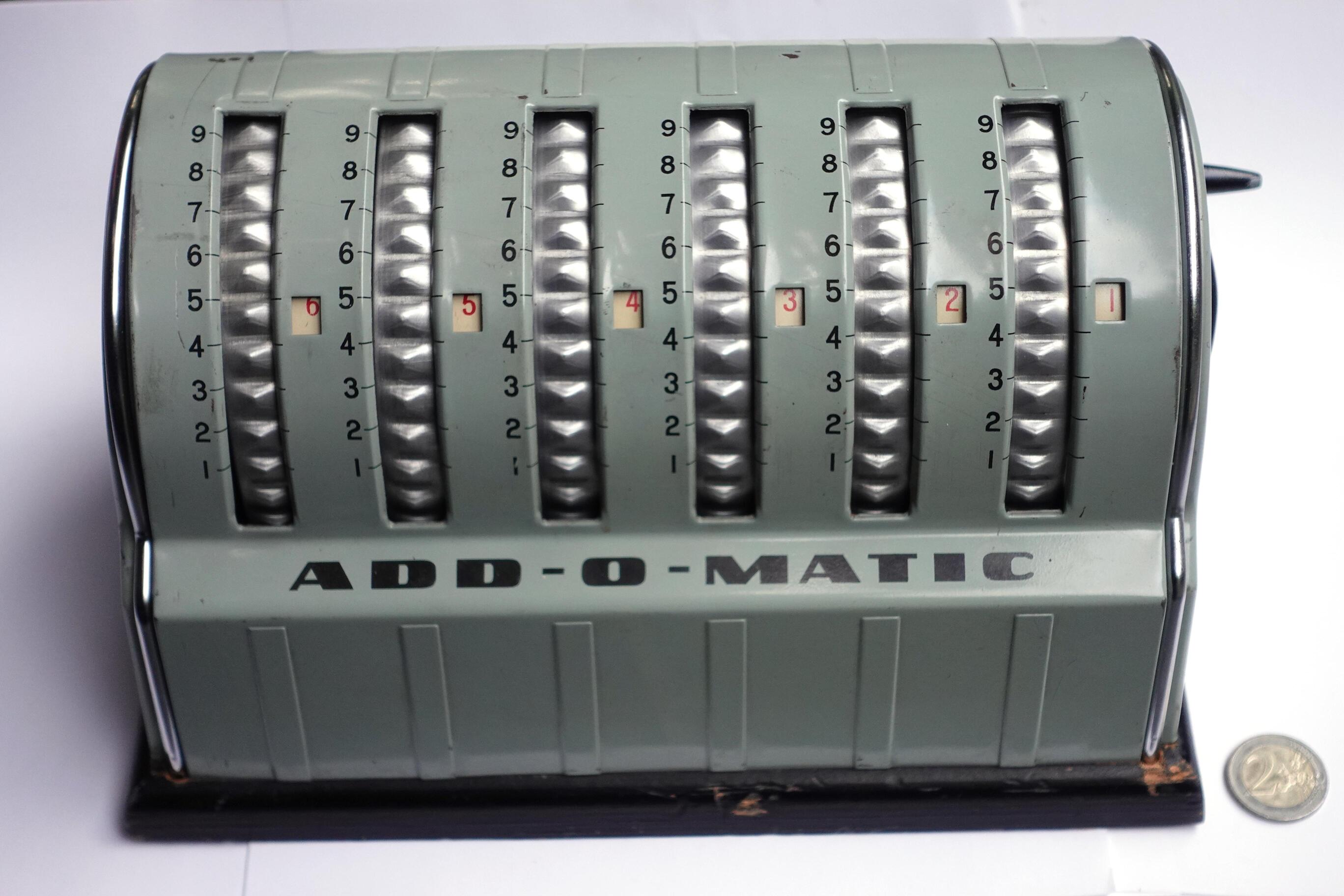
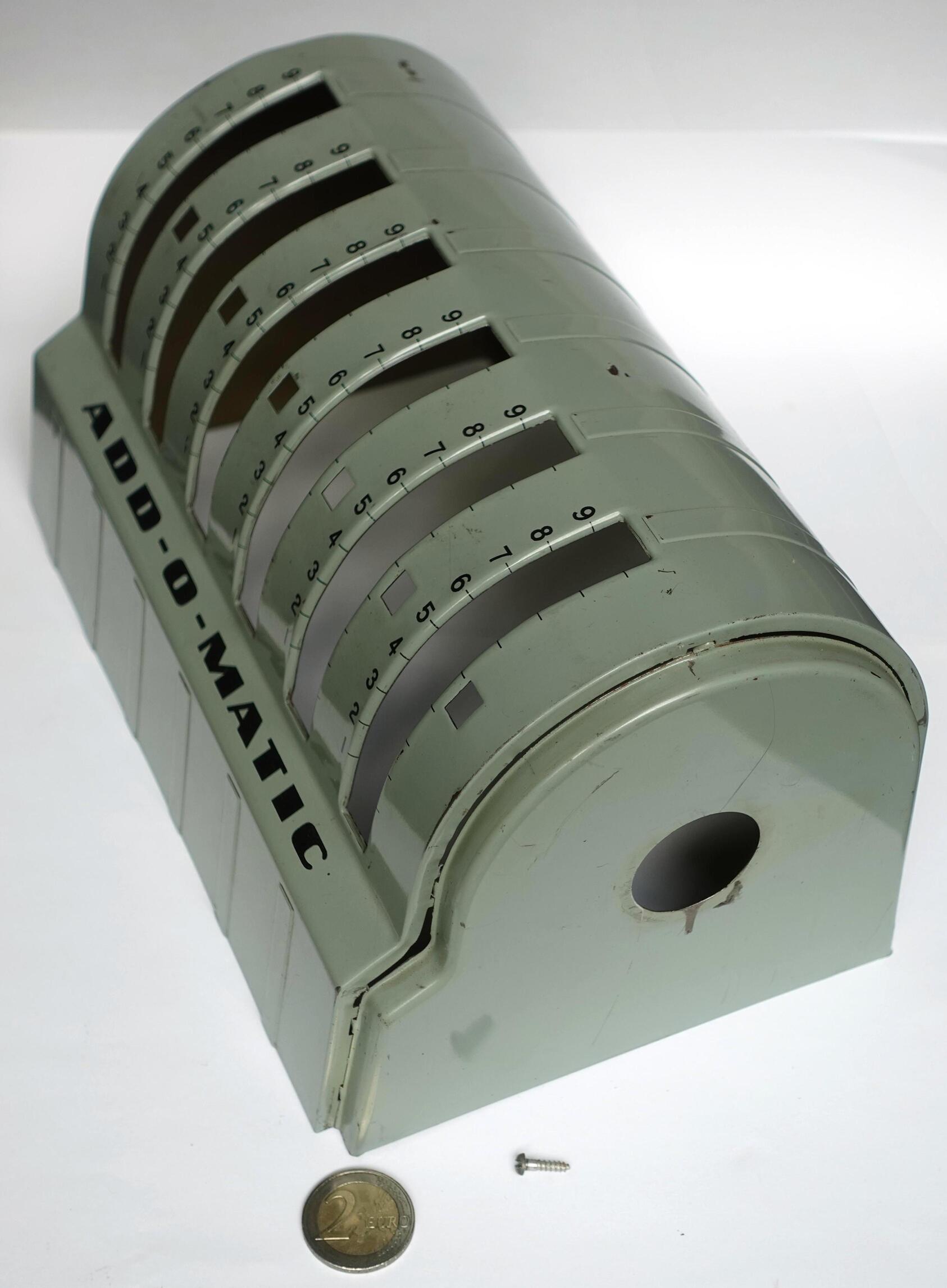
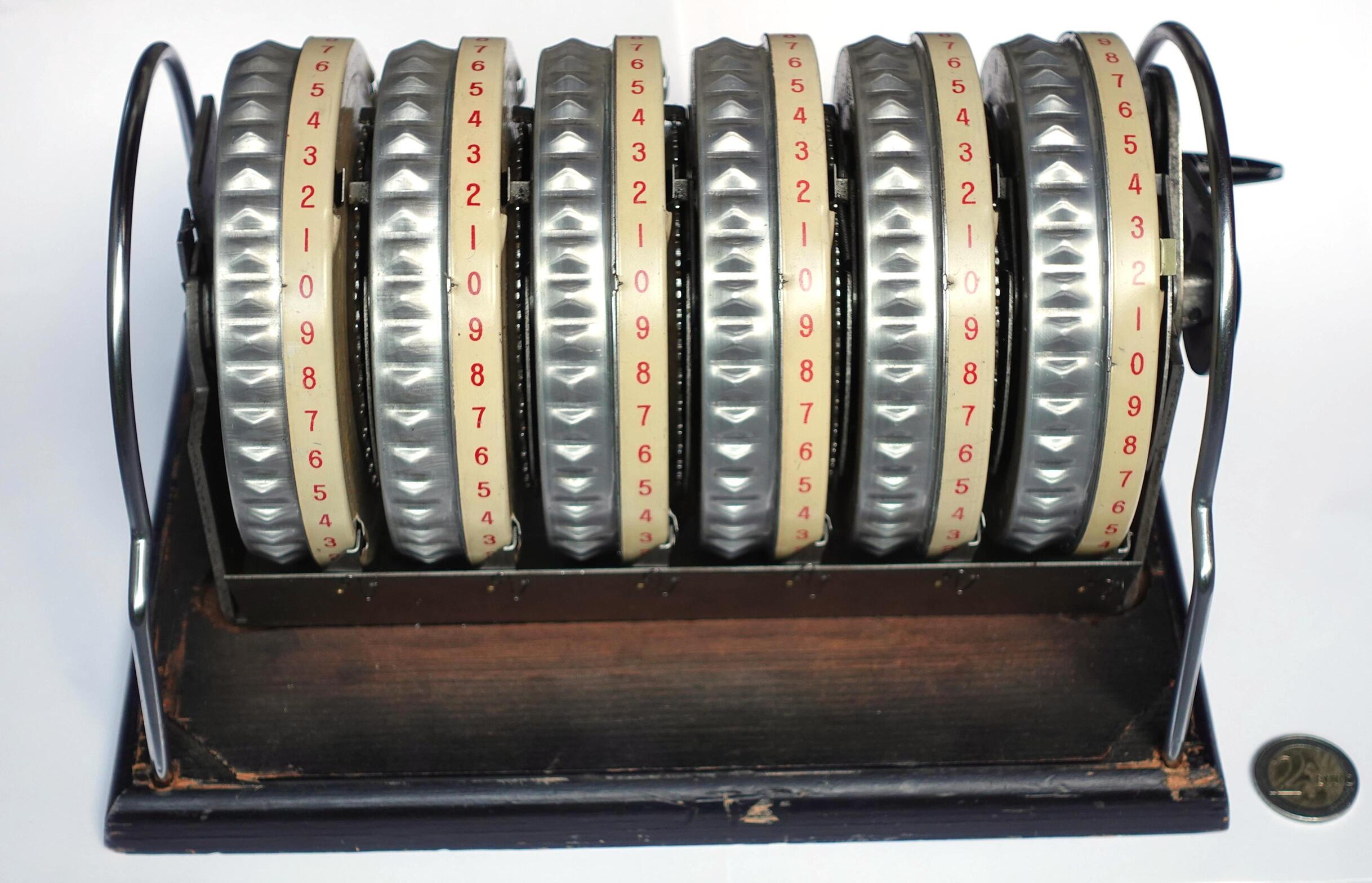
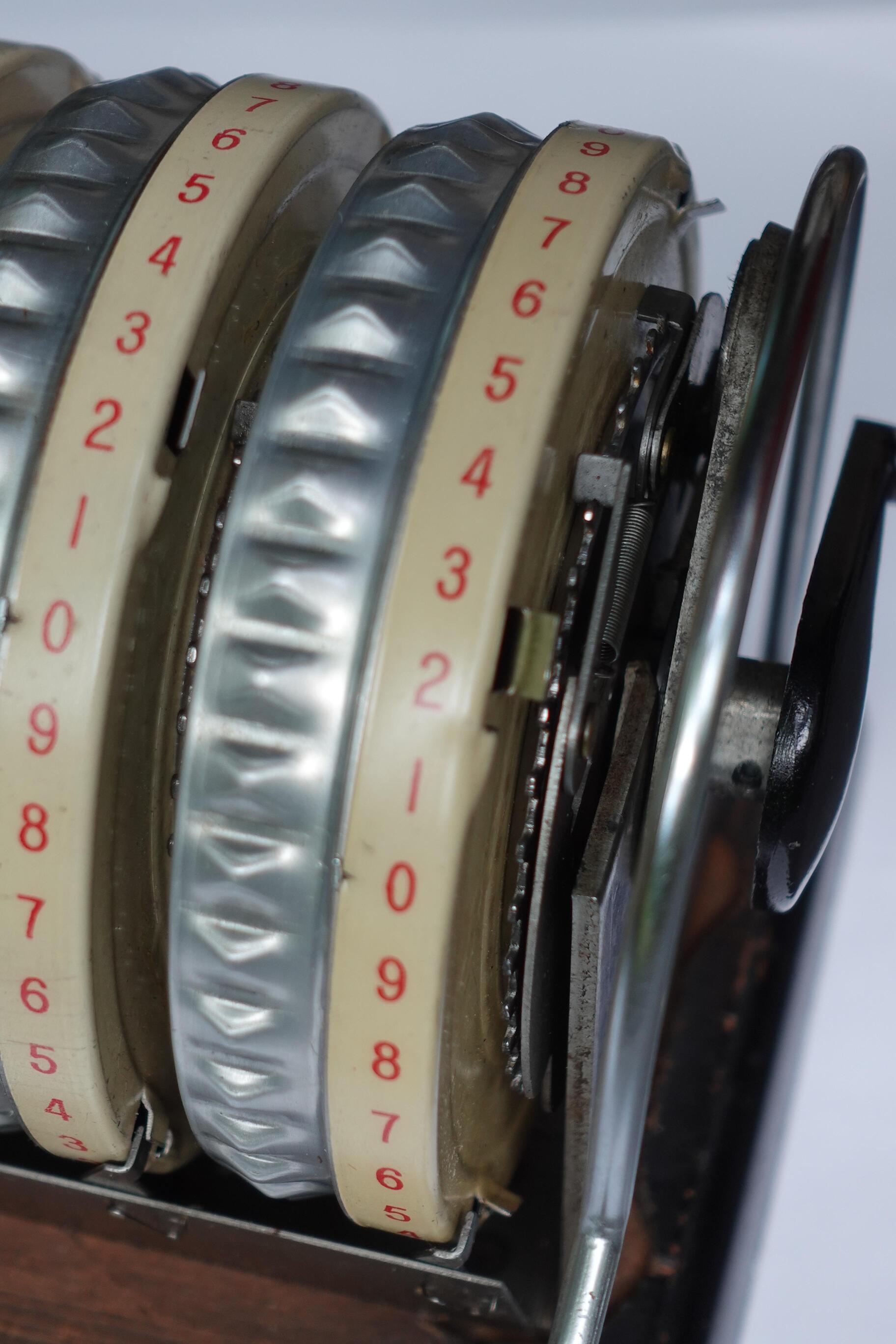
Add-O-Matic is a simple adding machine similar to the Addac but even more bulky. It has 6 coaxial input wheels which are accessible through wide vertical slots in the front of the casing. Next to each slot is a window showing a digit, and those six digits form the register. You can use your finger to move any wheel. If you place your finger in the slot next to one of the digits printed on the casing, and then move the wheel down until your finger reaches the bottom of the slot, then this adds the chosen digit to that location in the register. It has a stored energy carry mechanism.
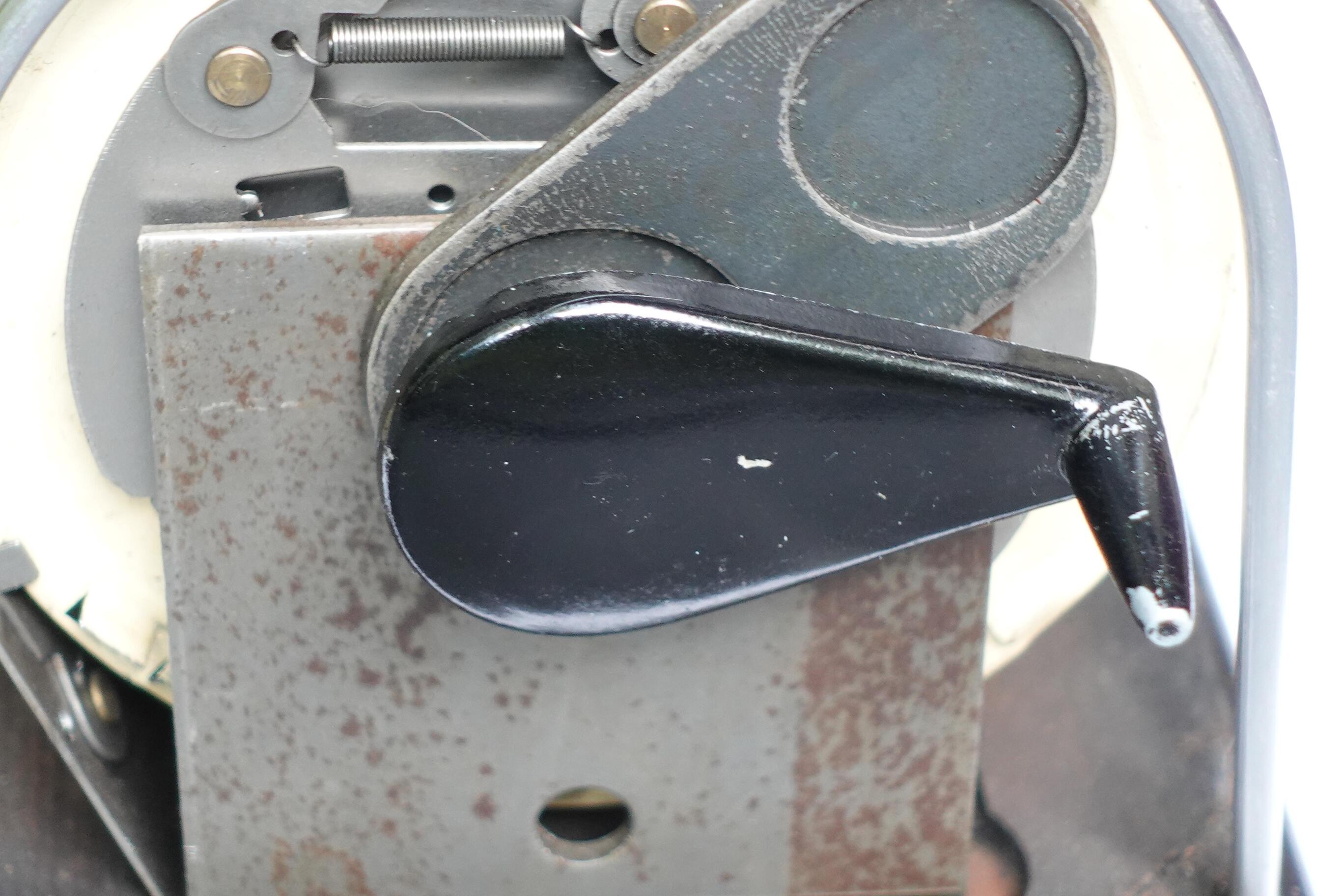
On the right hand side is a clearing crank. If you pull this towards you as far as it will go, and then move it back, the register will be reset to zero.
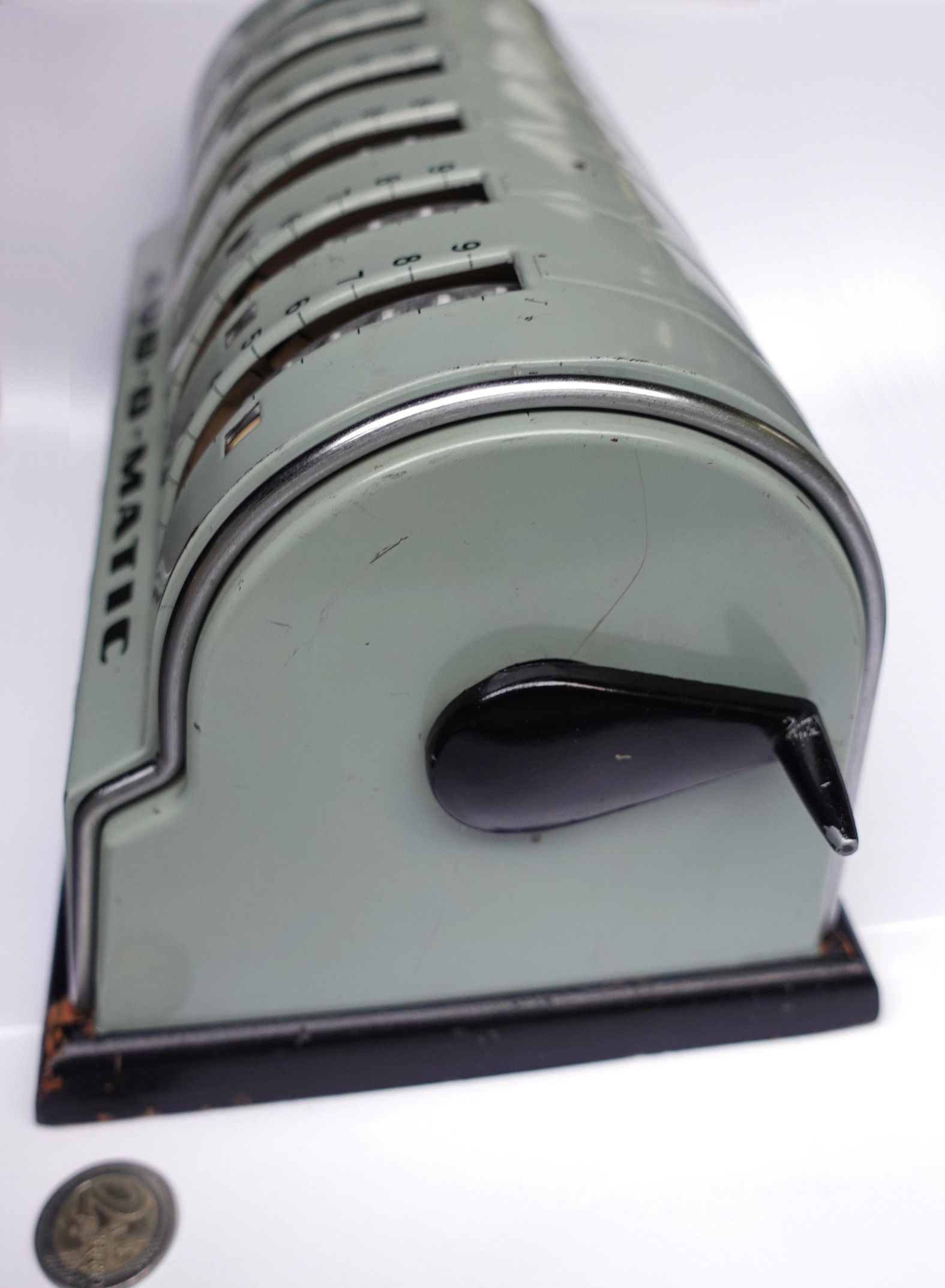
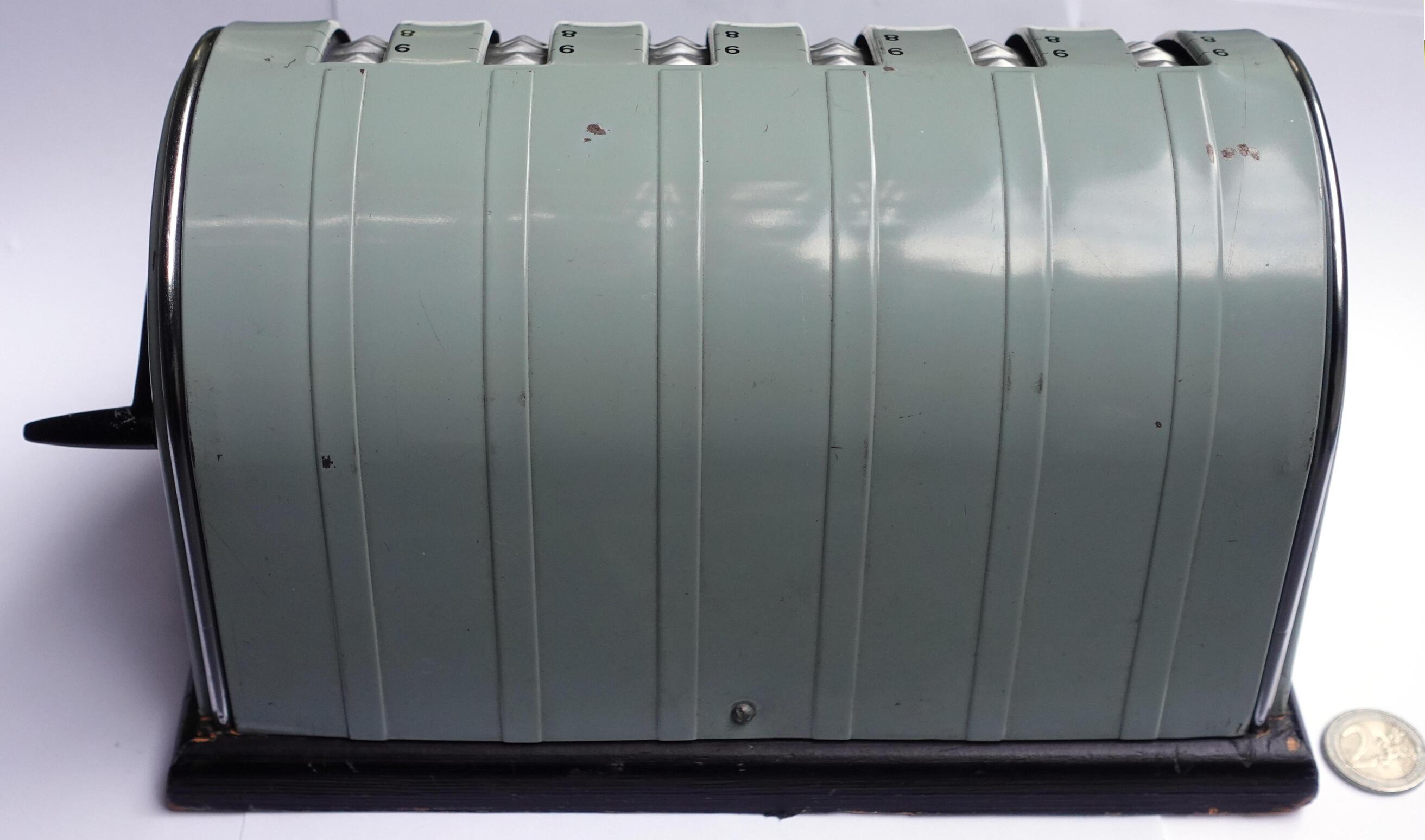
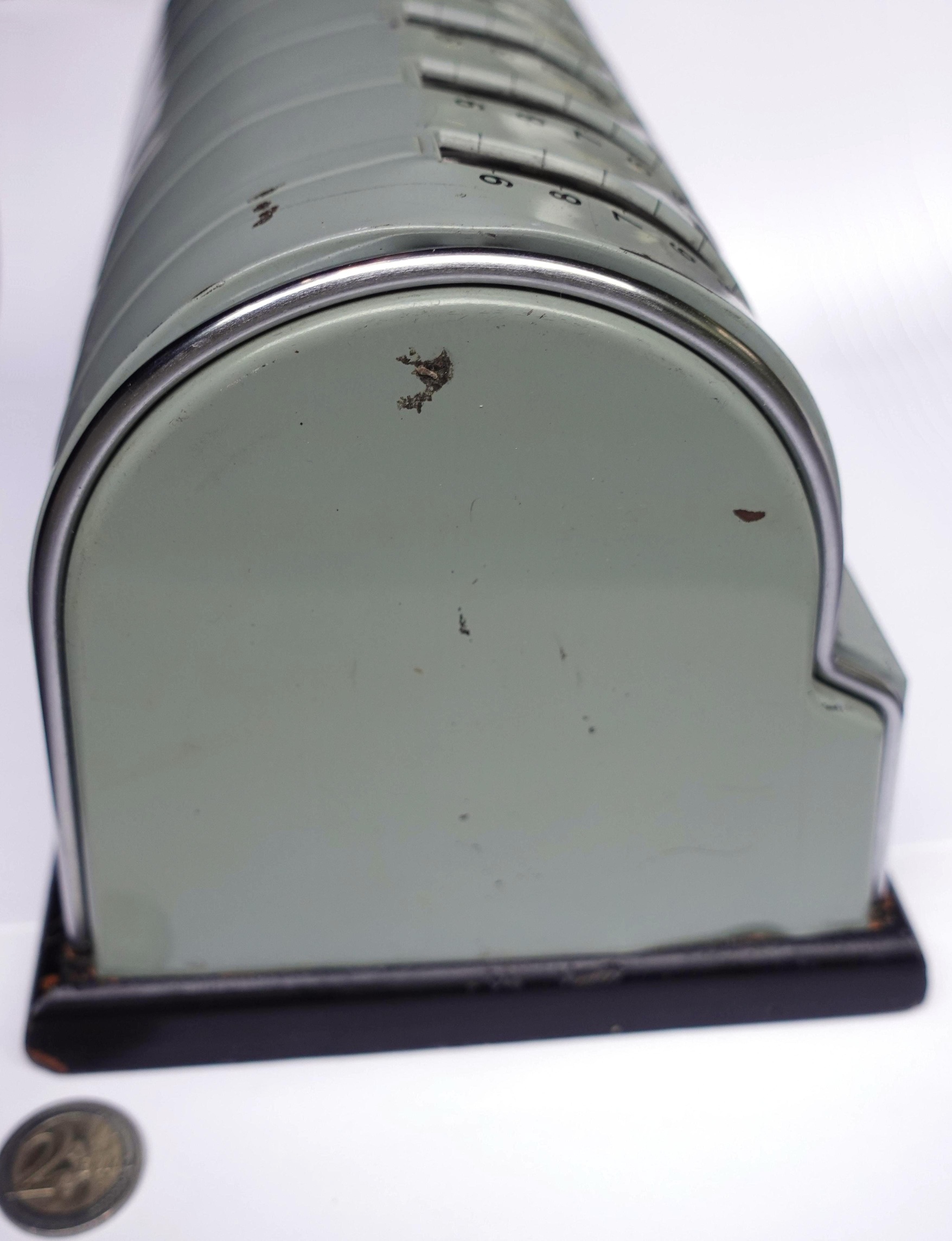
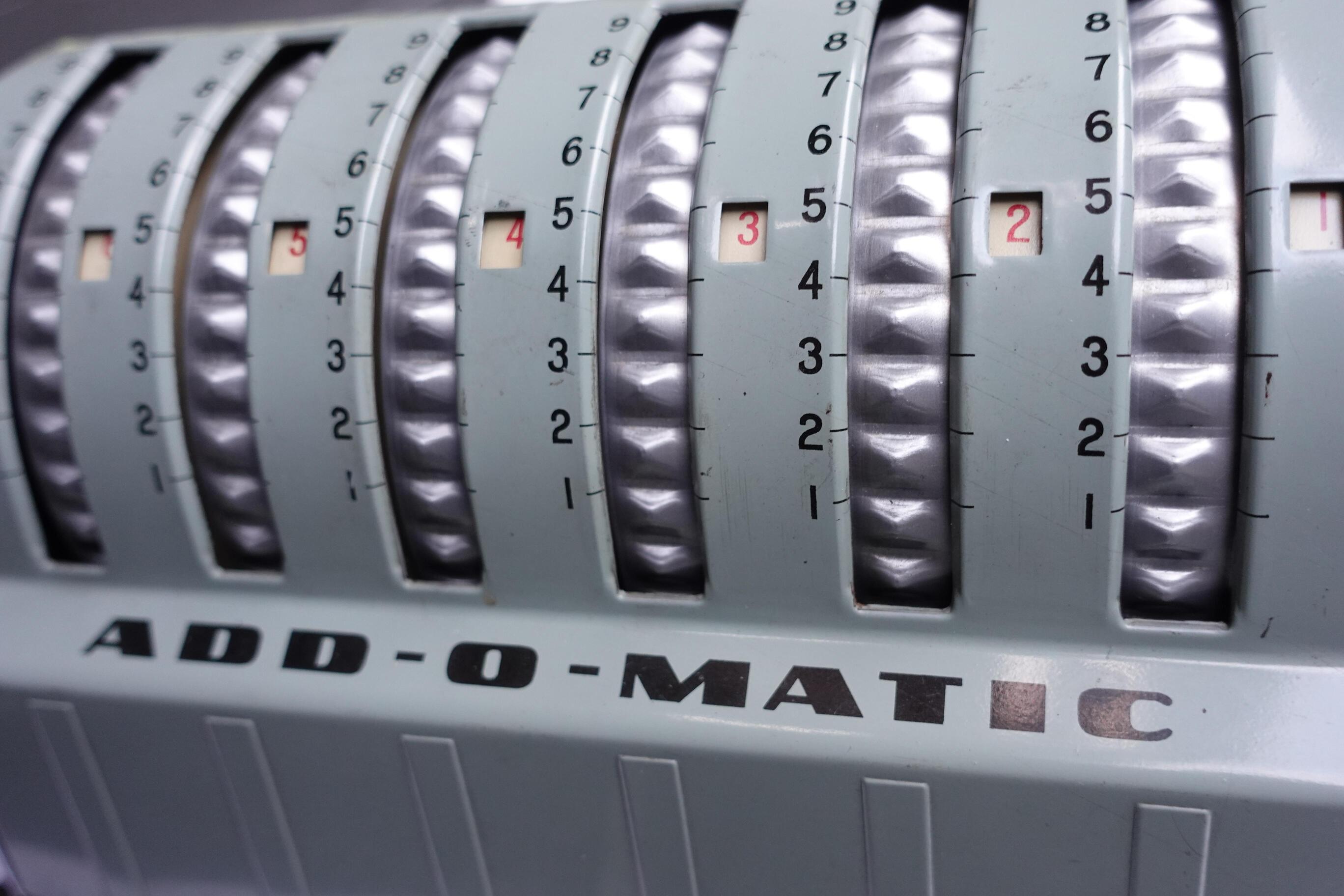
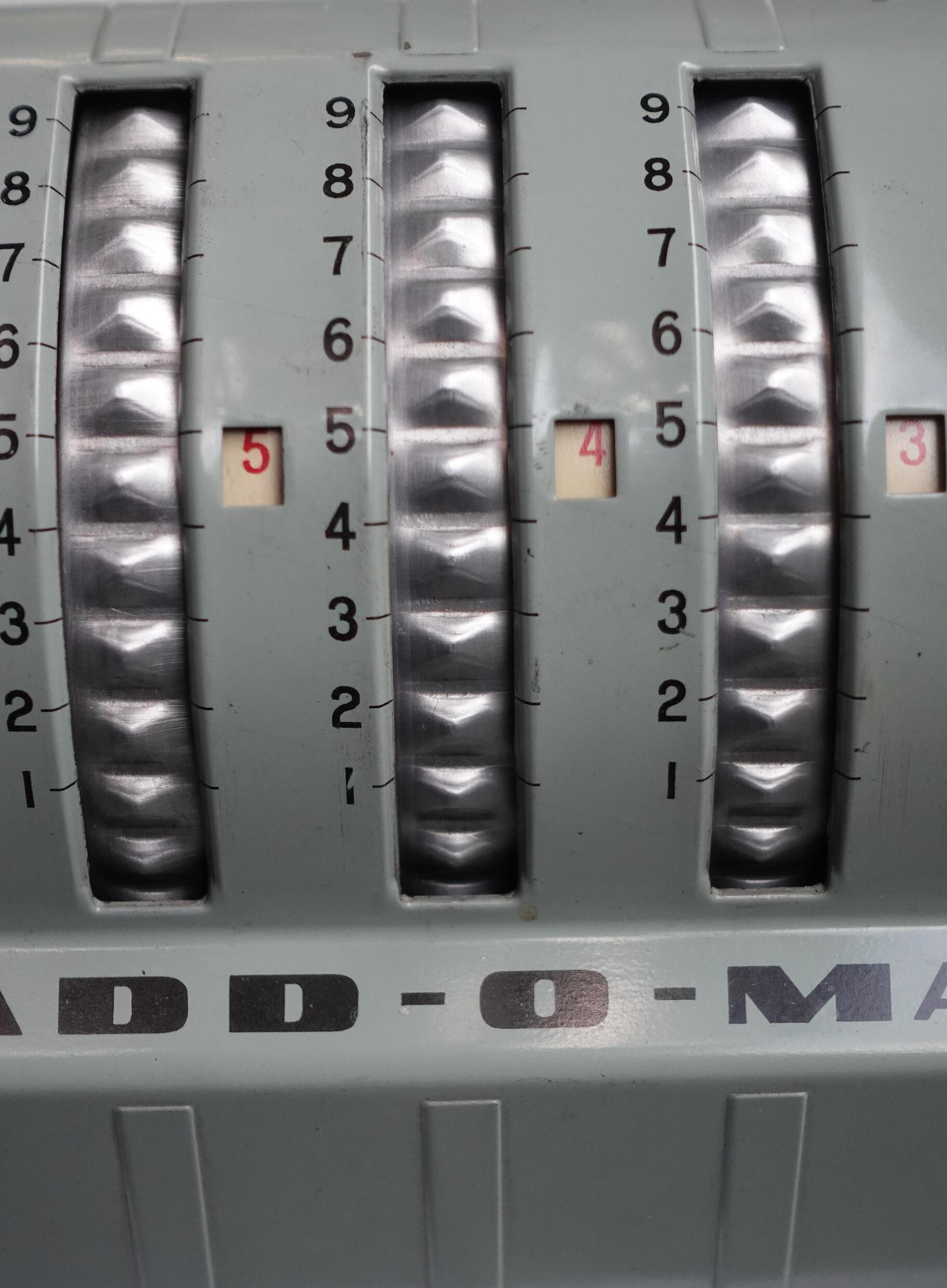
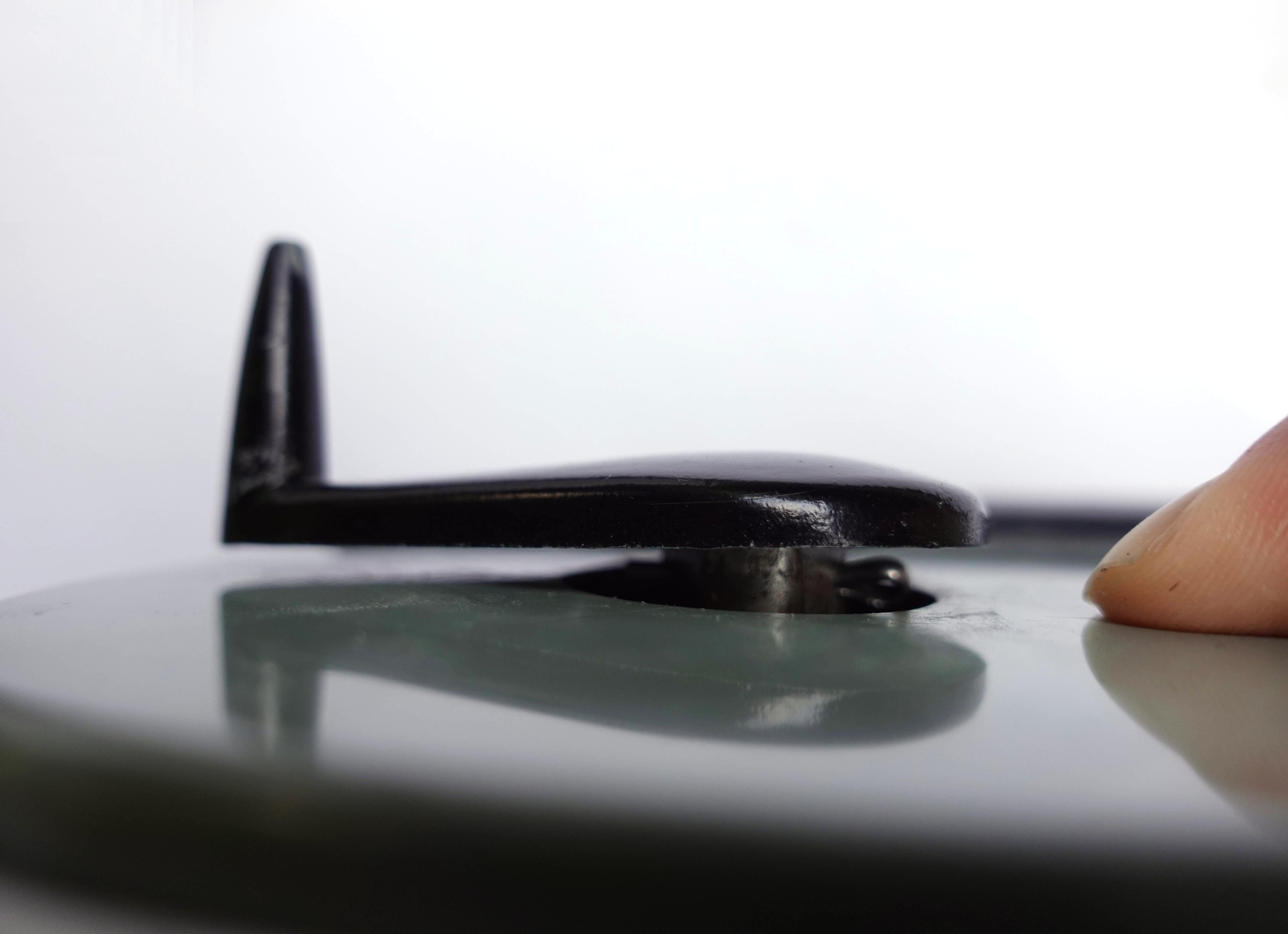
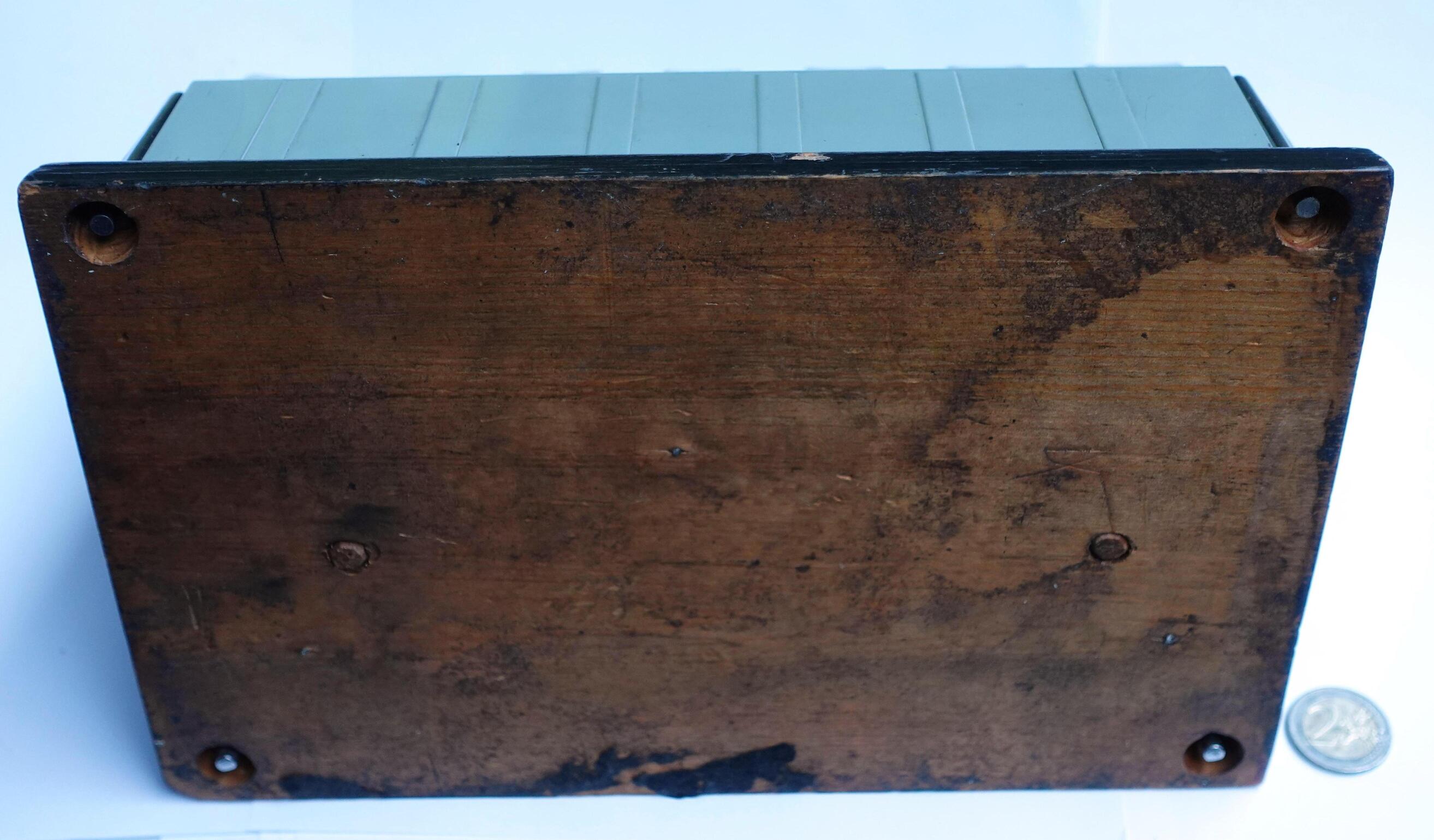
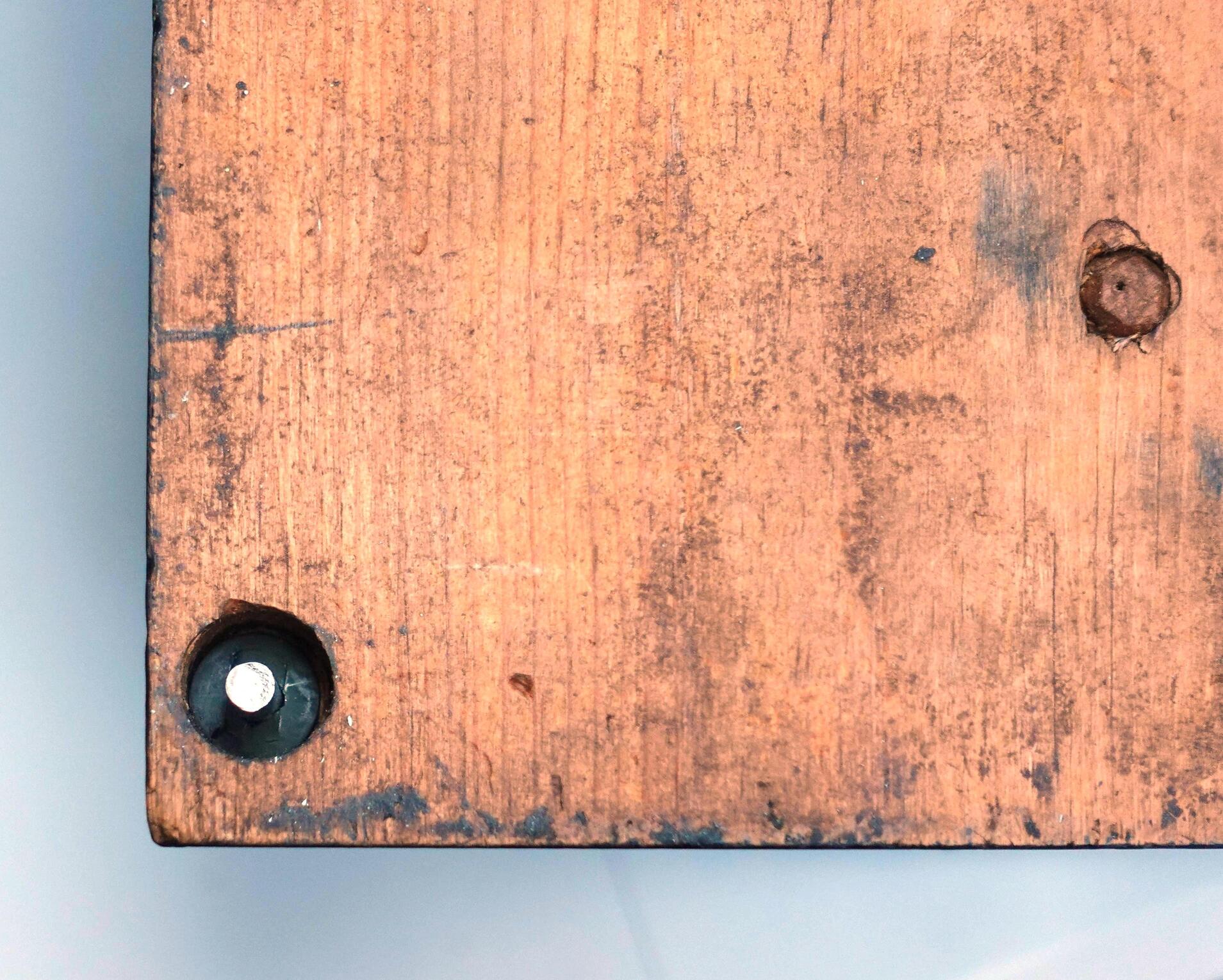
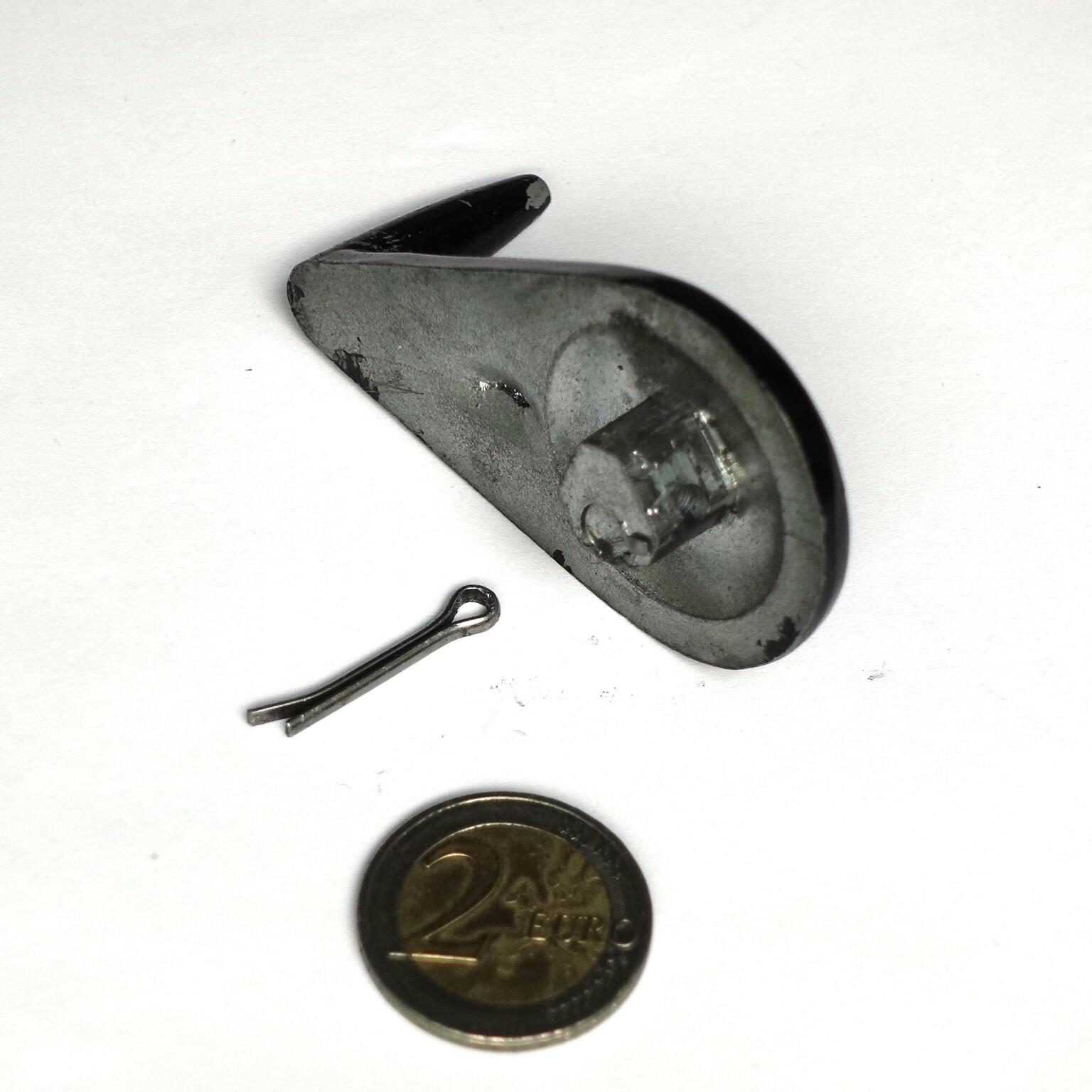
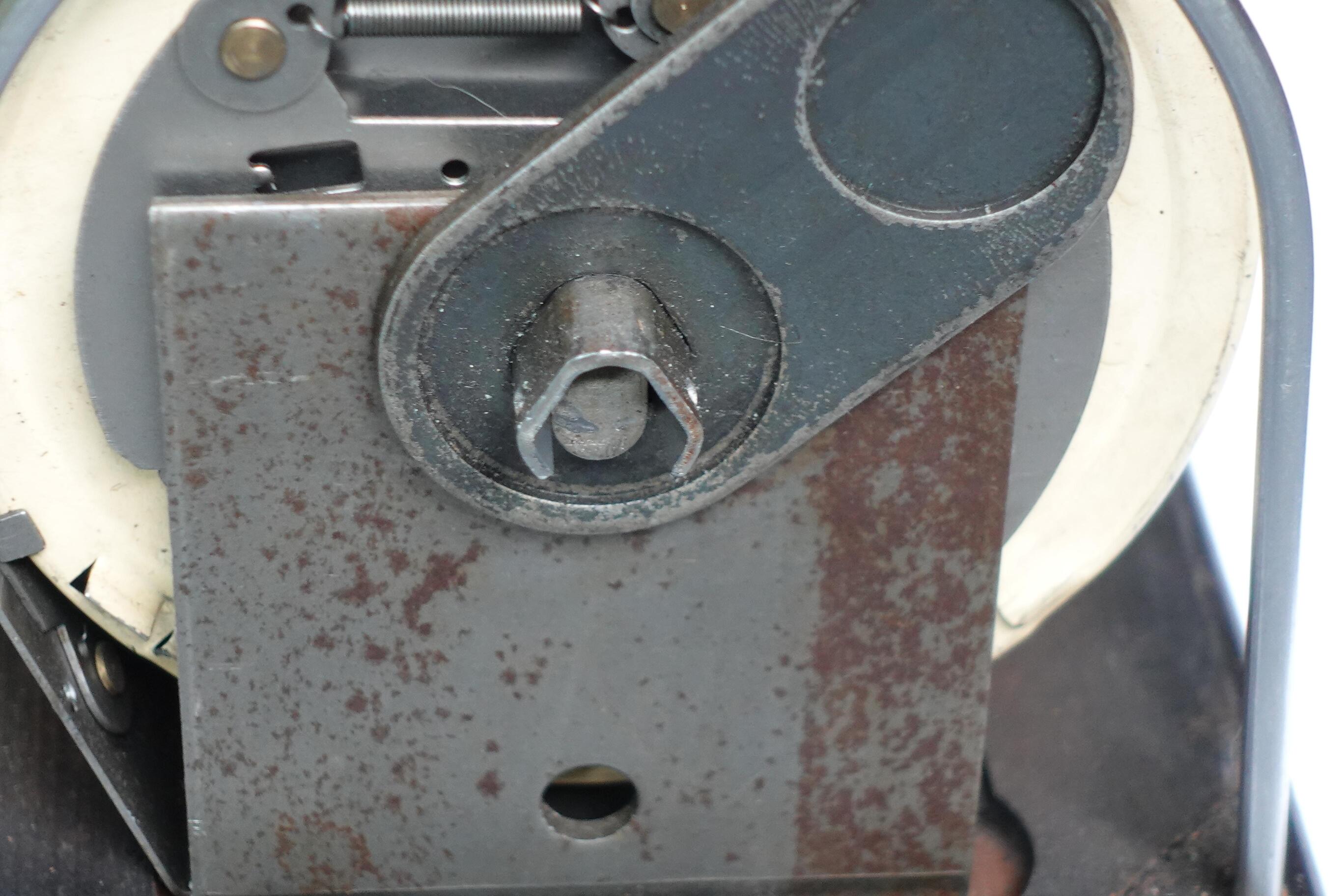
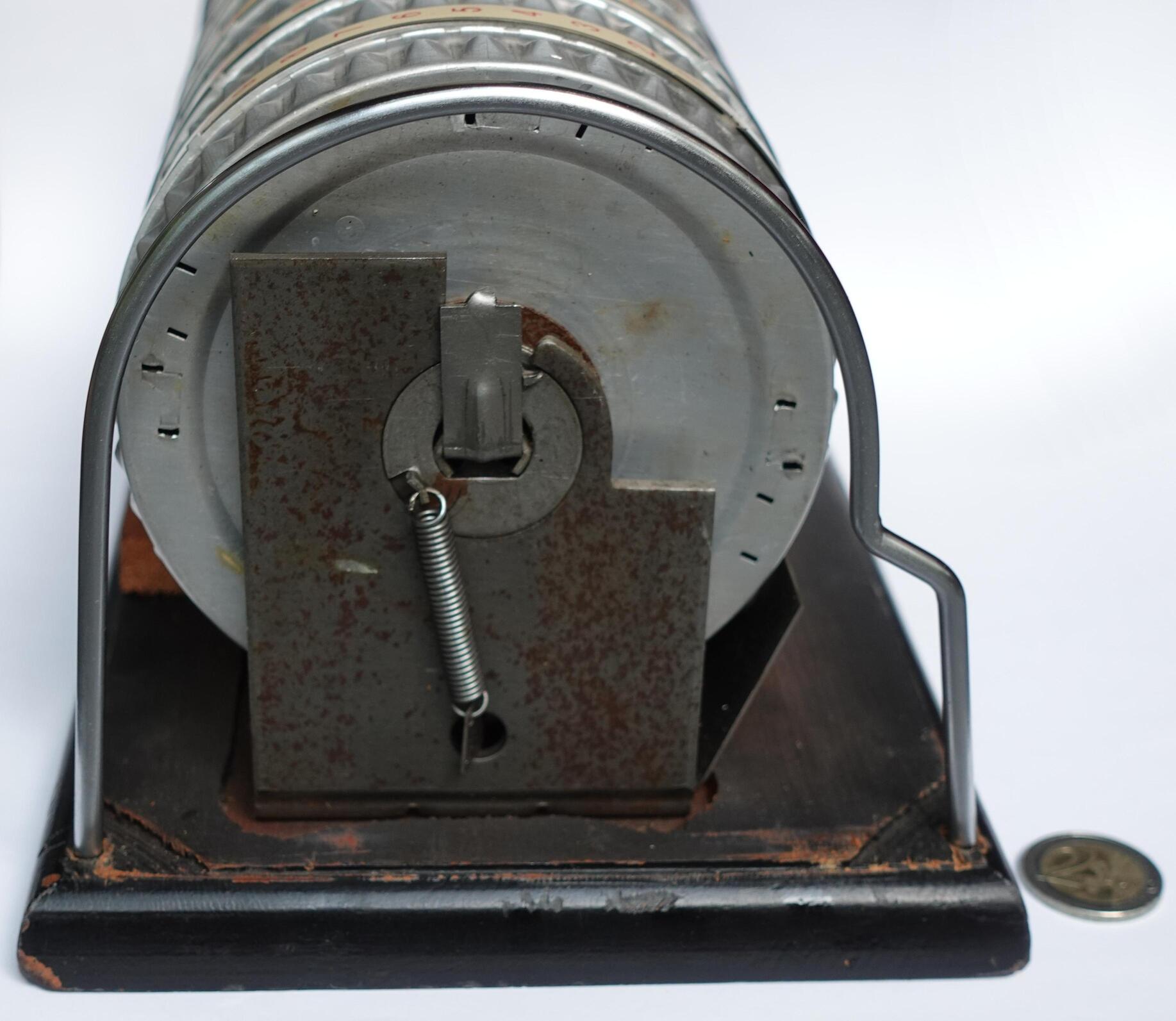
It is quite difficult to remove the casing. The clearing handle must be removed first, which is held in place by a locking pin which is hard to access. The casing needs to be pushed in to reach the pin. Apart from a single screw at the back, the casing is held in place by two arched metal rods, which go through the wooden base and are held underneath by metal fastening rings. These rings are near impossible to remove. Thankfully one of them is already missing here, which allows one end of one rod to be lifted out and then swung out of the way. The other arch can be pushed aside just enough for the casing to be released.
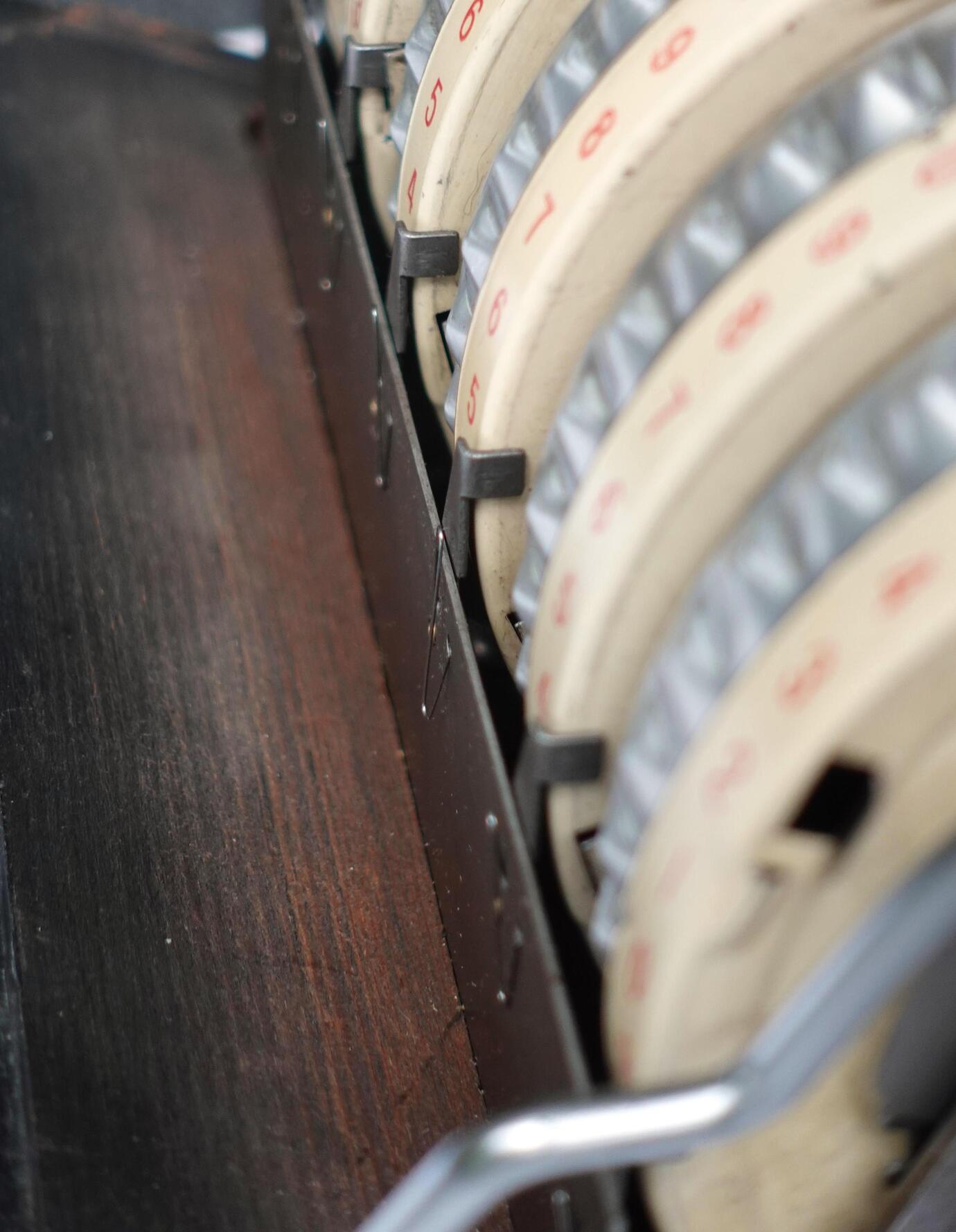
The clearing mechanism is simple but unusual. Pulling the clearing crank rotates the complete mechanism forward. When it is rotated back, small catches grab hold of all number wheels their 9 or 0 position. In effect, relative to the mechanism, all but the last wheel is pulled down to 9, while the last wheel is pulled down one step further past 9 causing a carry over all digits, overflowing the register to zero.
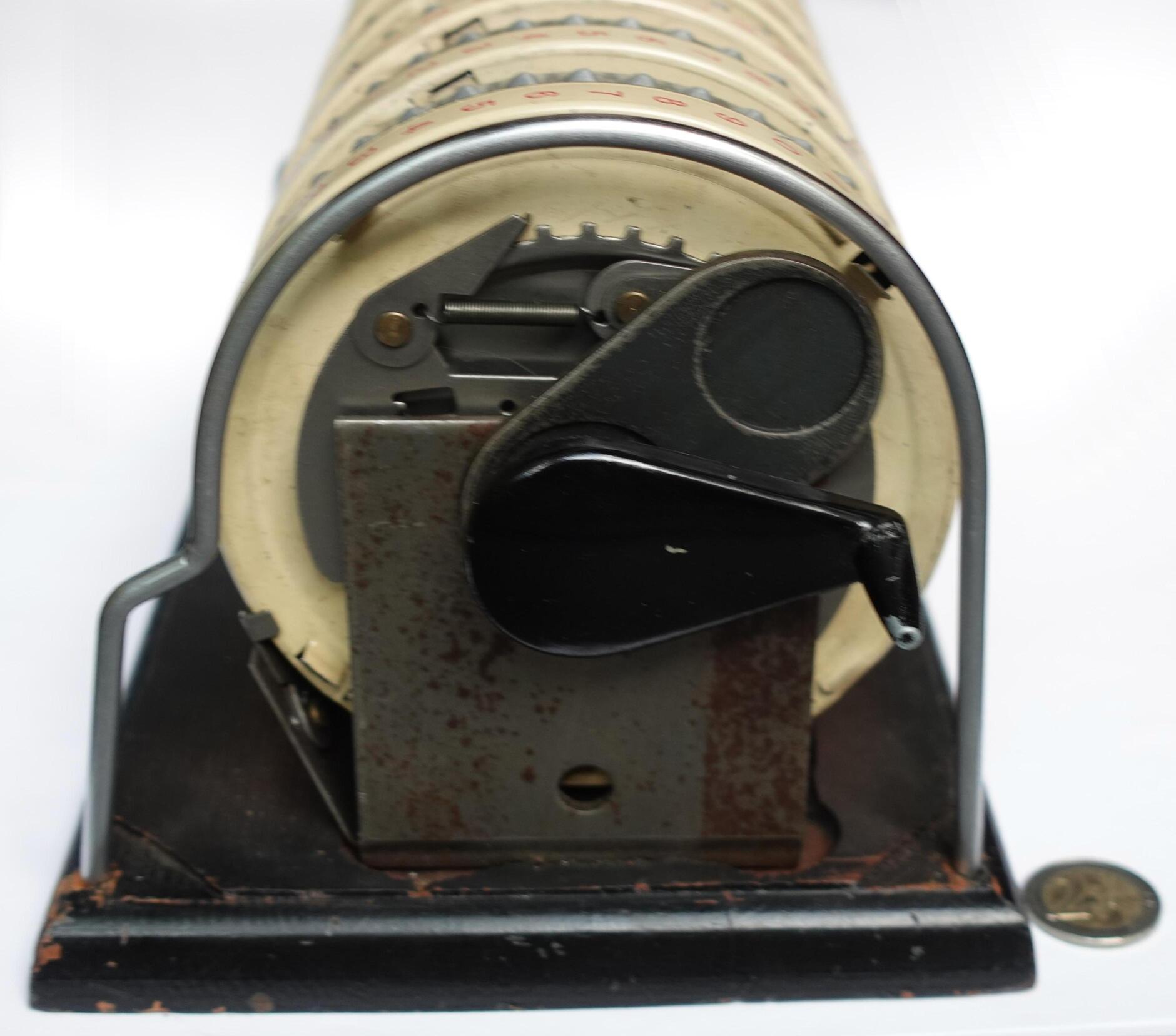
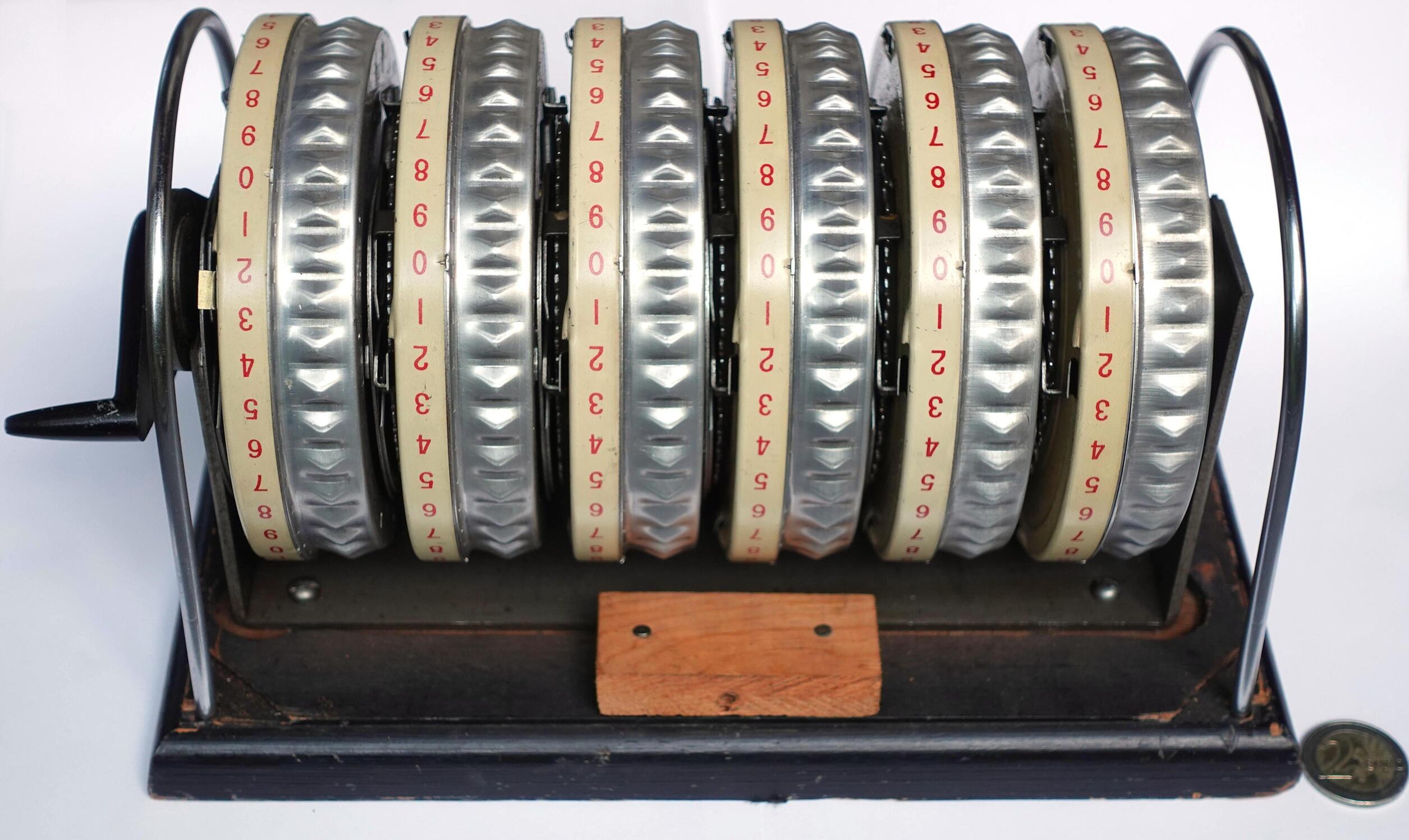
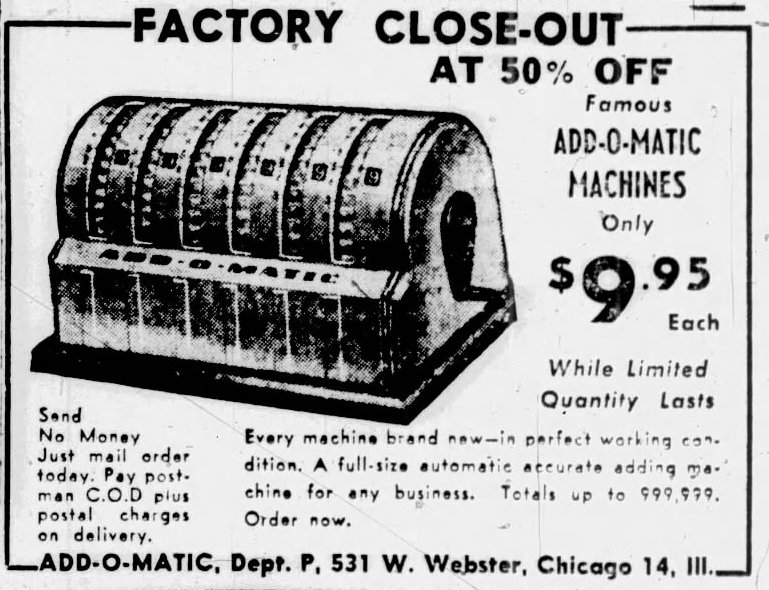
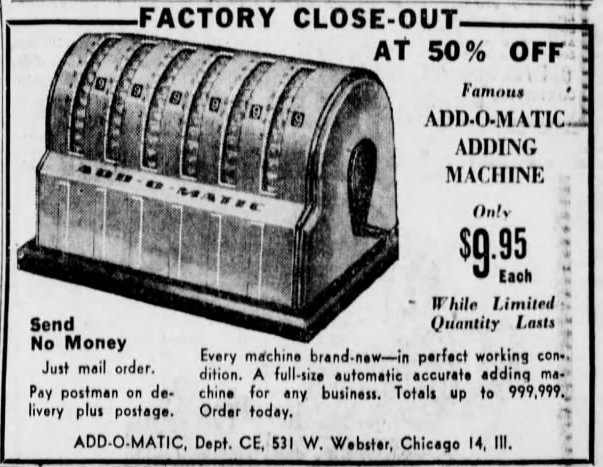
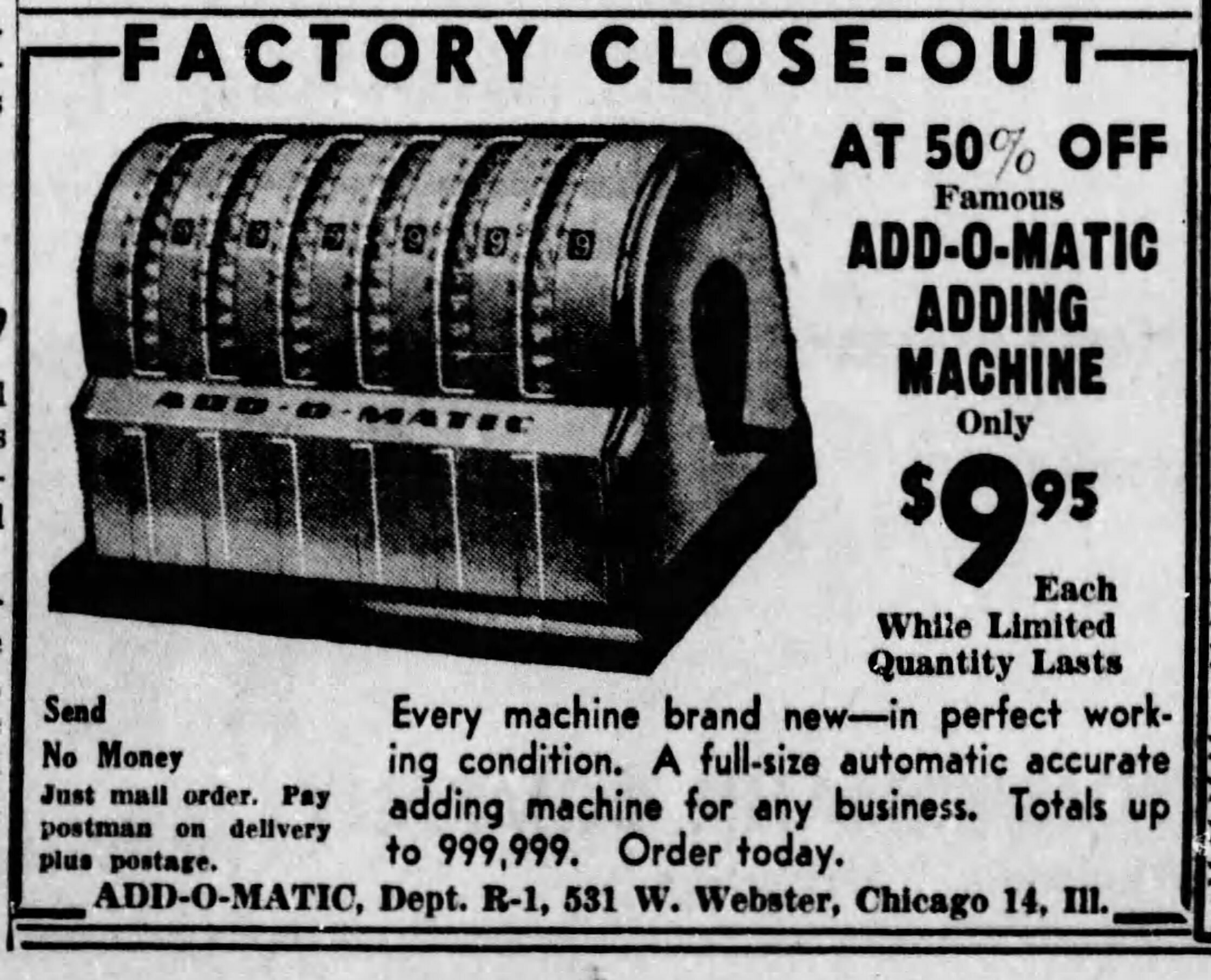
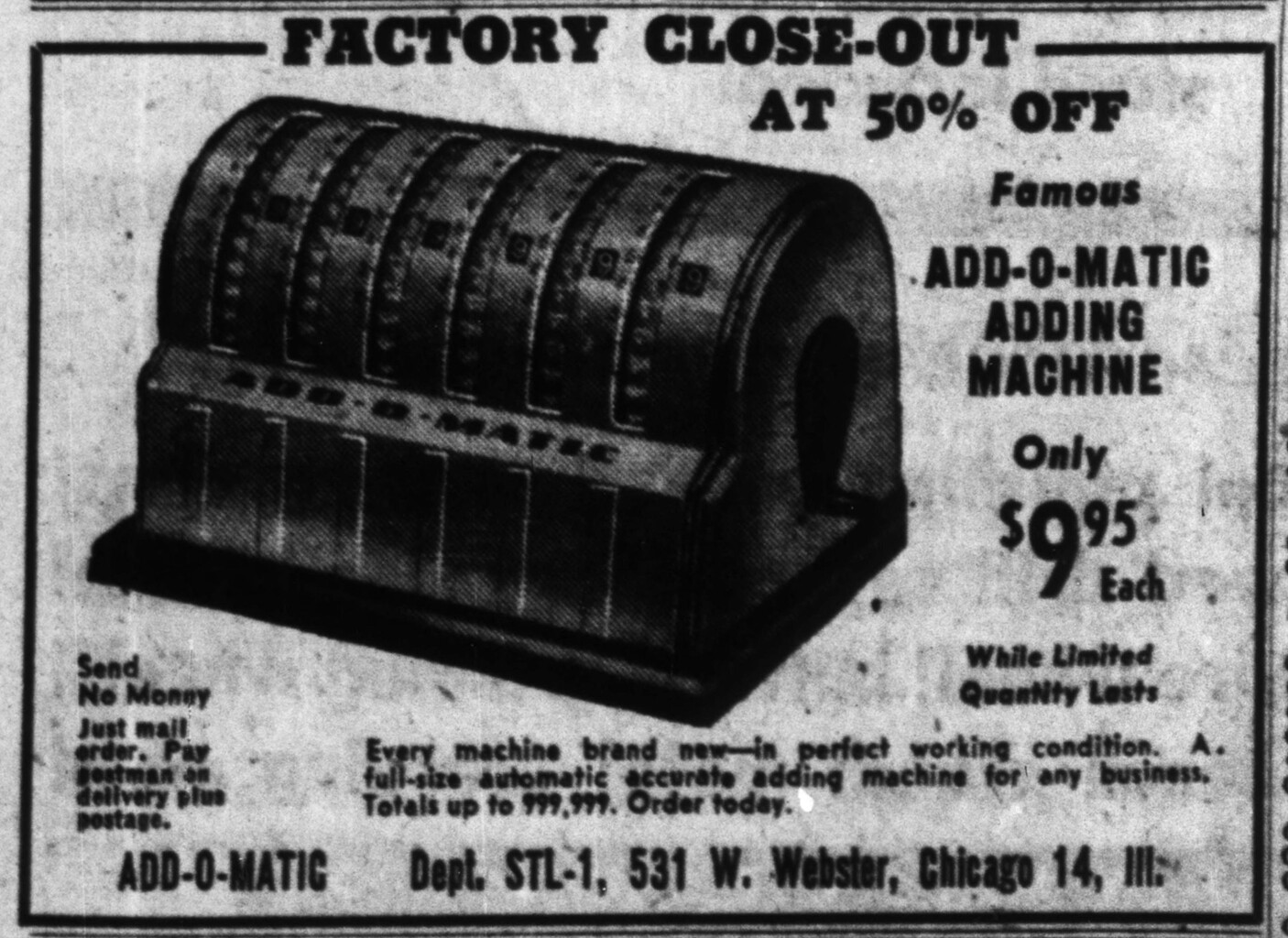
This Add-O-Matic adding machine appeared on the market in September of 1947, sold by the Add-O-Matic Sales Company of Chicago. The company was located at 541 W. North Avenue at first, but by September 1948 they had moved to 531 W. Webster Avenue. This is where the company remained until the end of 1949 when there was a factory closing sale and the company ceased trading.
I have not found any information about the company, nor about who designed the adder. There is no patent that I could find for this machine, though patents may have been applied for.
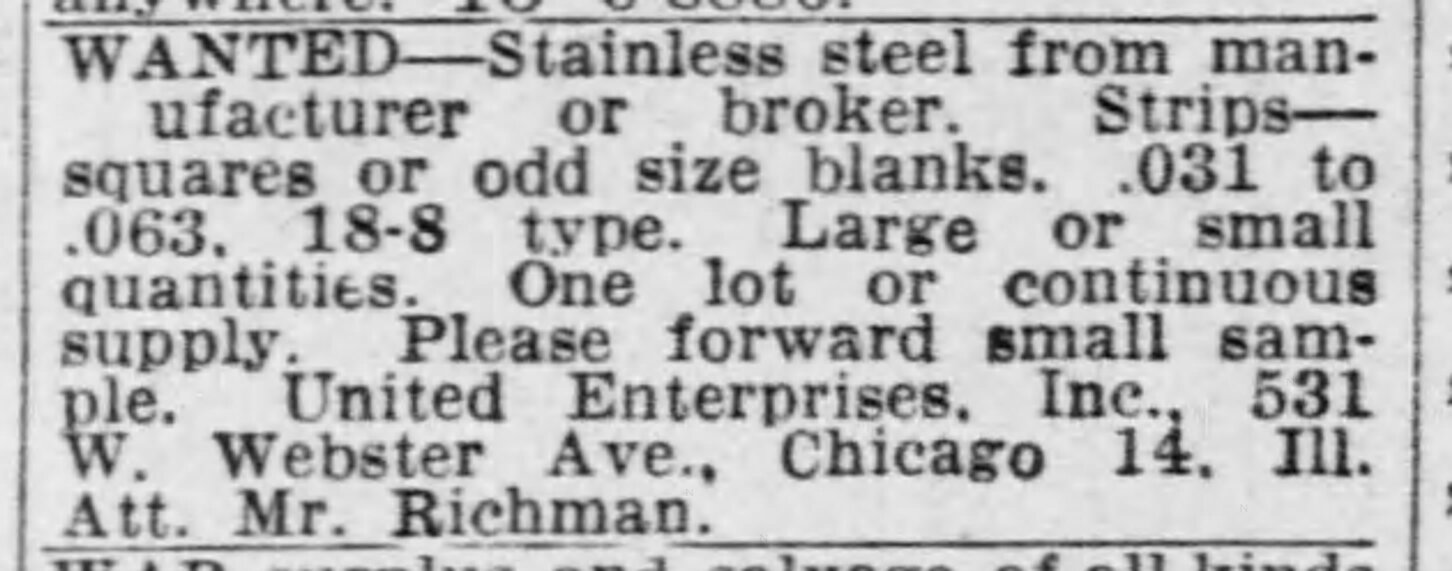
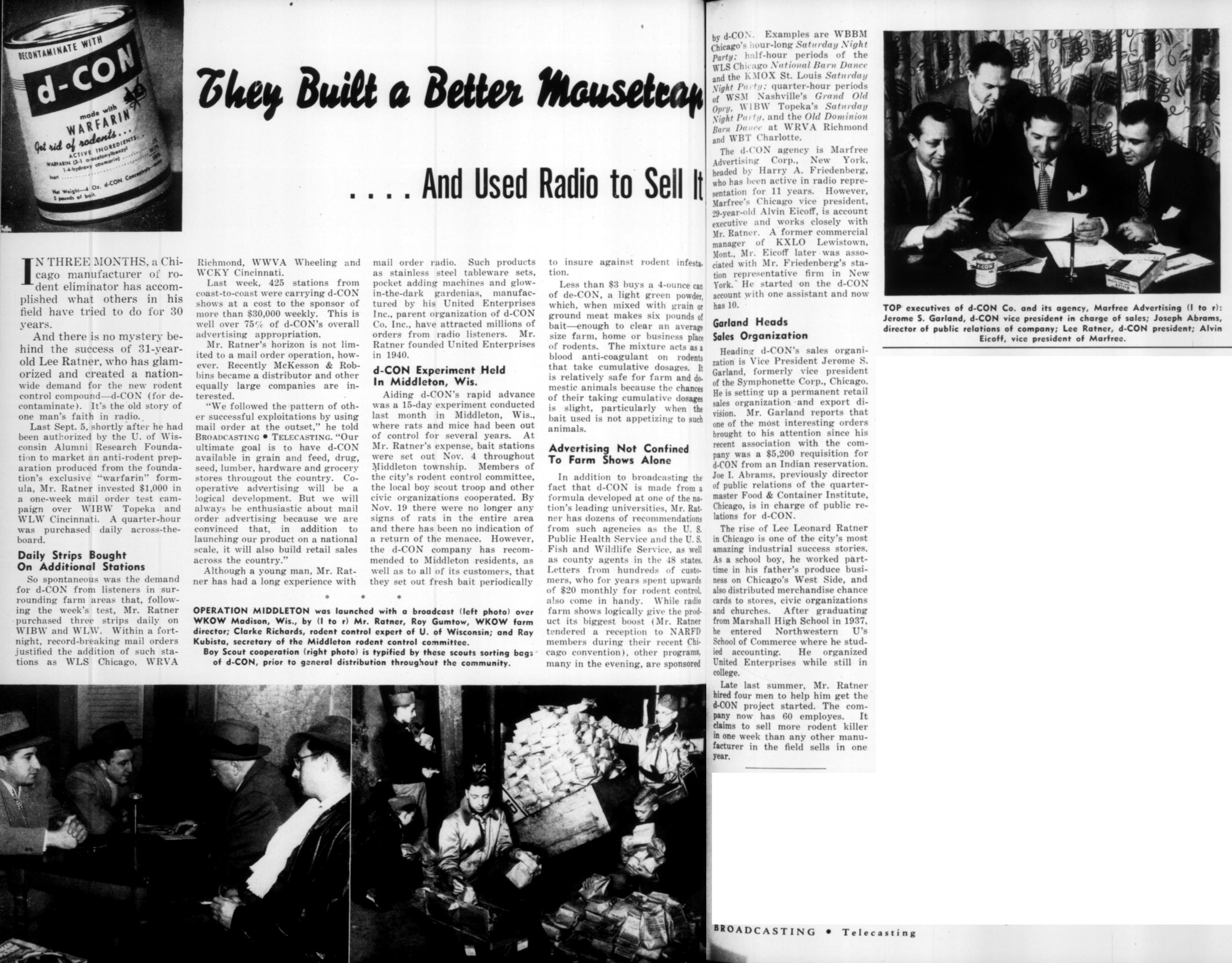
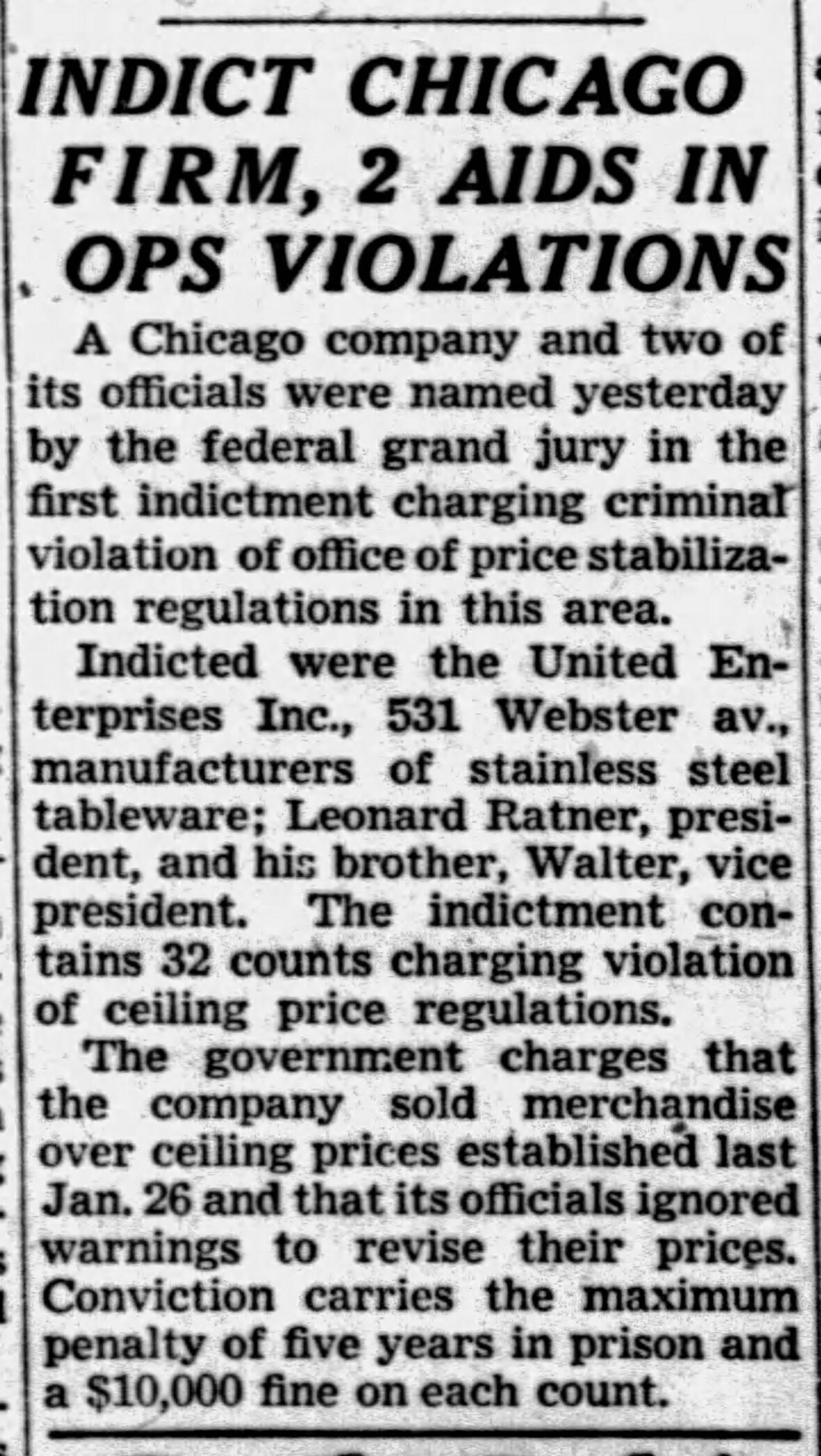
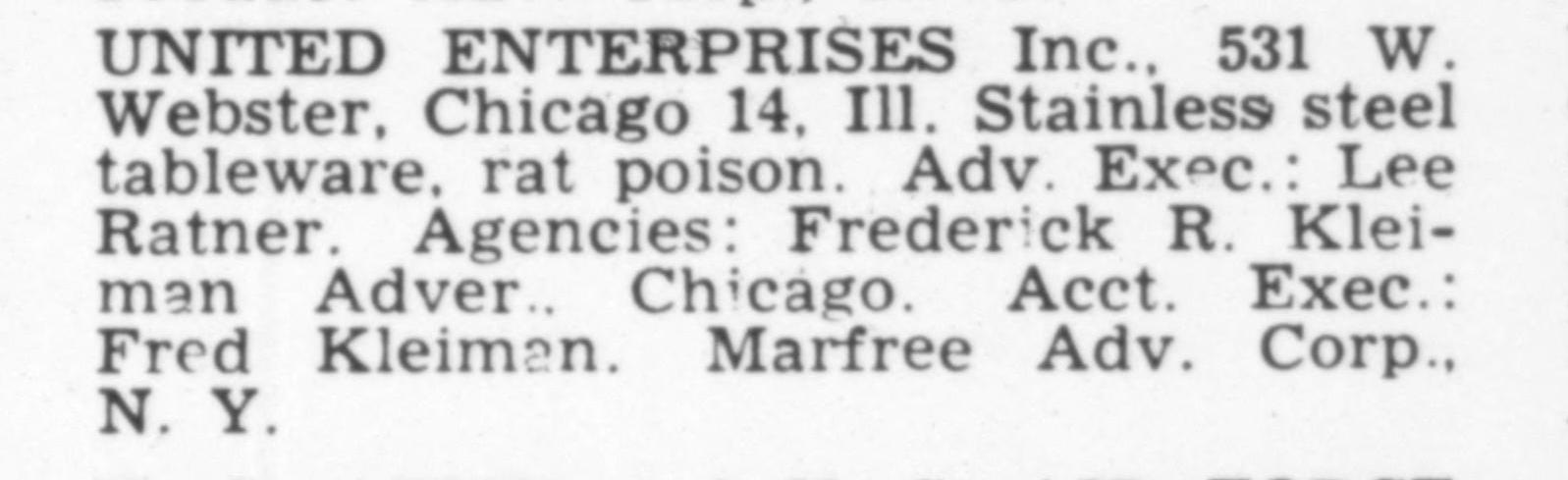
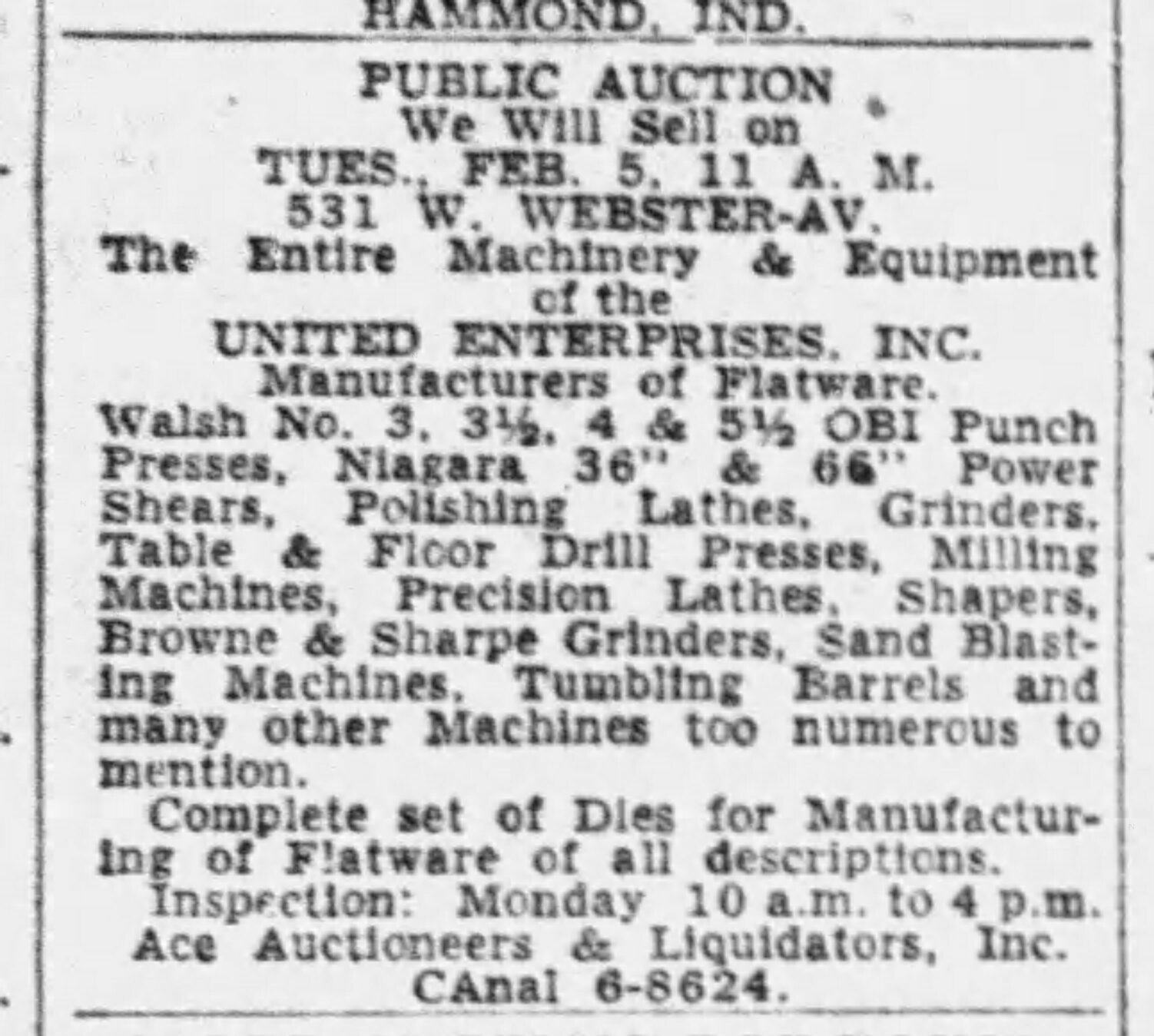
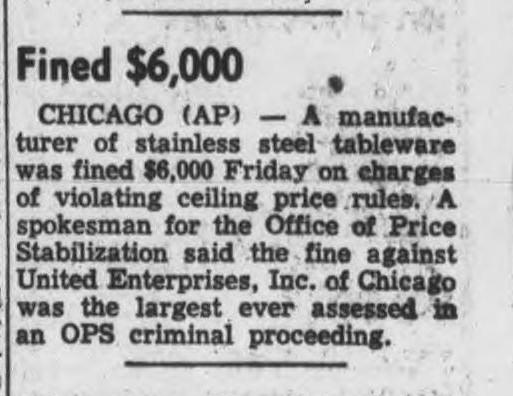
However, established the same addresses as the Add-O-Matic Sales Co. there was also United Enterprises Inc., and I am convinced this was the actual manufacturing company. This company was founded in 1940 by Lee Ratner, and mostly produced stainless steel cutlery, but also other things such as glow-in-the-dark gardenias (as hair decorations or broche), and this adding machine. In 1950, not long after the adding machine production stopped, they found a new product to market, a warfarin-based rat poison called "d-Con". It seems however that in 1952 the company was liquidated and sold off all its metalworking machinery around the same time it was fined for violating ceiling price rules by the Office of Price Stabilization.
Several online sources wrongly claim that this Add-O-Matic was made by Chadwick, but that is likely because Chadwick made the Speedee Add-A-Matic (a clone of the Contex model A). Similarly, it is sometimes confused with the Add-O-Matic adding machine from the late 1930s which was also made in Chicago. Such confusion is understandable given that the name "Add-O-Matic" has been used by several different companies for various products. Here are some Add-O-Matics (but not Add-A-Matics) I have found:
| 1937-1941 | The 5-column Add-O-Matic adding machine with sliding buttons seems to be the first one. |
| 1947-1949 | This adding machine. |
| 1956-1959 | A coin bank given by the First Security Bank as a promotonal item. |
| 1957 | A coin mechanism in vending machines by the S & S Vending Machine Company. |
| 1958 | A credit payment plan for the Sterling Furniture Company. |
| 1958 | An Addiator type of adder, as a free giveaway with a credit line. |
| 1959-1960 | A line of RC Allen adding machines (model 605, 606, 606E, 707, 707E) were given this nickname. |
| 1960s | The pencil-case version of the Sterling Dial-a-matic was also sold using this name. |
| 1963-1970 | A plastic 3-button shopping adder, including a version worn like a wristwatch. |
| 2009 | An installer program for Photoshop Elements. |
Here are many of the advertisements for the Add-O-Matic. It is odd that many depictions of the machine show the clearing crank at rest with the handle at the bottom instead of at the back.
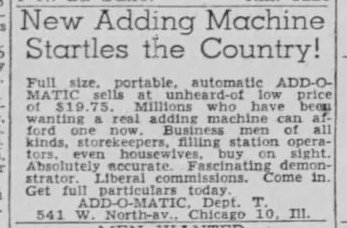
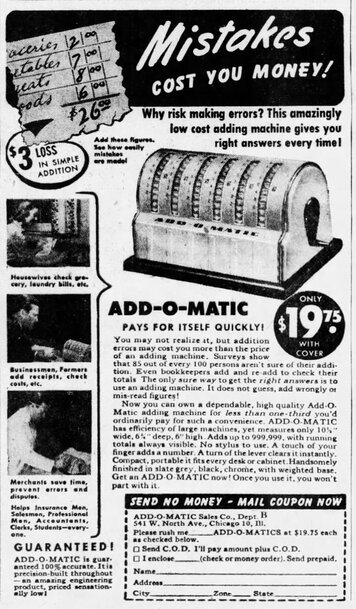
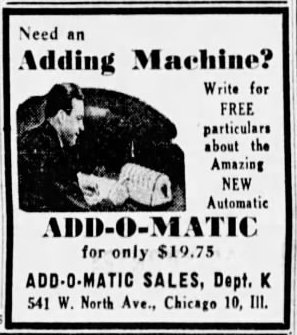
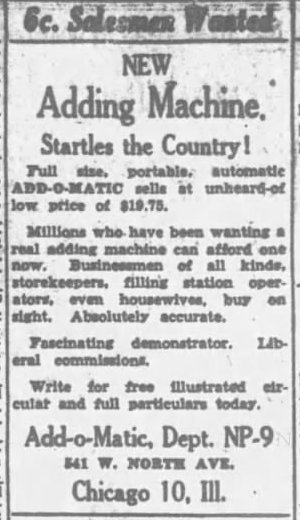
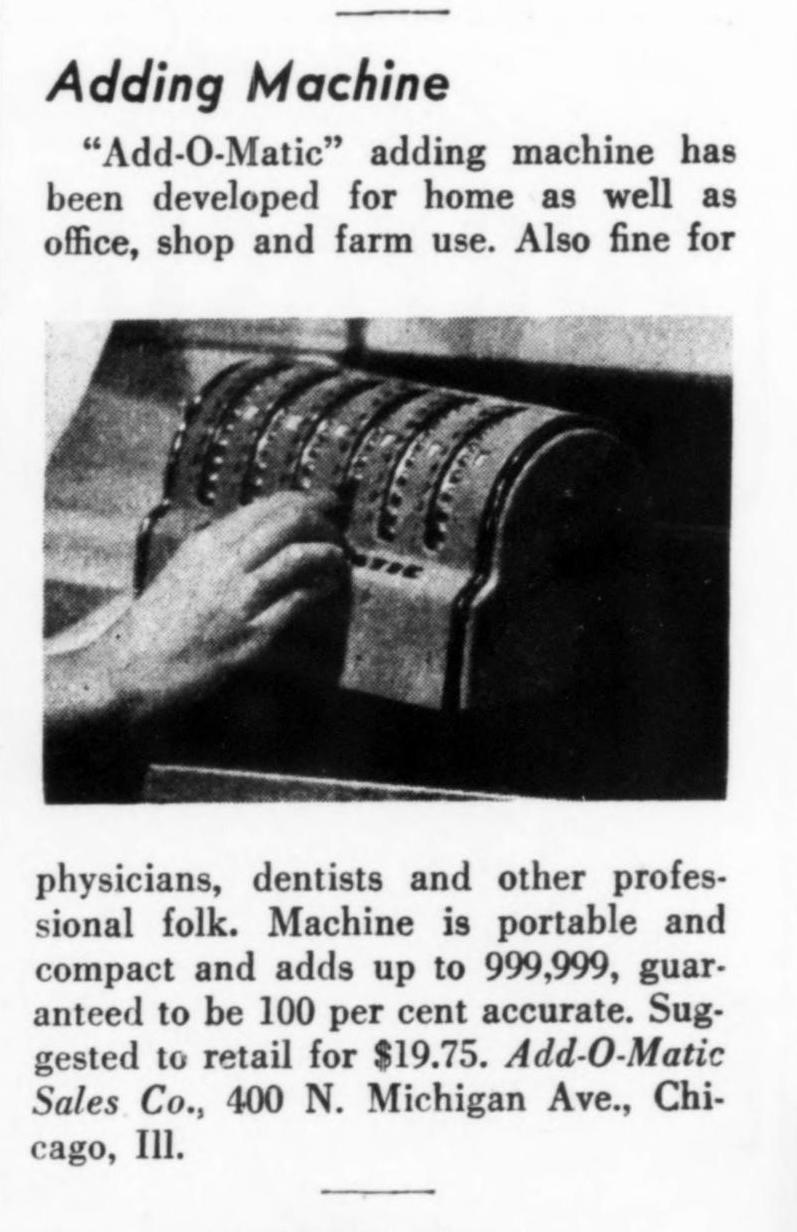
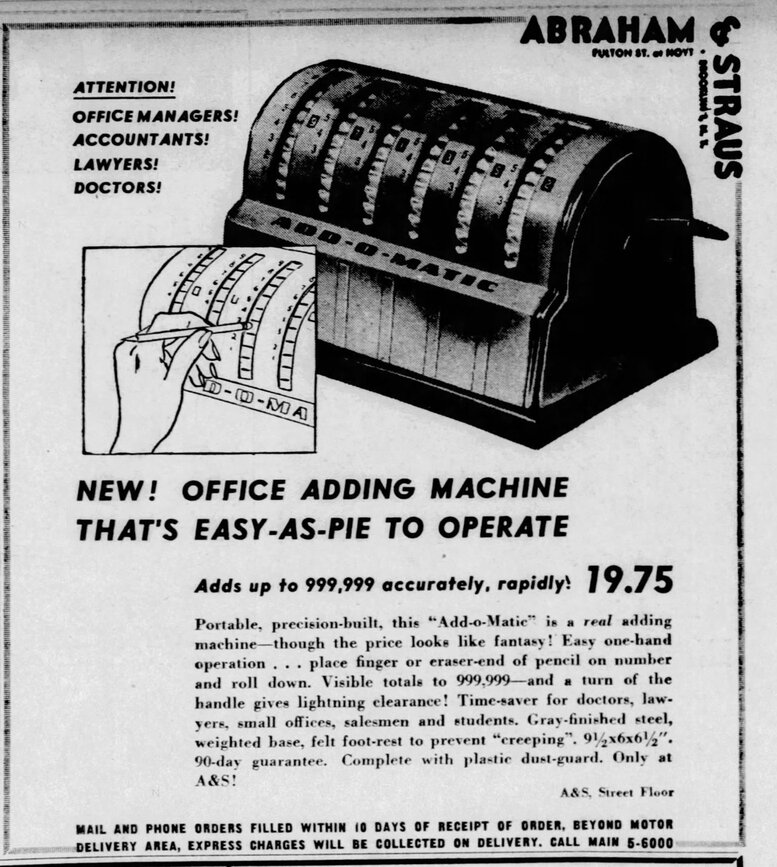
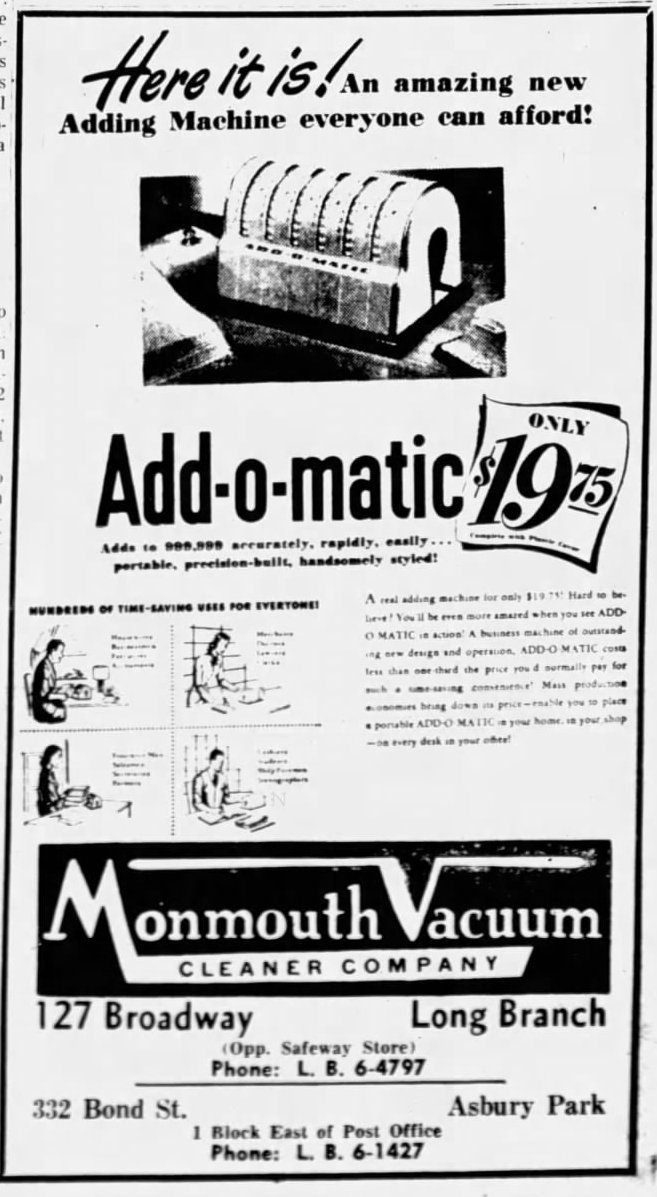
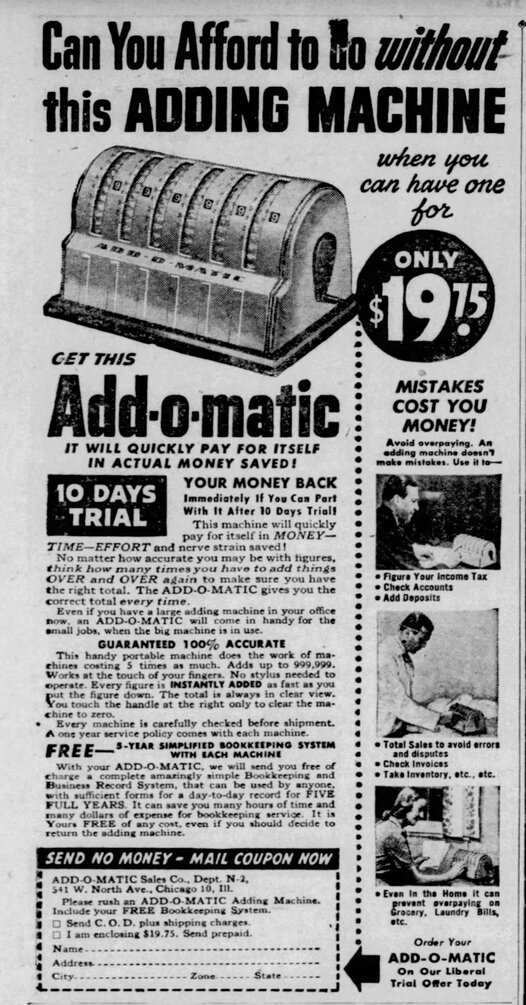
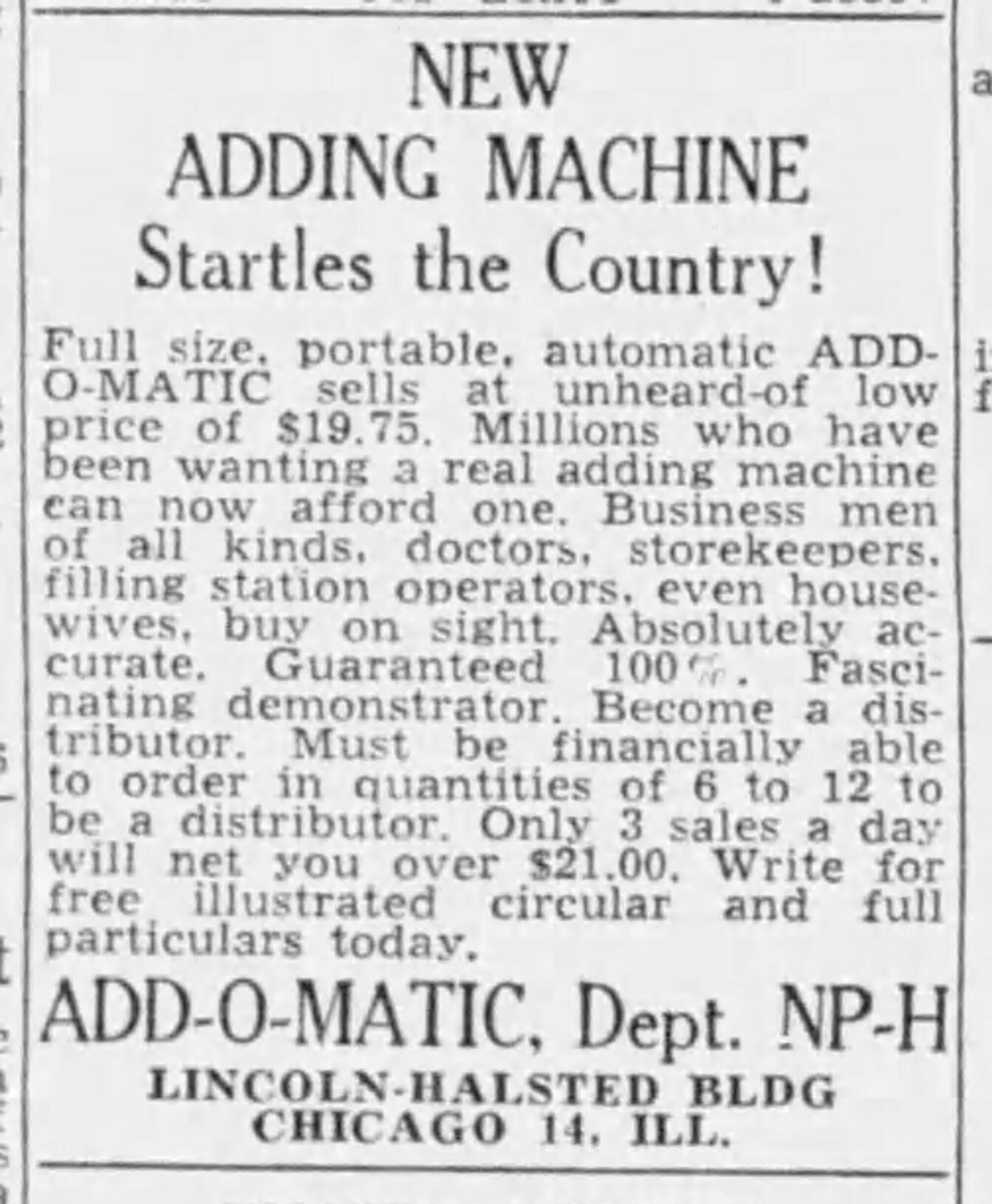
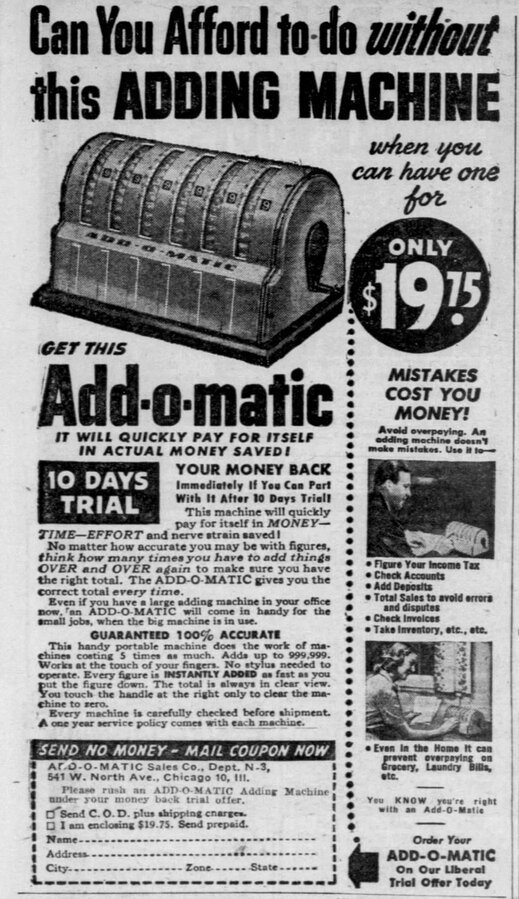
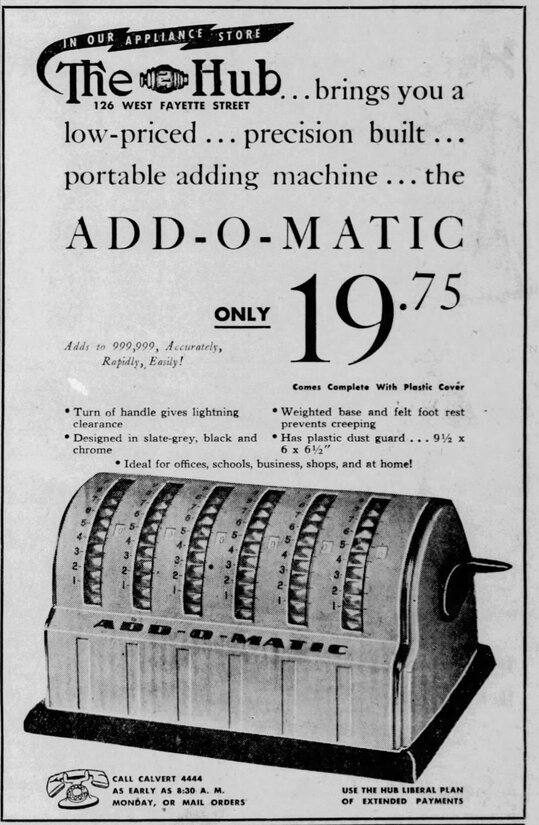
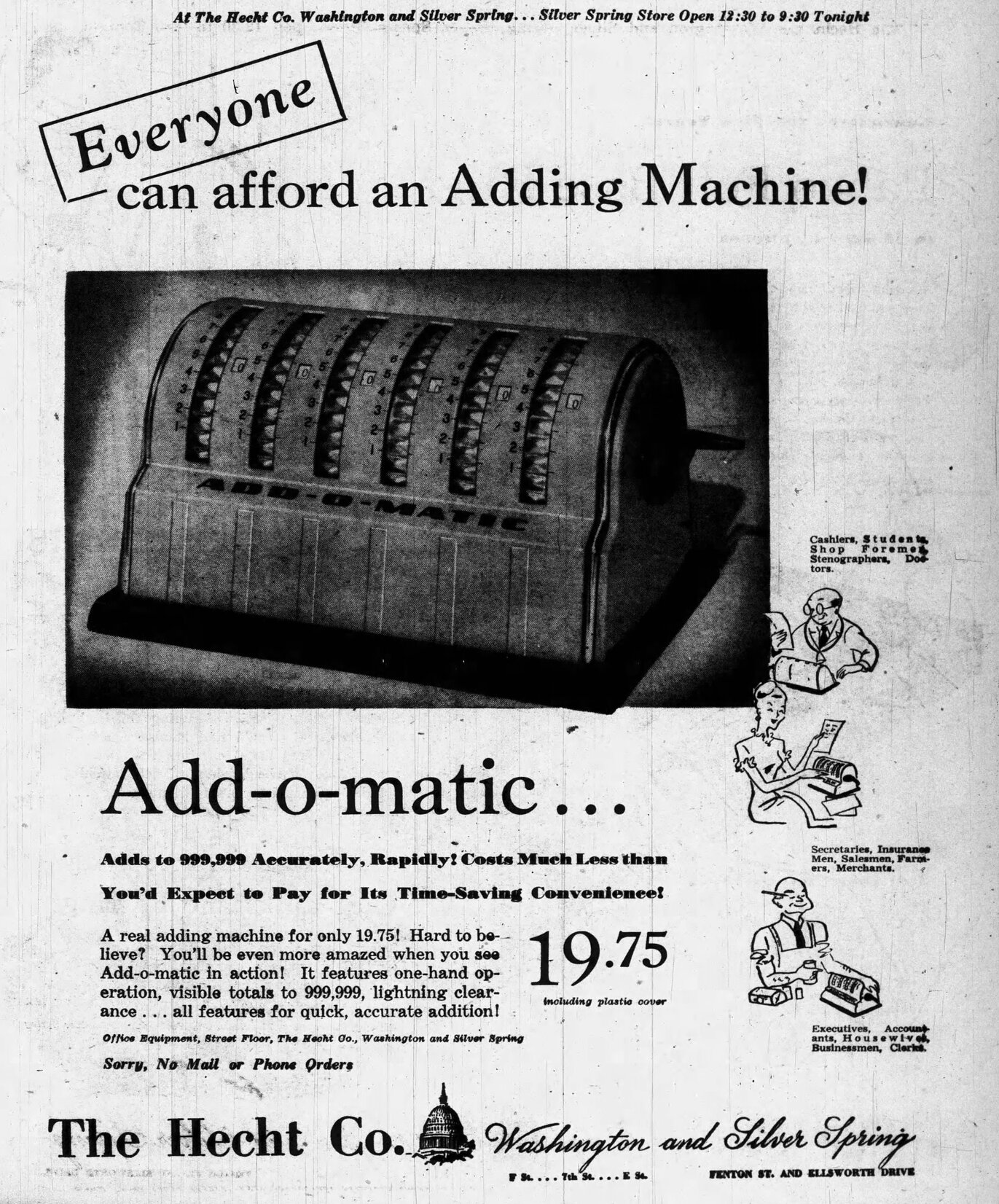
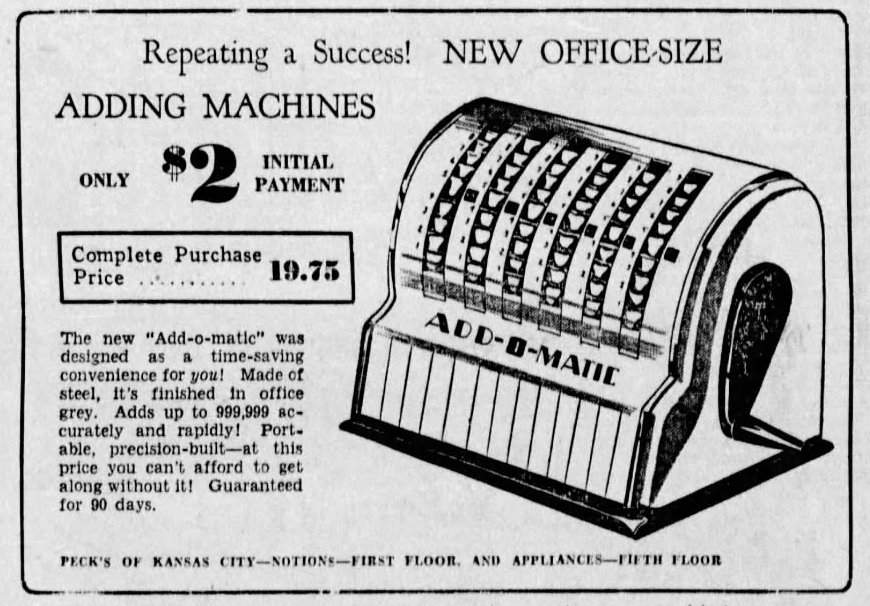
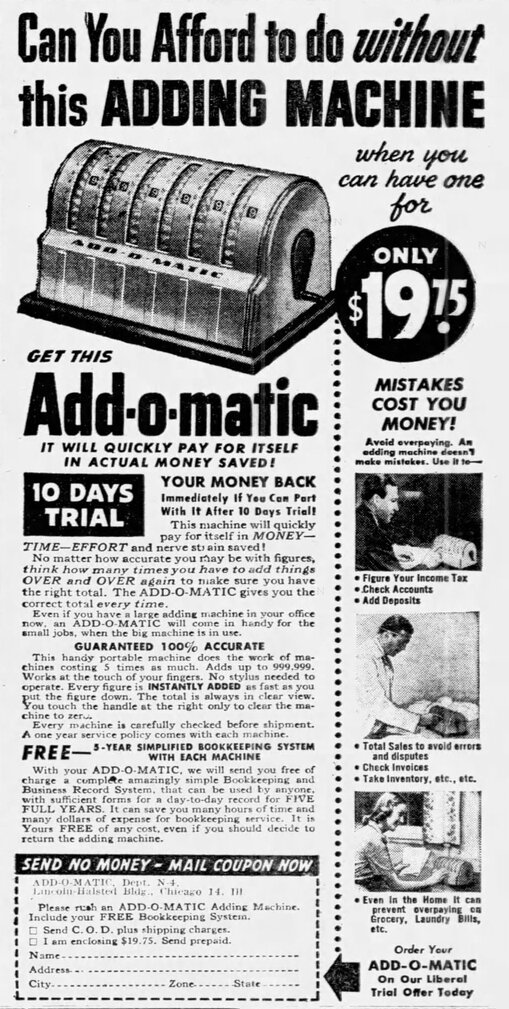
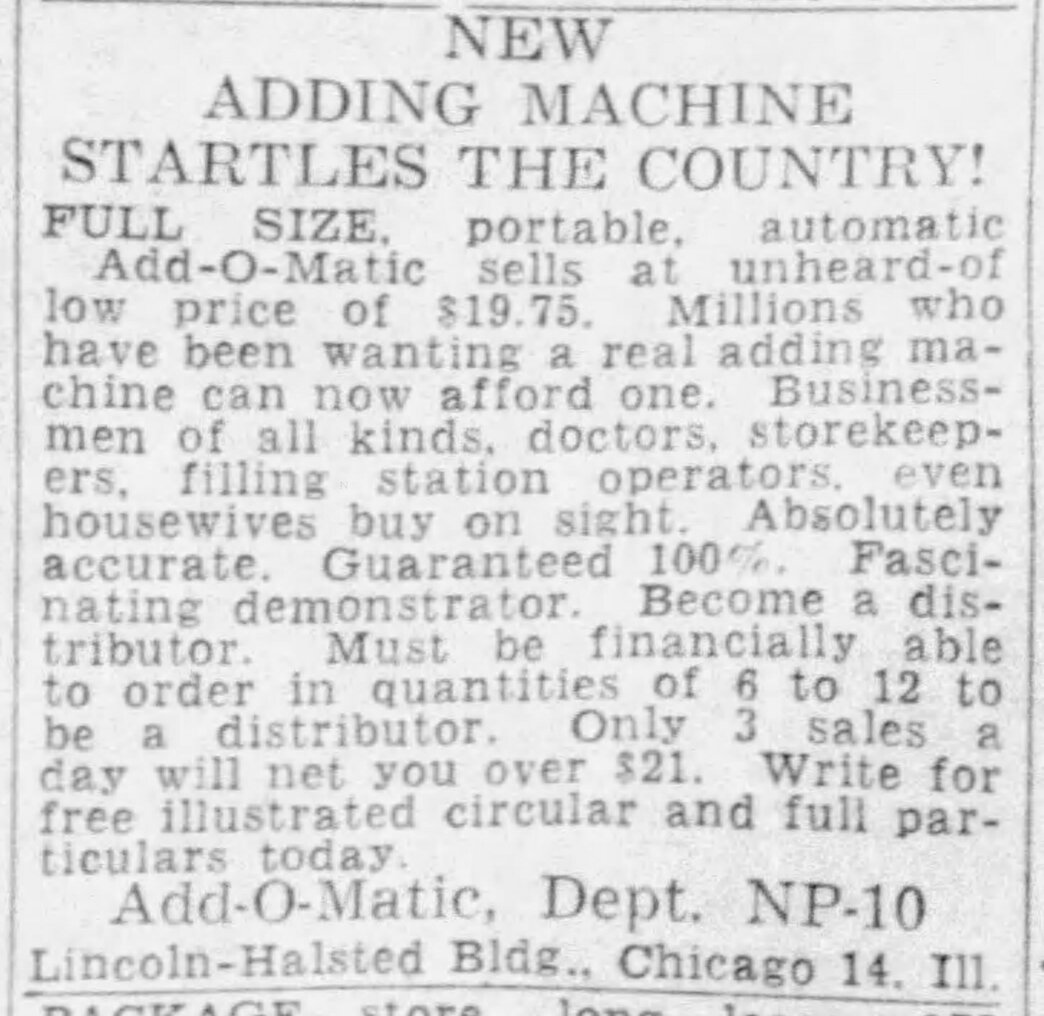
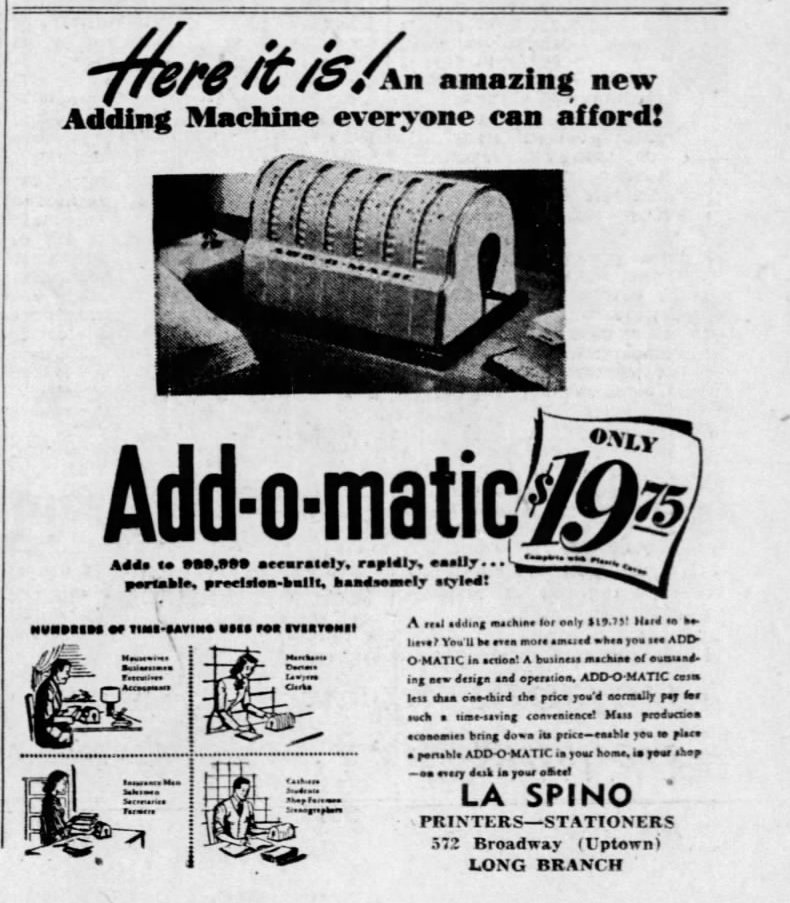
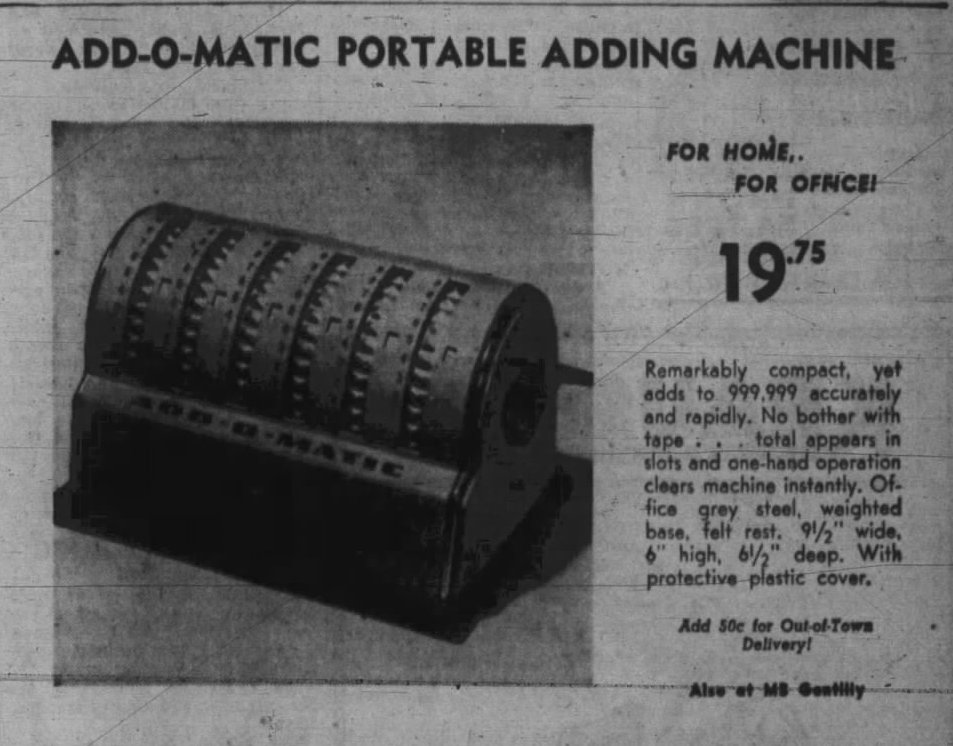
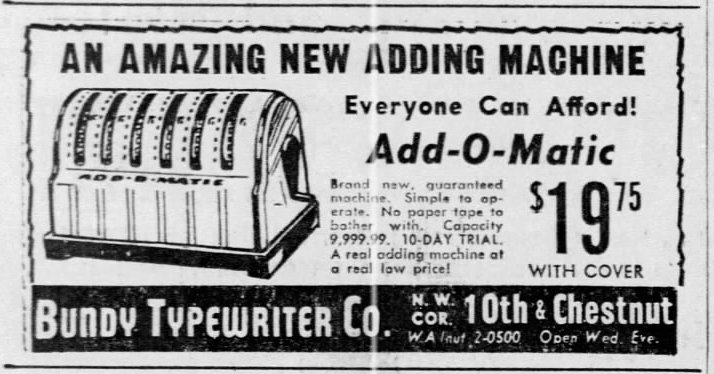
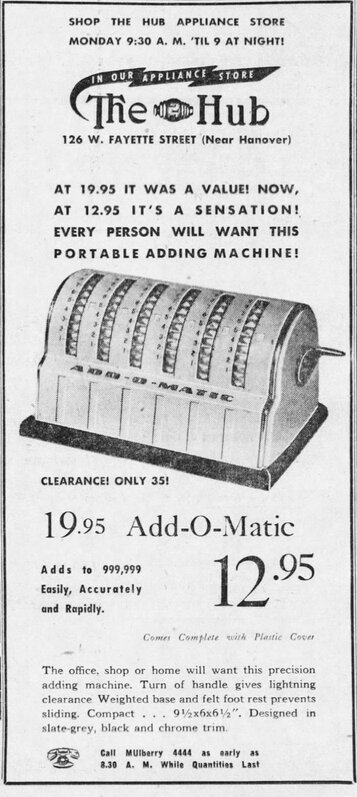
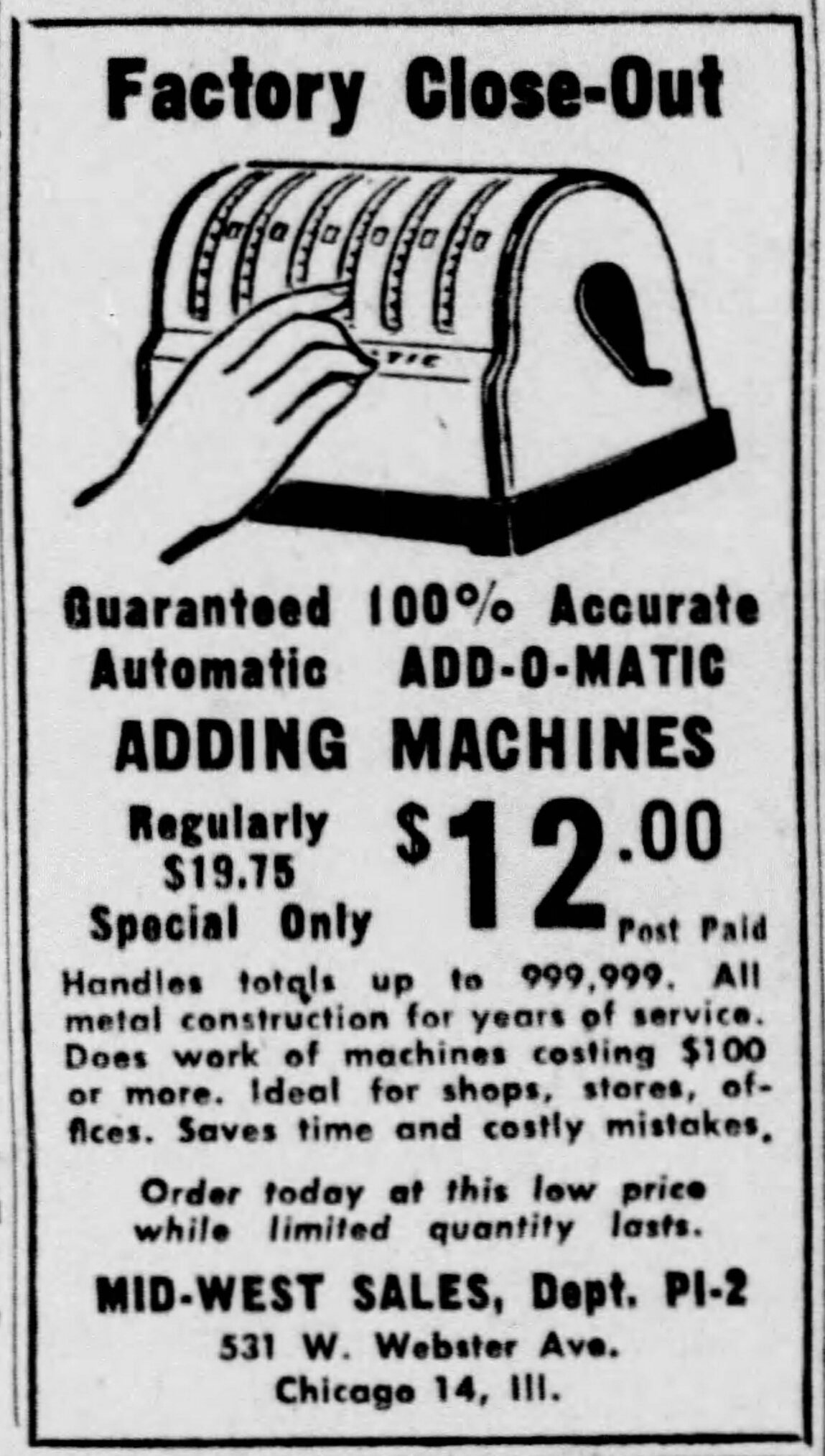
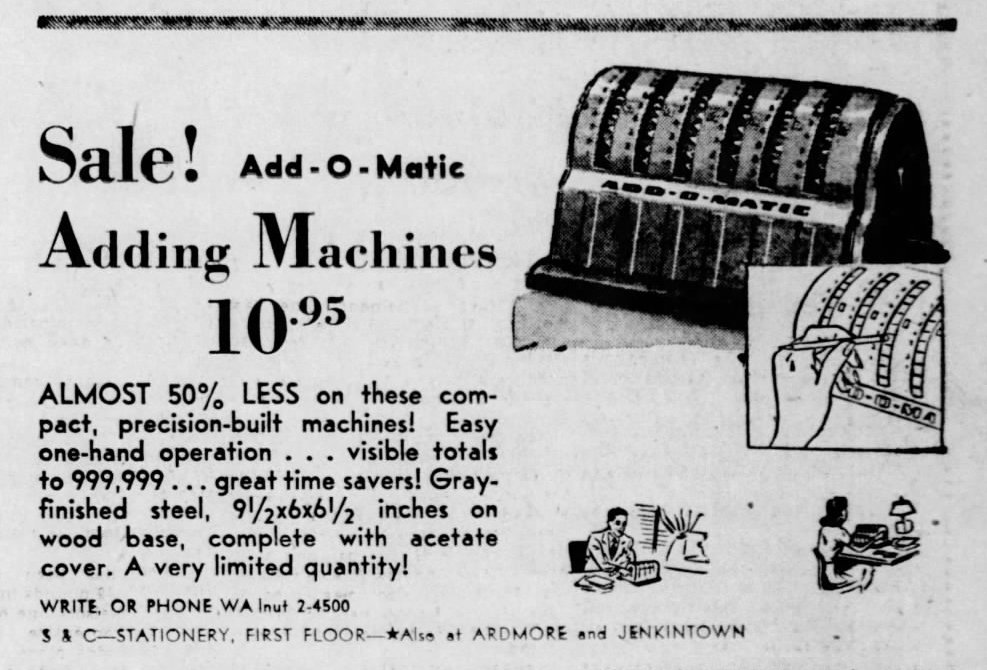
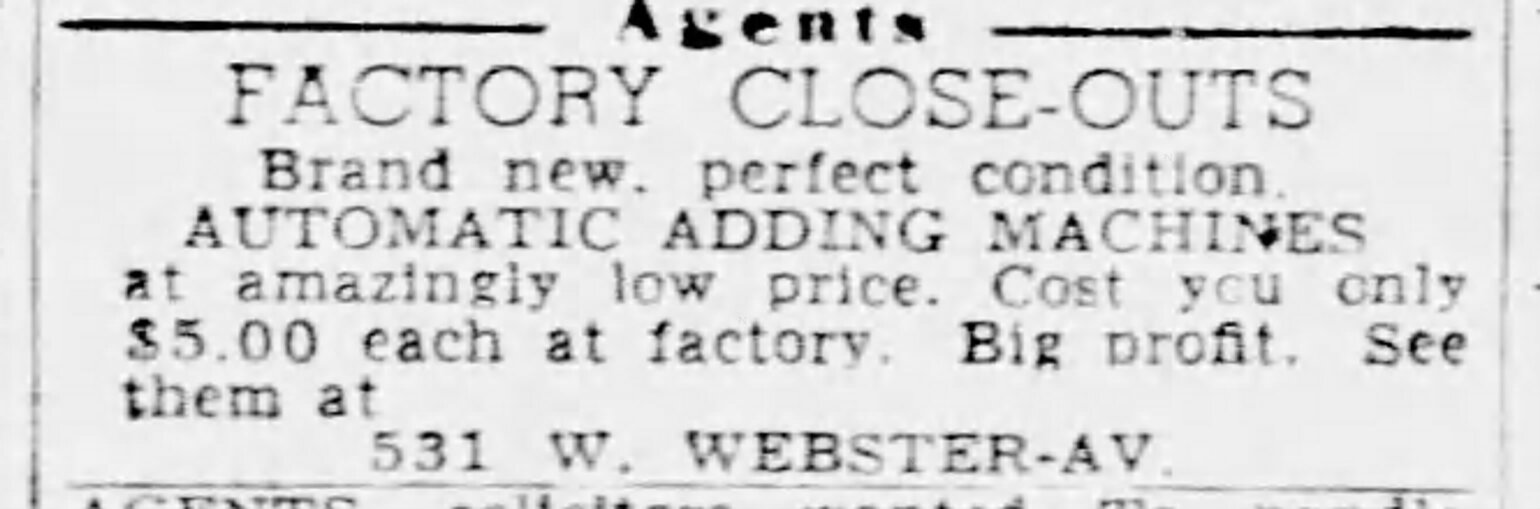
Here are various articles and small ads related to United Enterprises Inc., the manufacturing company behind the Add-O-Matic.







© Copyright 2026 Jaap Scherphuis, mechcalc a t jaapsch d o t net.