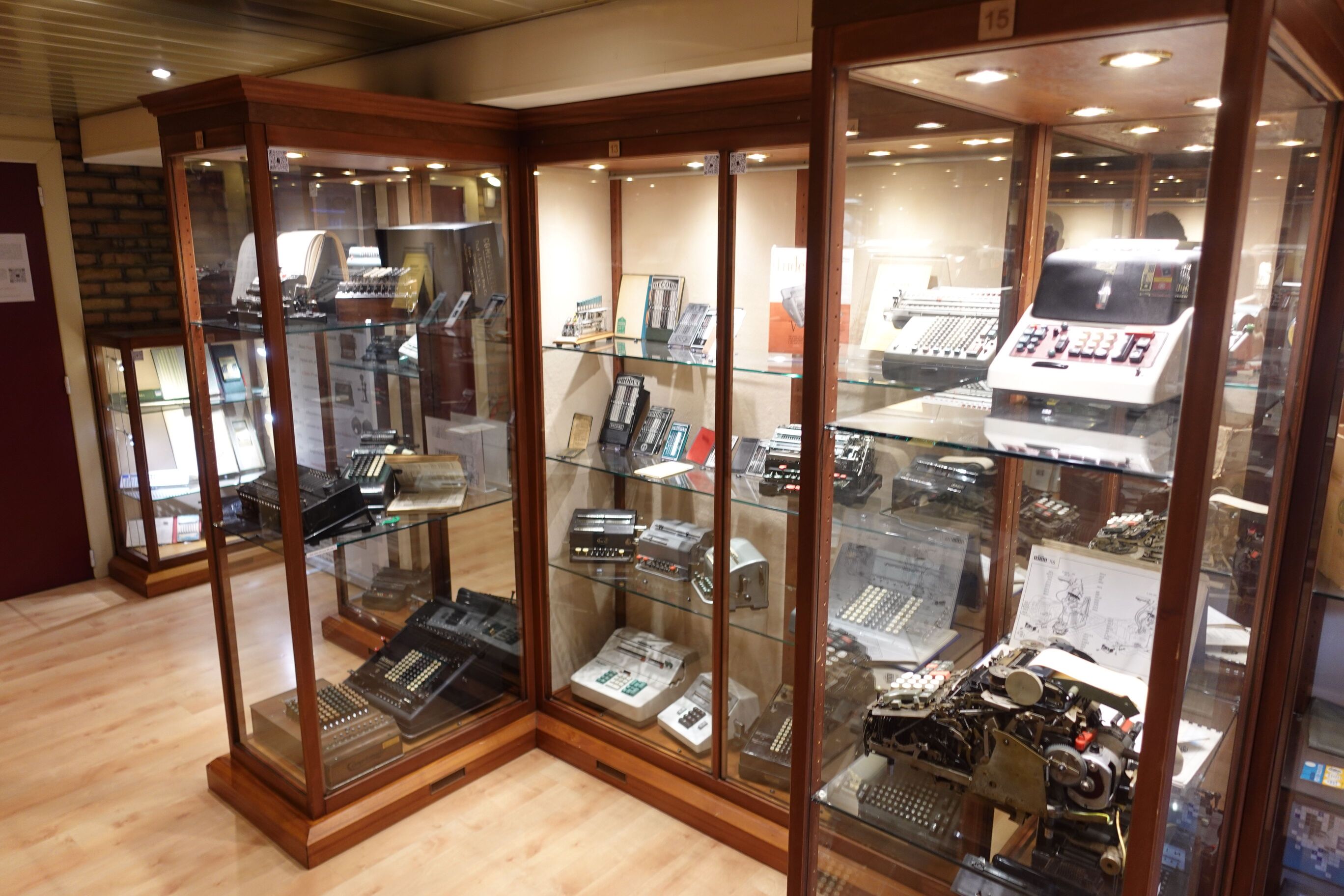
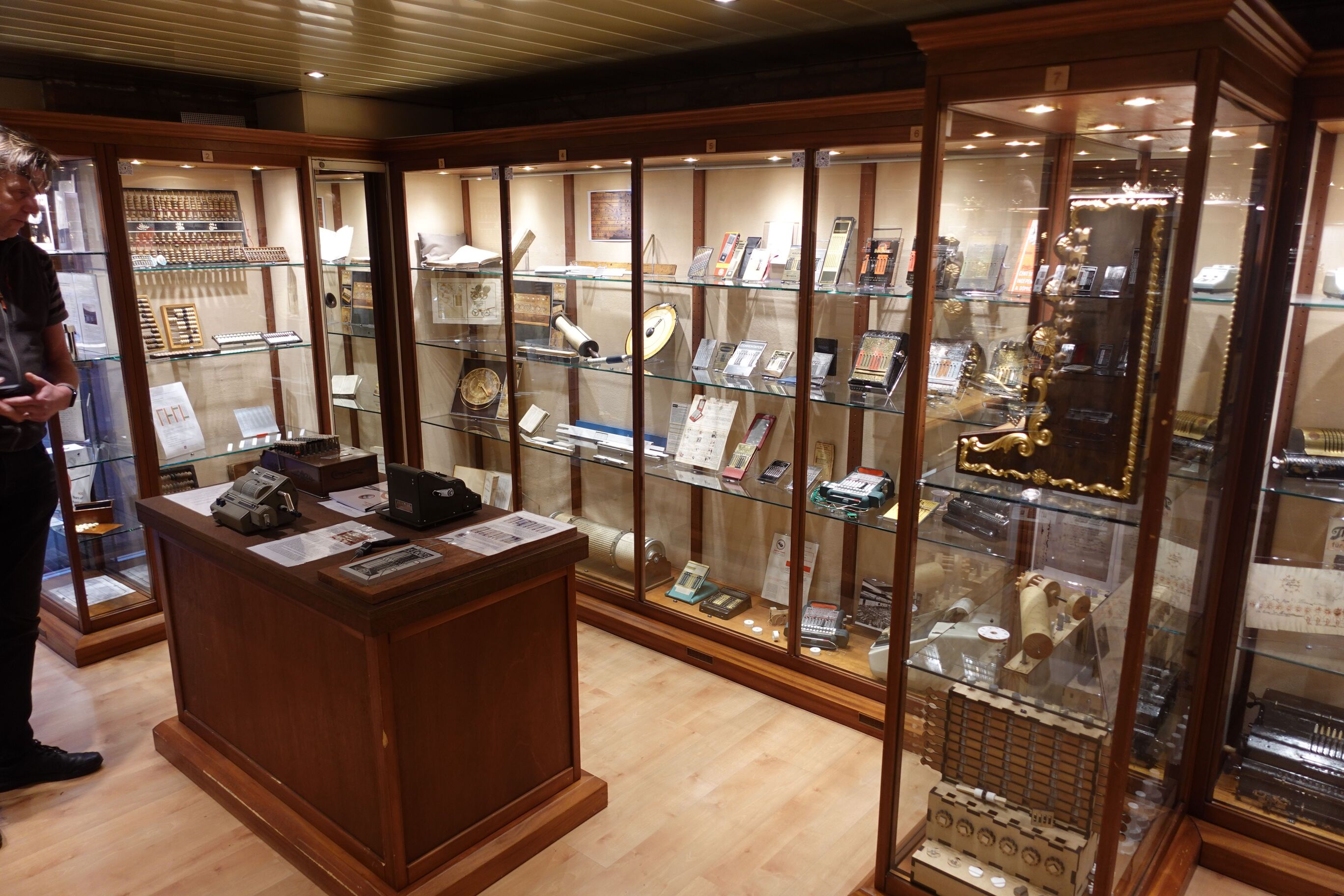
On this page I will list various books in my collection related to old
calculators. These are not manuals or books related to a single brand of
calculator, as those can be found on the relevant page. These are more
general books, whether covering all the calculators available at time
of publication, a retrospective overview of calculator history, or a
museum catalogue. They are listed in chronological order.
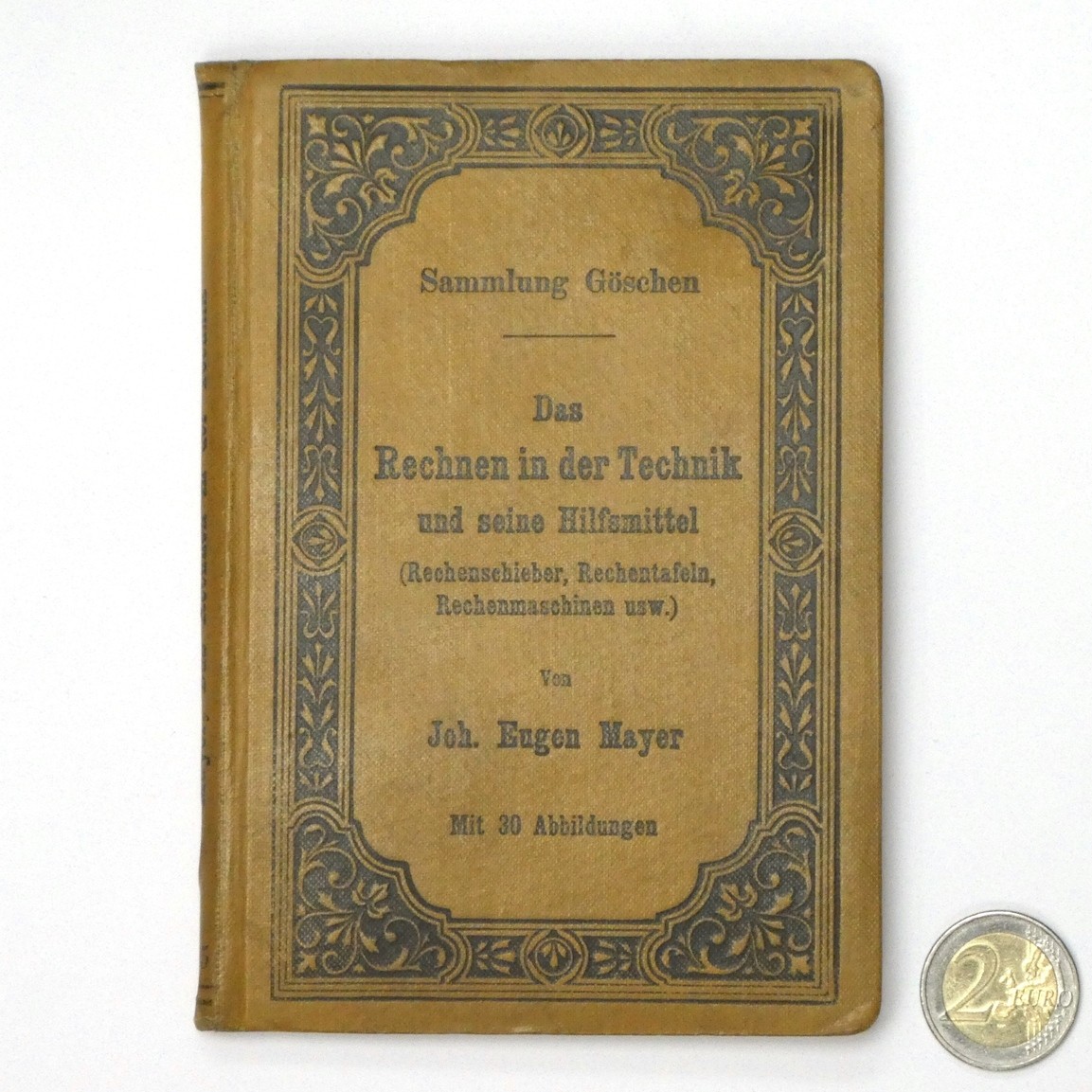
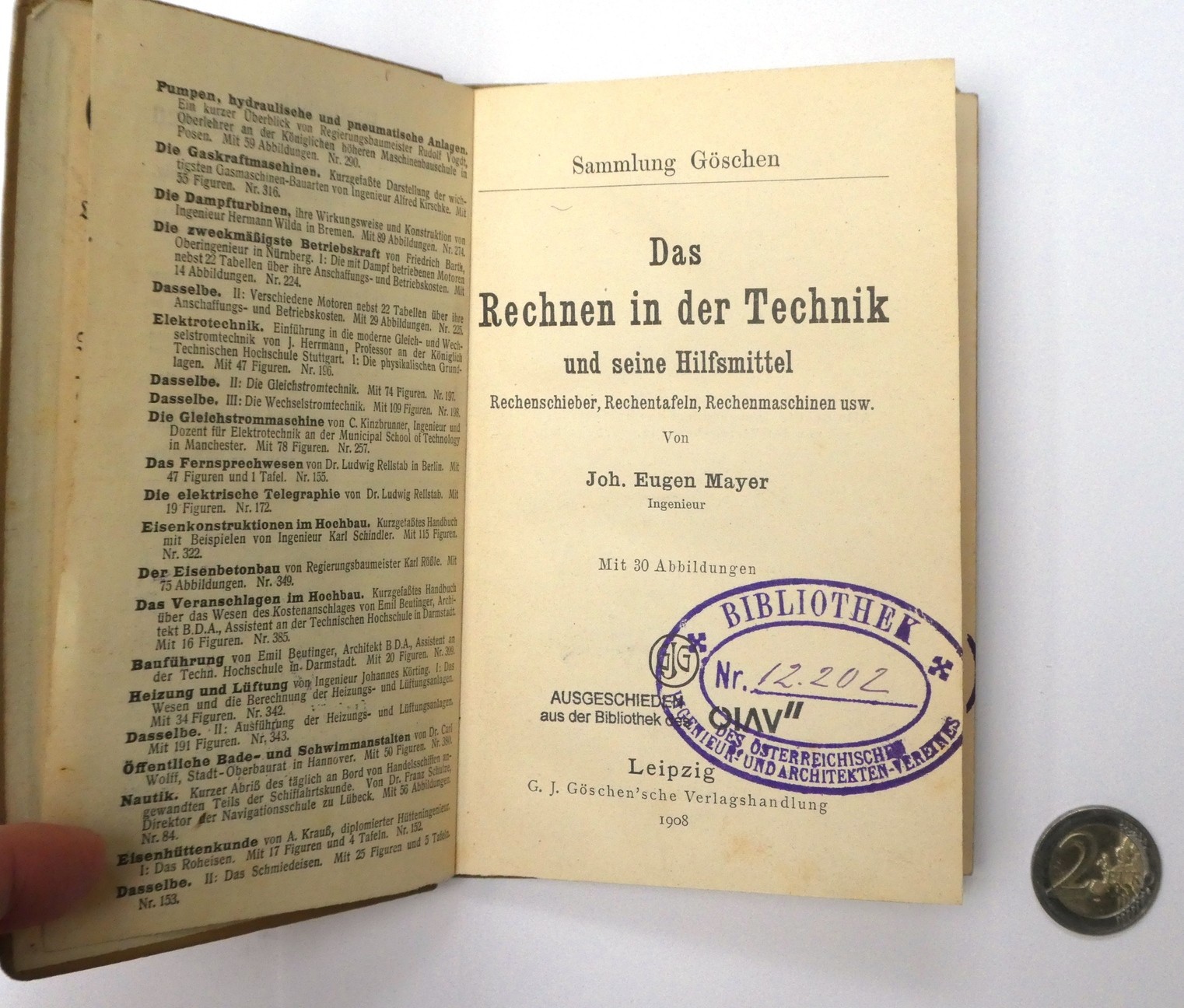
Das Rechnen in der Technik und seine Hilfsmittel (Rechenschieber, Rechentafeln, Rechenmaschinen usw.) (archive.org)
Joh. Eugen Mayer 1908
128 pages, hardcover, German
110mm × 157mm × 9mm
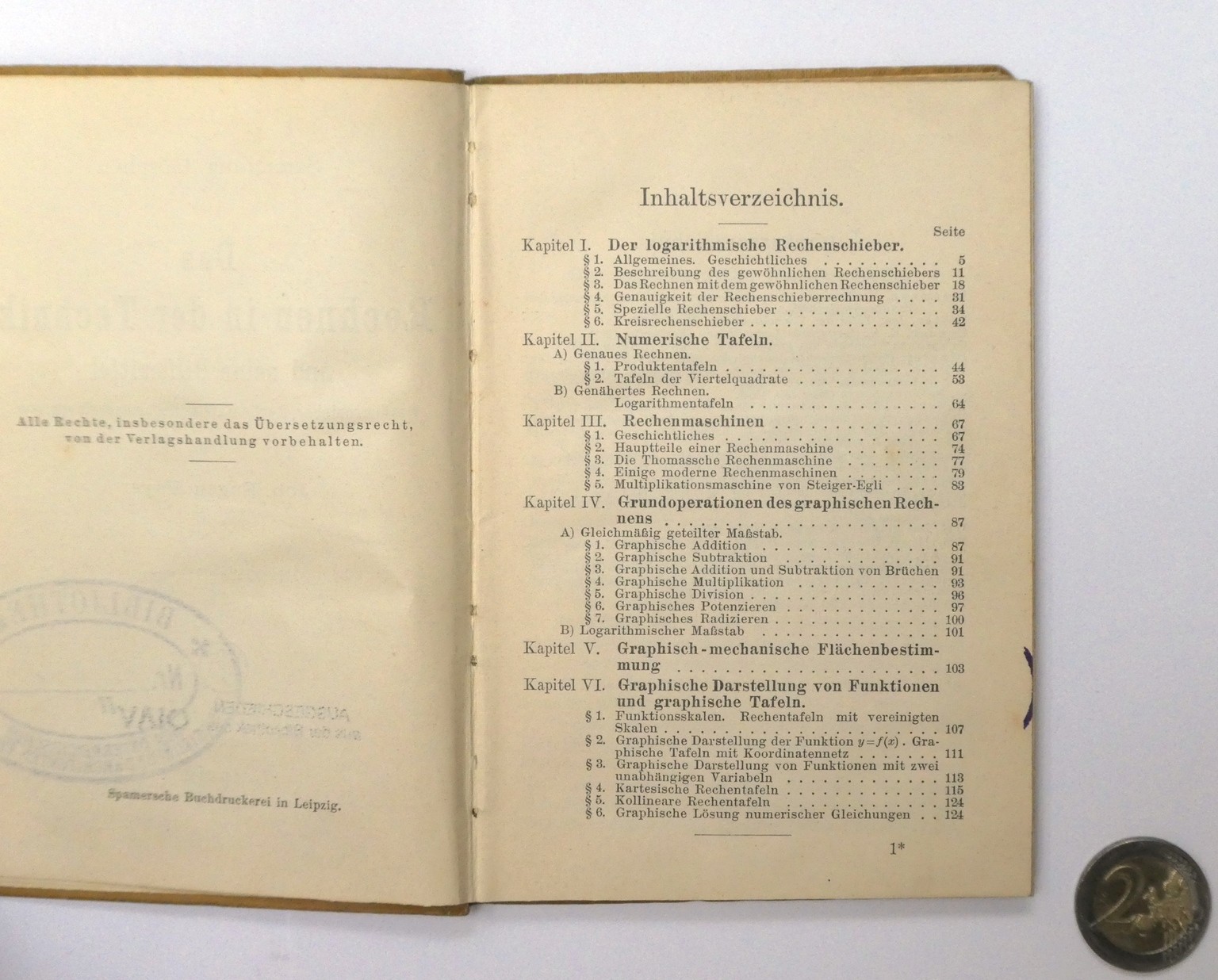
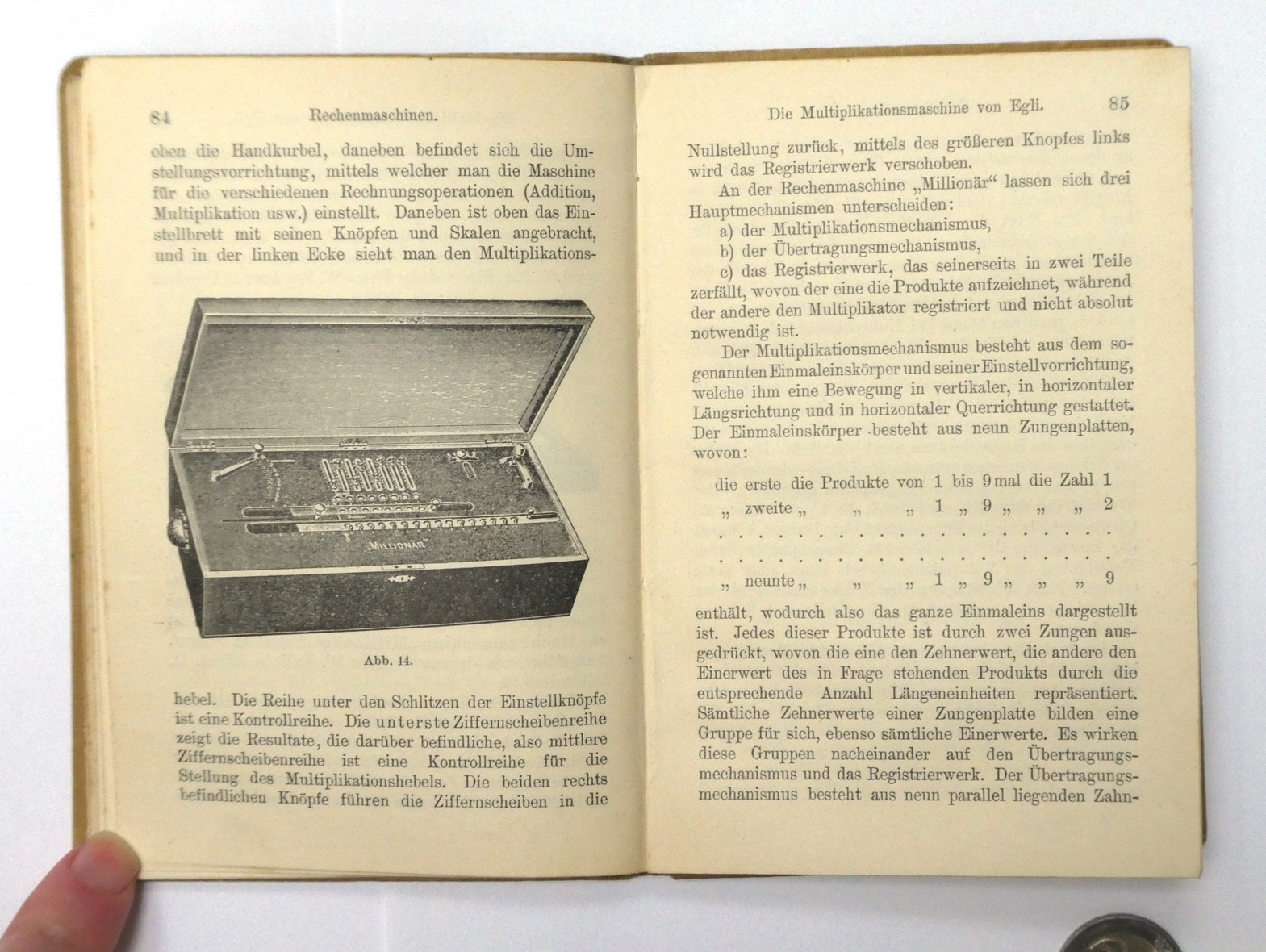
This book describes the many calculation aids and devices that were available
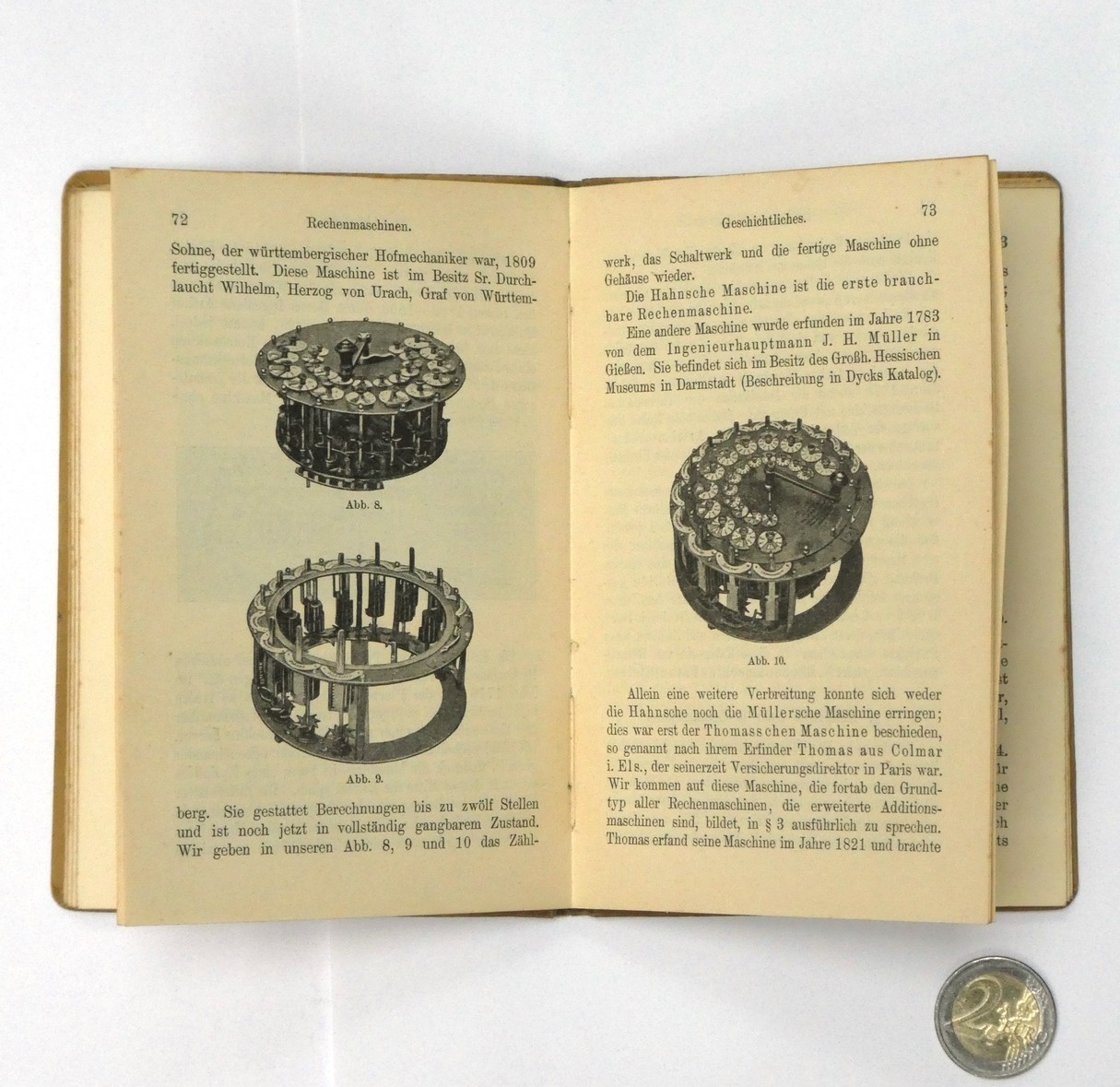
in 1908. The chapter on calculators is only 20 pages and has few illustrations
and pictures. More than half the chapter deals with the history of calculators,
with only a few pages with brief descriptions of contemparary machines. There are
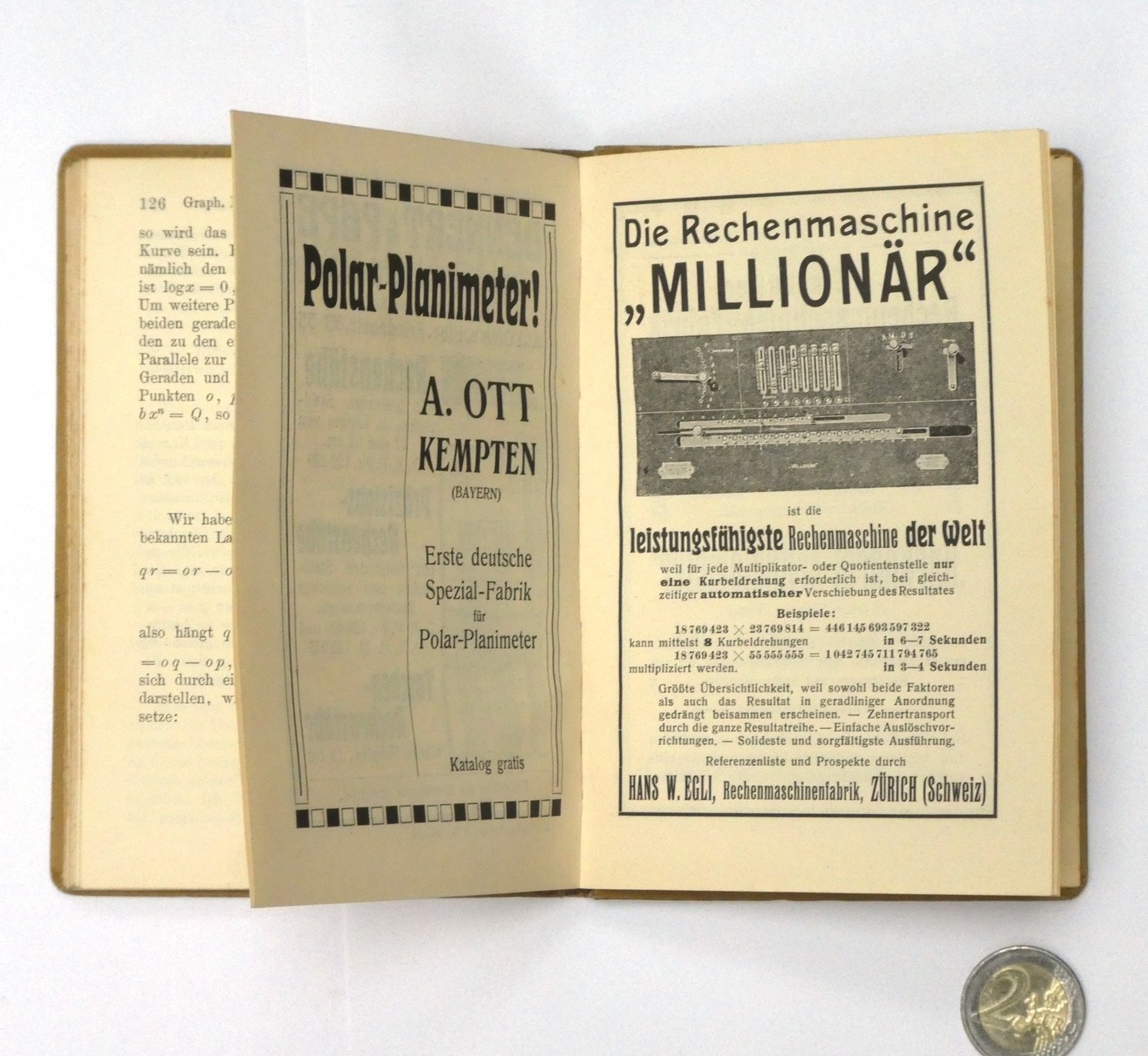
some ads at the back of the book, including ones for the Millionaire, and the
Burkhardt Arithmometer.
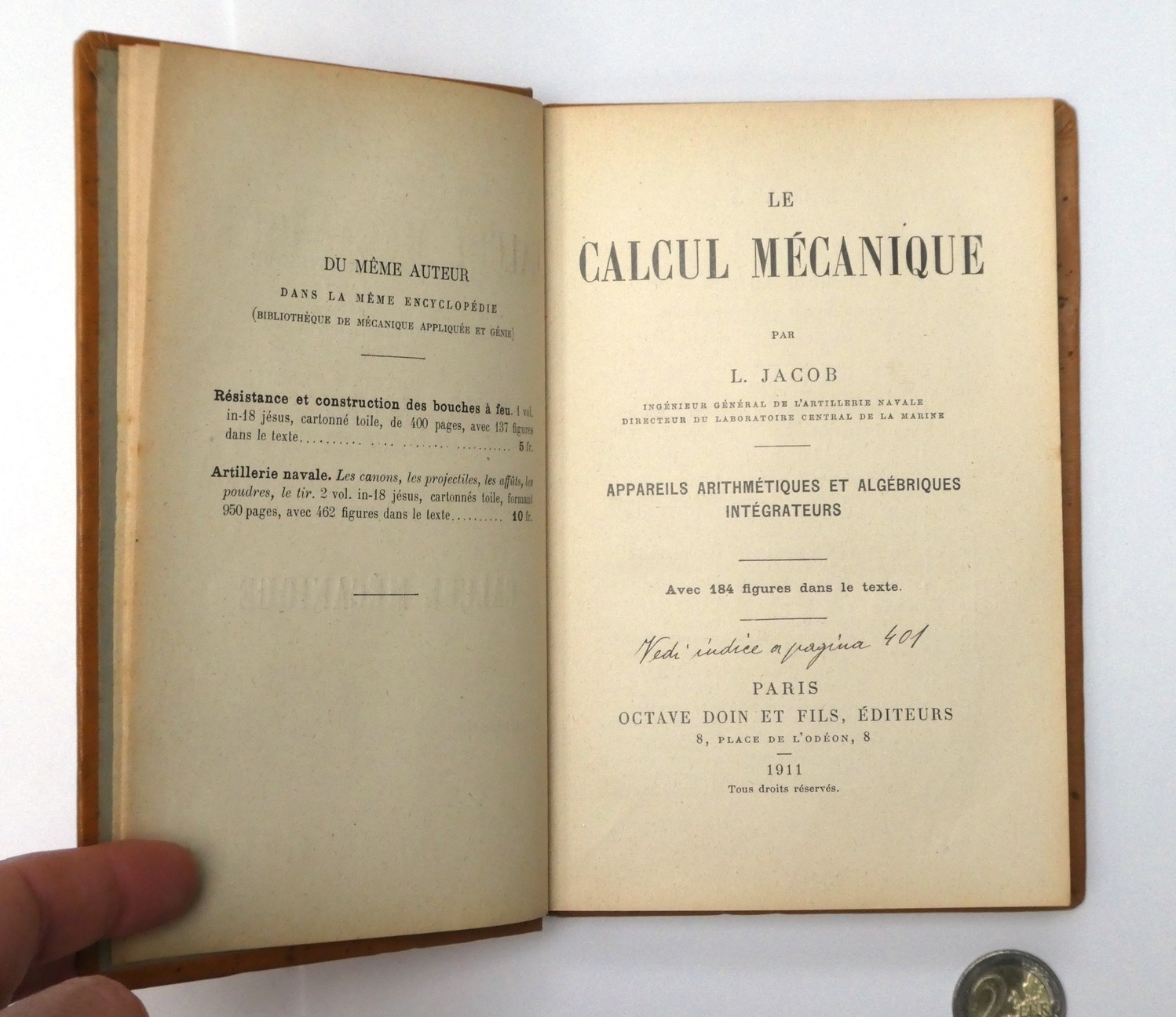
Le Calcul mécanique Appareils arithmétiques et algébriques Intégrateurs (archive.org)
L. Jacob 1911
412 pages, hardcover, French
127mm × 185mm × 24mm
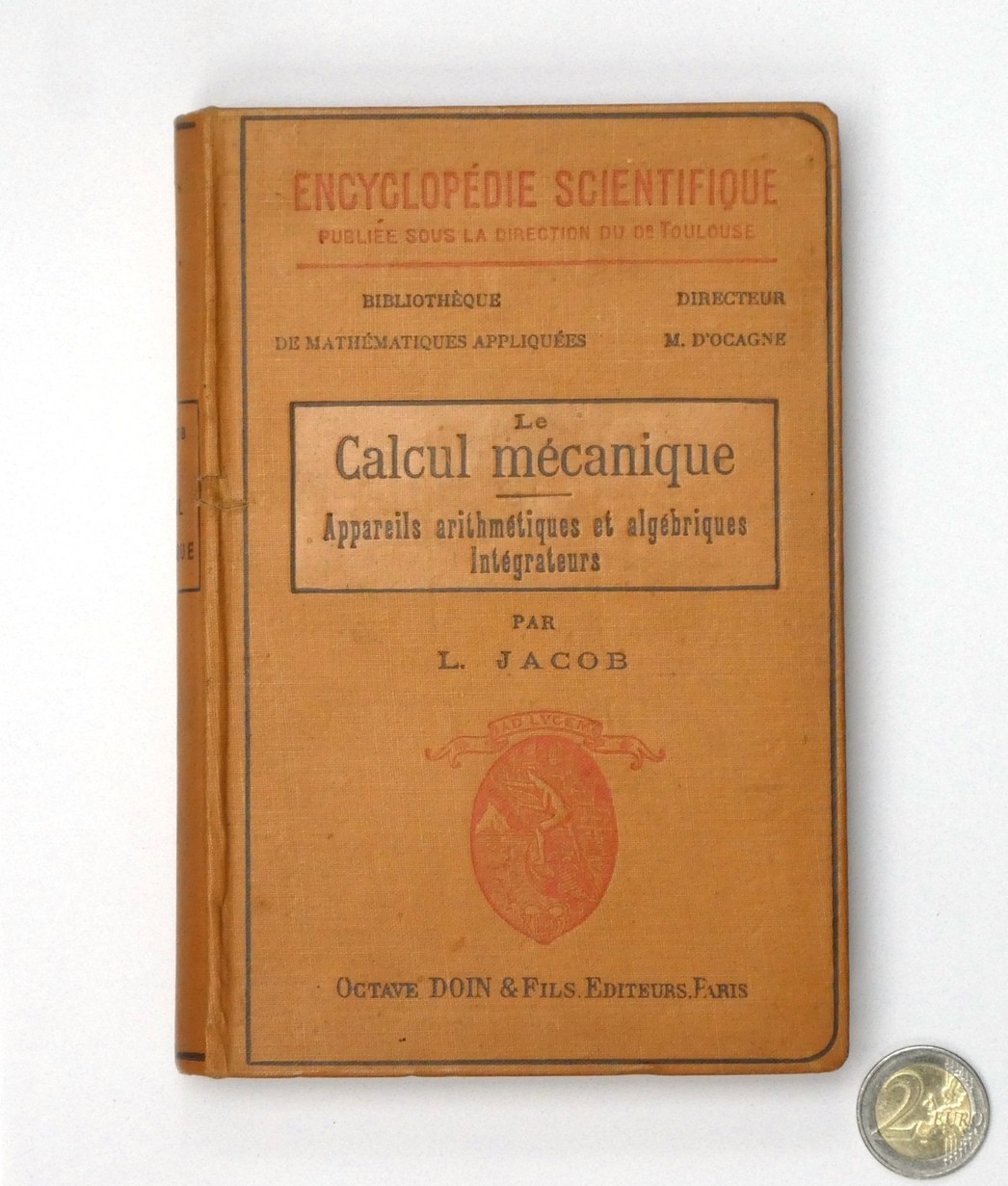
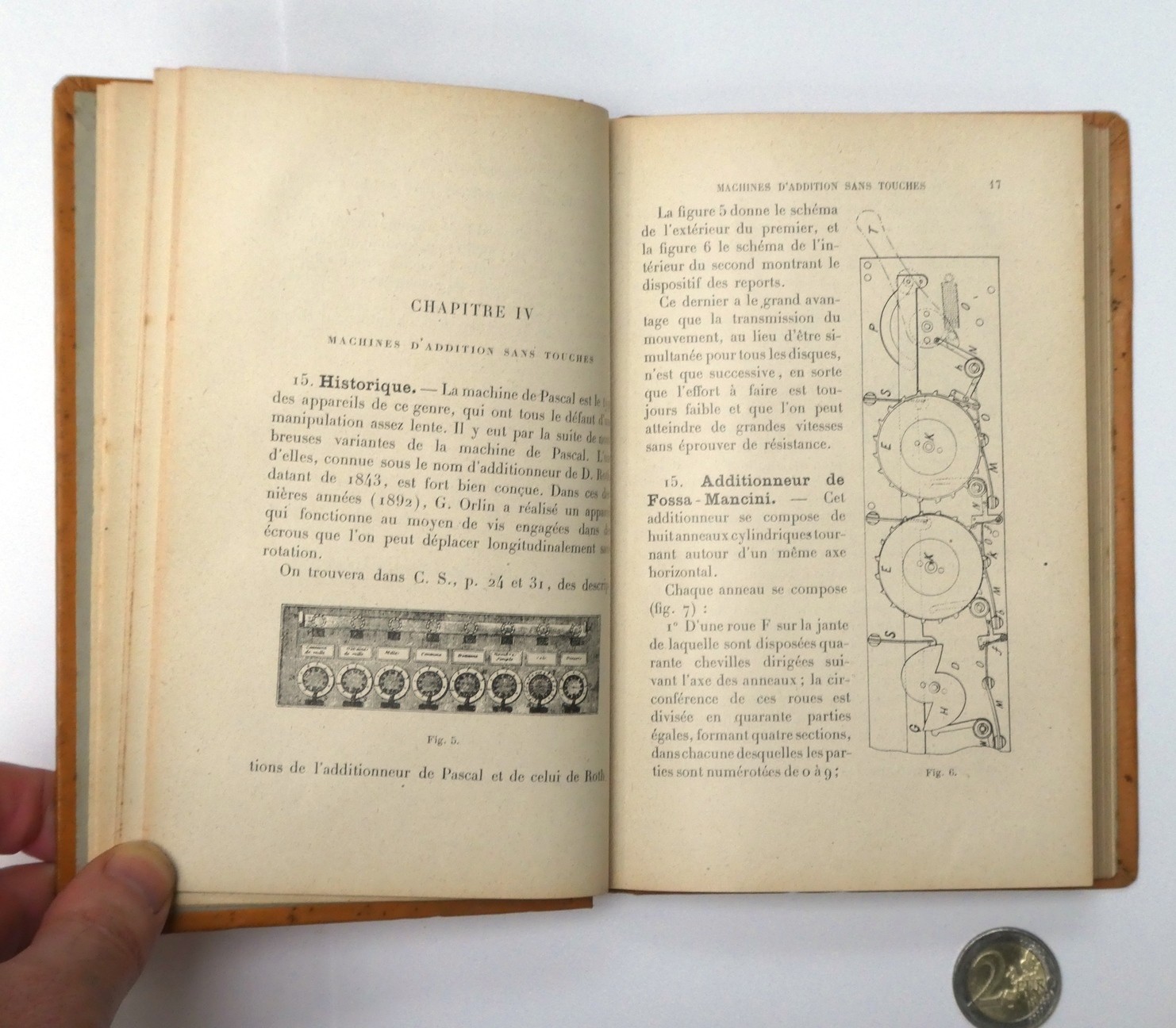
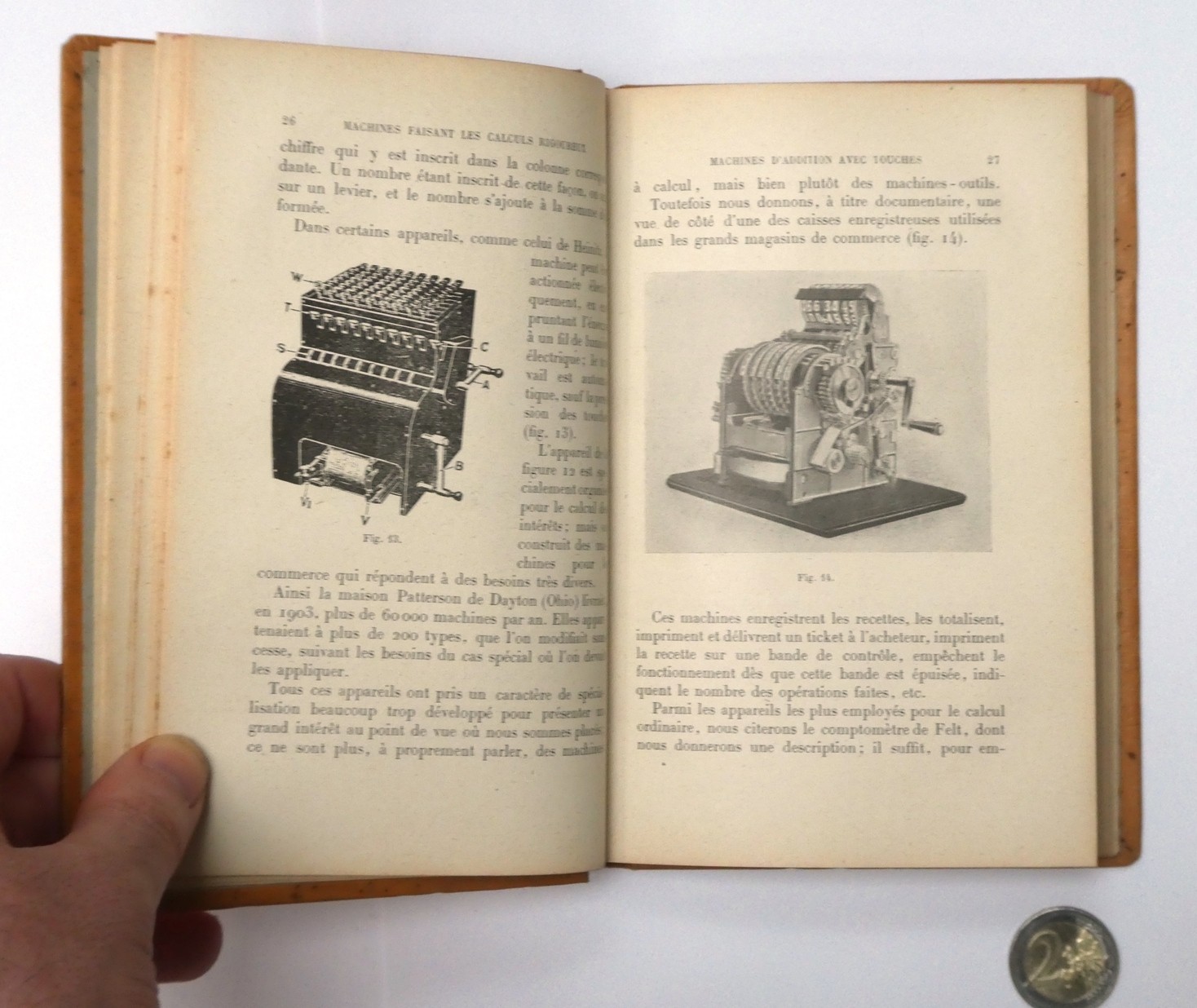
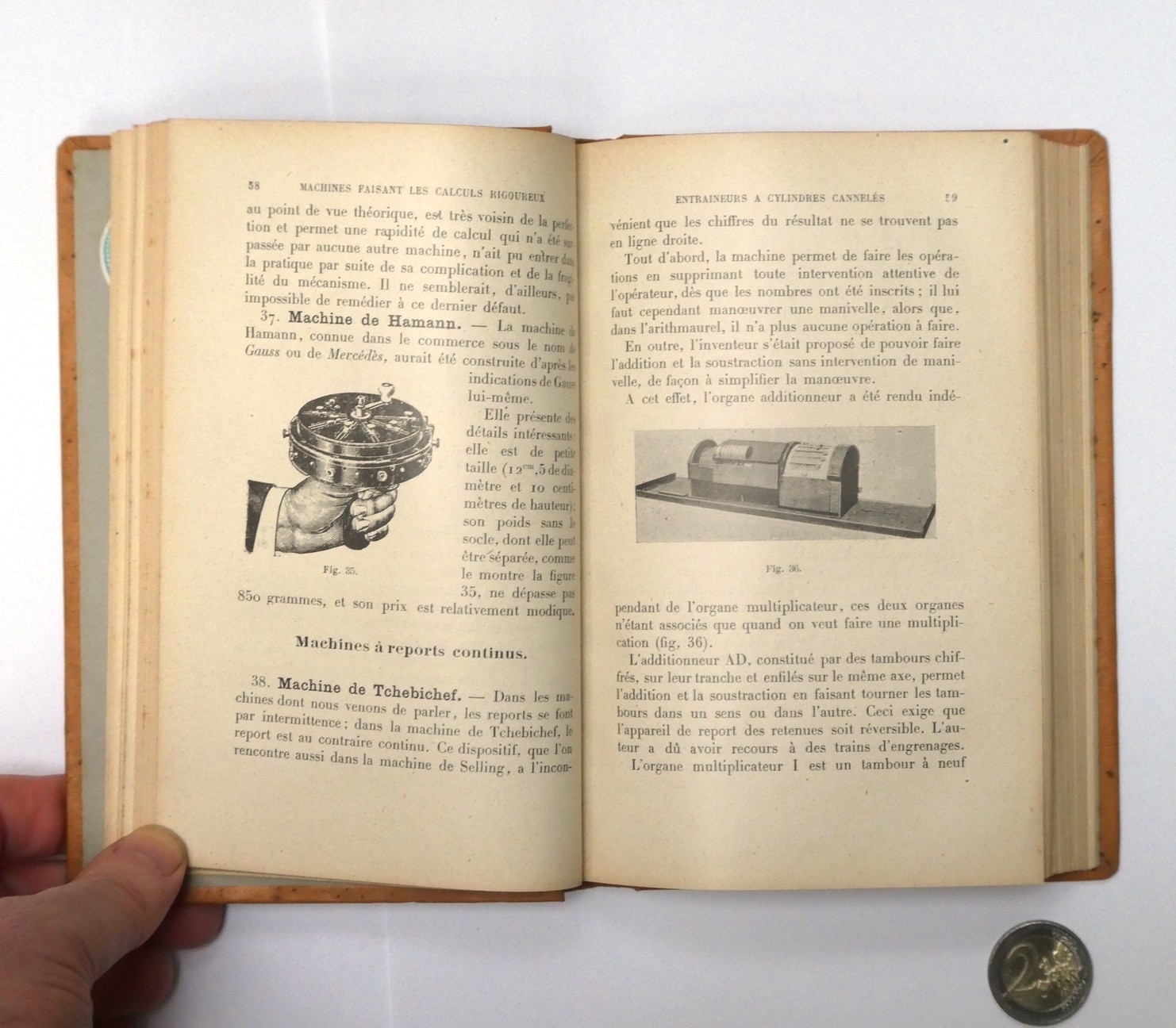
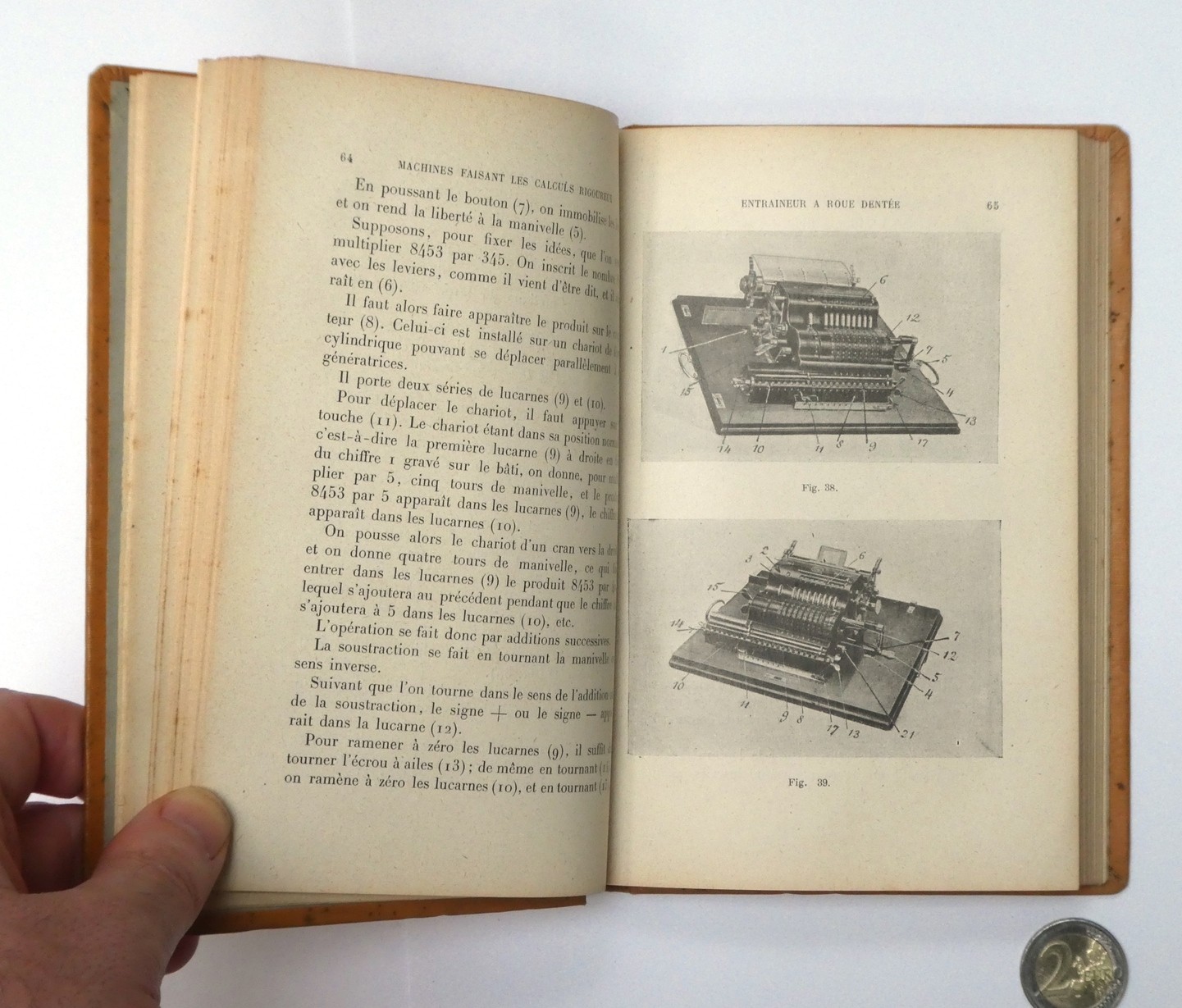
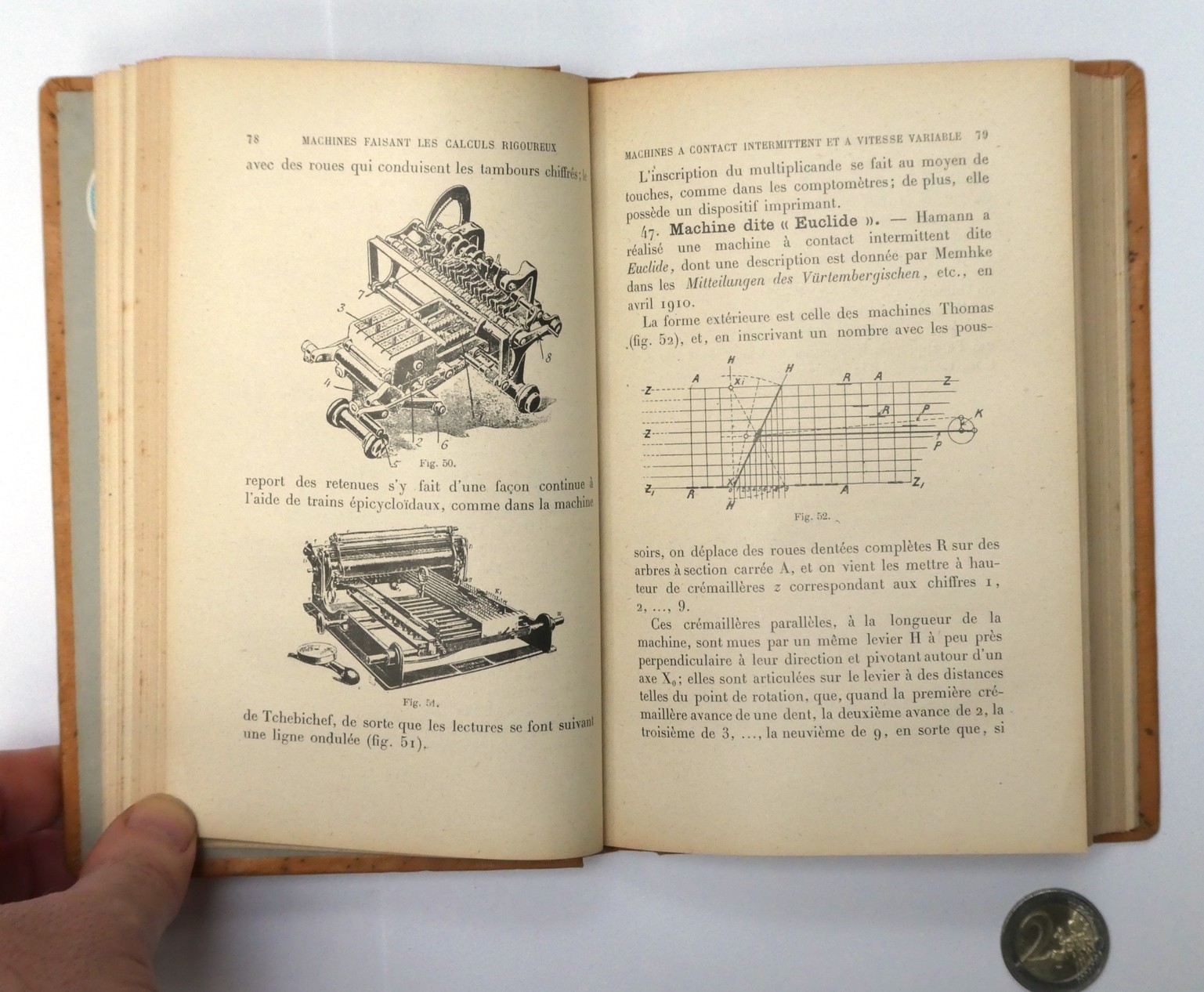
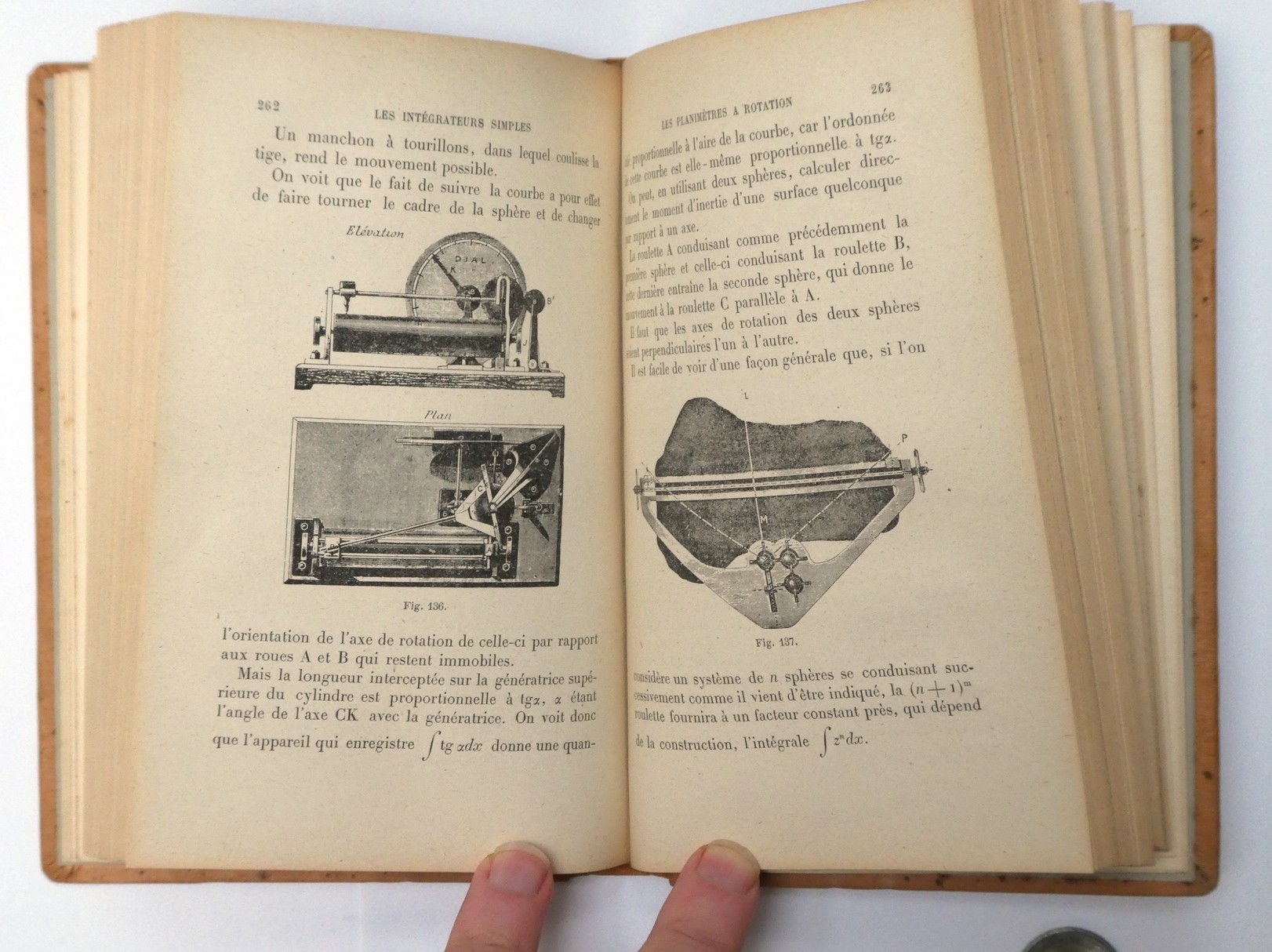
The first 95 pages are about calculators, while the rest of the book concerns
various techniques and analog devices for approximately solving equations and
other calculations. It has a fair number of pictures of mechanisms and
machines. The text mostly discusses the various mechanisms and their
inventors, but hardly ever mentions any particular brand or model except in
a historical context.
This book was published as part of the "Encyclopédie Scientifique",
a collection of books on a wide variety of subjects including photography, plant
scents, astronomy, finances, biological growth, oil fields, cancer, steam engines,
heredity, suspension bridges, and many others.
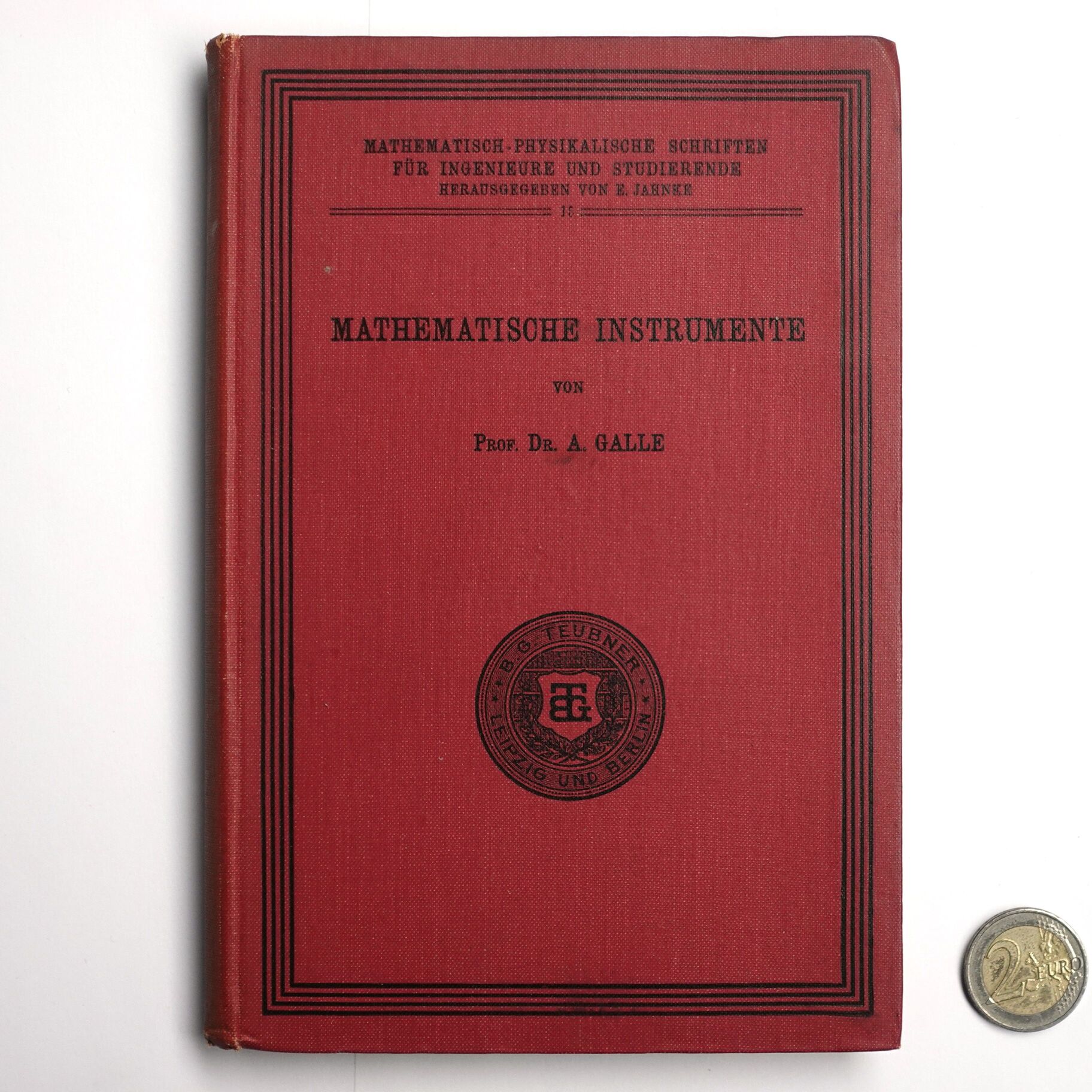
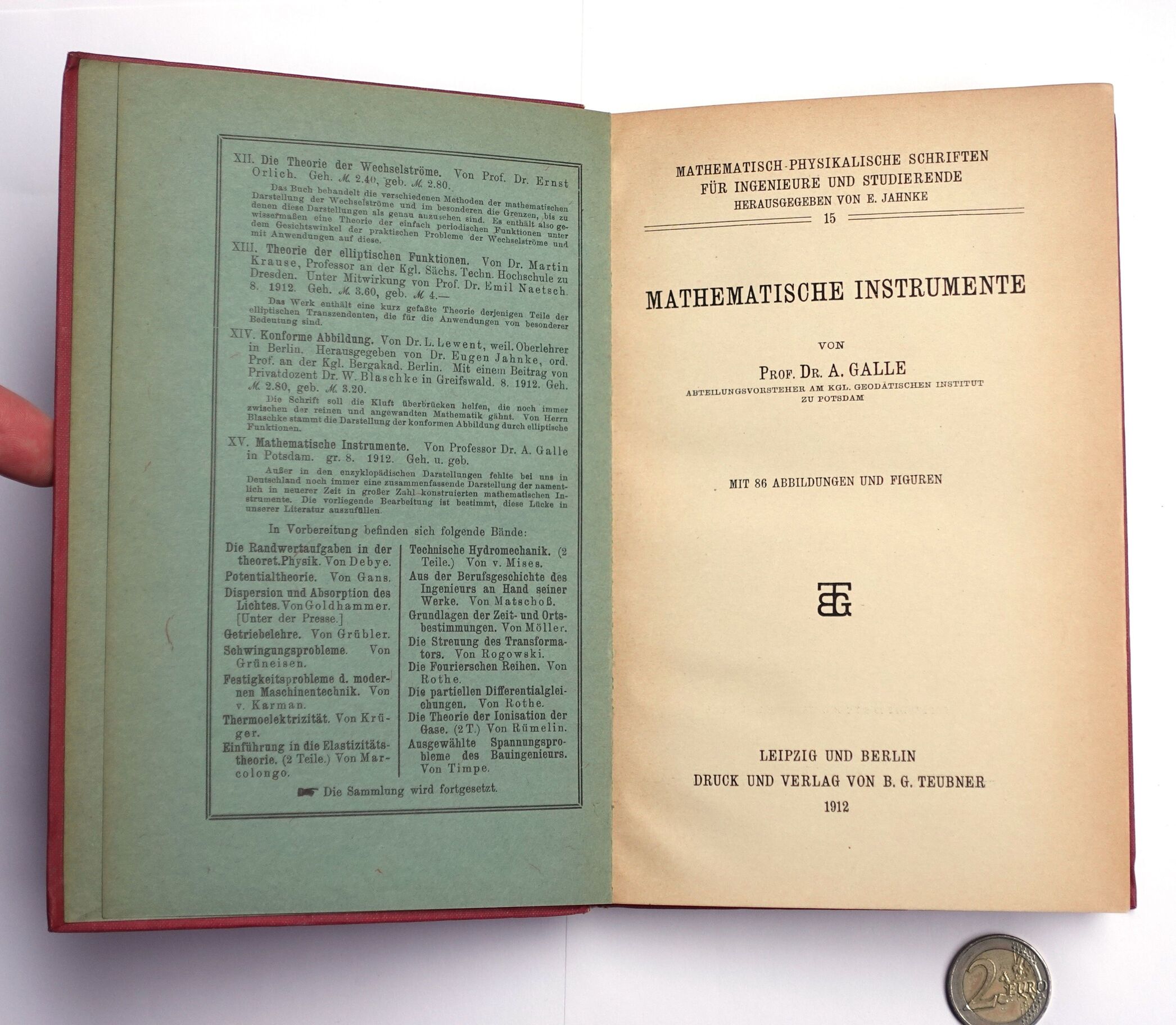
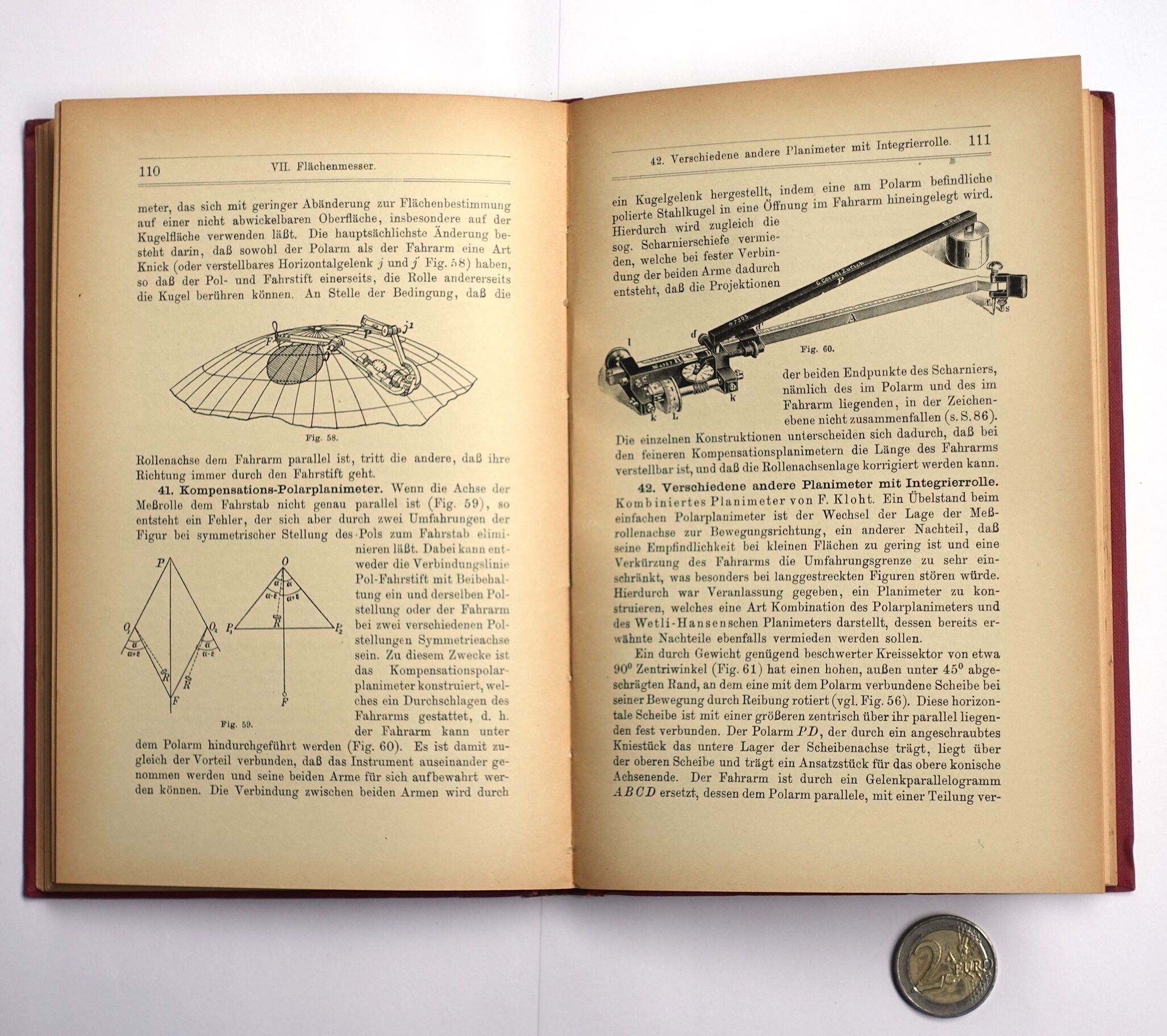
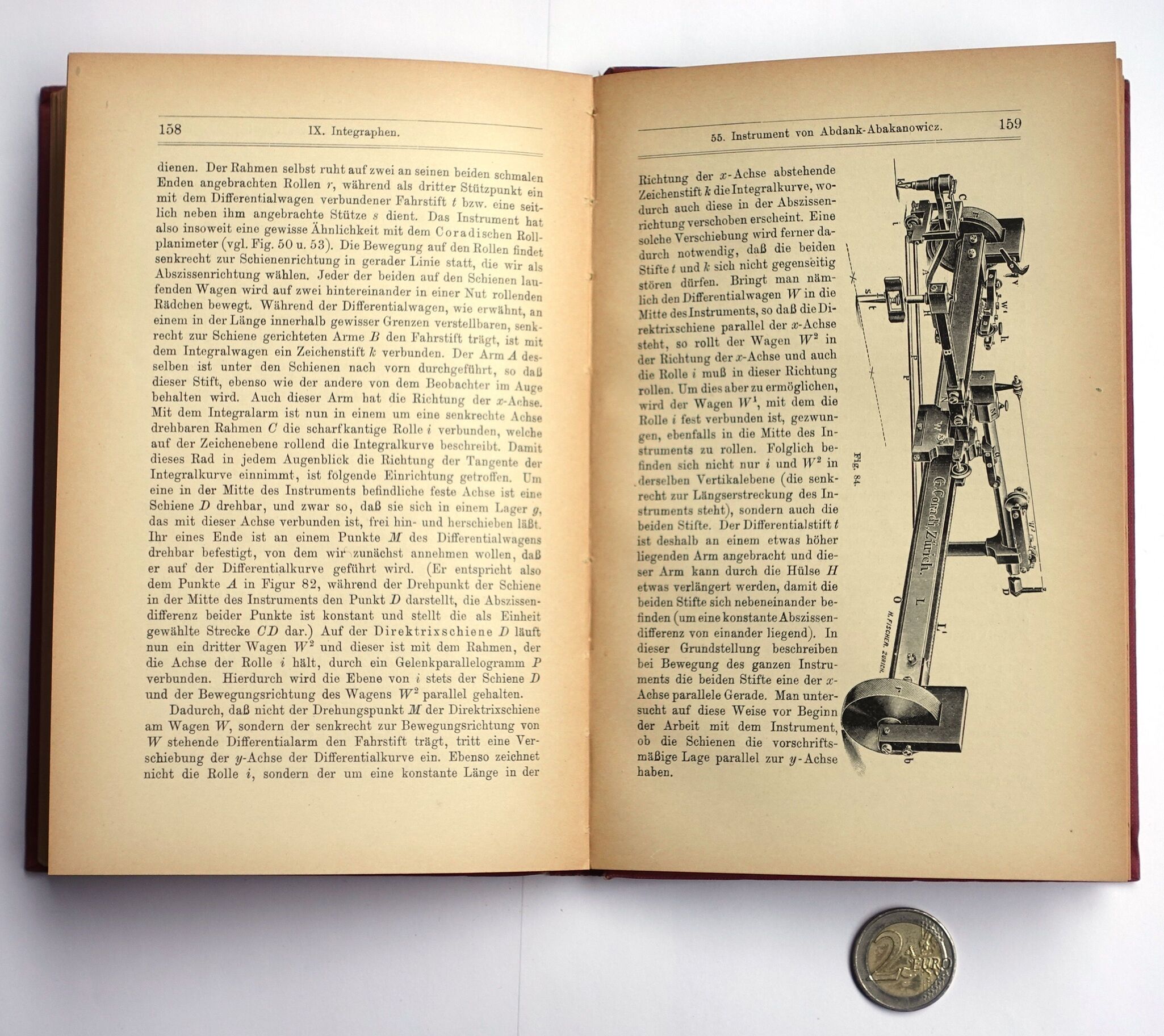
Mathematische Instrumente A. Galle 1912
197 pages, hardcover, German
140mm × 203mm × 15mm
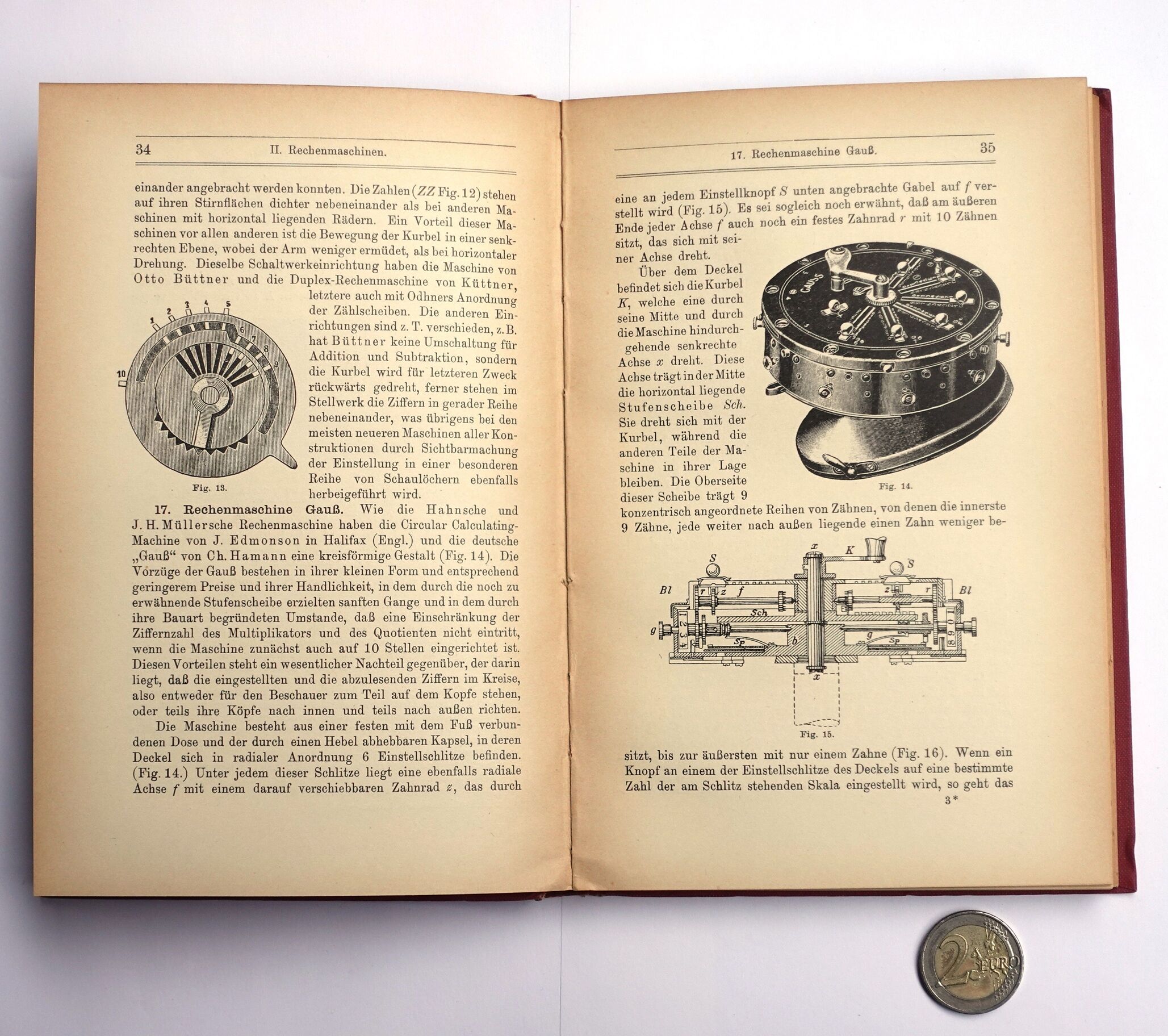
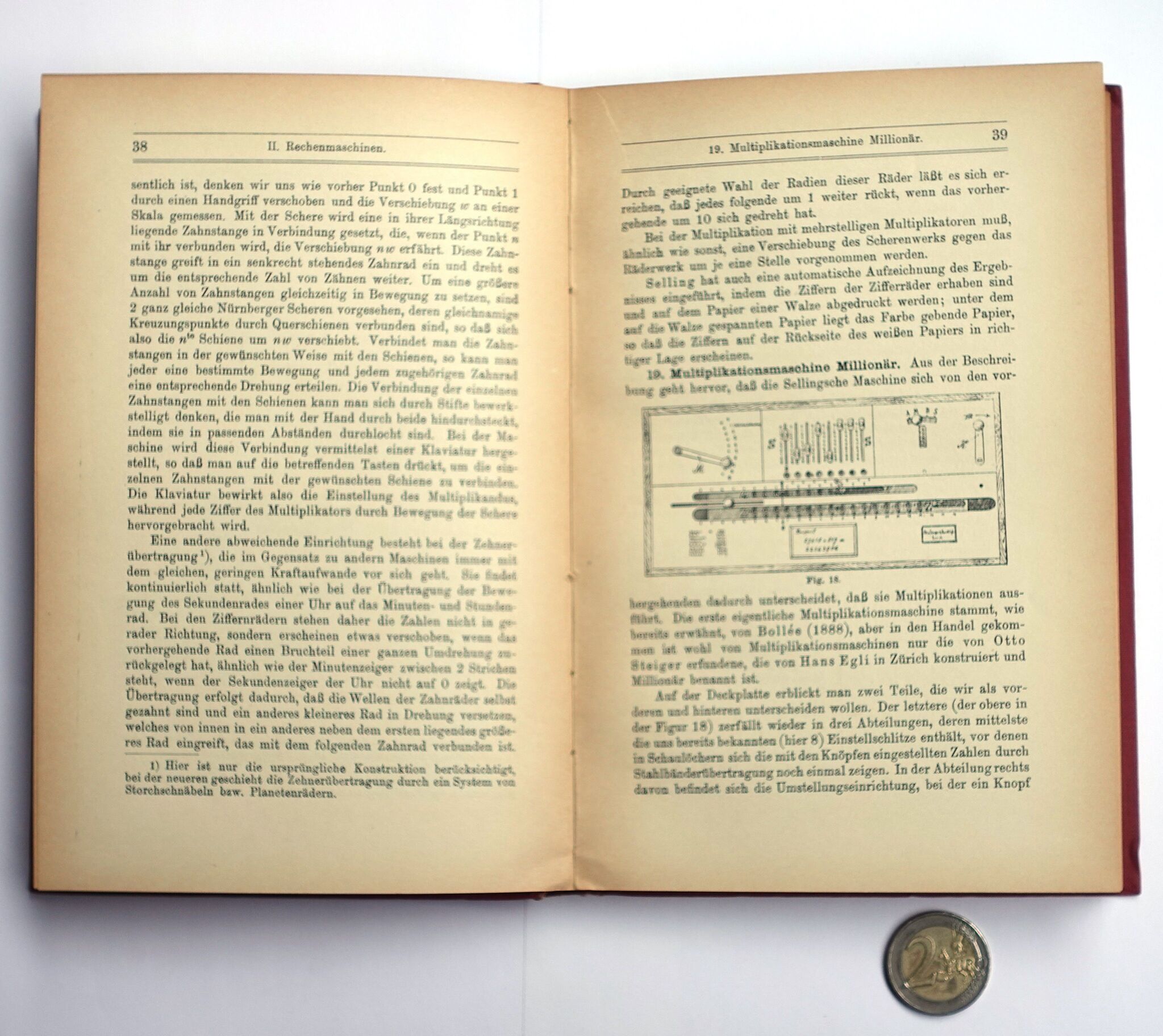
After 22 pages about slide rules, there is a 26-page section about mechanical
calculators, while the rest of the book concerns planimeters and other analog
devices. It has very few pictures of calculator mechanisms and machines.
This book was published by E. Jahnke as #15 in a collection of books
"Mathematisch-Physikalische Schriften für Ingenieure und Studierende".
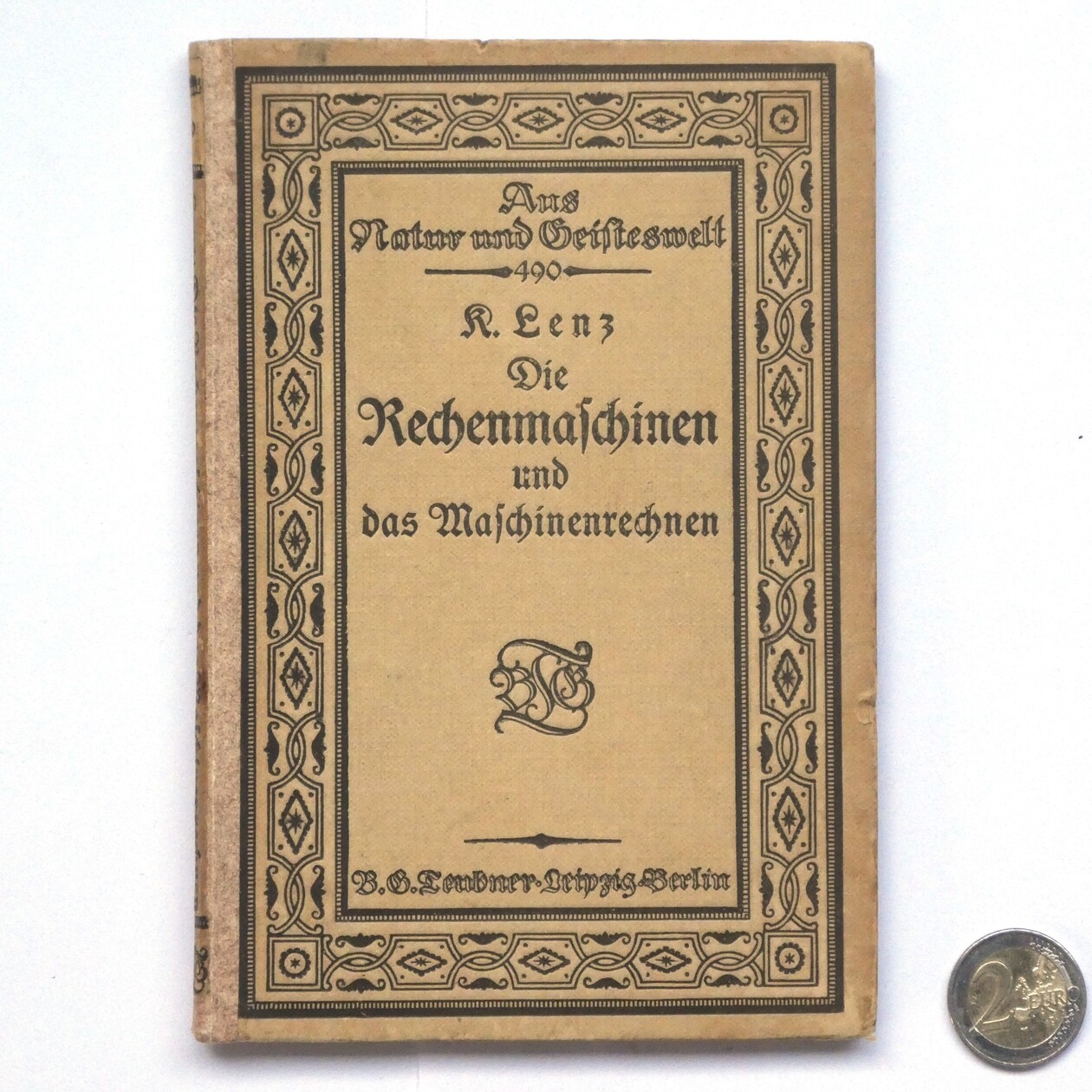
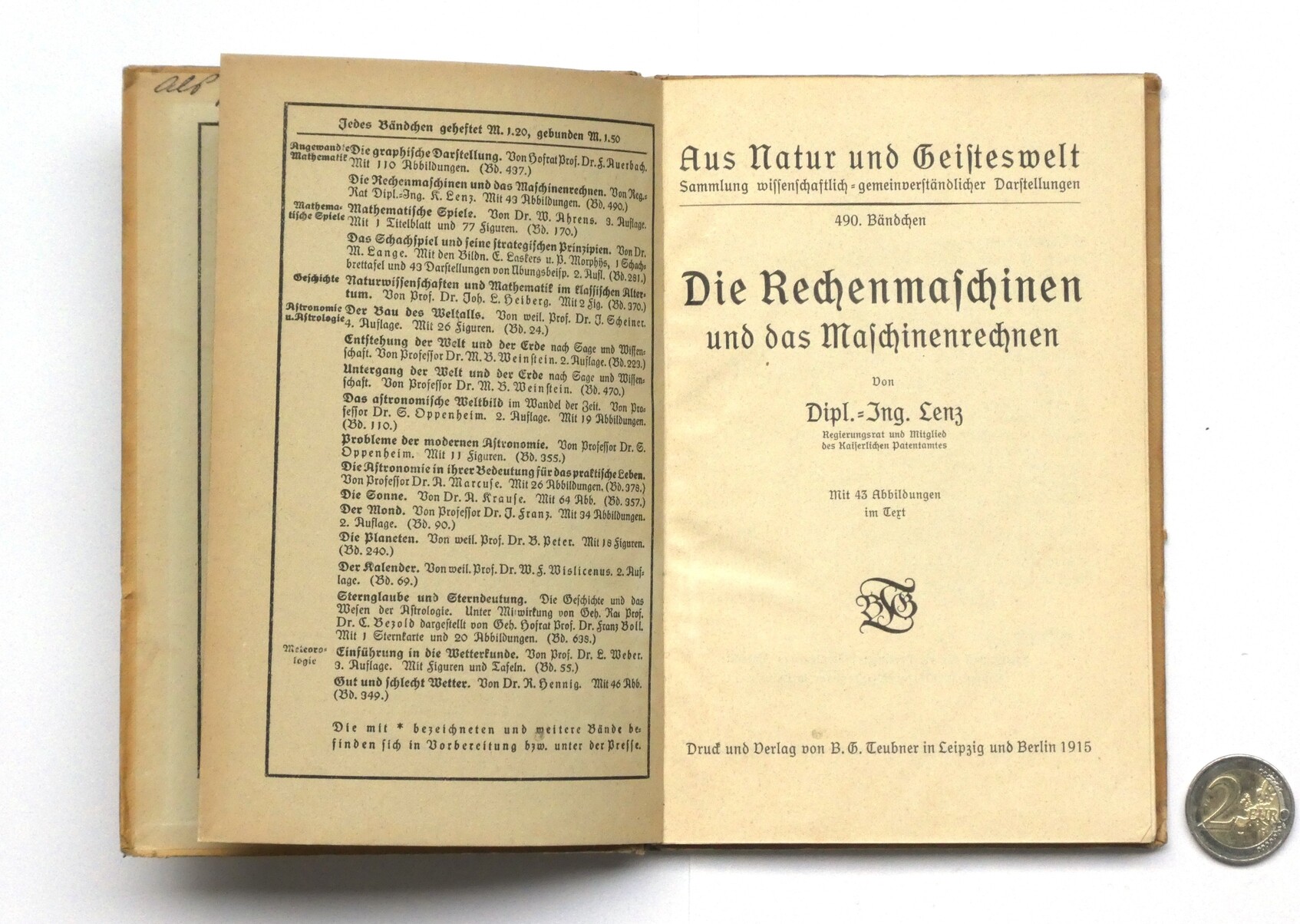
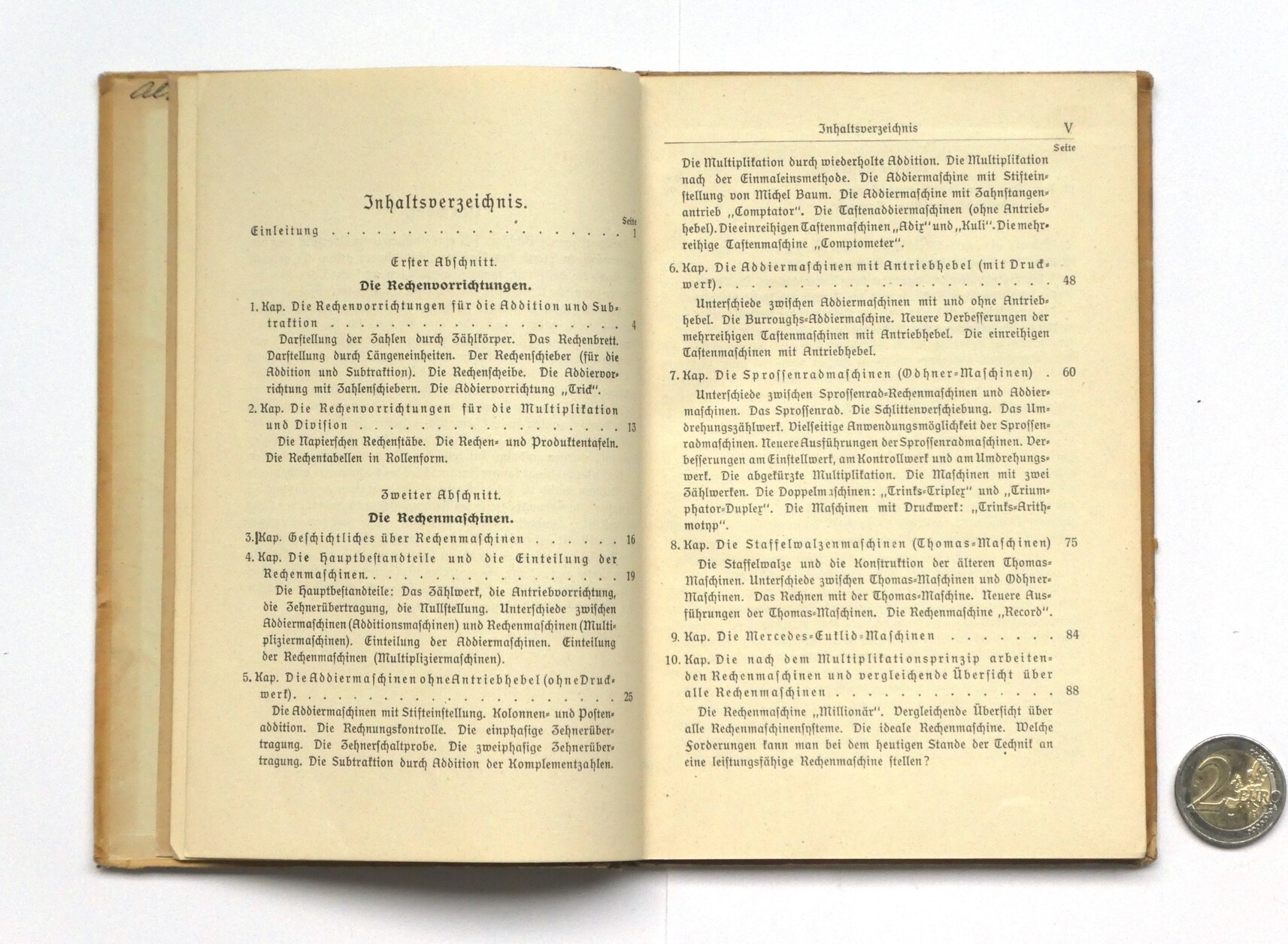
Die Rechenmaschinen und das Maschinenrechnen Karl Lenz 1915
118 pages, hardcover, German
125mm × 184mm × 8mm
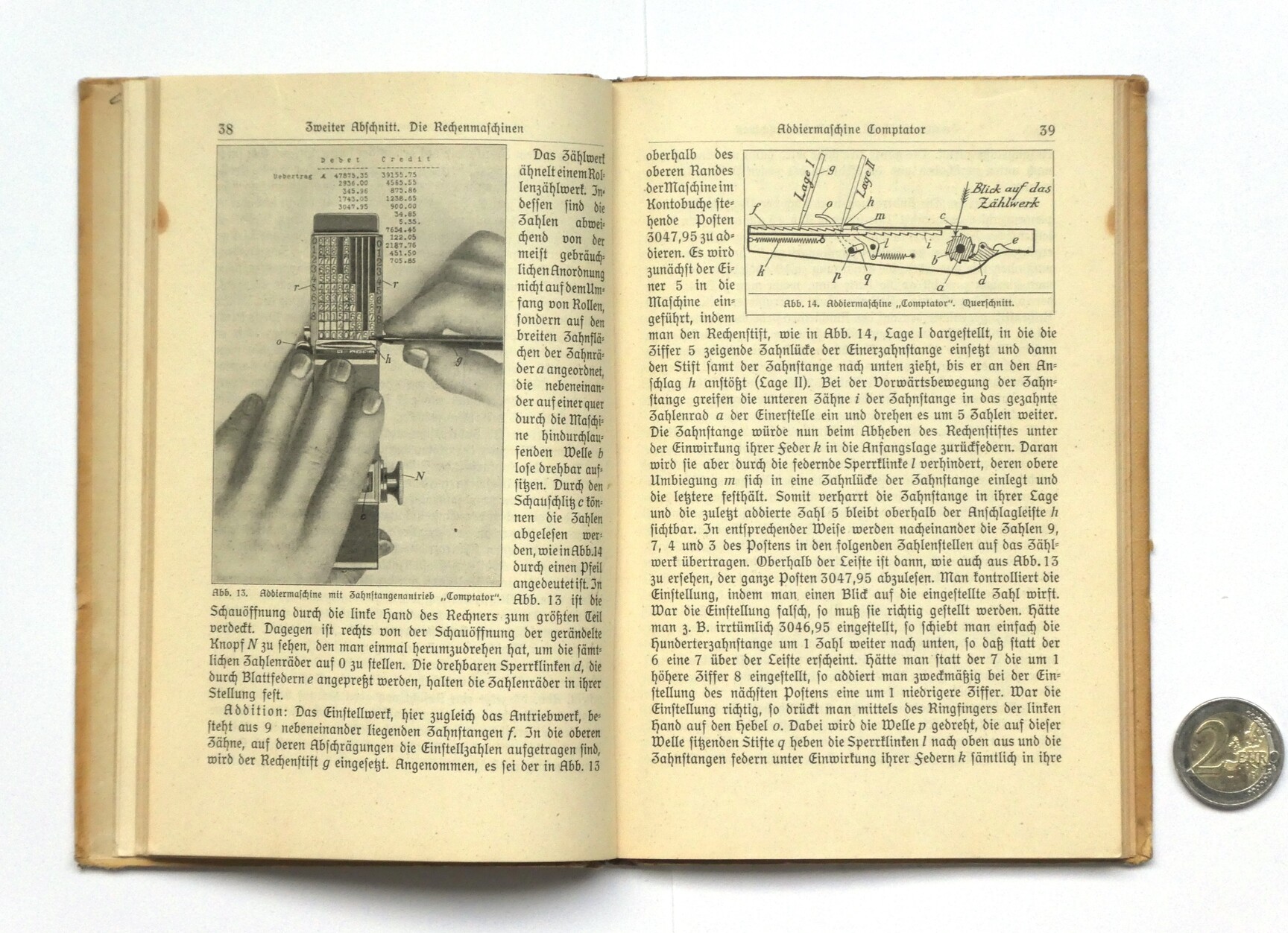
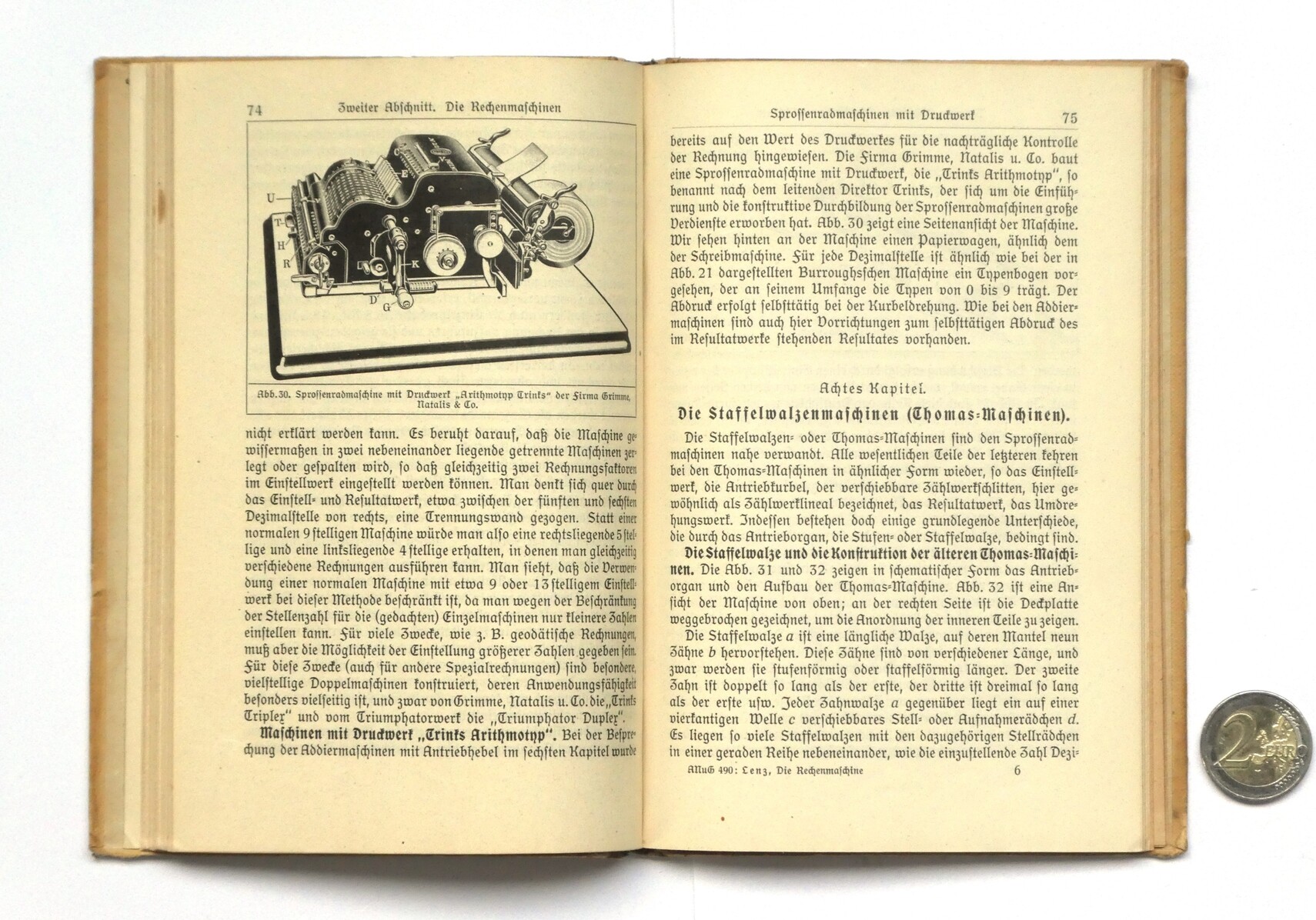
This book has a thorough overview of the various types of calculator
mechanism and the main calculators of each type that were available
in 1915. It has a moderate number of good illustrations and pictures.
There were later updated editions in 1924 and 1932.
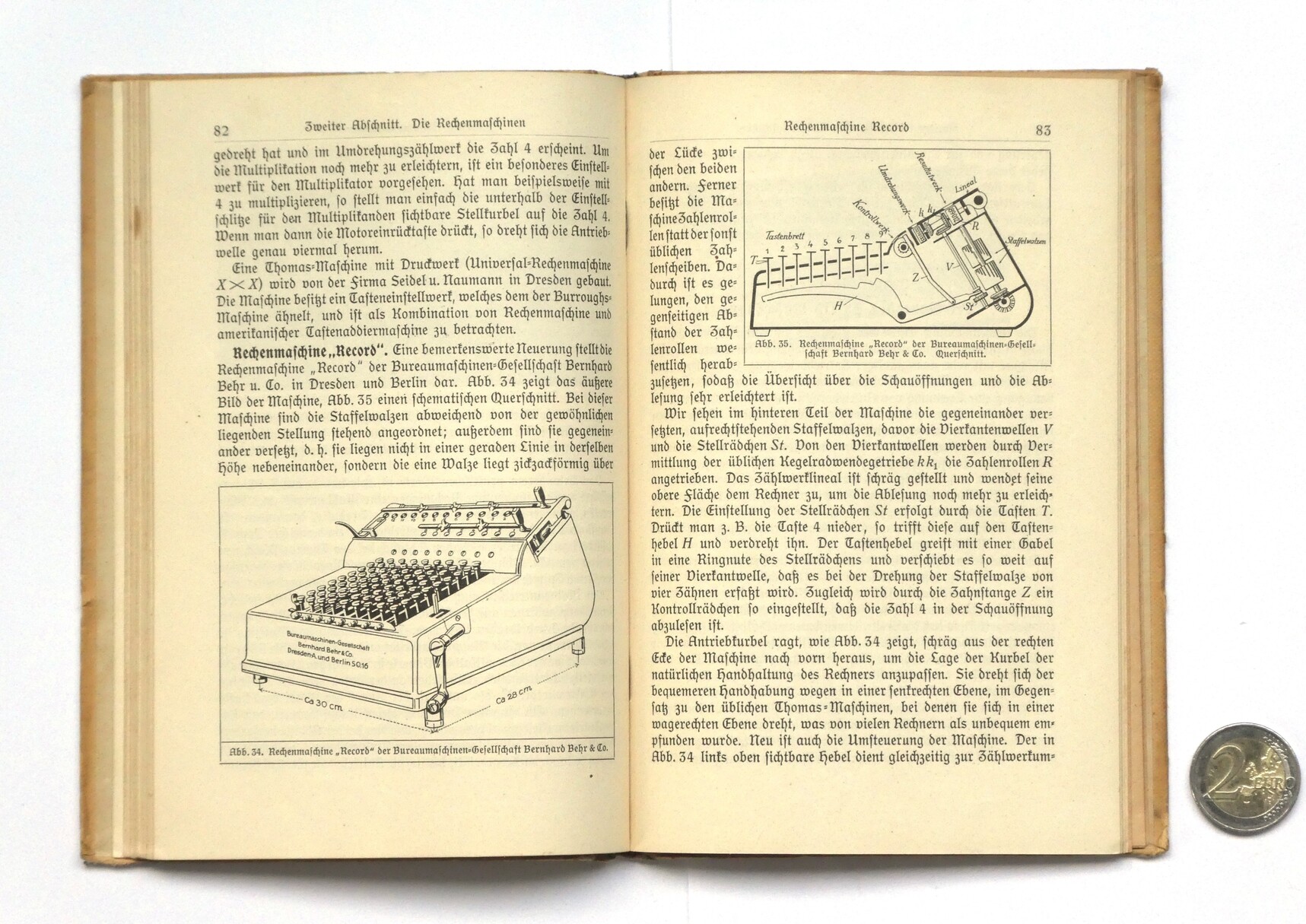
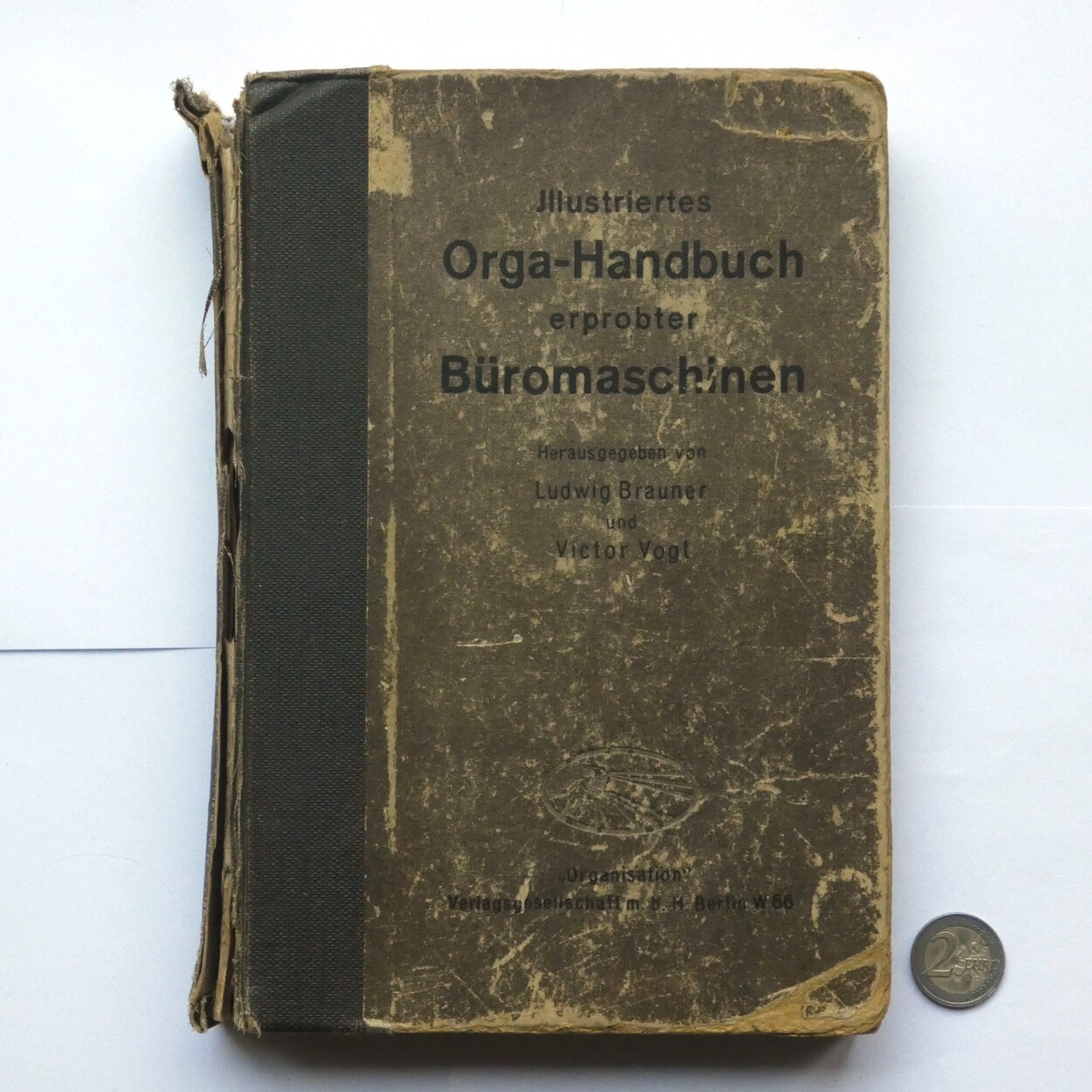
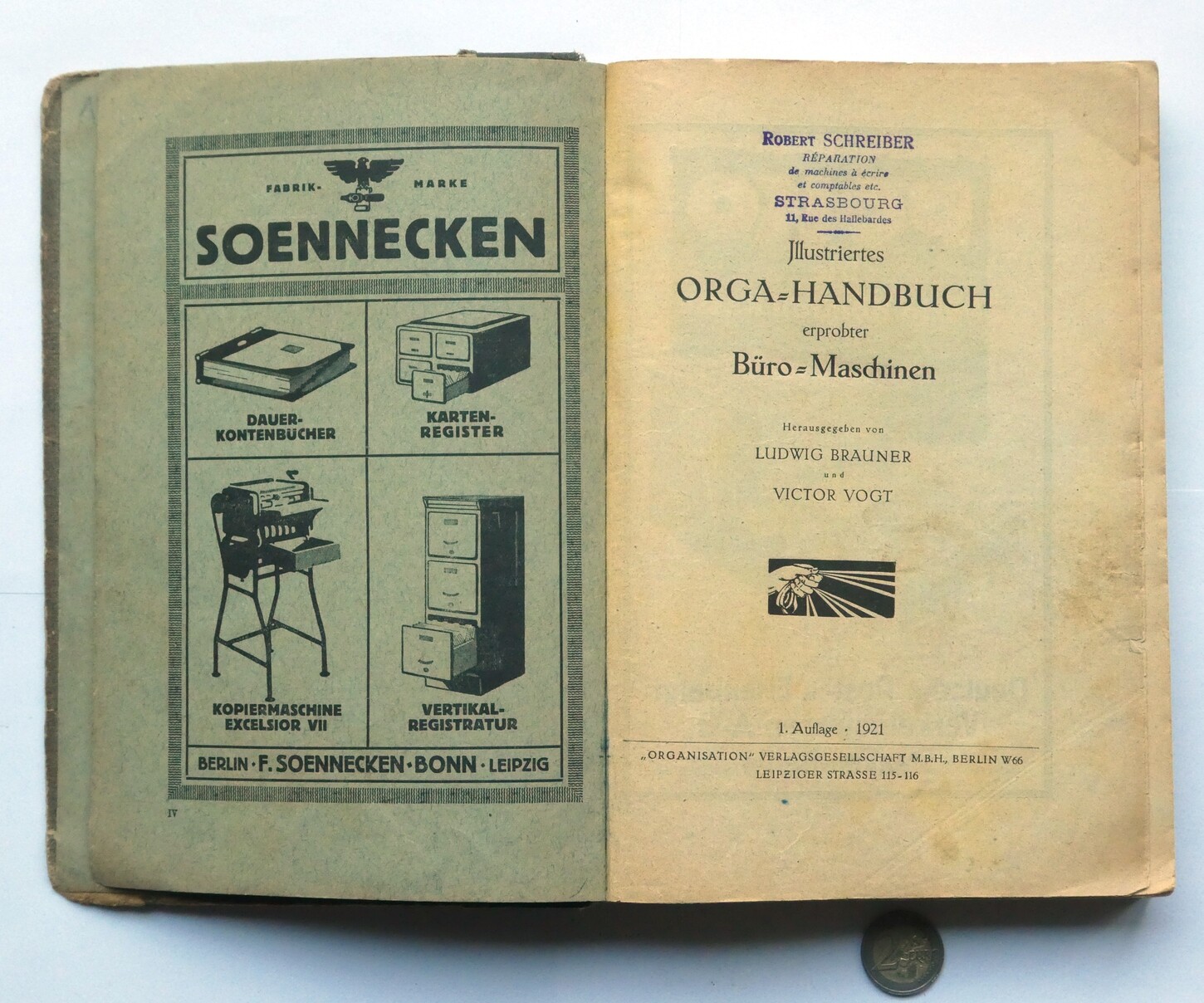
Illustriertes Orga-Handbuch erprobter Büromaschinen (PDF, 67.9 MB or archive.org)
Ludwig Brauner & Victor Vogt 1921
644 pages, hardcover, German
177mm × 260mm × 32mm
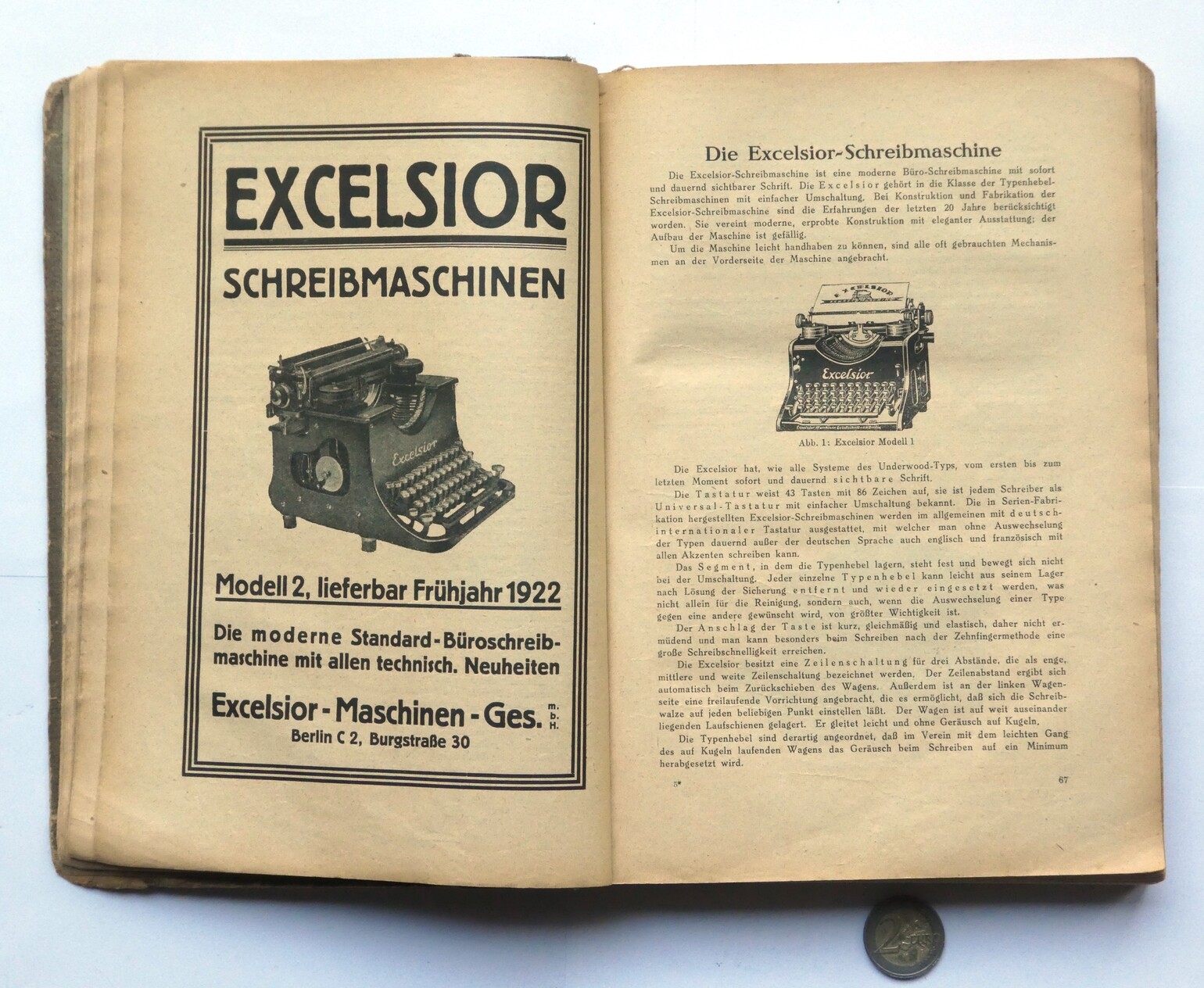
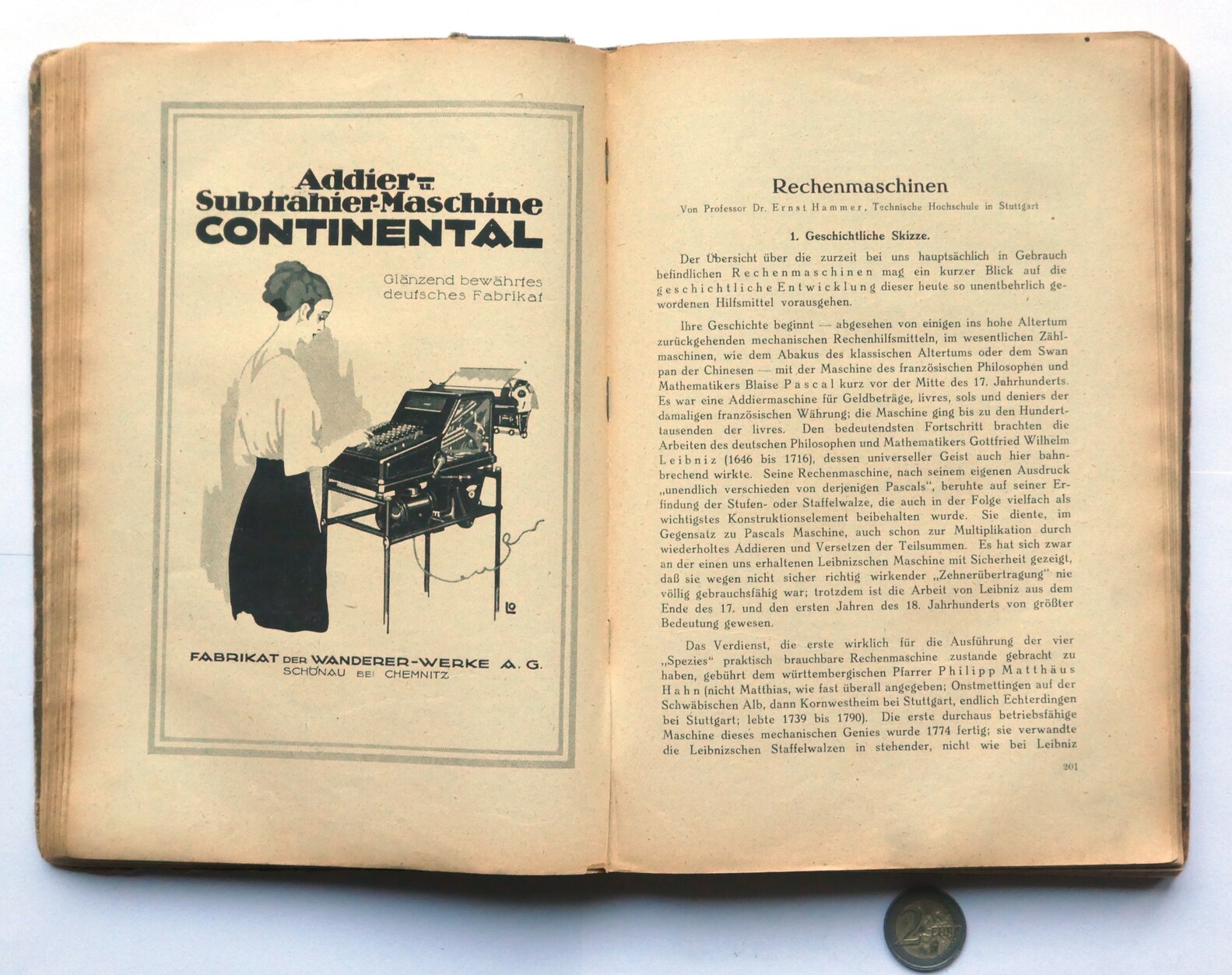
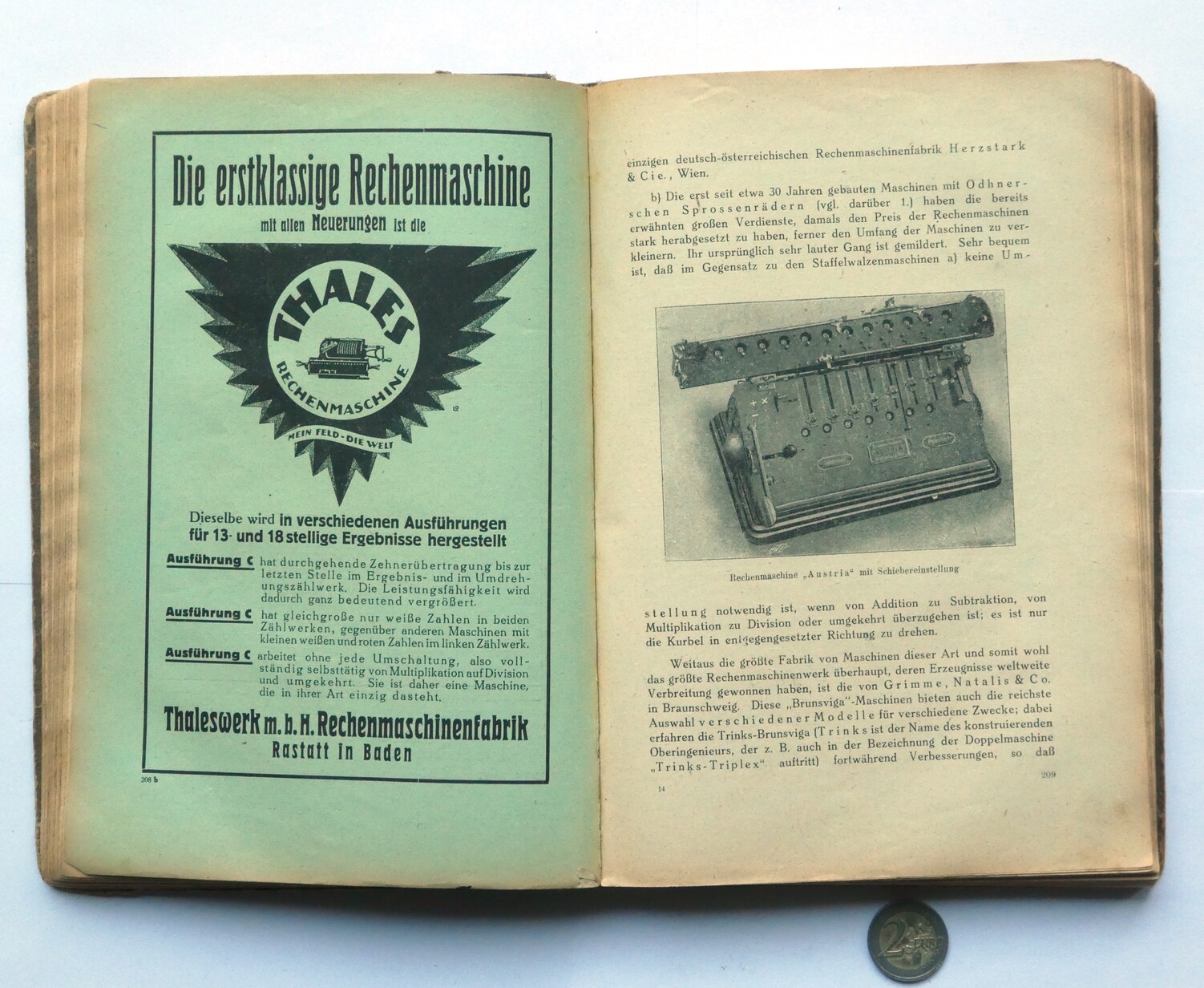
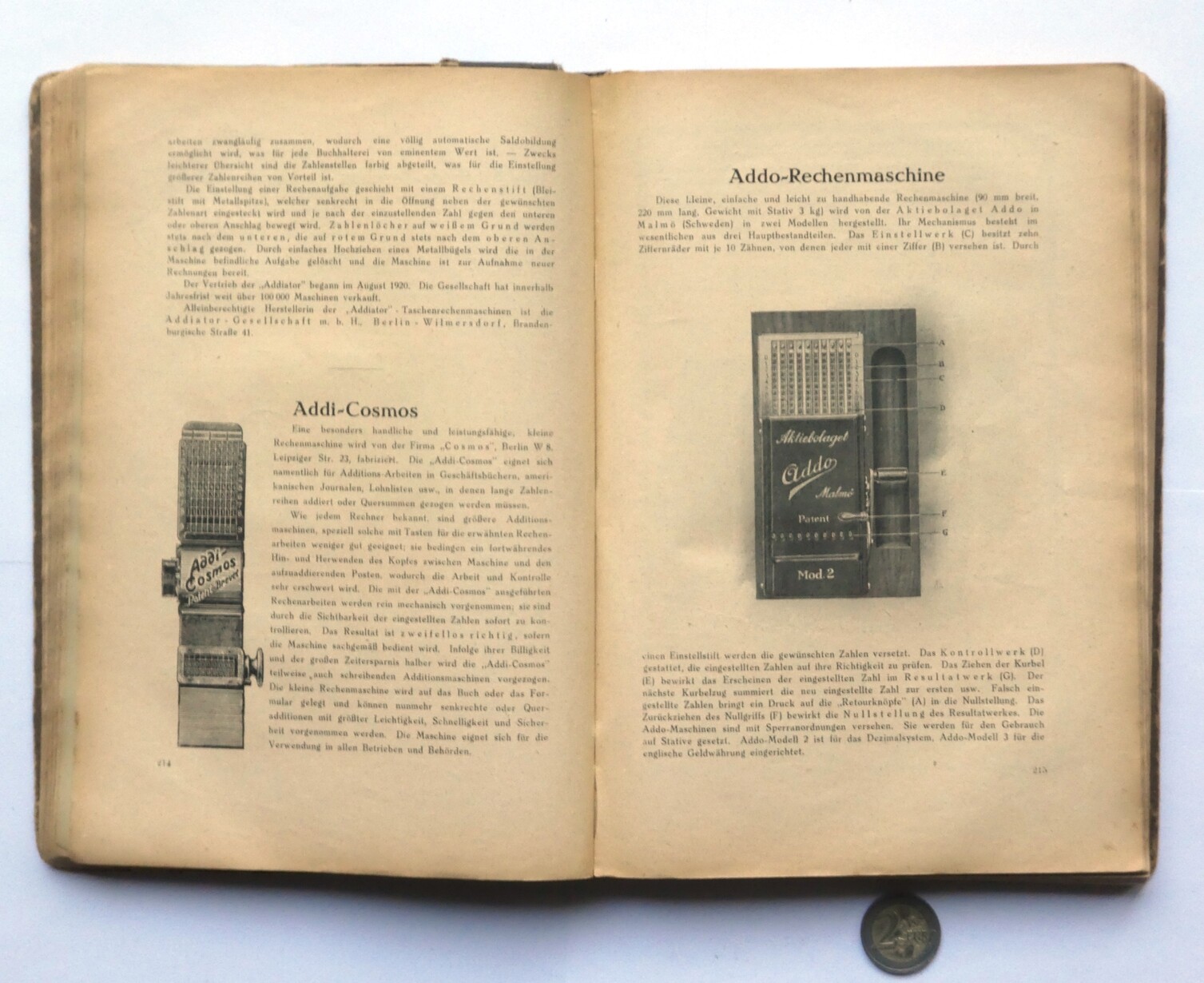
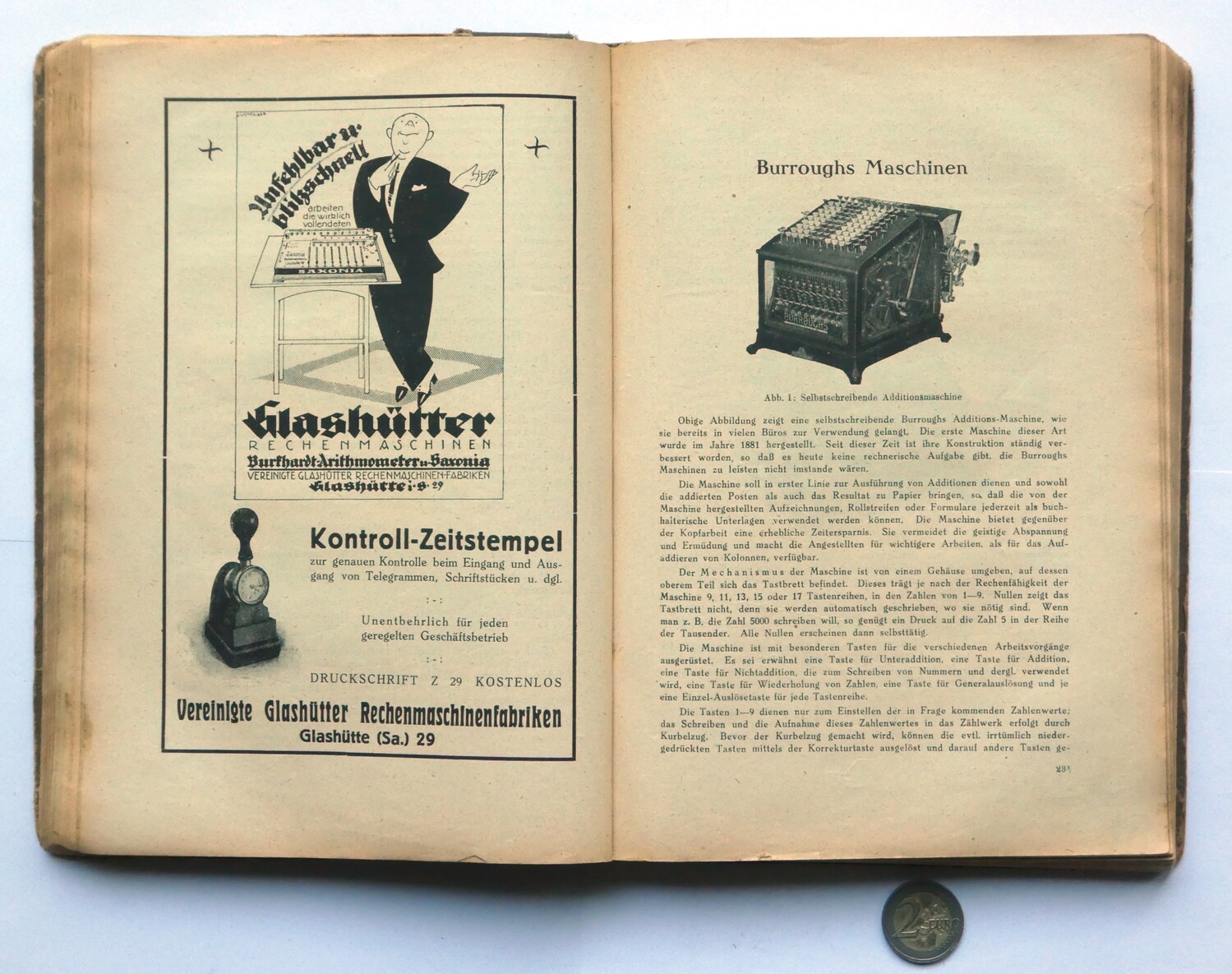
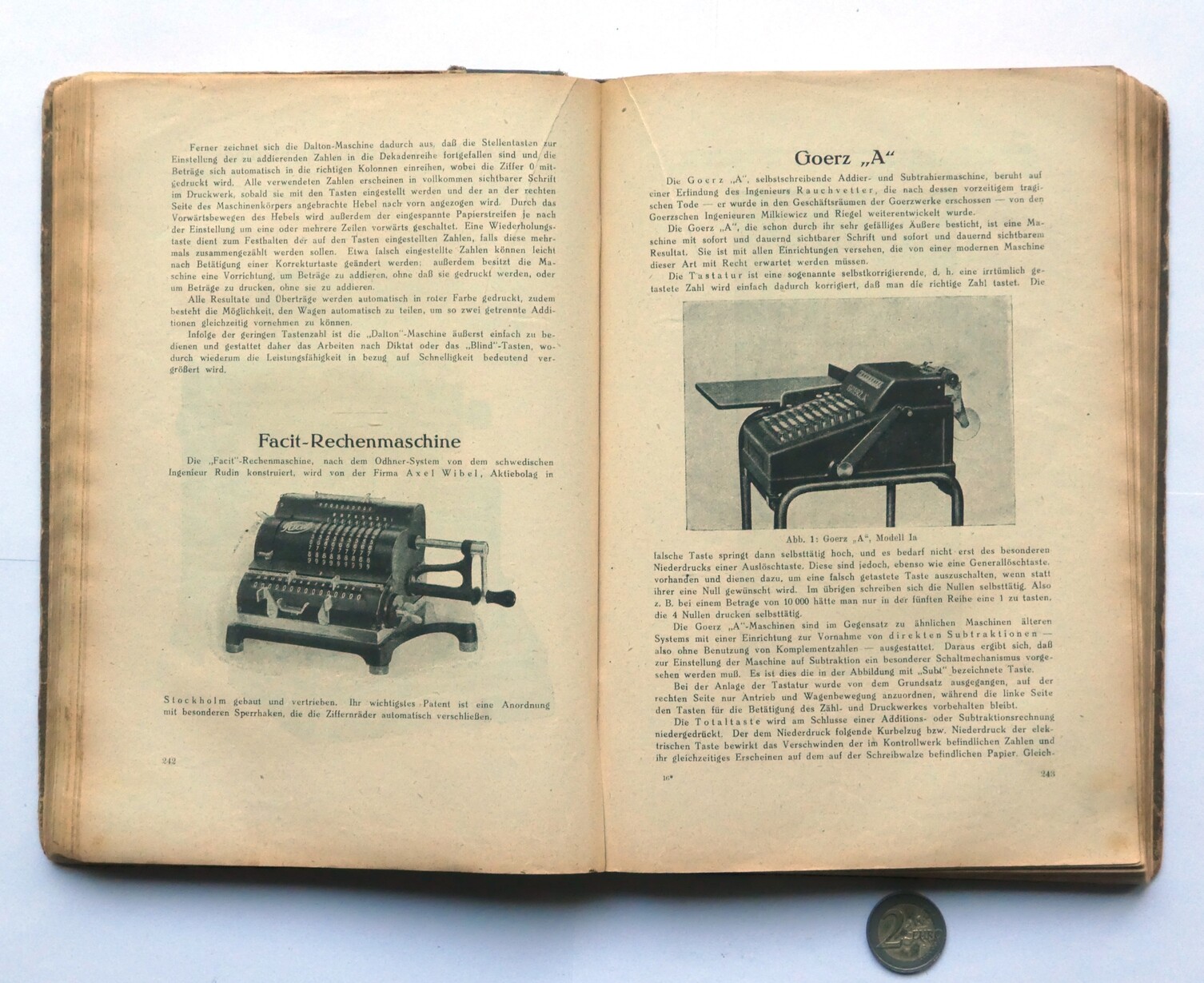
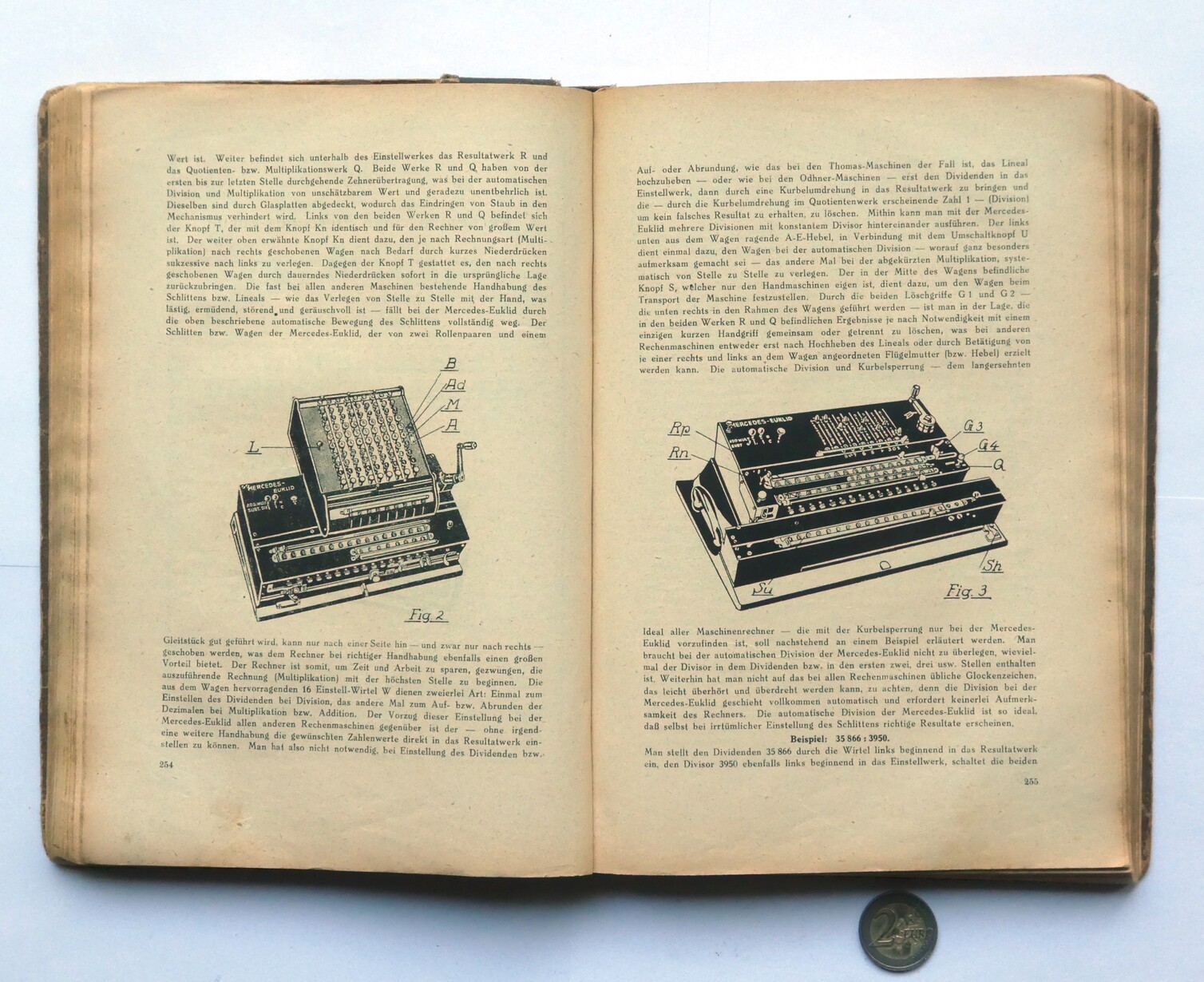
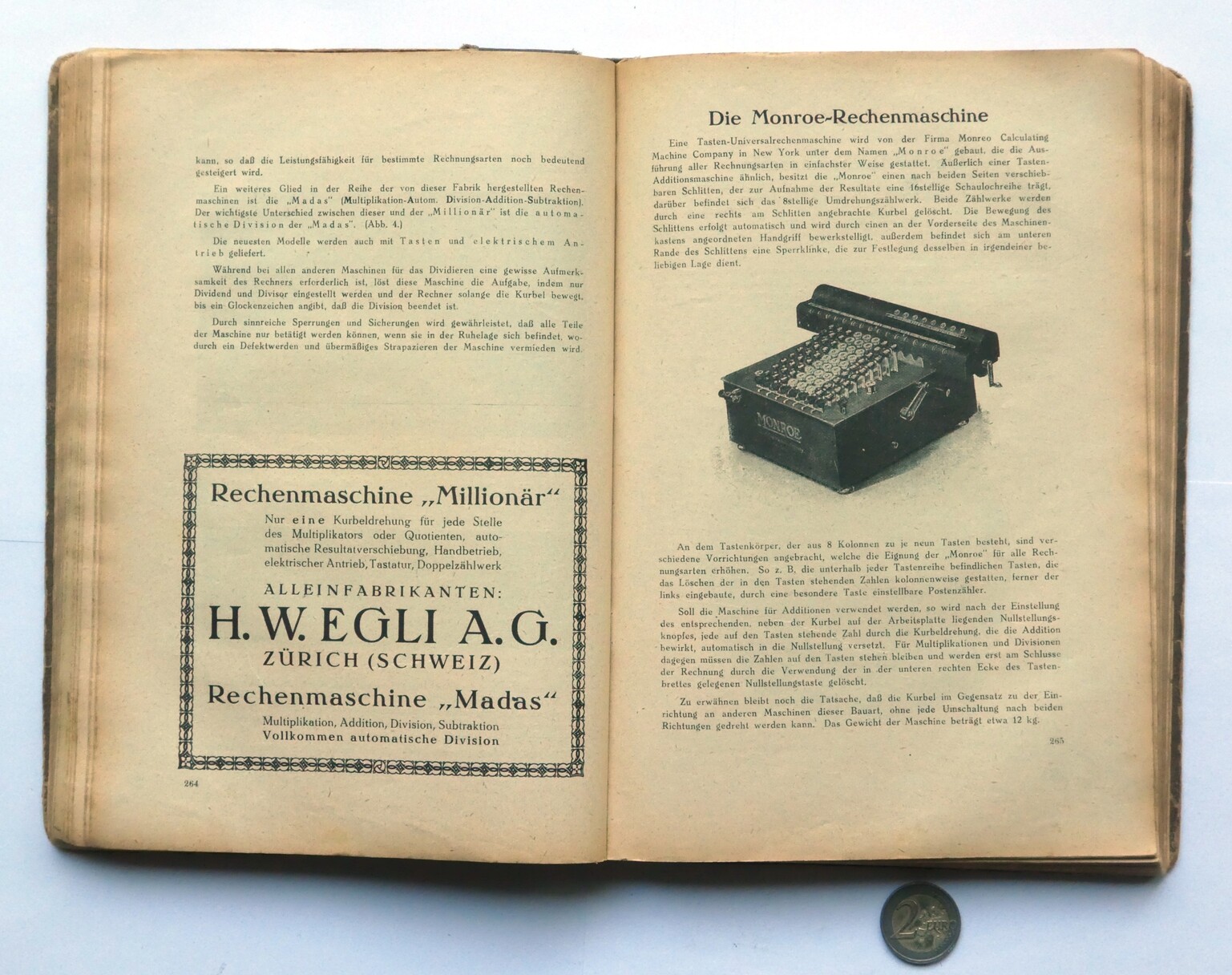
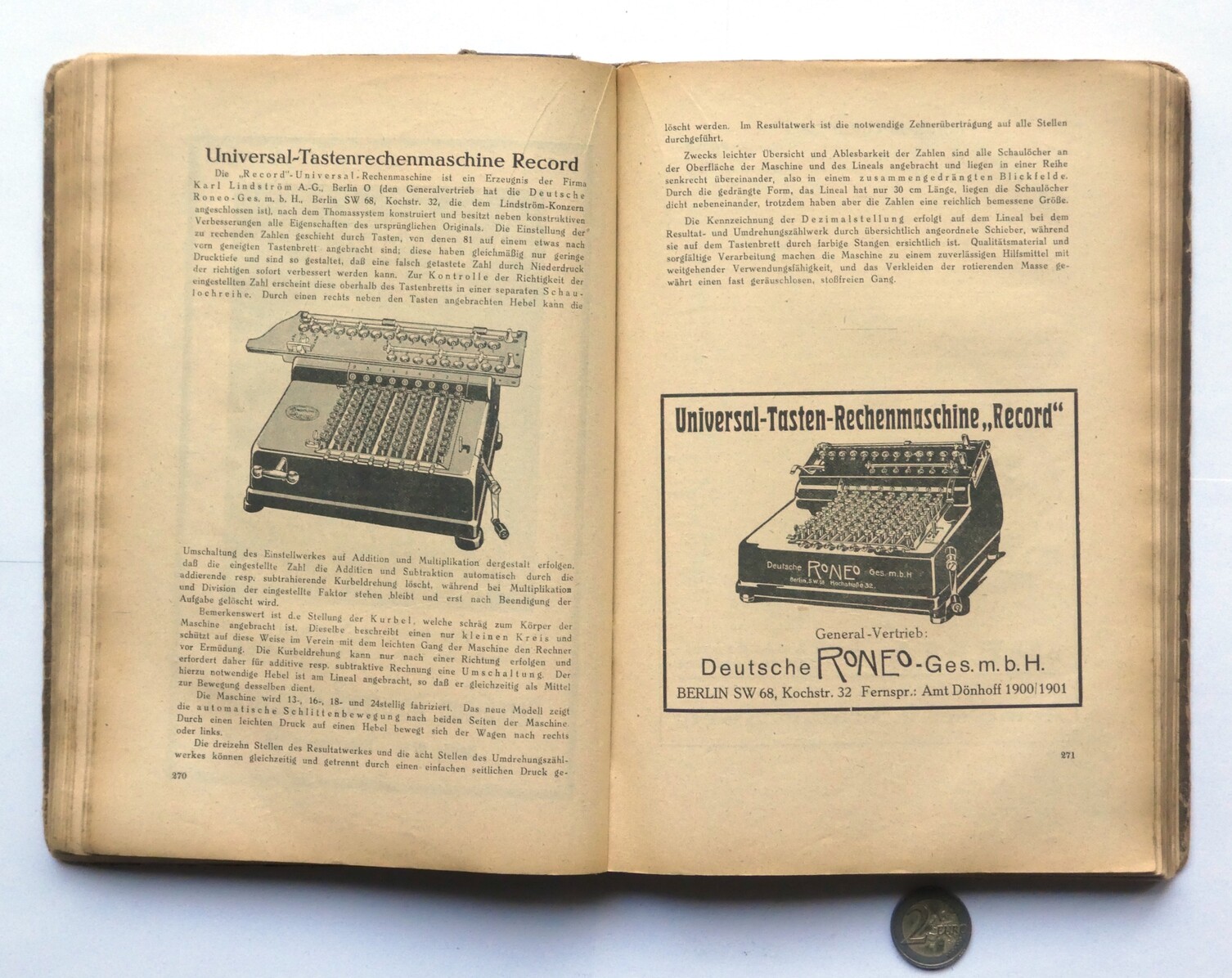
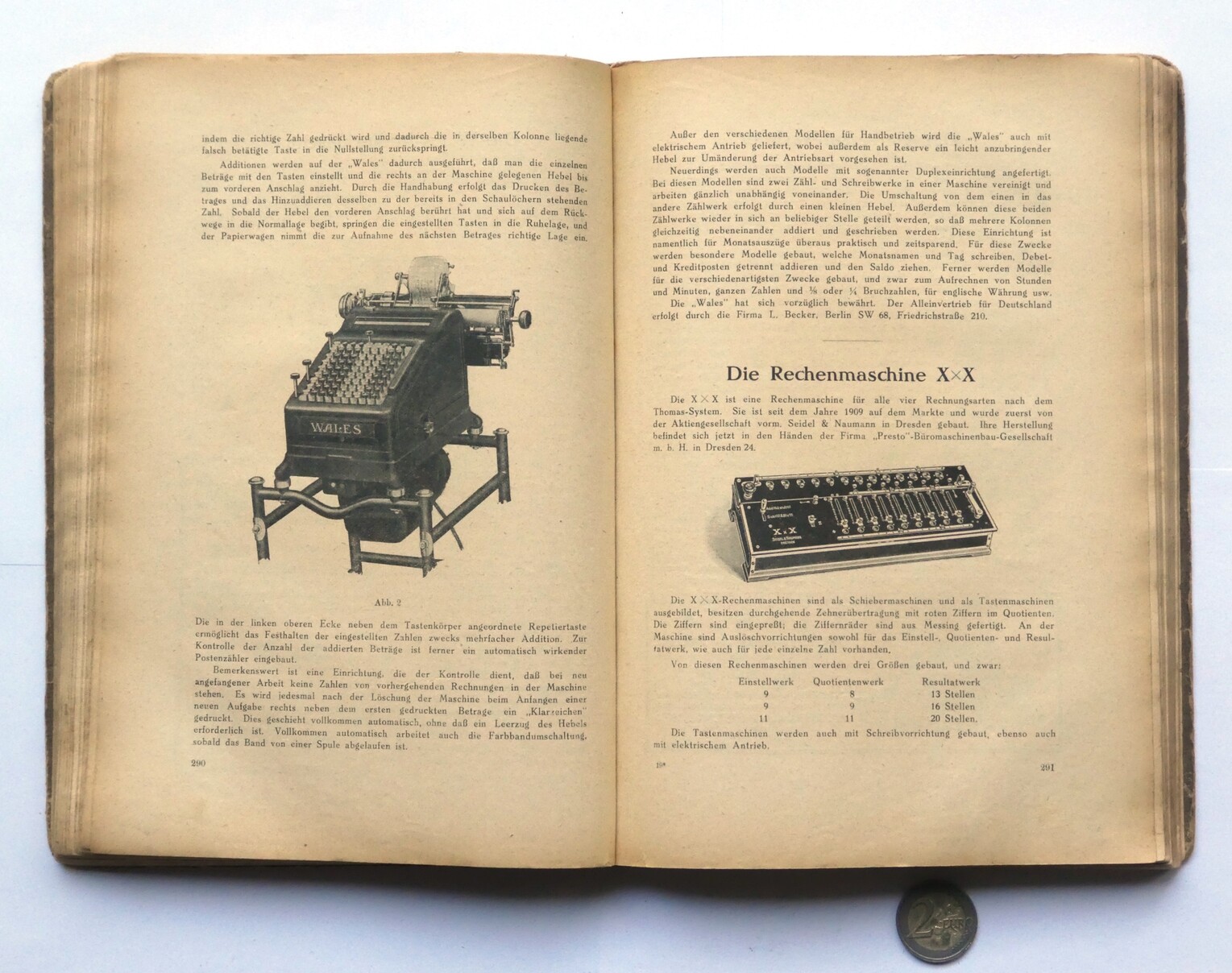
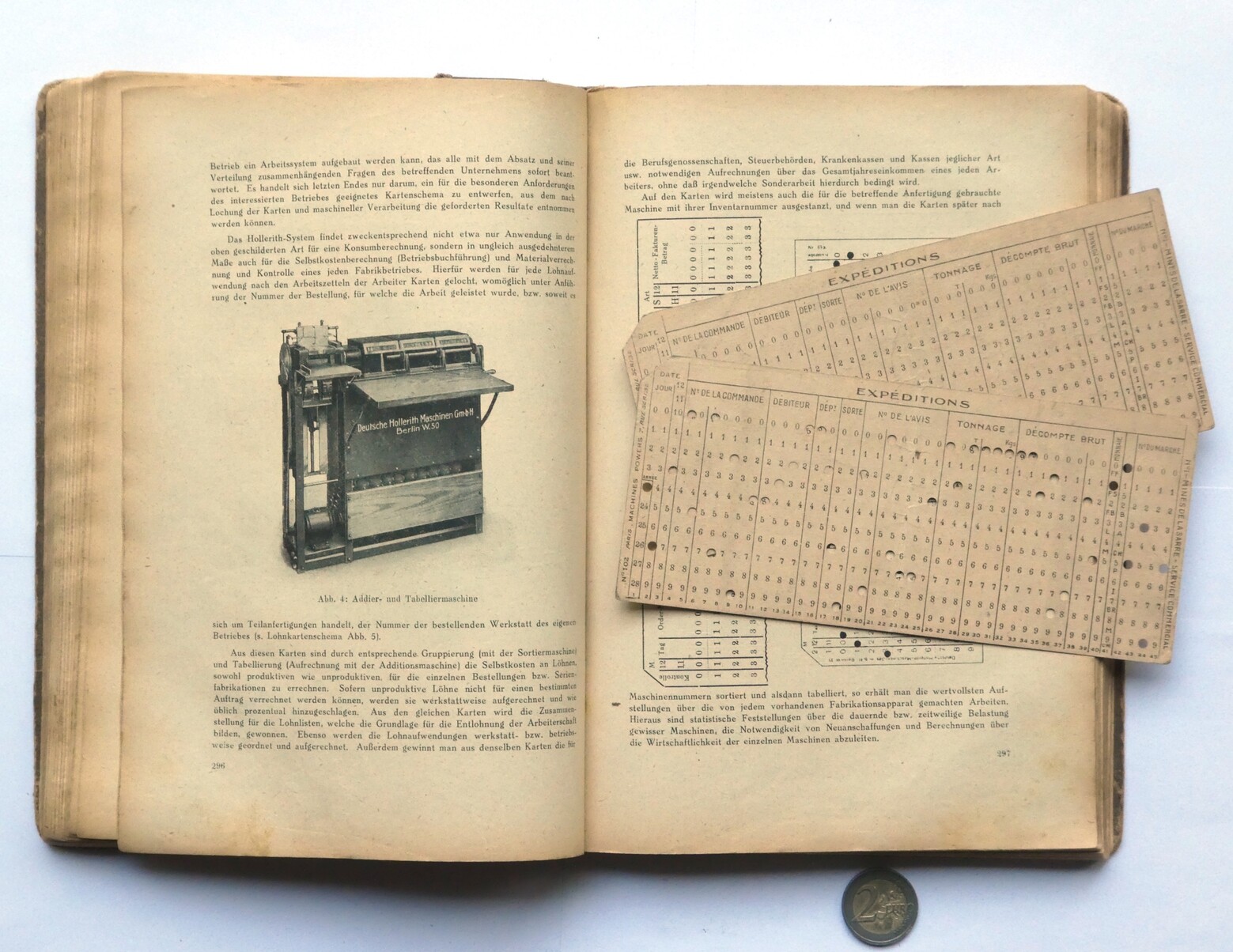
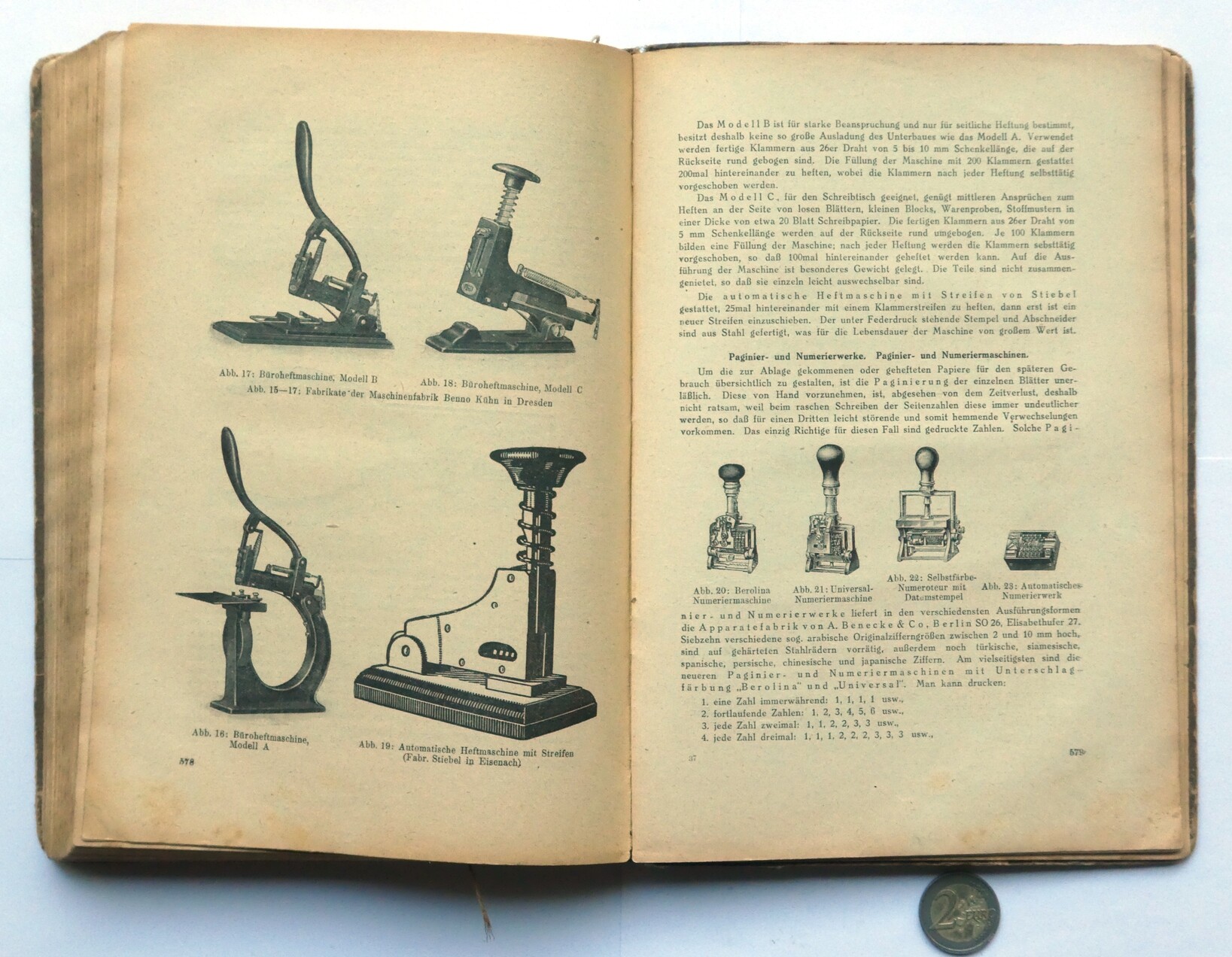
This book contains an extensive description of most of the office
machines that were available in 1921. The first section is about
typewriters, the second about calculators, then bookkeeping machines,
duplicators, clocks, safes, and other machines. I have scanned the
section on calculators and this is available at the links above.
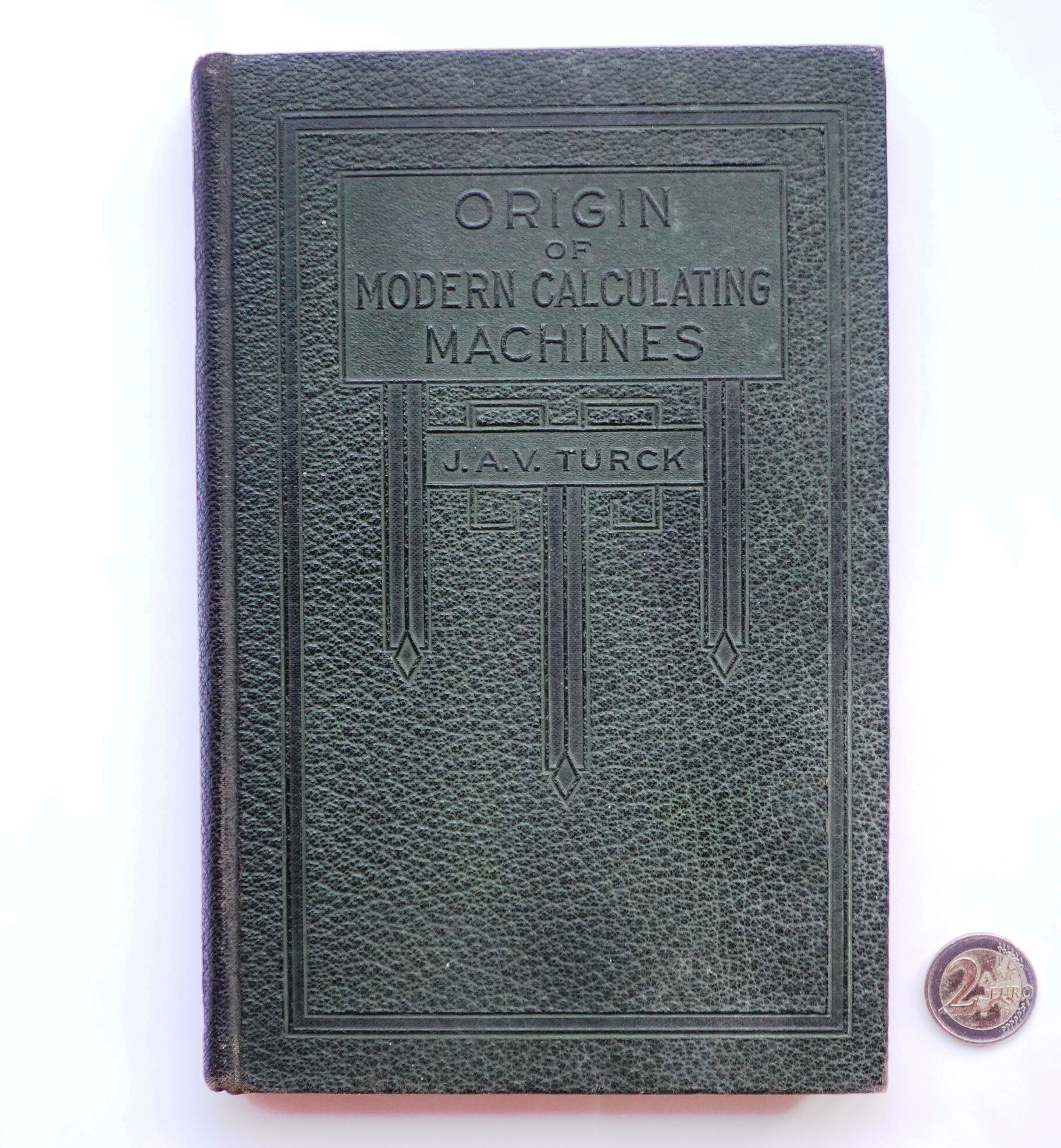
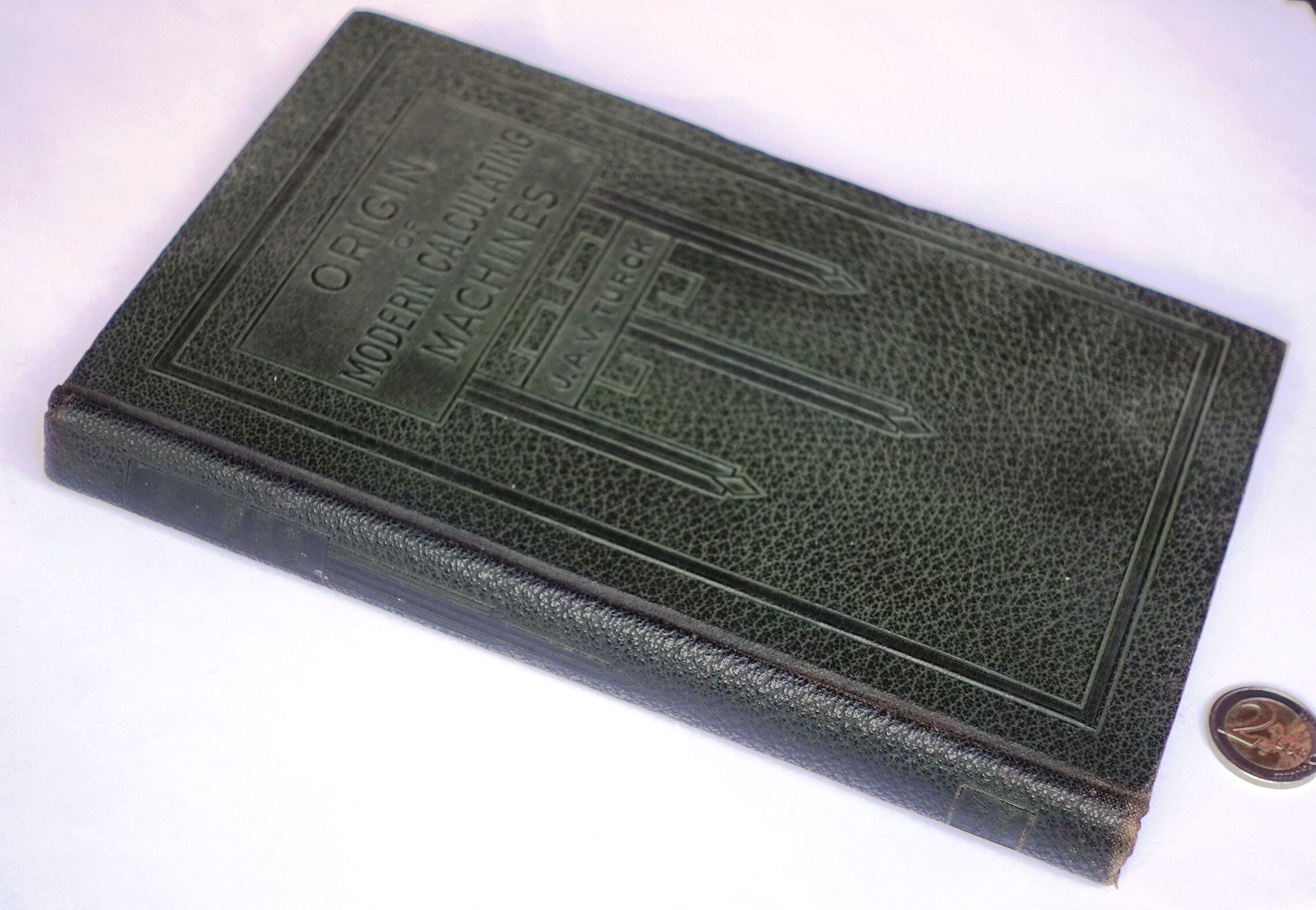
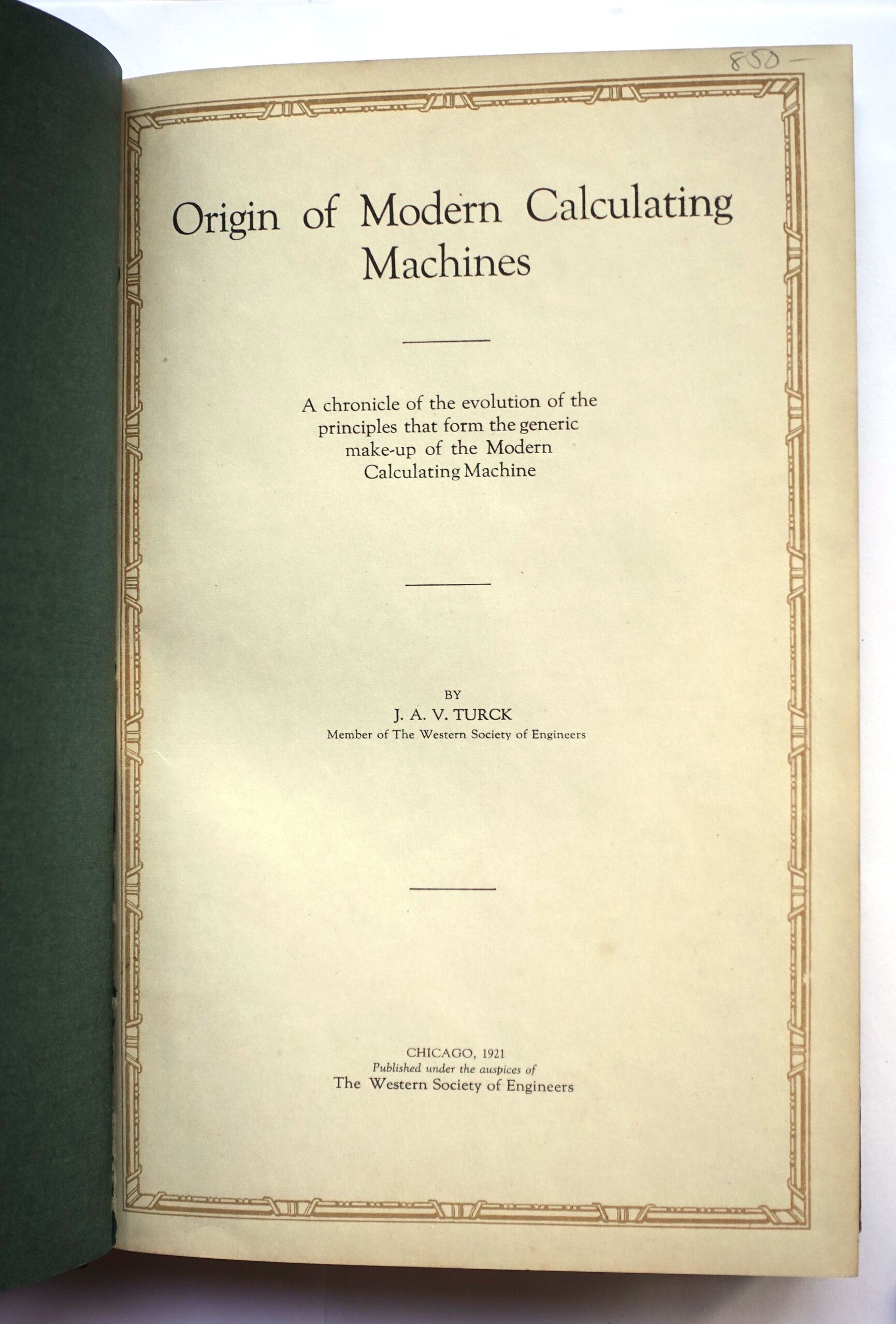
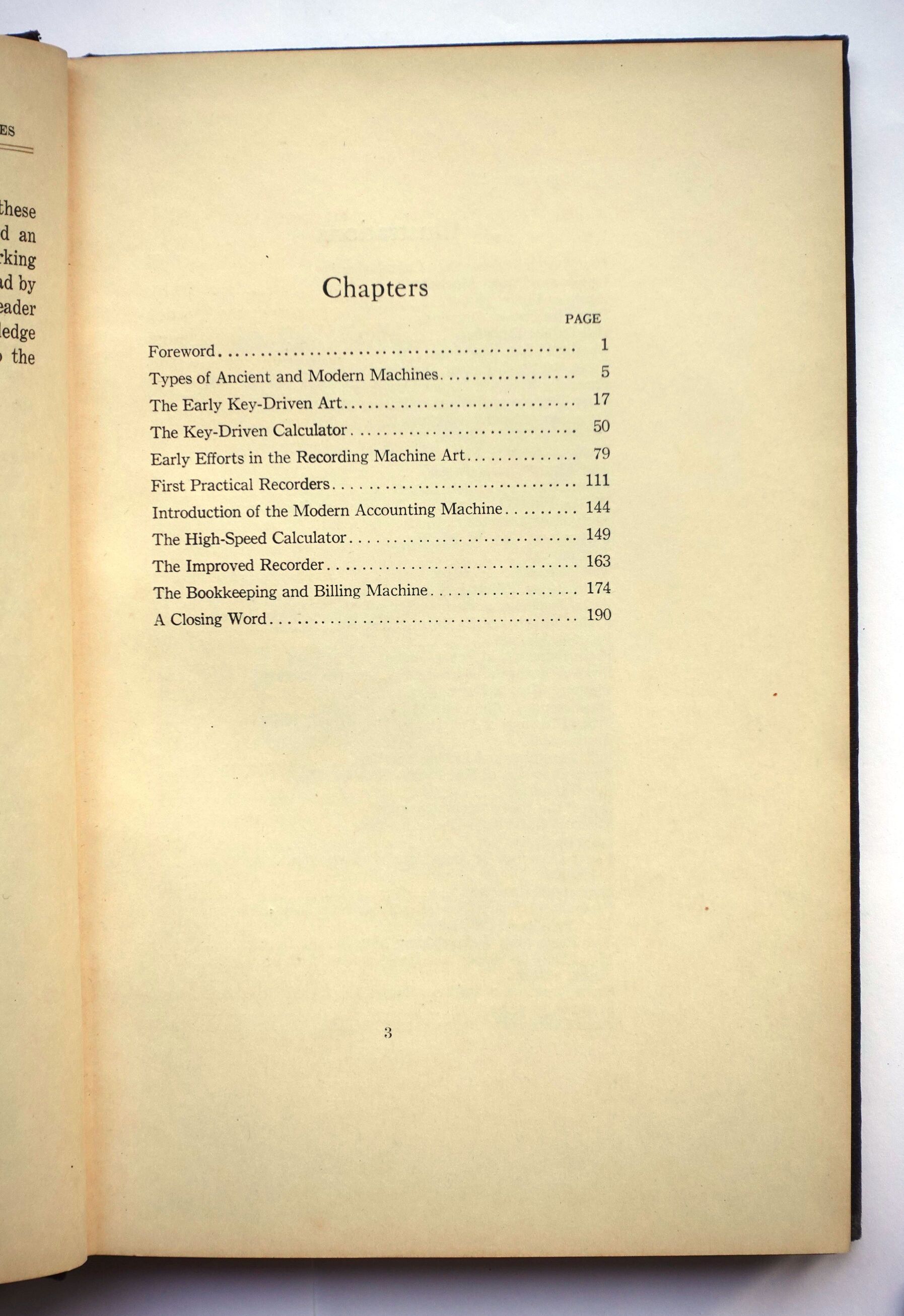
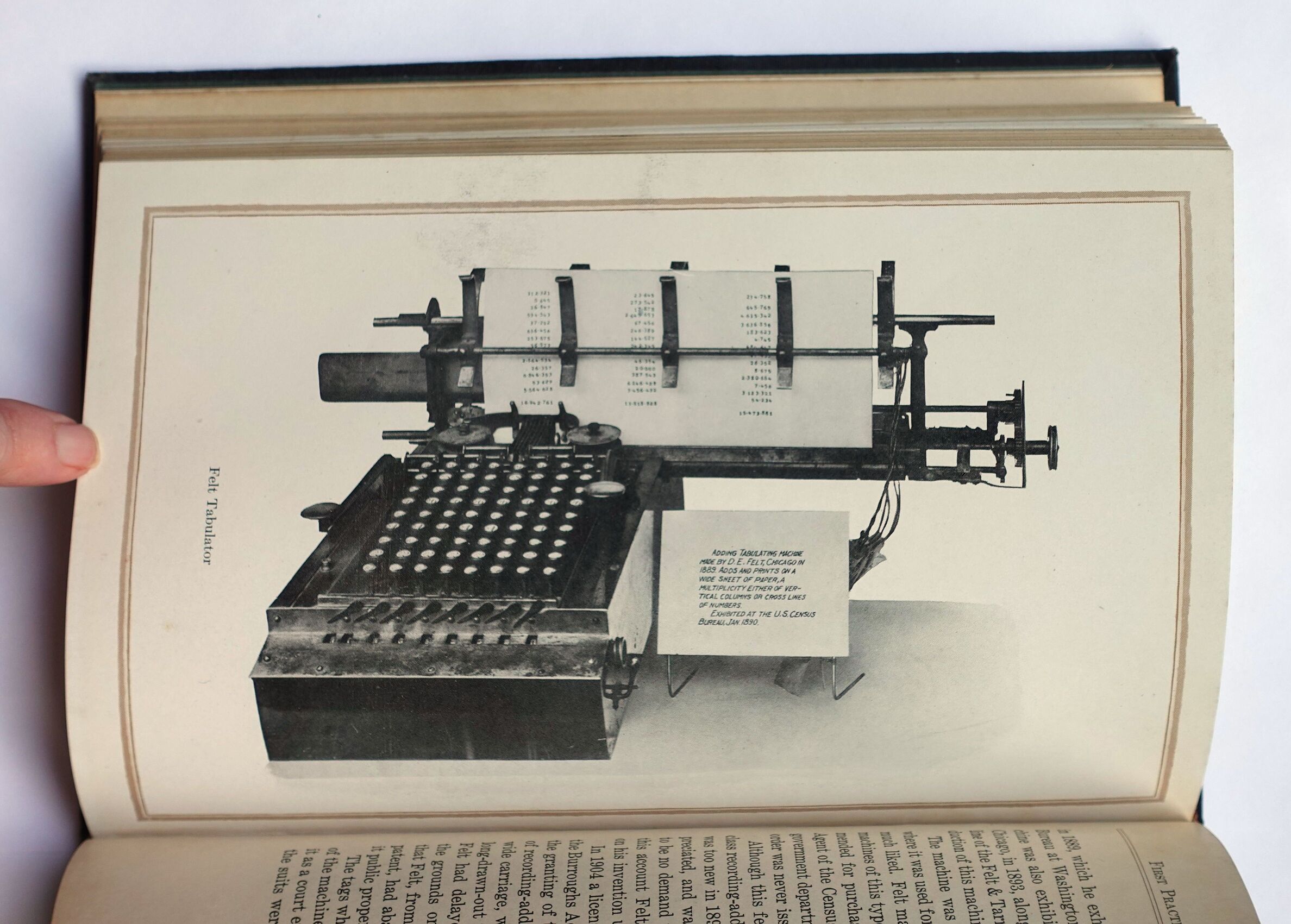
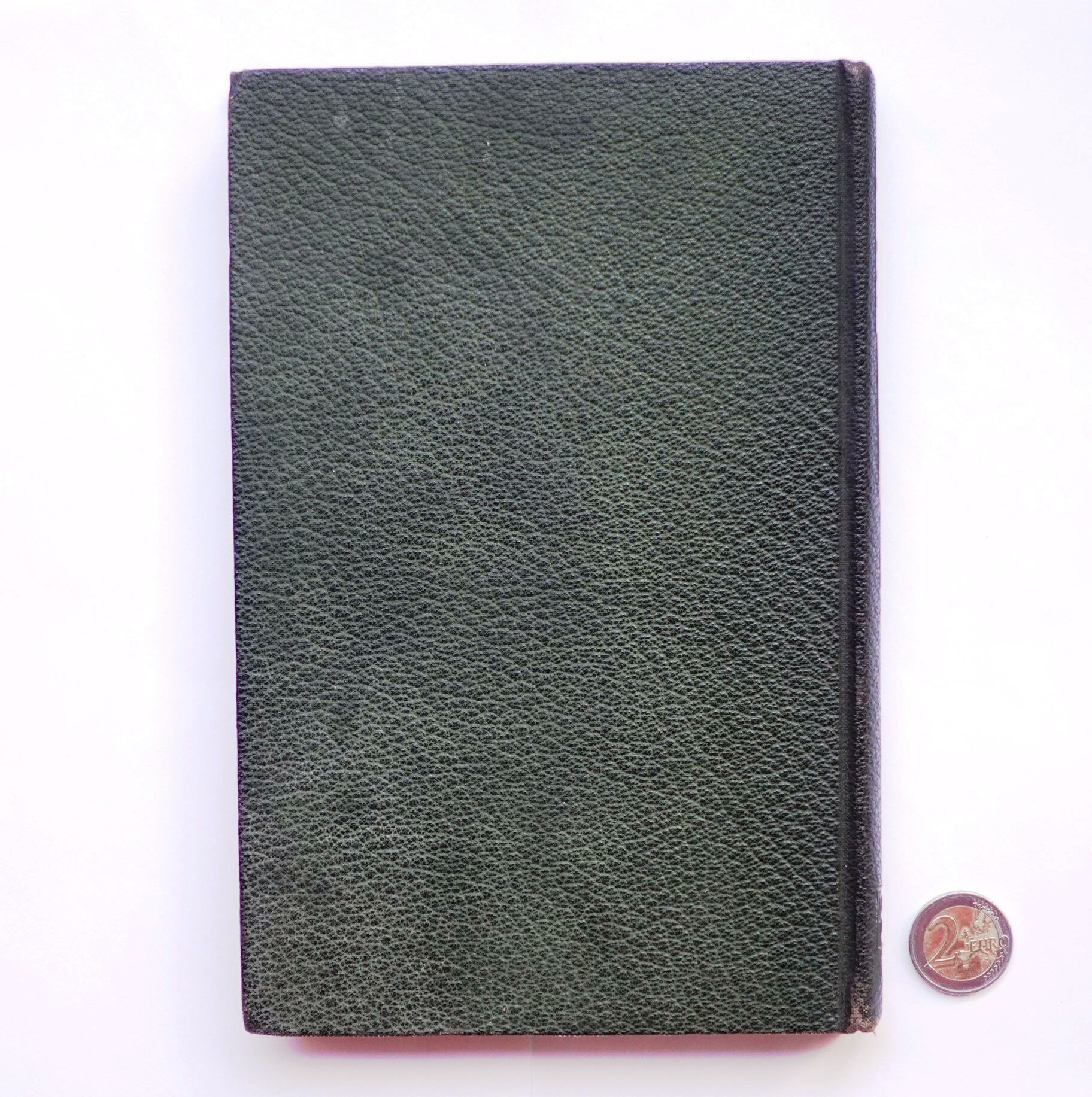
Origin of Modern Calculating Machines a Chronicle of the Evolution of the Principles That Form the Generic Make Up of the Modern Calculating Machine
J. A. V. Turck 1921
200 pages, hardcover, English
153mm × 232mm × 22mm
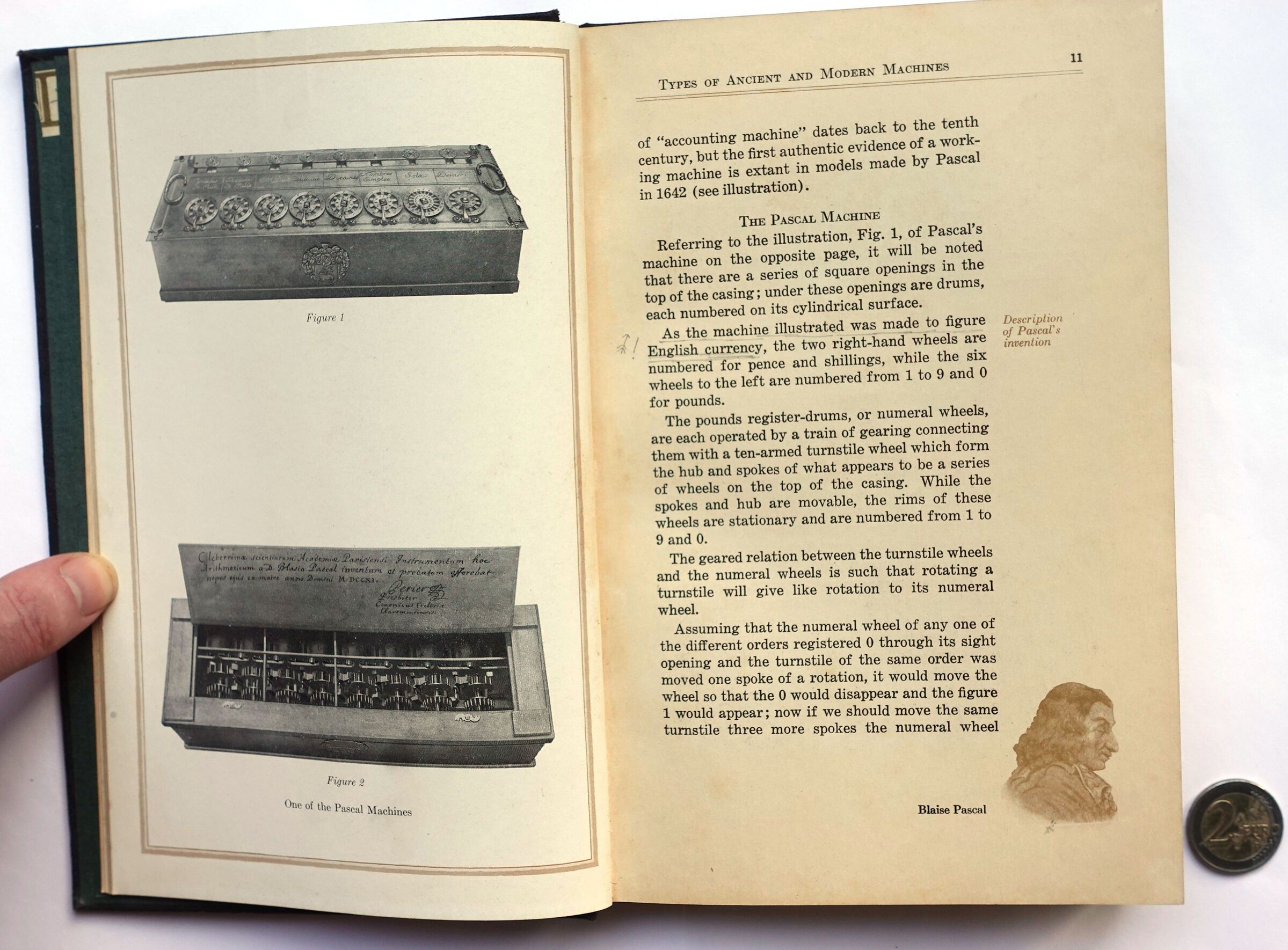
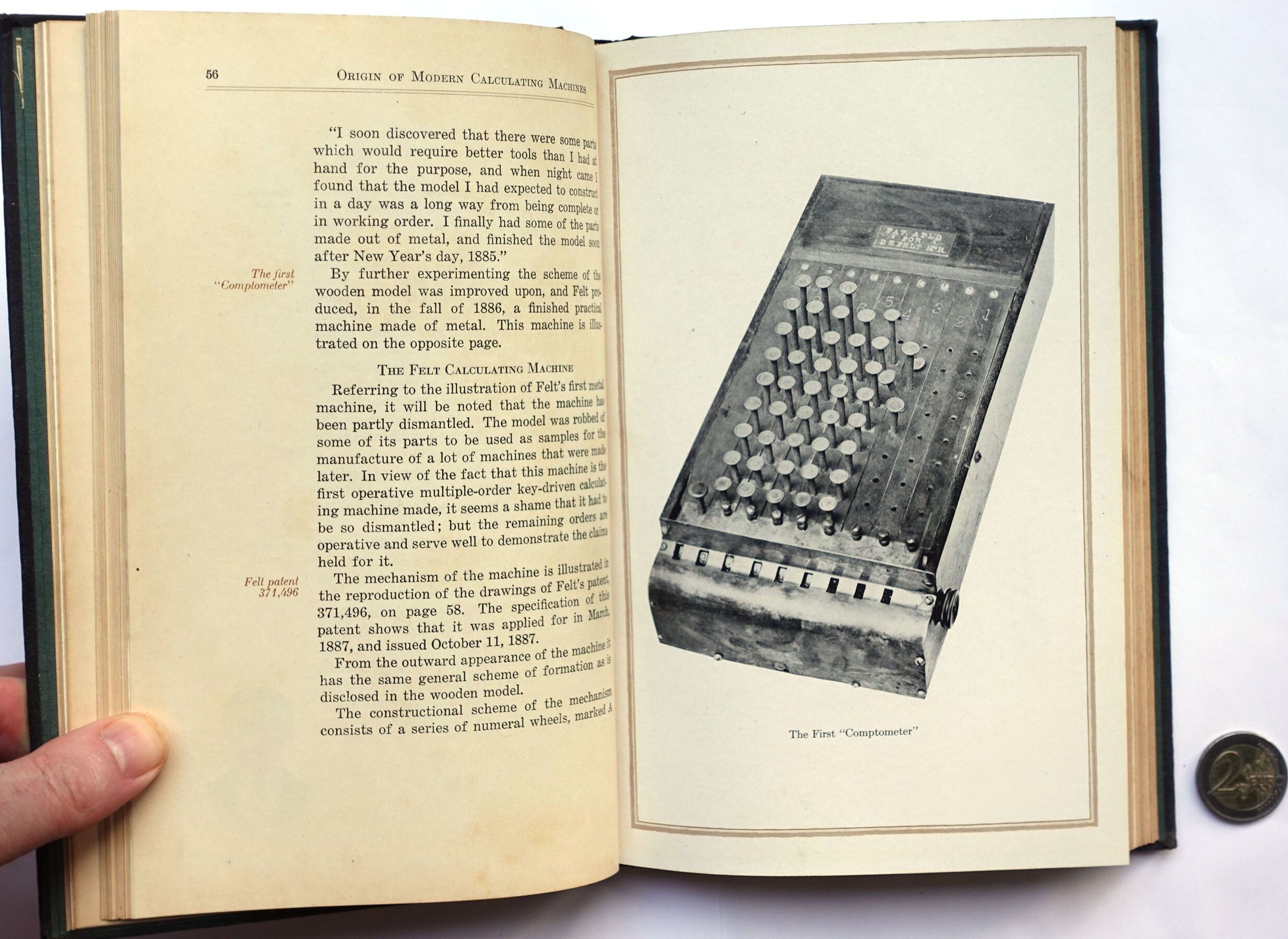
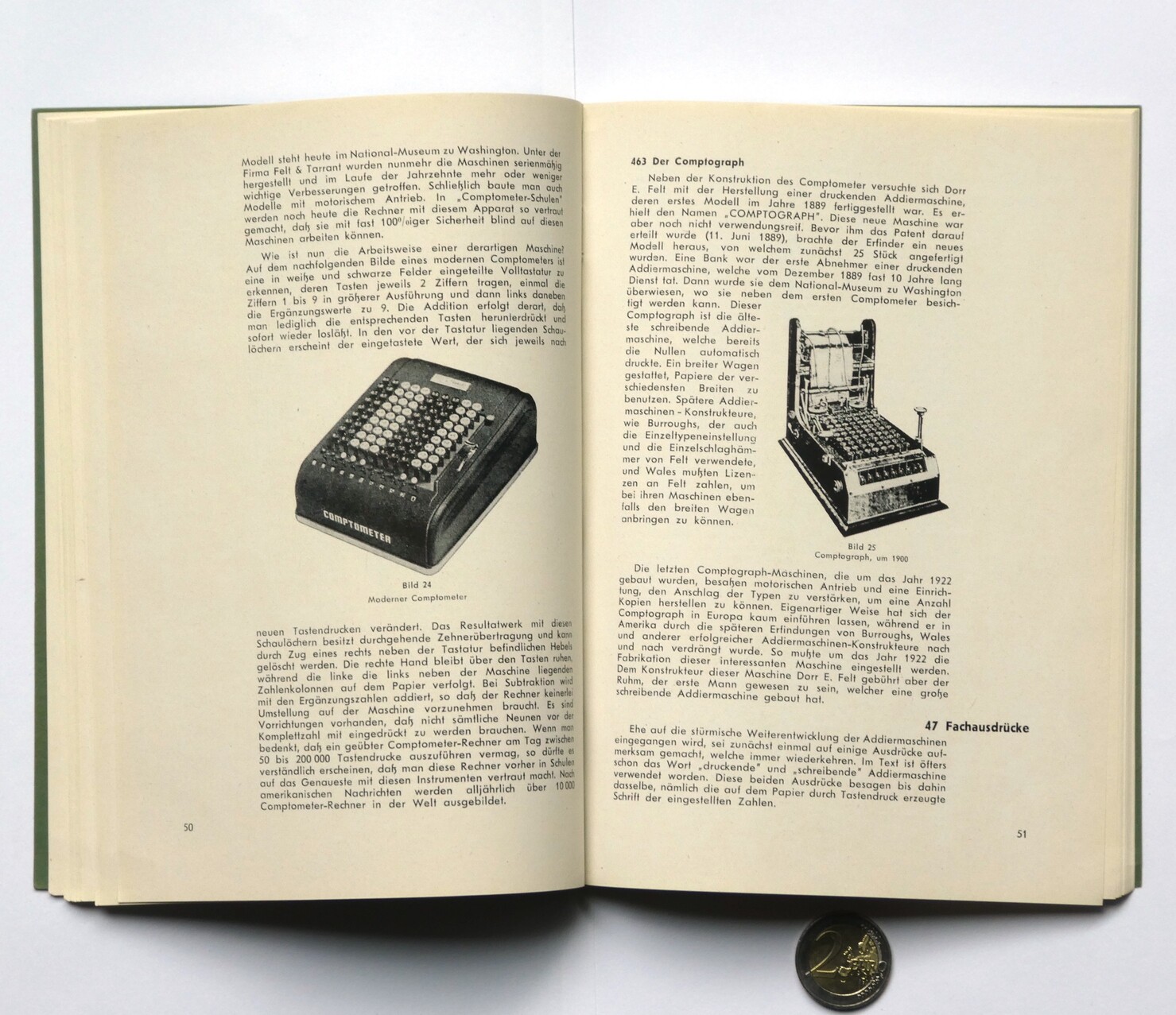
This book appears to be a history of the calculator, but after a short
section about Pascal's adding machine it is mostly limited to the history
and development of key-driven machines and adding-listing machines, in
particular the Comptometer, Comptograph, and the Burroughs Adding Machine.
There is virtually no mention of pinwheel machines or stepped drum machines.
Turck was engineer at Felt & Tarrant, and seems to have written
this book in order to refute various claims made by Burroughs about their
adding machine being the first. A scan can be found on
archive.org.
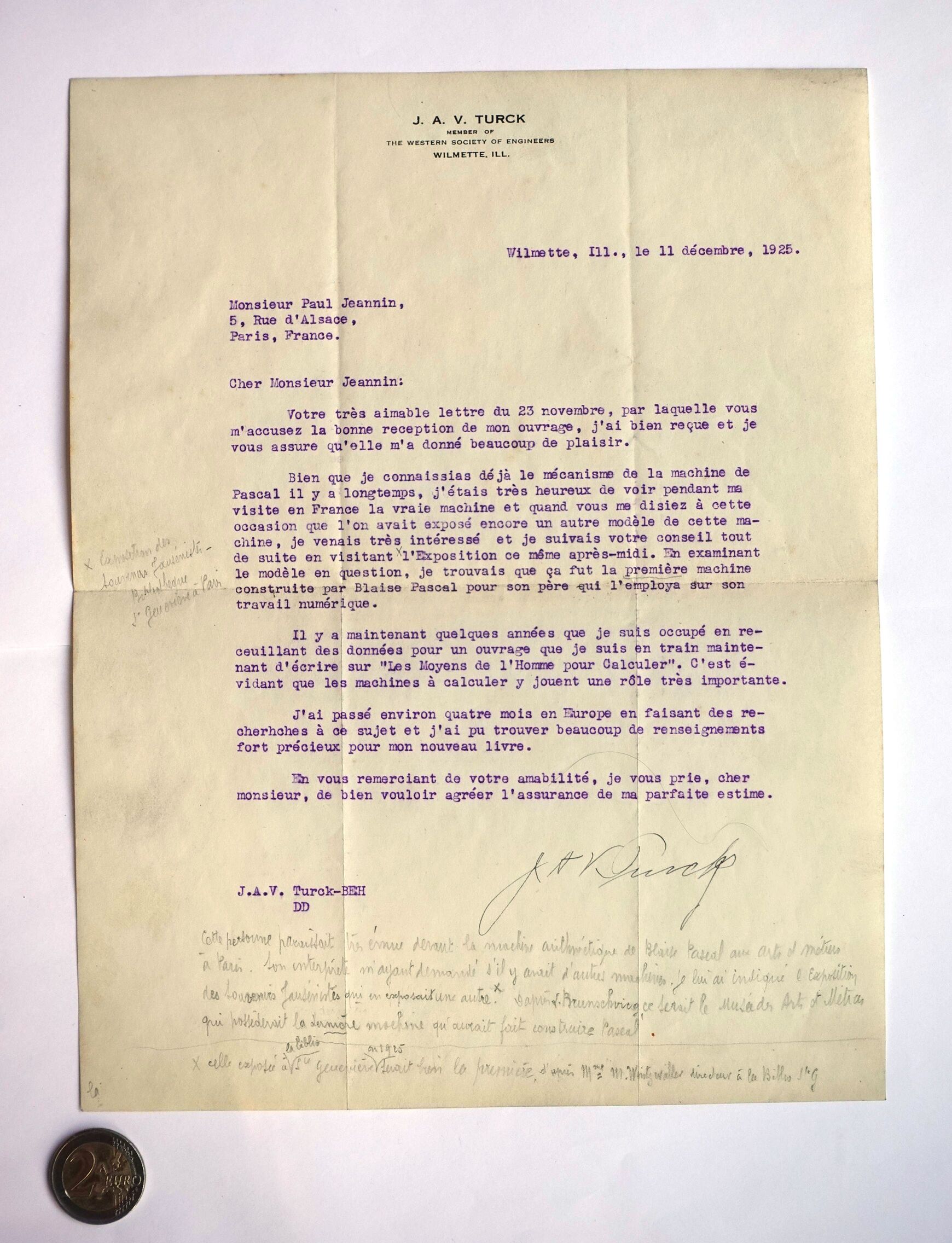
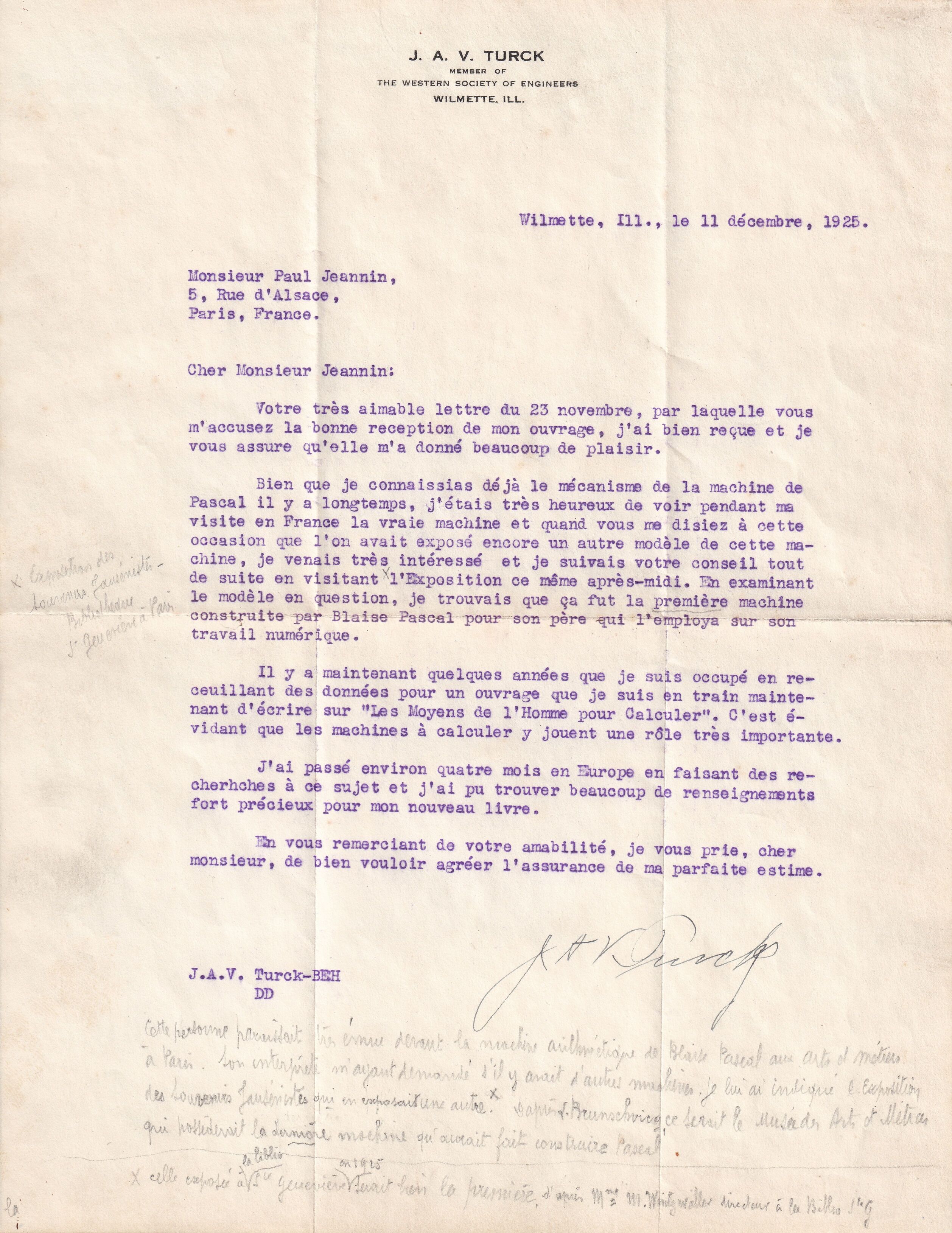
My copy of this book was originally given by the author to Paul Jeannin, who had helped him to
view one of Blaise Pascal's adding machines at the Musée des Arts et Métiers in Paris,
and told him about another that was in an exhibition at the Sainte Geneviève Library.
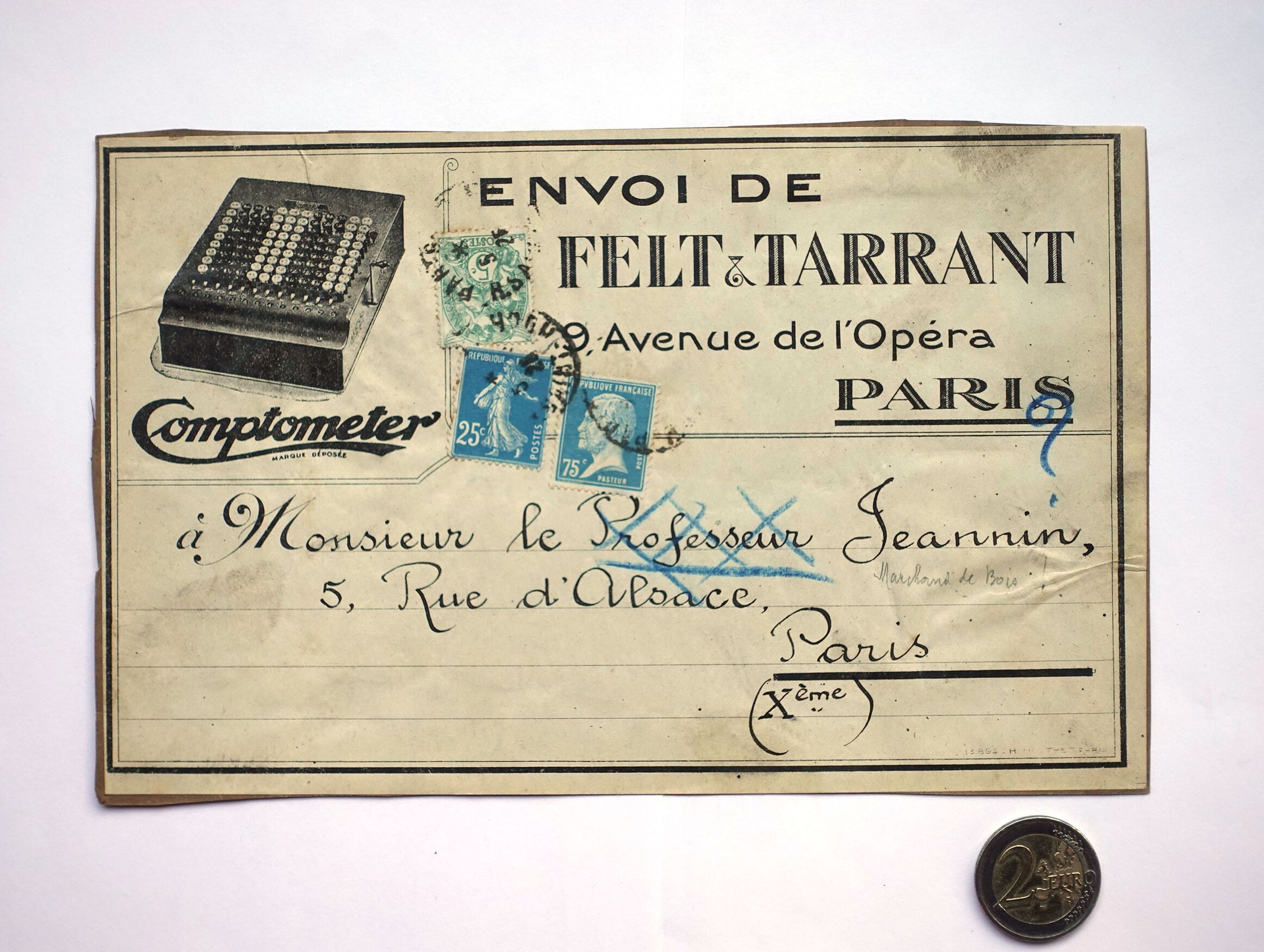
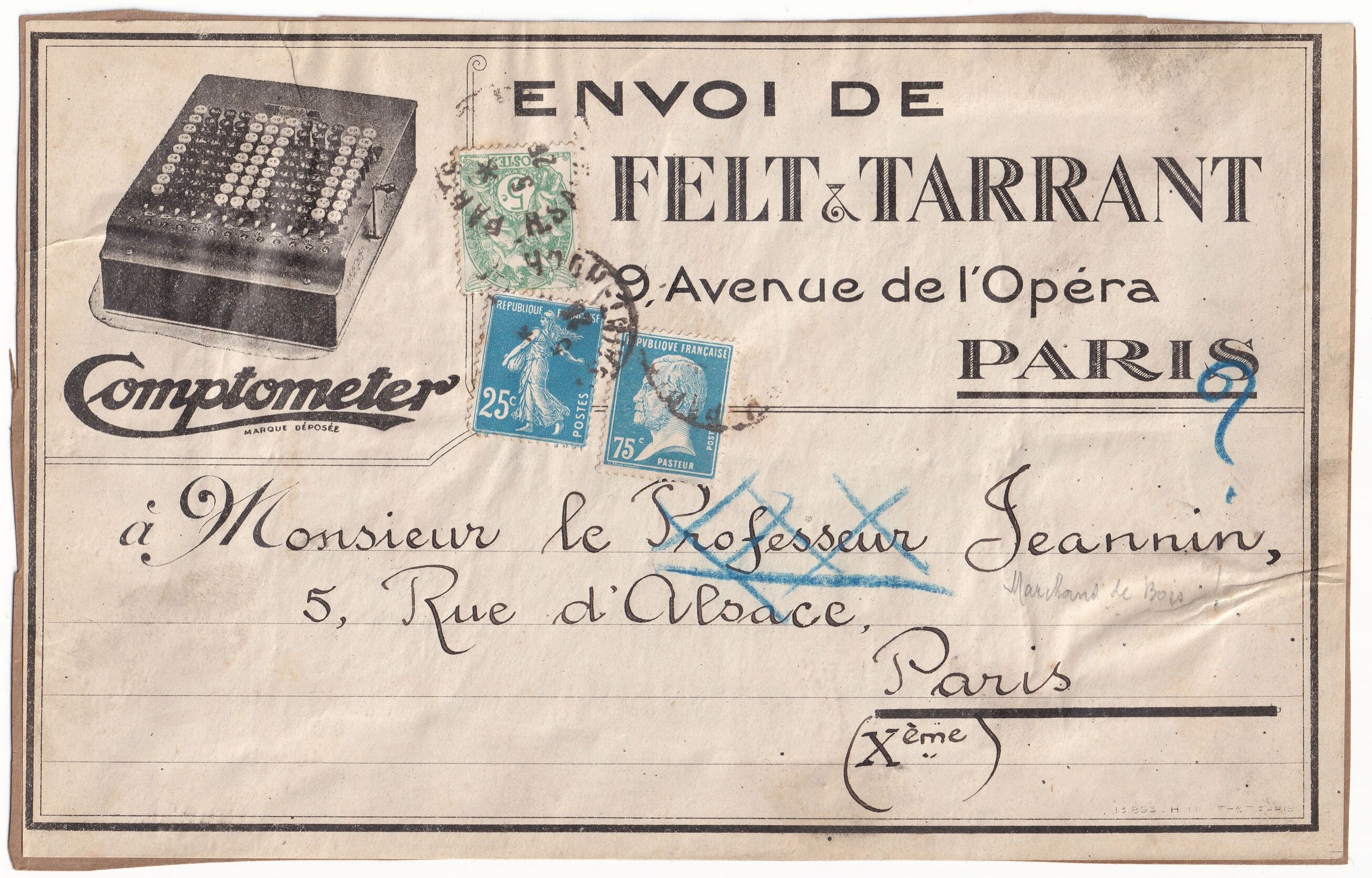
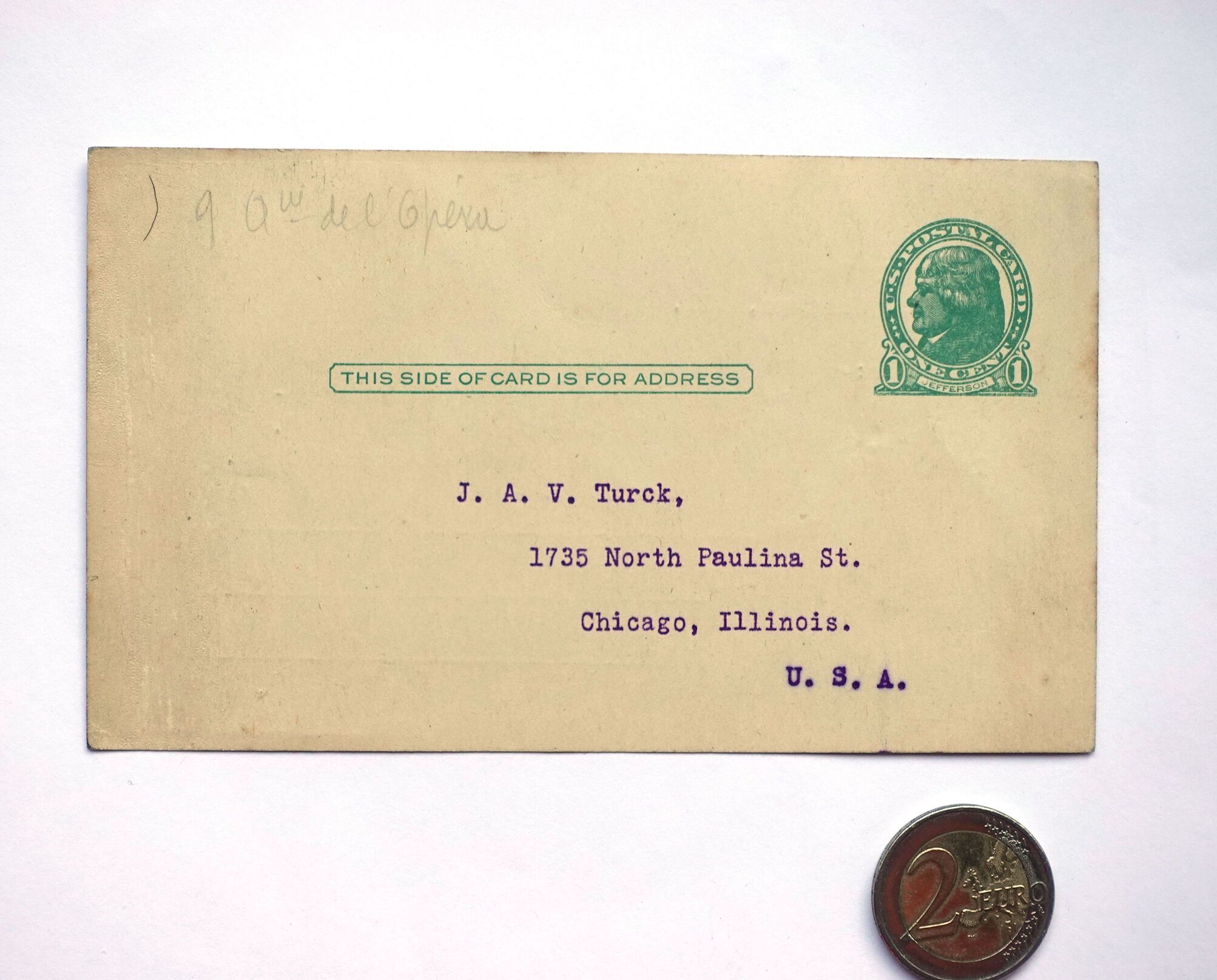
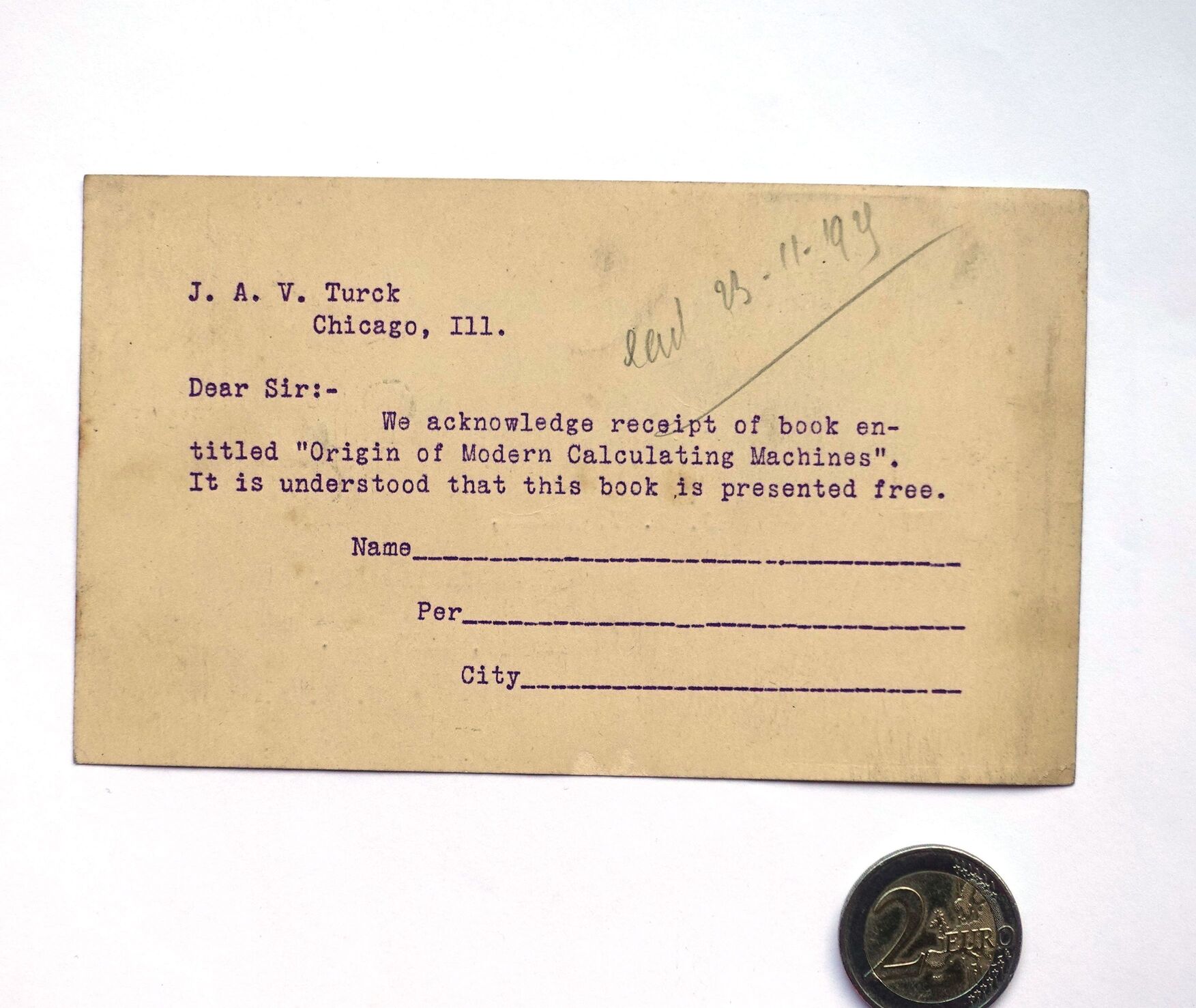
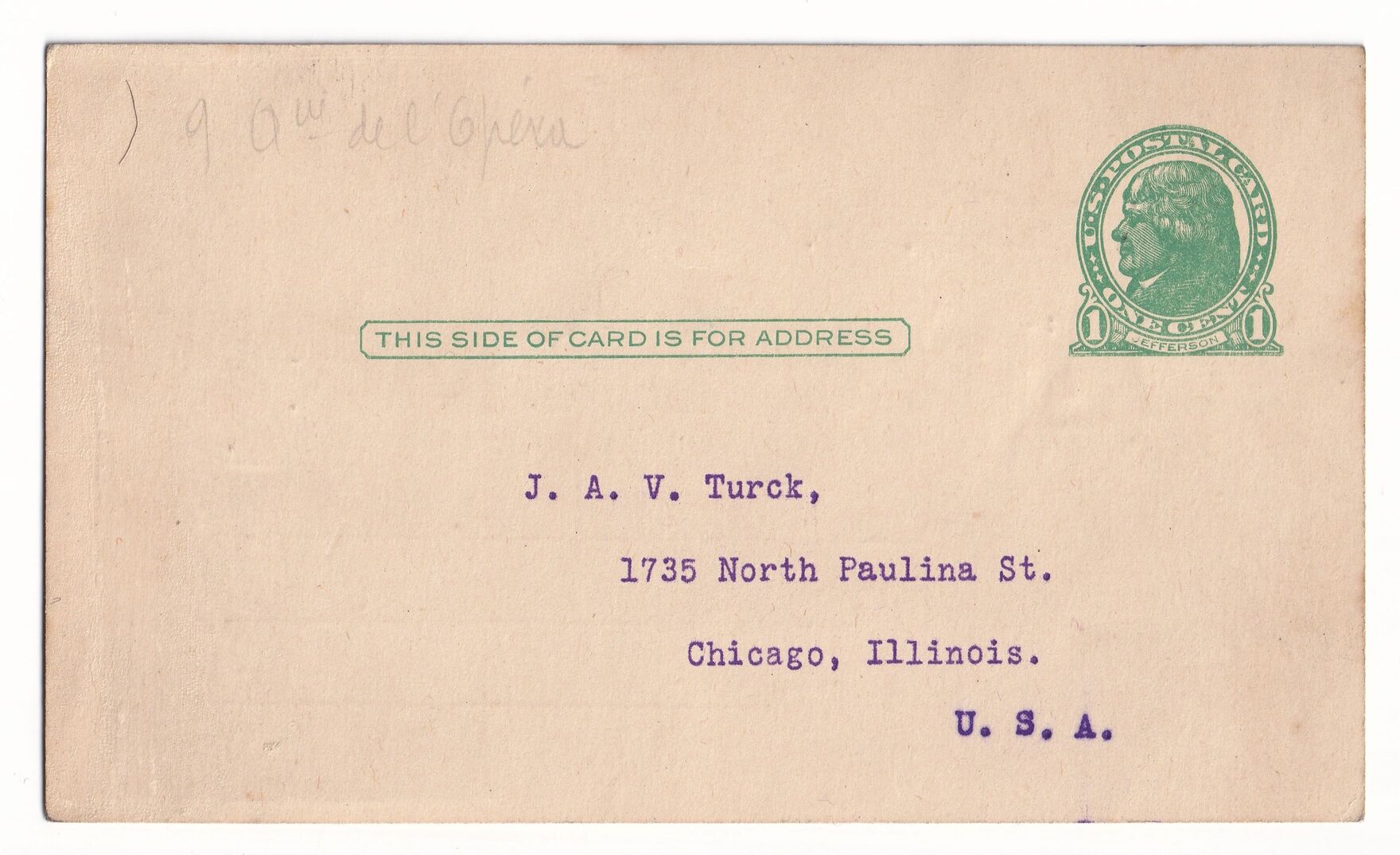
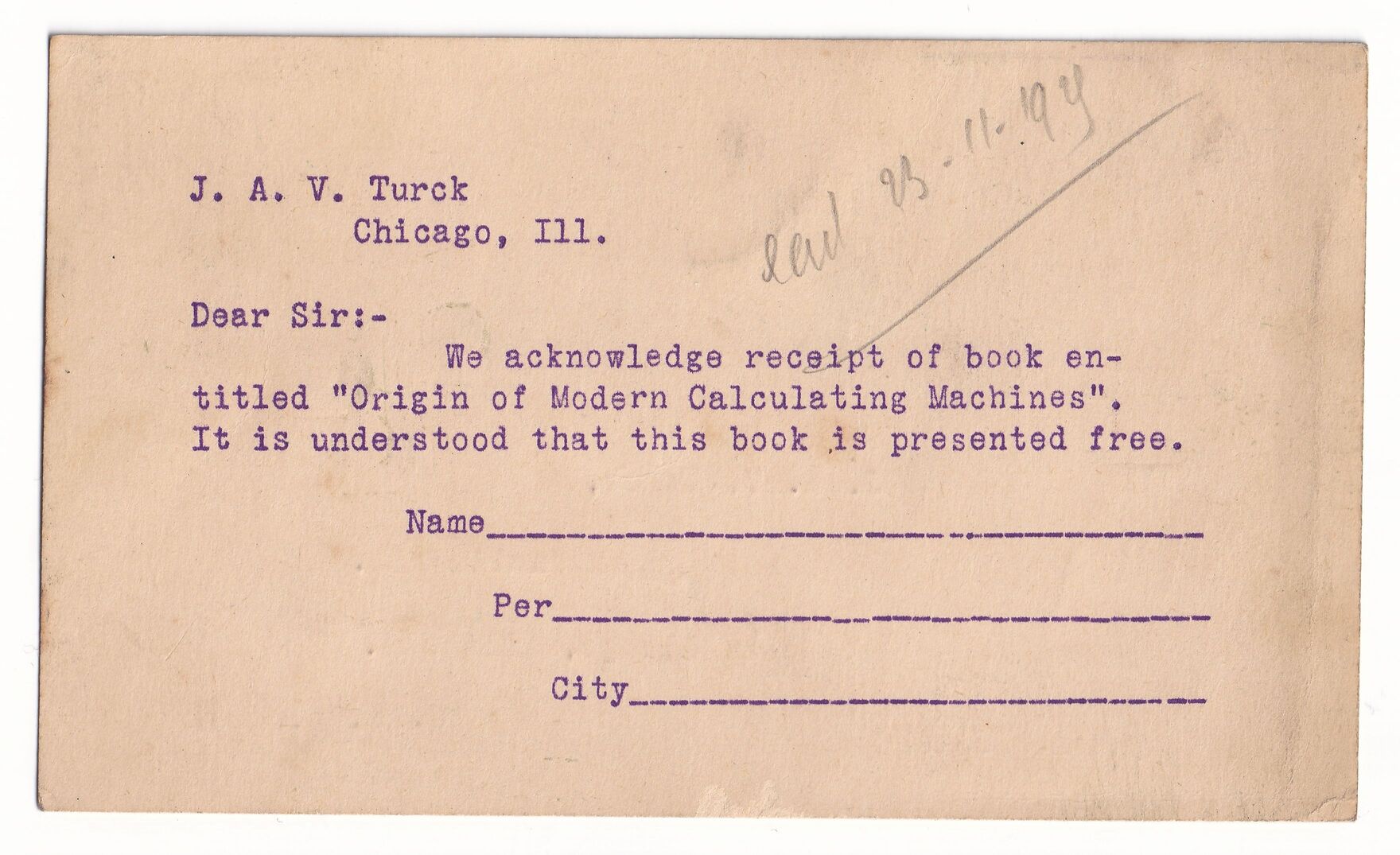
My book came with the beautiful address label with which the book had been sent to Jeannin from
the French branch of Felt & Tarrant, a reply postcard, and a letter from Turck
acknowledging receipt of Jeannin's thank you letter and thanking him for his help. The
letter has pencil annotations (presumably from Jeannin) that fill in some details.
For completeness, here is the full text of the letter including its annotations.
                                               J. A. V. TURCK
                                                  MEMBER OF
                                       THE WESTERN SOCIETY OF ENGINEERS
                                                WILMETTE, ILL.

                                                              Wilmette, Ill., le 11 décembre, 1925.


                           Monsieur Paul Jeannin,
                           5, Rue d'Alsace,
                           Paris, France.

                           Cher Monsieur Jeannin:

                                  Votre très aimable lettre du 23 novembre, par laquelle vous
                           m'accusez la bonne reception de mon ouvrage, j'ai bien reçue et je
                           vous assure qu'elle m'a donné beaucoup de plaisir.

                                  Bien que je connaissias déjà le mécanisme de la machine de
                           Pascal il y a longtemps, j'étais très heureux de voir pendant ma
                           visite en France la vraie machine et quand vous me disiez à cette
                           occasion que l'on avait exposé encore un autre modèle de cette ma-
X Exposition des           chine, je venais très intéressé et je suivais votre conseil tout
Souvenirs jansénistes -    de suite en visitantXl'Exposition ce même après-midi. En examinant
Bibliotheque               le modèle en question, je trouvais que ça fut la première machine
Ste Geneviève á Paris      construite par Blaise Pascal pour son père qui l'employa sur son
                           travail numérique.

                                  Il y a maintenant quelques années que je suis occupé en re-
                           ceuillant des données pour un ouvrage que je suis en train mainte-
                           nant d'écrire sur "Les Moyens de l'Homme pour Calculer". C'est é-
                           vidant que les machines à calculer y jouent une rôle très importante.

                                  J'ai passé environ quatre mois en Europe en faisant des re-
                           cherhches à ce sujet et j'ai pu trouver beaucoup de renseignements
                           fort précieux pour mon nouveau livre.

                                  En vous remerciant de votre amabilité, je vous prie, cher
                           monsieur, de bien vouloir agréer l'assurance de ma parfaite estime.


                           J.A.V. Turck-BEH
                                  DD

Cette personne paraissait trés envie devant la machine arithmétique de Blaise Pascal aux Arts et Métiers
à Paris. Son interpréte m'ayant demandé s'il y avait d'autres machines. Je lui ai indiqué l'Exposition
des Souvenirs jansénistes qui en exposait une autre. X ?après? Brunschvieg, ce serait le musée des Art et Métiers
qui posséderait la derniére machine qu'aurait fait construire Pascal.

             la biblio      on 1925
                 V             V
X celle exposée á Ste Geneviève serait bien la premiére d'après Mme M. Wintzweiller directeur á la Biblio Ste G
                                               J. A. V. TURCK
                                                  MEMBER OF
                                       THE WESTERN SOCIETY OF ENGINEERS
                                                WILMETTE, ILL.

                                                              Wilmette, Ill., 11th December, 1925.


                           Mister Paul Jeannin,
                           5, Rue d'Alsace,
                           Paris, France.

                           Dear Mr. Jeannin:

                                  I received your very kind letter of November 23rd, in which
                           you acknowledge receipt of my work, and I assure you it gave me
                           great pleasure.

                                  Although I had known the mechanism of Pascal's machine for
                           a long time, I was very happy to see the real machine during my
                           visit to France, and when you told me on that occasion that yet
                           another model of this machine had been exhibited, I was very
X Exhibition of            interested and I followed your advice immediately by visiting the
Jansenist Memorabilia,     ExhibitionXthat same afternoon. Upon examining the model in
Sainte-Geneviève           question, I found that it was the first machine built by Blaise
Library in Paris           Pascal for his father, who used it on his numerical work.

                                  For the past few years, I have been busy collecting data
                           for a book I am currently writing on "Man's Means of Calculating".
                           It is obvious that calculating machines play a very important role
                           in it.

                                  I spent about four months in Europe researching this topic
                           and was able to find a lot of very valuable information for my new
                           book.

                                  Thanking you for your kindness, I ask you, dear sir, to
                           accept the assurance of my highest esteem.


                           J.A.V. Turck-BEH
                                  DD

This person seemed very envious of Blaise Pascal's arithmetic machine at Arts et Métiers
in Paris. Their interpreter asked me if there were other machines. I pointed them to the Jansenist
Memorabilia Exhibition, which displayed another one. X According to Brunschvieg, it would be the Musée
des Arts et Métiers that possesses the last machine Pascal had built.

                 the library     on 1925
                      V             V
X the one exhibited at Ste Geneviève would indeed be the first, according to Ms. M. Wintzweiller,
  director at the Ste G. Library.
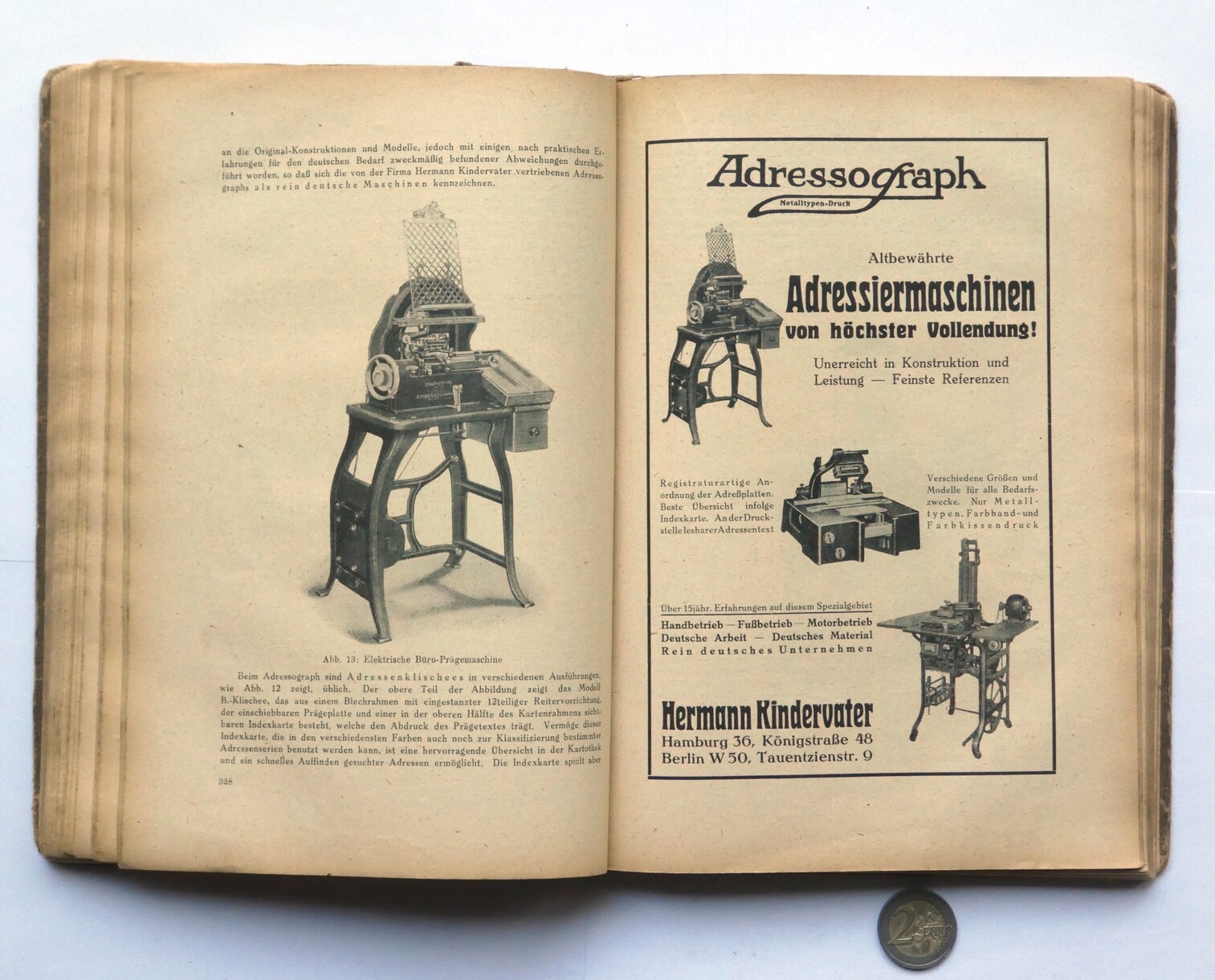
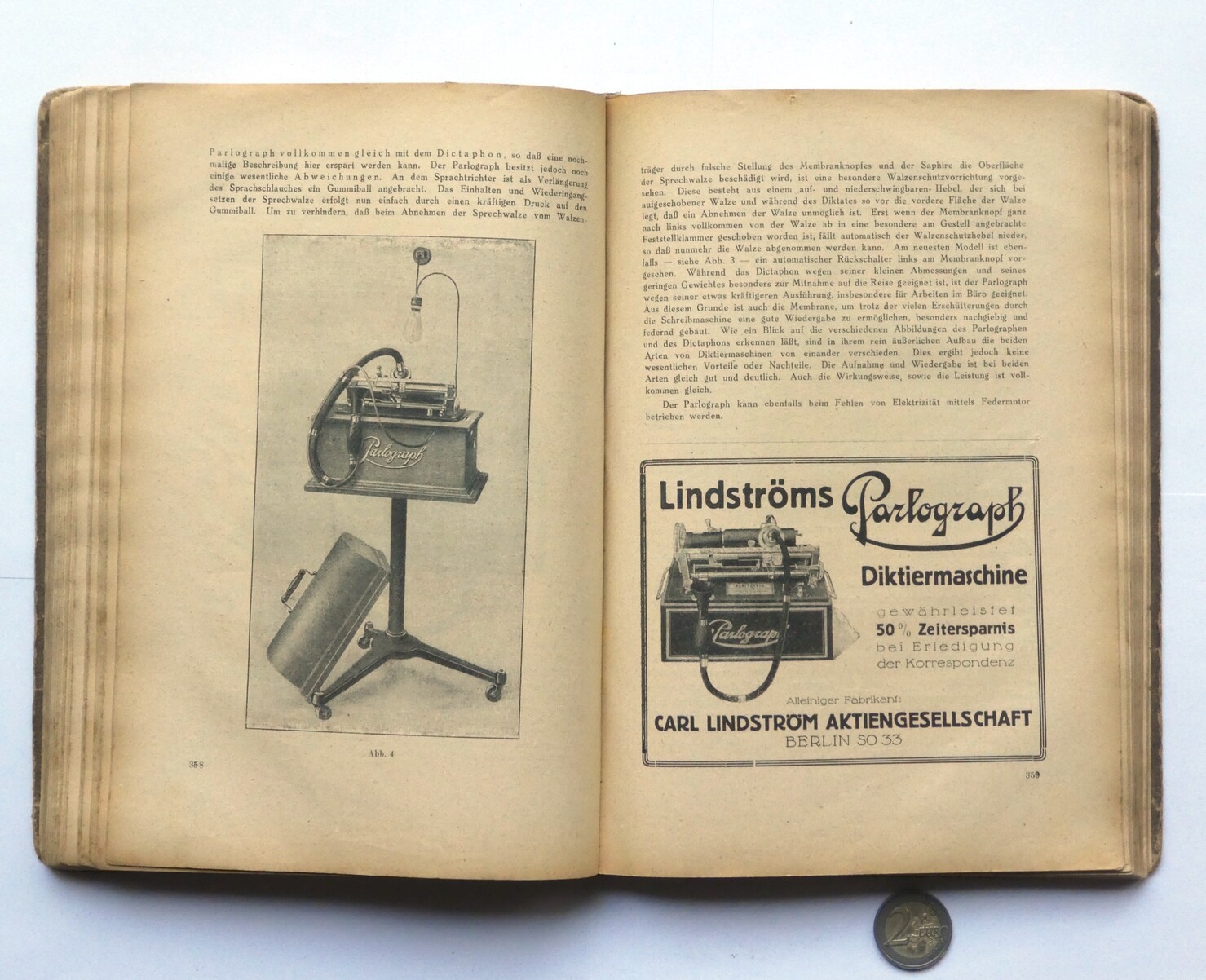
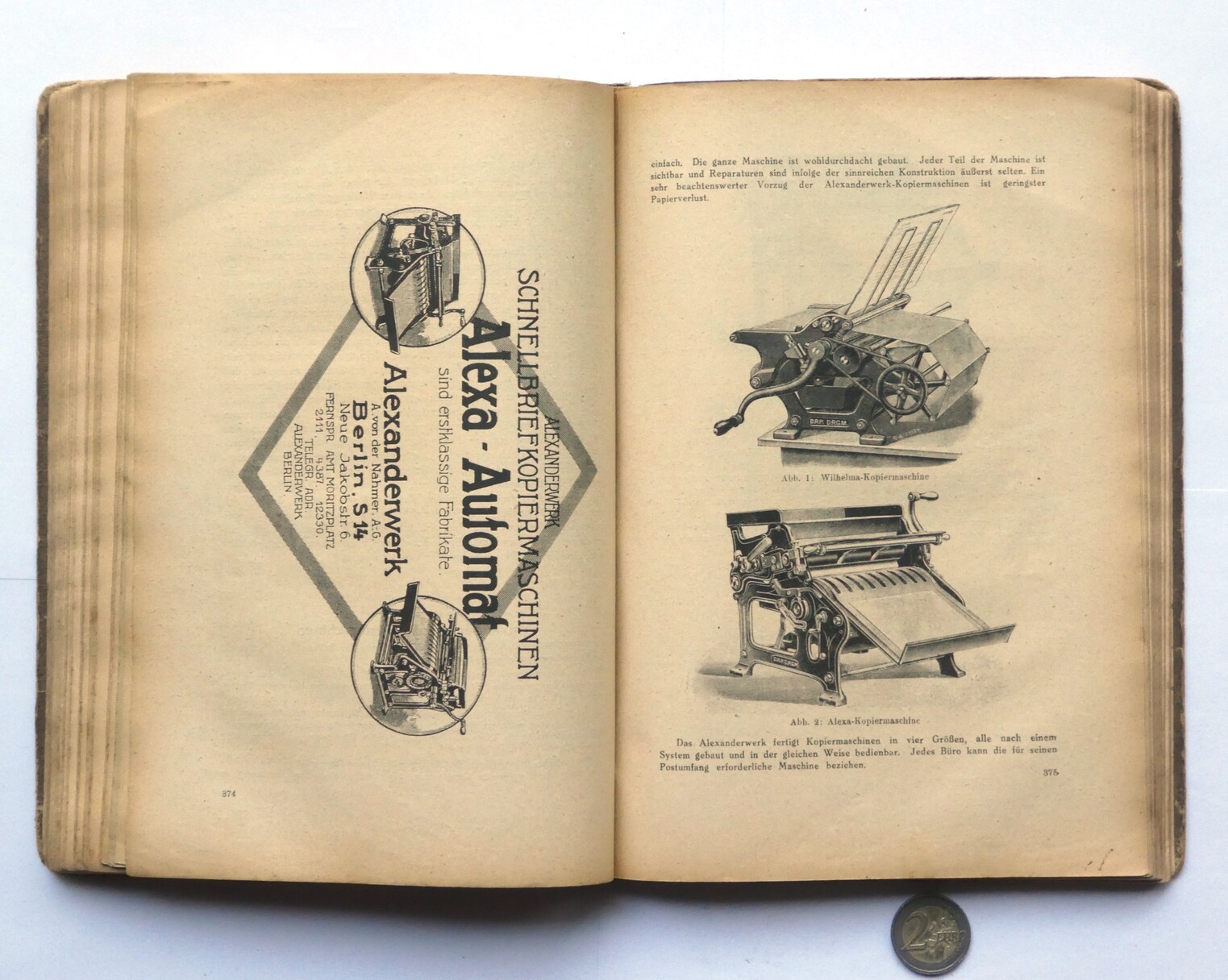
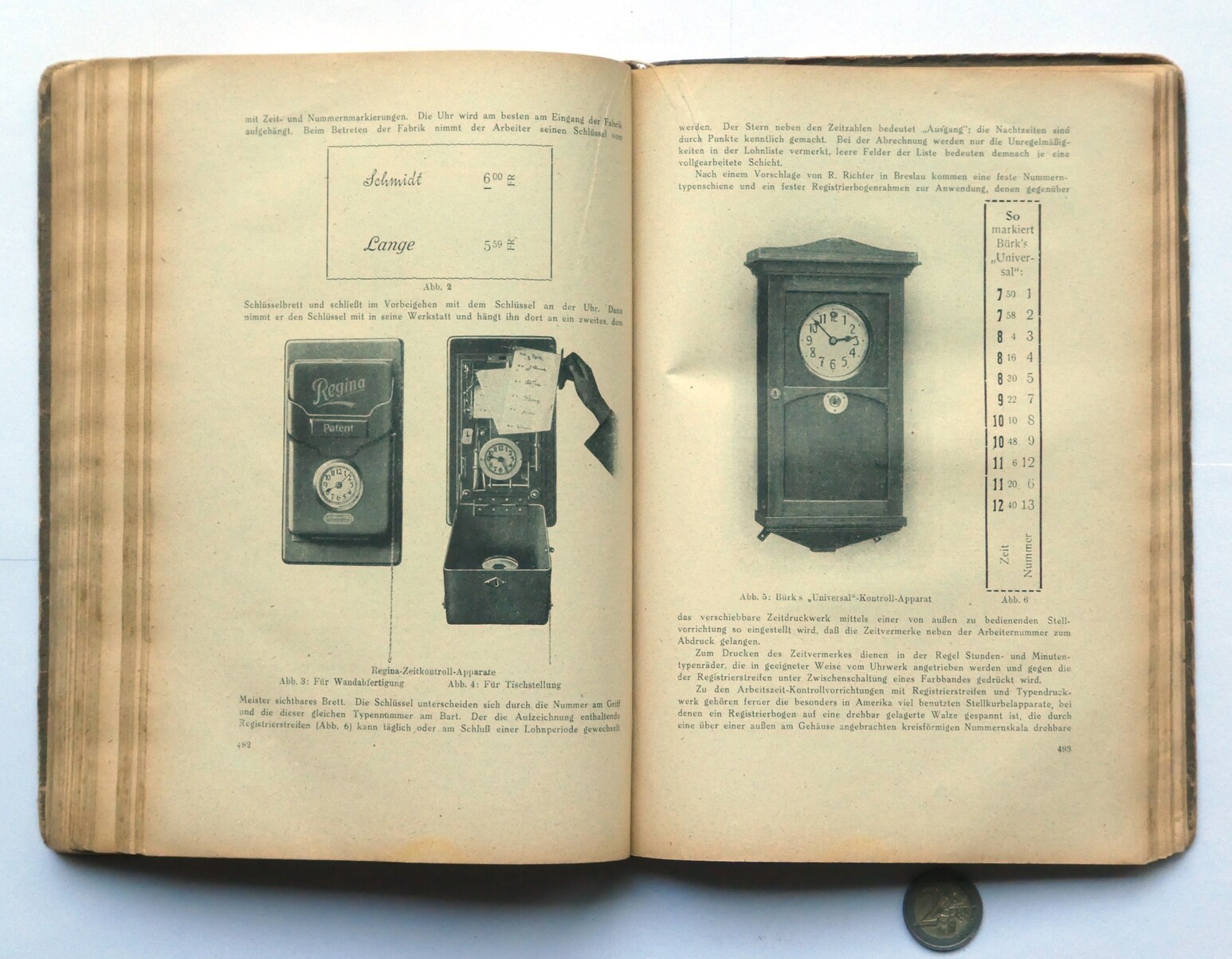
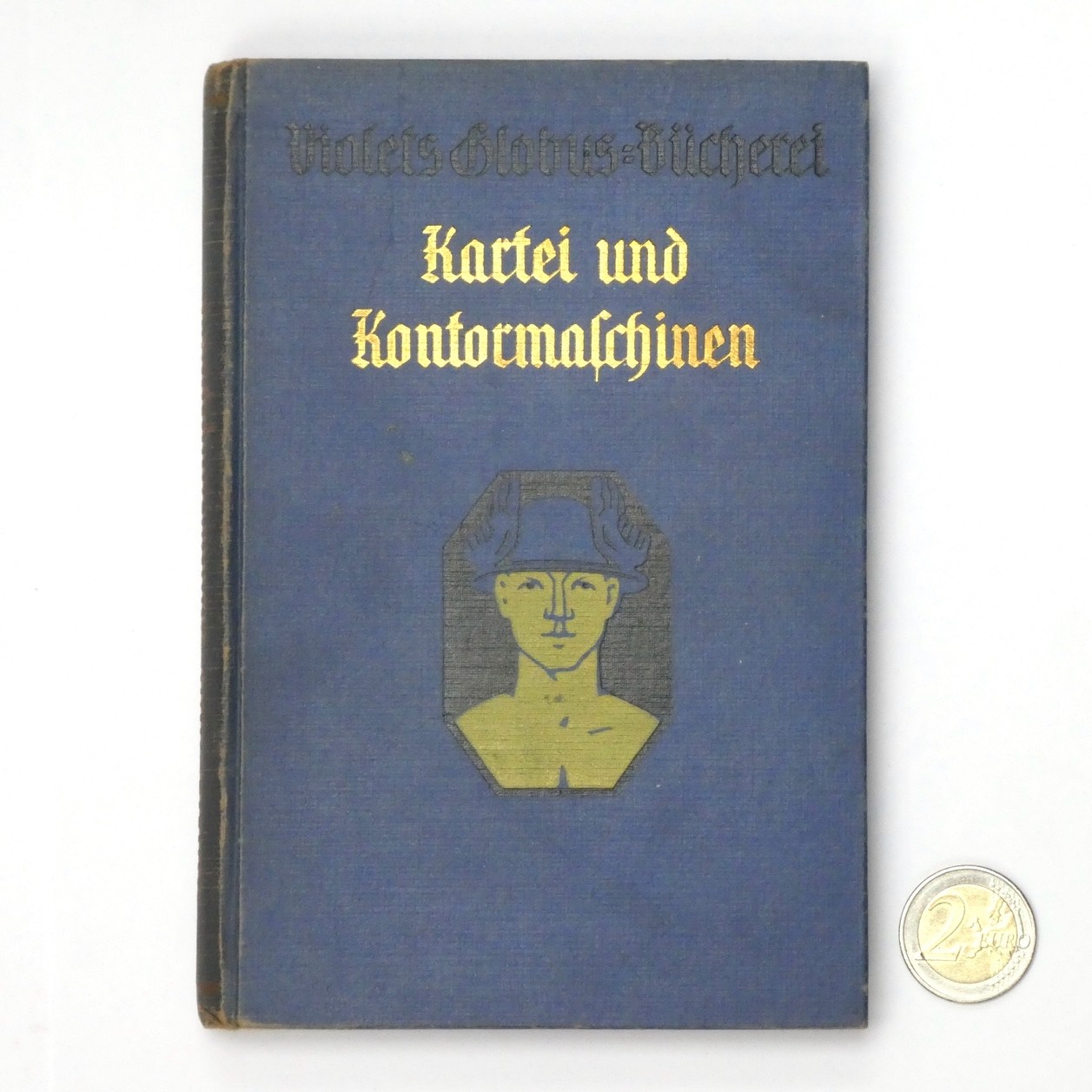
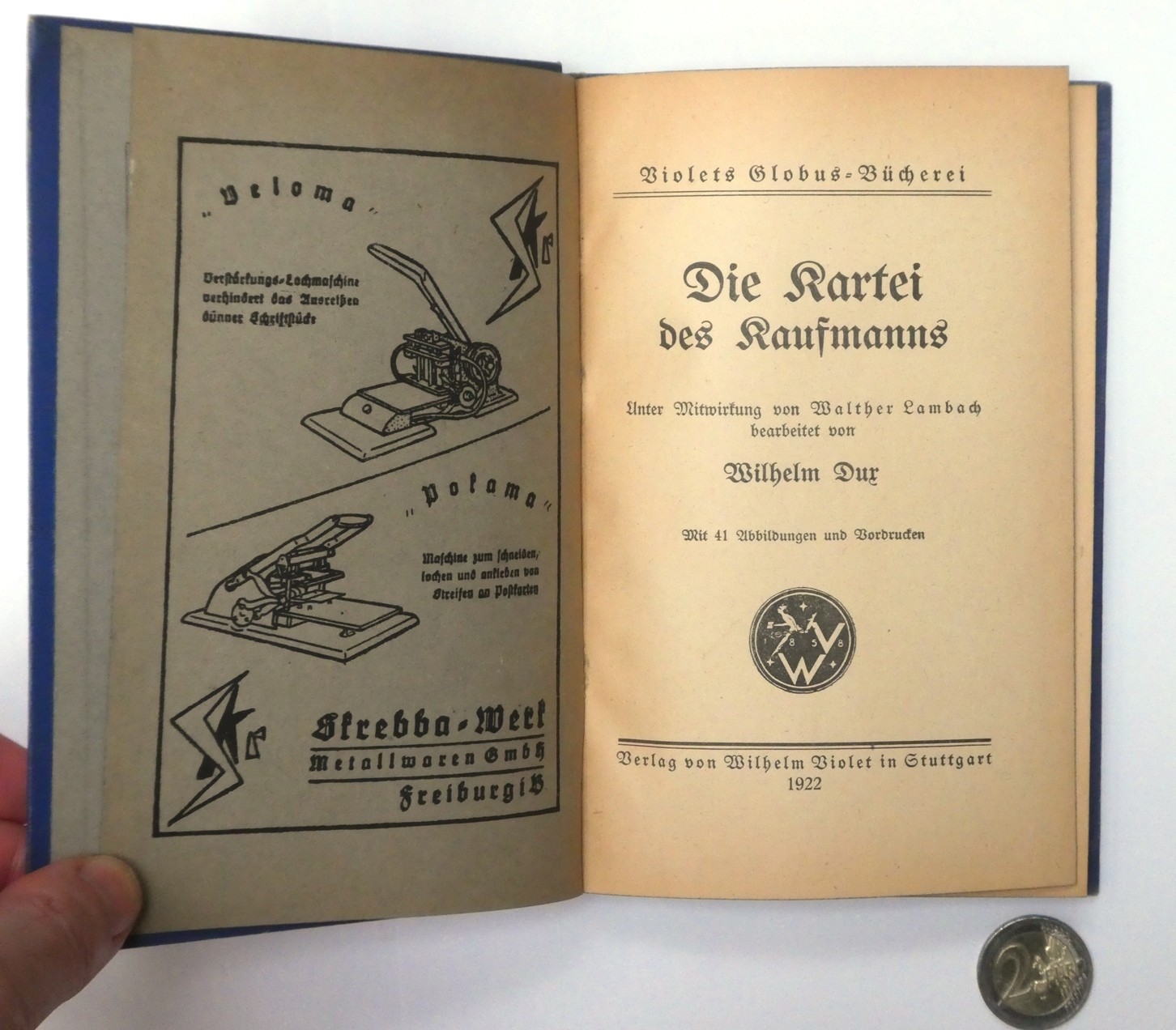
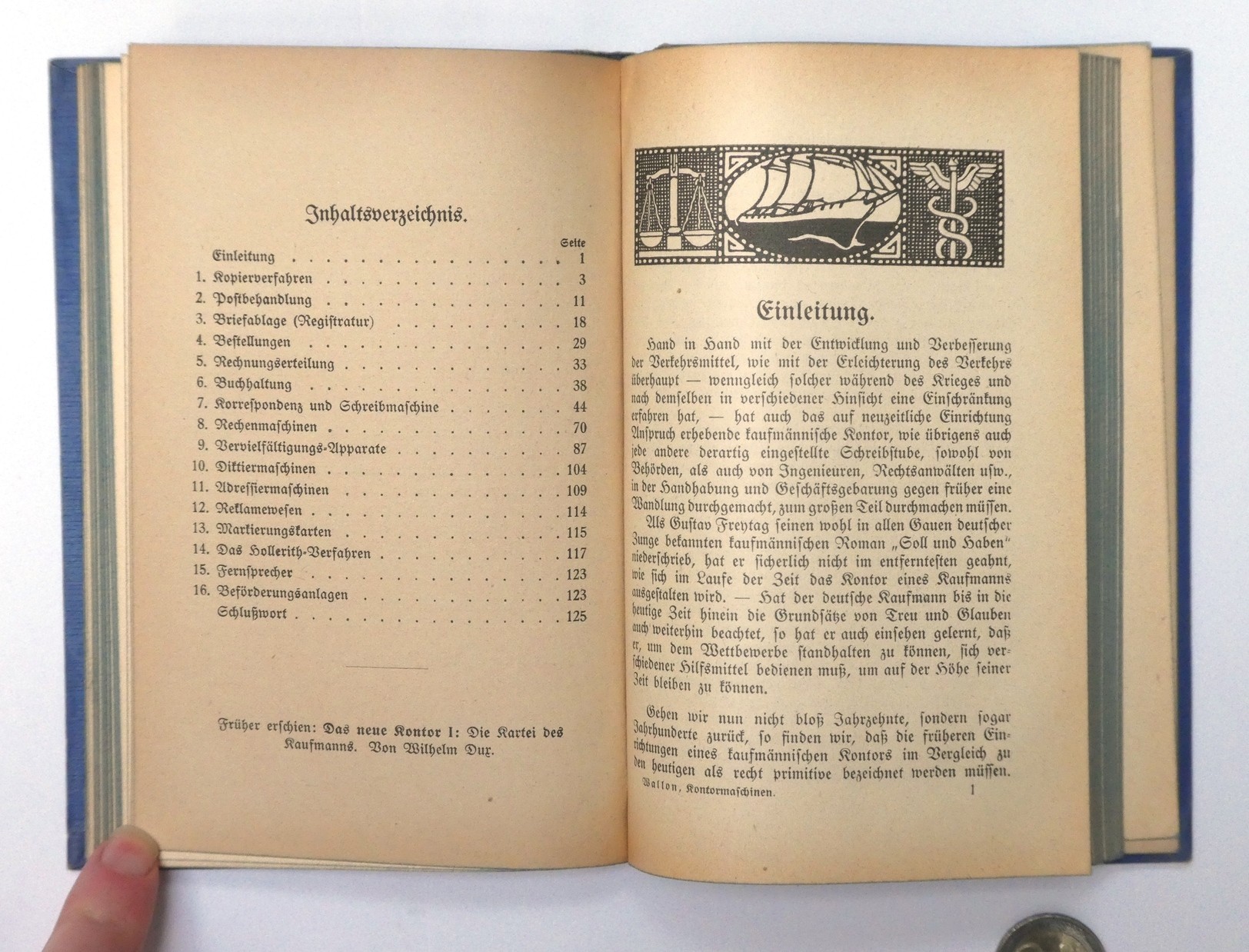
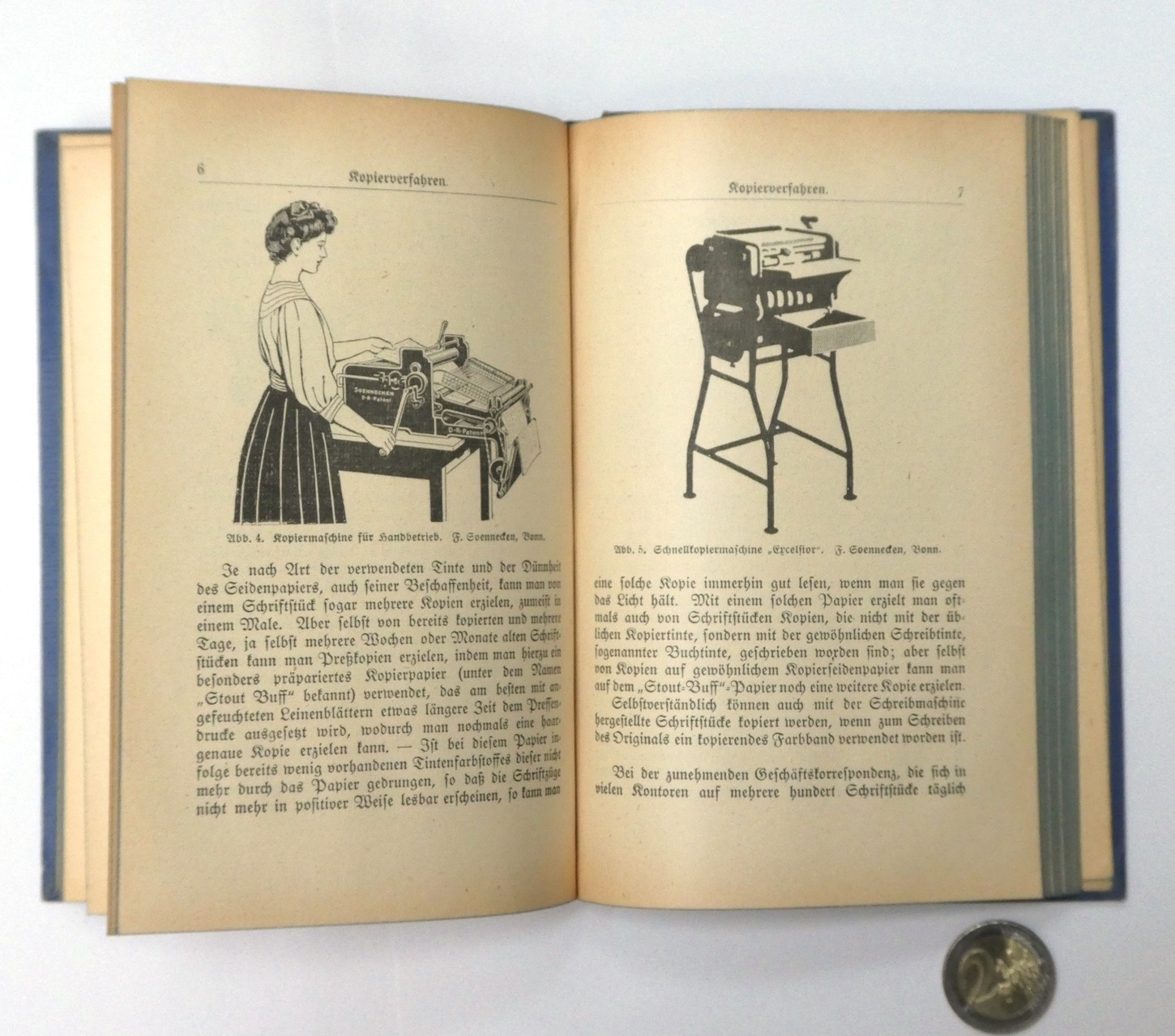
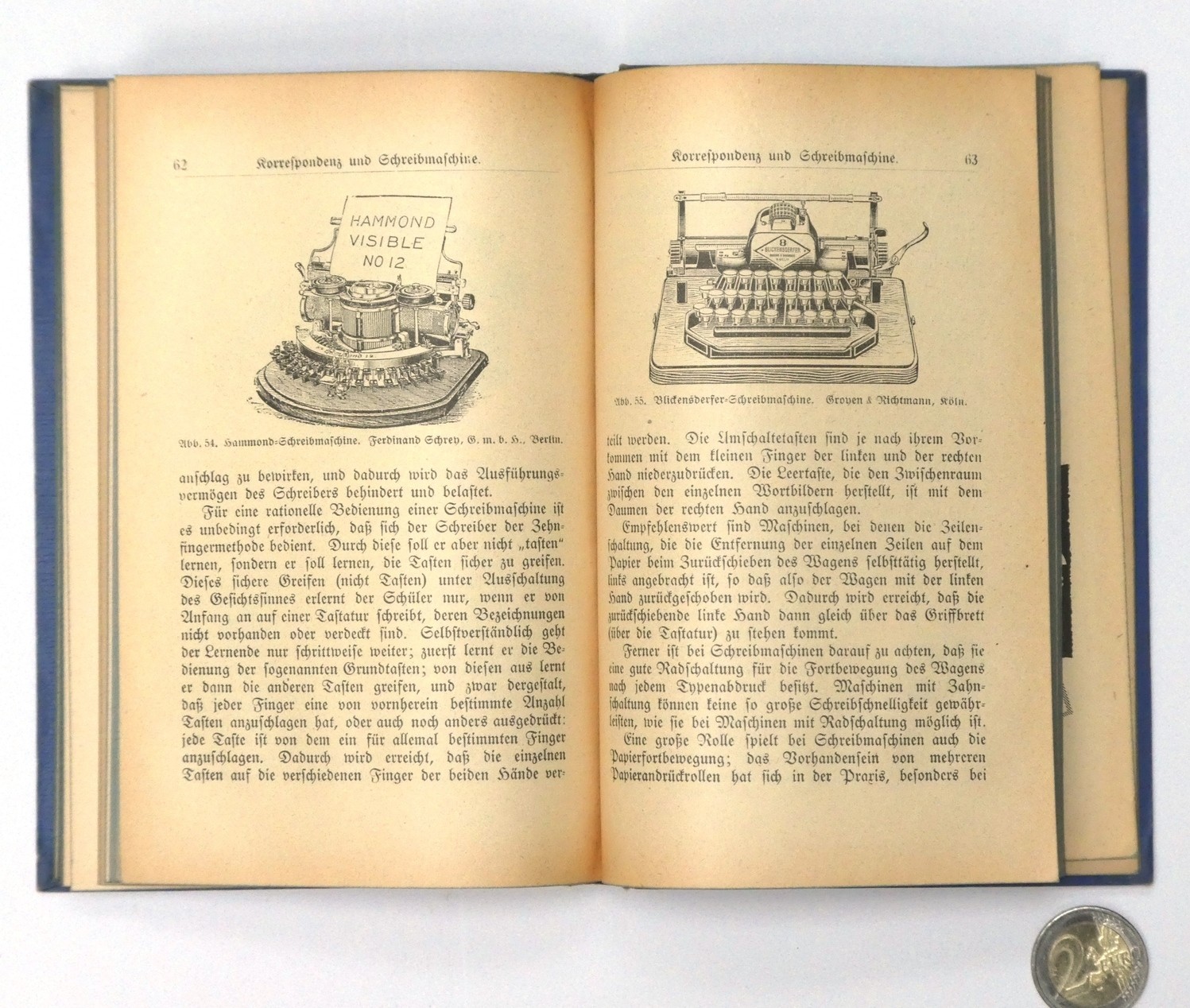
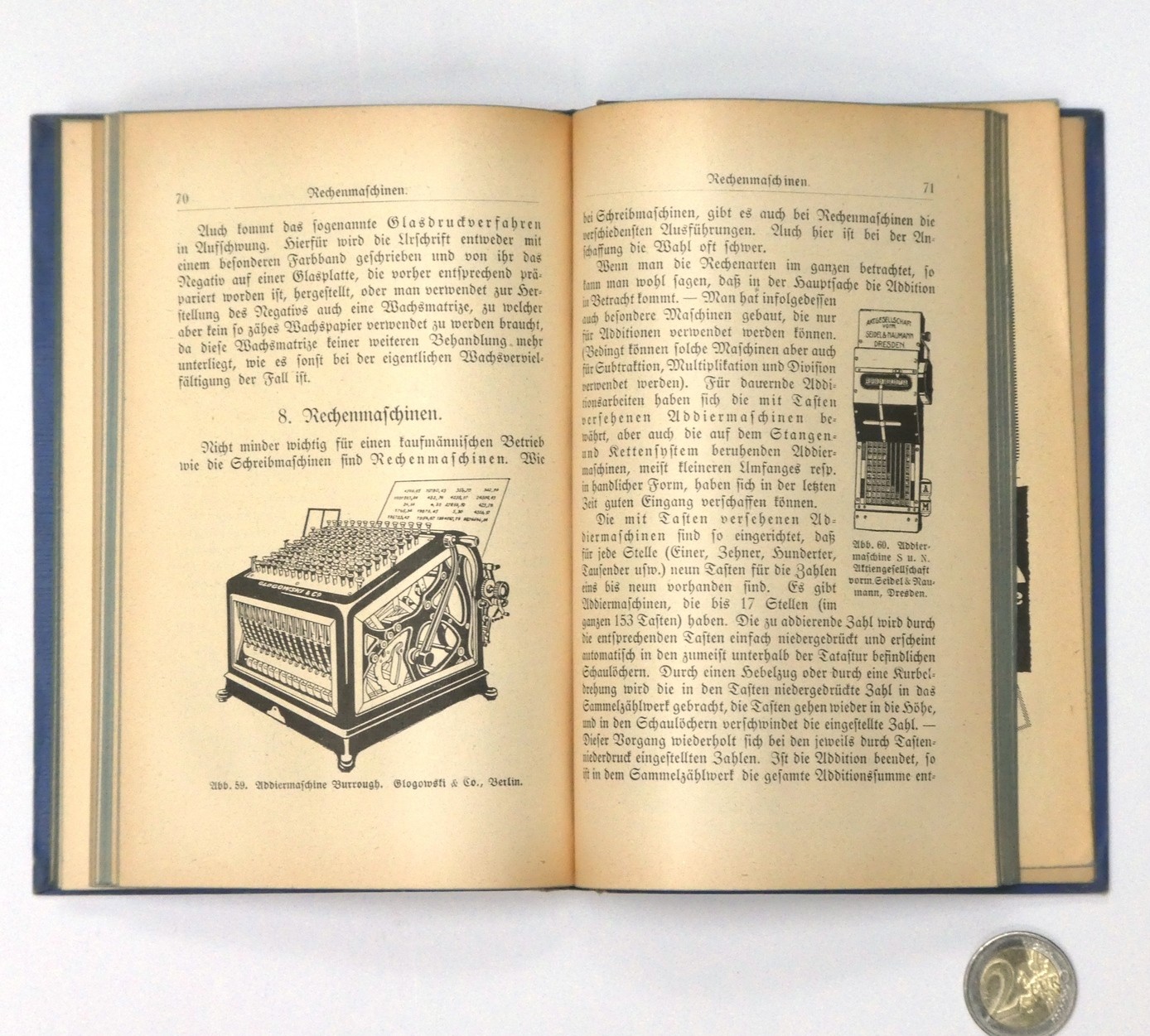
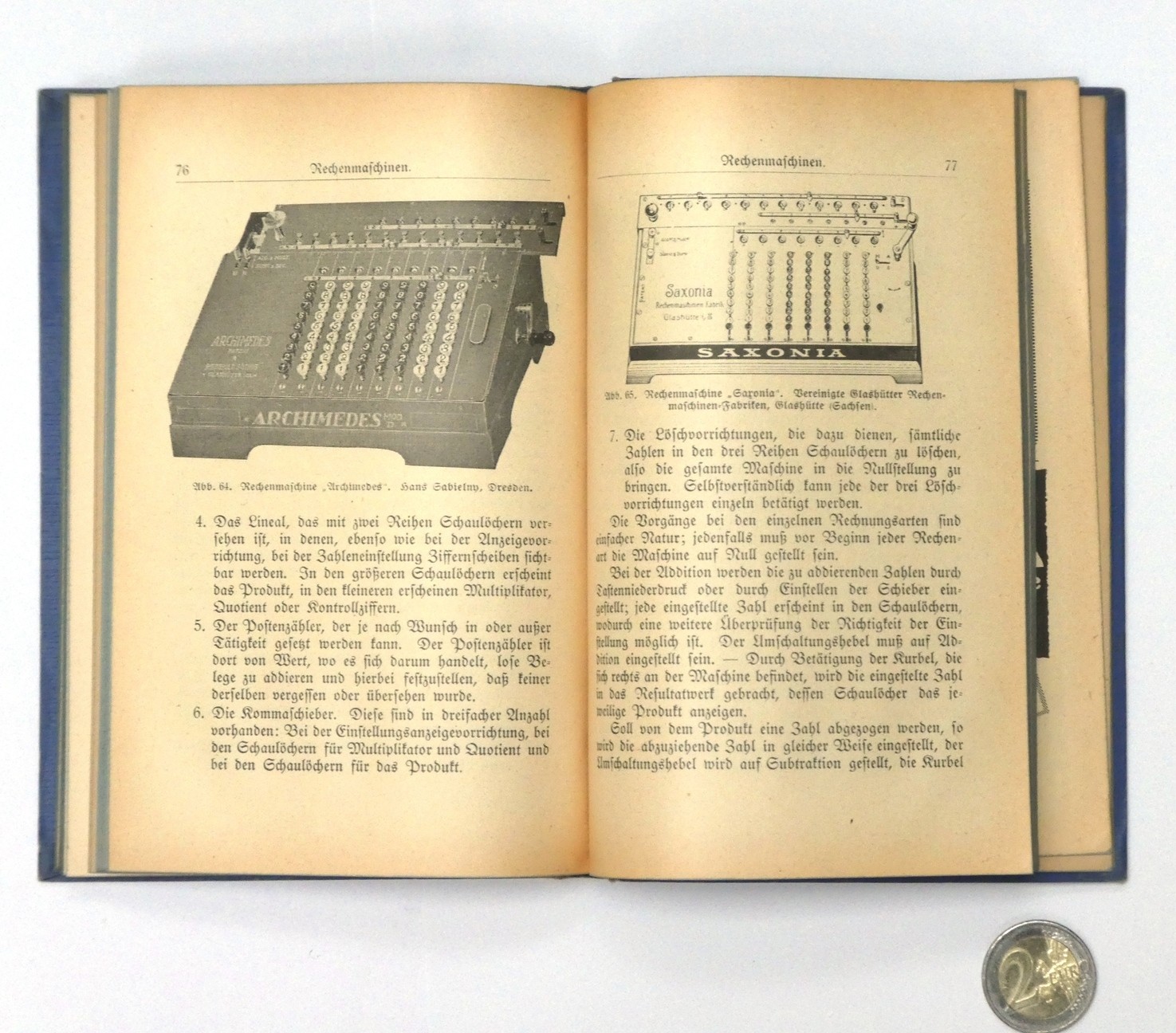
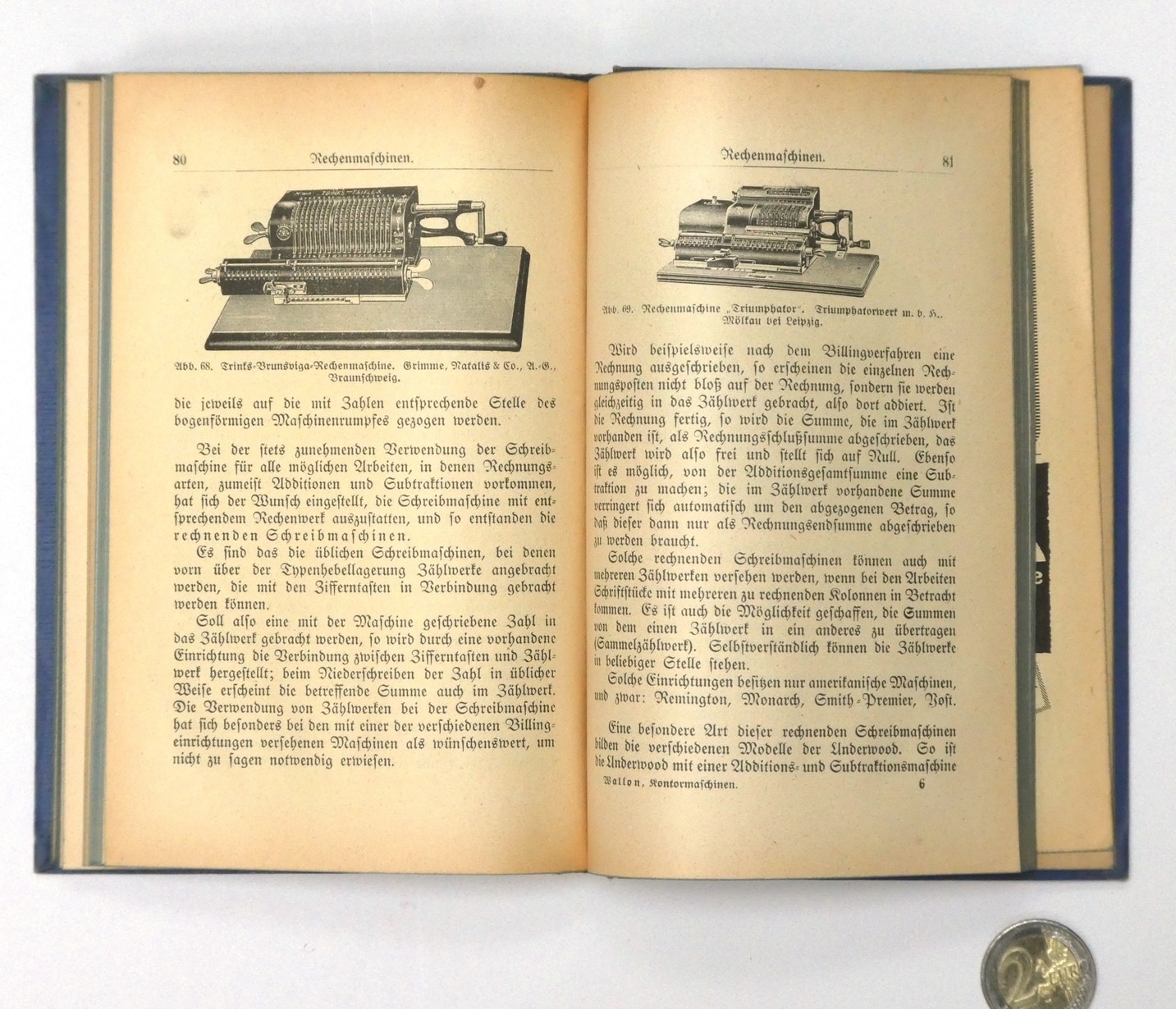
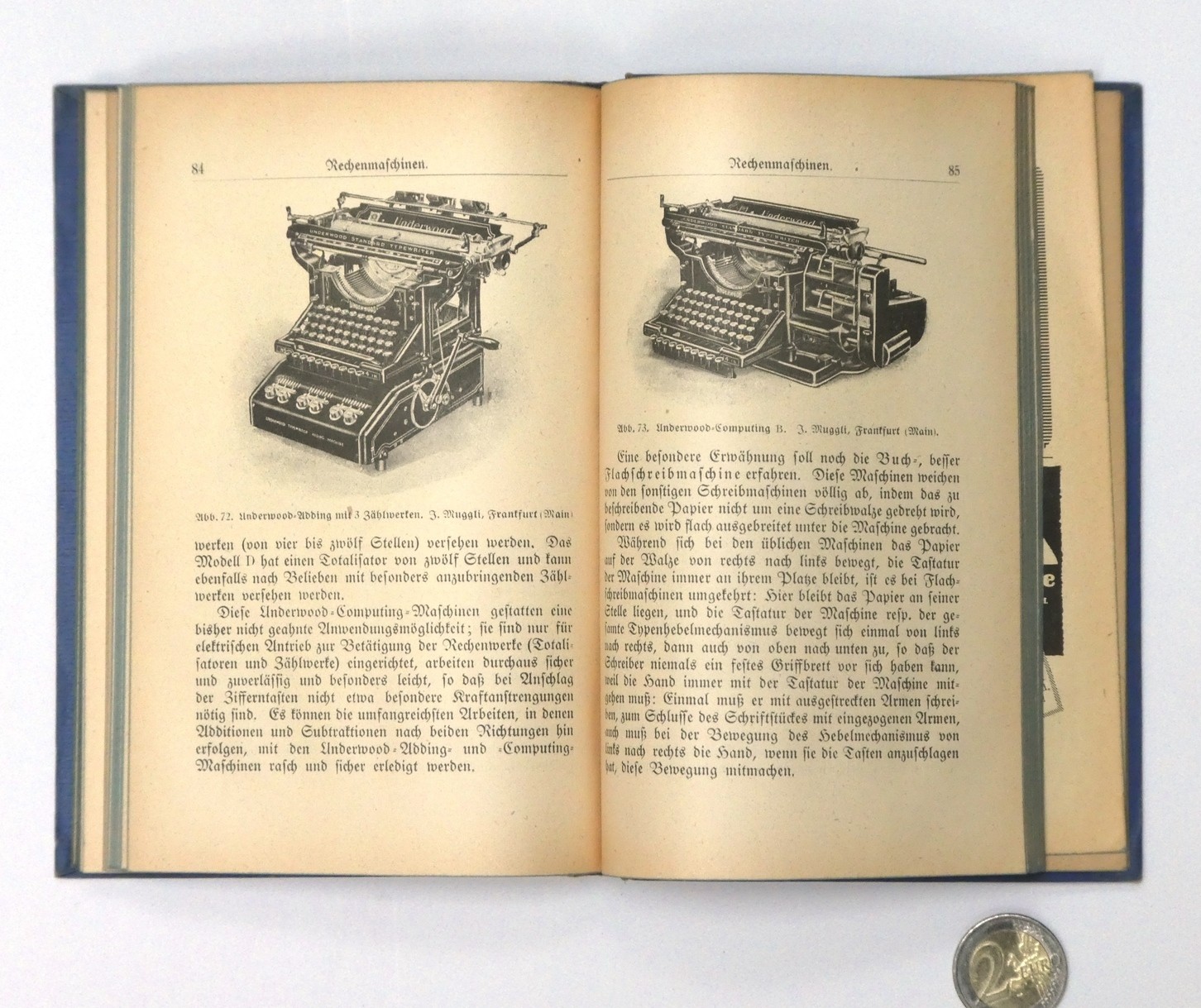
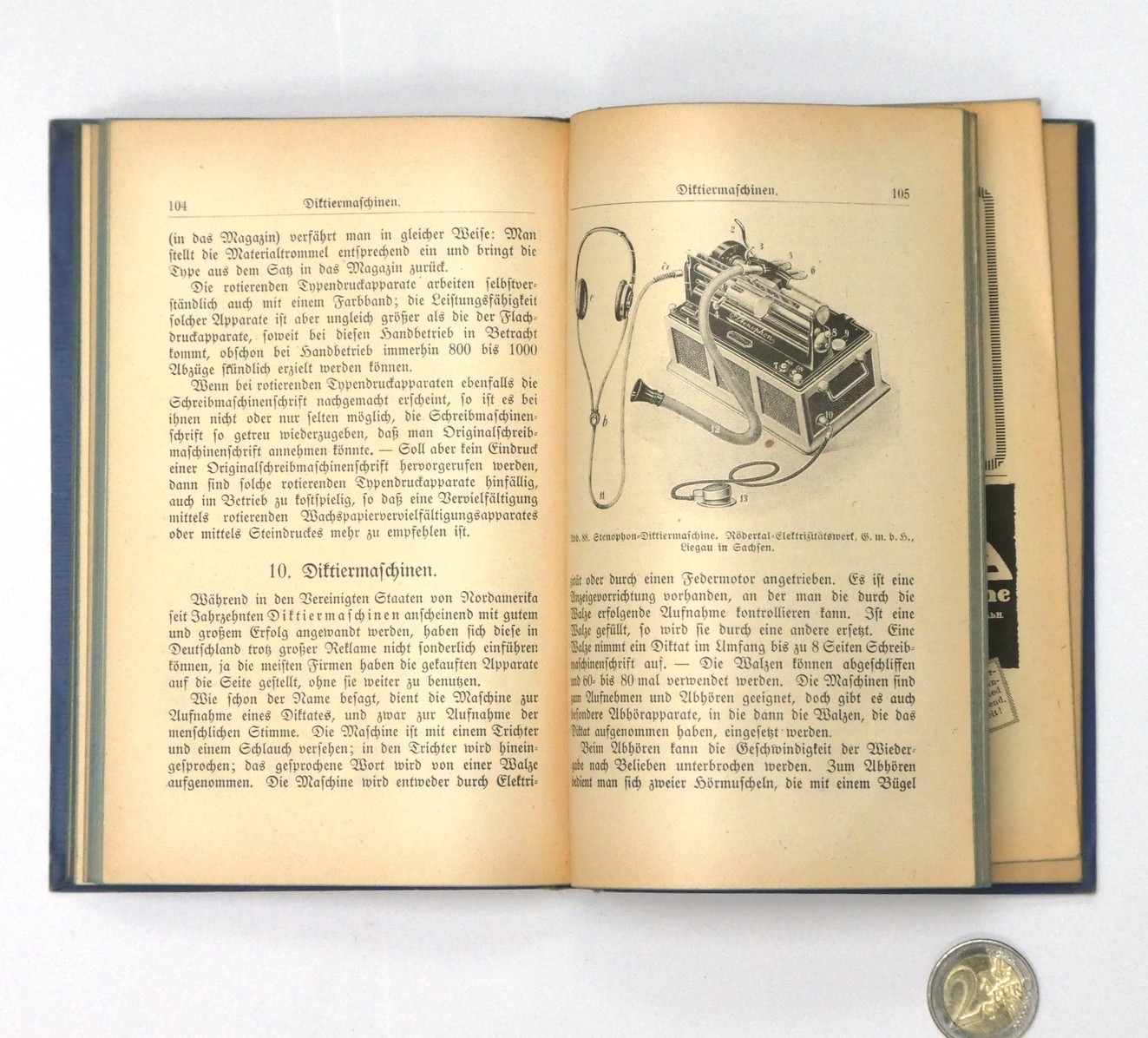
Kartei und Kontormaschinen Die Kartei des KaufmannsWilhelm Dur KontormaschinenKarl Wallon 1922
108+133 pages, hardcover, German
124mm × 180mm × 15mm
This is two books bound in a single cover. The first book is all about the
admin and organisation necessary to run a business office. The second book
describes all the office machinery that is available, including machines for
coping, printing, filing, dictation, bookkeeping, etc. The section on calculators
is only 16 pages, with about one illustration per page.
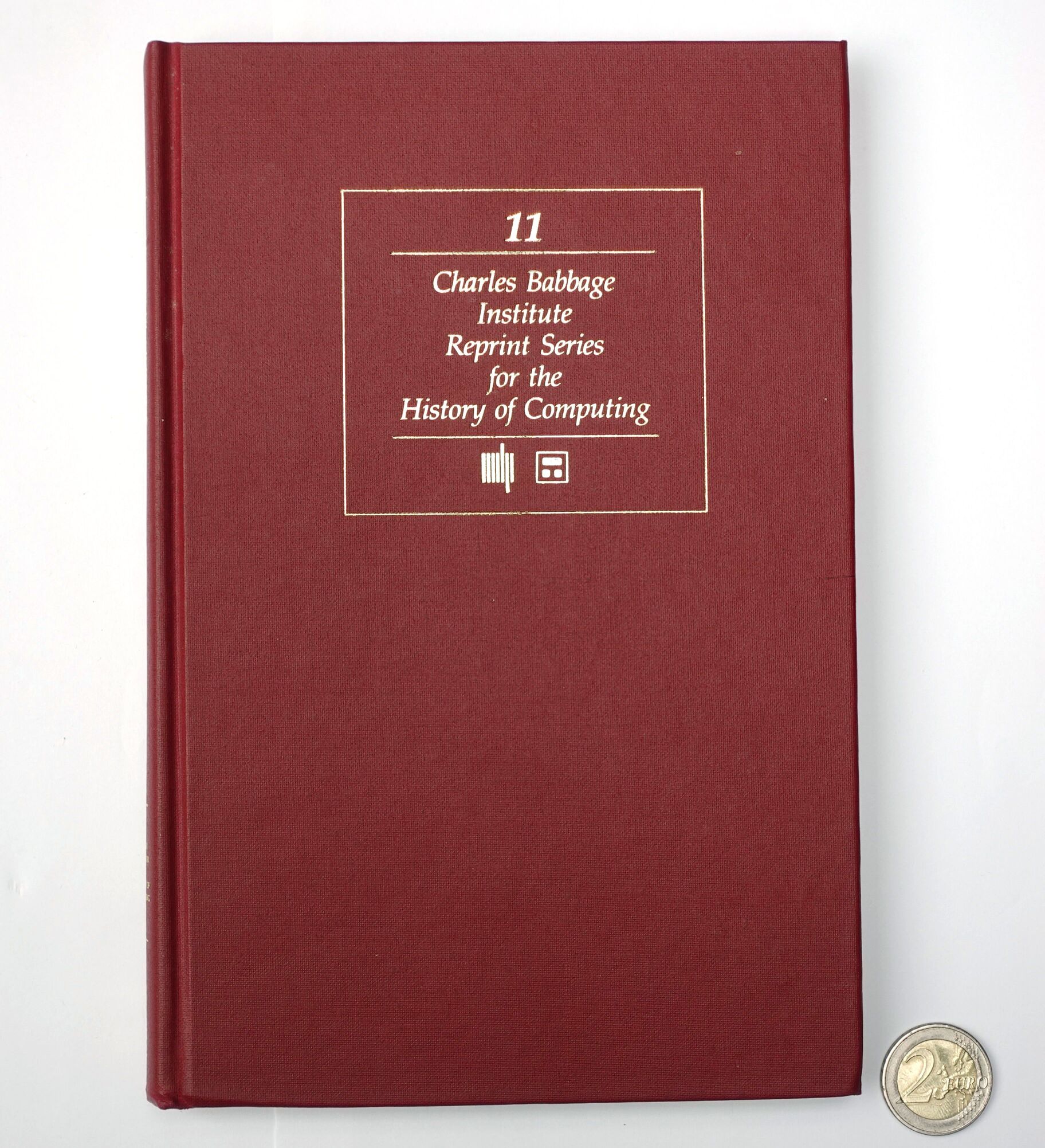
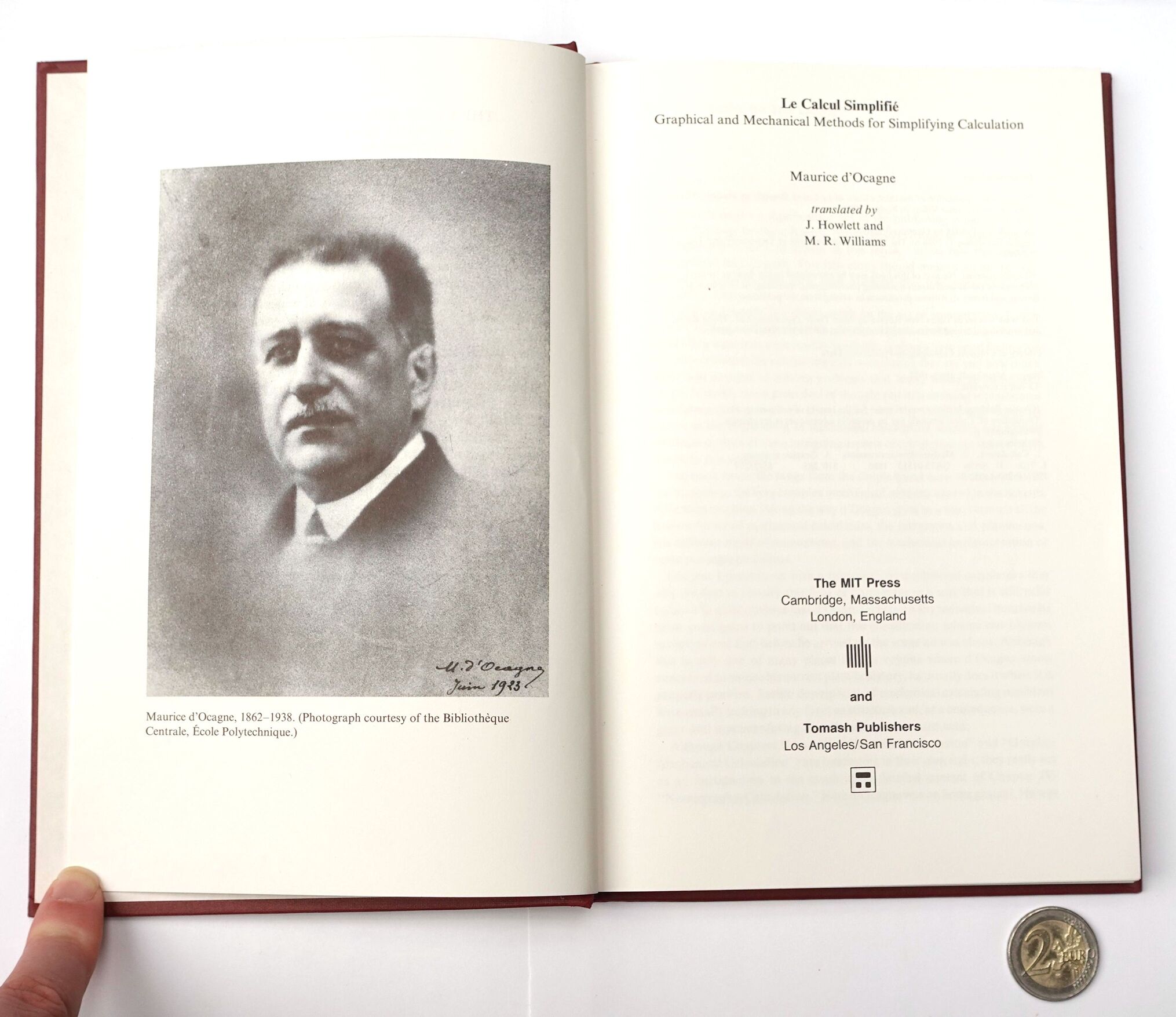
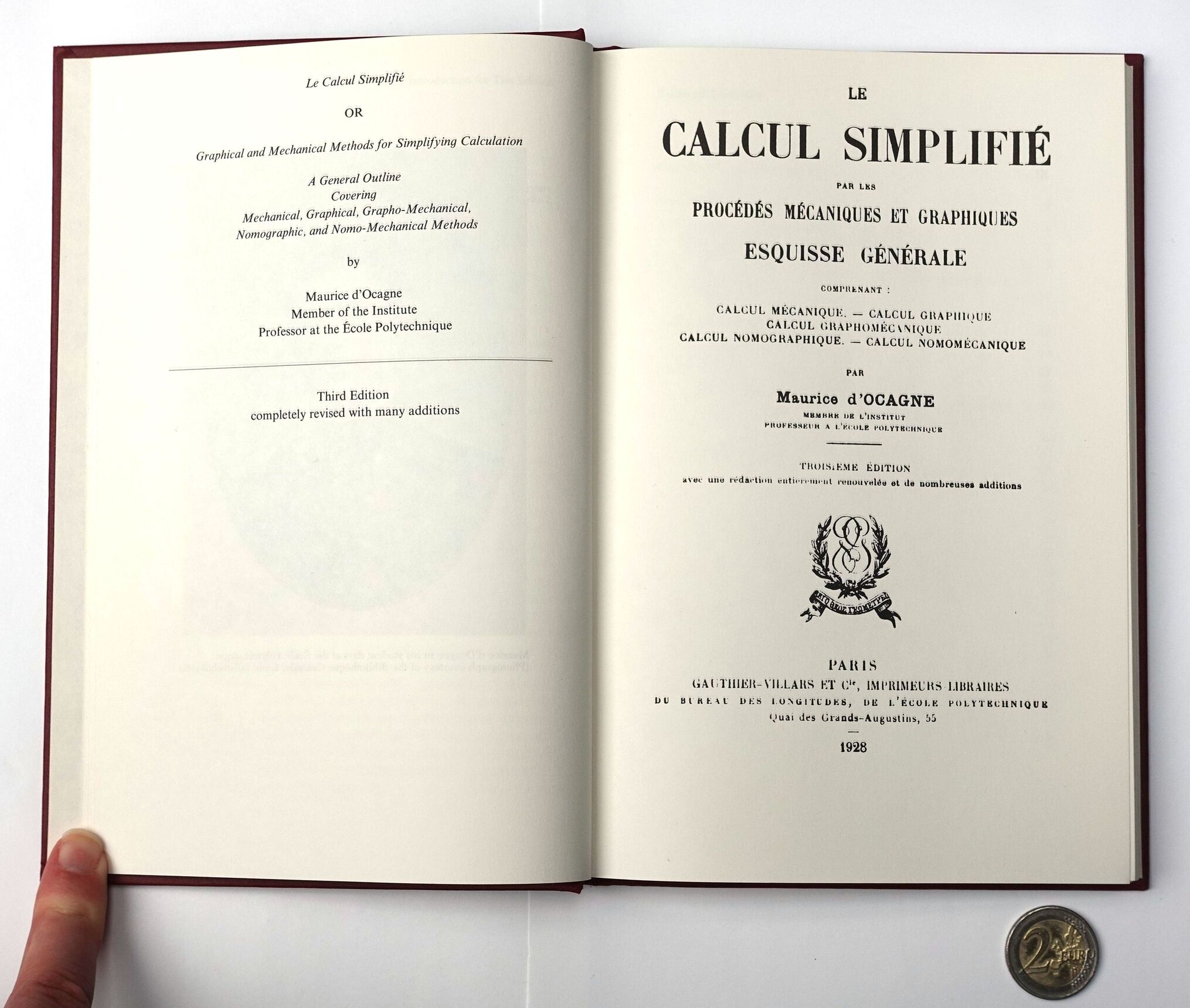
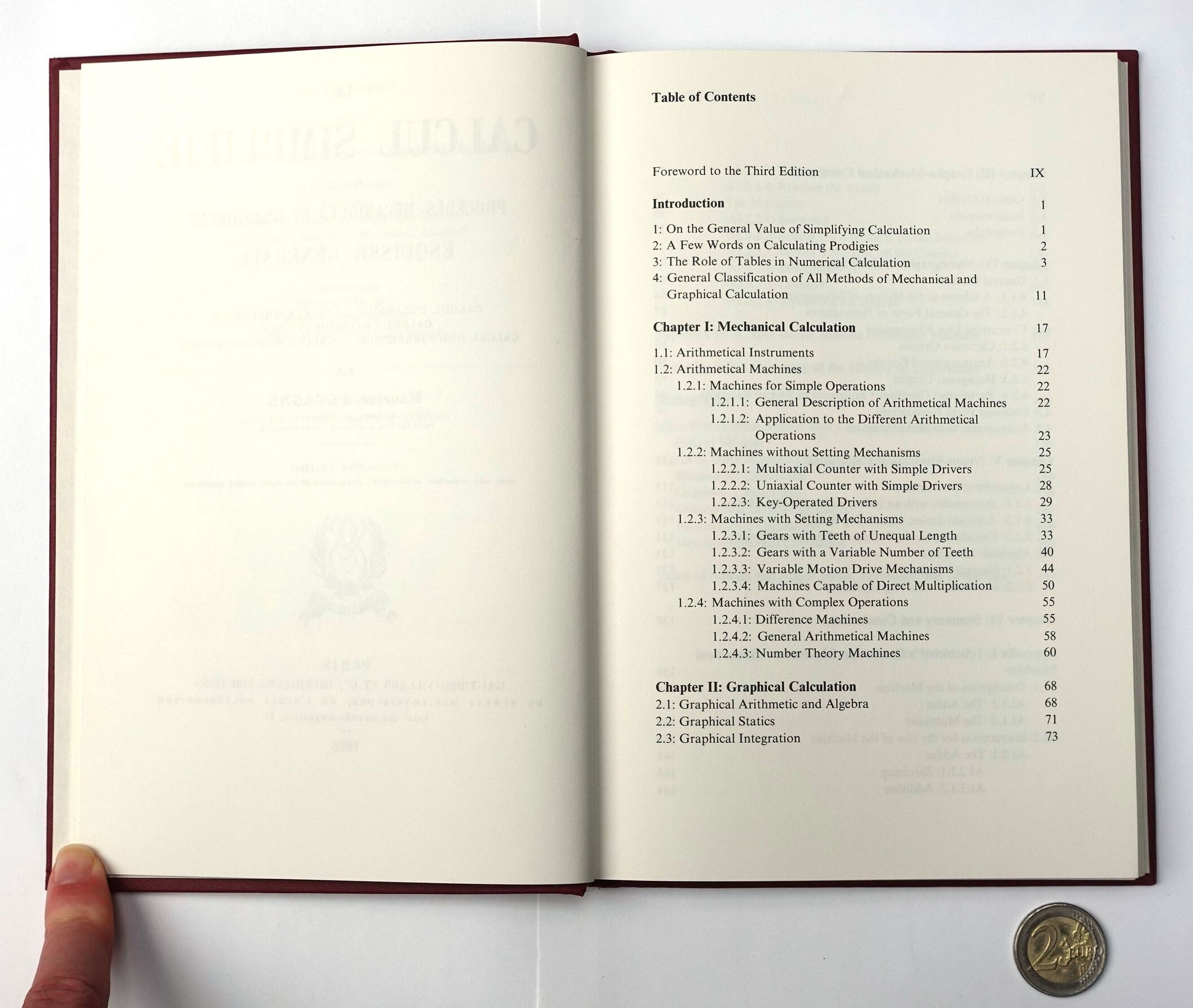
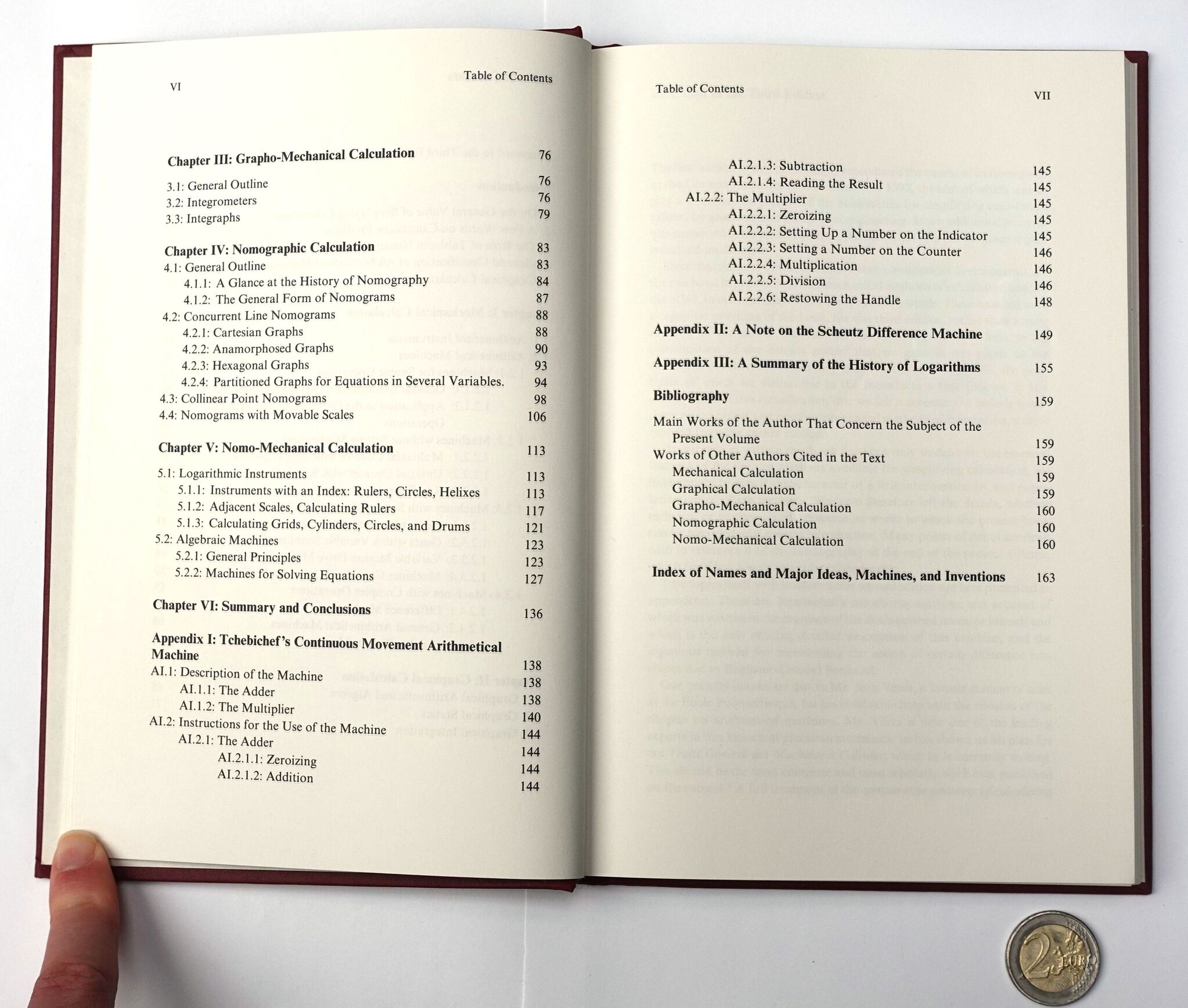
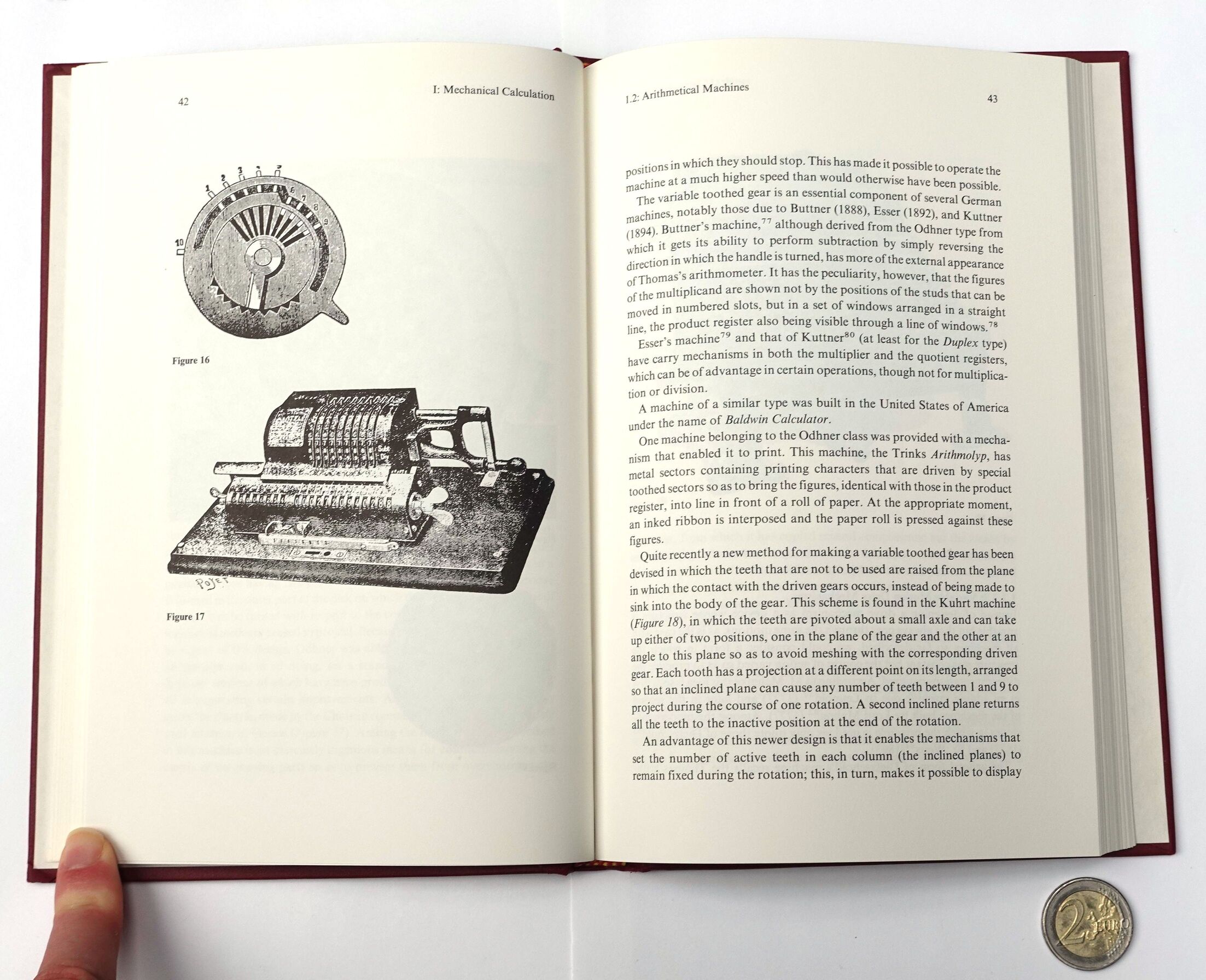
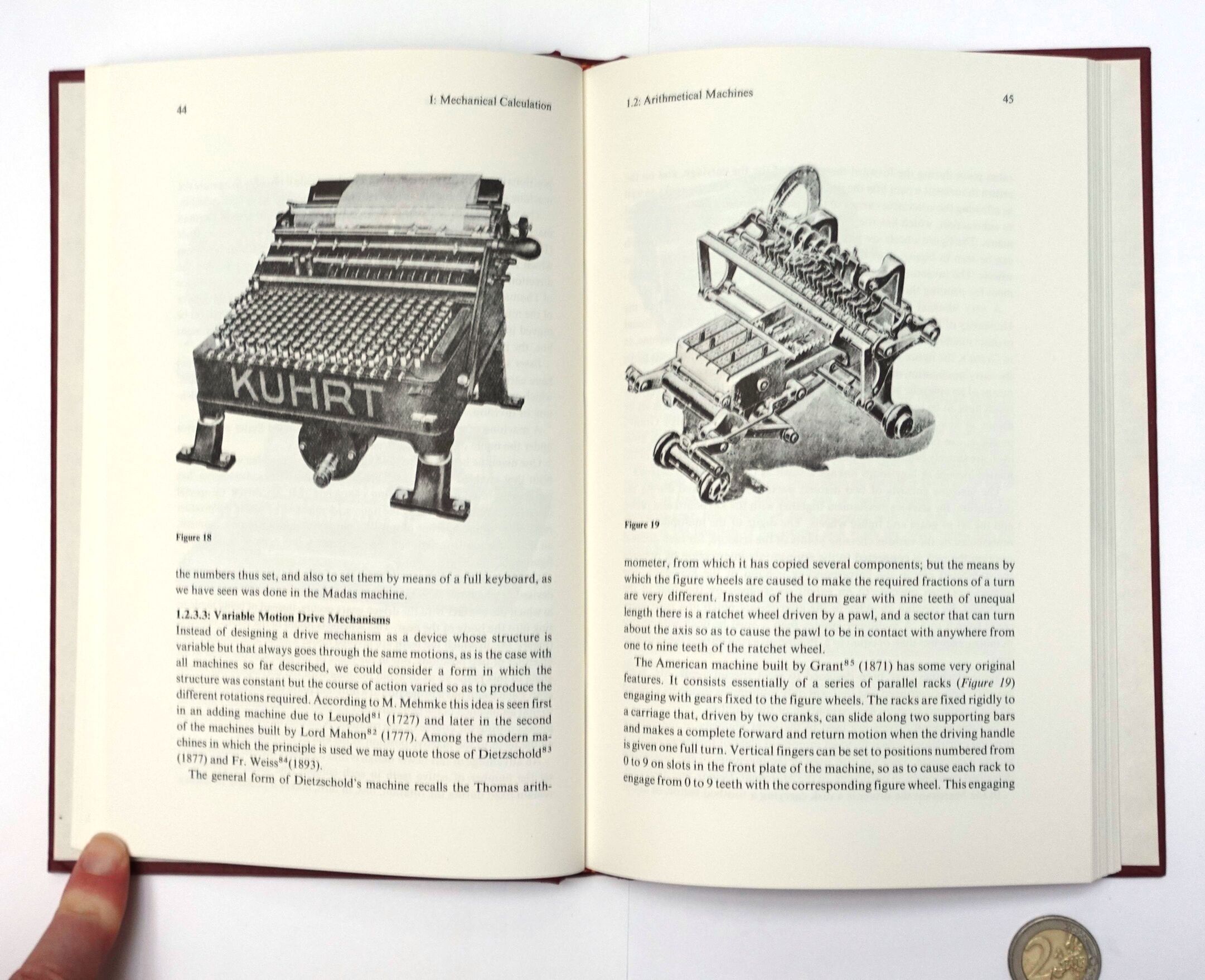
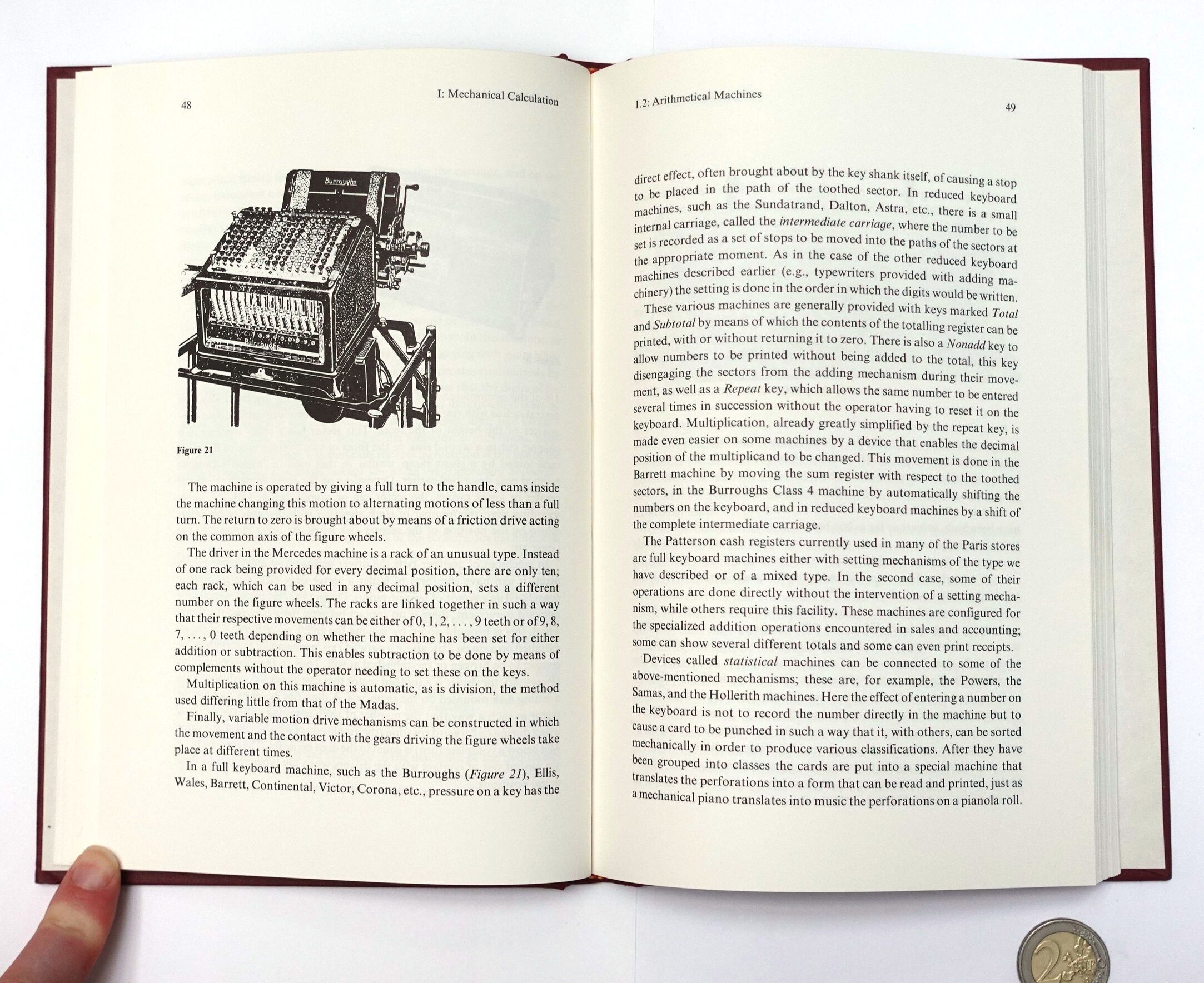
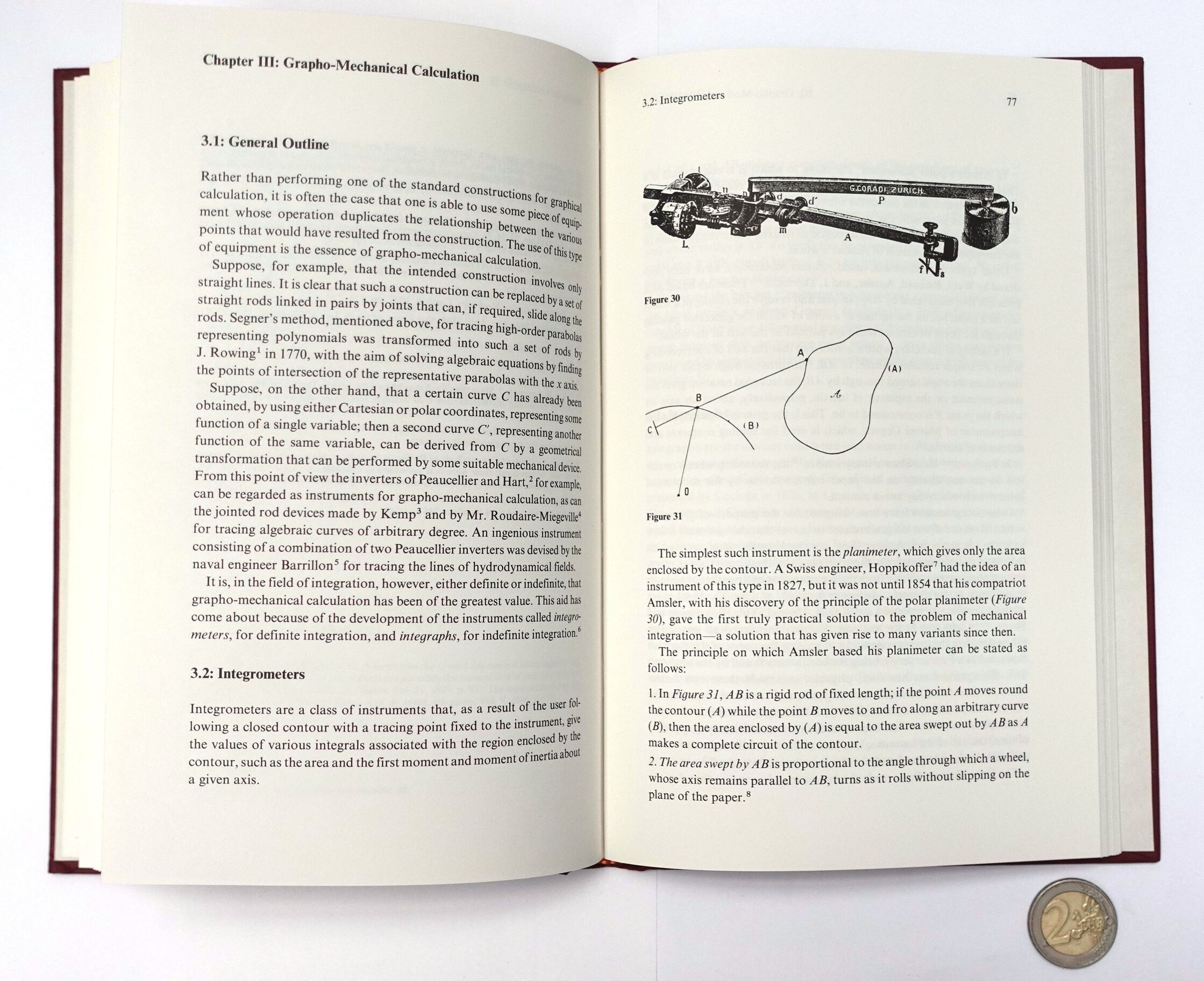
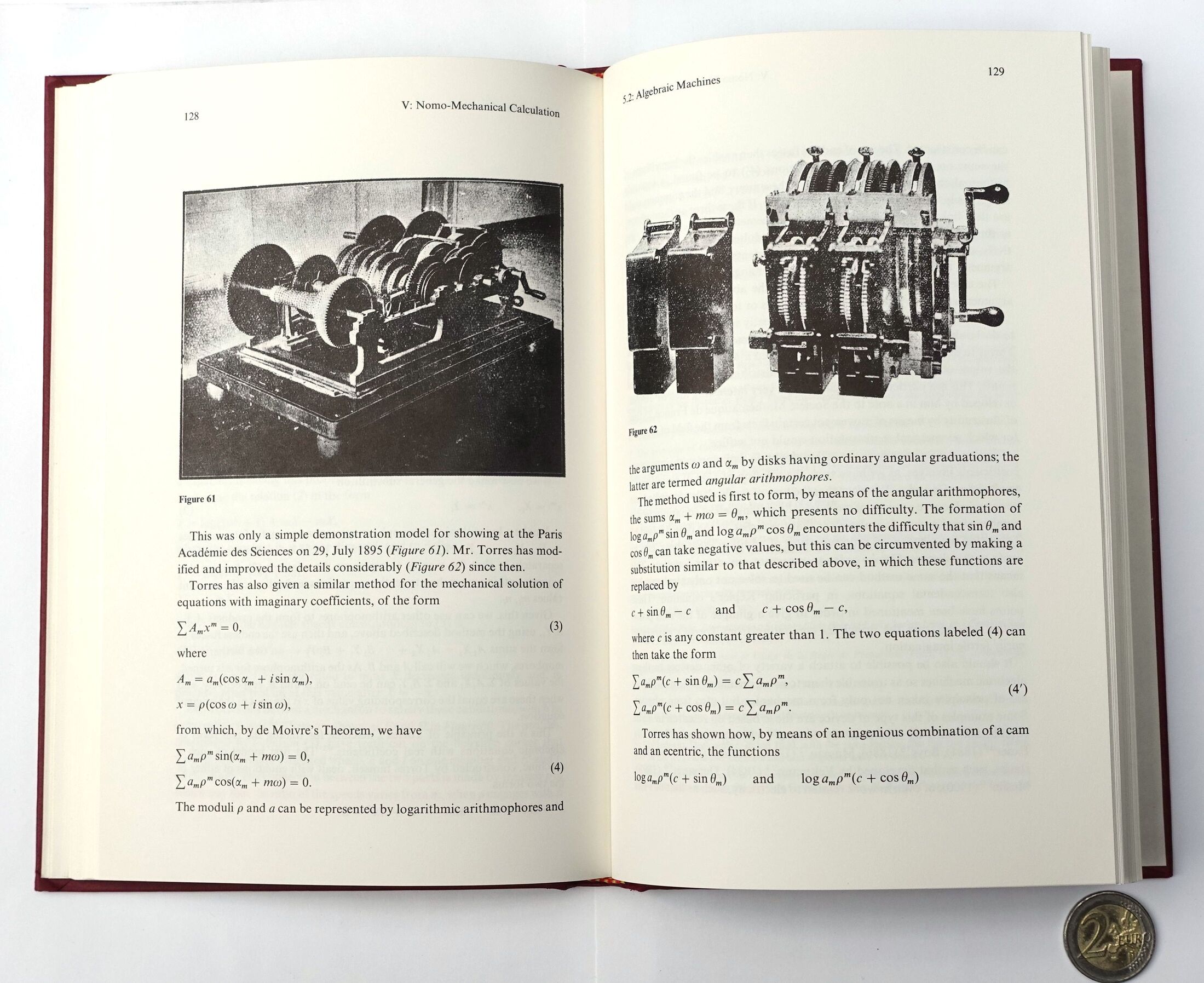
Le Calcul Simplifié Graphical and Mechanical Methods for Simplifying Calculation
Maurice d'Ocagne 1928 (English translation 1986)
167 pages, hardcover, English (originally French)
157mm × 236mm × 15mm
This book starts with an extensive classification of calculating machines, then continues
with graphical calculation methods, grapho-mechanical calculation (like planimeters),
nomographic calculation, and finally nomo-mechanical methods (including slide rules).
There is then an appendix that describes Chebyshev's calculator in detail.
This is a translated version of the third (final) edition of D'Ocagne's original work.
It was published at the MIT Press by the Charles Babbage Institute for the History of
Information Processing, as the 11th book in a series of reprints of foundational texts from
the history of computing.
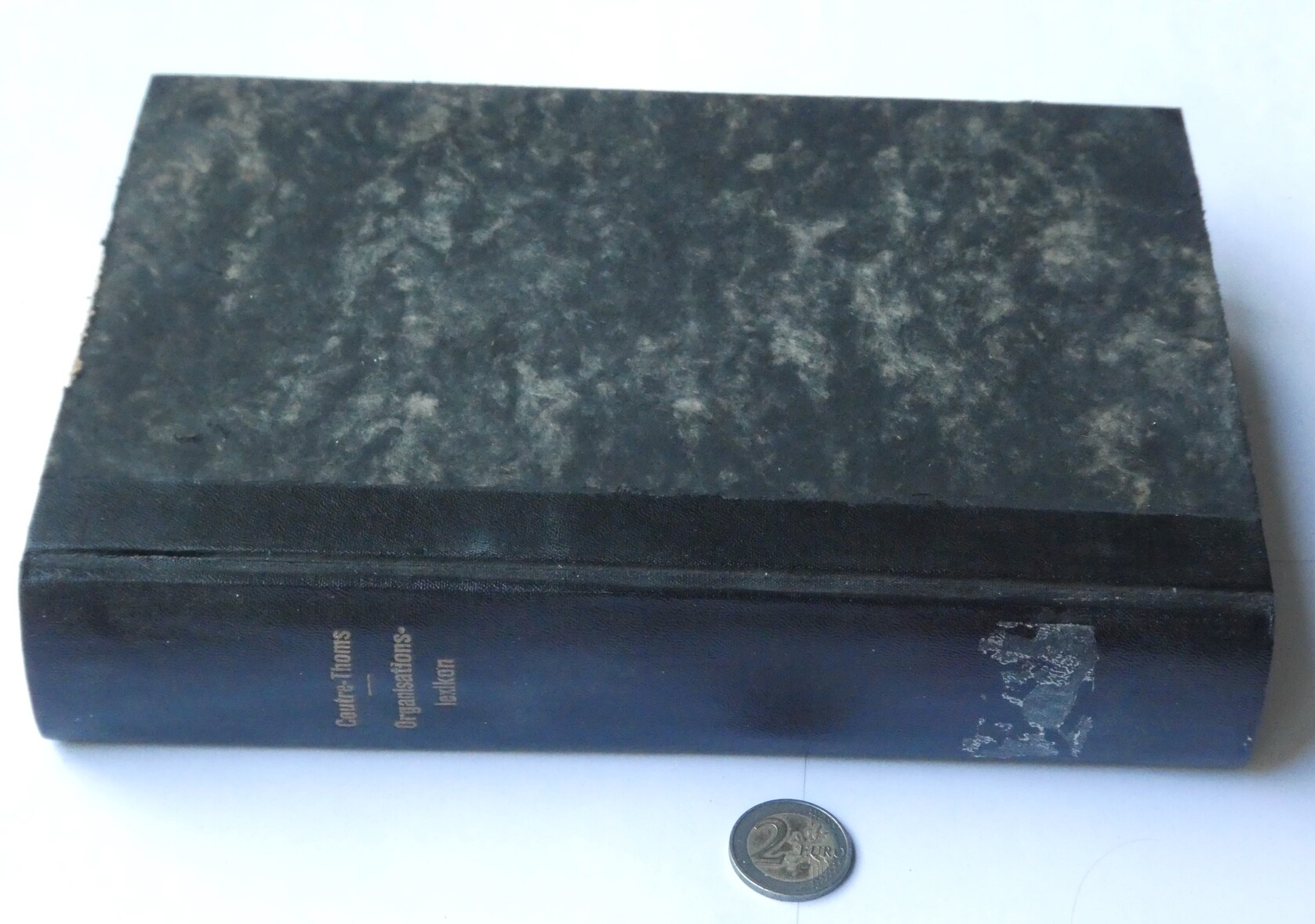
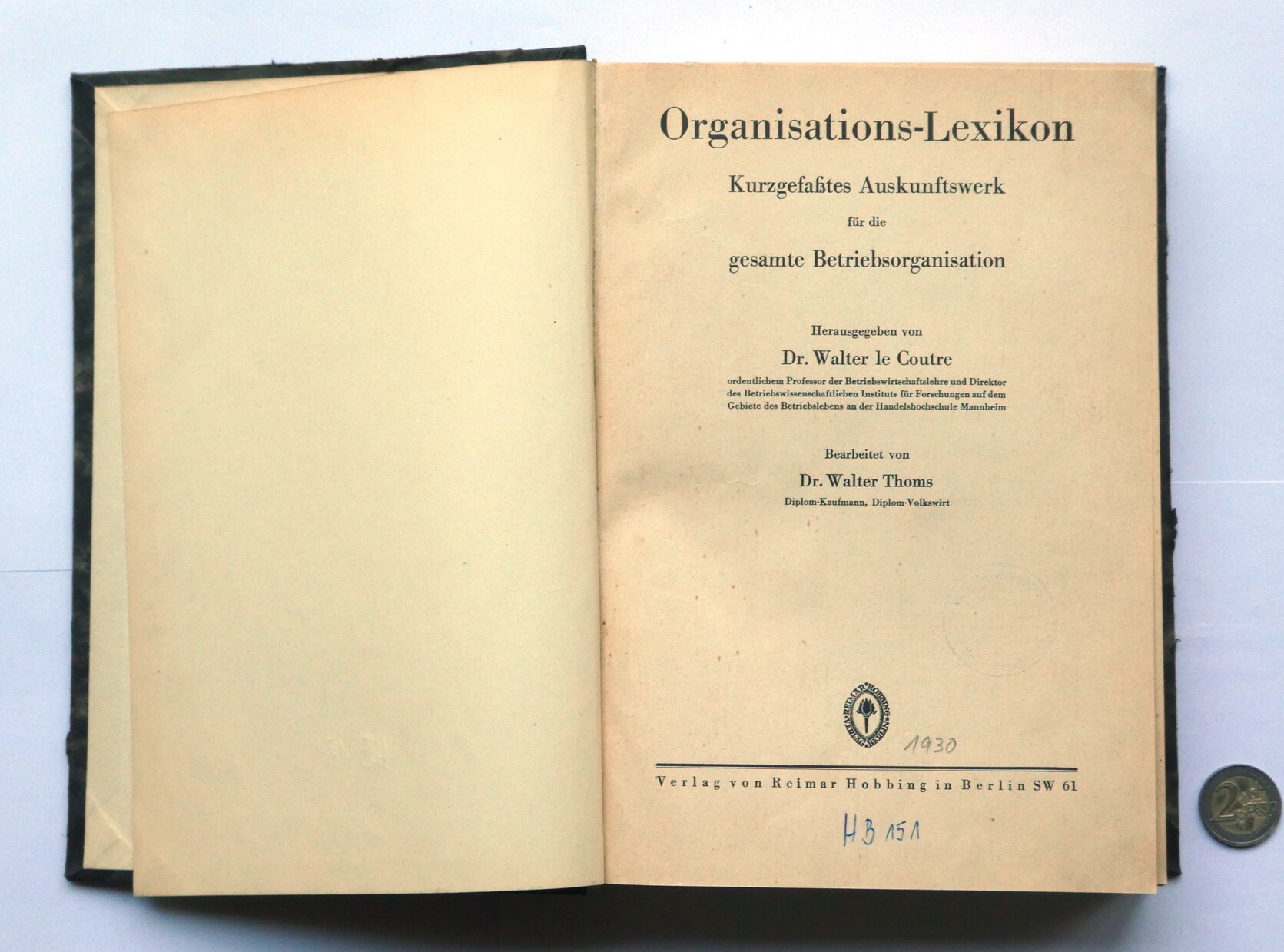
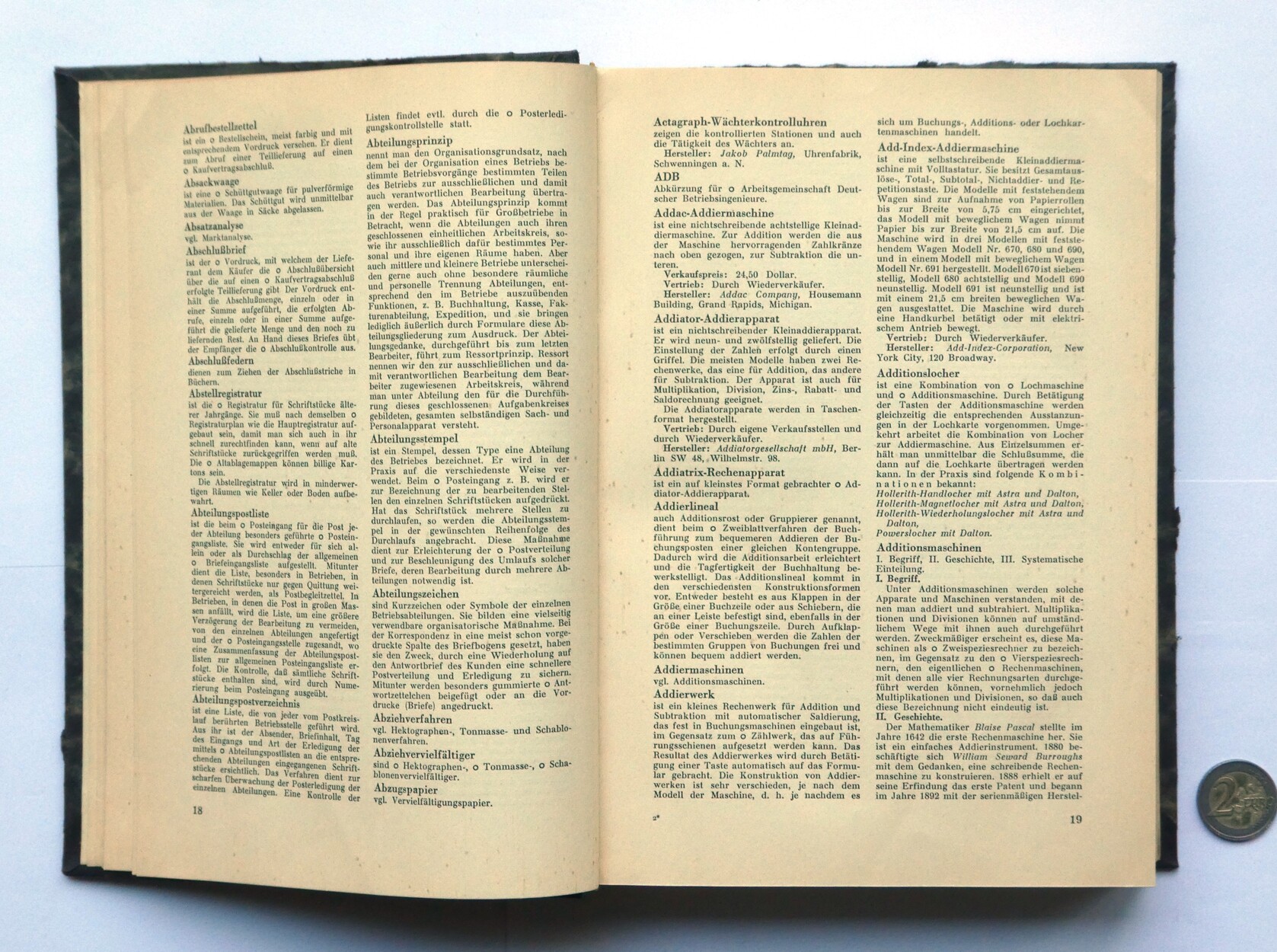
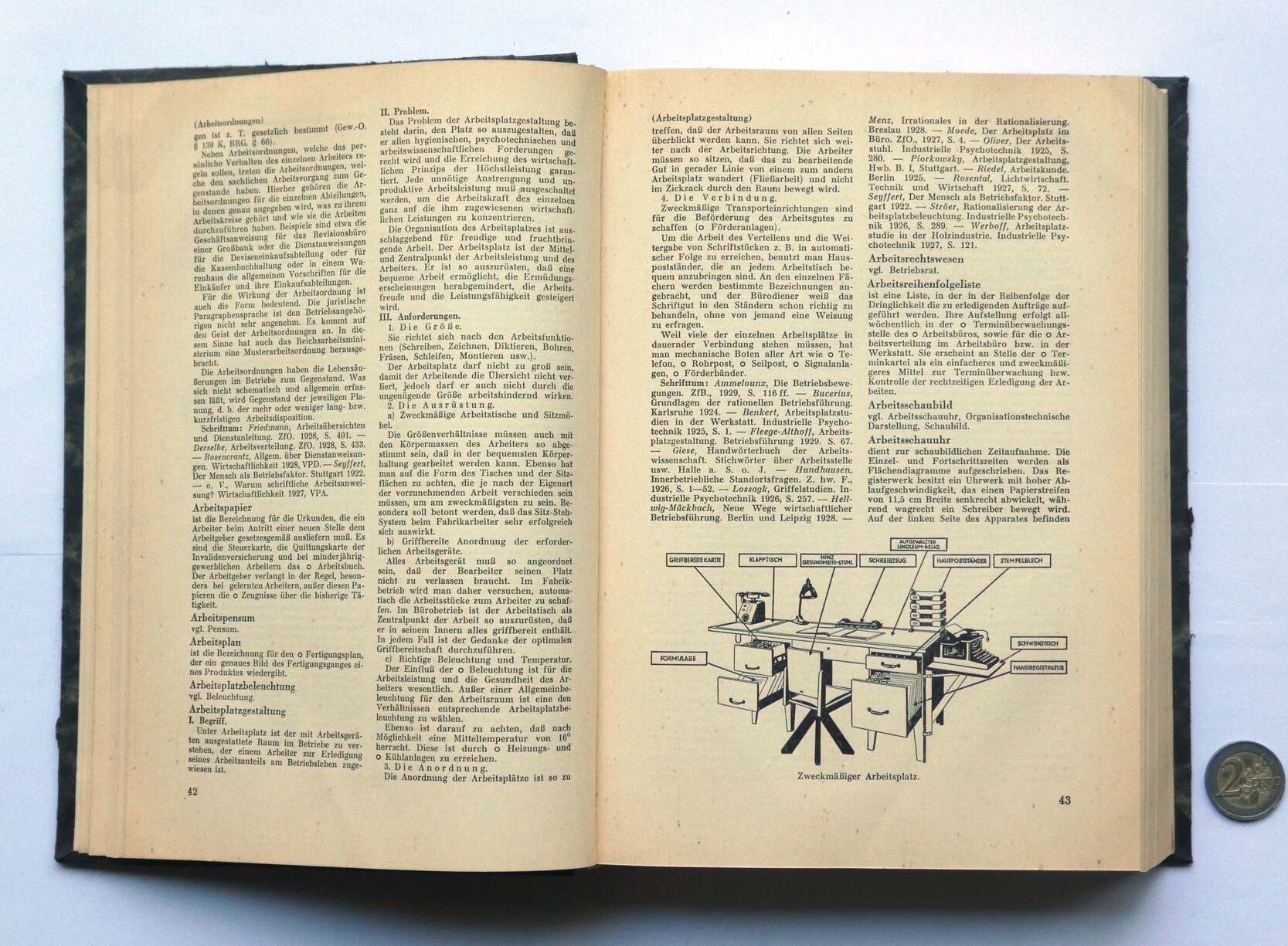
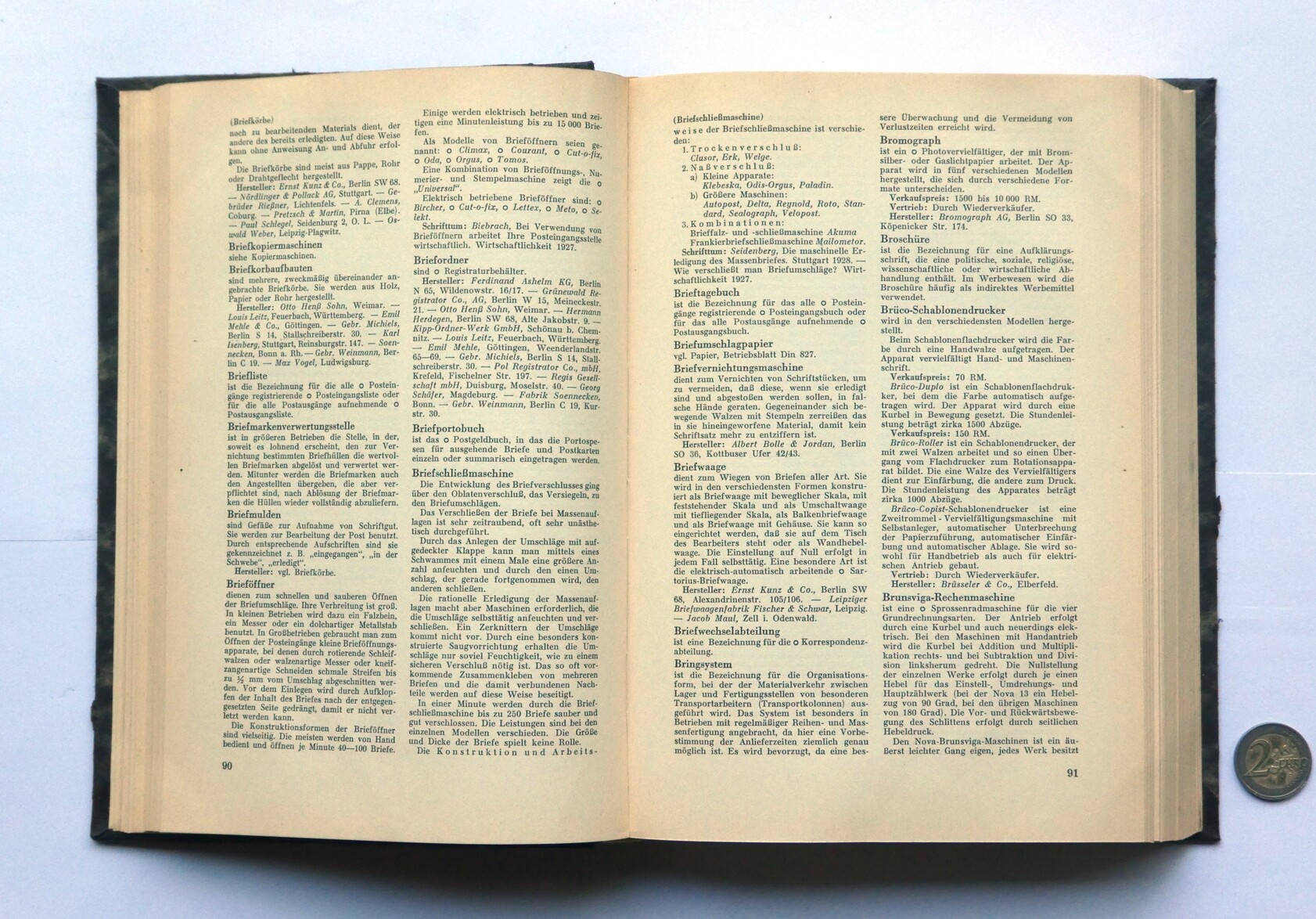
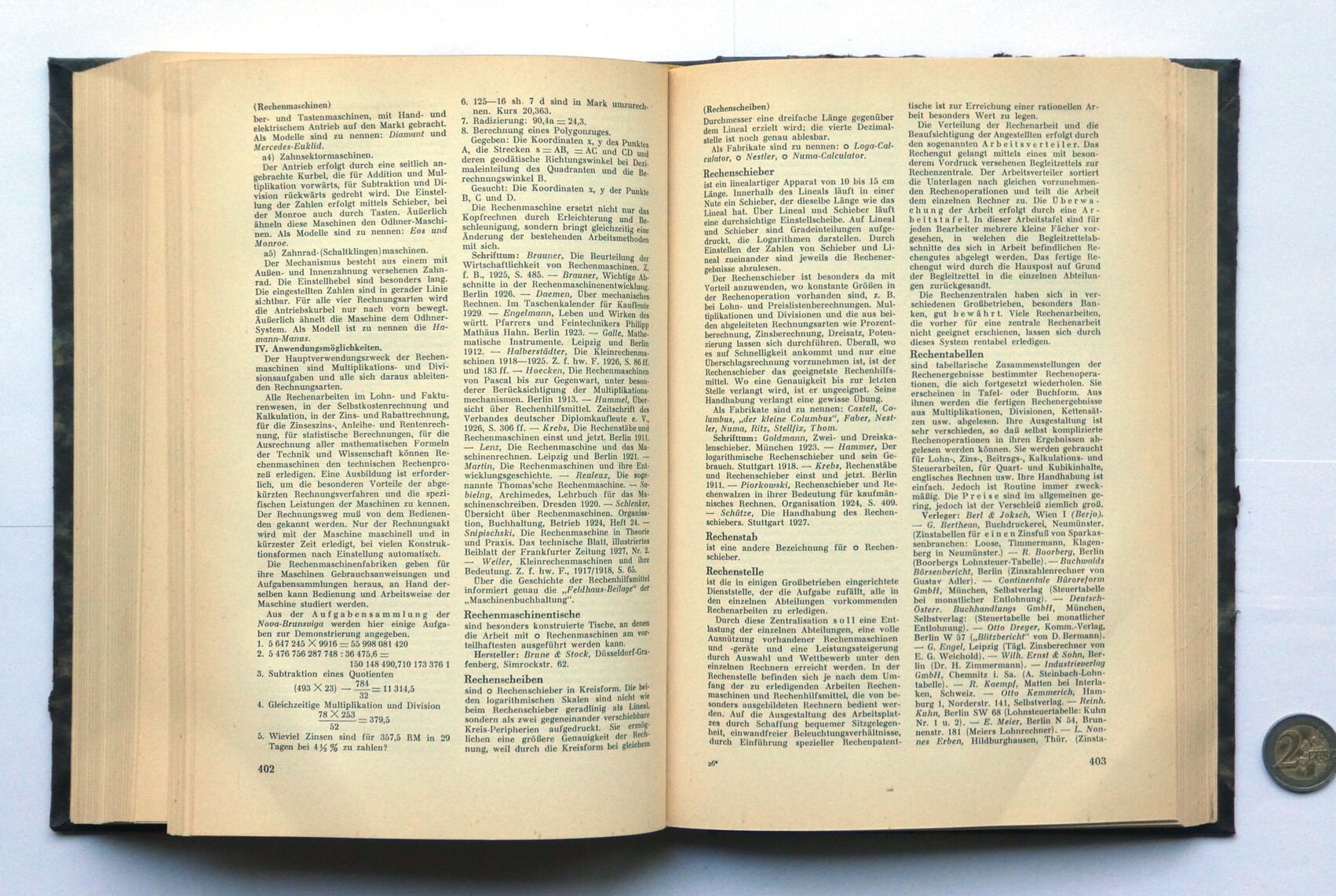
Organisations-Lexikon Kurzgefaßtes Auskunftswerk für die gesamte Betriebsorganisation
Walter le Coutre 1930
587 pages, hardcover, German
185mm × 257mm × 46mm
This book is a dictionary of terms related to the office. This includes
various brand names of office machines, such as calculators and adding
machines. Unfortunately there are virtually no illustrations at all.
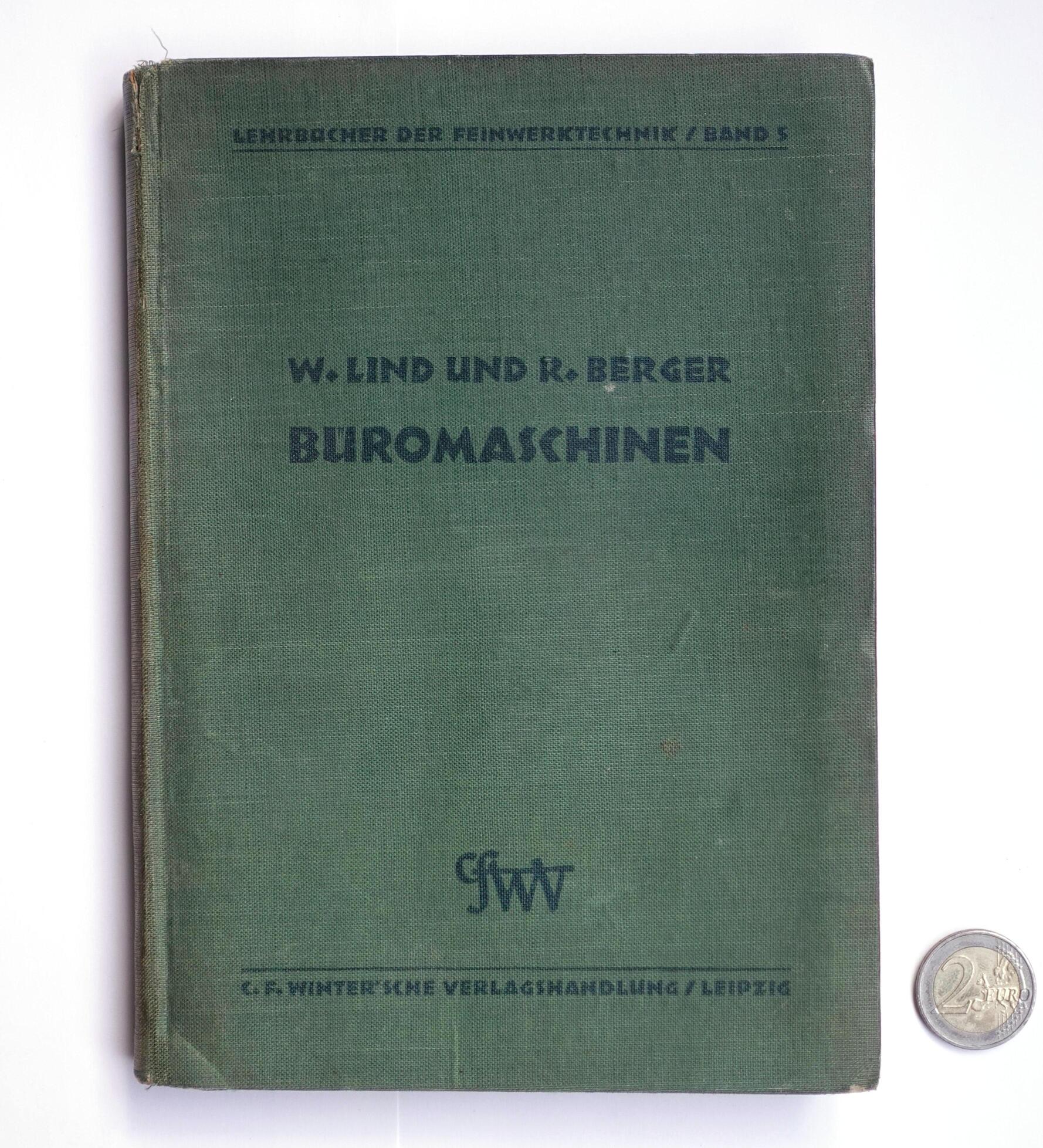
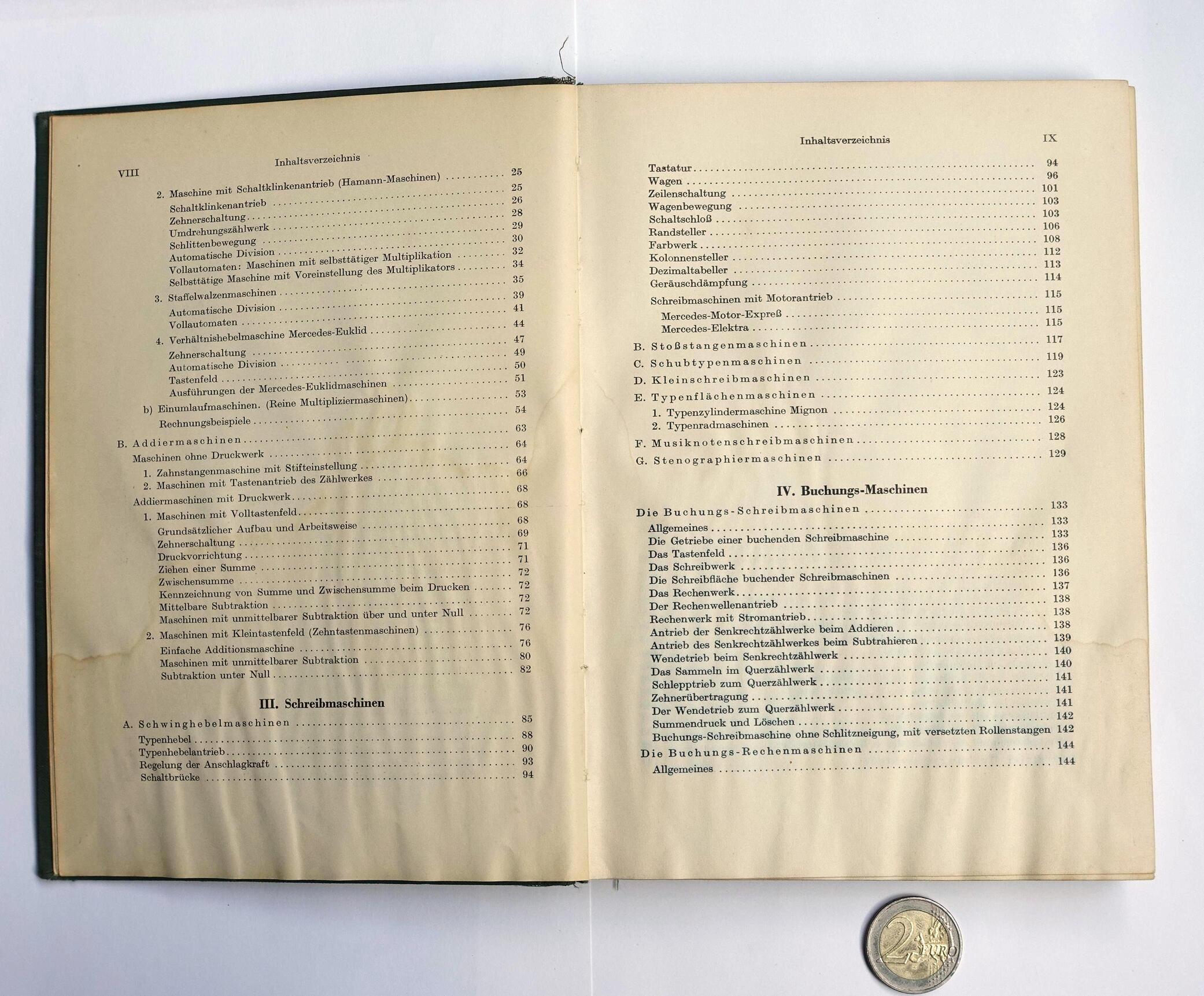
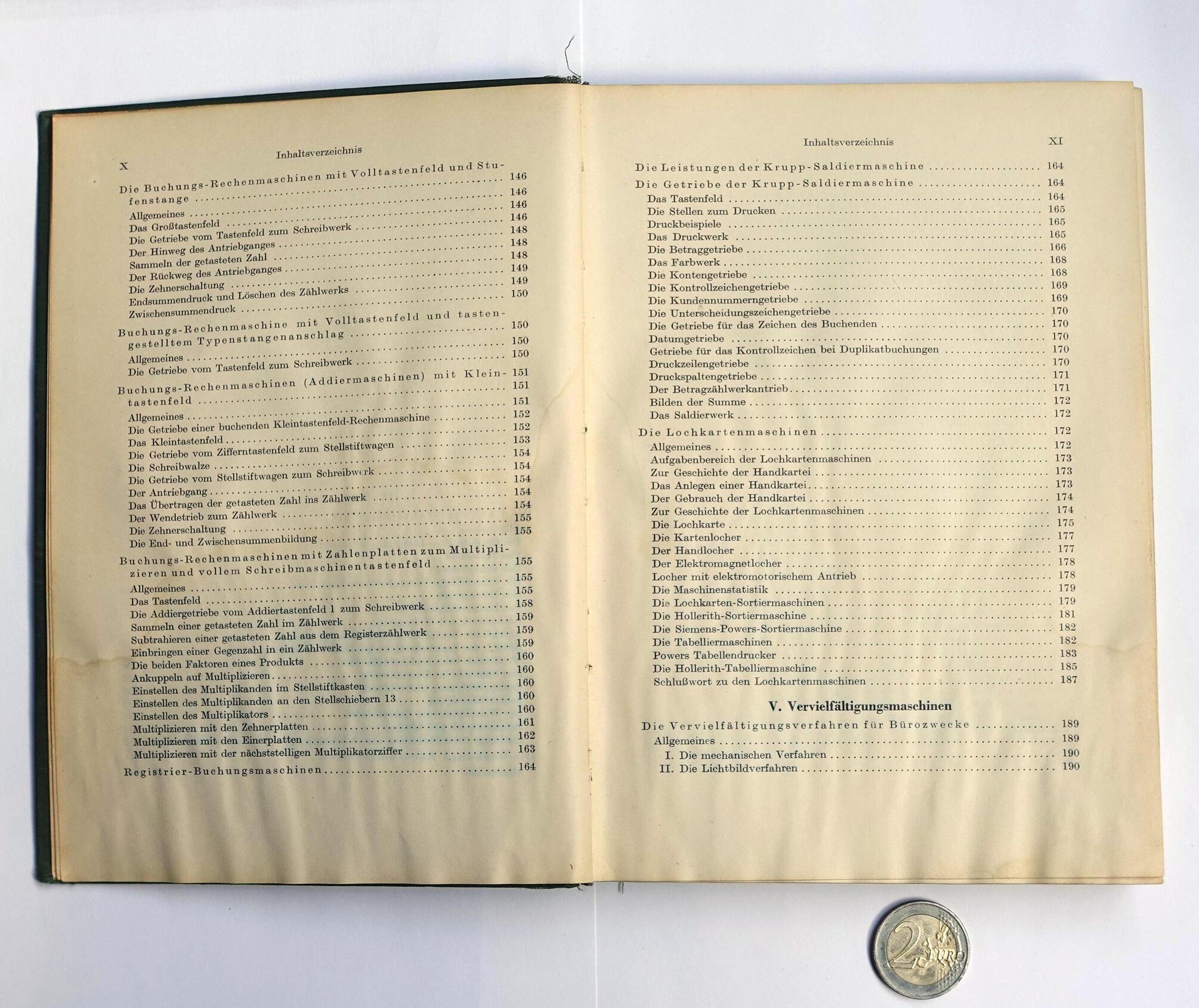
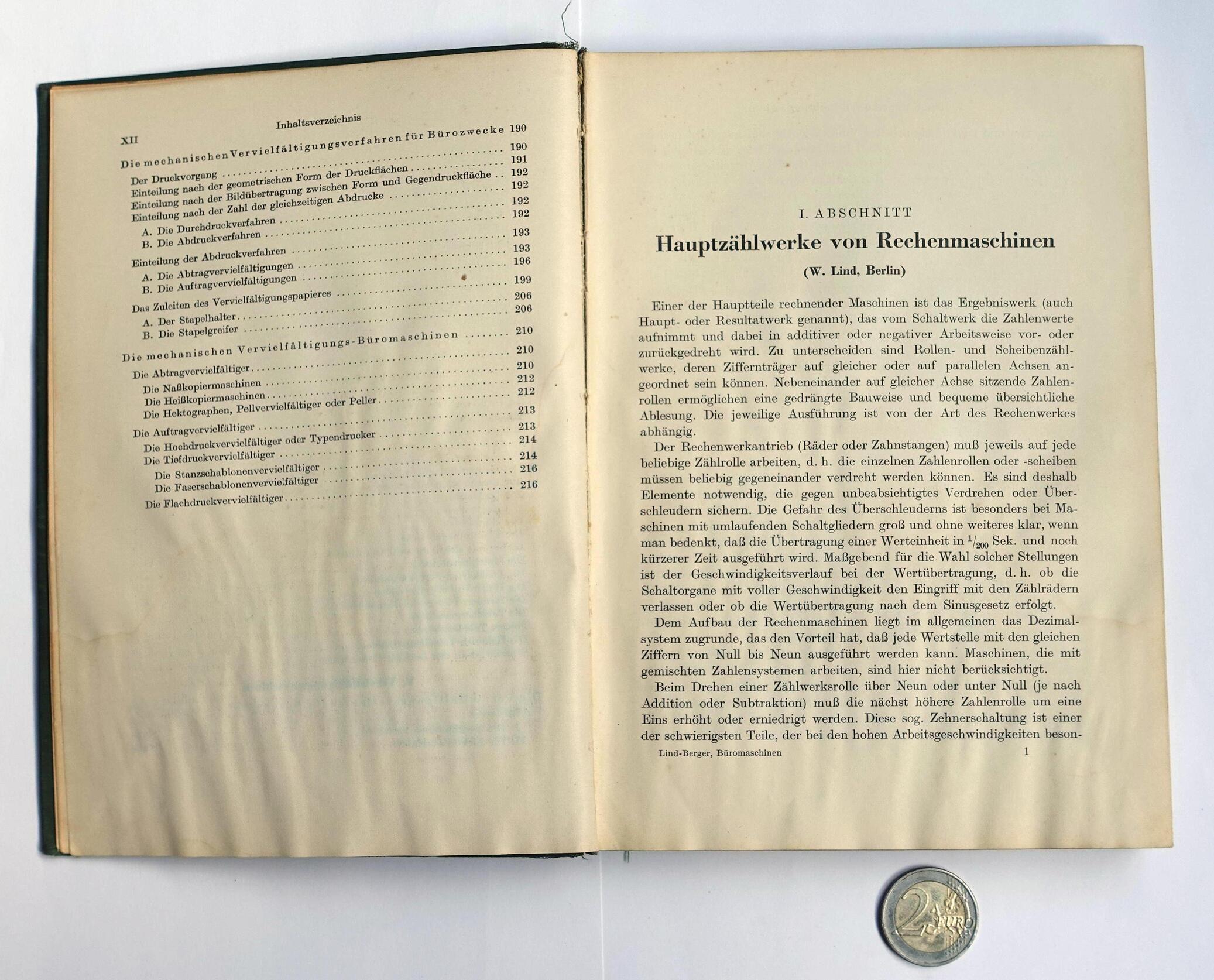
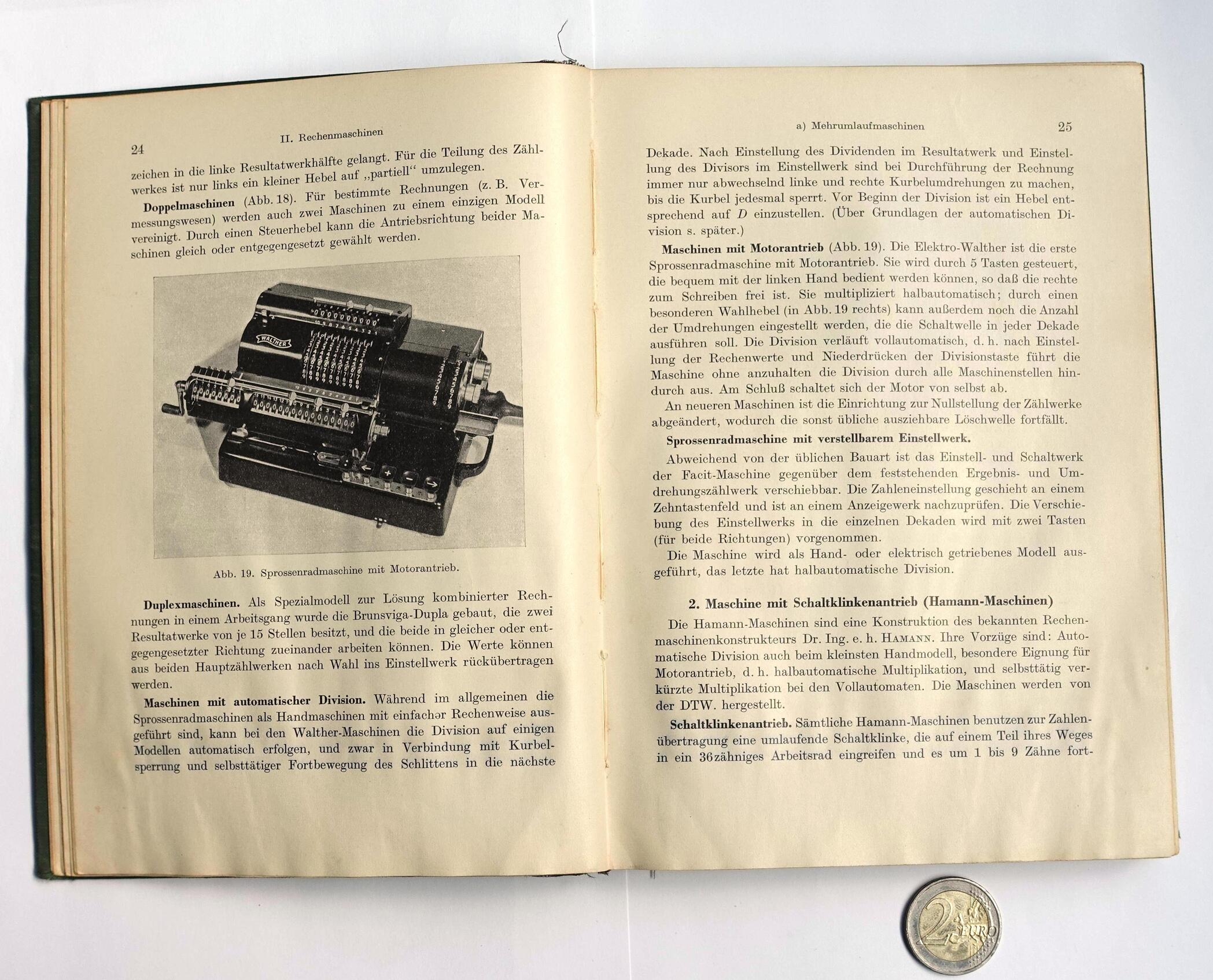
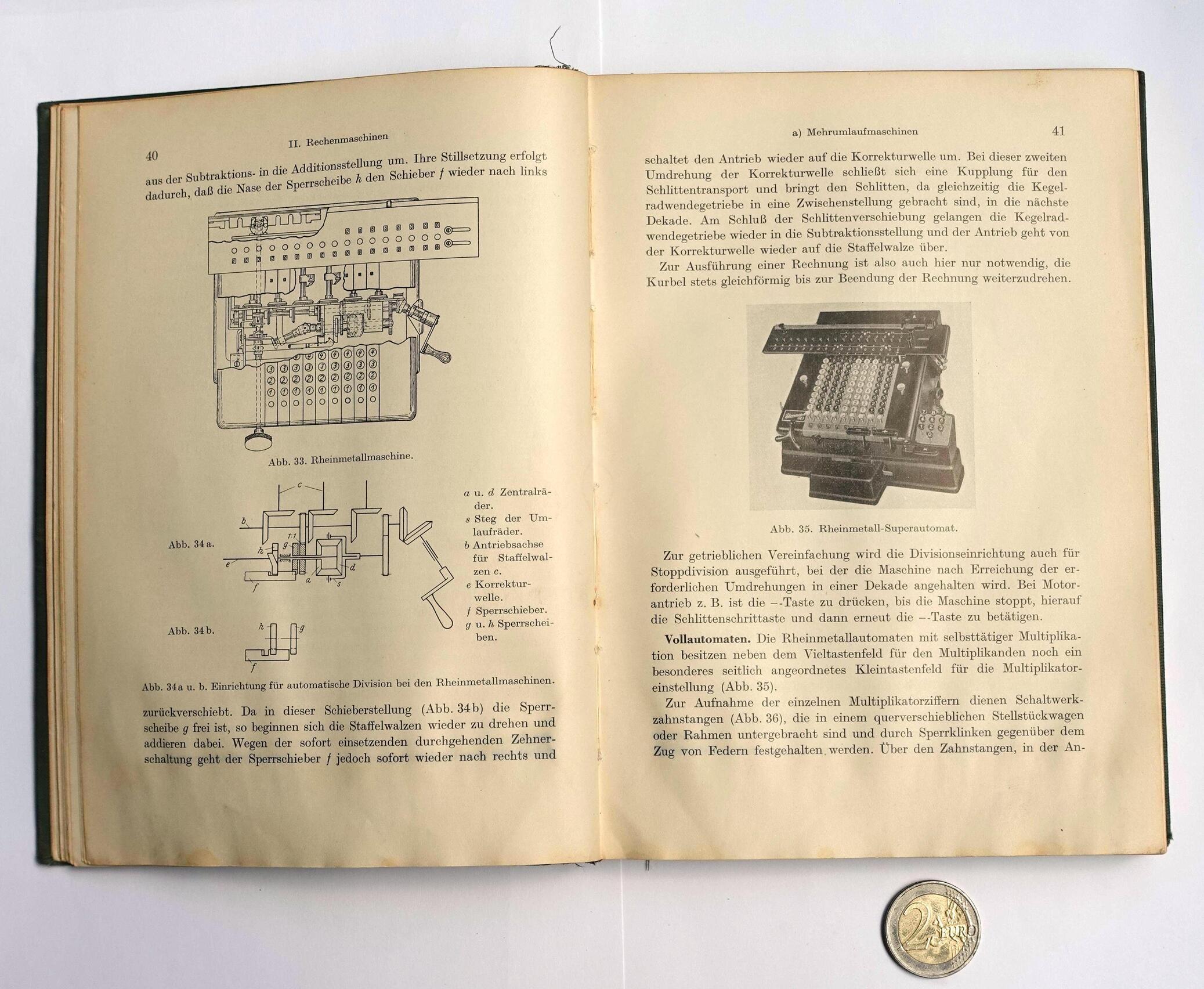
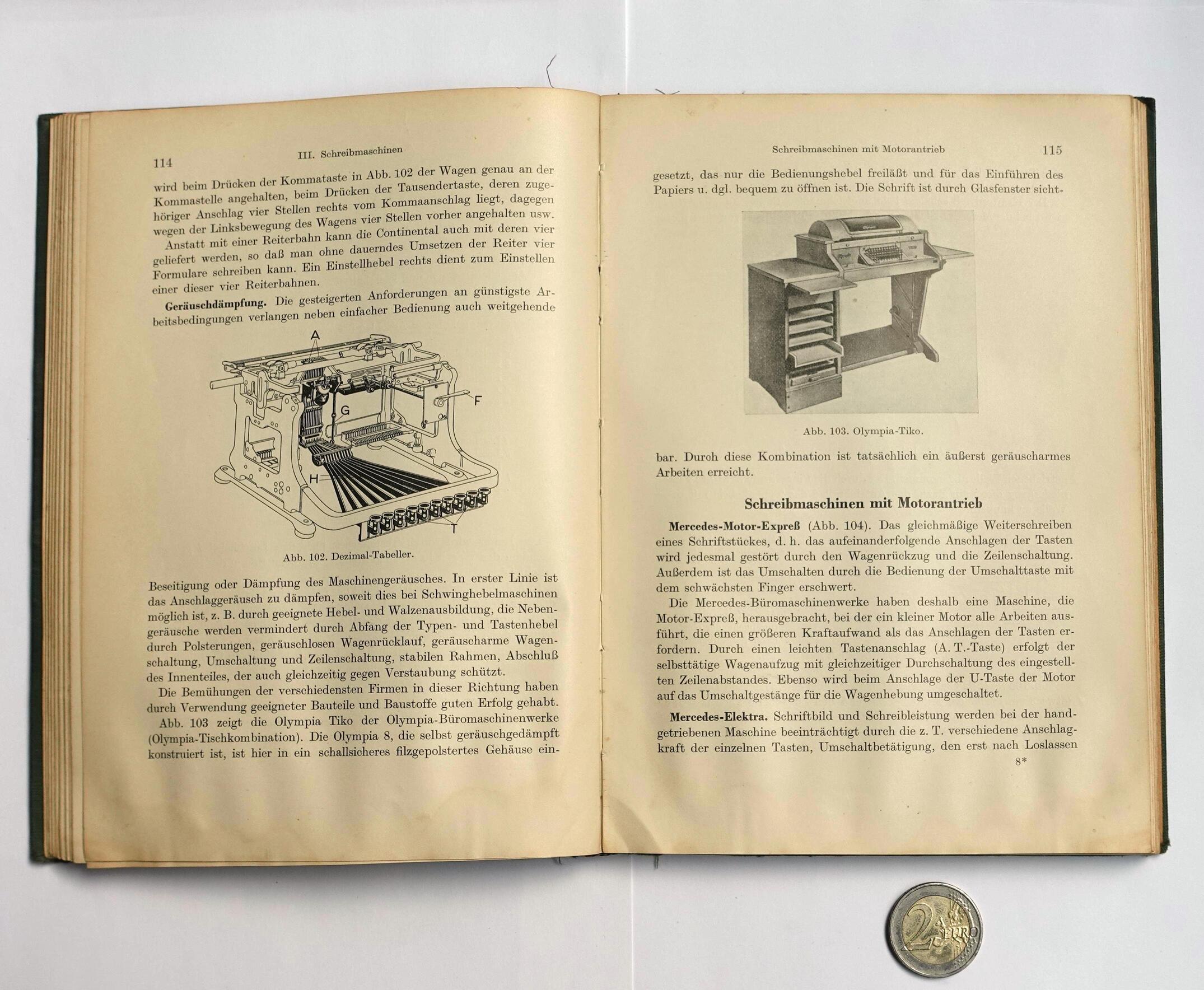
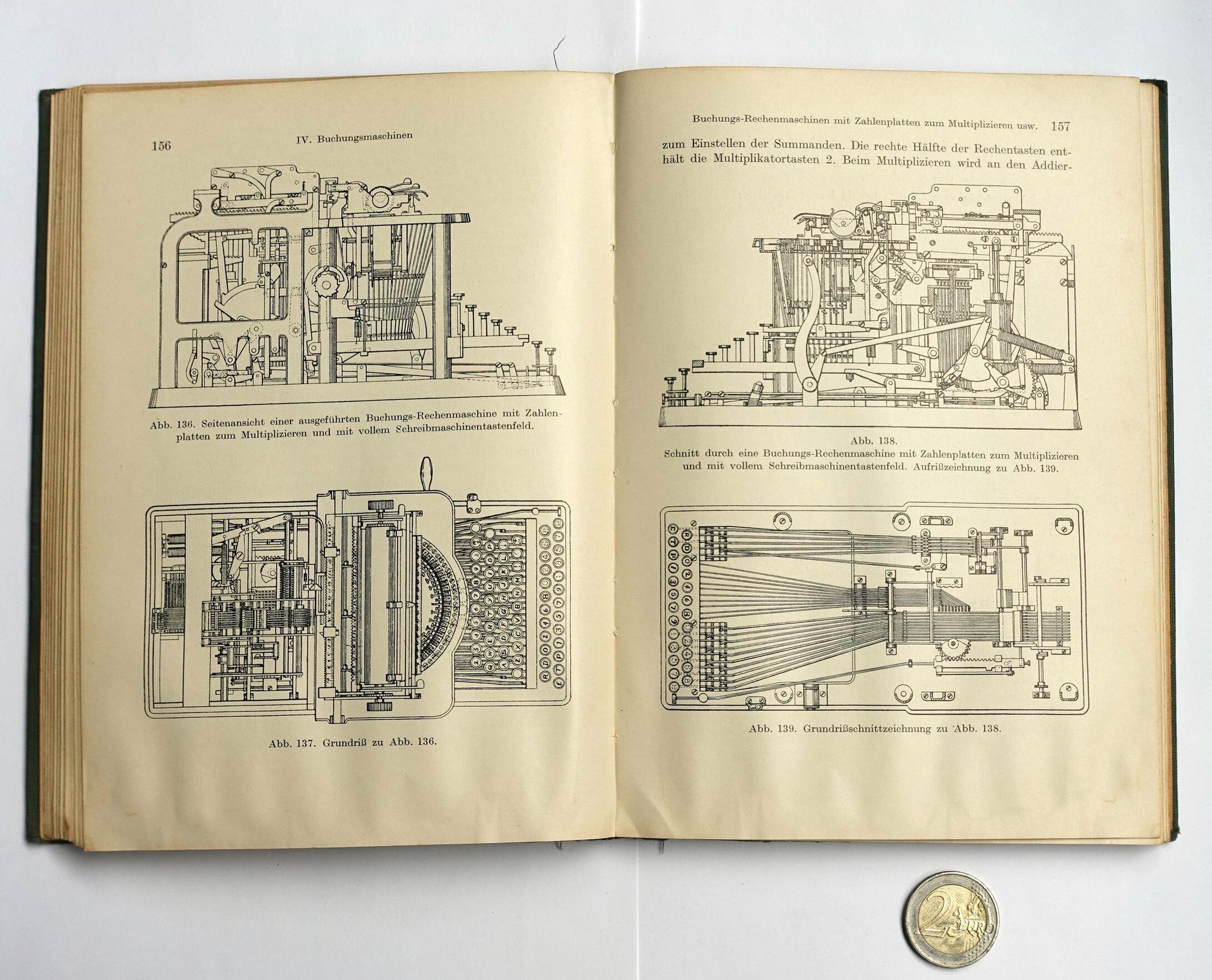
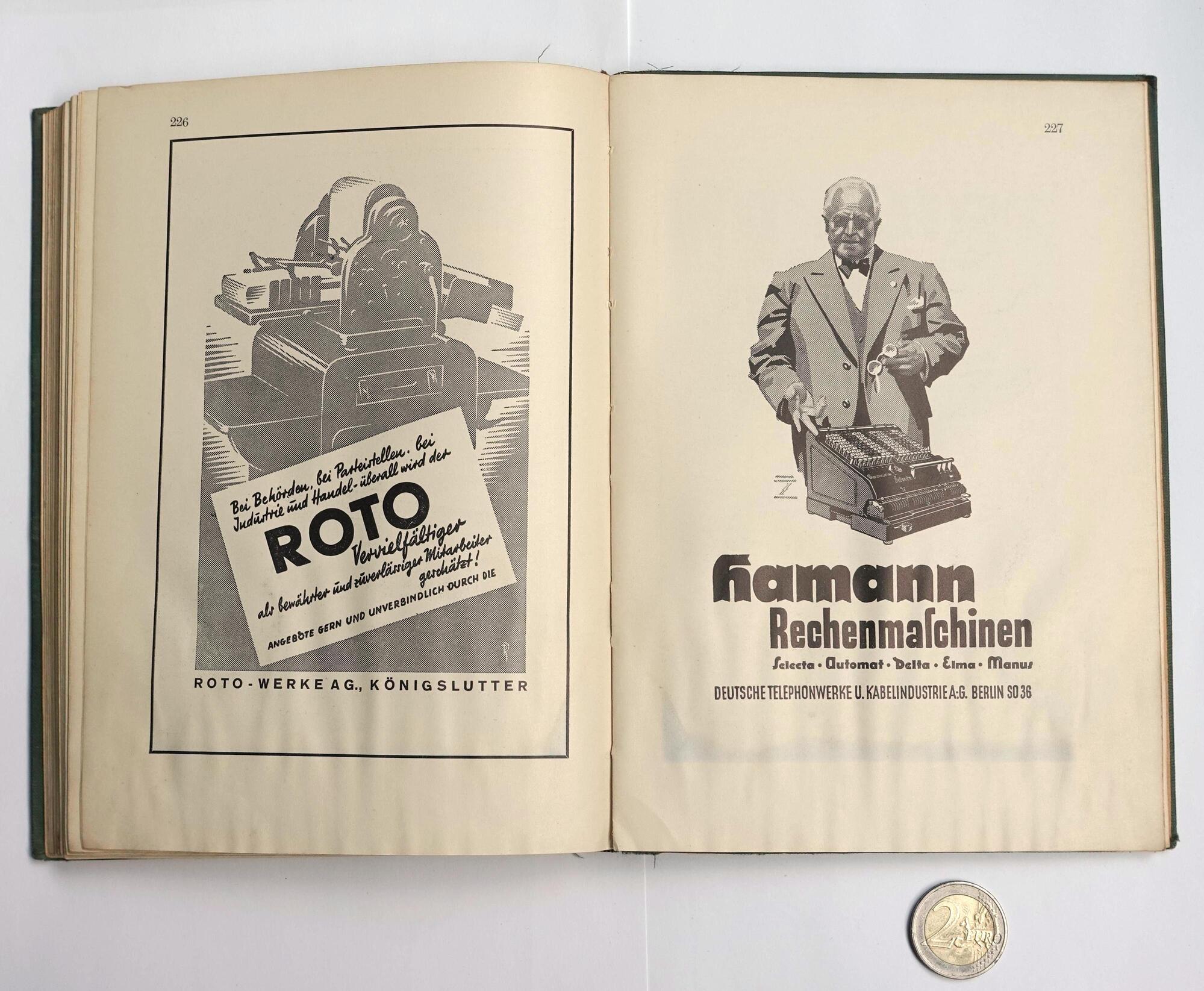
Büromaschinen W. Lind & R. Berger 1940
260 pages, hardcover, German
155mm × 212mm × 15mm
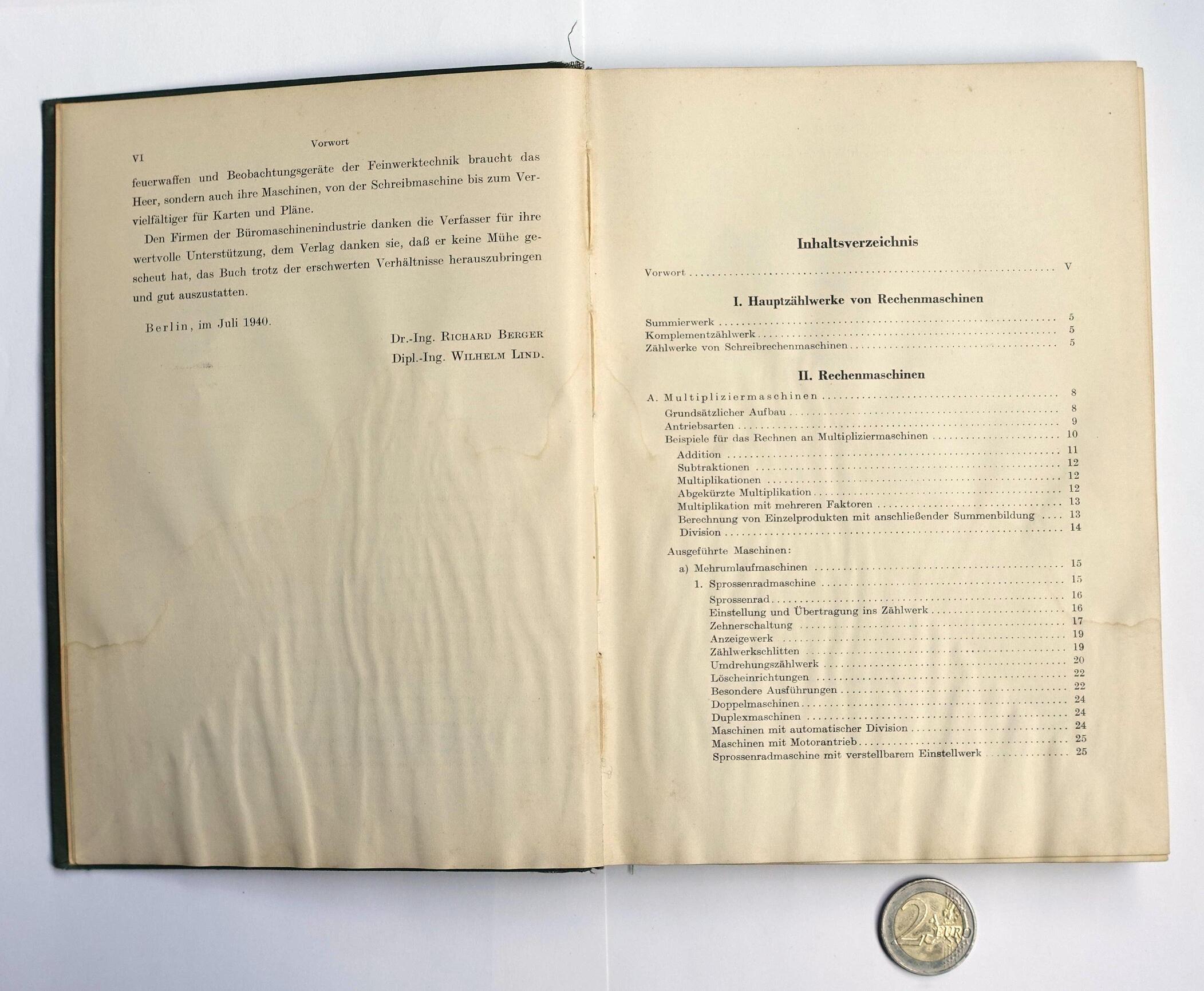
The first 83 text pages have an in-depth description of calculators and adding machines,
including some explanation of the various mechanisms with many illustrations. Typewriters
are then discussed similarly (51 pages), followed by bookkeeping machines including
punchcard systems (56 pages), and duplicating machines excluding photographic methods
(31 pages). There are 23 pages of adverts at the back.
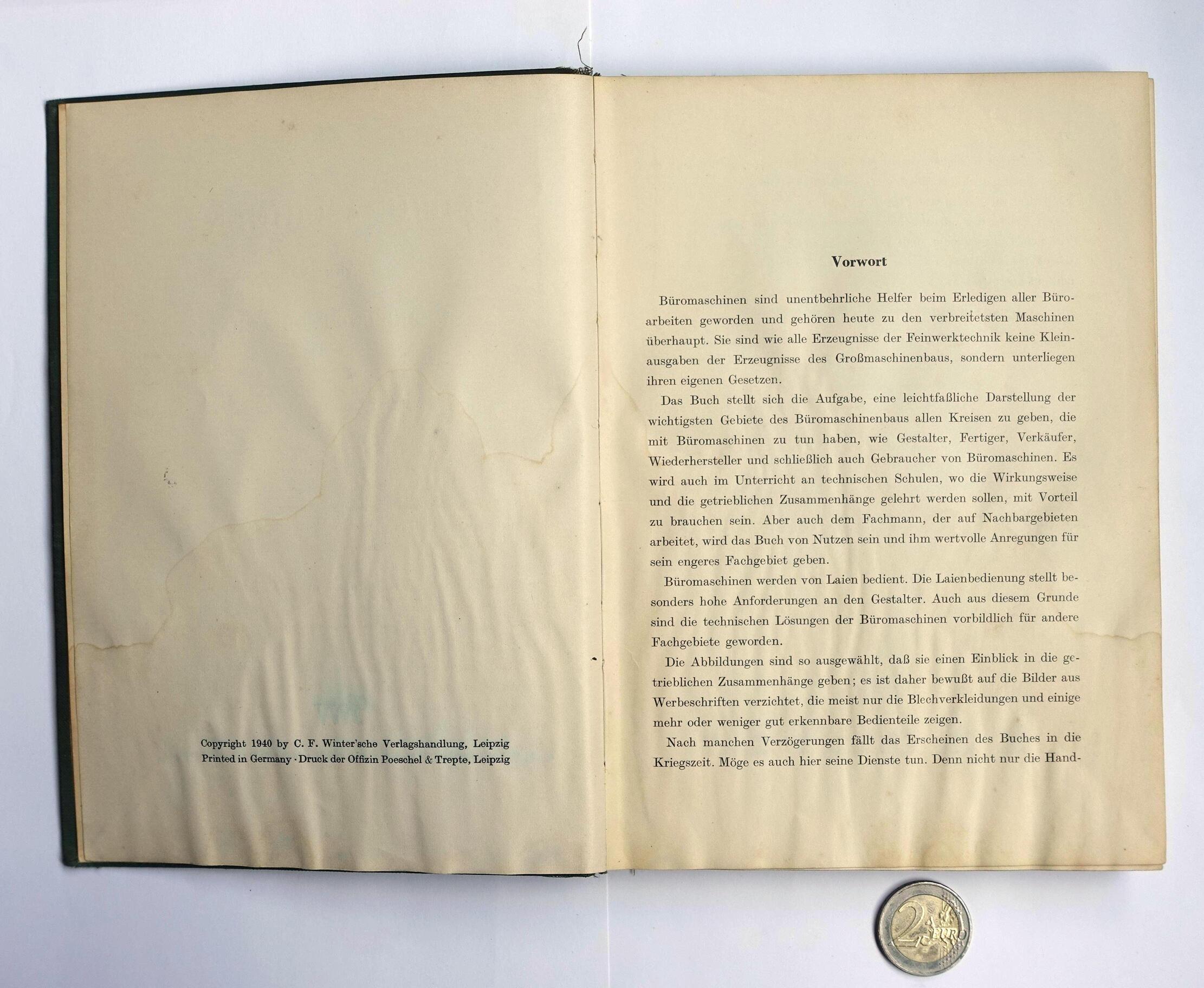
My copy of this book has some water damage, but apart from some crinkling the
pages are unaffected.
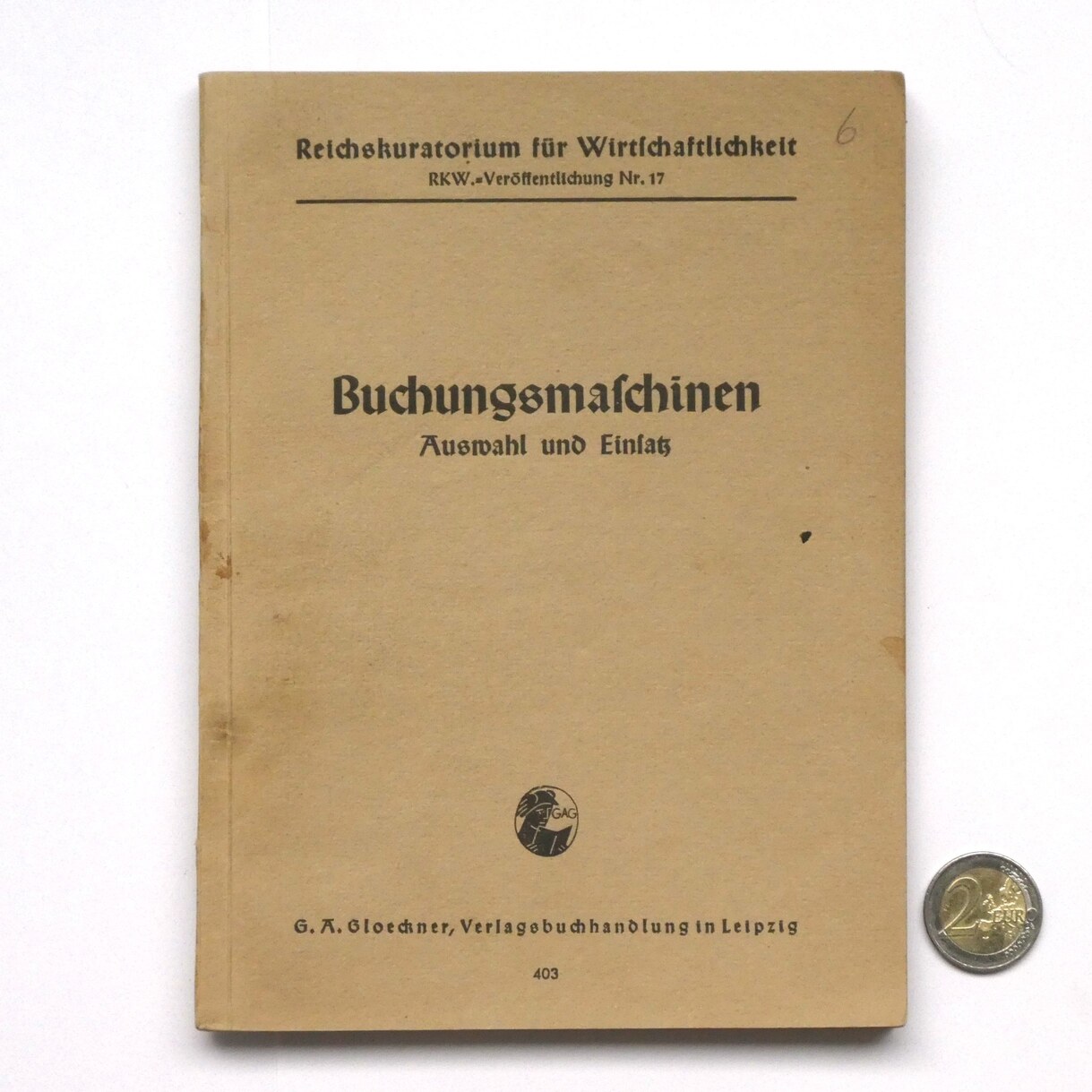
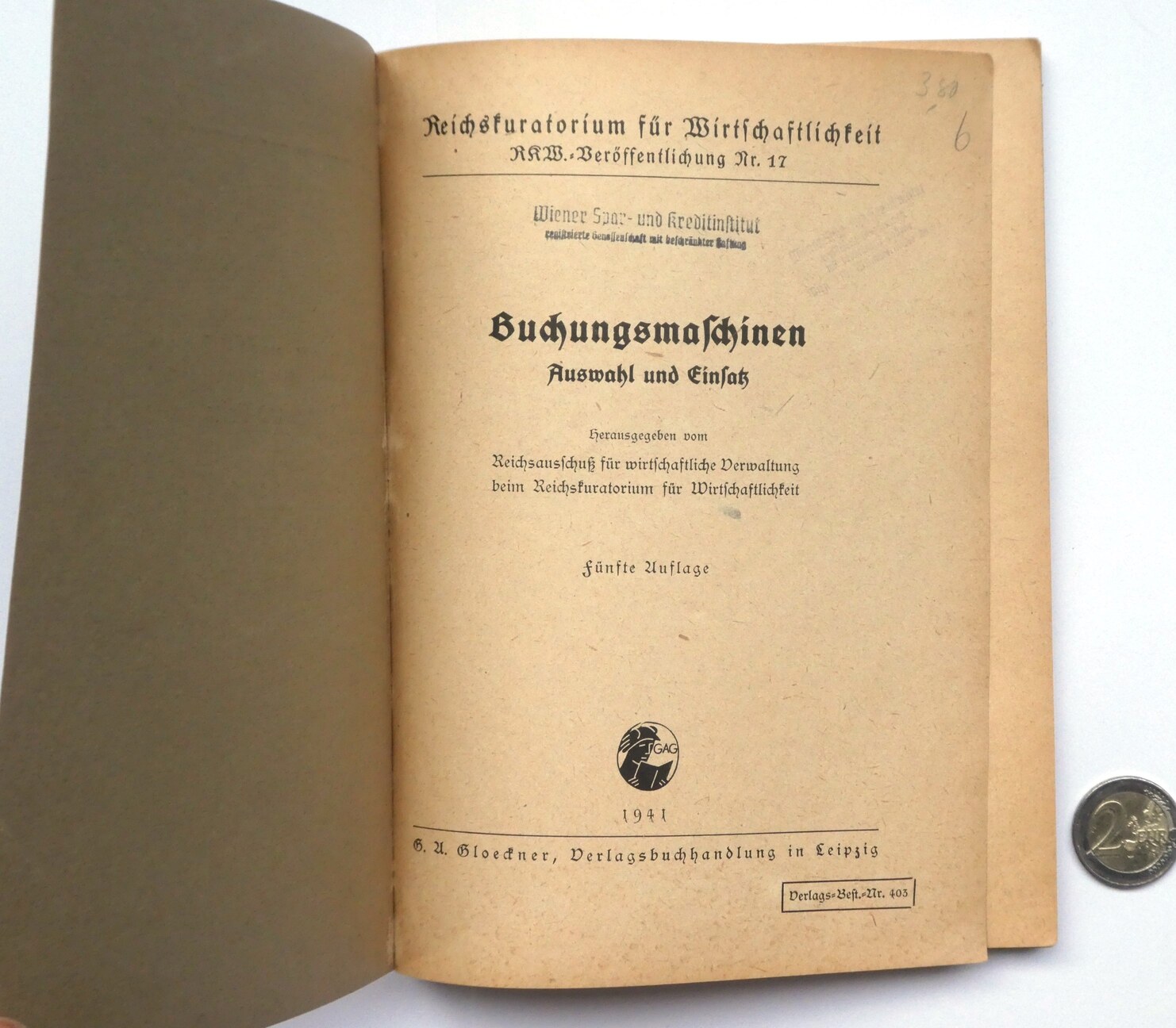
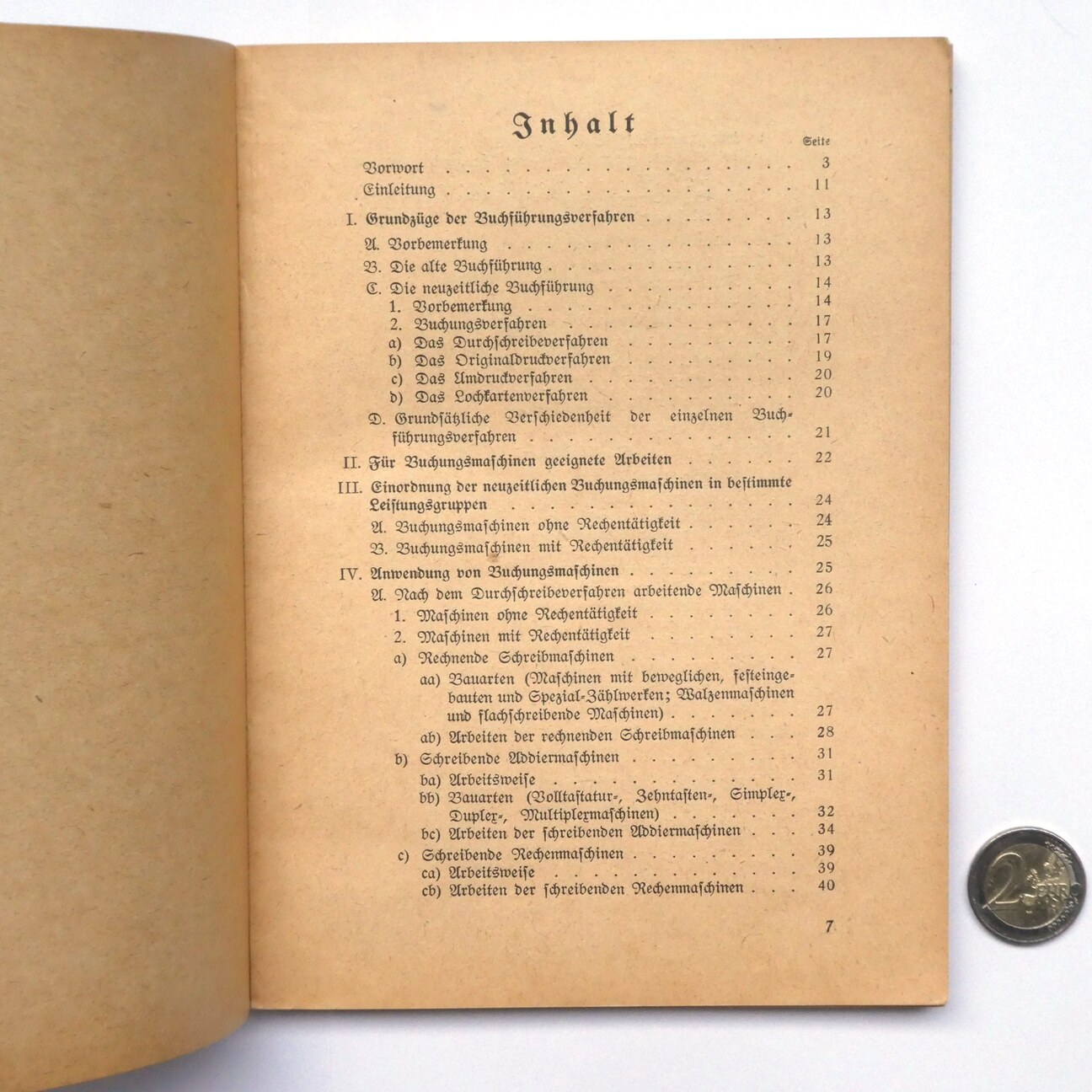
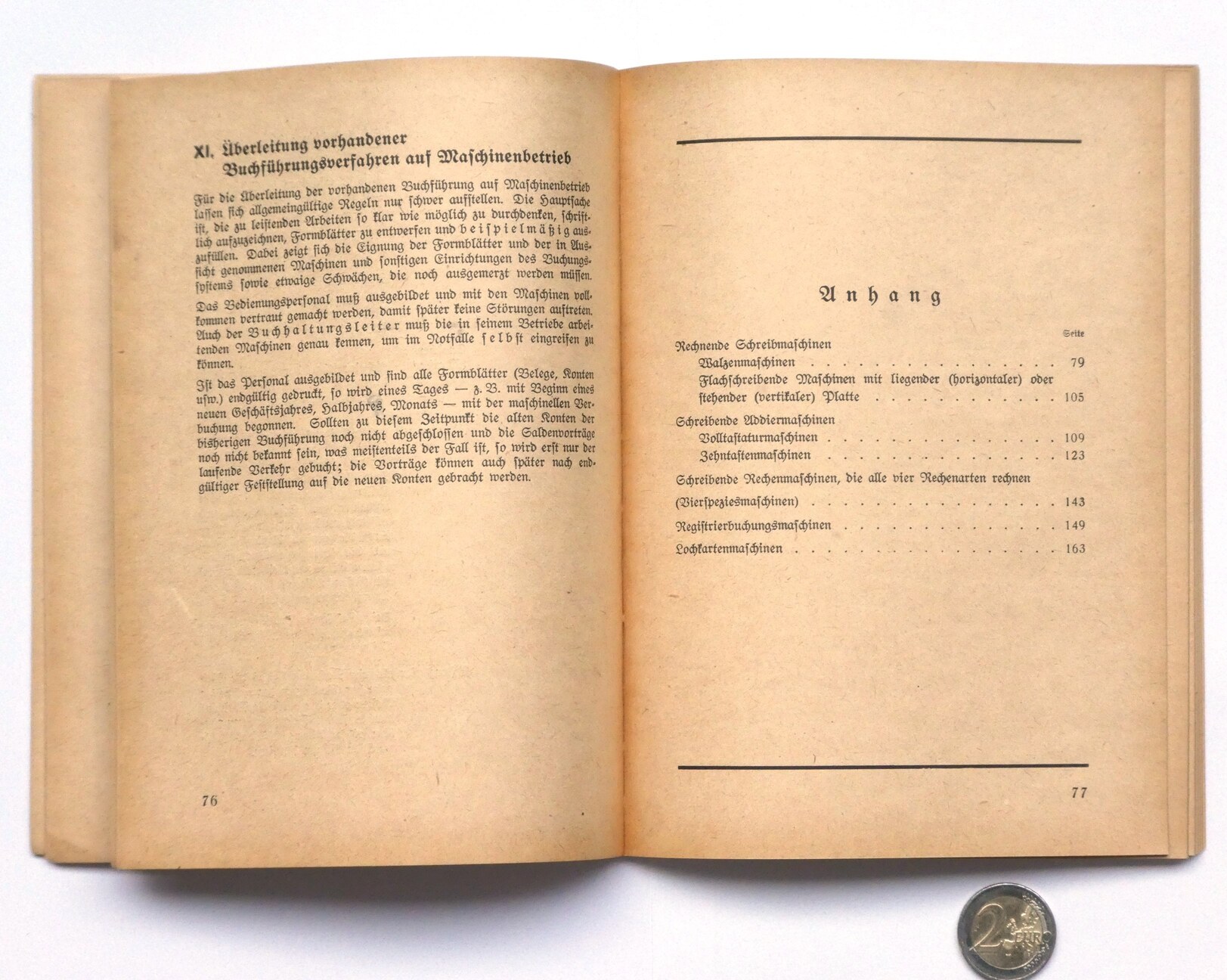
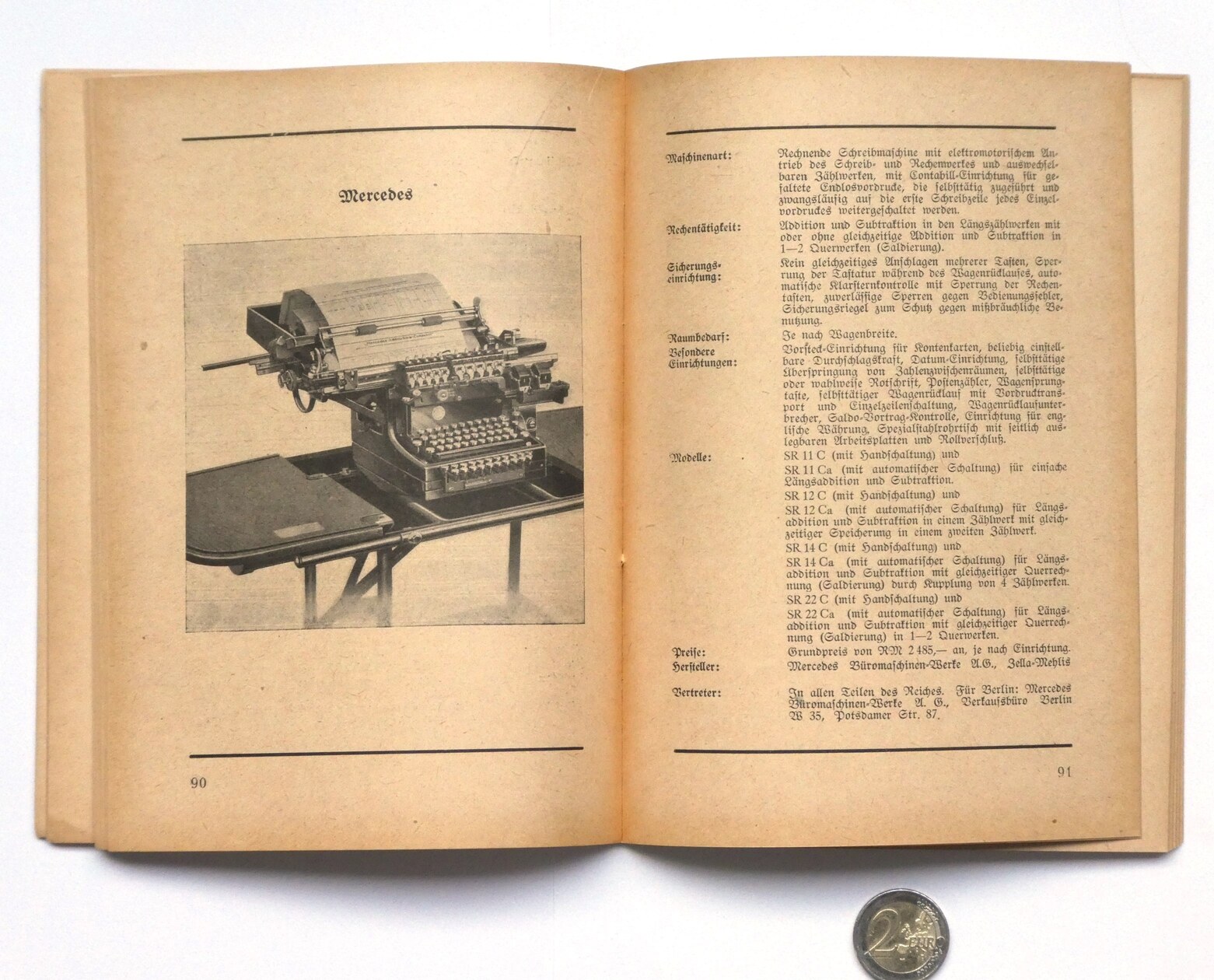
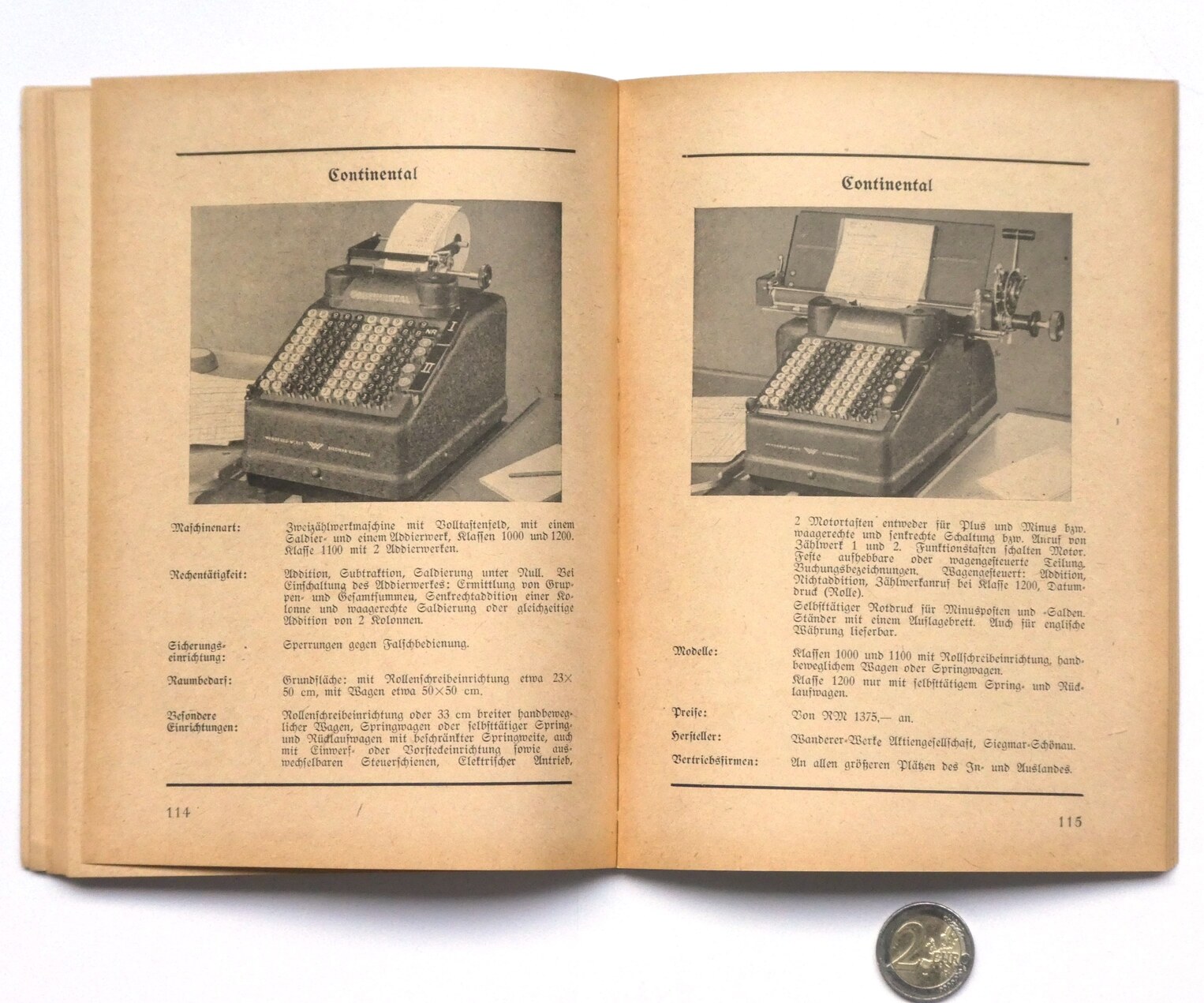
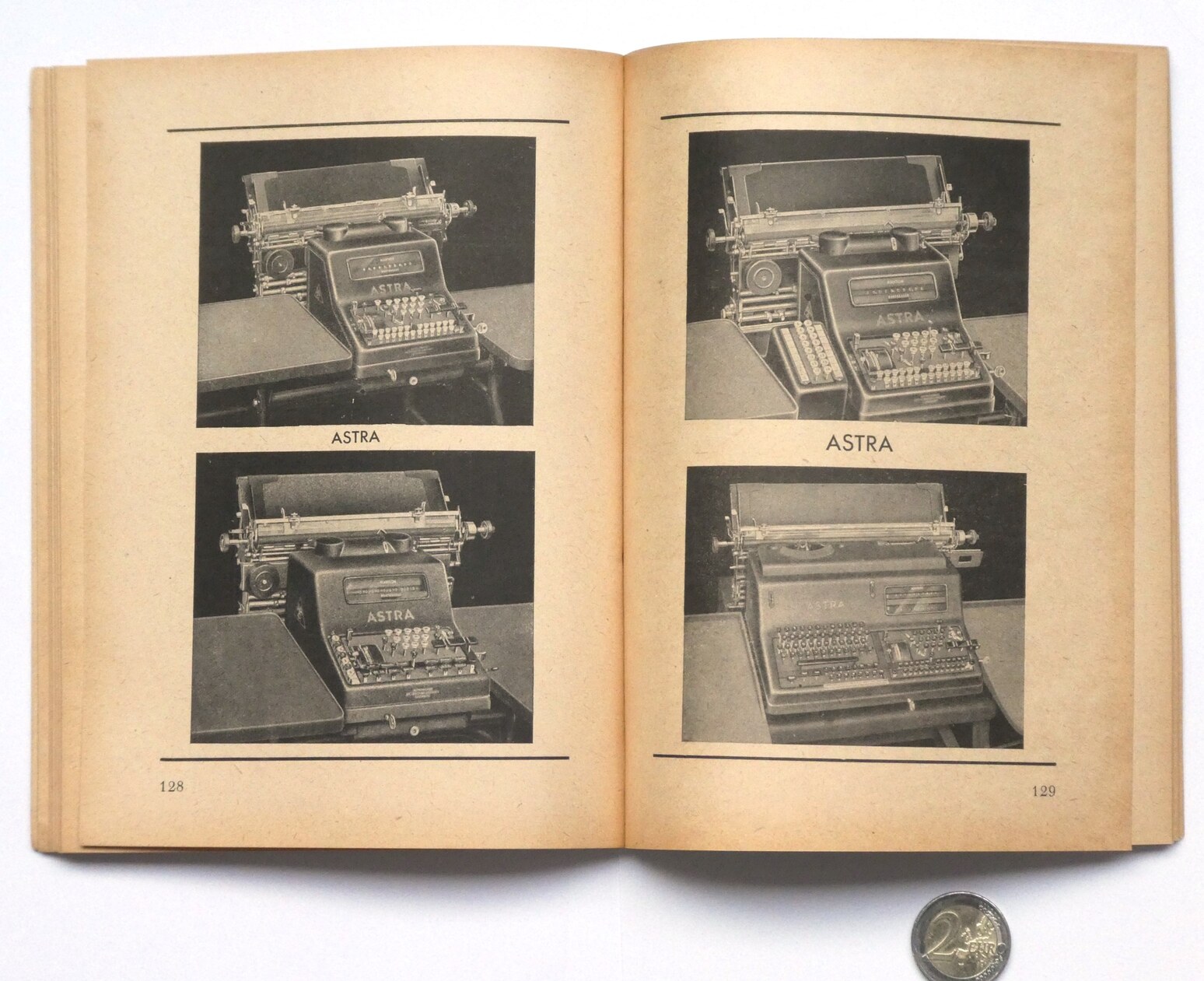
Buchungsmaschinen Auswahl und Einsatz
Alfred Brüggeman 1941
174 pages, paperback, German
151mm × 205mm × 8mm
This book about bookkeeping machines has two parts. The first explains
how bookkeeping machines are used in the running of a business (almost
80 pages), and then a catalogue of the various machines that were
available. There were calculating typewriters (30 pages), full keyboard
adding listing machines (15 pages), 10-key adding listing machines (20
pages), printing calculators (6 pages), printing registers (15 pages),
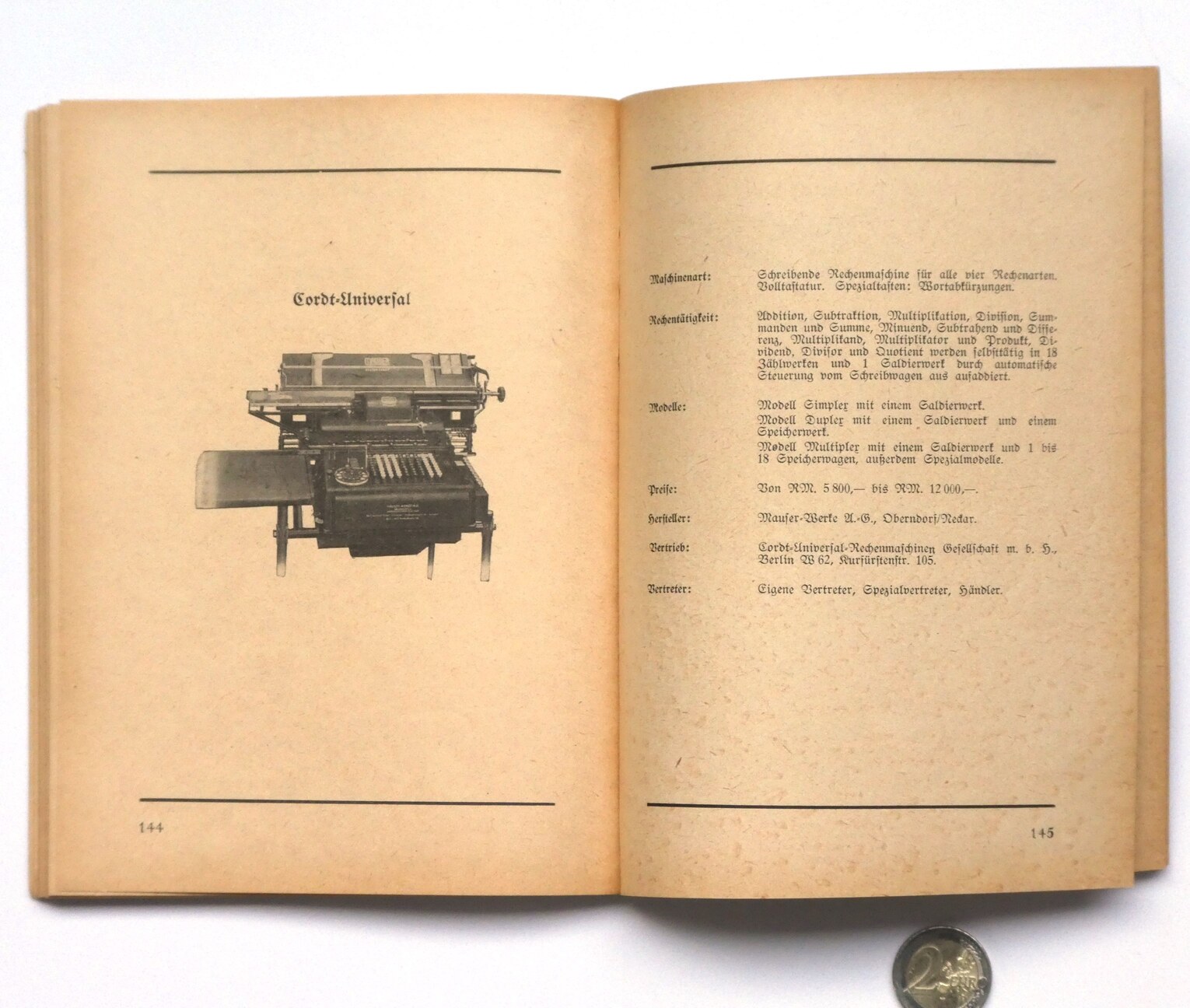
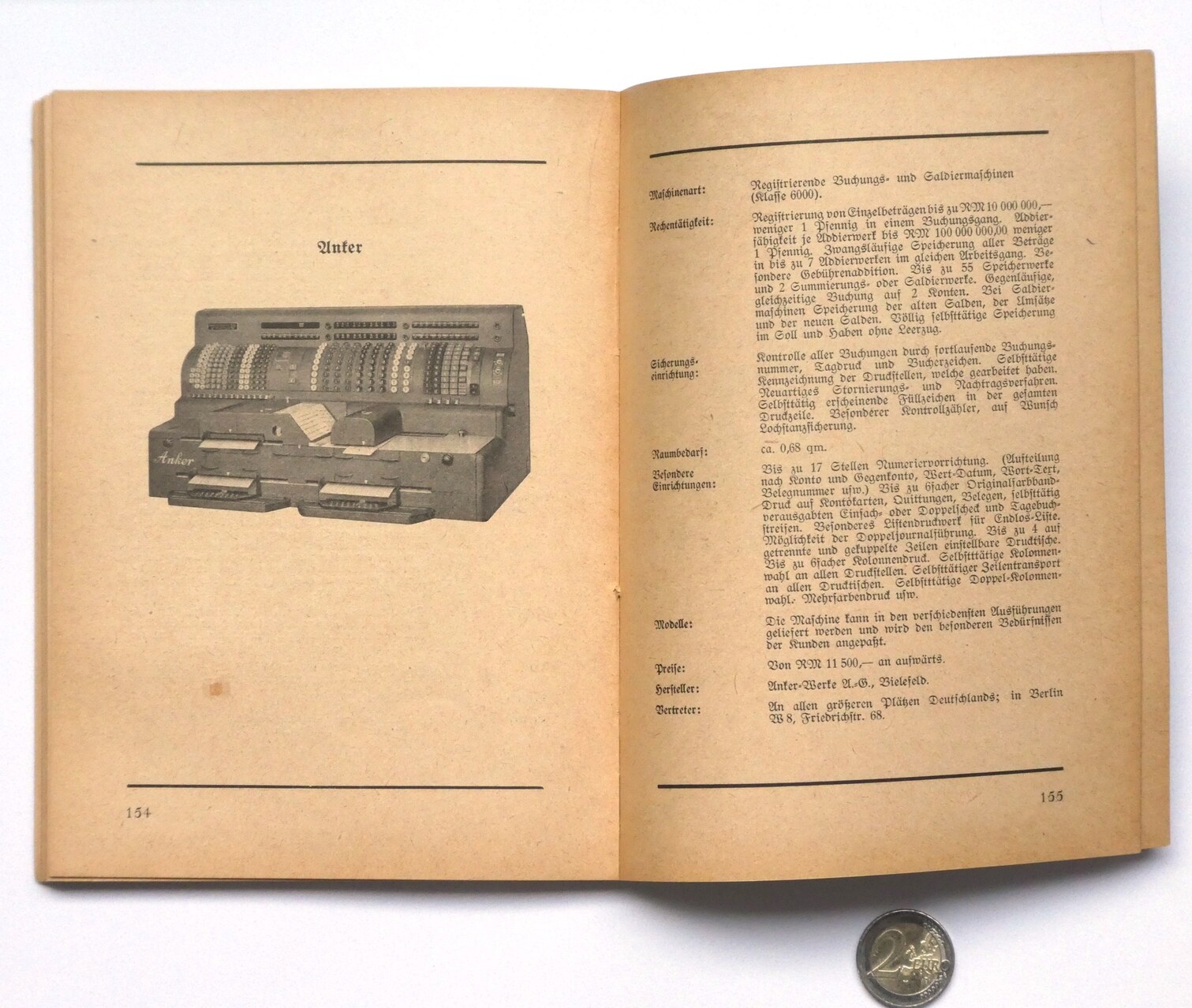
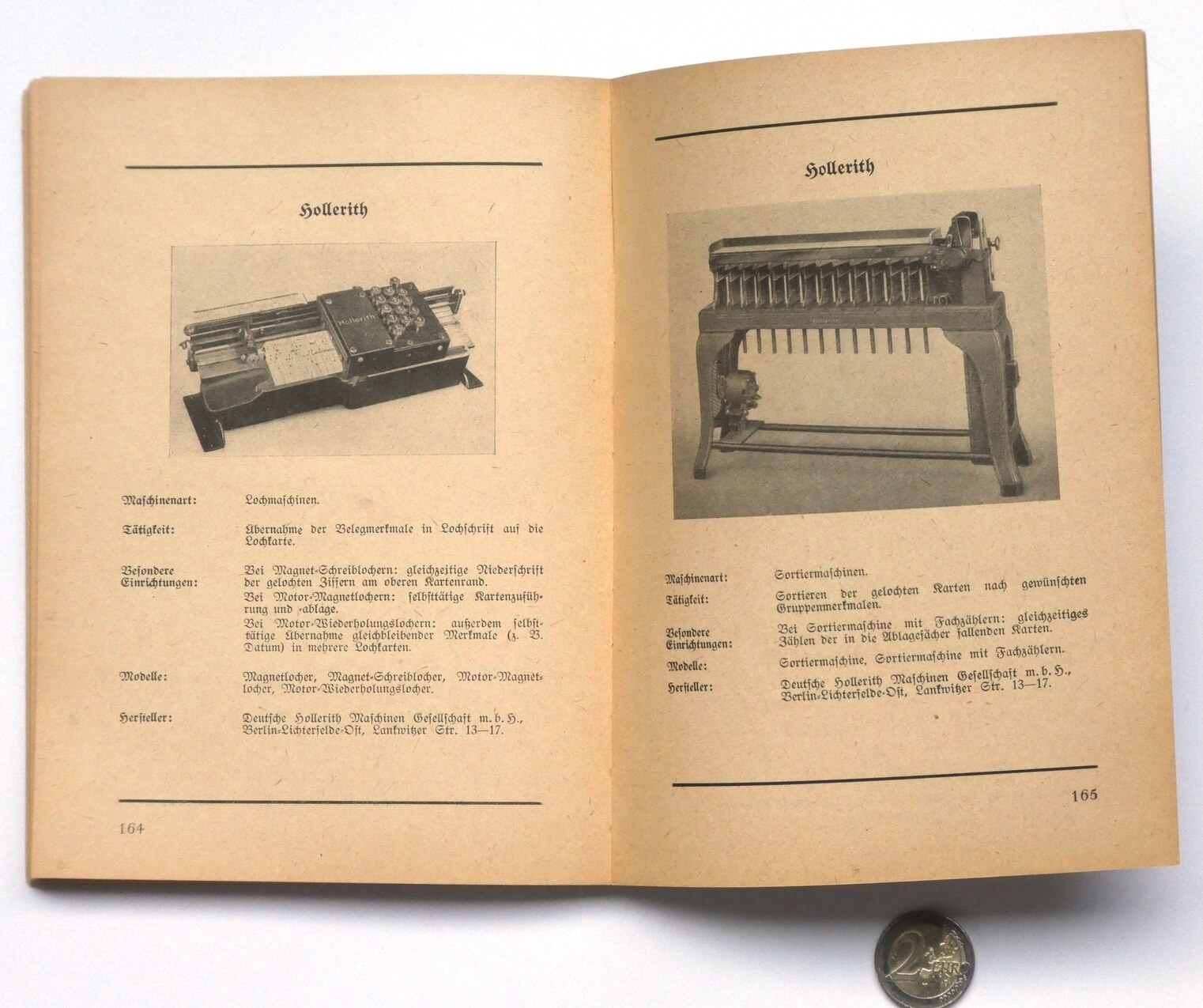
and punchcard machines (10 pages). Each machine is pictured, and its
capabilities listed.
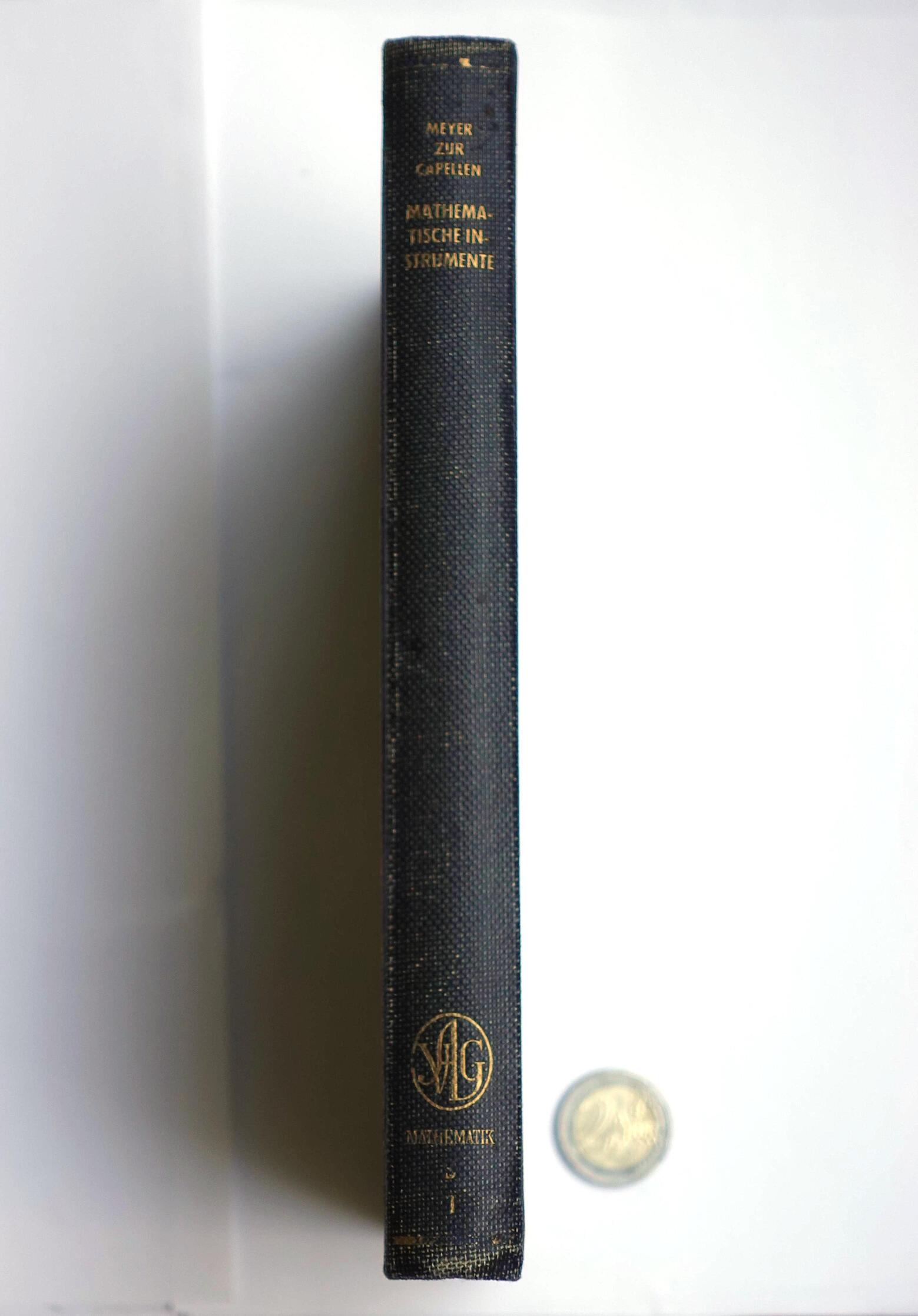
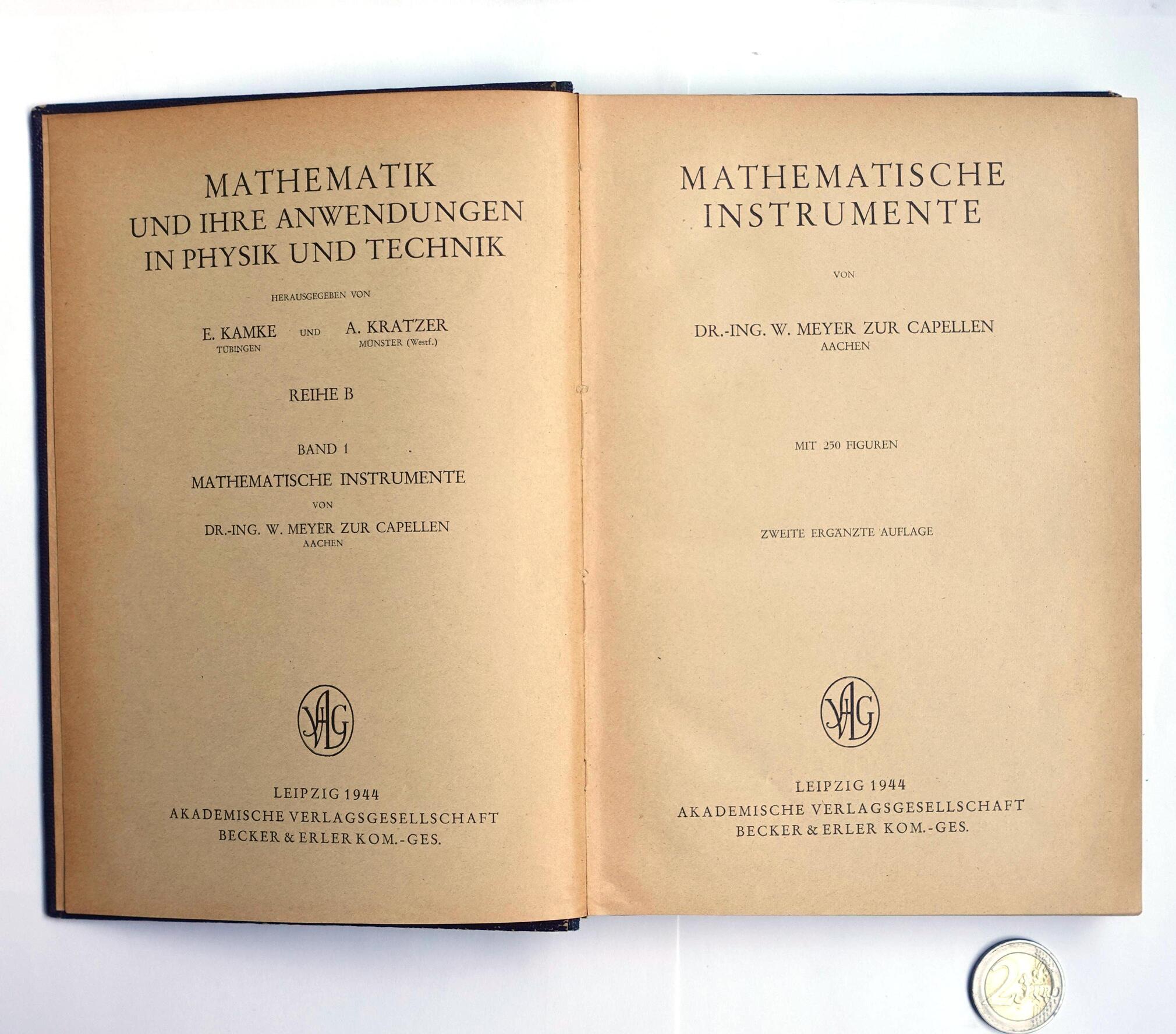
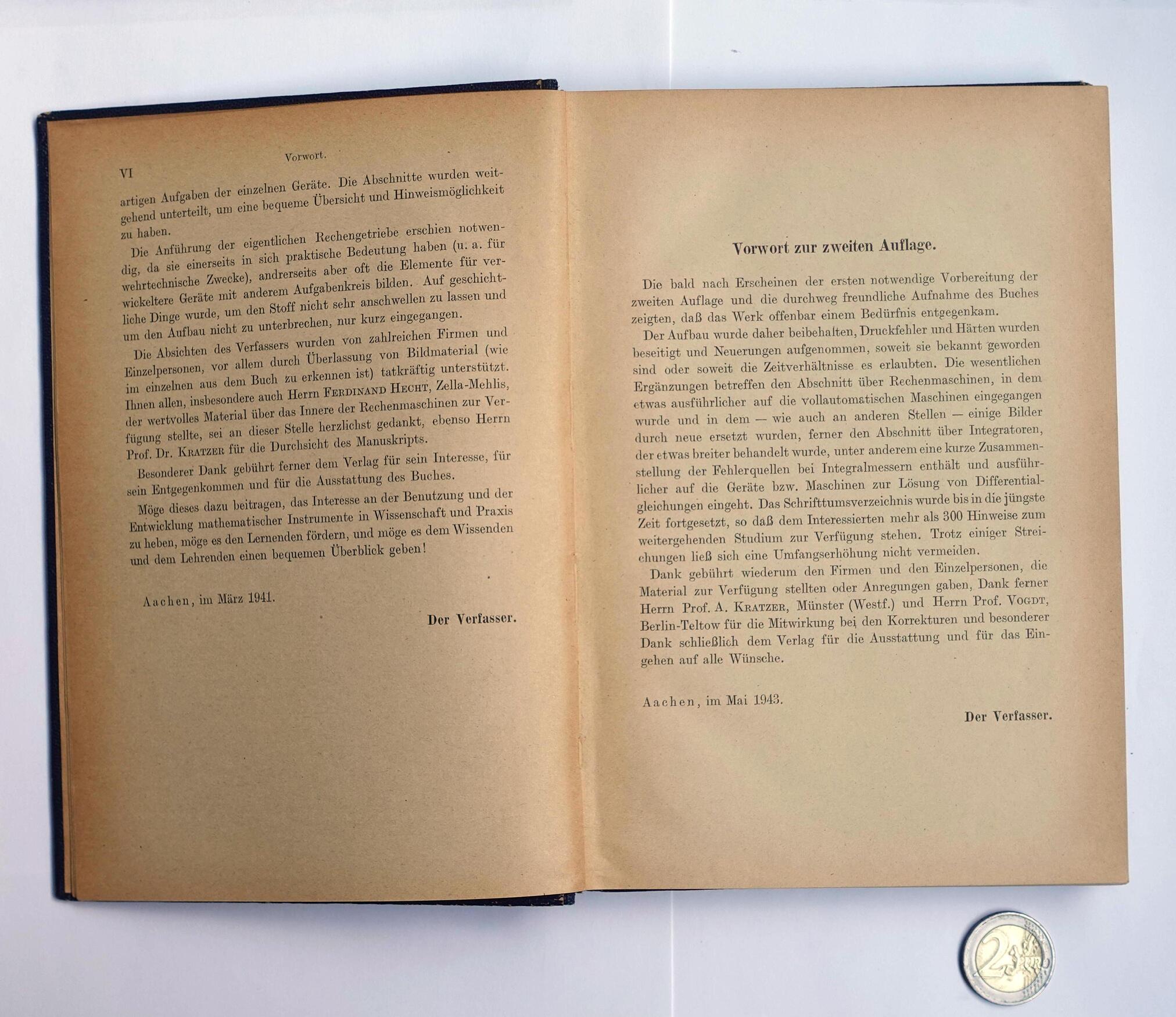
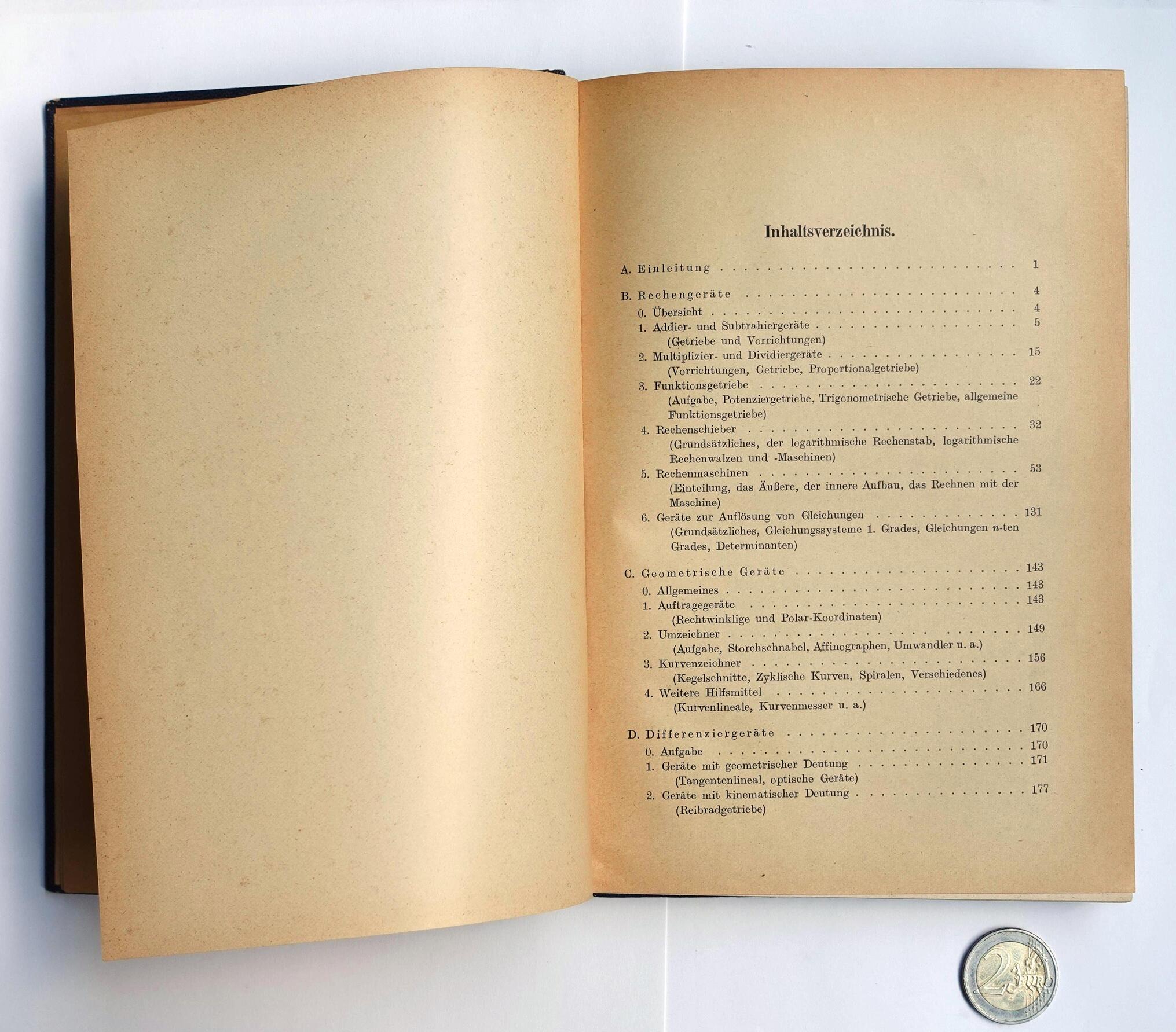
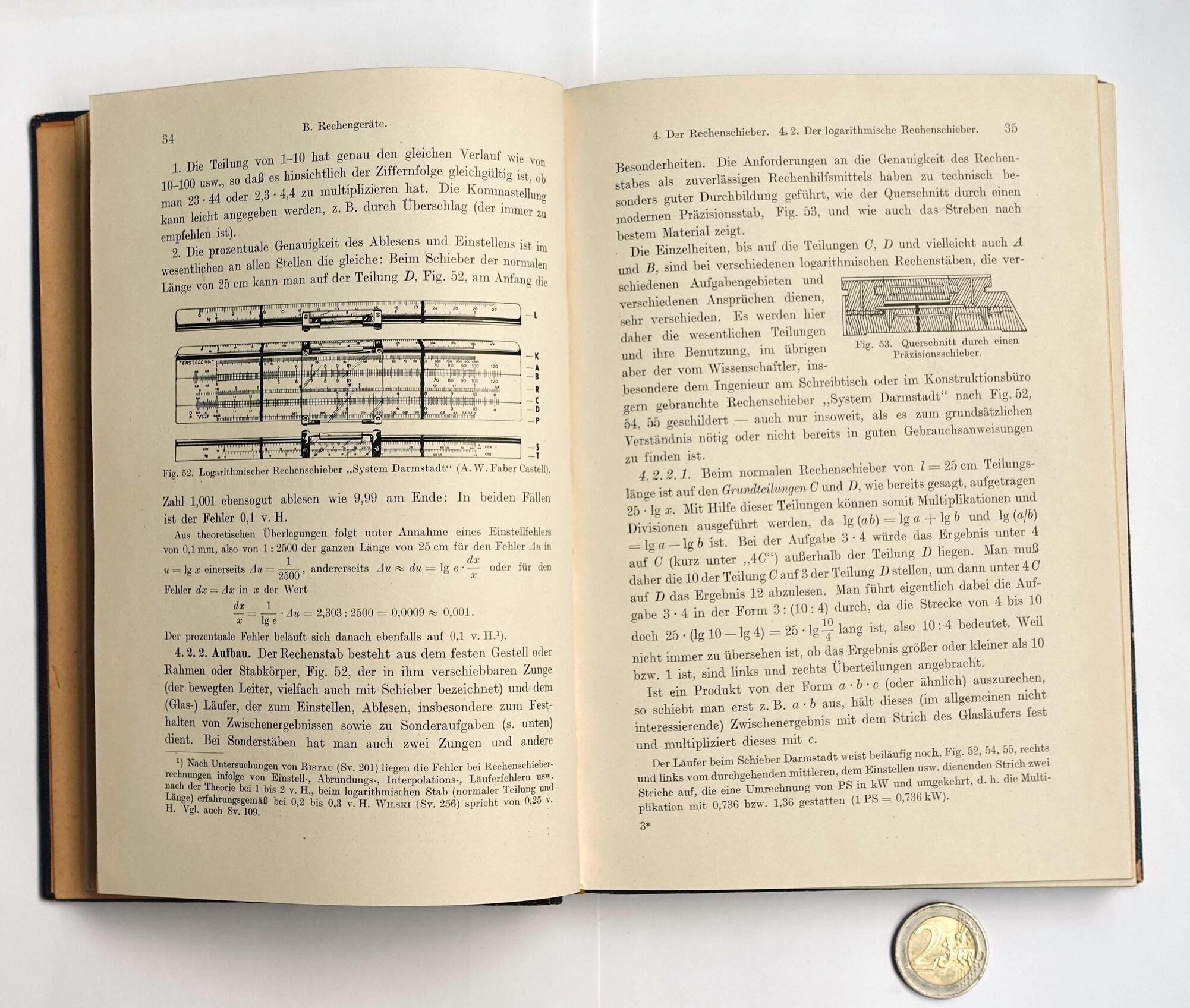
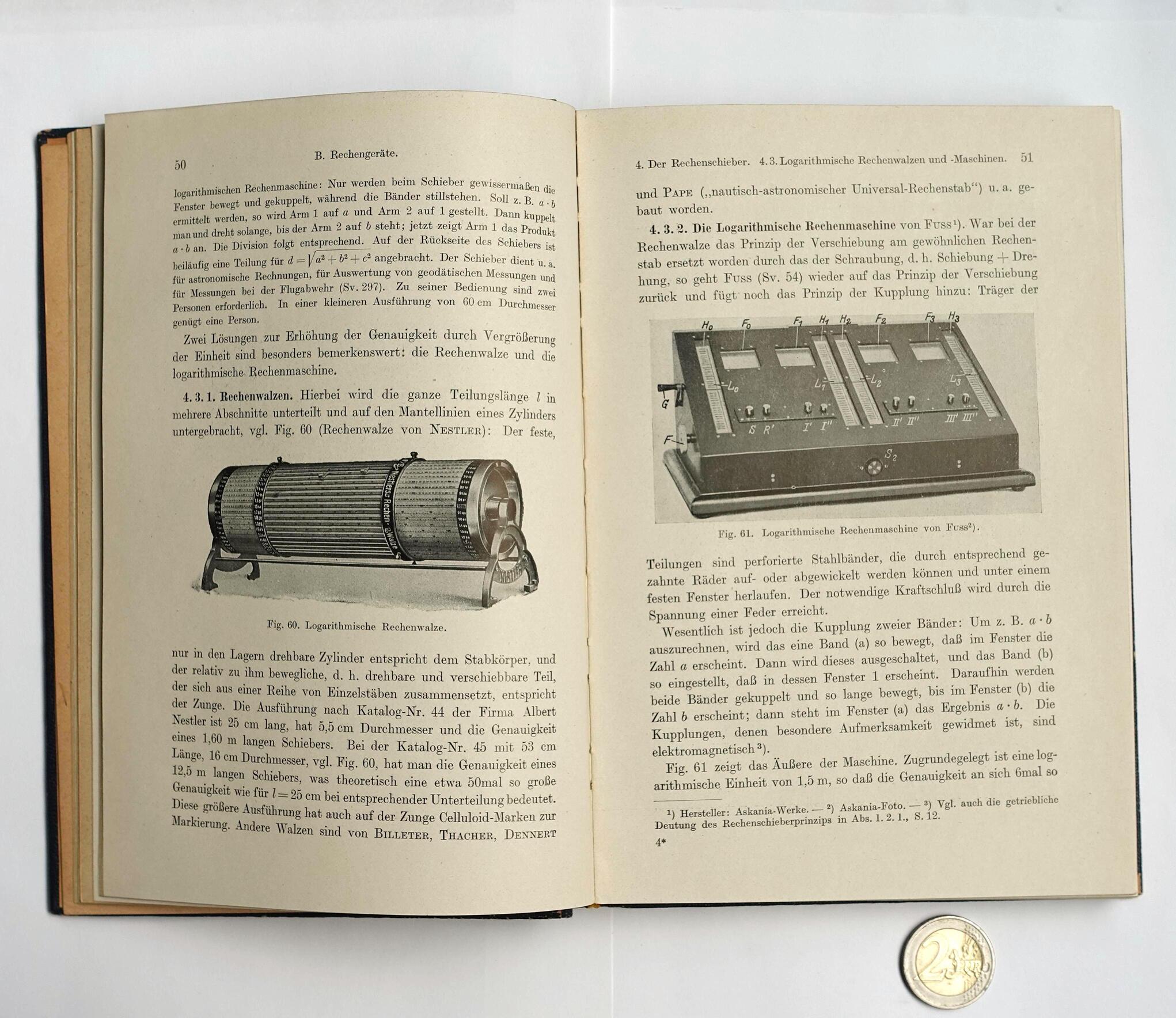
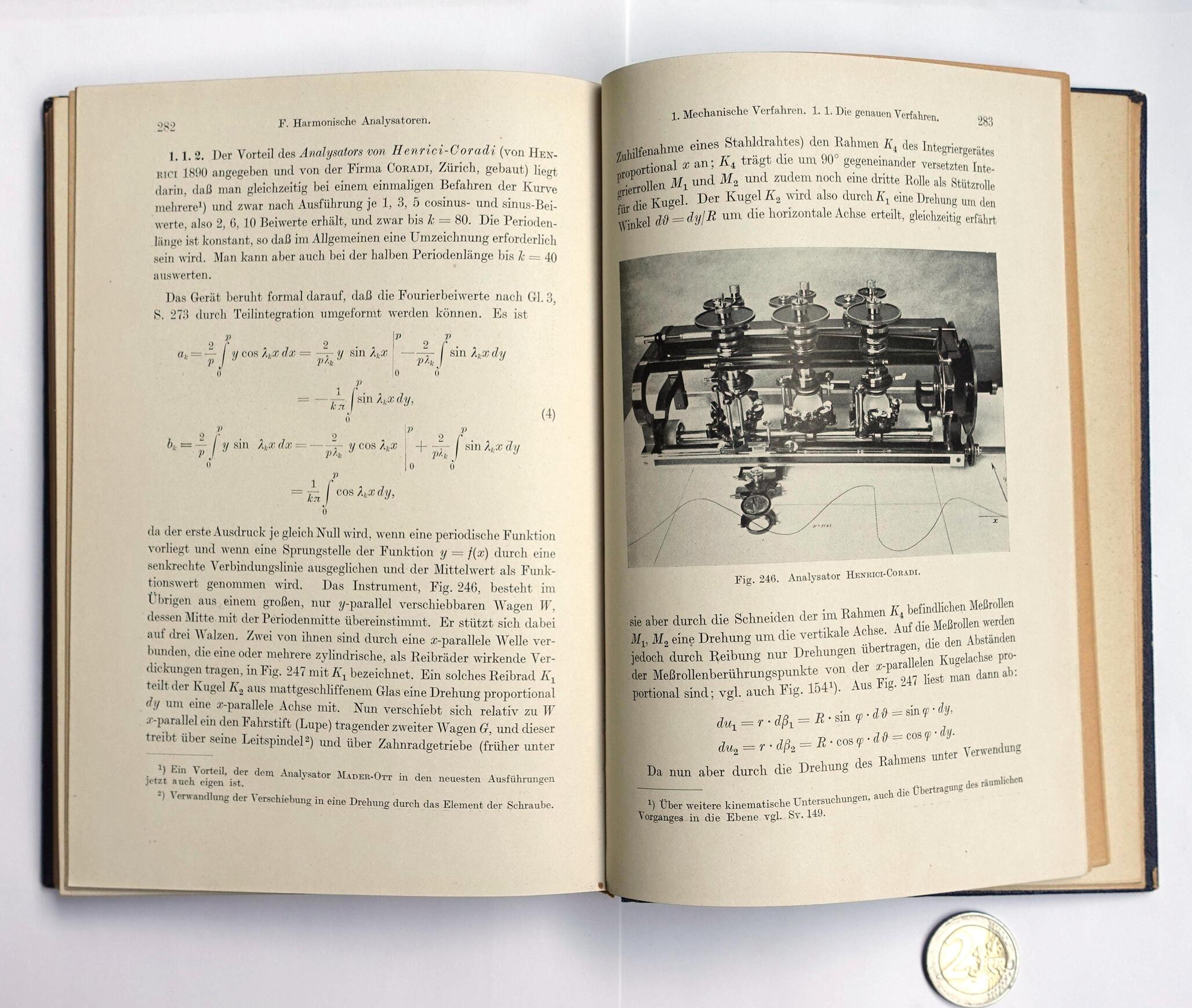
Mathematische Instrumente W. Meyer Zur Capellen 1944
318 pages, hardcover, German
152mm × 219mm × 21mm
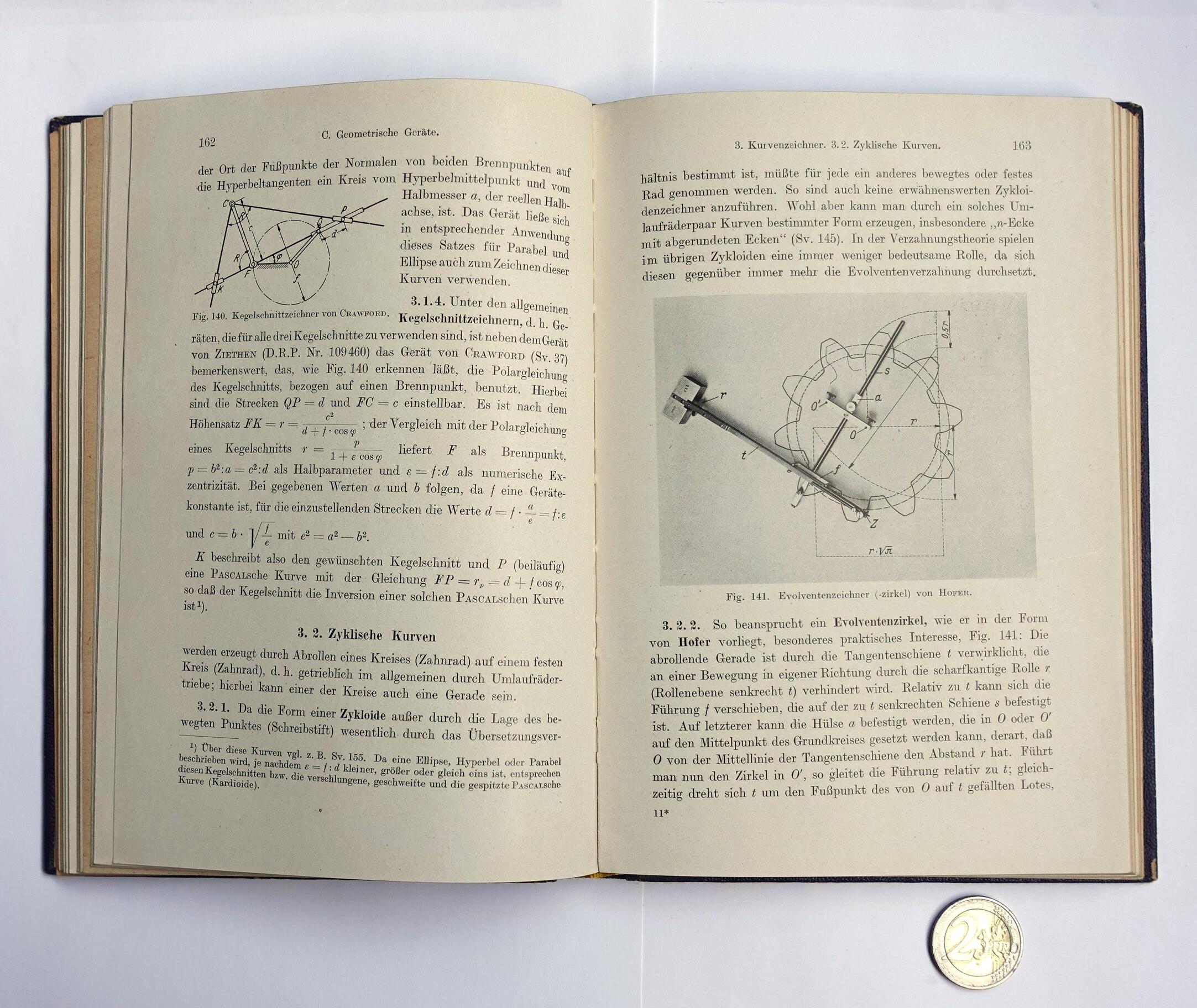
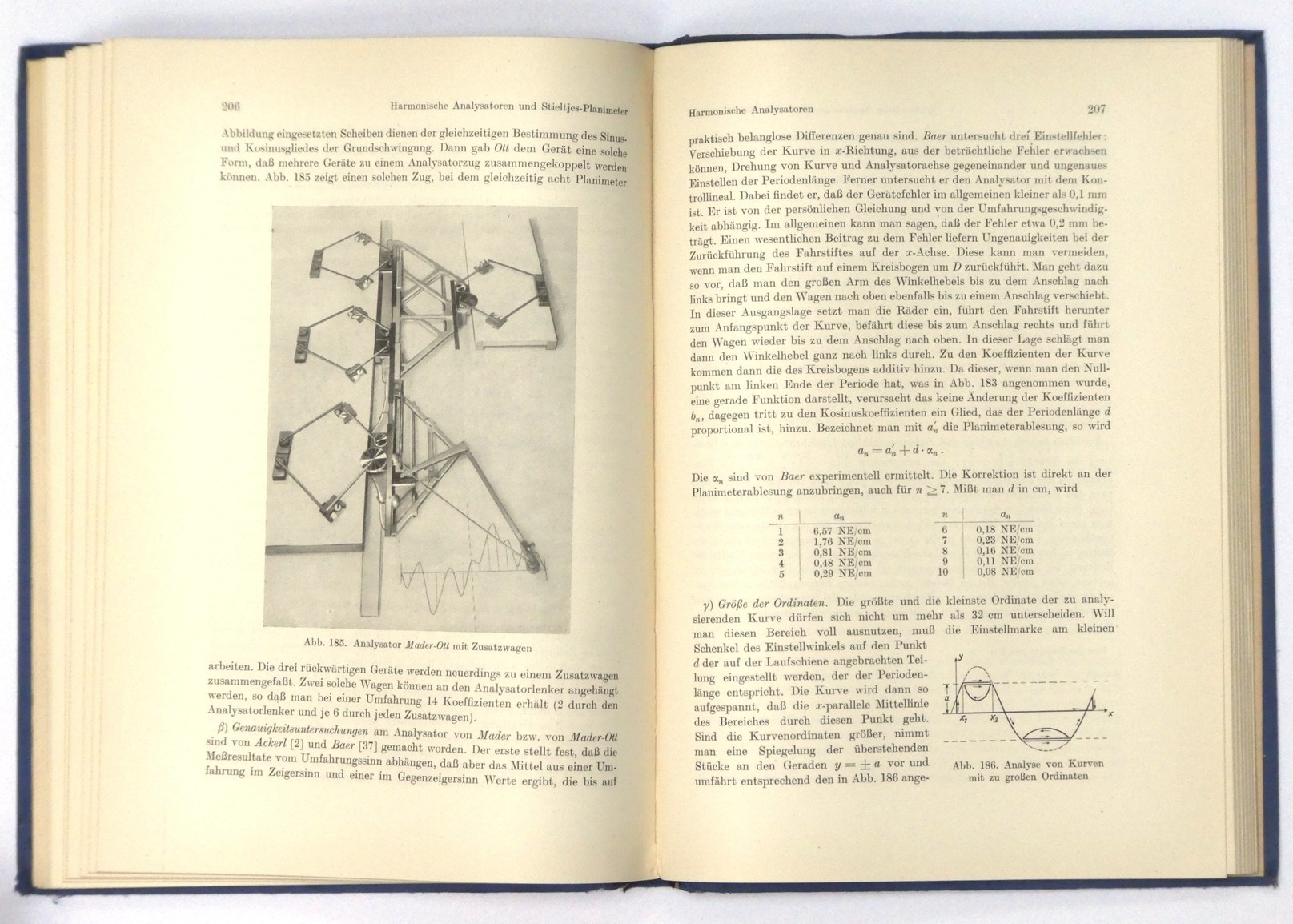
This book discusses all kinds of mathematical tools, and is divided into the
following sections: tools for calculation (139 pages, subdivided into parts
on adding/subtracting, multiplication/division, calculating functions, sliderules,
calculators, equation solving), tools for geometry, tools for differentiation,
tools for integration, and tools for harmonic analysis.
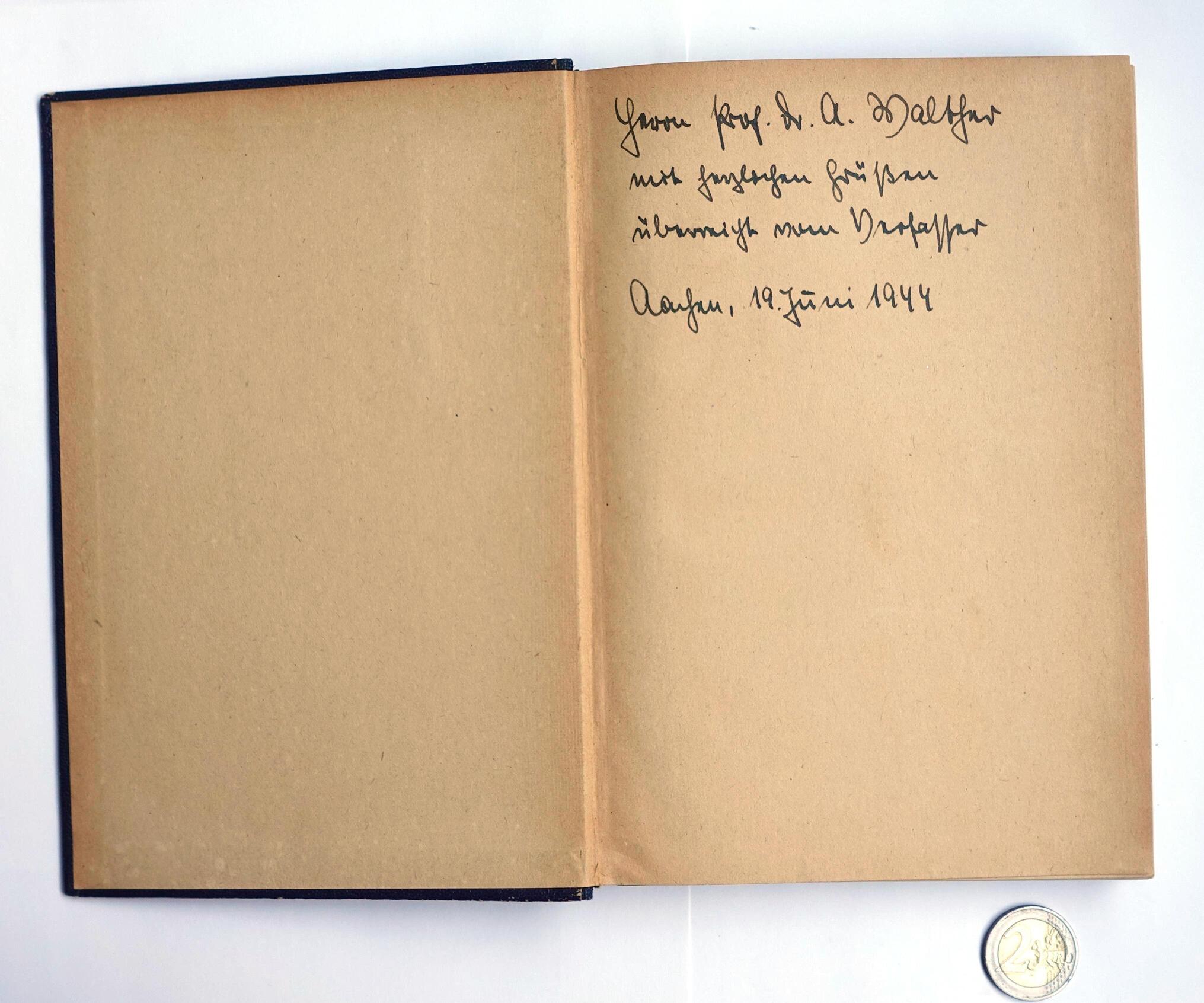
According to the handwritten dedication, this copy of the book was gifted
by the author to Prof. Dr. A. Walther in June 1944.
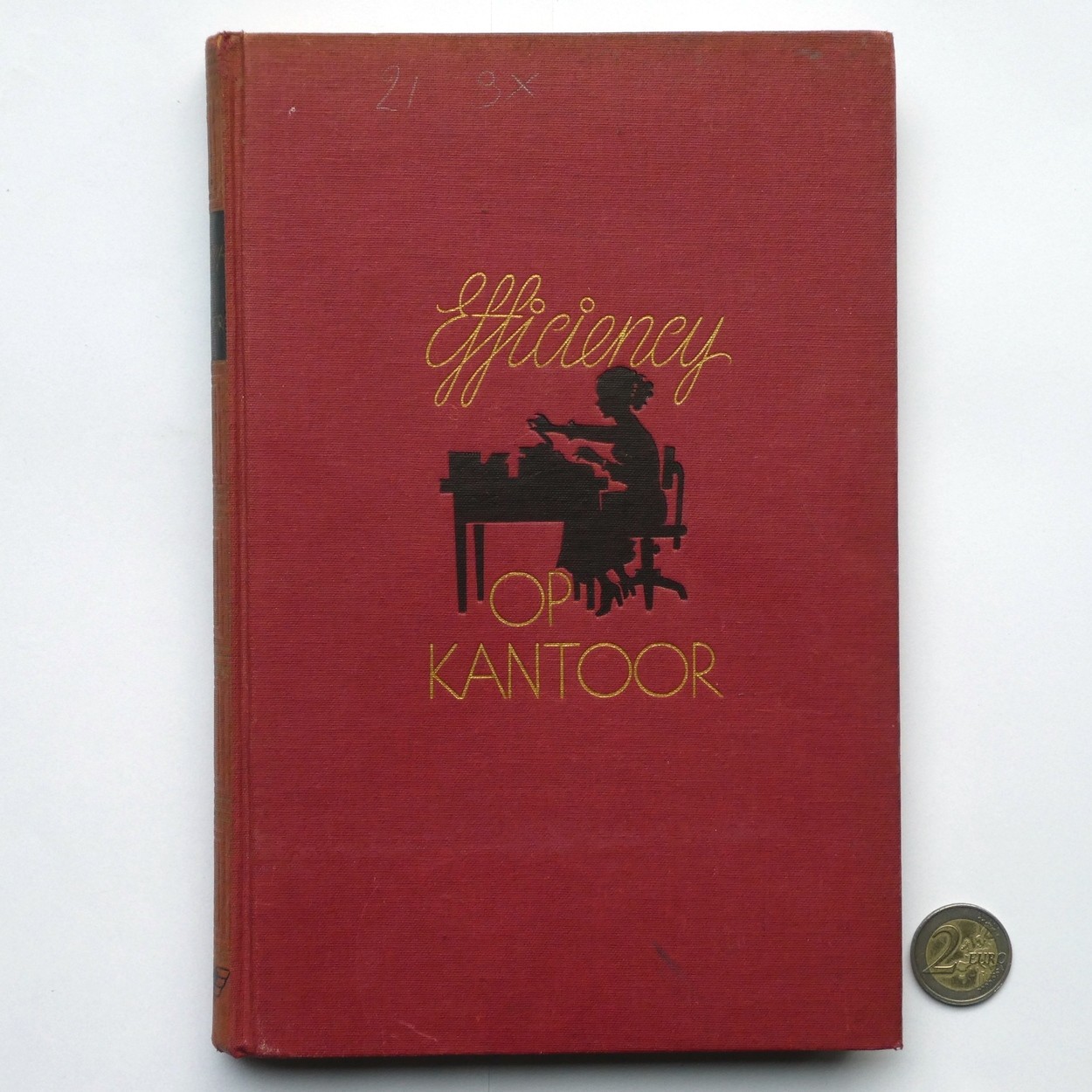
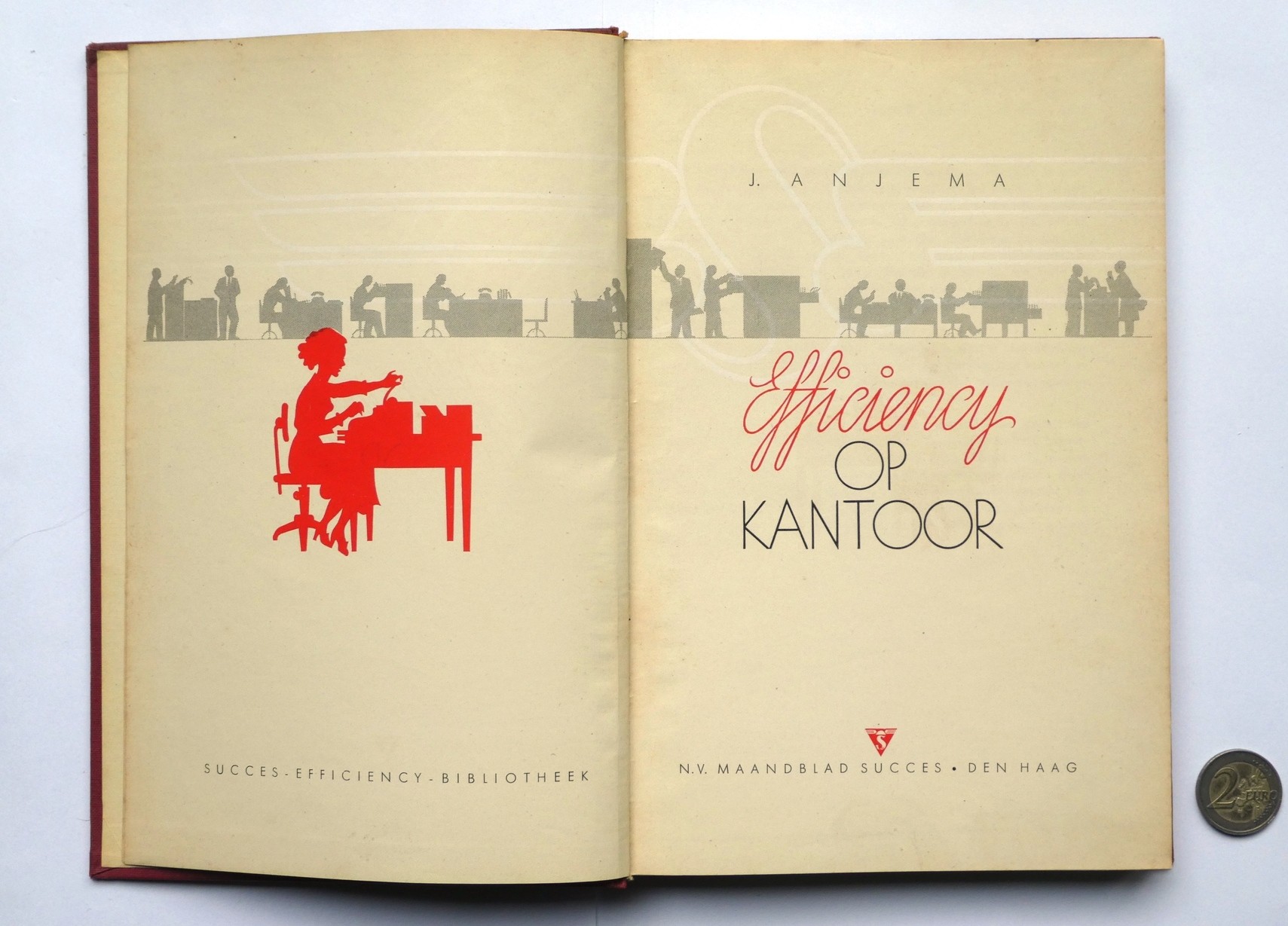
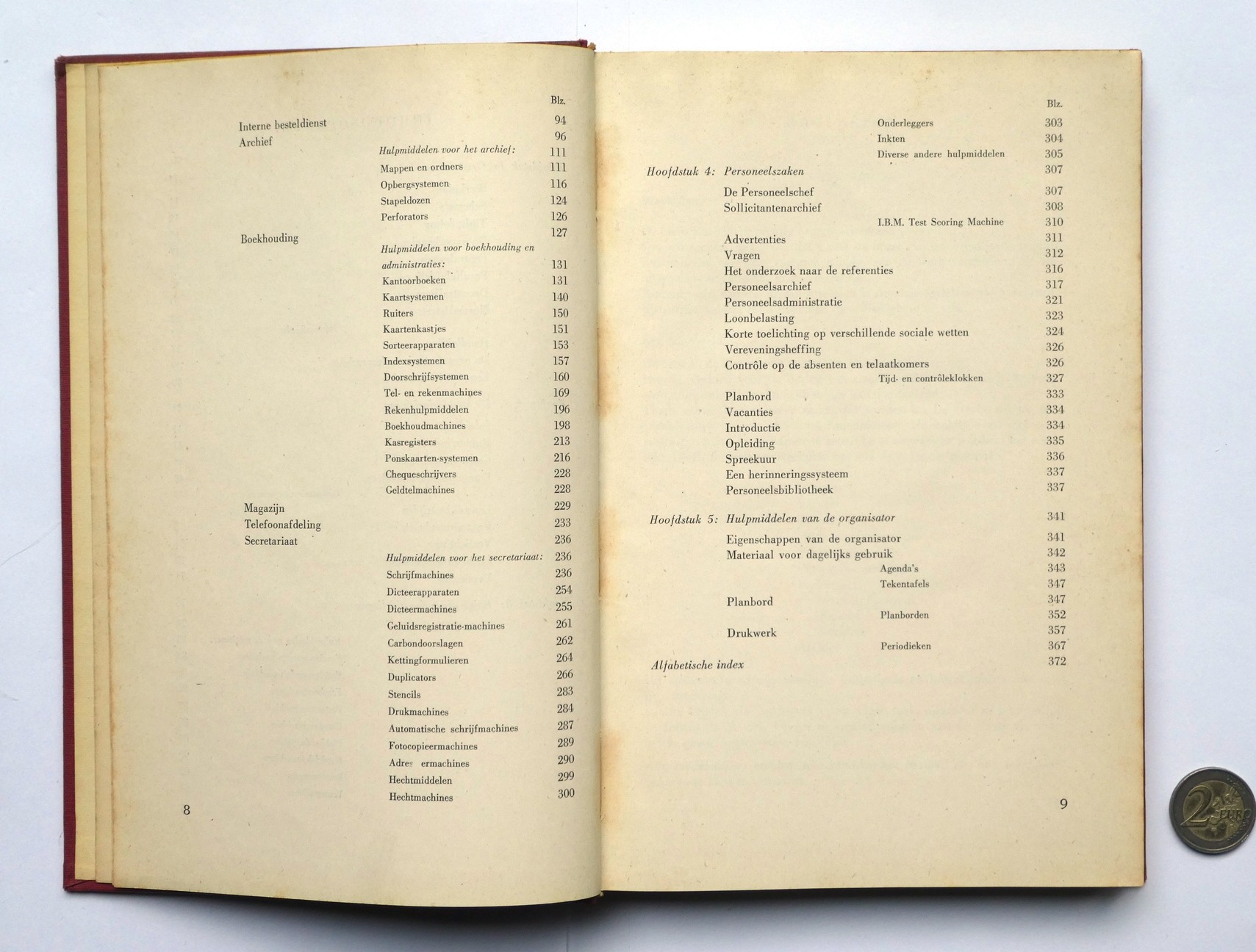
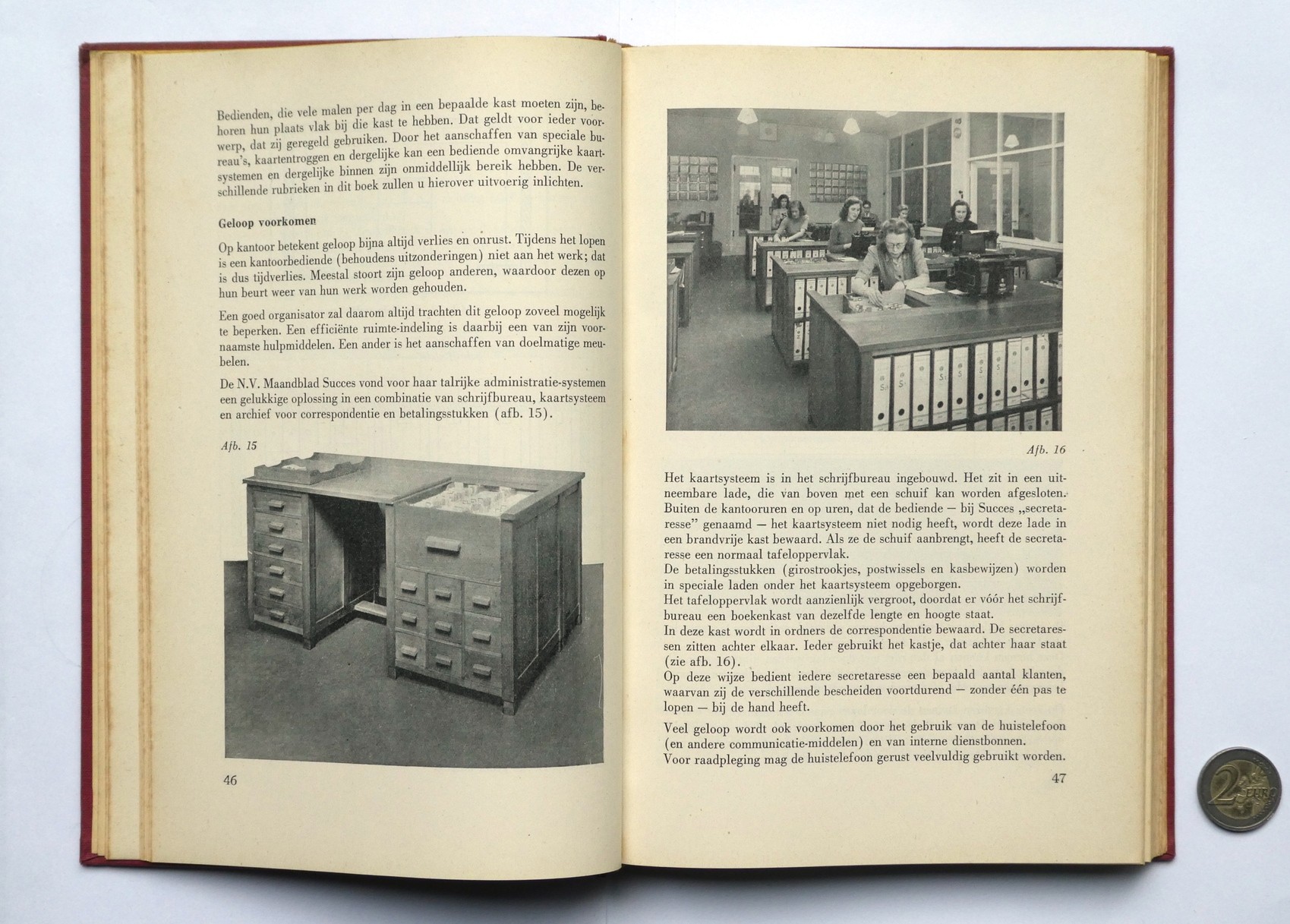
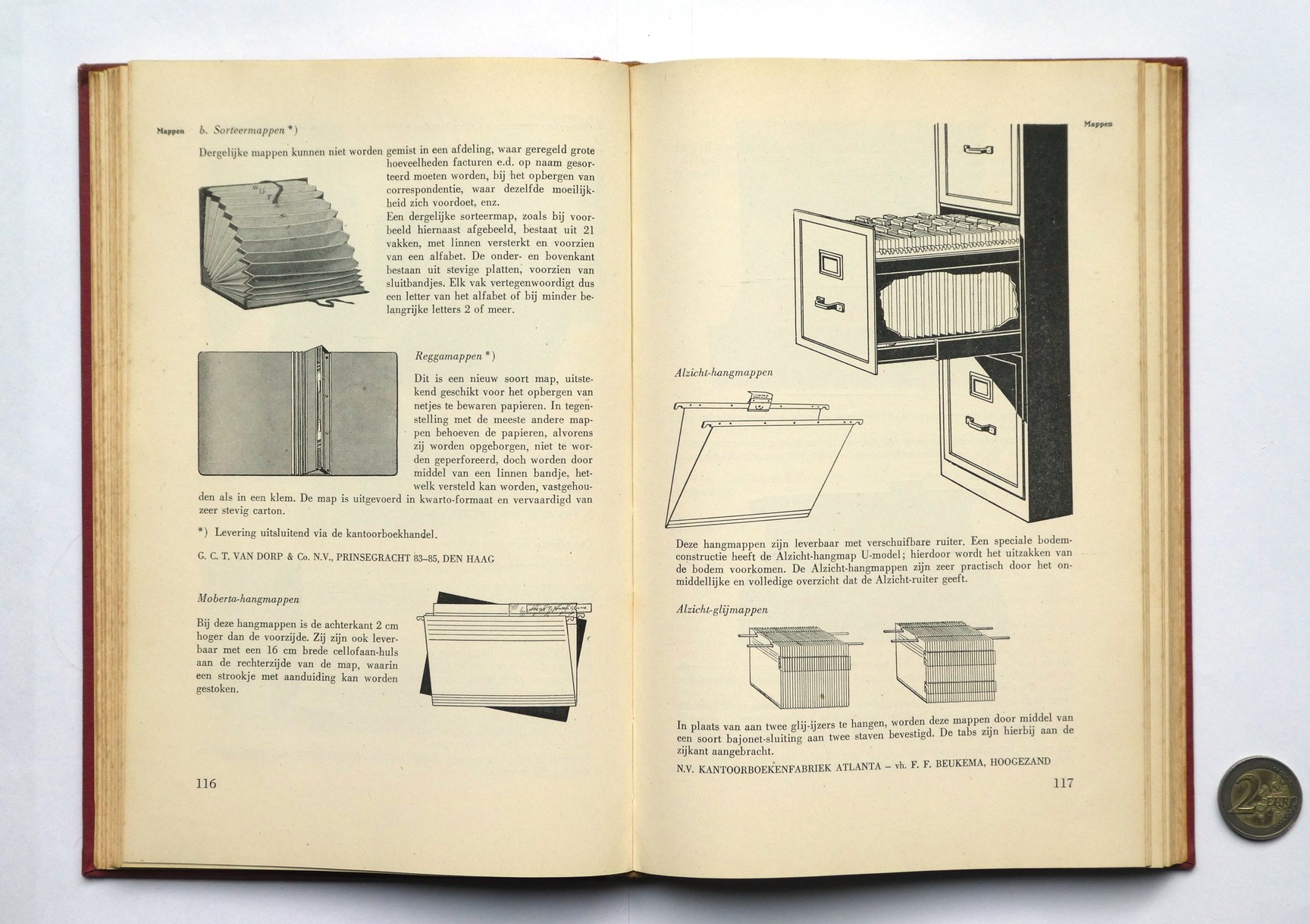
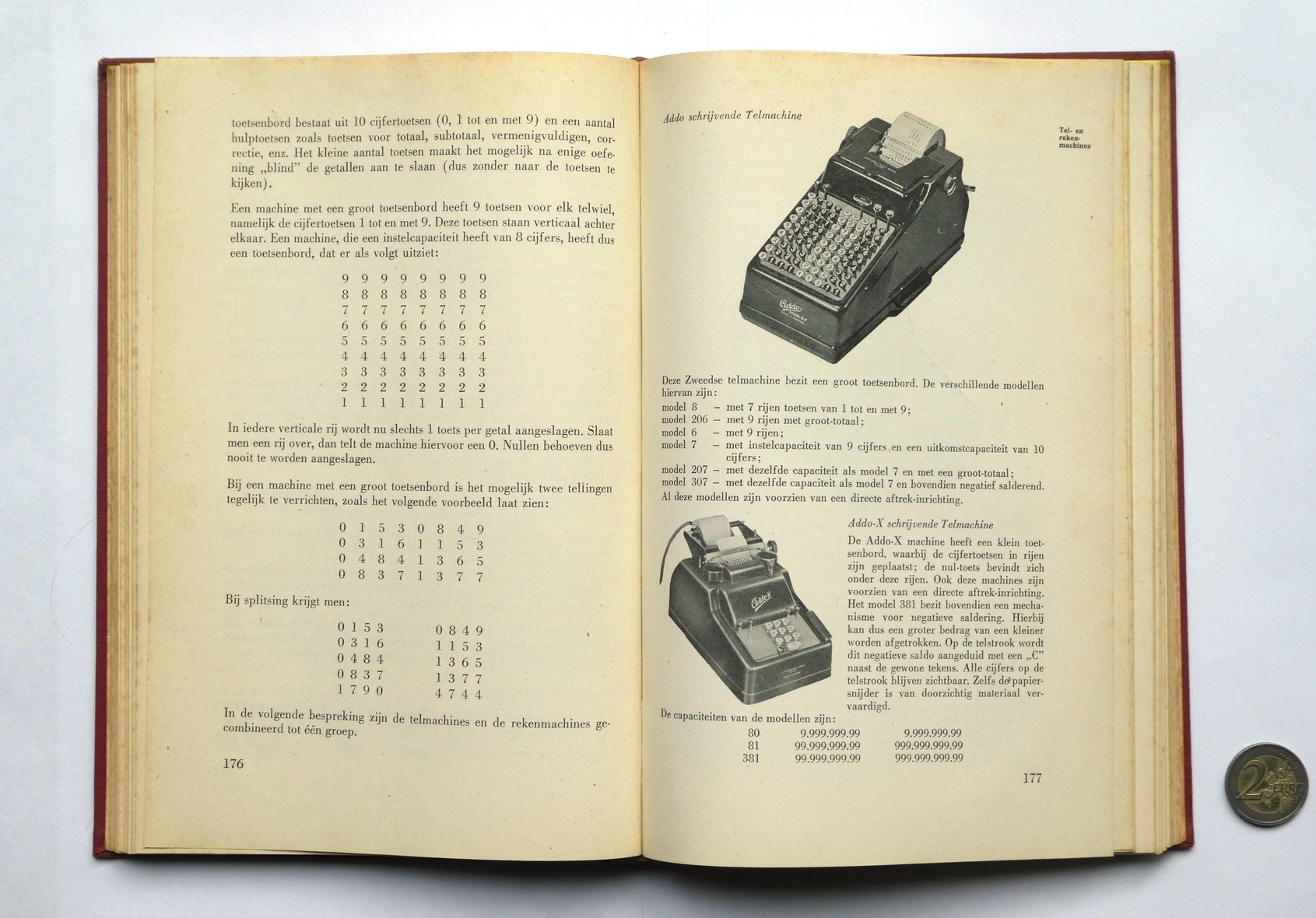
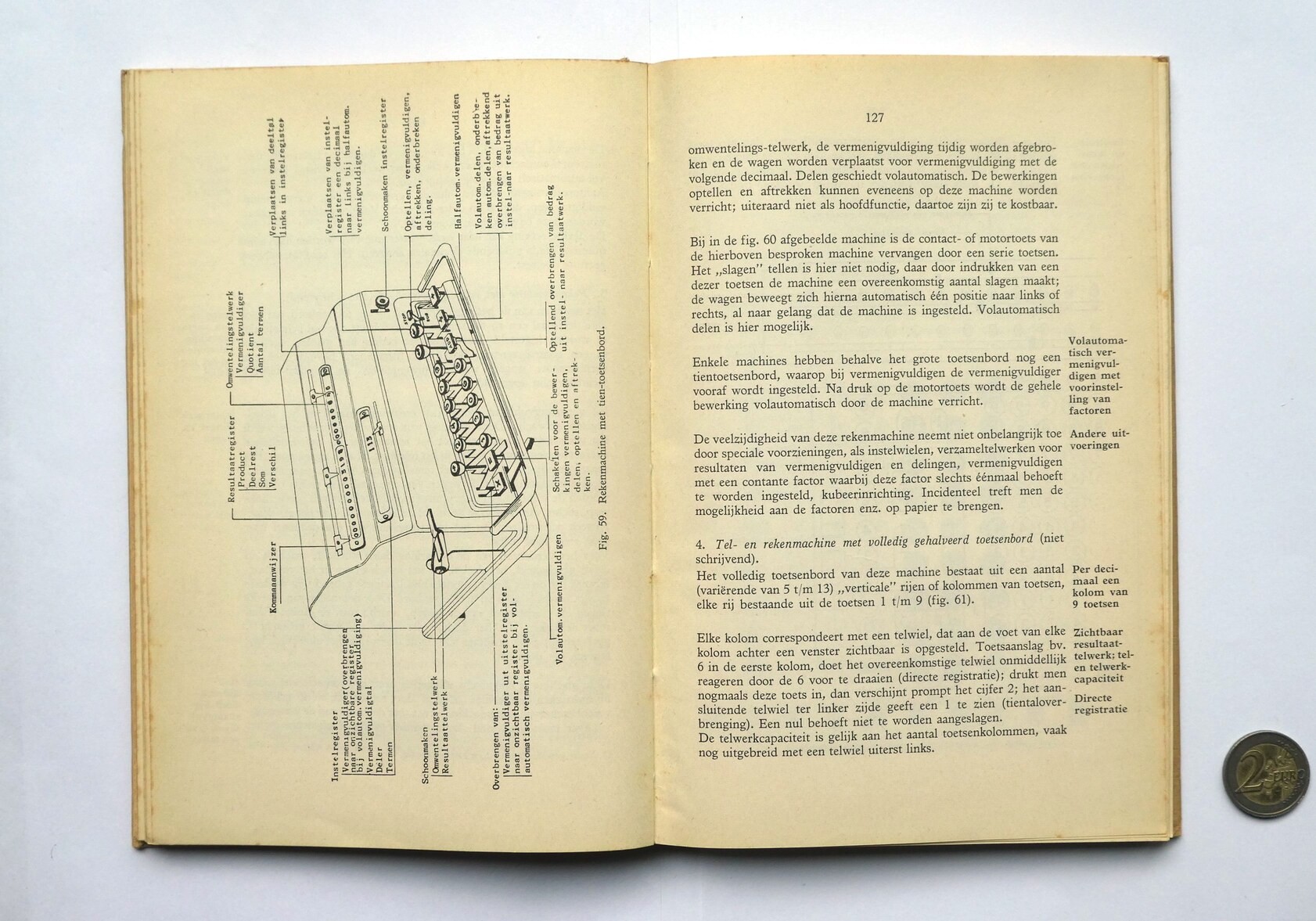
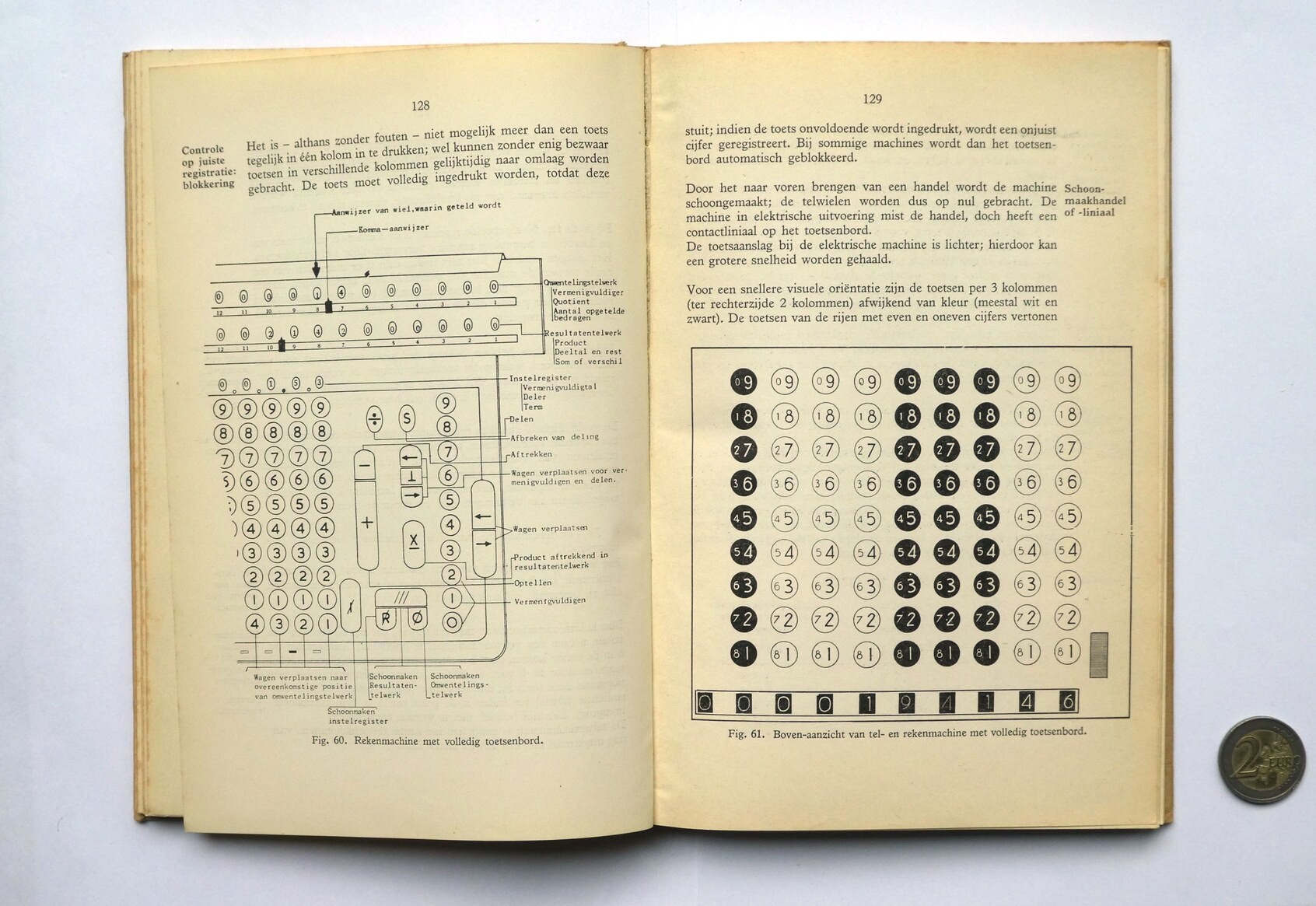
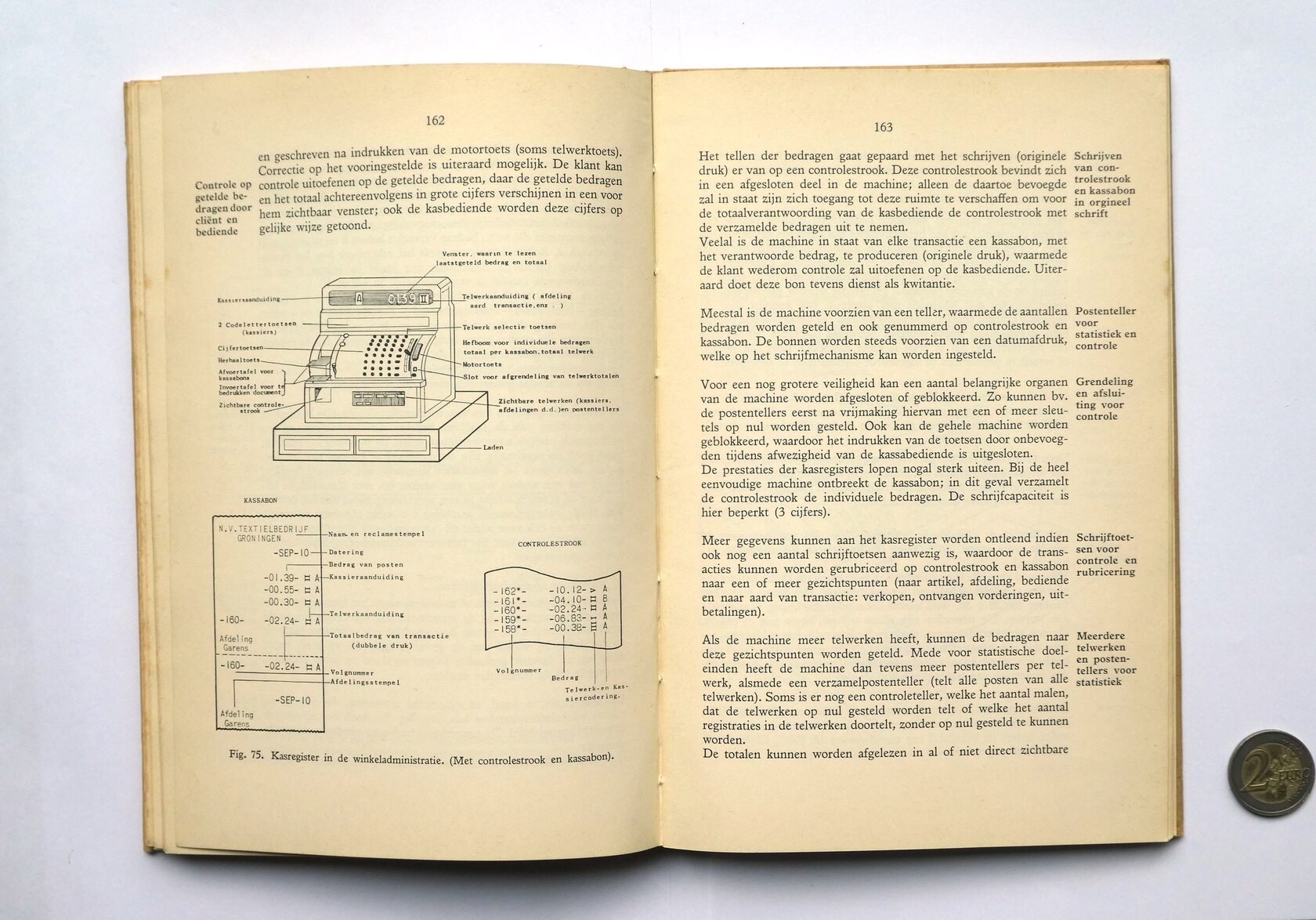
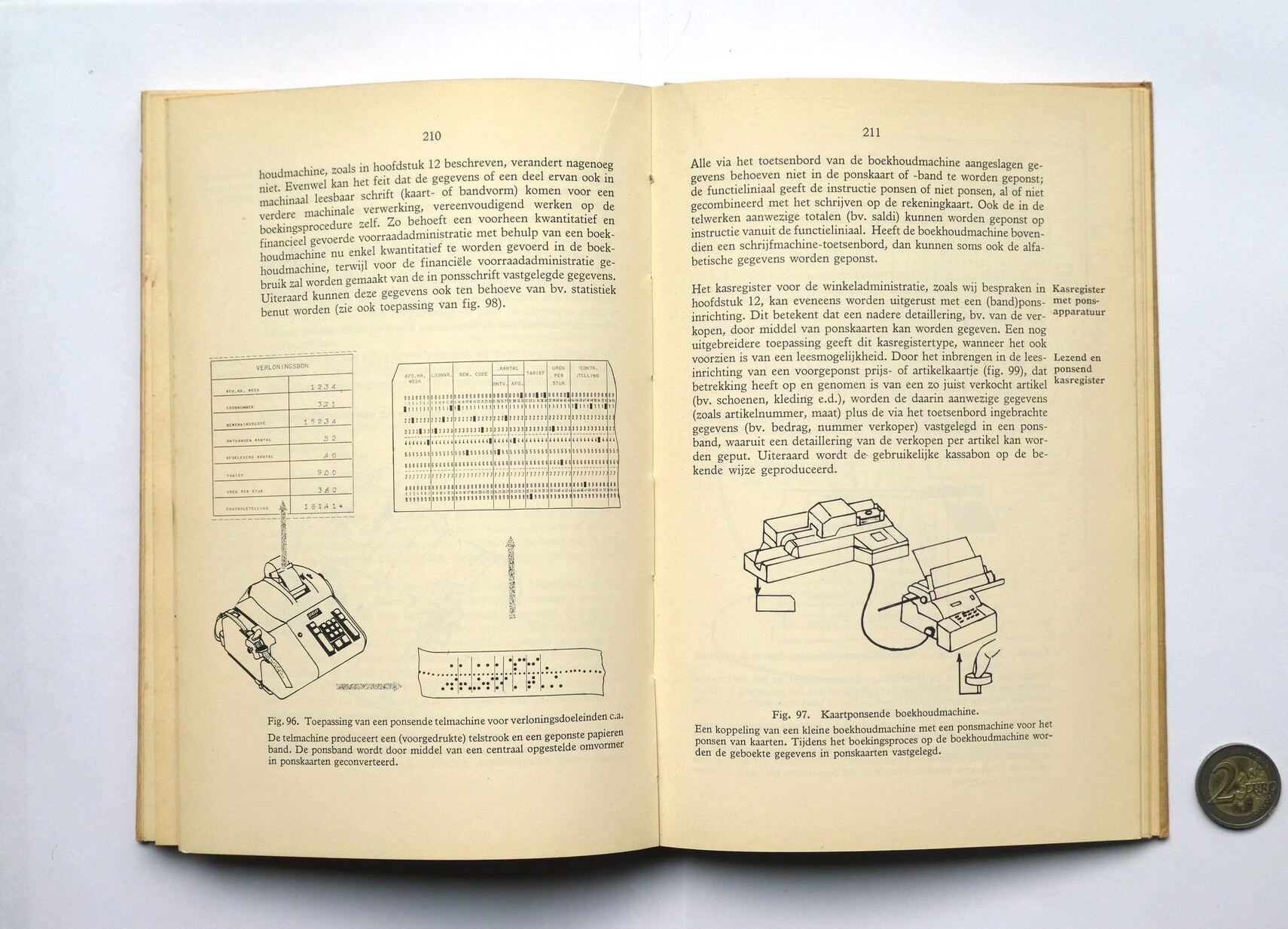
Efficiency op Kantoor J. Anjema 1948
376 pages, hardcover, Dutch
168mm × 250mm × 20mm
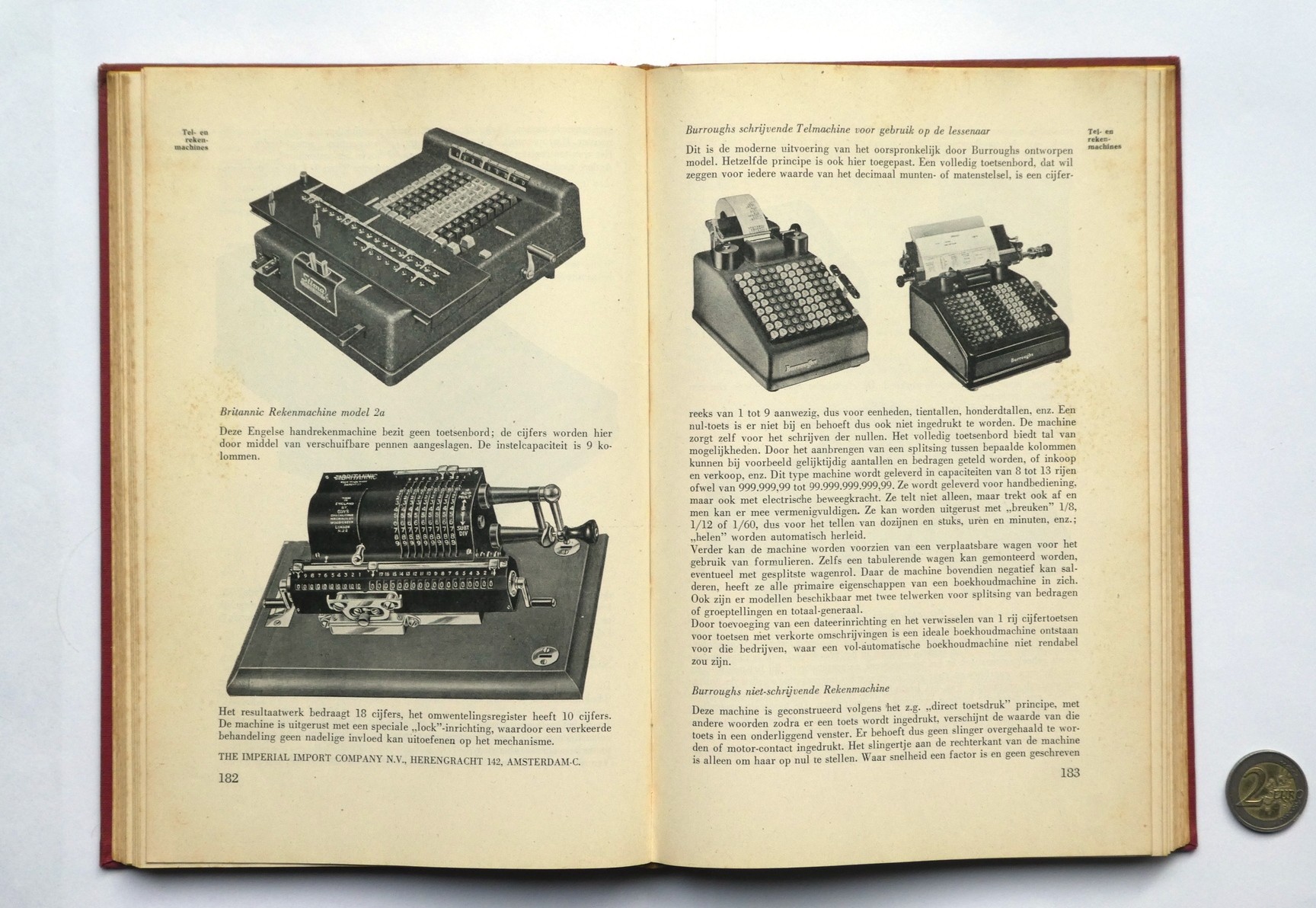
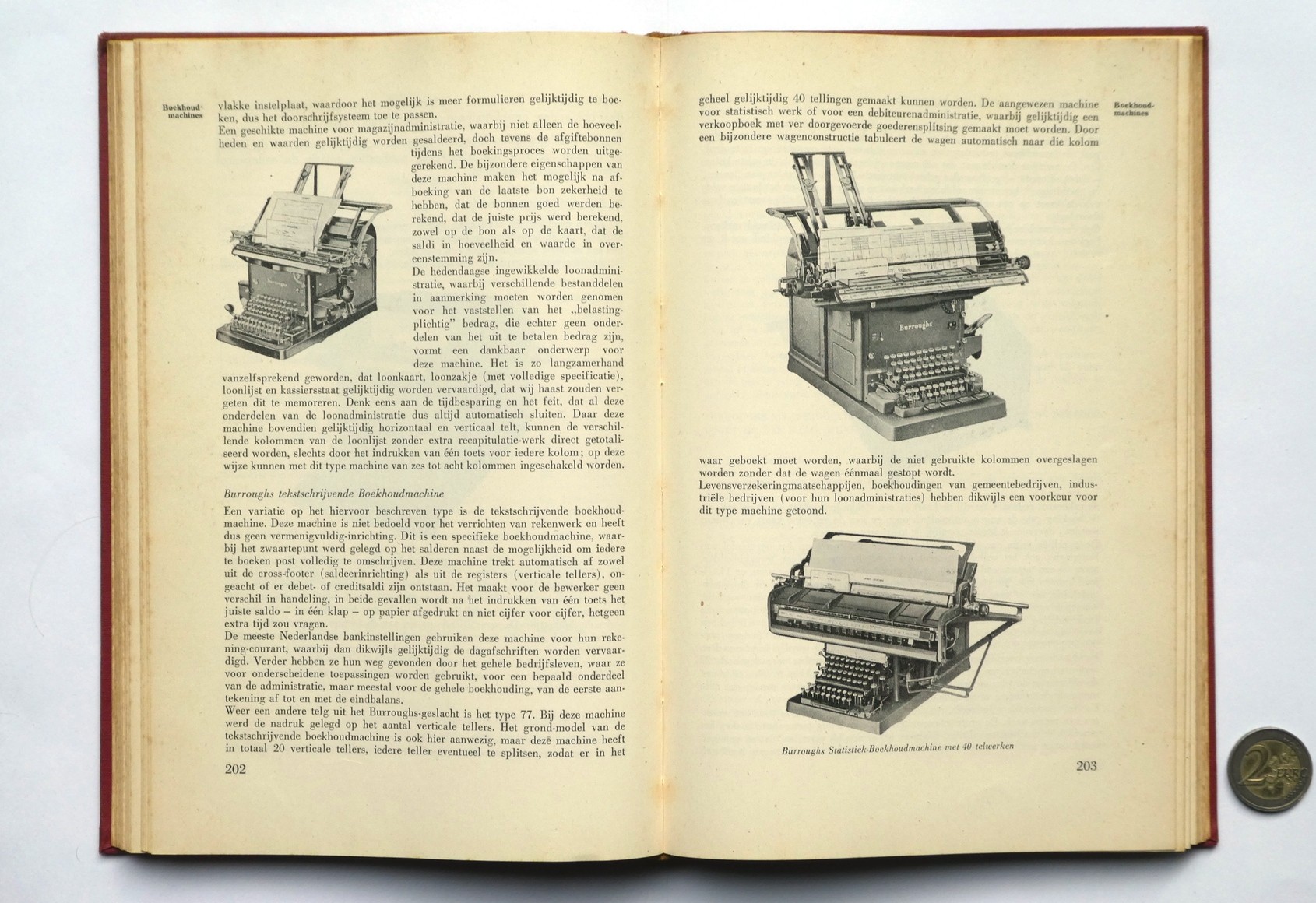
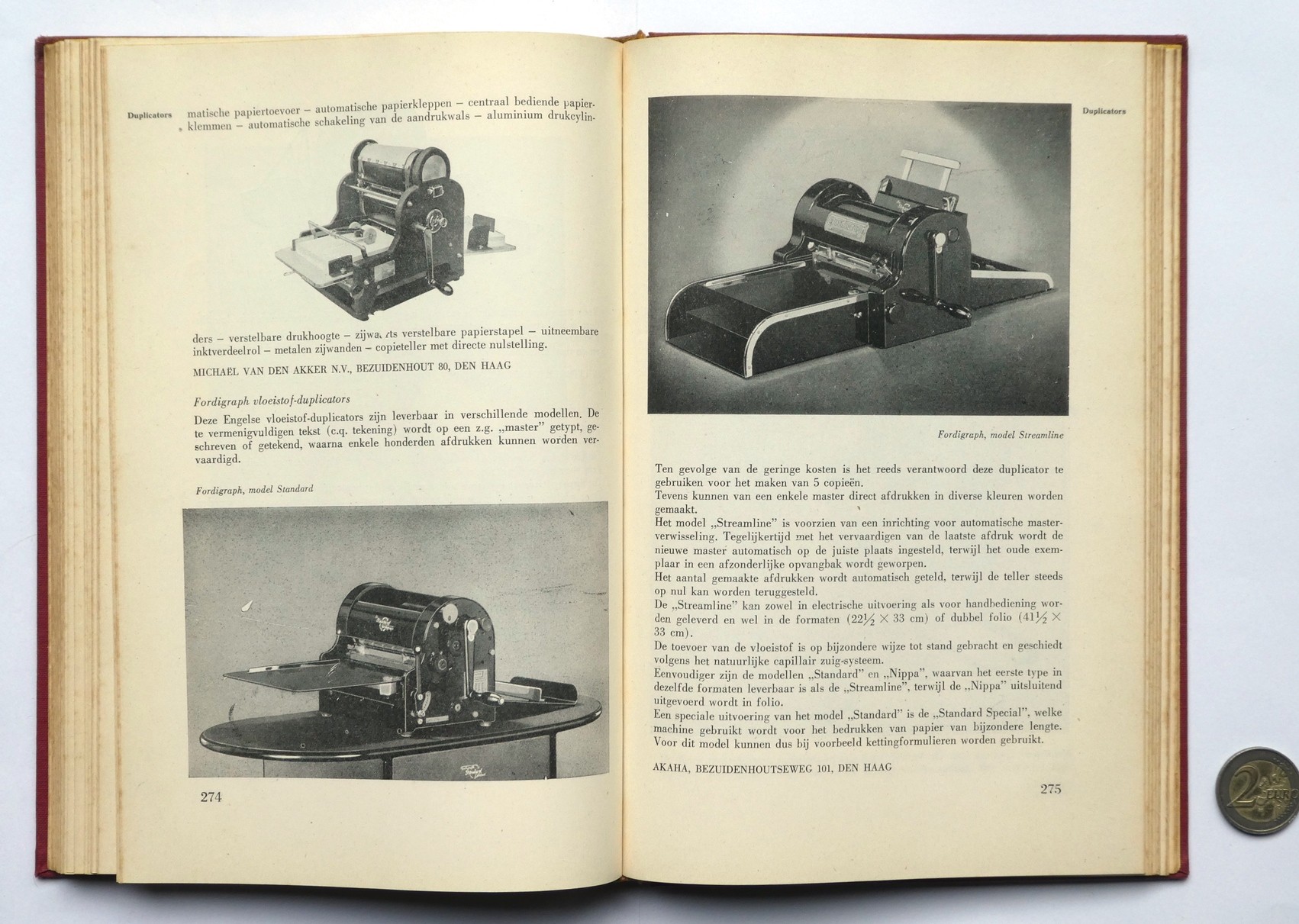
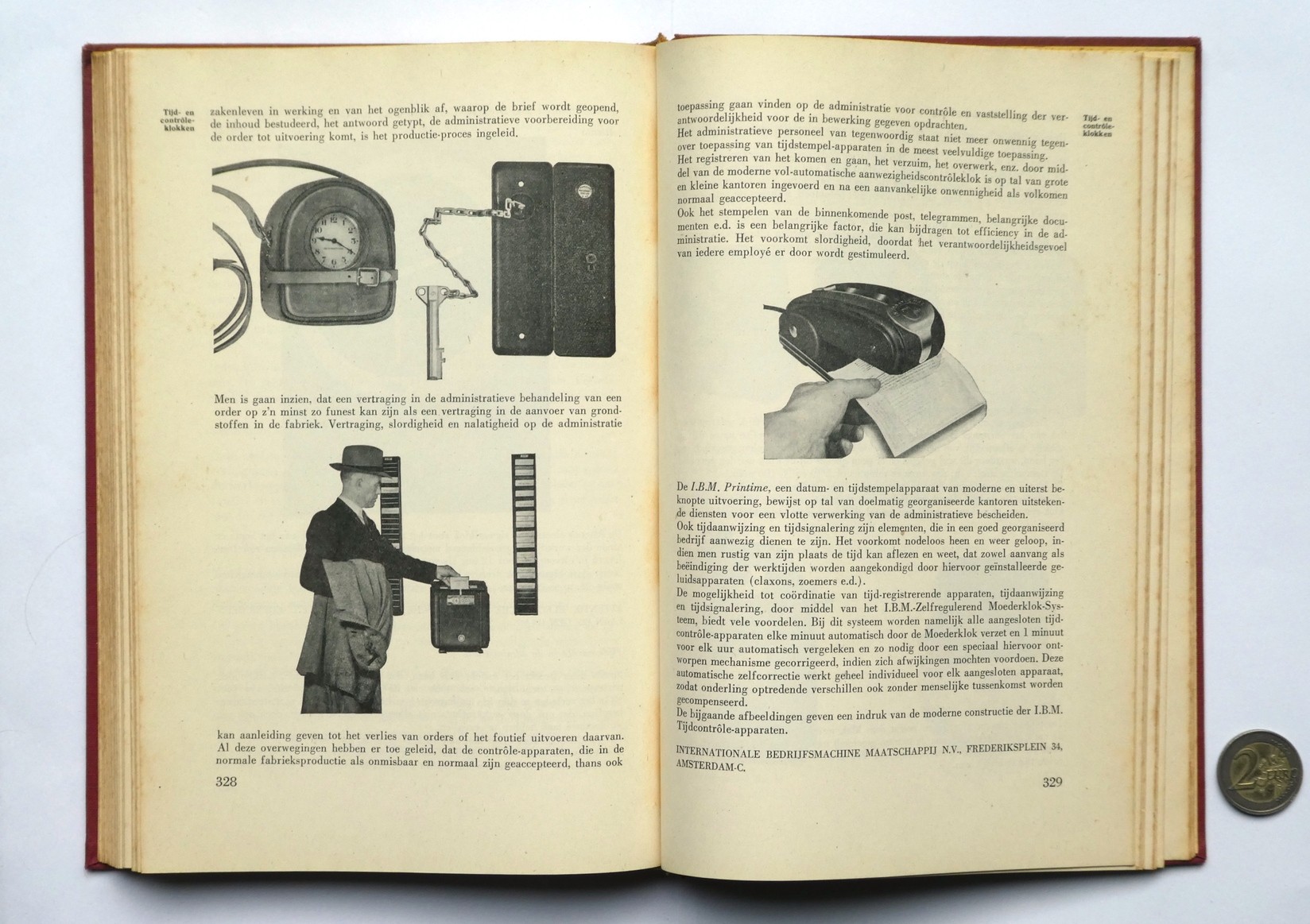
This book lists the various machines and tools that were
available for the office. It has many photos and illustrations.
Its chapter on calculators includes some rare machines of
the time such as the Stima 4 and the Dacometer 9. I have not found
any copyright year, but other sources claim it was published in 1948.
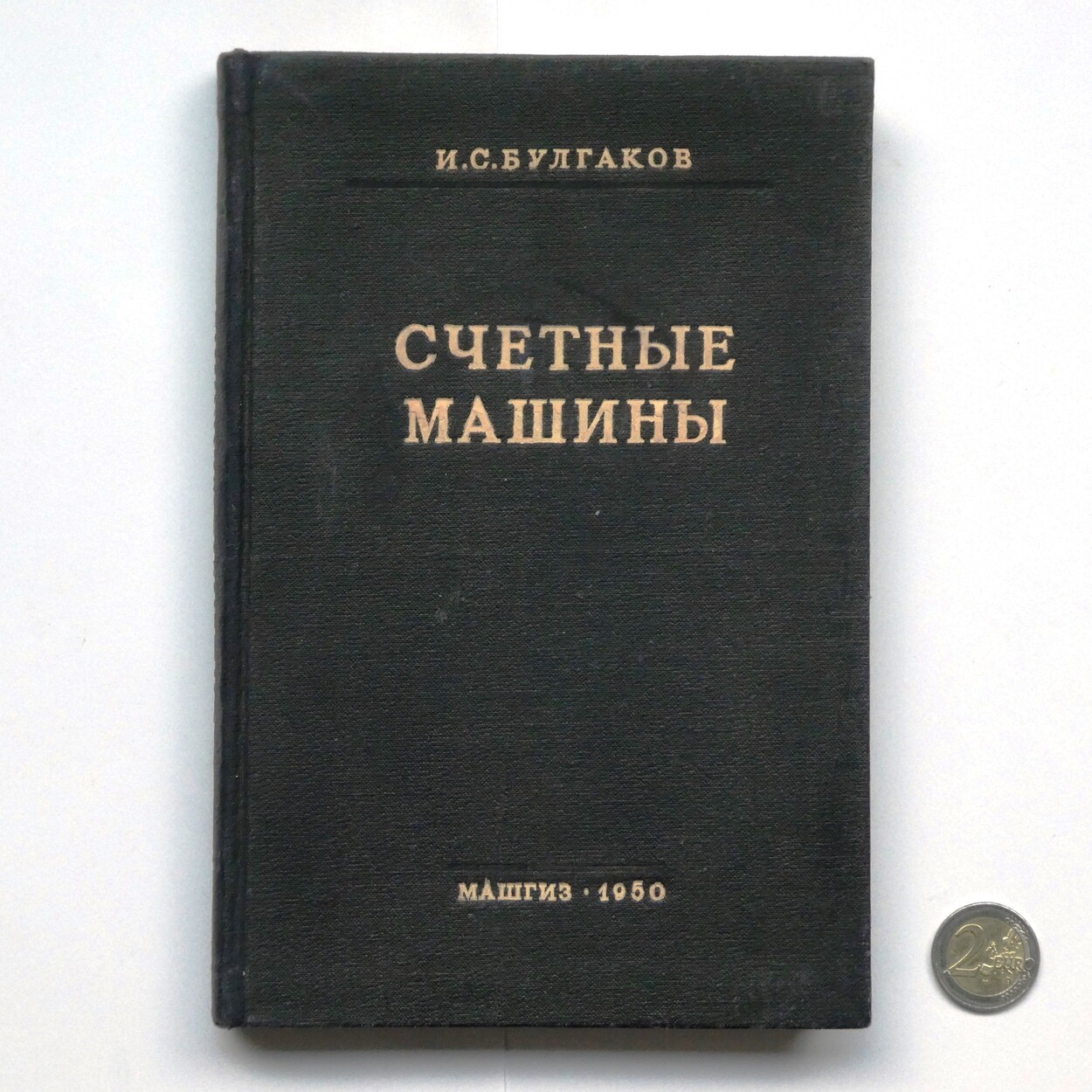
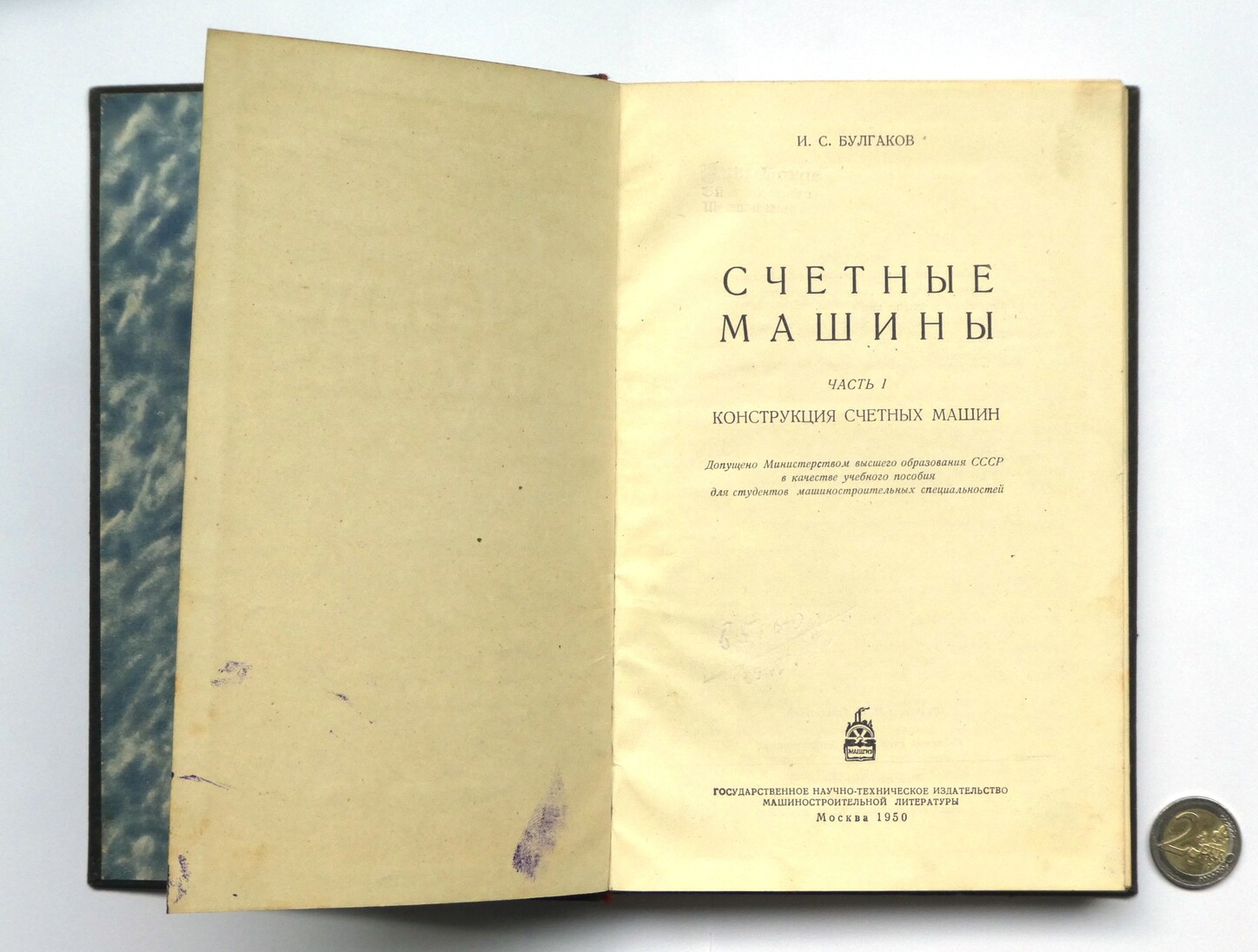
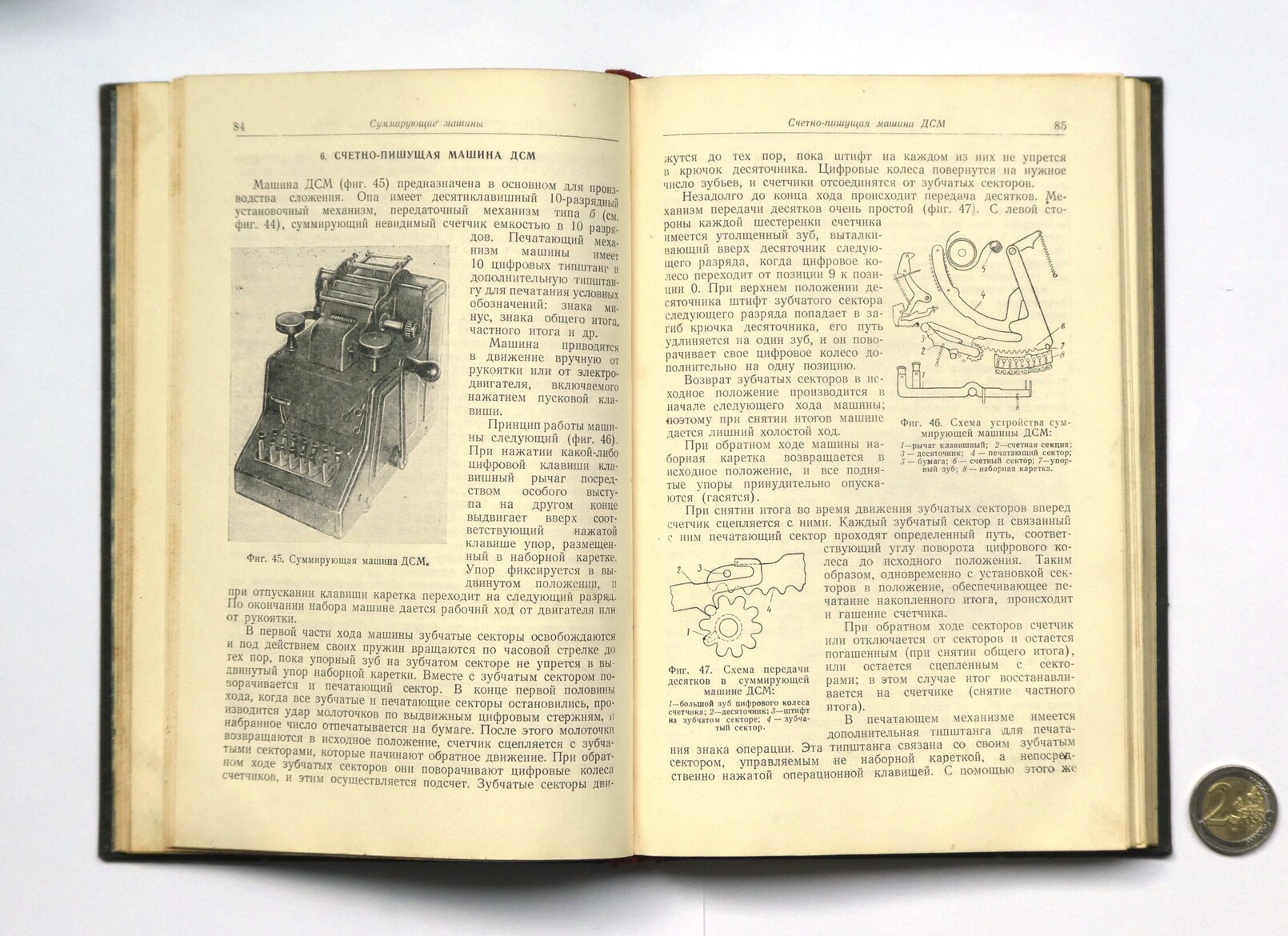
Счетные машины (Schetnyye mashiny - Calculating machines)
И. С. Булгаков (I. S. Bulgakov)
1950
268 pages, hardcover, Russian
153mm × 226mm × 17mm
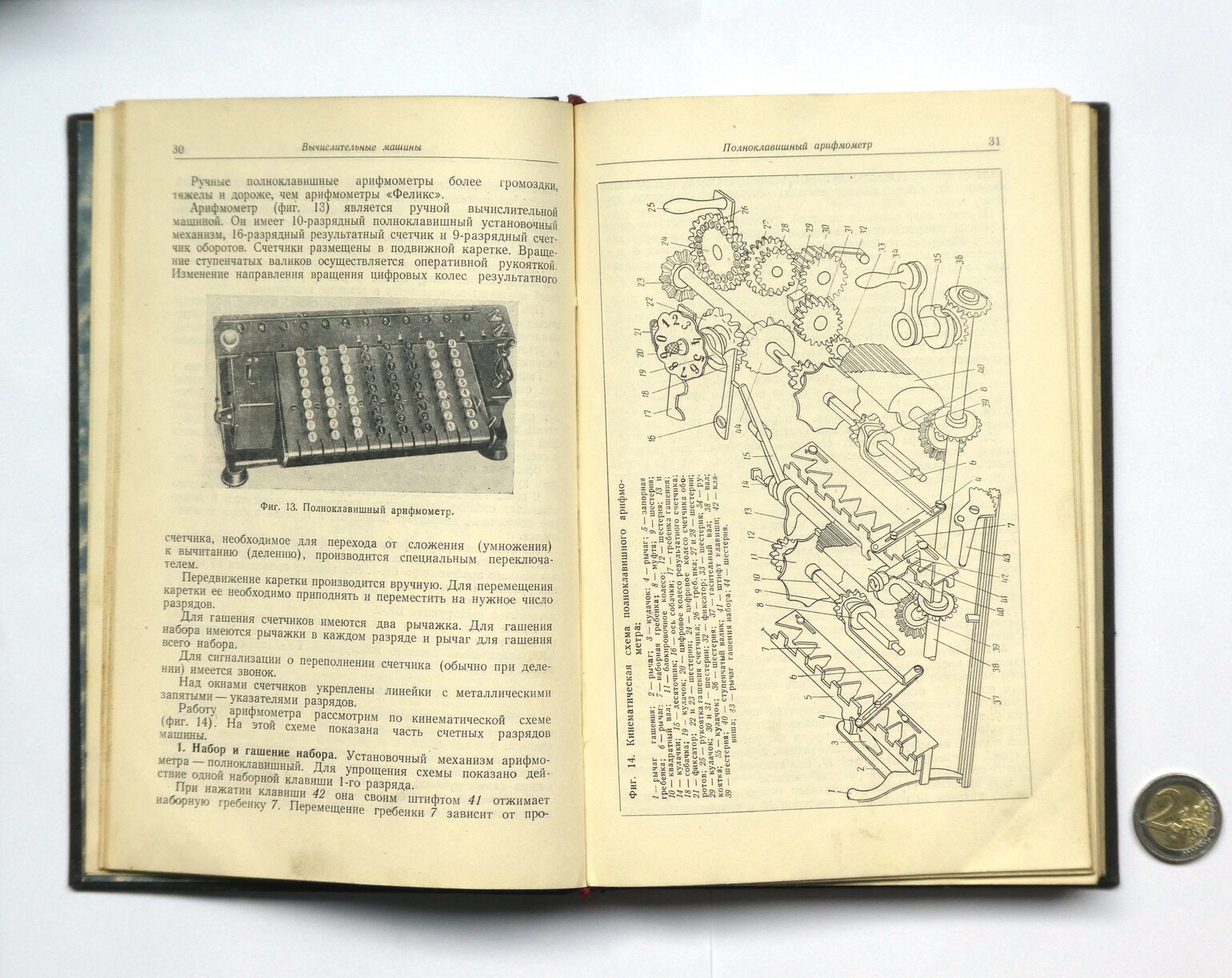
This Russian book is intended for engineering students and contains pictures
of many different calculation machines, with diagrams of some parts of their
mechanisms. Amongst the calculators discussed are the Felix, the VK-2 (Facit
clone), TIM with keyboard, KSM (Monroe KA clone), Rheinmetall SASL,
Mercedes-Euklid, and Hamann Manus. The adding machines include the
Burroughs class 5, Torpedo, Direct, DSM (Dalton clone), Monarch,
Burroughs Portable, and Mauser-Addi. The rest of the book tackles various
other machines such as those that create punchcards or sort and tabulate
them.
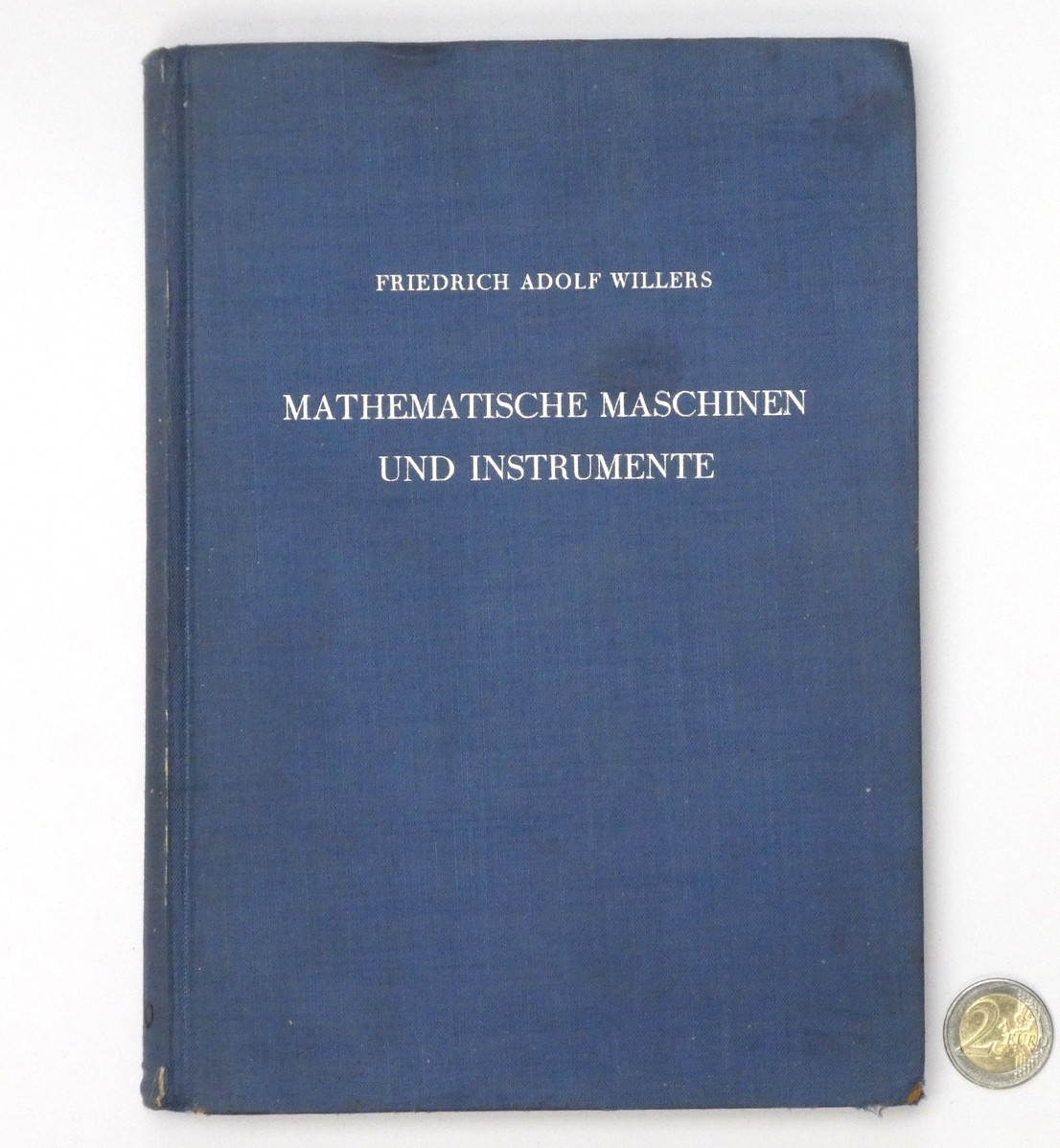
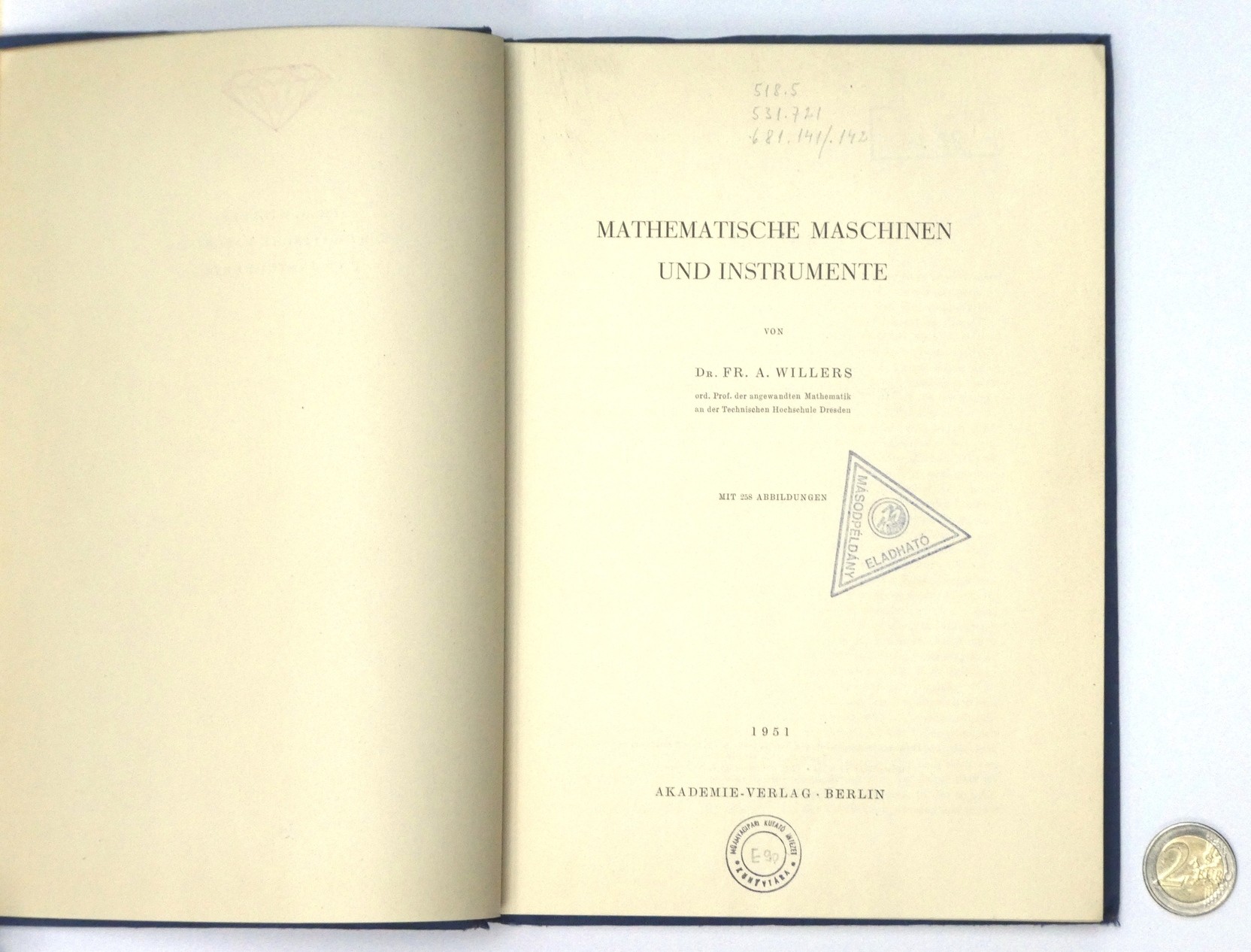
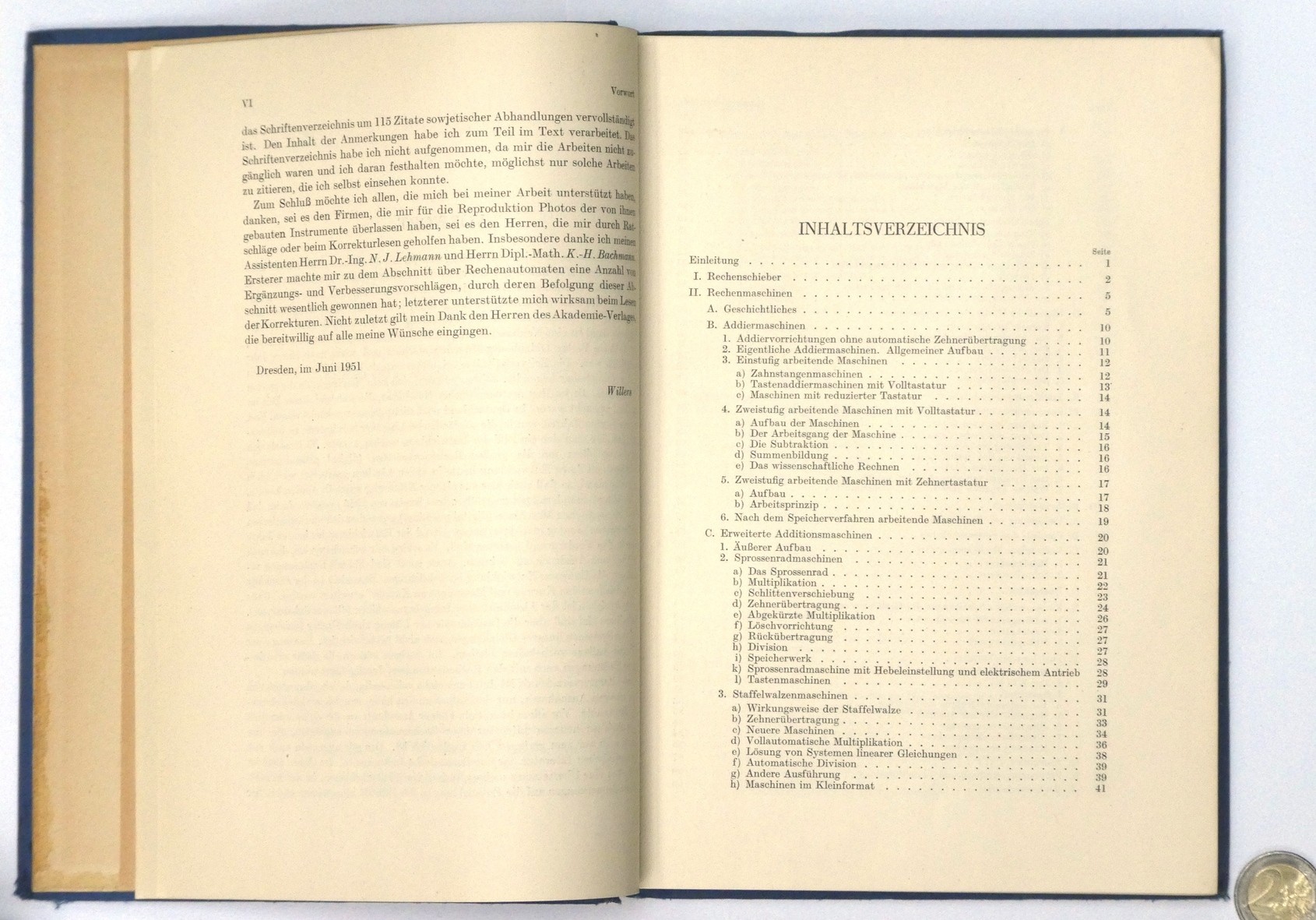
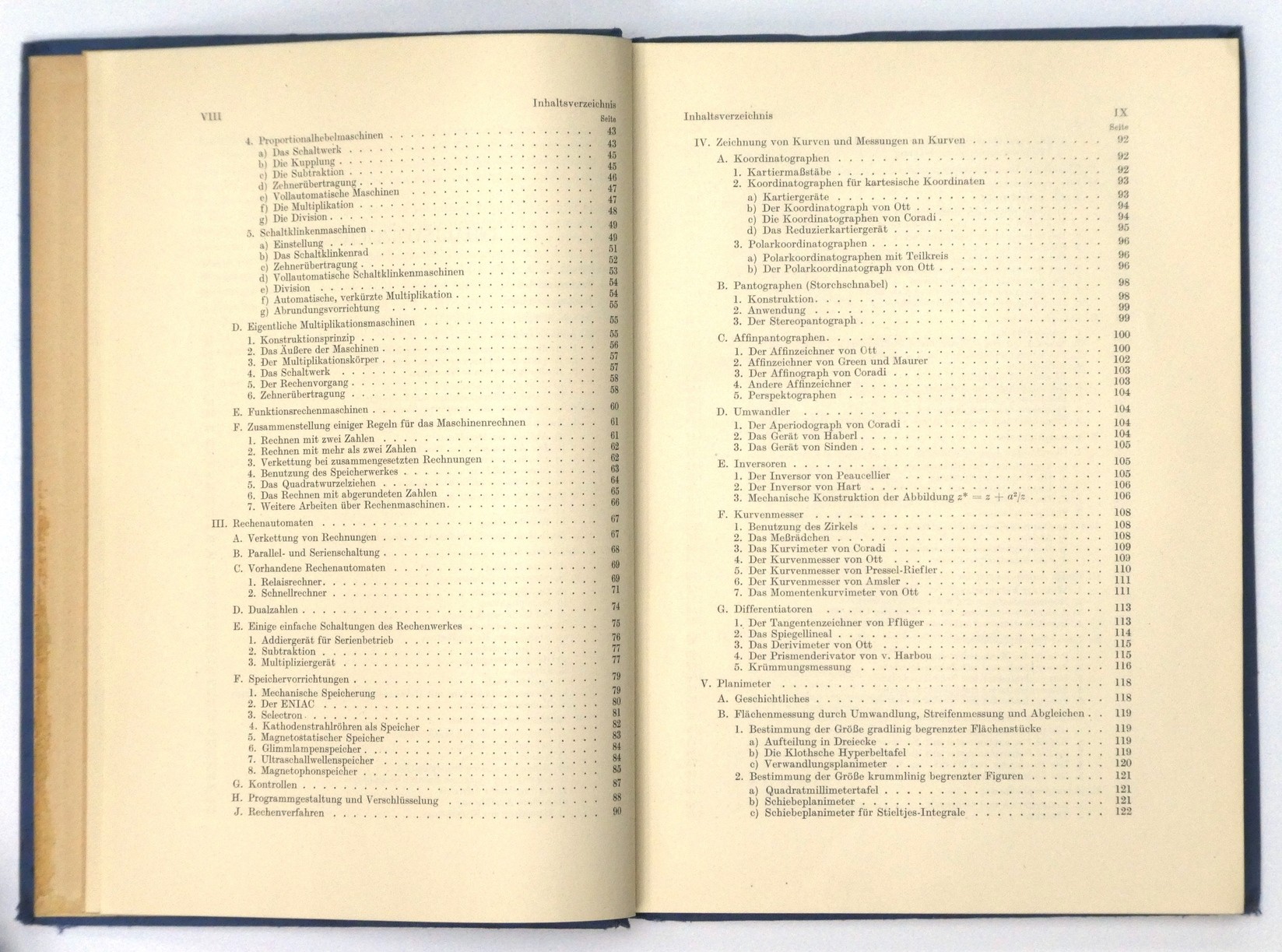
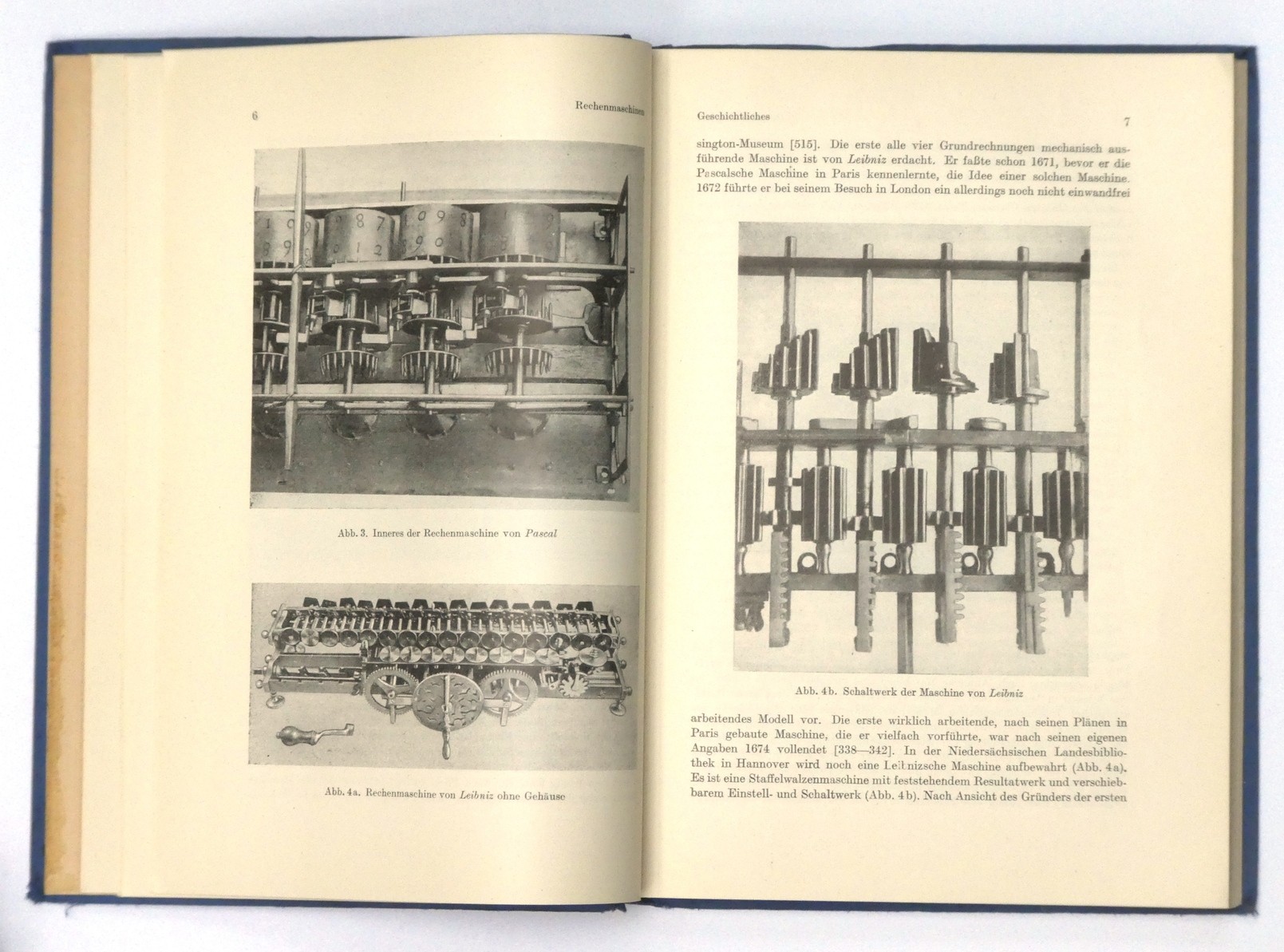
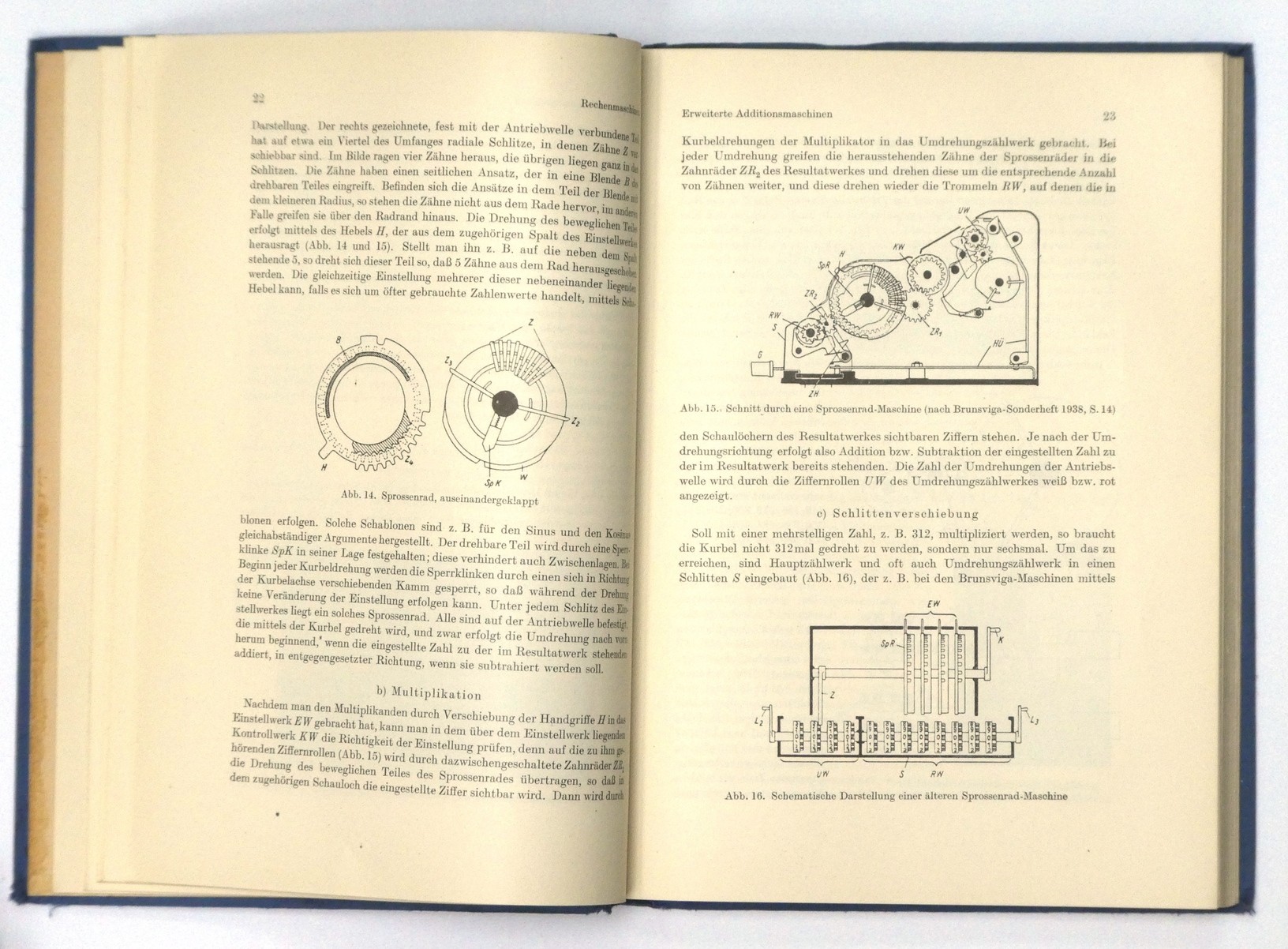
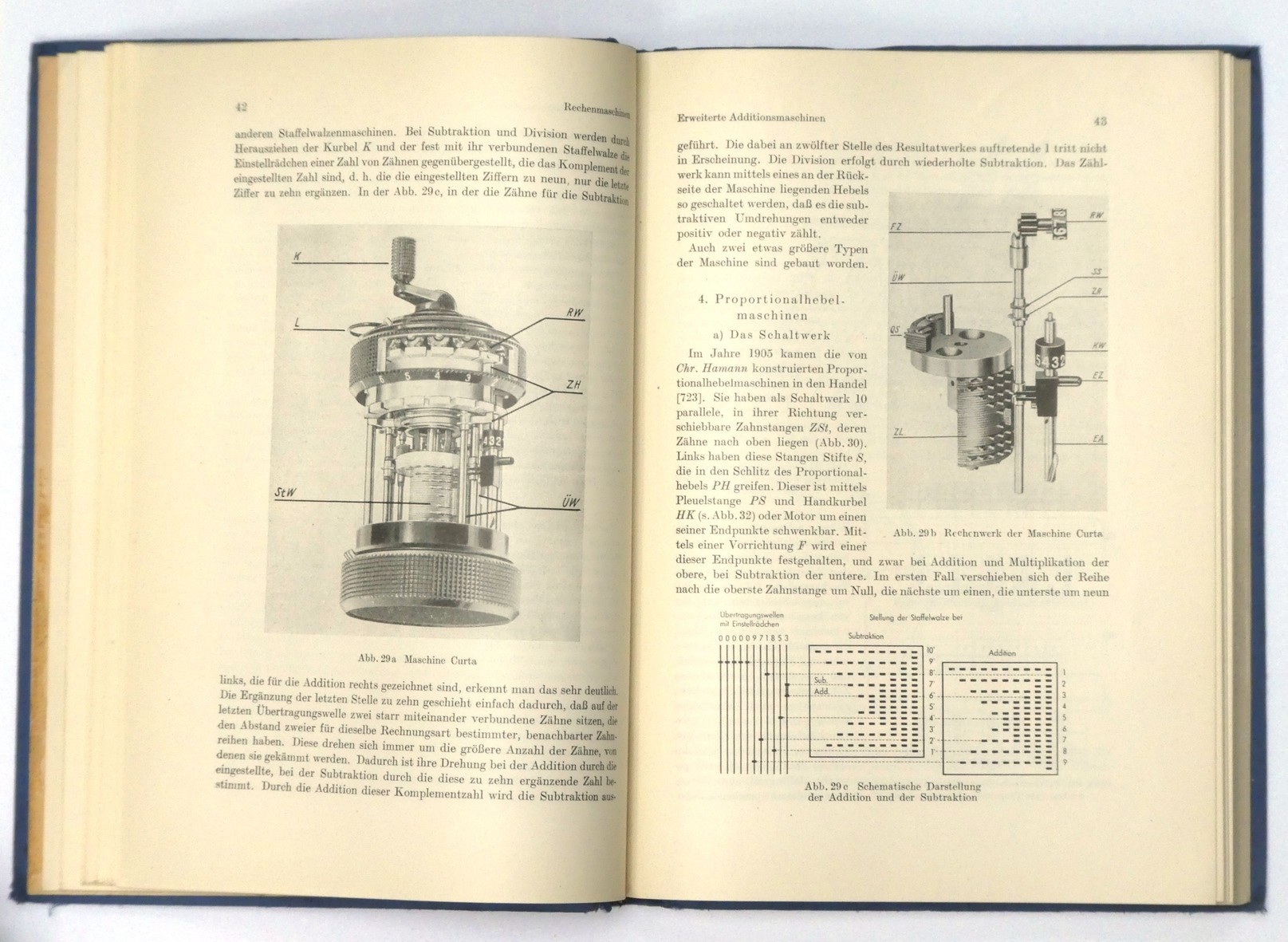
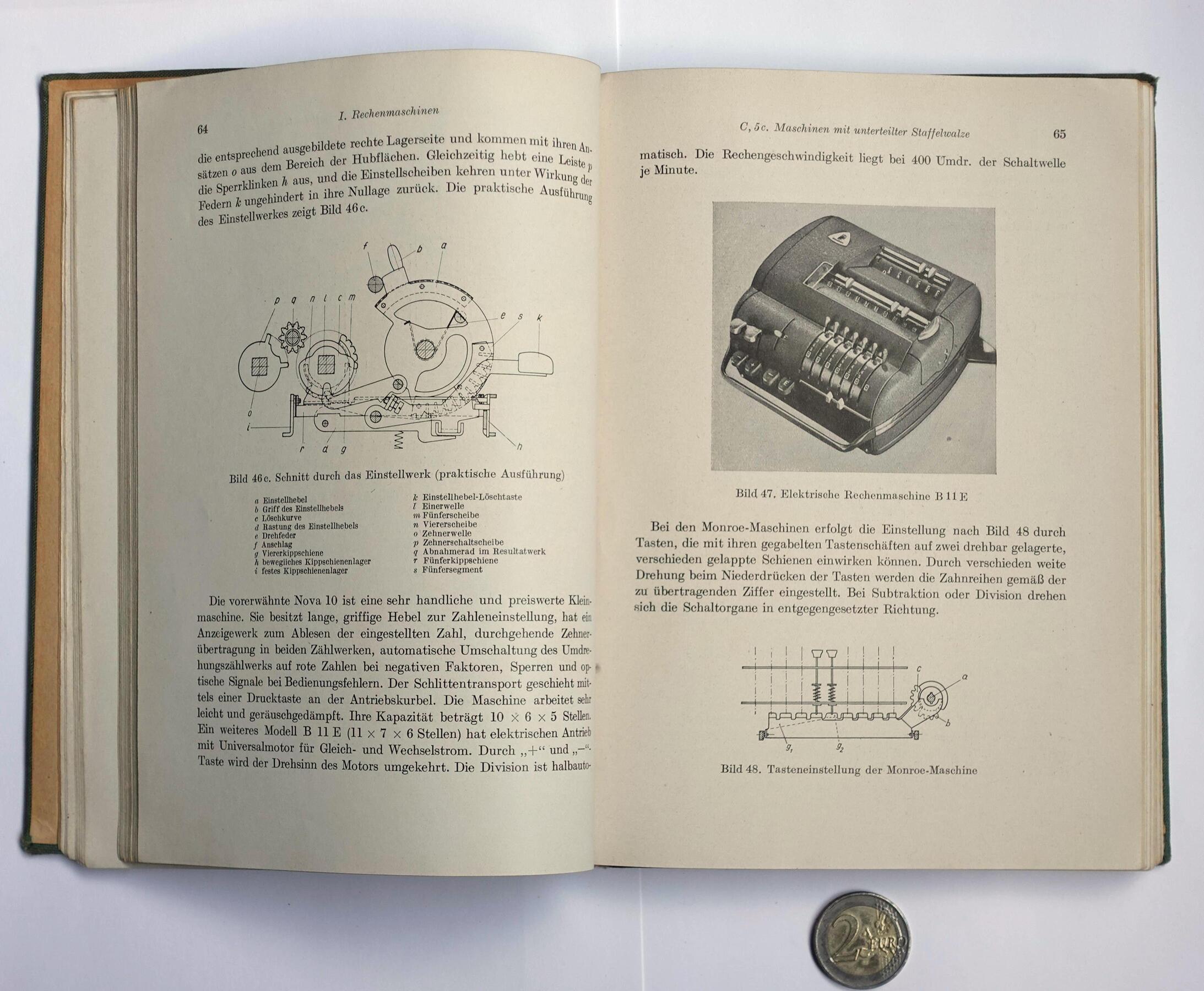
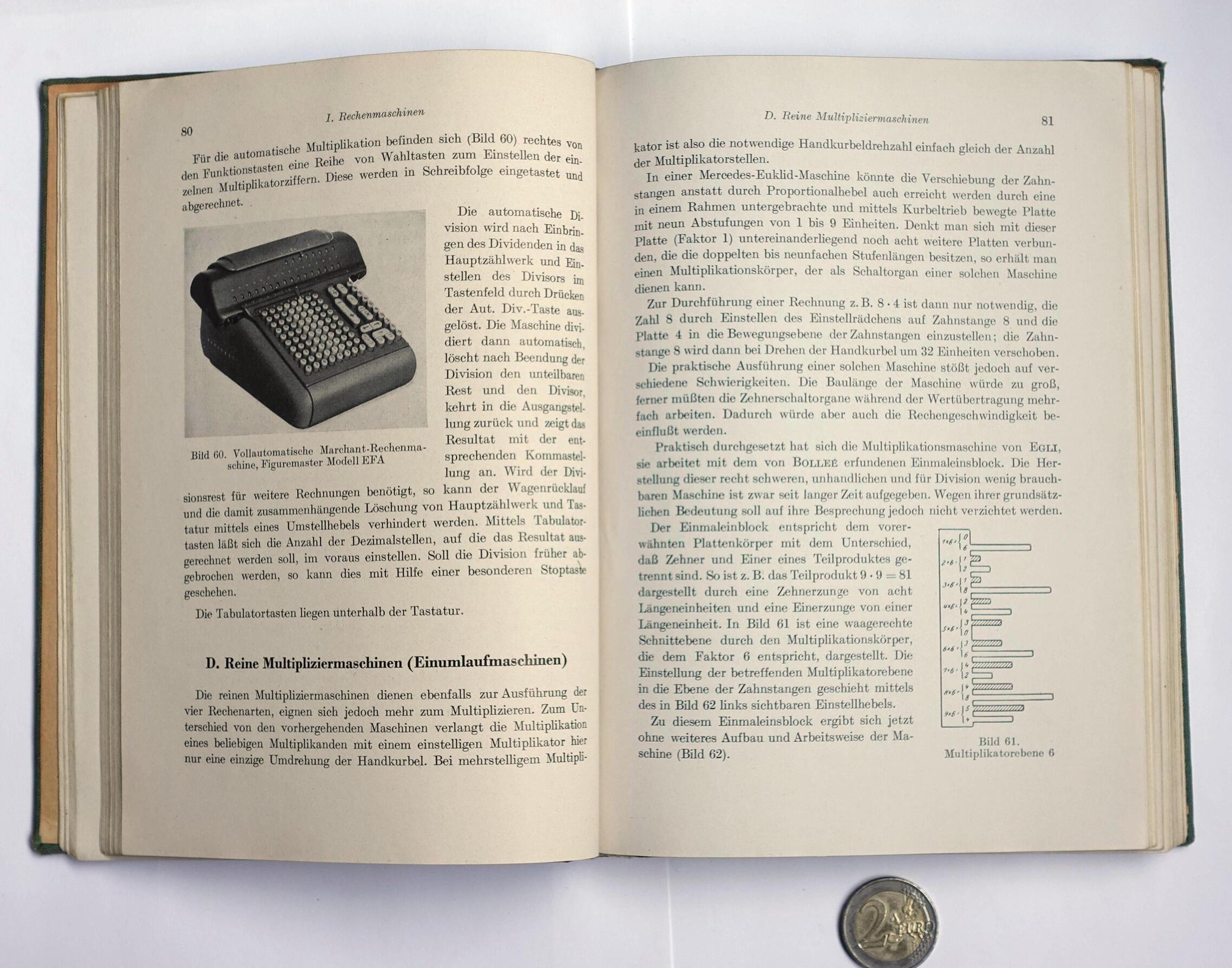
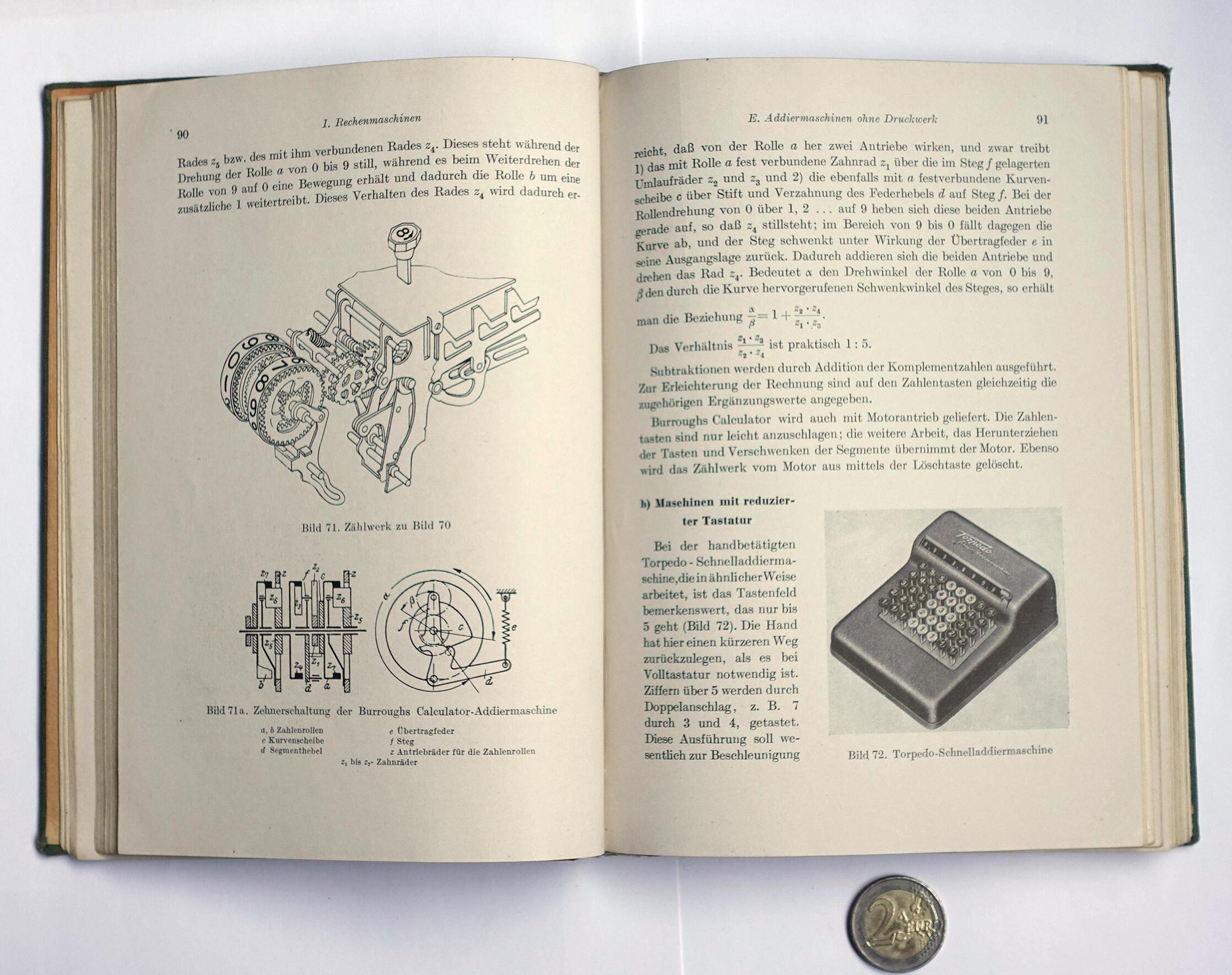
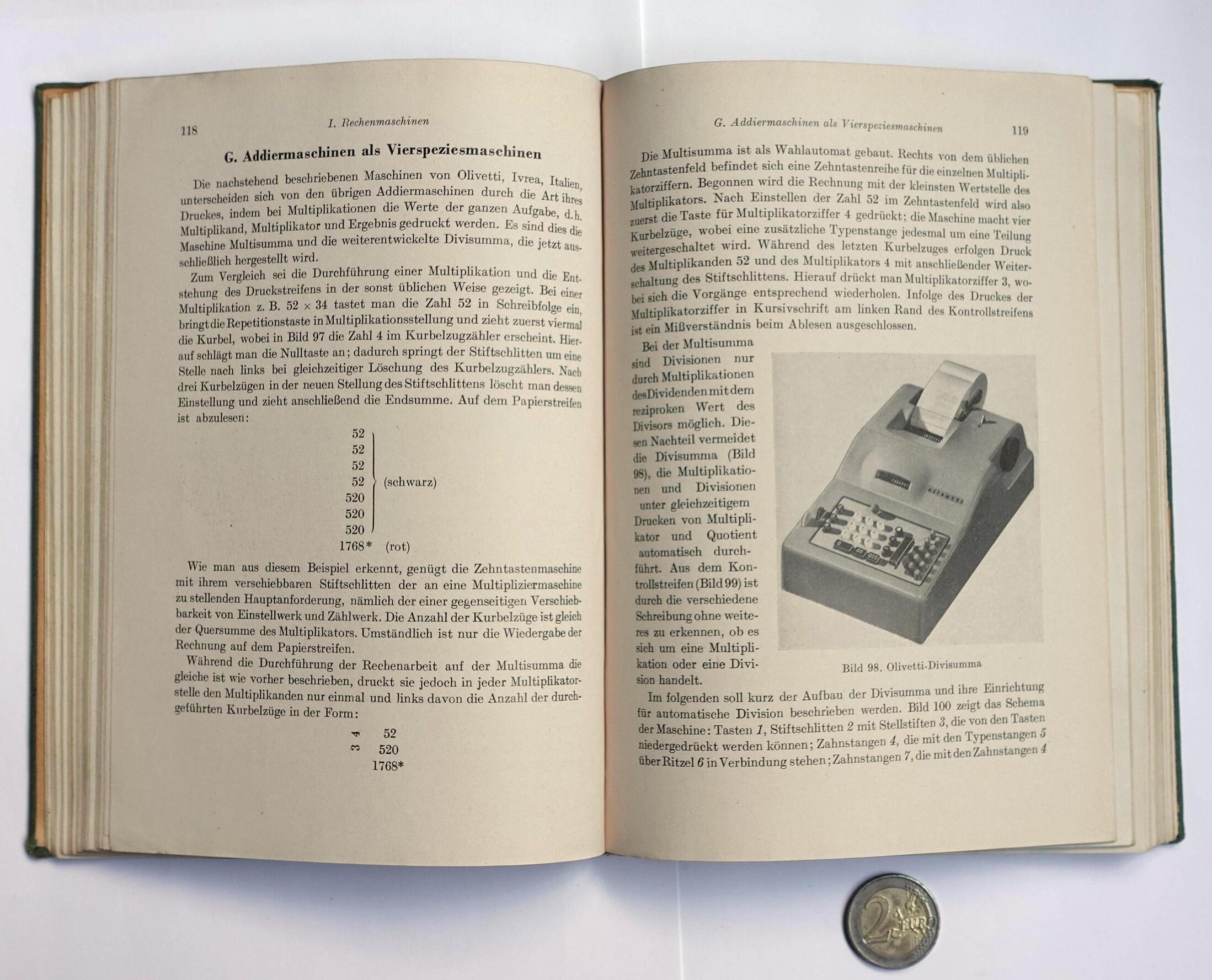
Mathematische Maschinen und Instrumente Friedrich Adolf Willers 1951
326 pages, hardcover, German
178mm × 246mm × 20mm
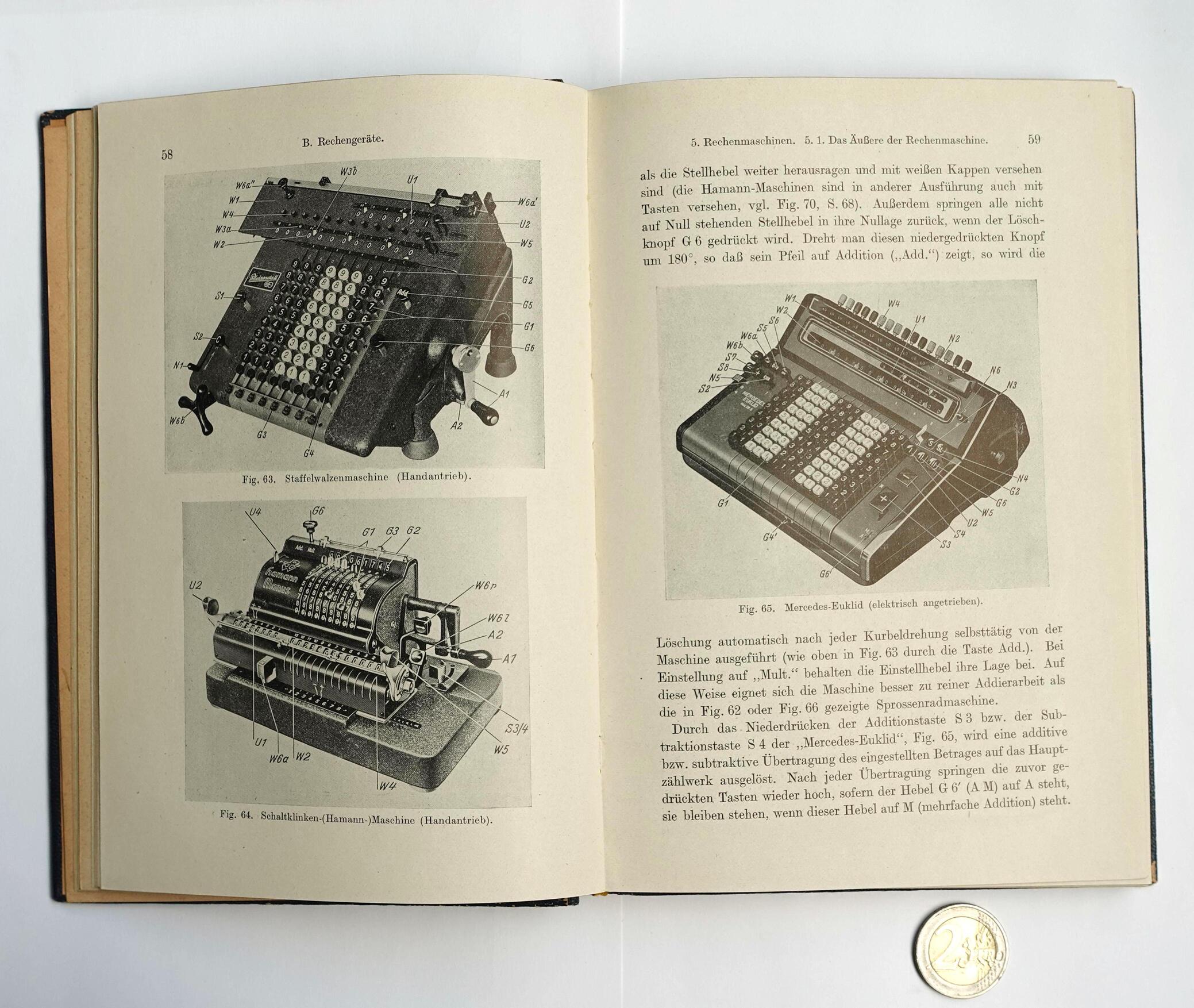
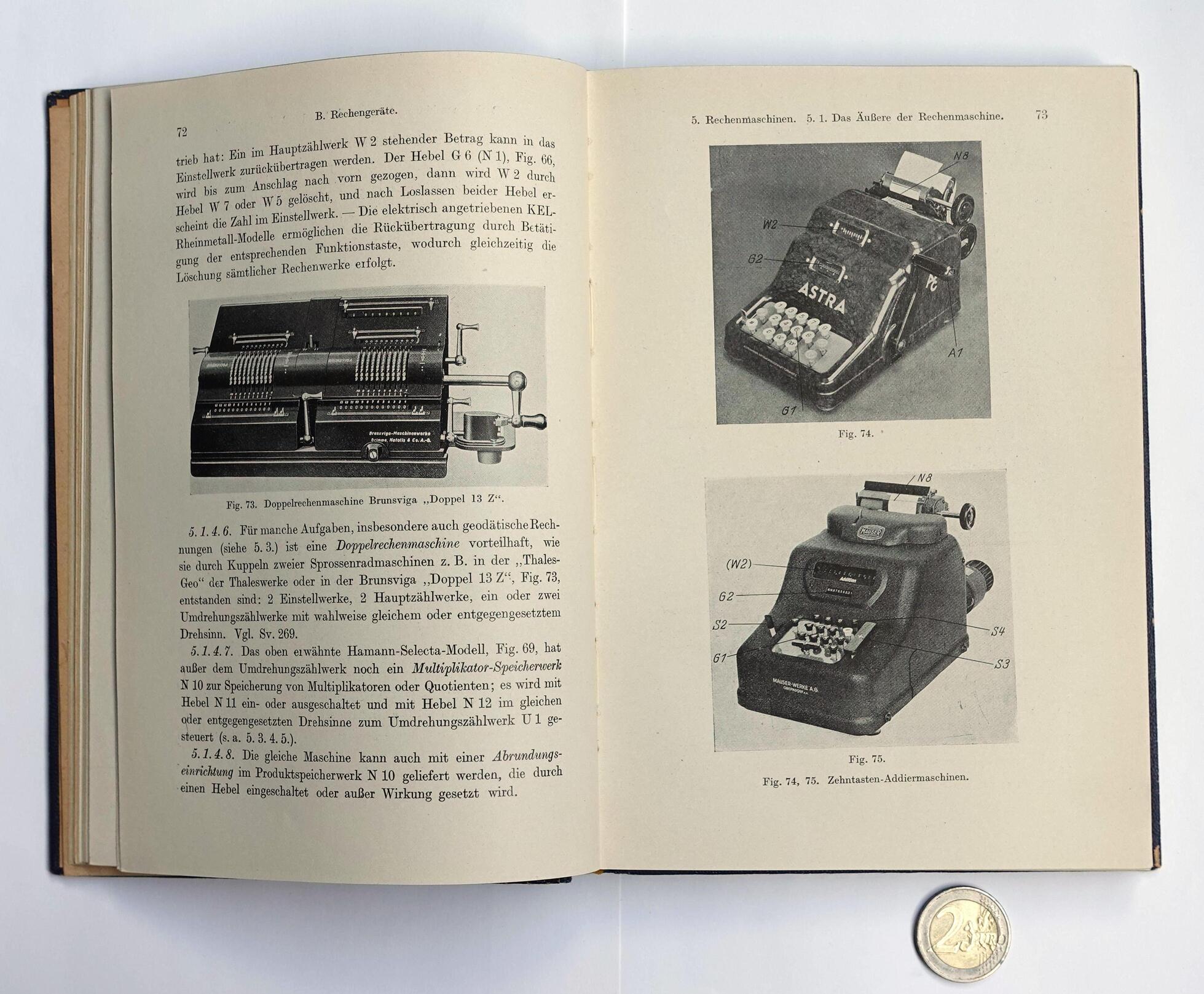
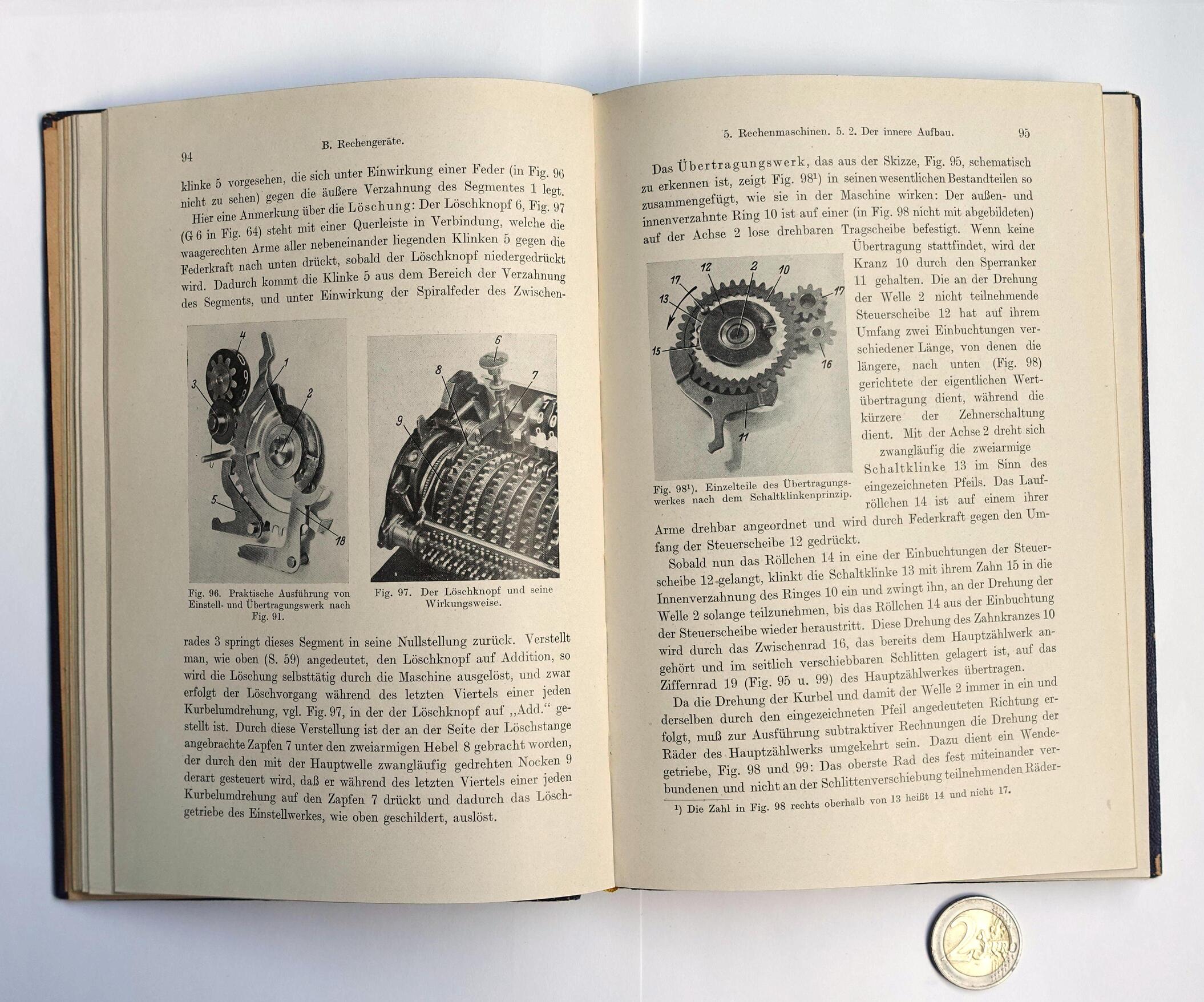
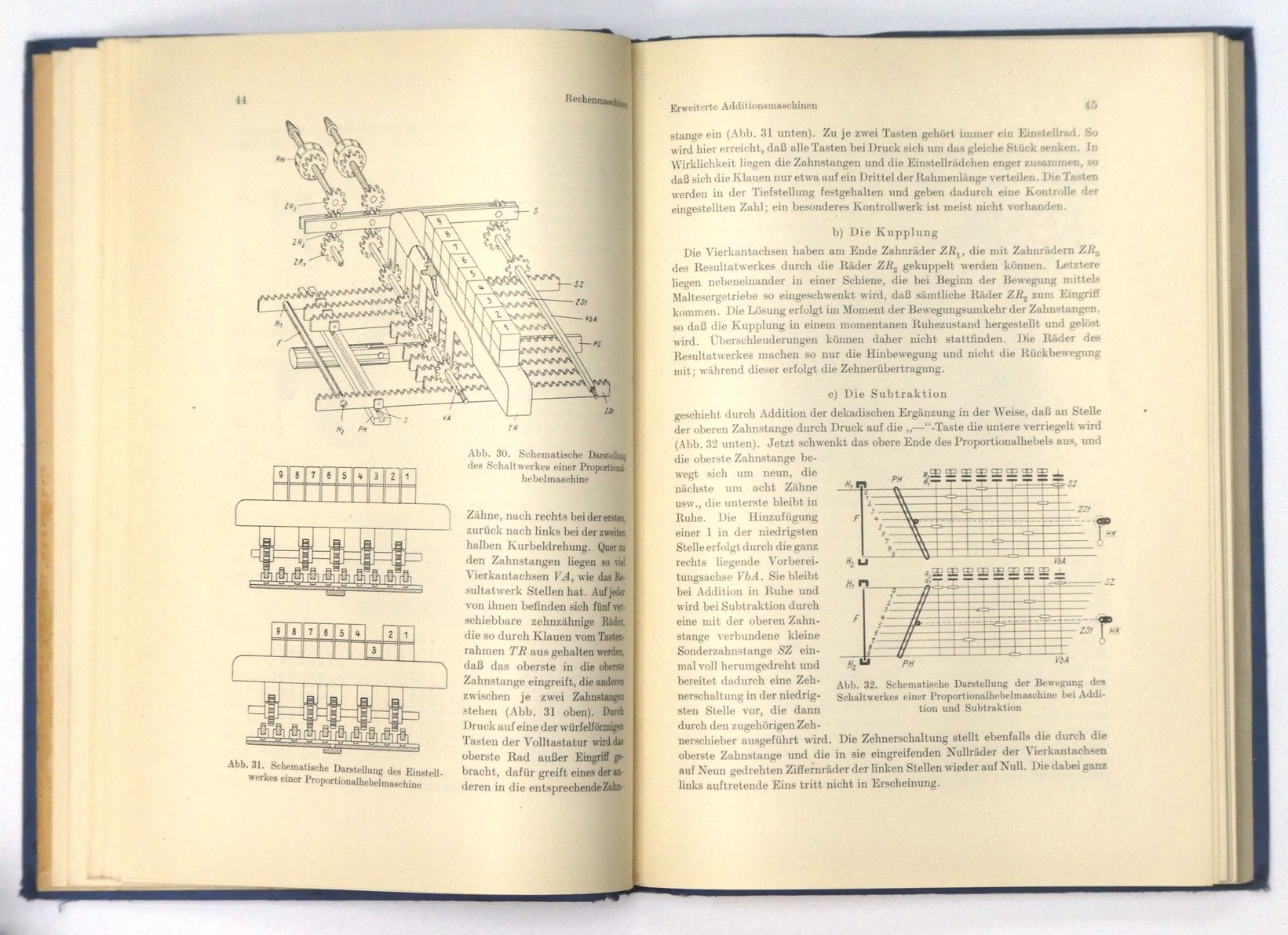
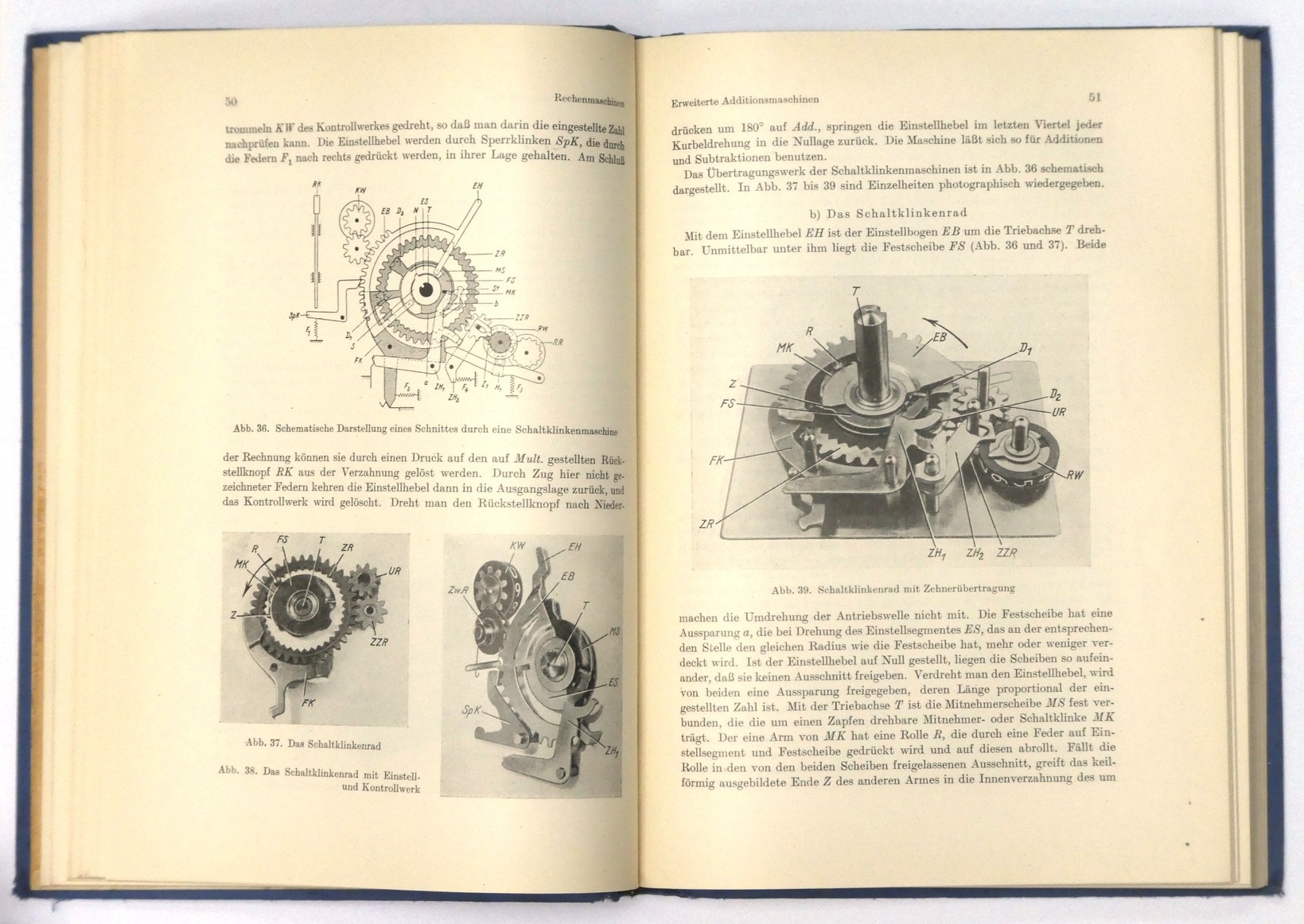
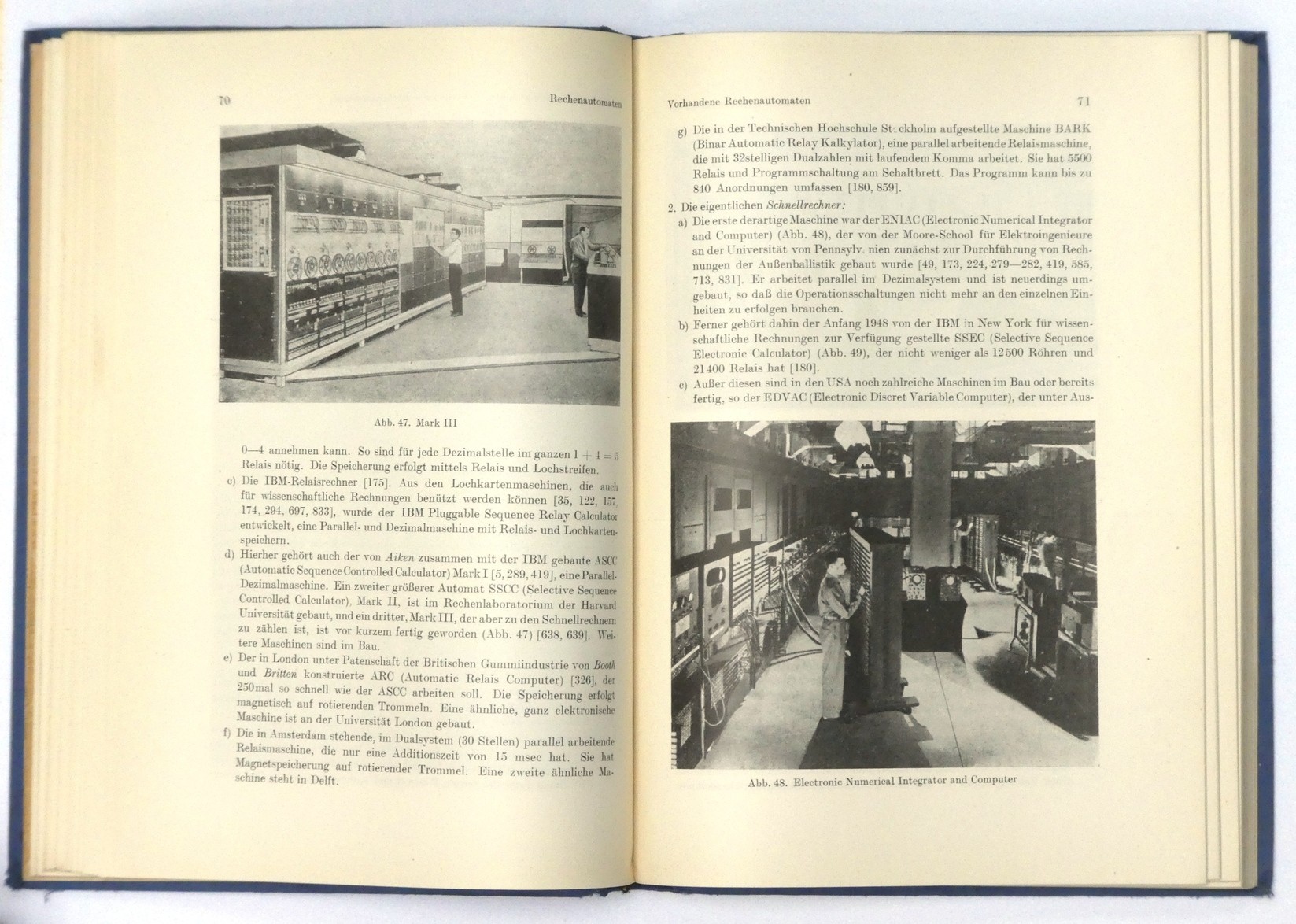
The first 65 pages discuss mechanical calculators, which is followed
by chapters on early electronic calculators/computers, graphing tools,
planimeters, integration tools, and analog machines for differential
equations.
The calculator section focuses on the various mechanisms
and general uses of these machines. In particular, it discusses the
history (Pascal, Leibnitz, Hahn, Thomas), adding machines (troncet,
comptator, Burroughs, 10-key adding machines), pinwheel machines
(Brunsviga, Walther, Facit), stepped drum machines (Rheinmetall,
Archimedes, Curta), proportional rack (Mercedes Euklid), switching
latch (Hamann), and direct multiplication (Millionaire).
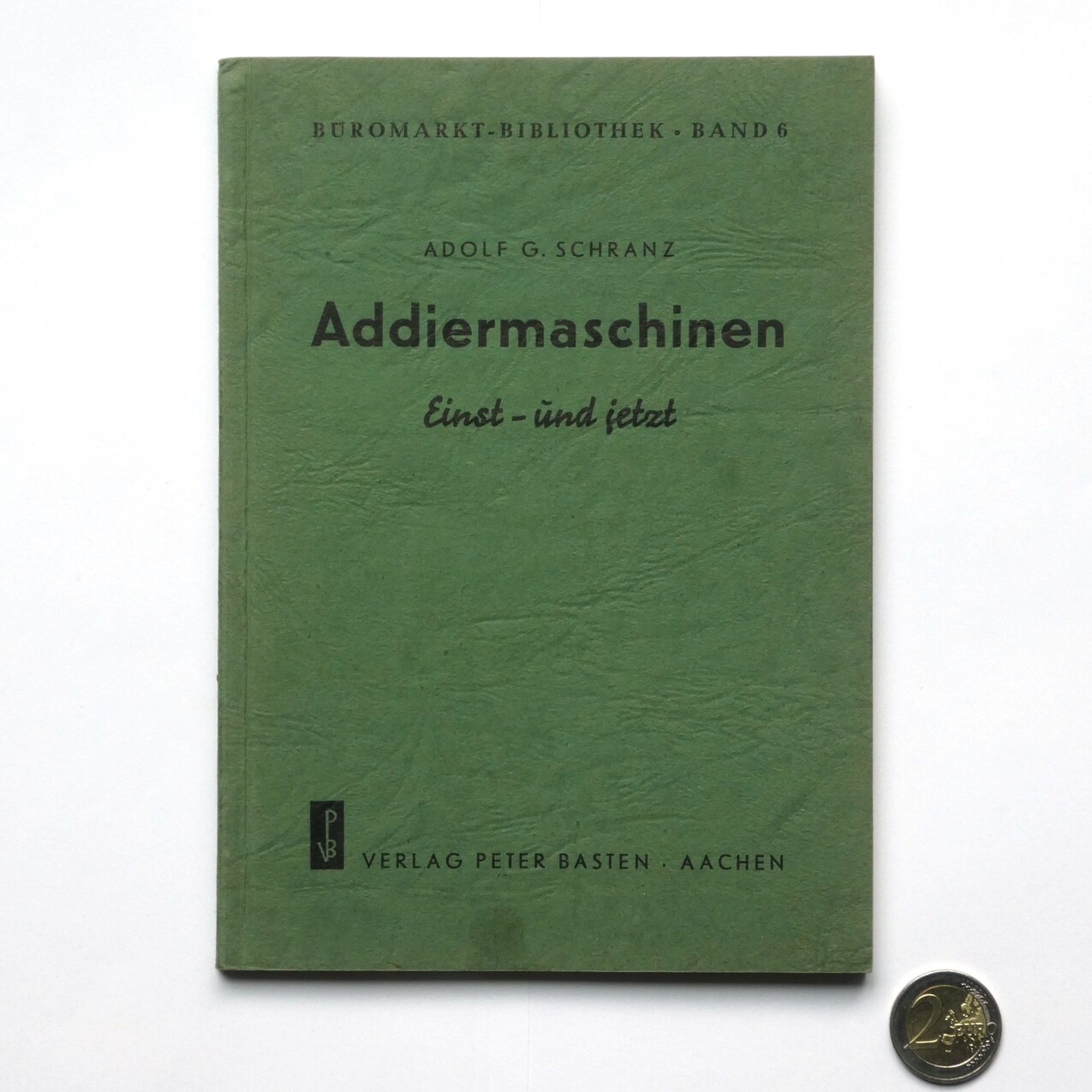
Addiermaschinen Einst - ünd jetzt
Adolf G. Schranz 1953
128 pages, paperback, German
149mm × 209mm × 6mm
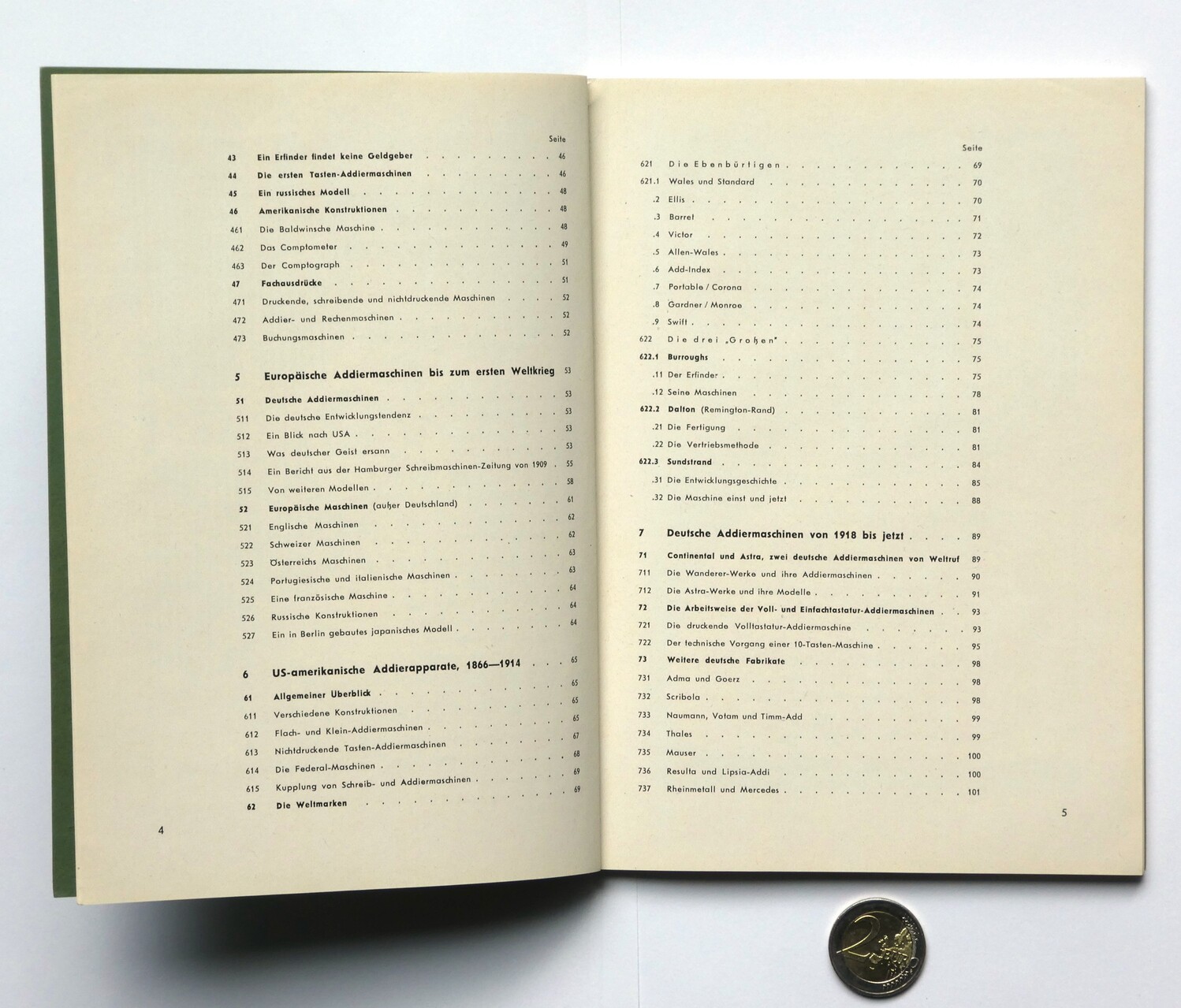
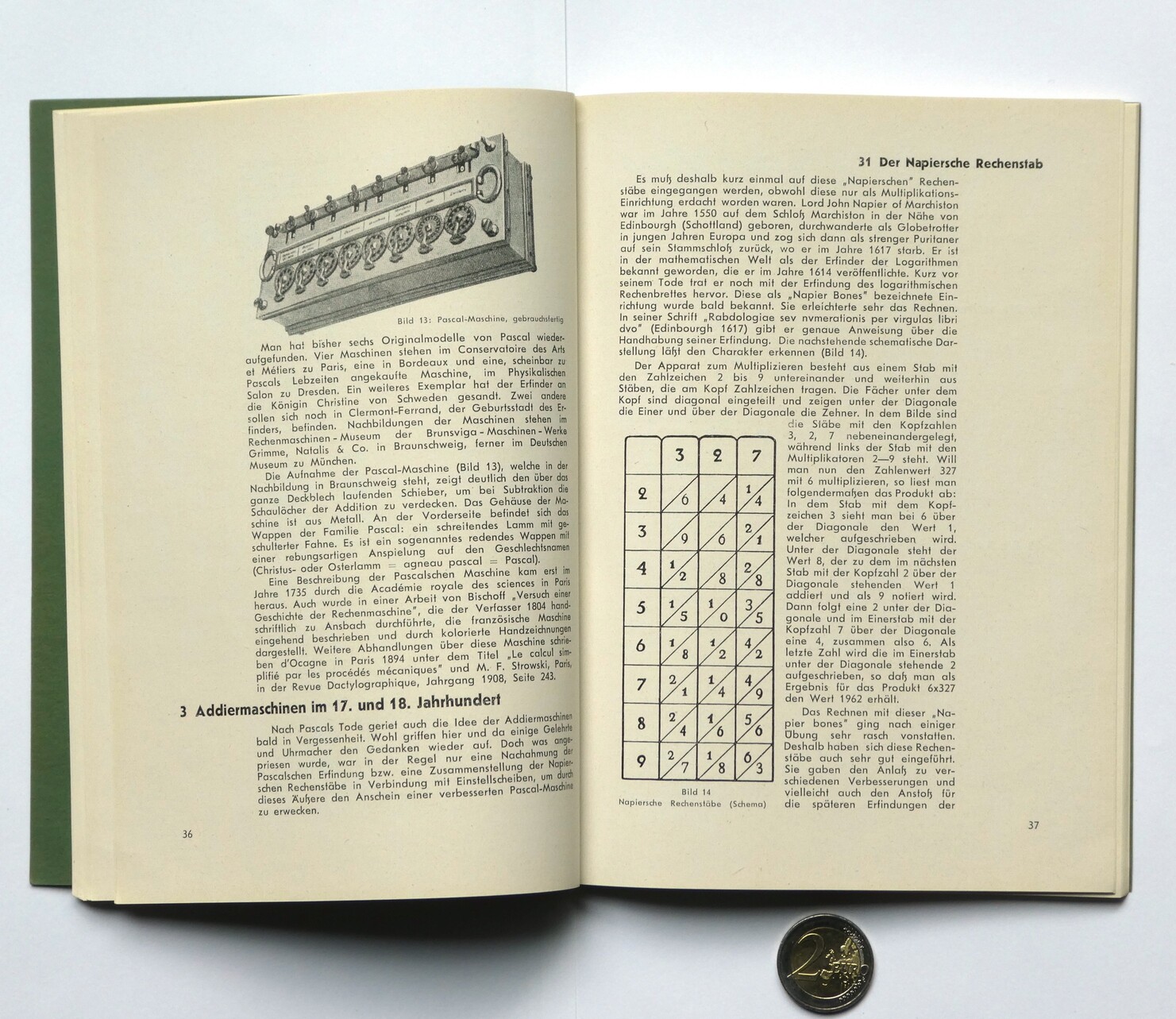
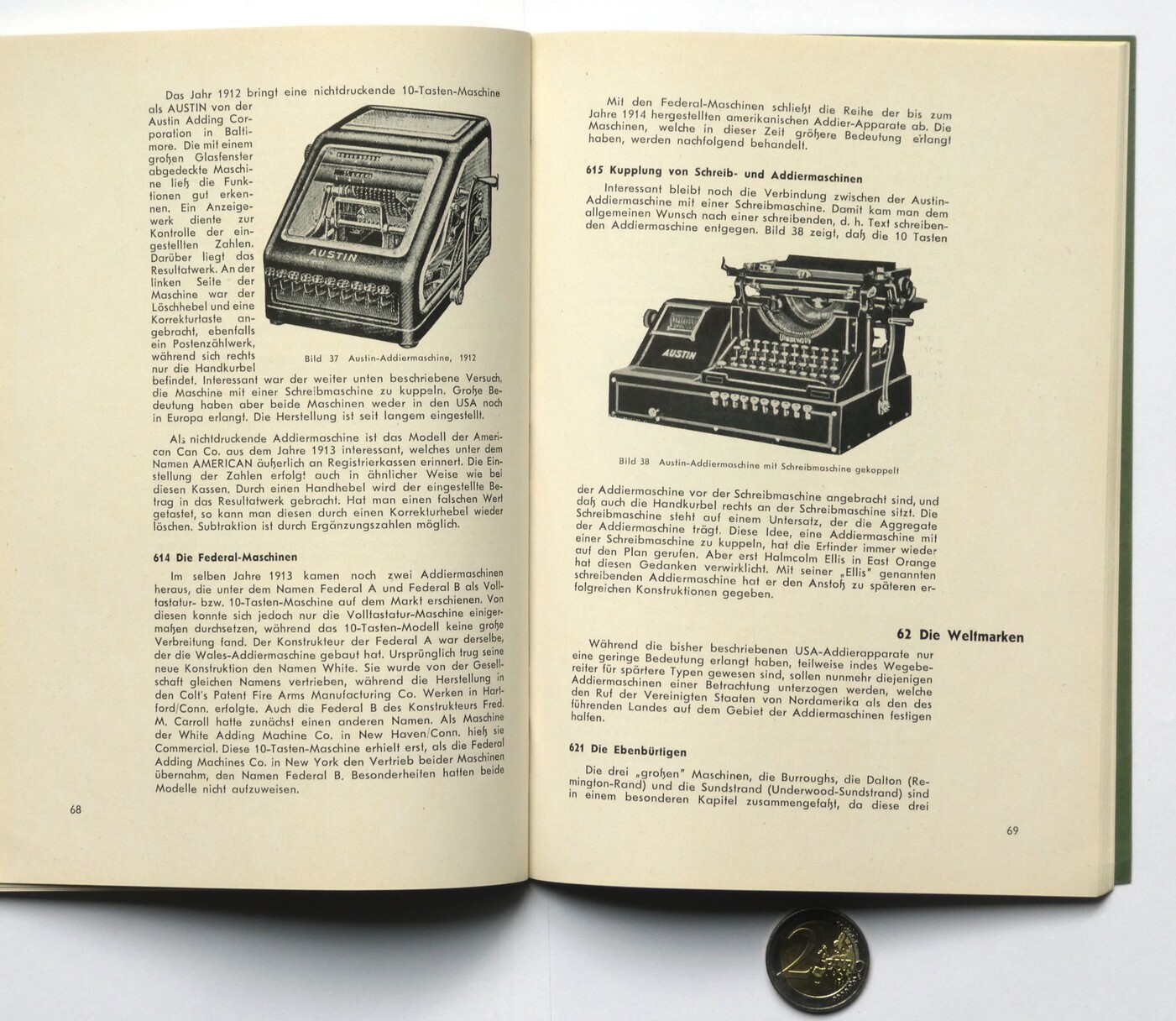
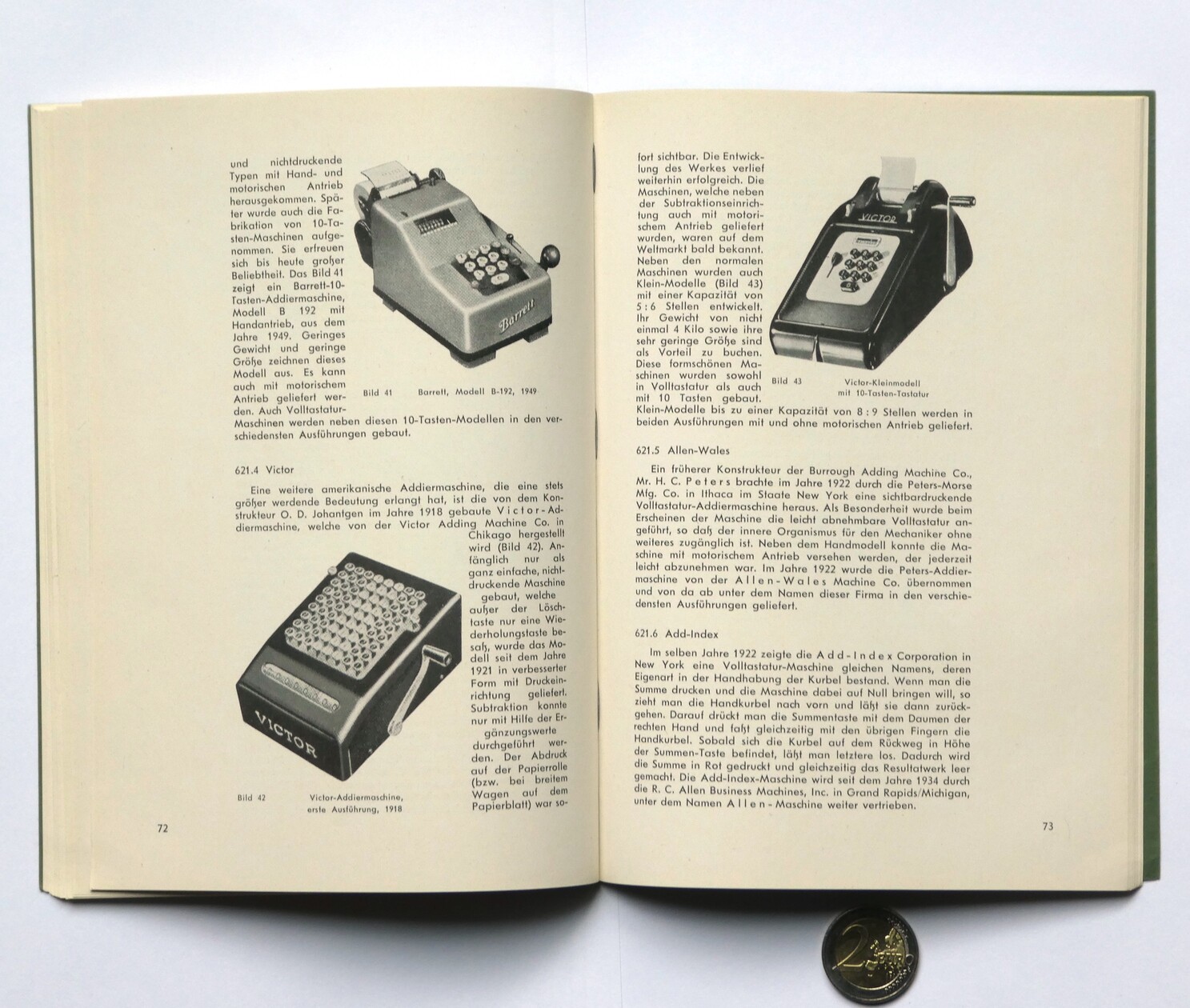
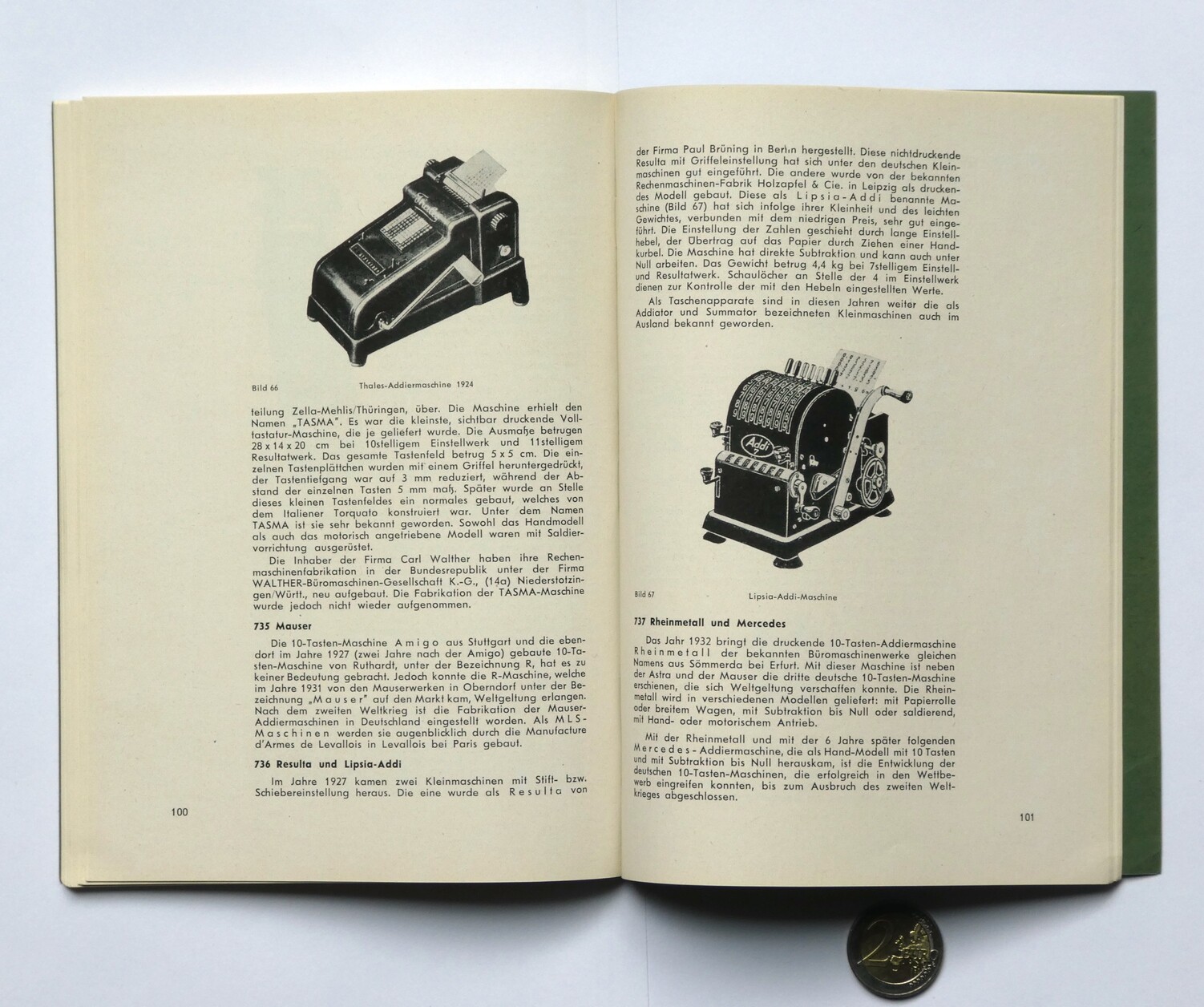
This book provides a history of adding machines, with many pictures
of machines from Europe and the USA. Note that it does not include
calculators. At the end it has a time line.
There is no copyright year in the book, but other sources claim it was
published in 1953. A scan can be found on
archive.org.
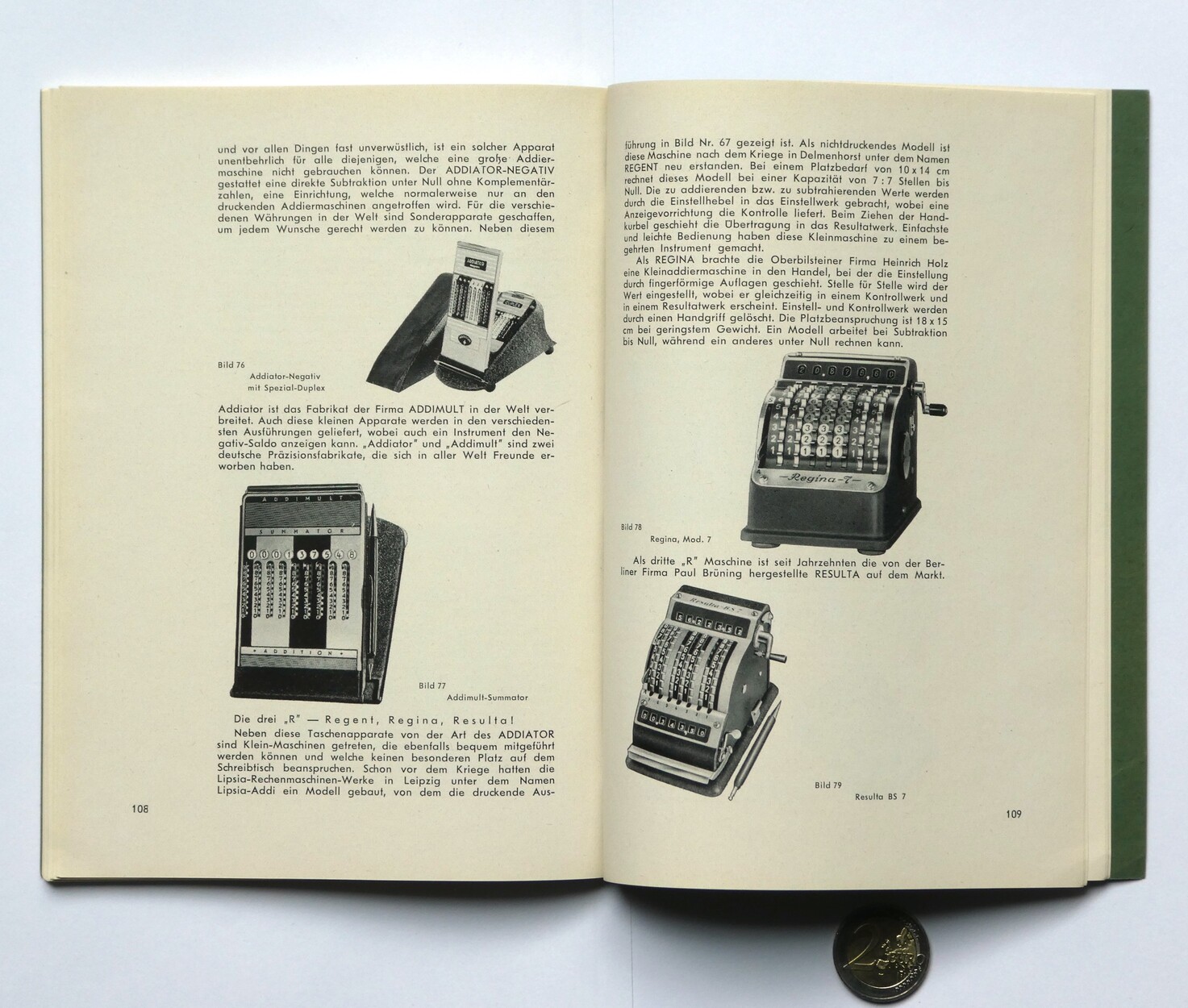
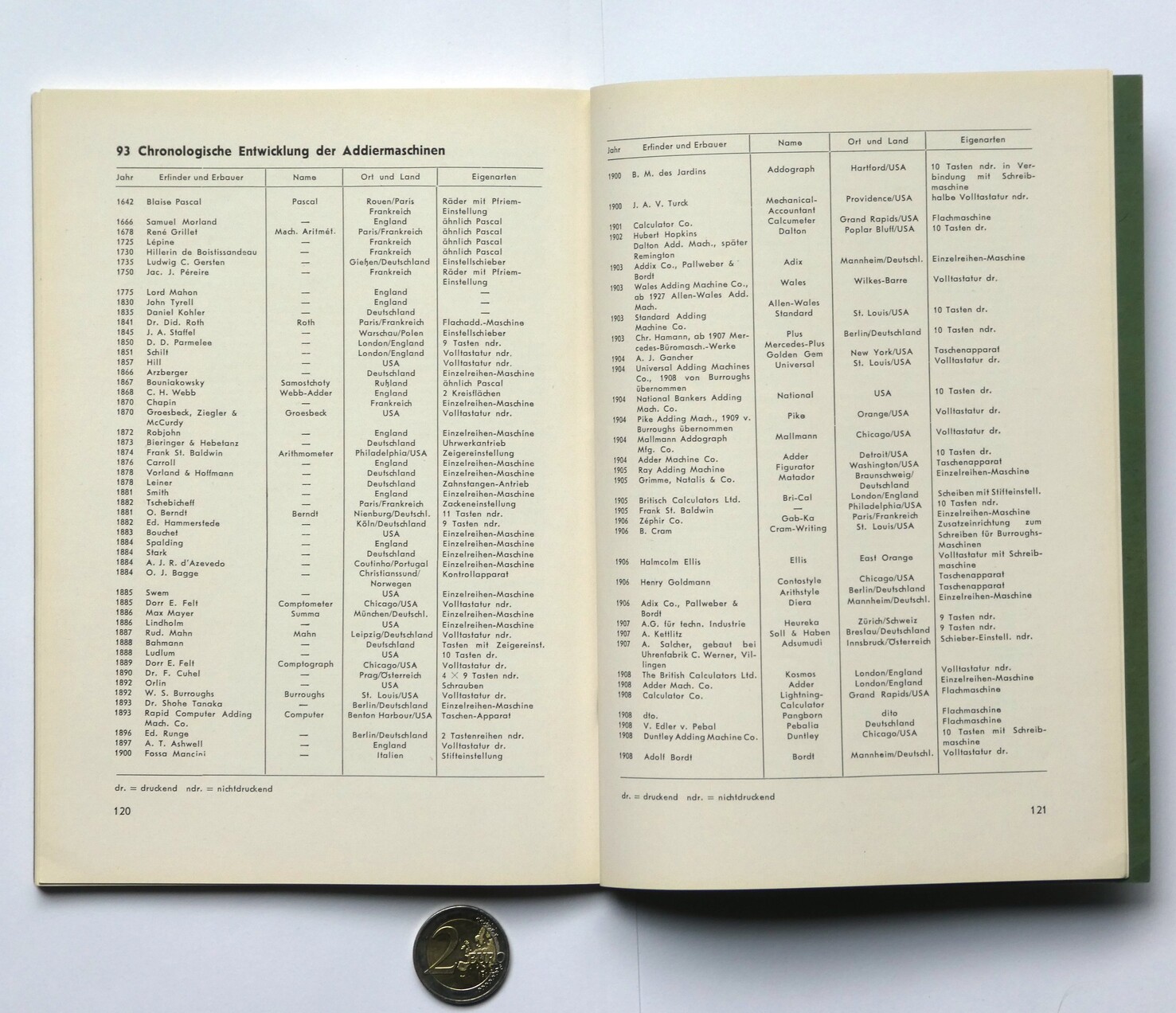
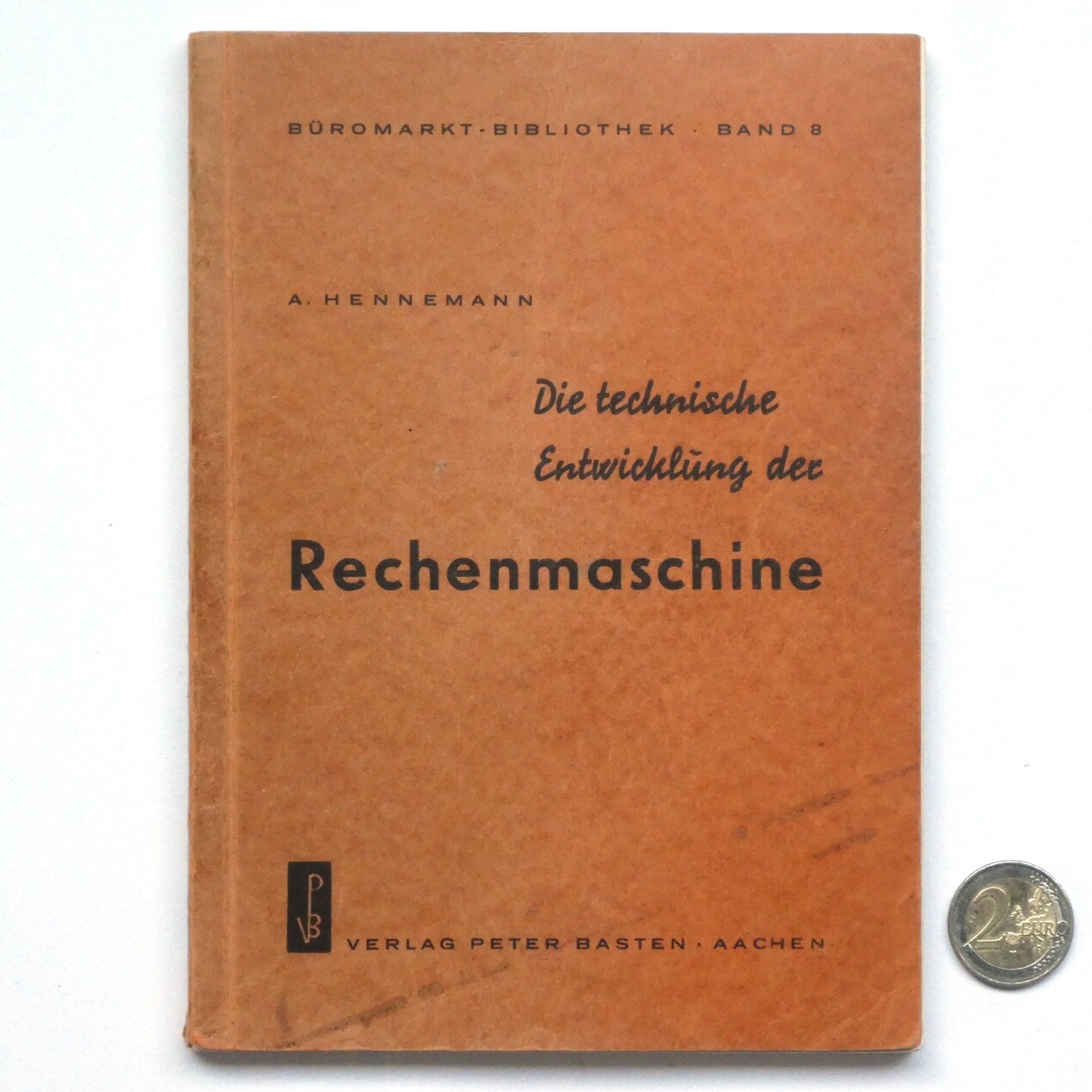
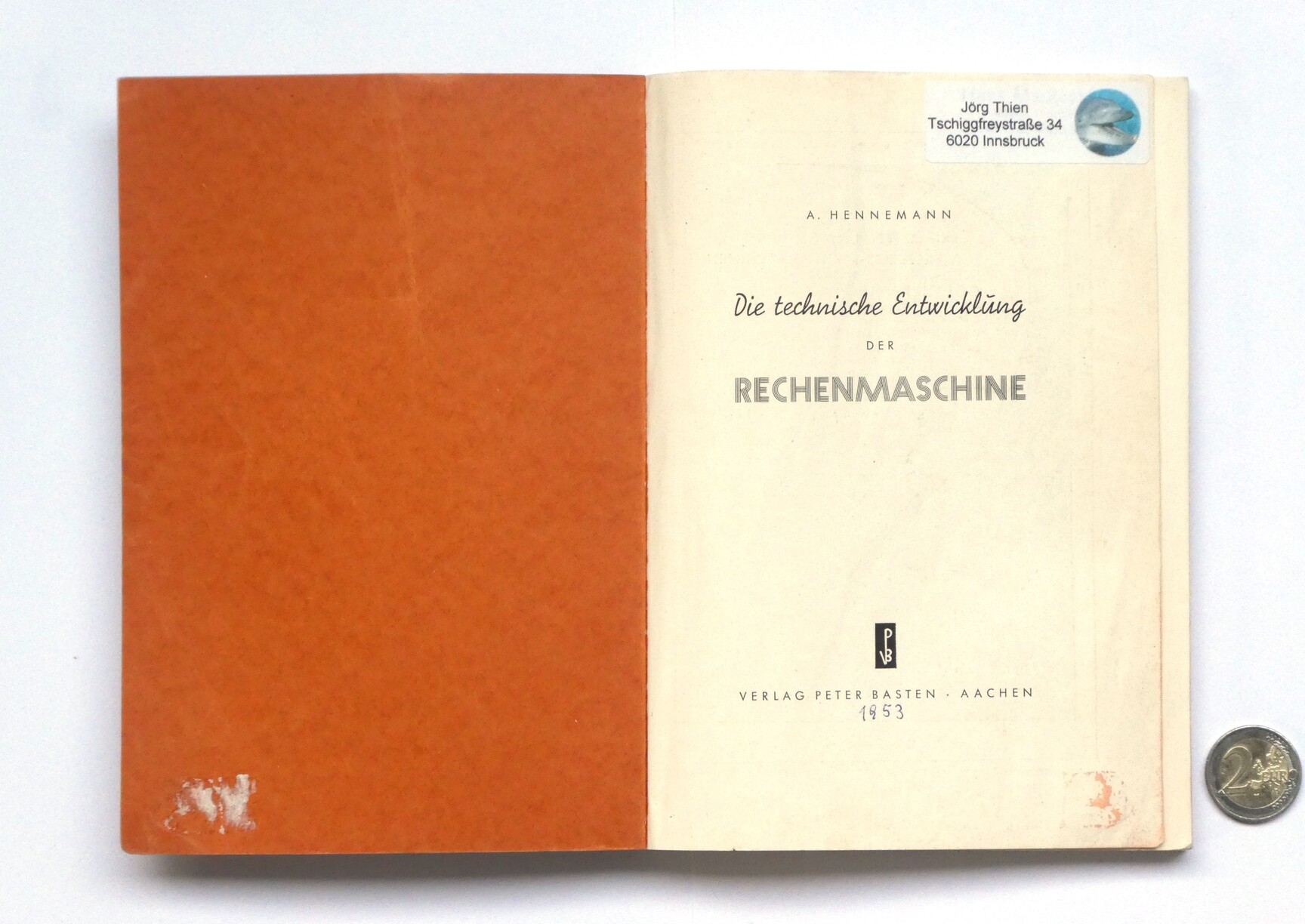
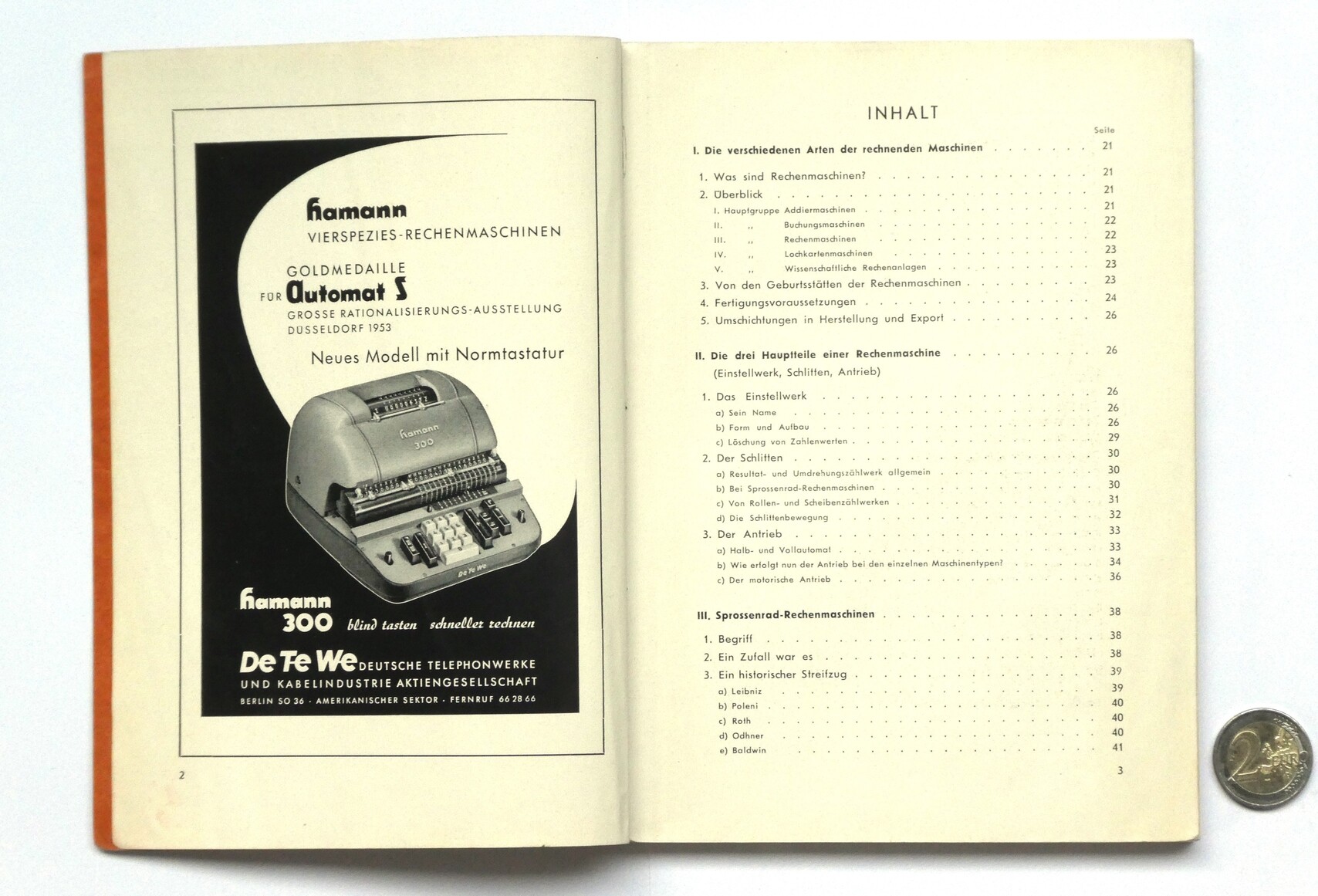
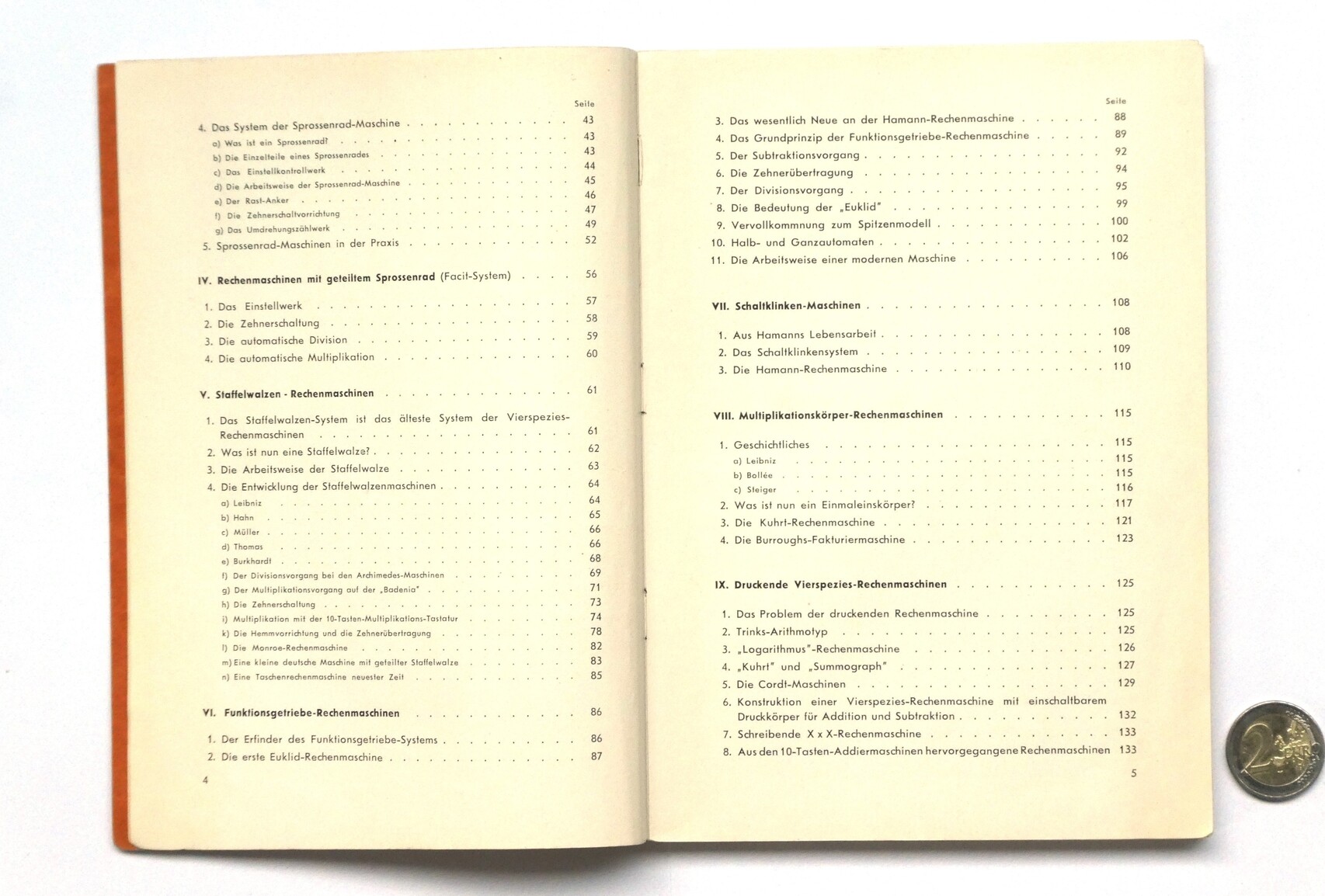
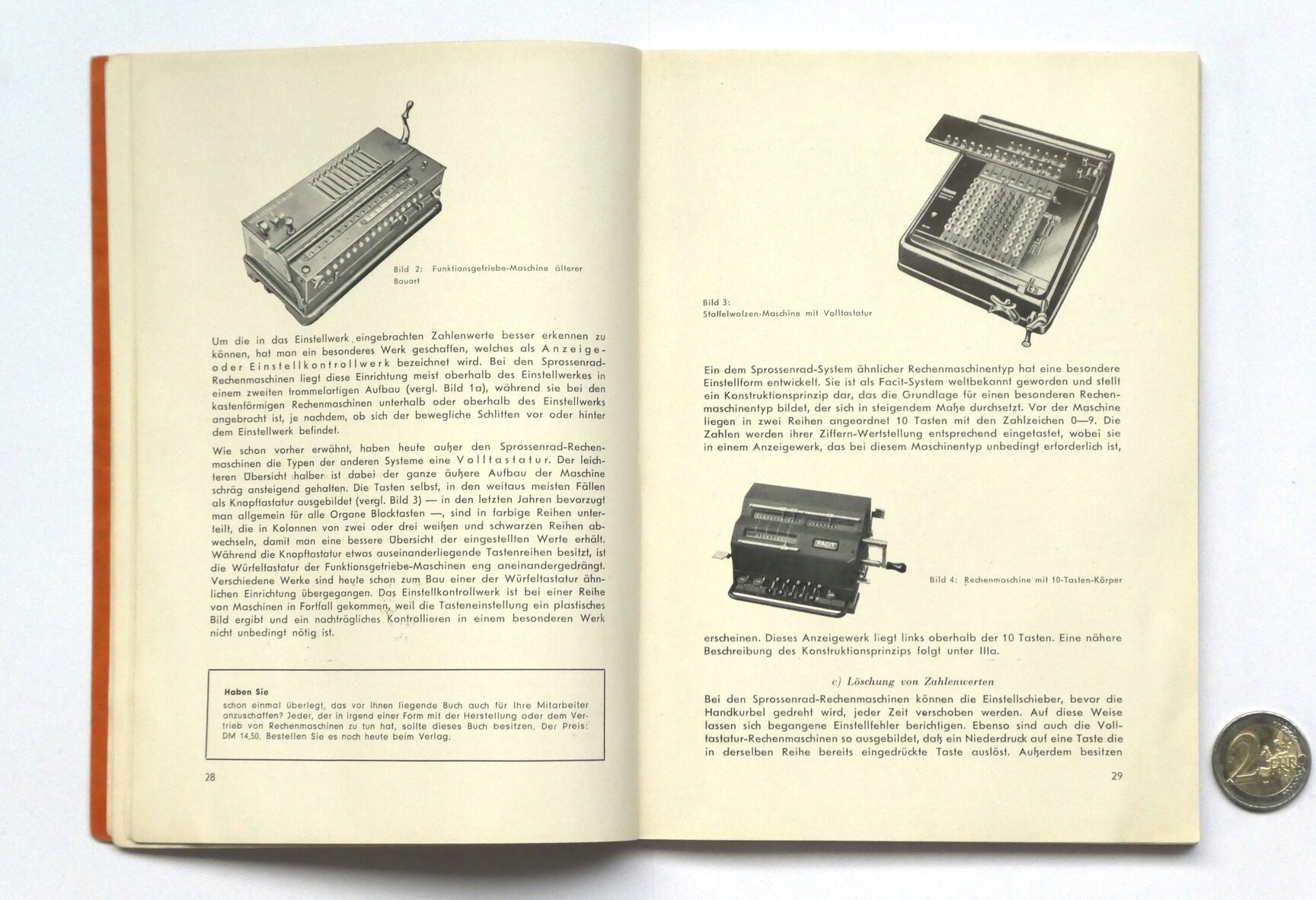
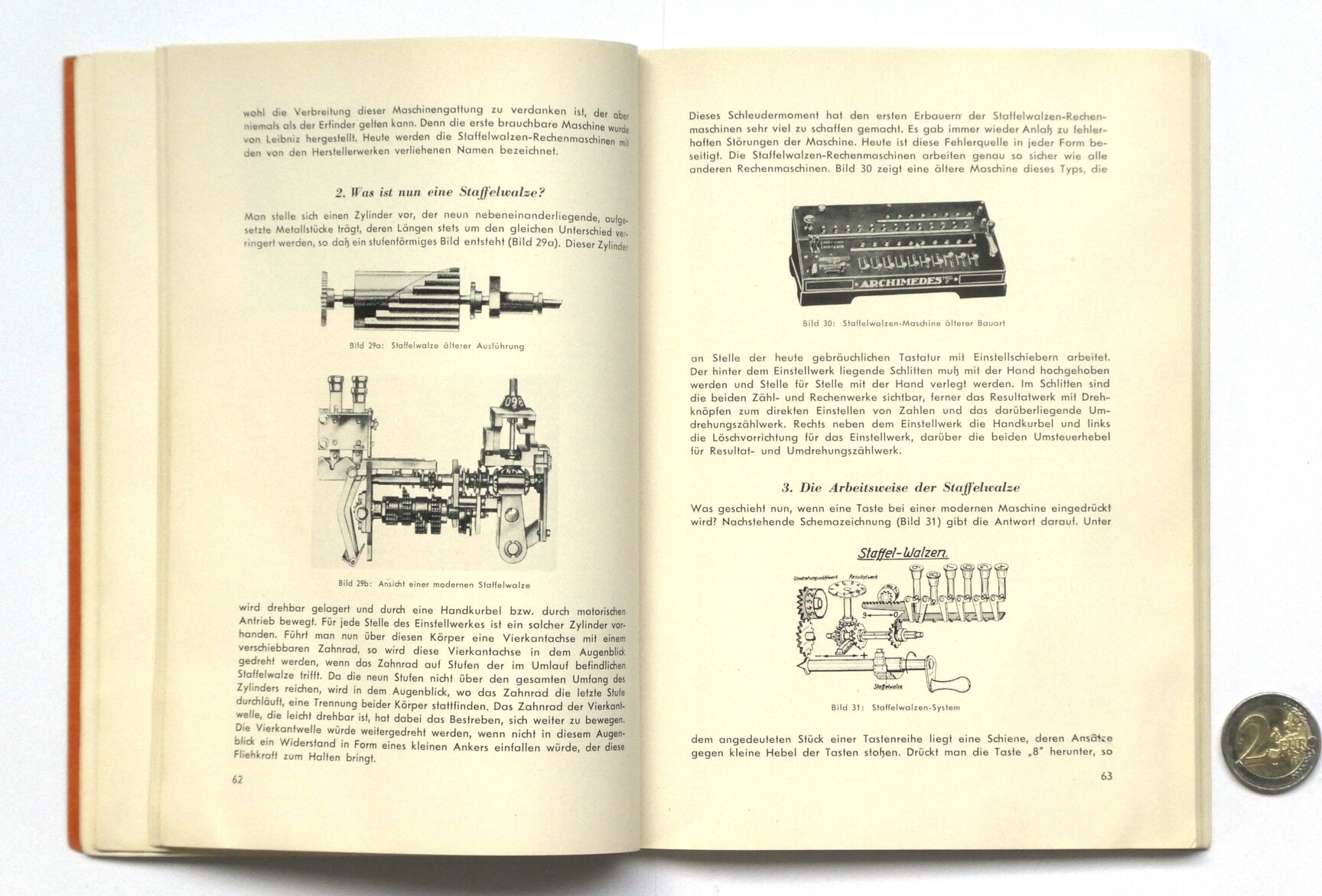
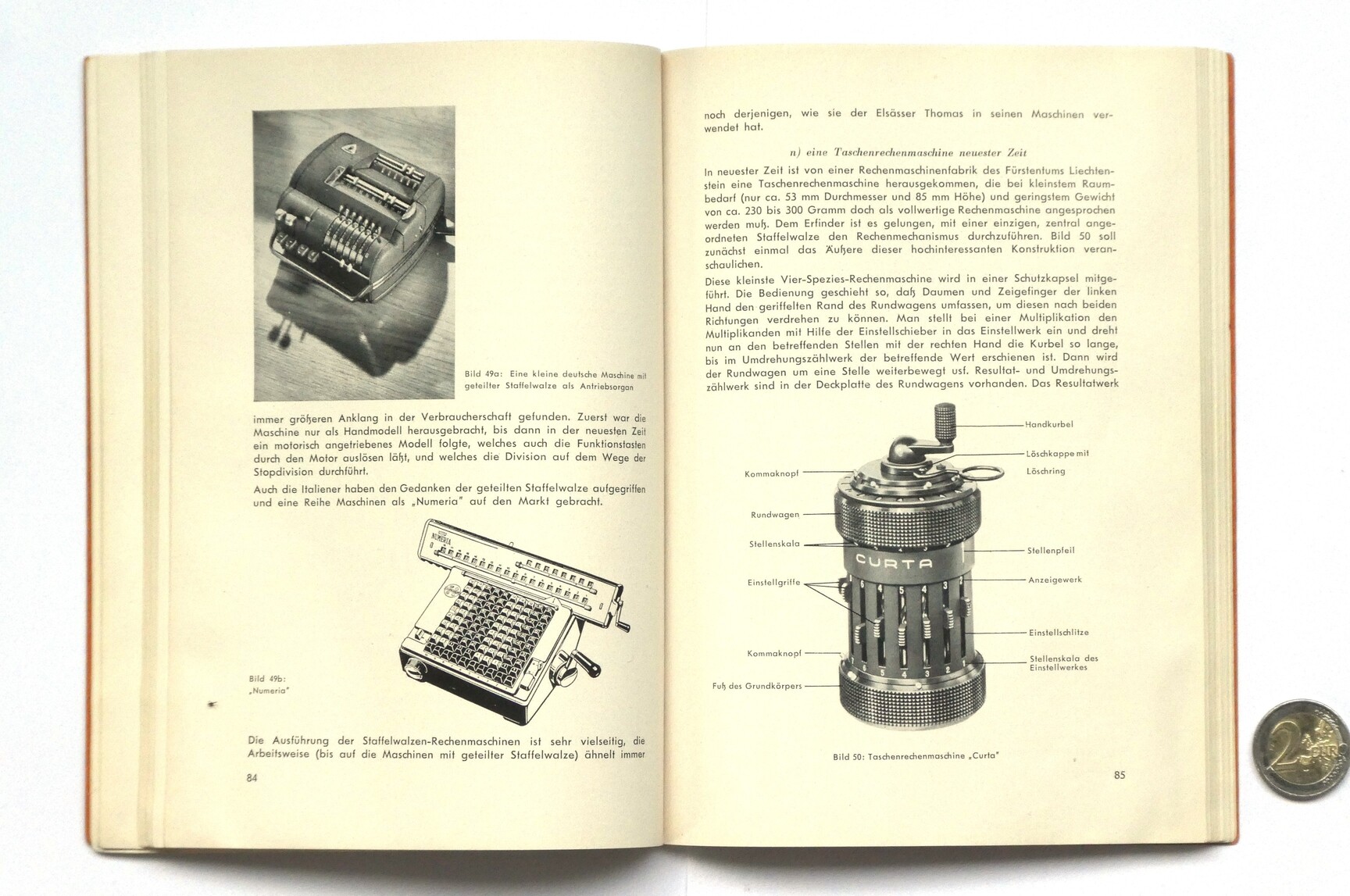
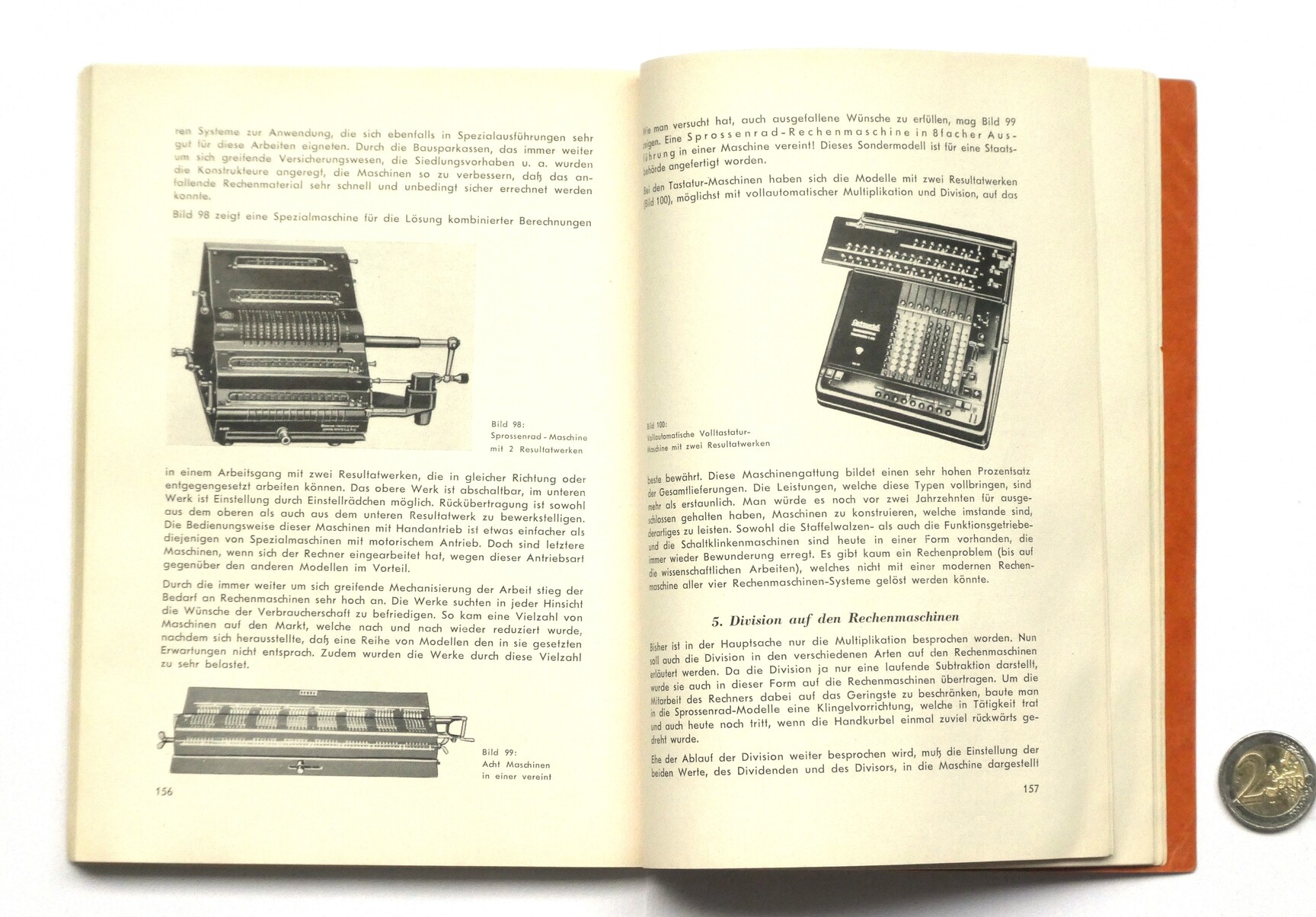
Die technische Entwicklung der Rechenmaschine A. Henneman 1953
184 pages, paperback, German
149mm × 207mm × 9mm
This book extensively discusses most types of calculators,
with many pictures of machines and their mechanisms.
There is no copyright year in the book, but other sources claim it was
published in 1953. Apparently A. Henneman is actually a
pseudonym of Adolf G. Schranz, see above.
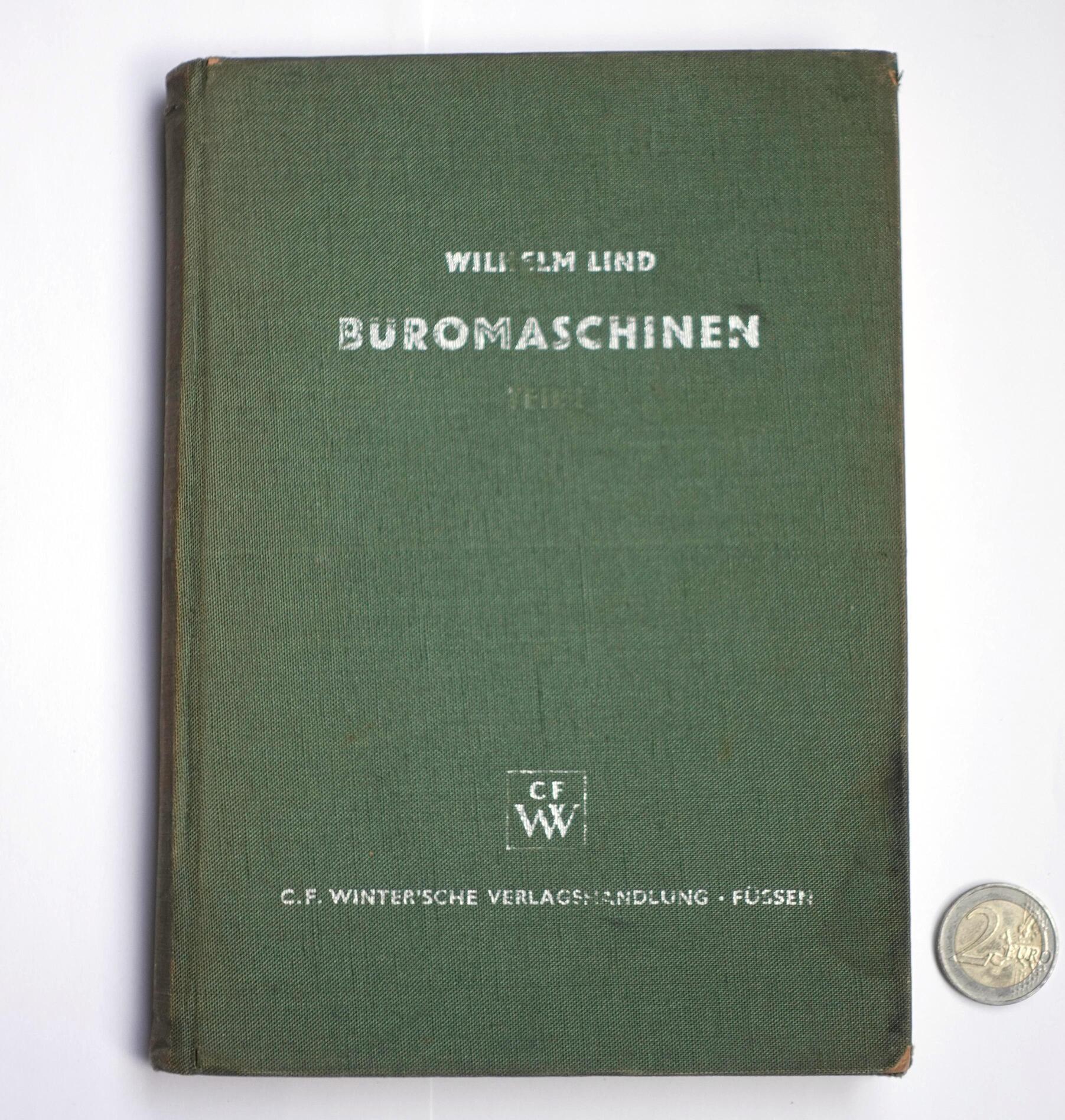
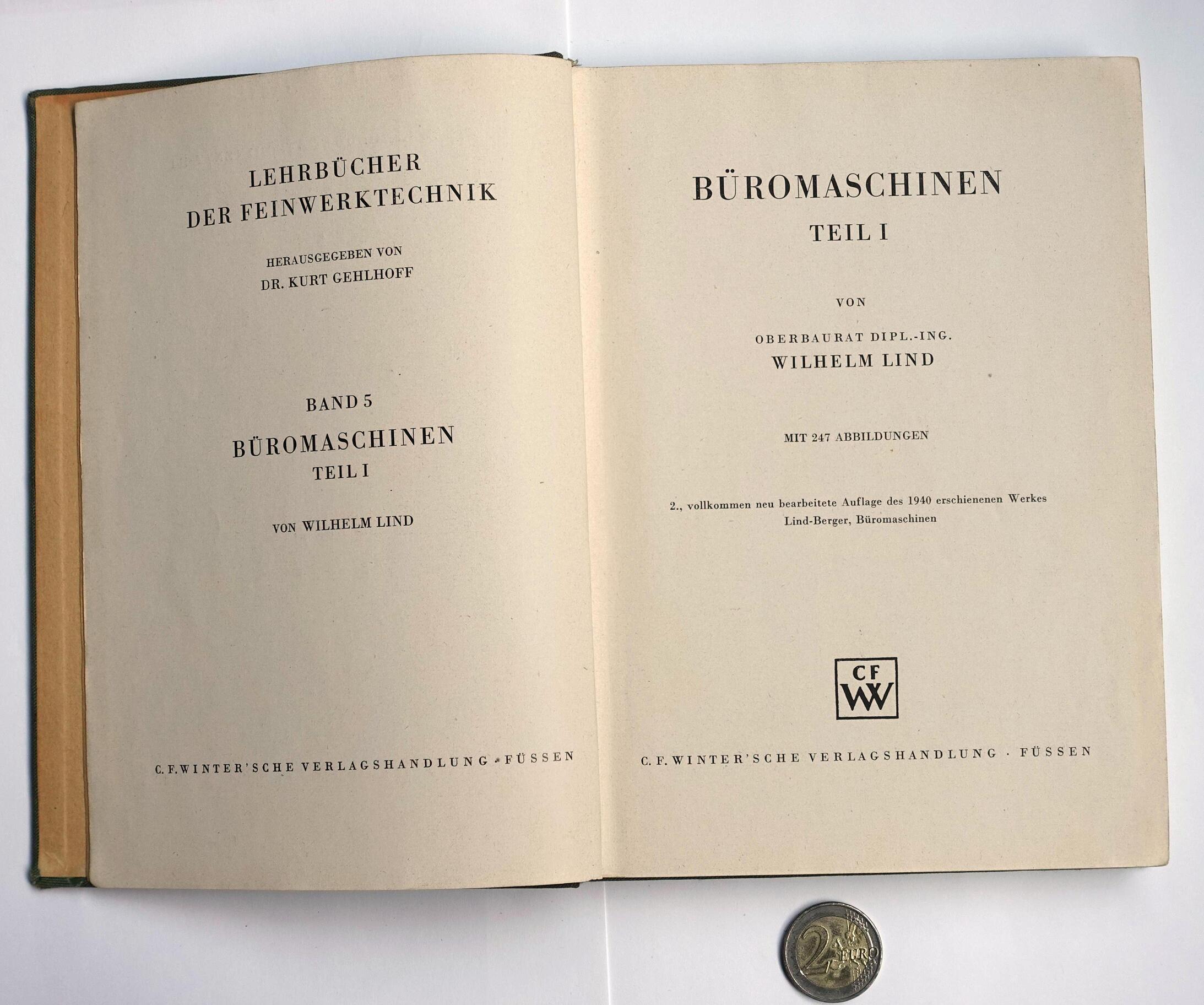
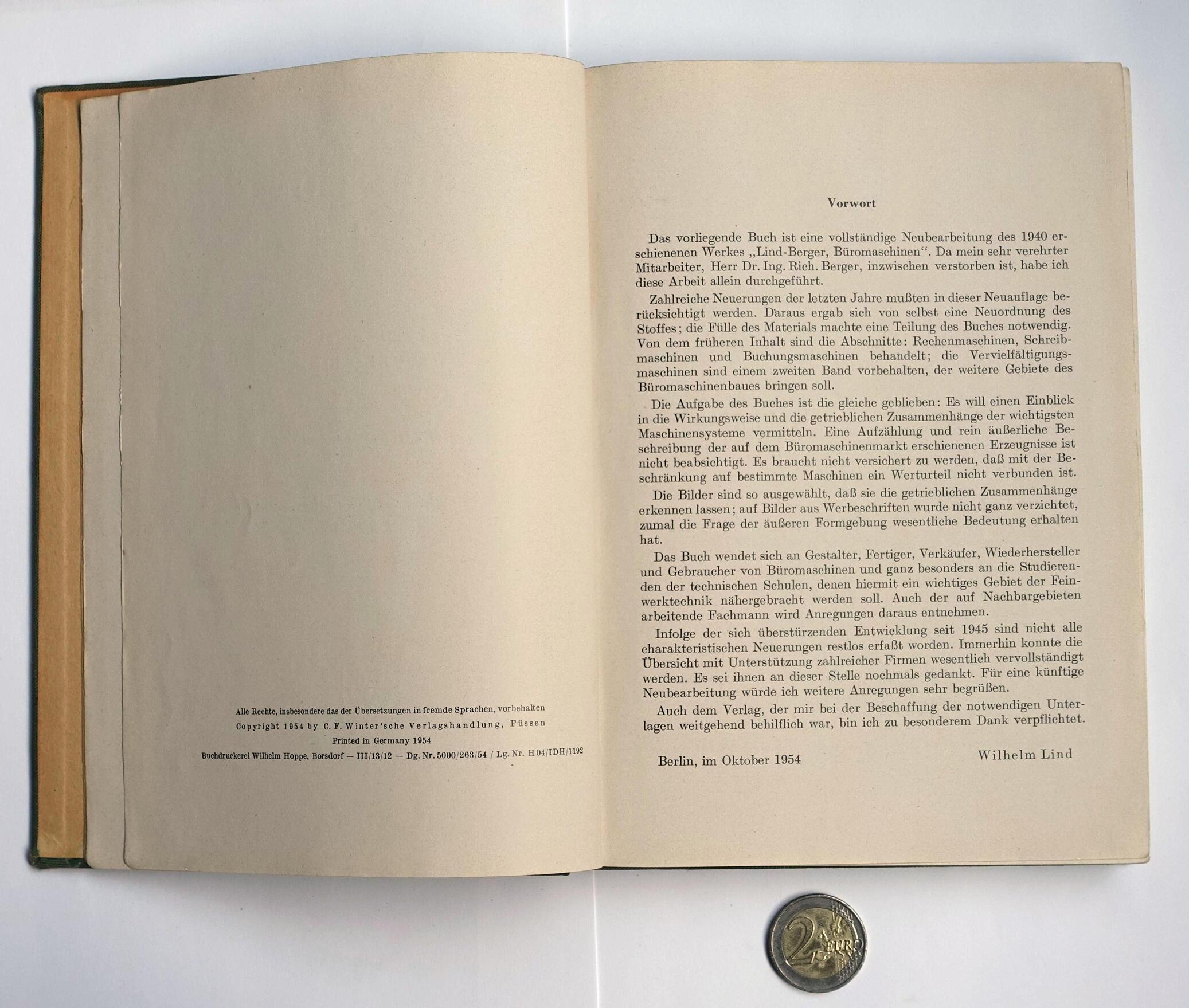
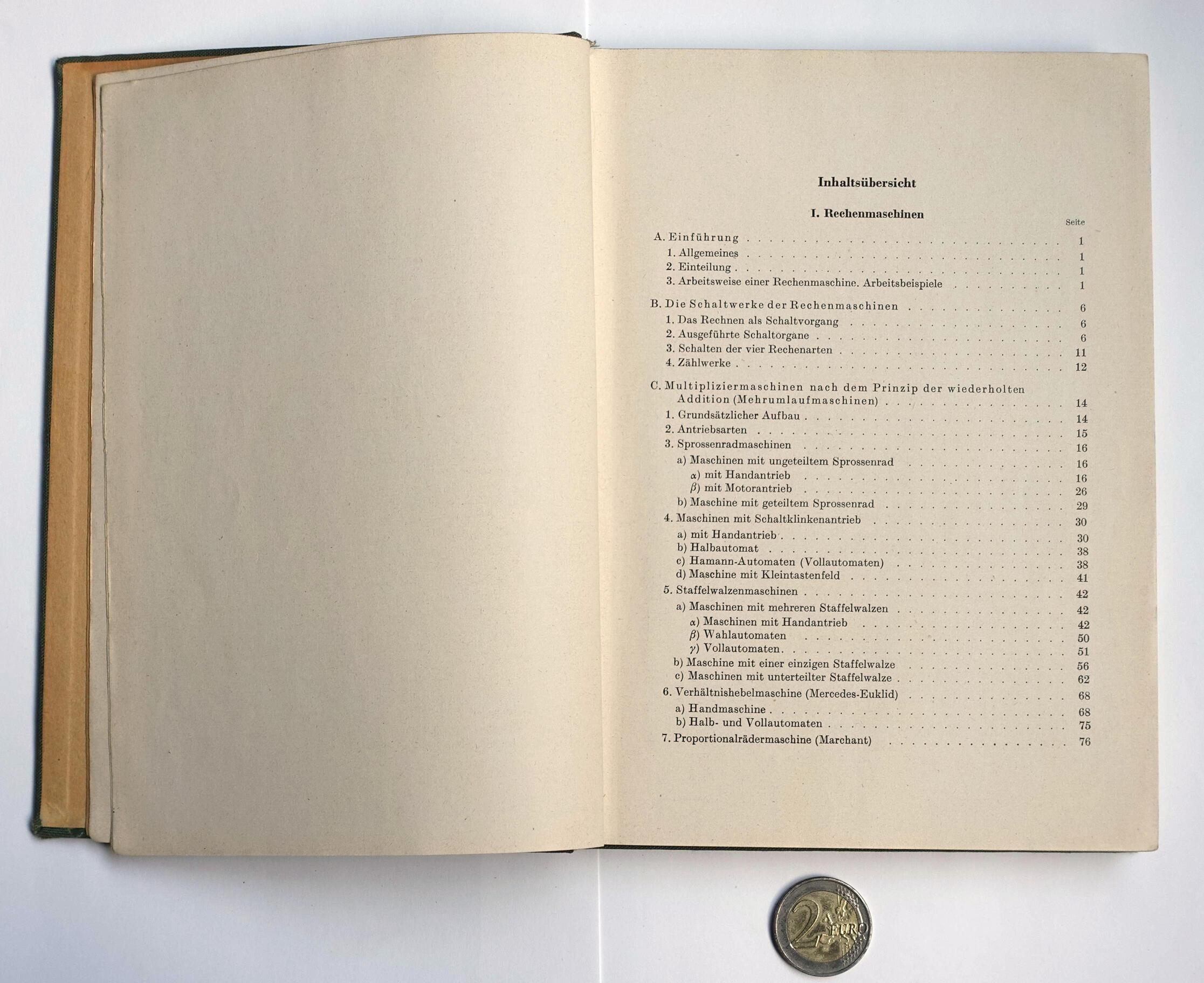
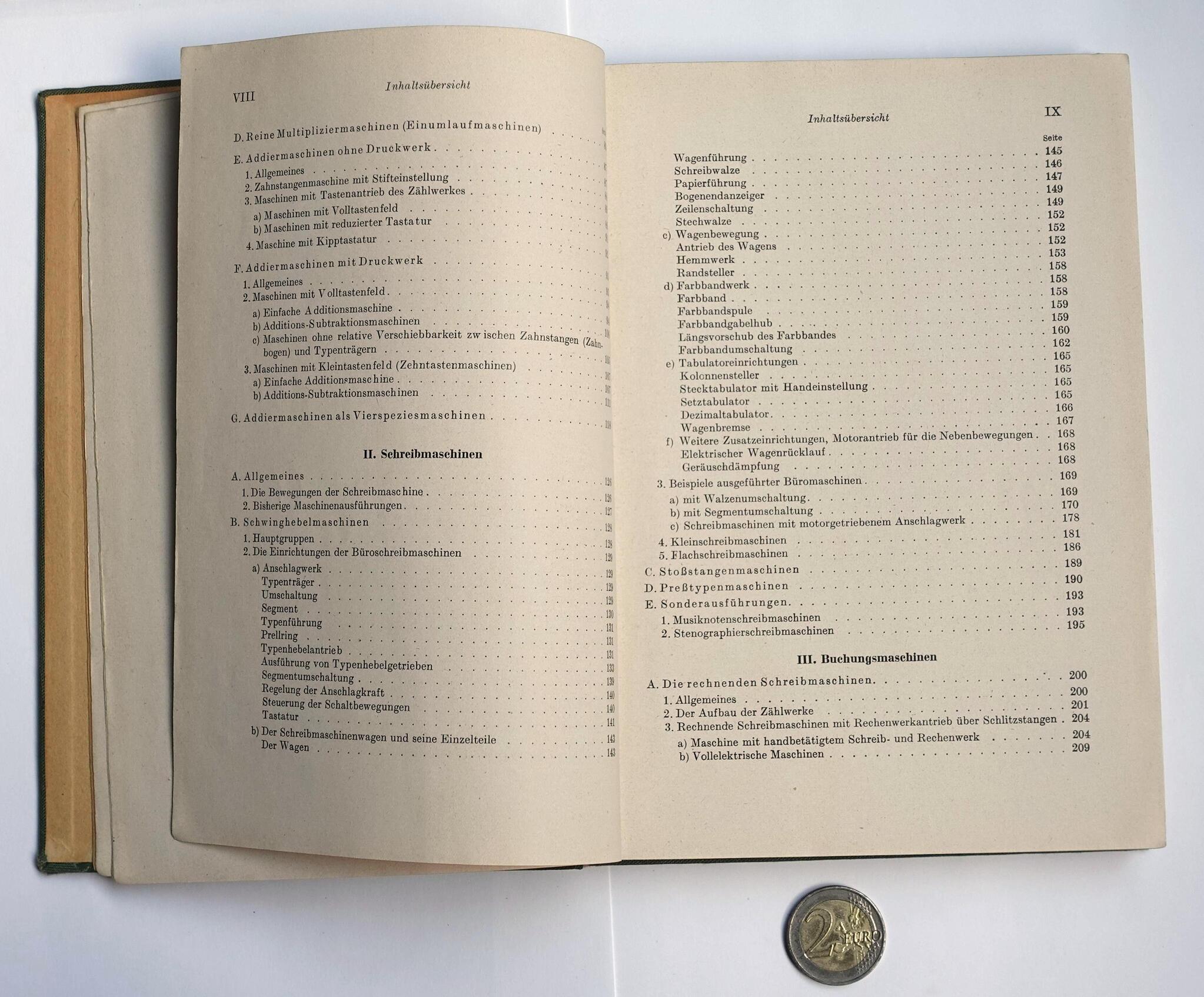
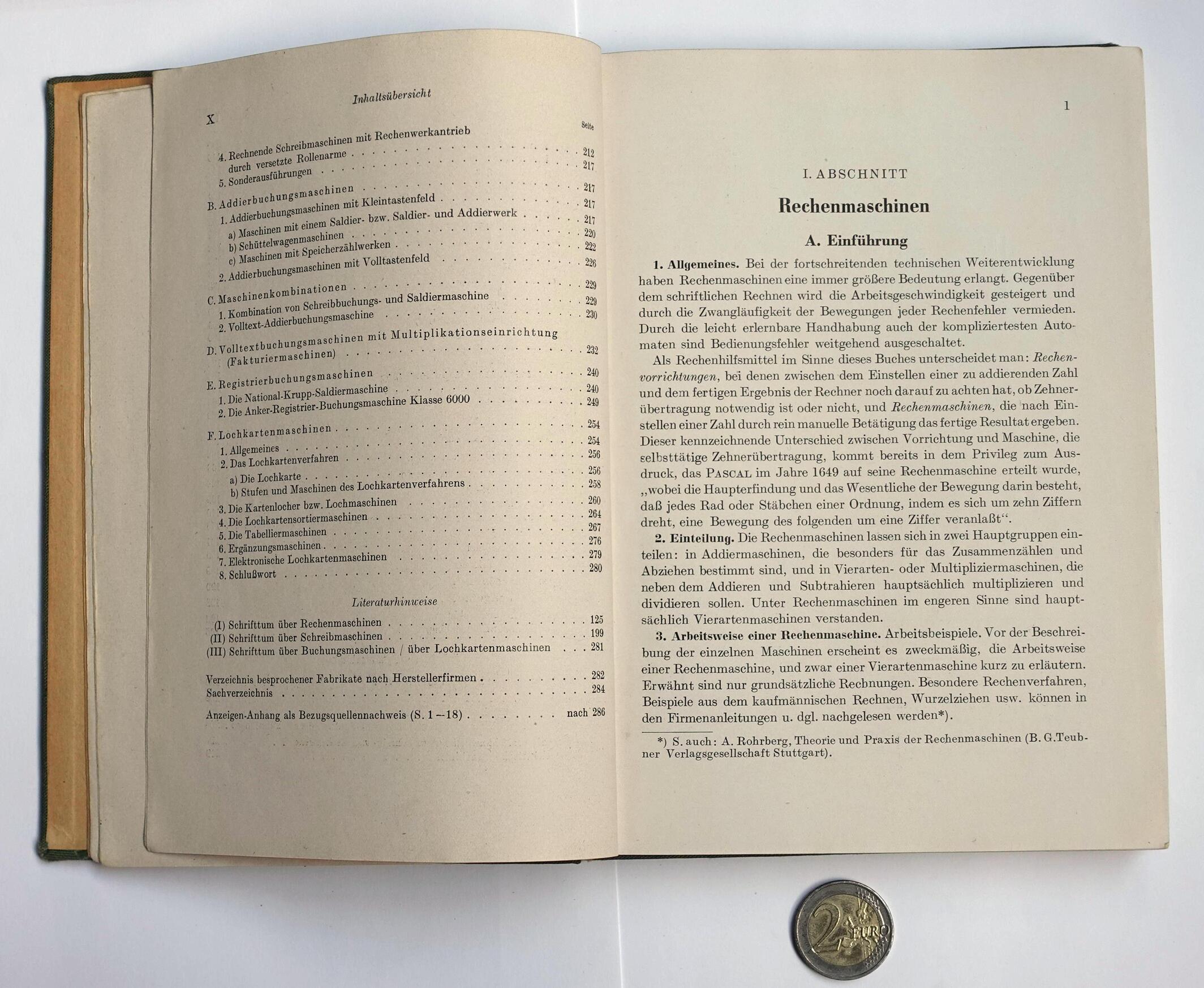
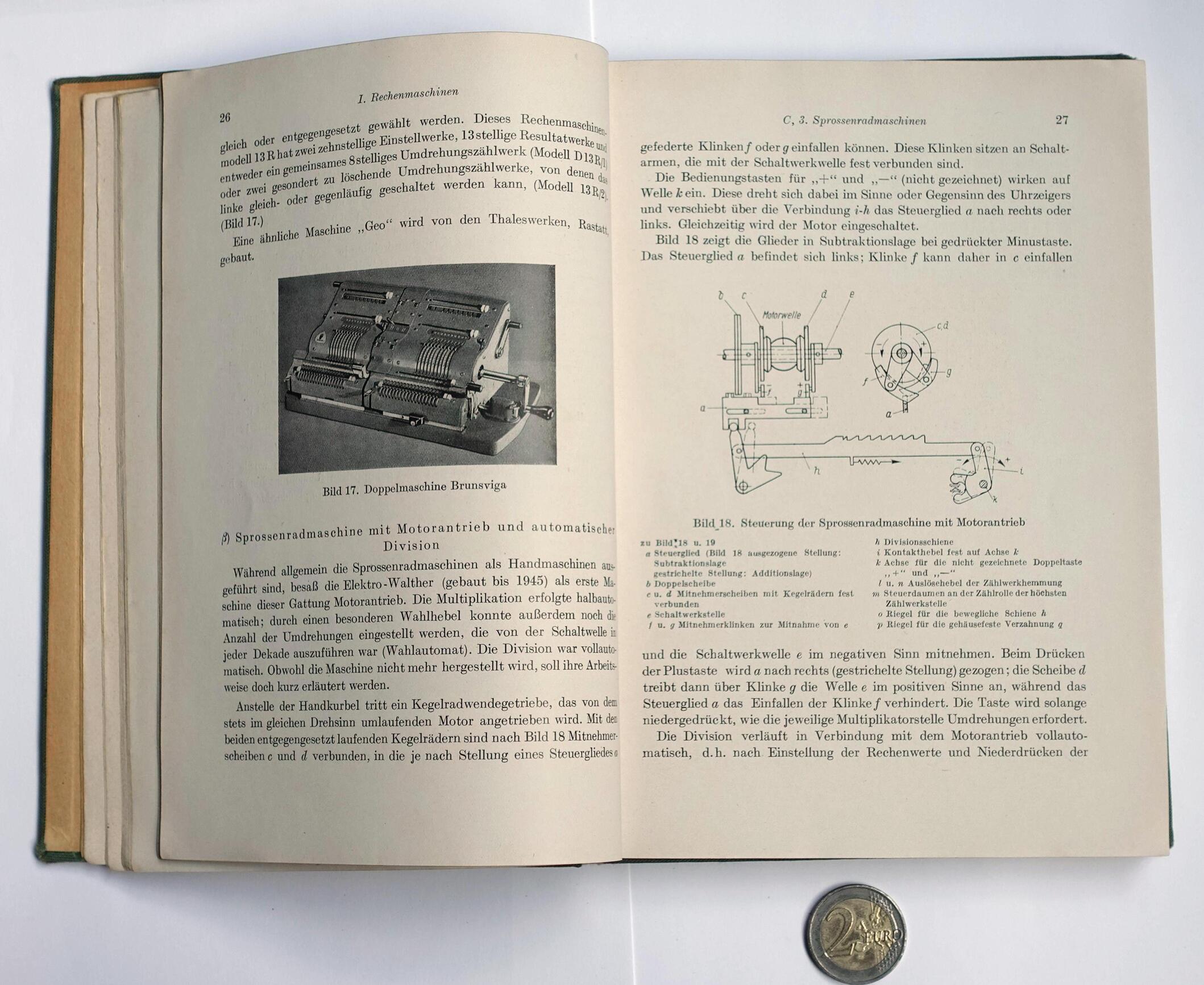
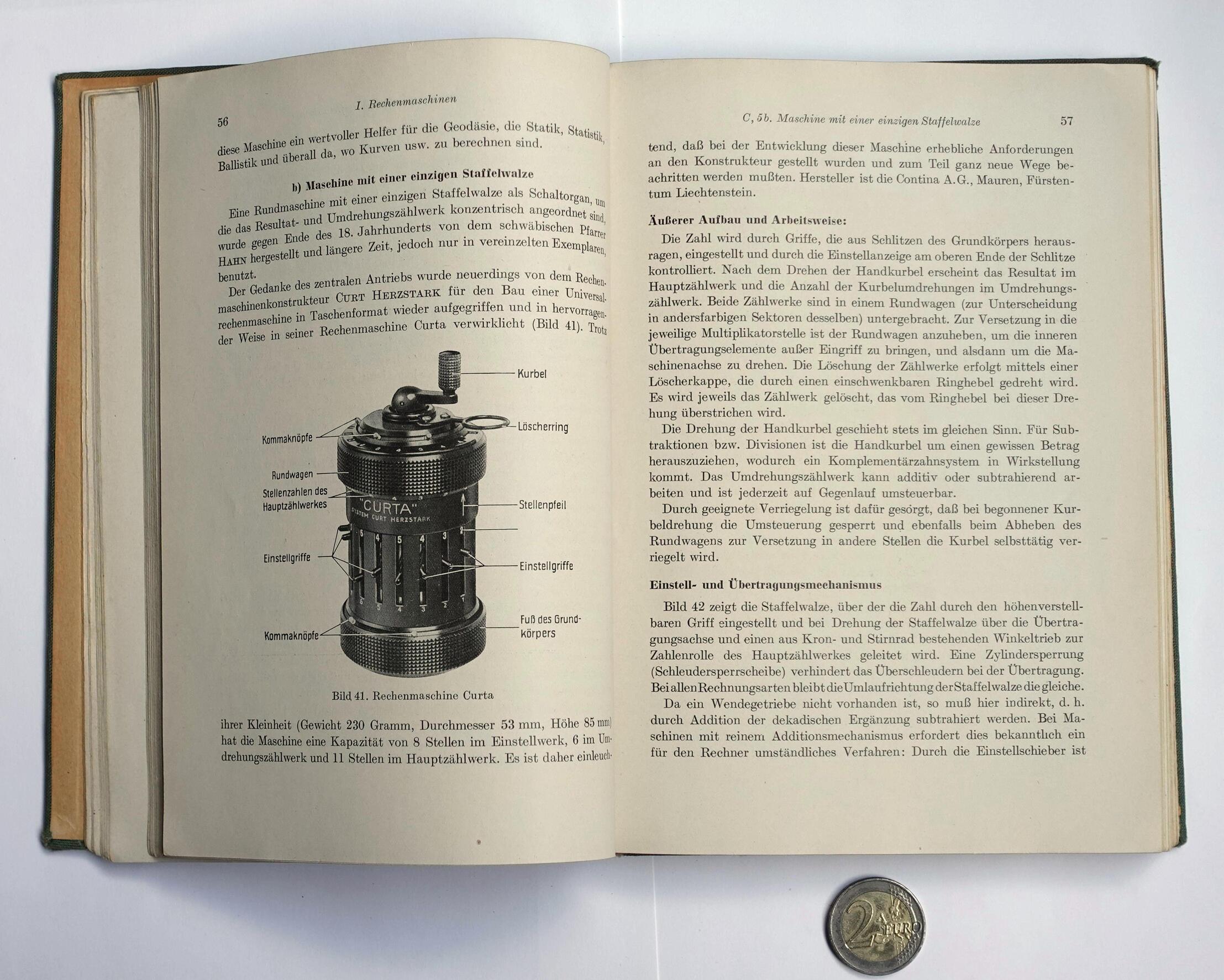
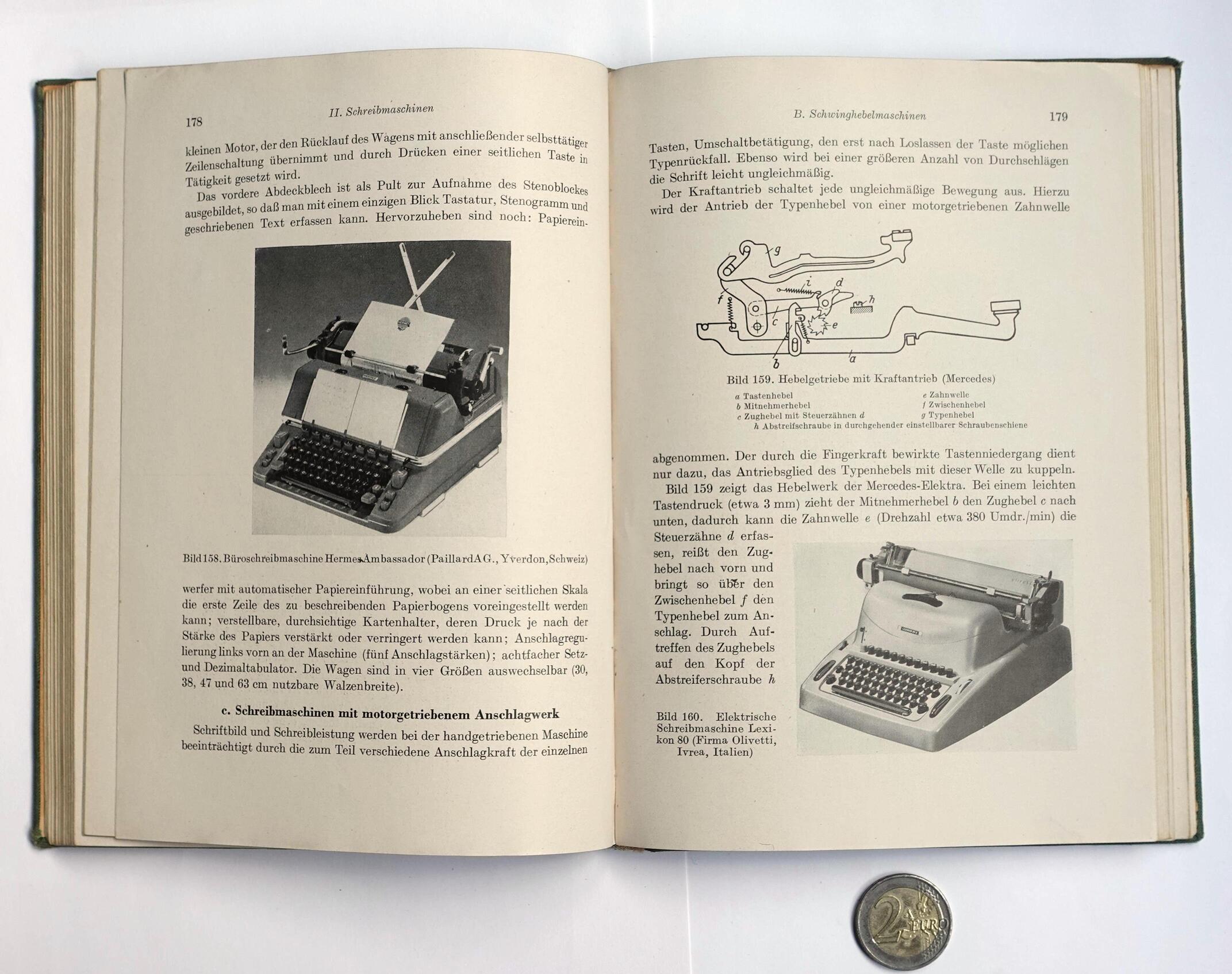
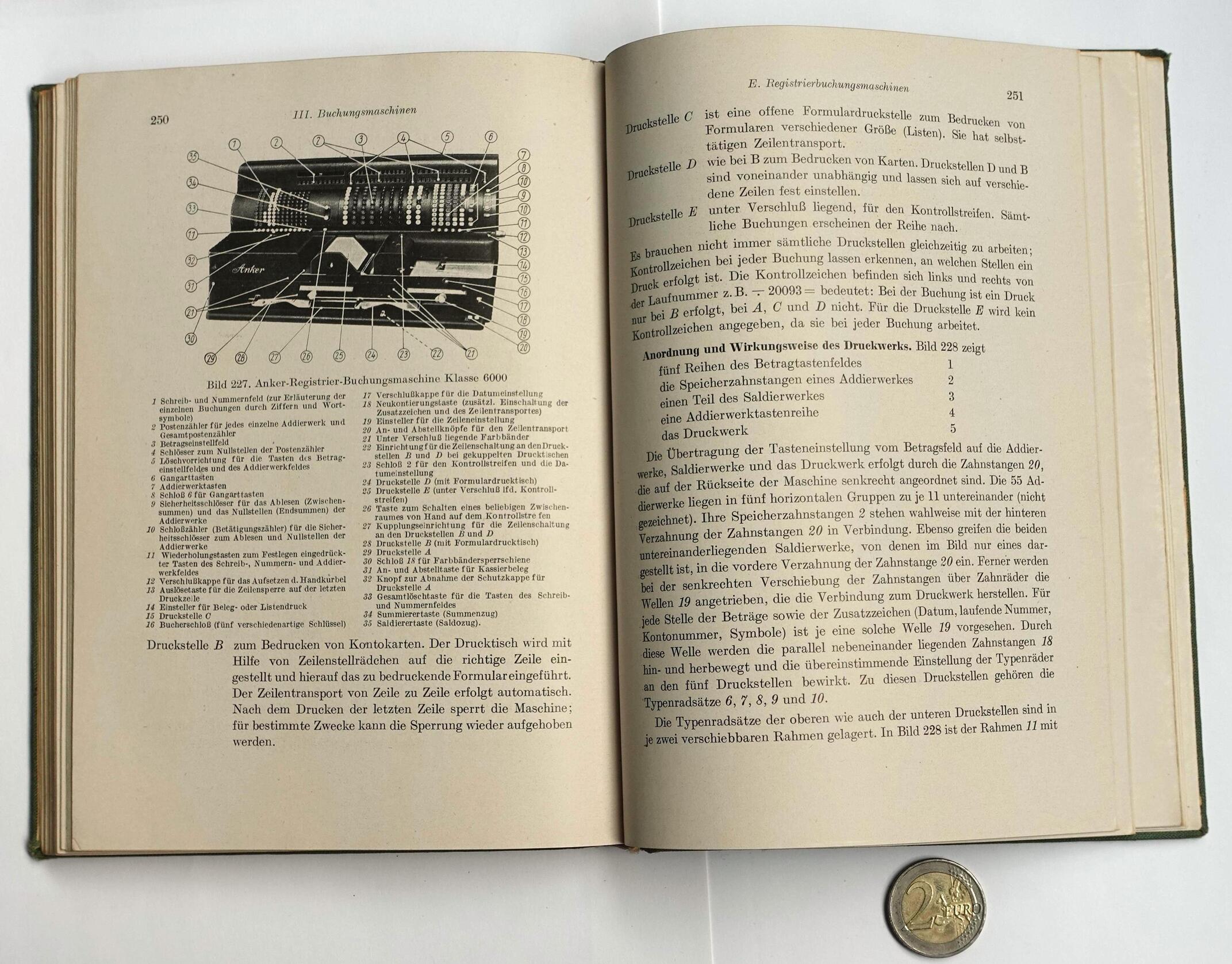
Büromaschinen W. Lind 1954
308 pages, hardcover, German
153mm × 212mm × 20mm
This is a revision of the 1940 book by Lind & Berger.
Berger had died in the meantime, so this is a solo work by Lind.
The first 125 text pages have an in-depth description of calculators and adding machines,
including some explanation of the various mechanisms with many illustrations. Typewriters
are then discussed similarly (74 pages), followed by bookkeeping machines including
punchcard systems (84 pages). The section on duplicating machines has been omitted in
this edition. There are 12 pages of adverts at the back.
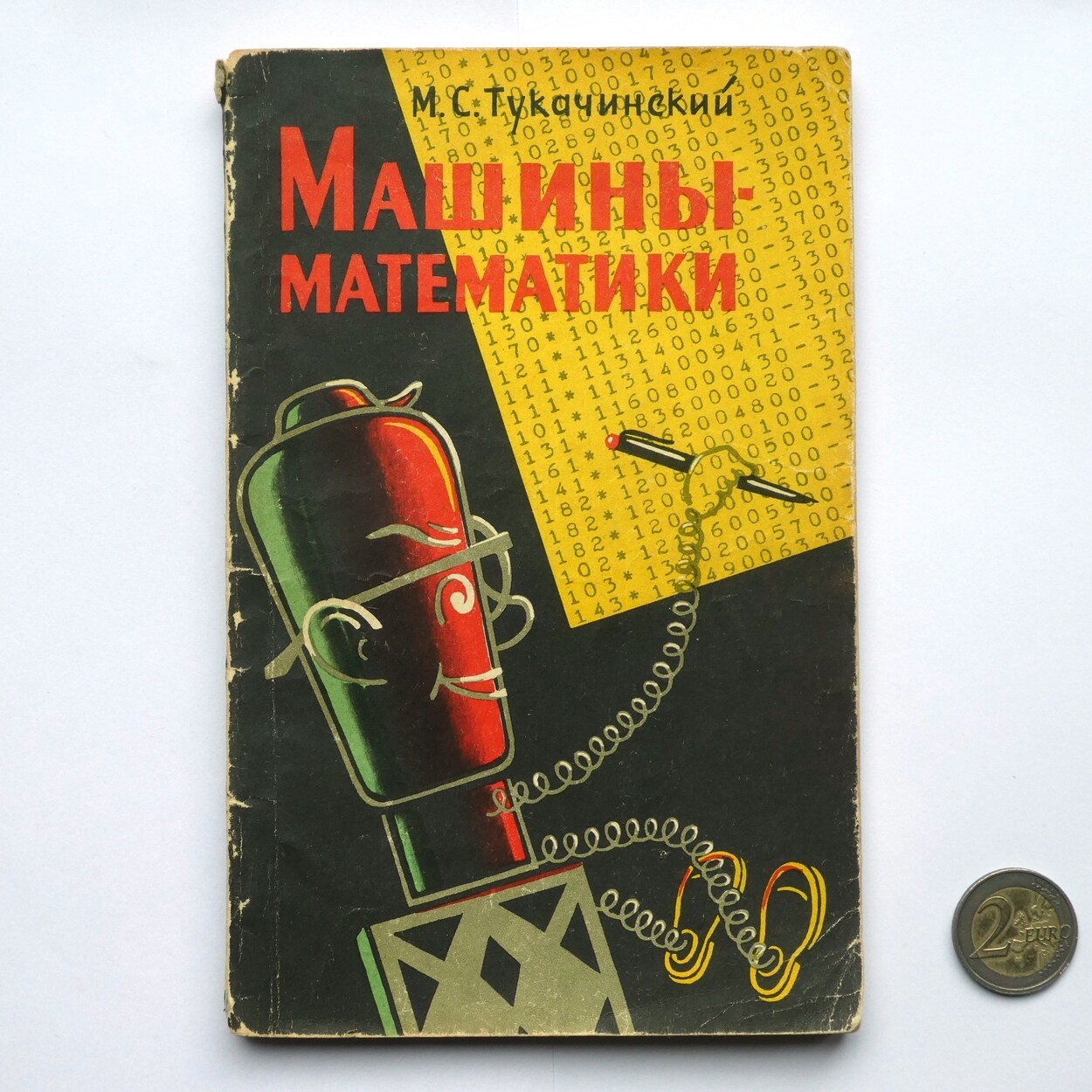
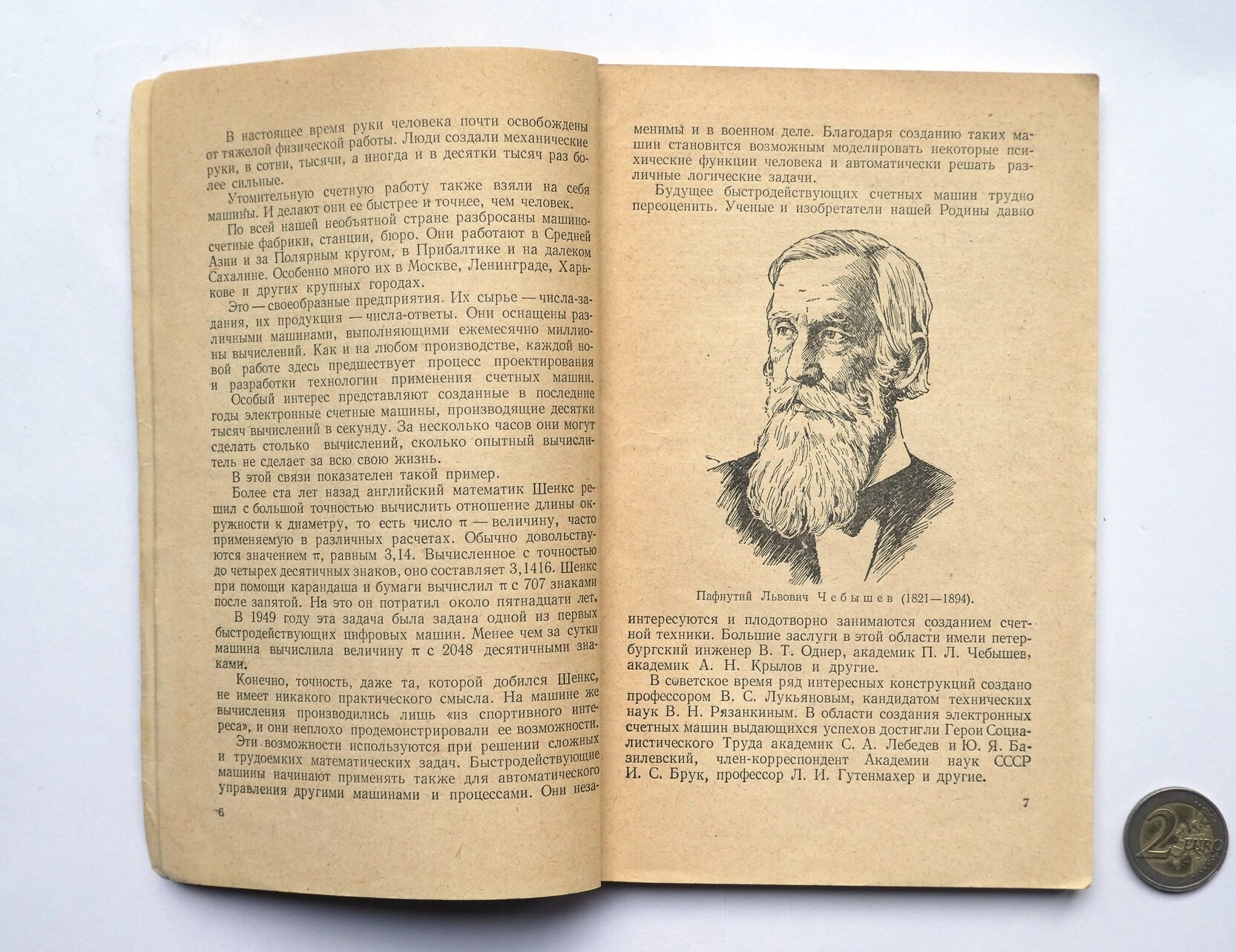
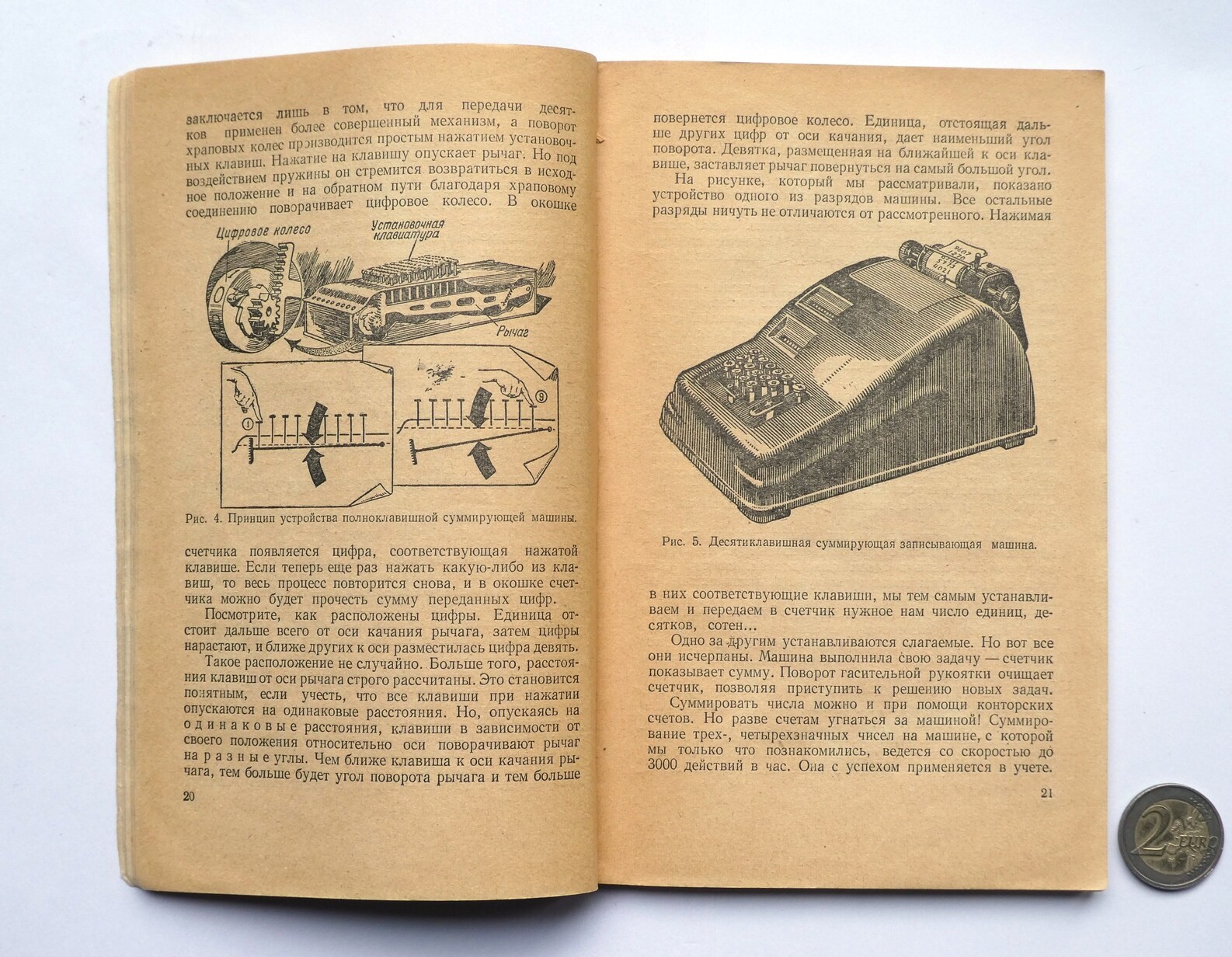
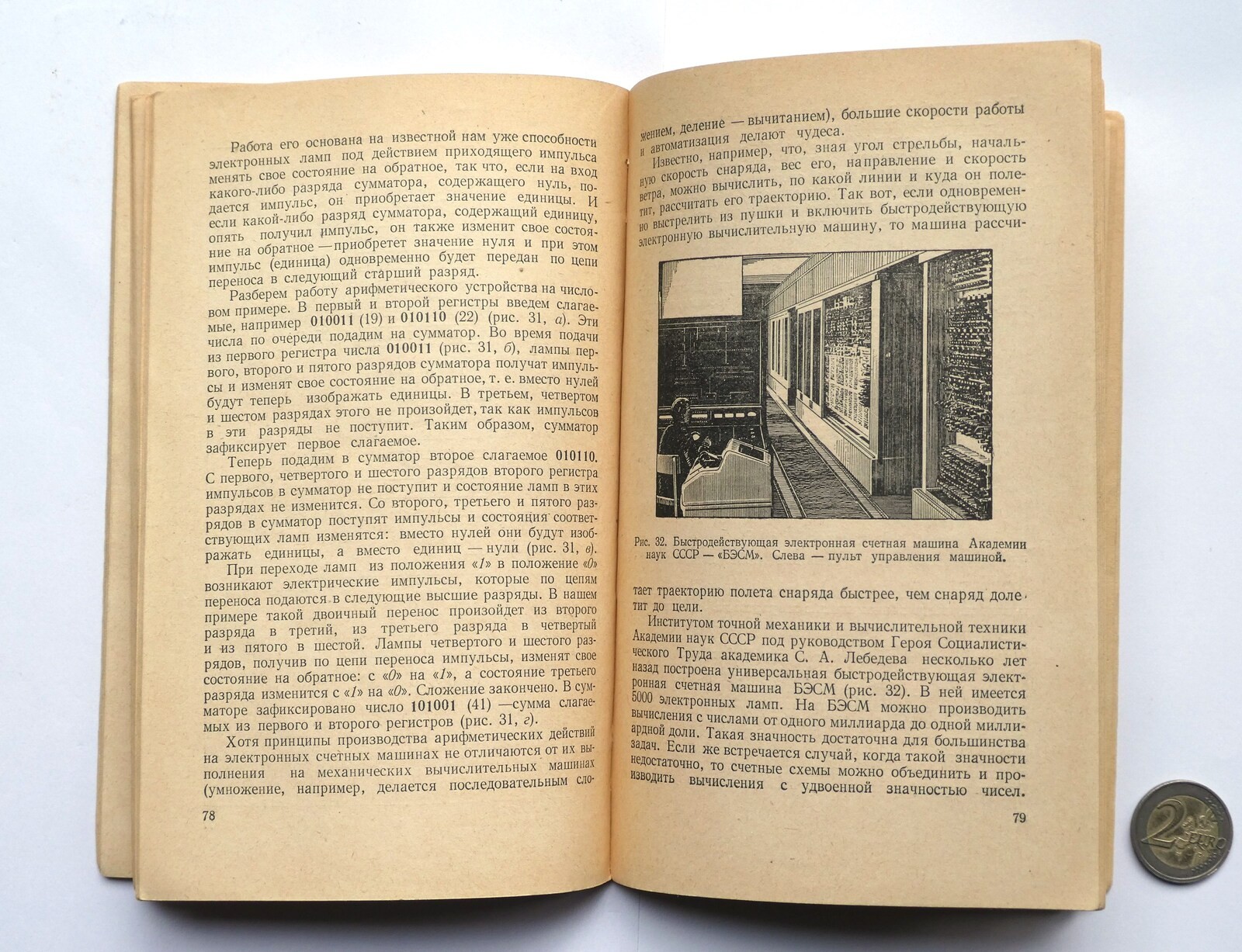
This is a Russian popular science book about calculating machines.
It starts off with the Russian father of the calculator, Pafnuty
Chebyshev. It includes descriptions of several types of mechanism, from
pinwheel to Mercedes-Euklid, and then leads on to electronic computers.
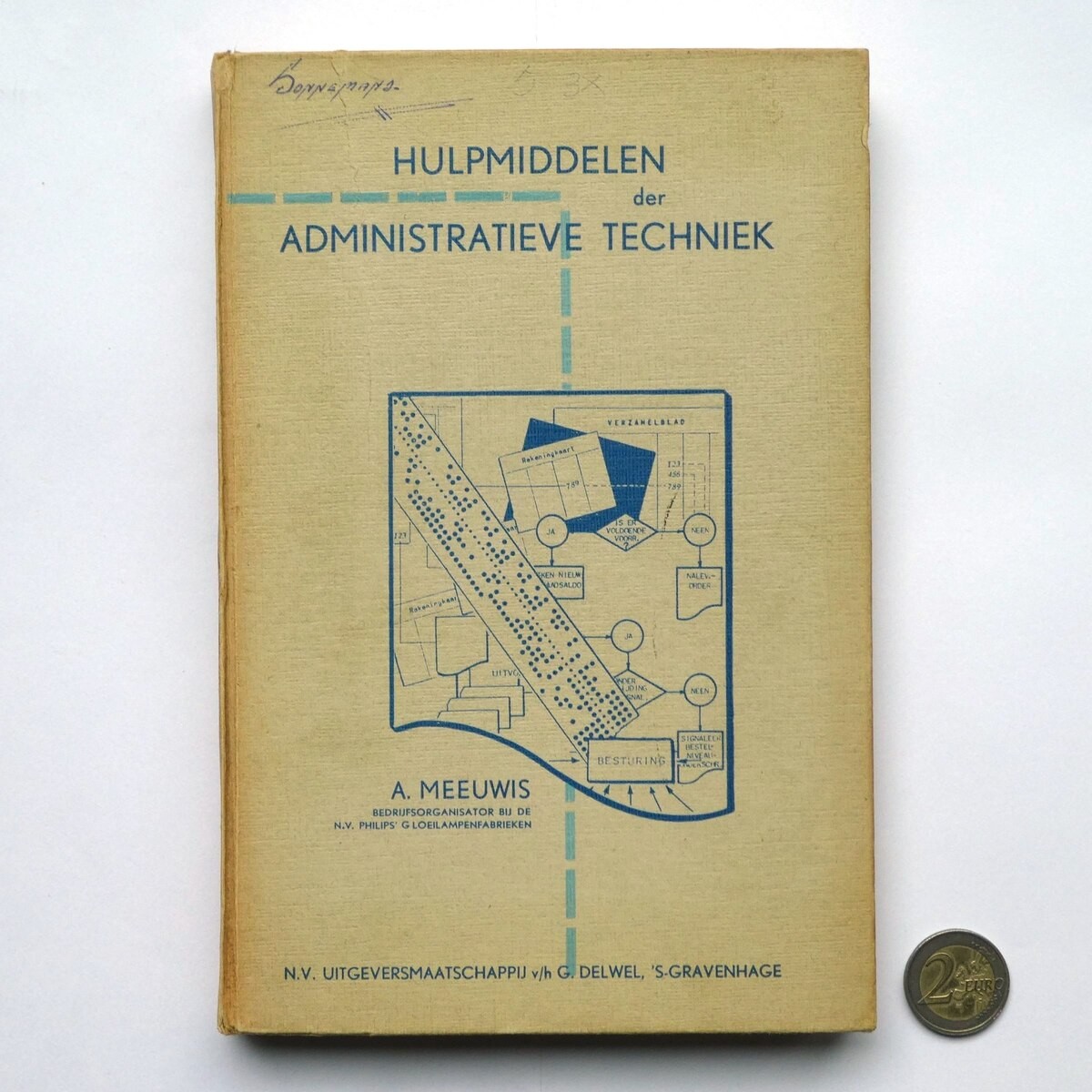
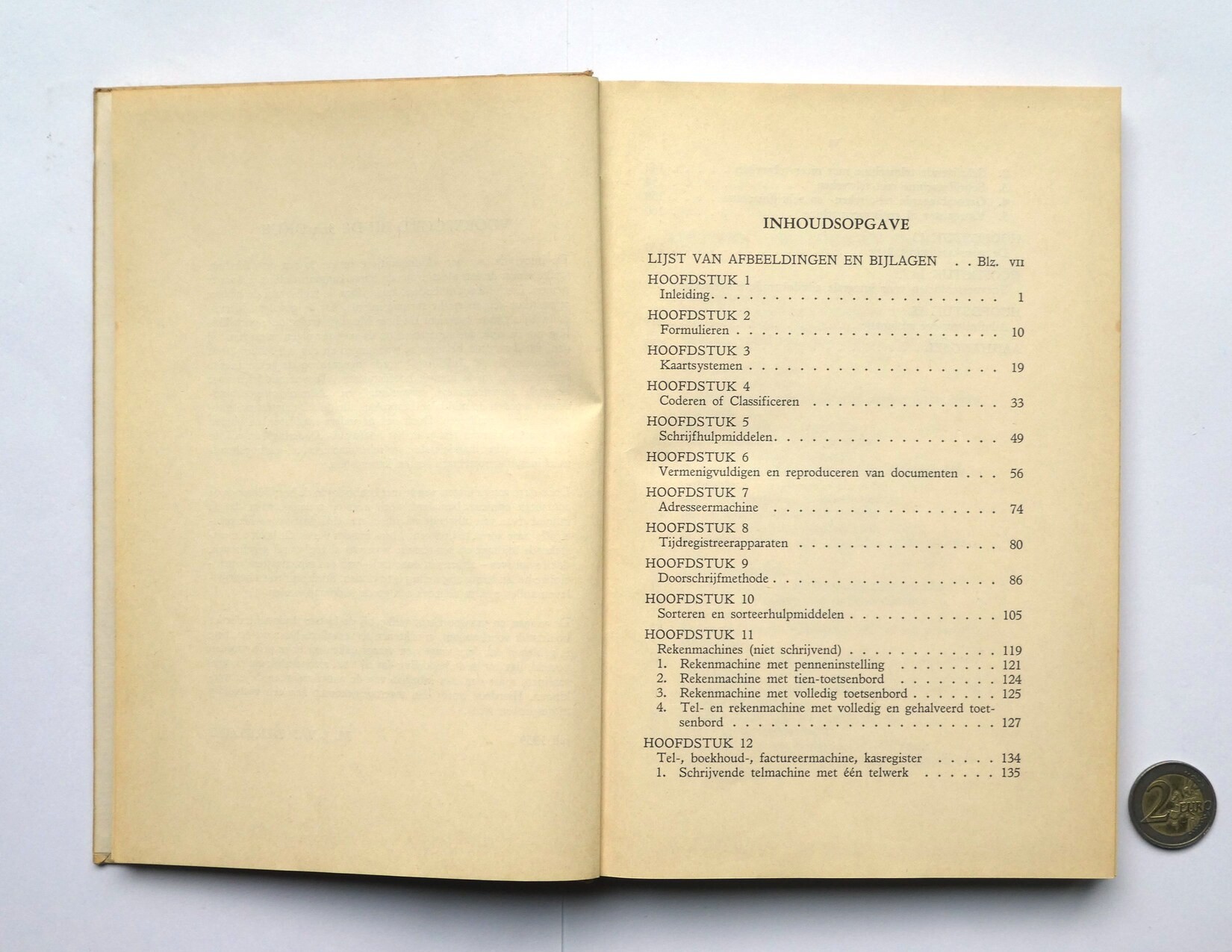
Hulpmiddelen der Administratieve Techniek A. Meeuwis 1959
298 pages, hardcover, Dutch
155mm × 232mm × 18mm
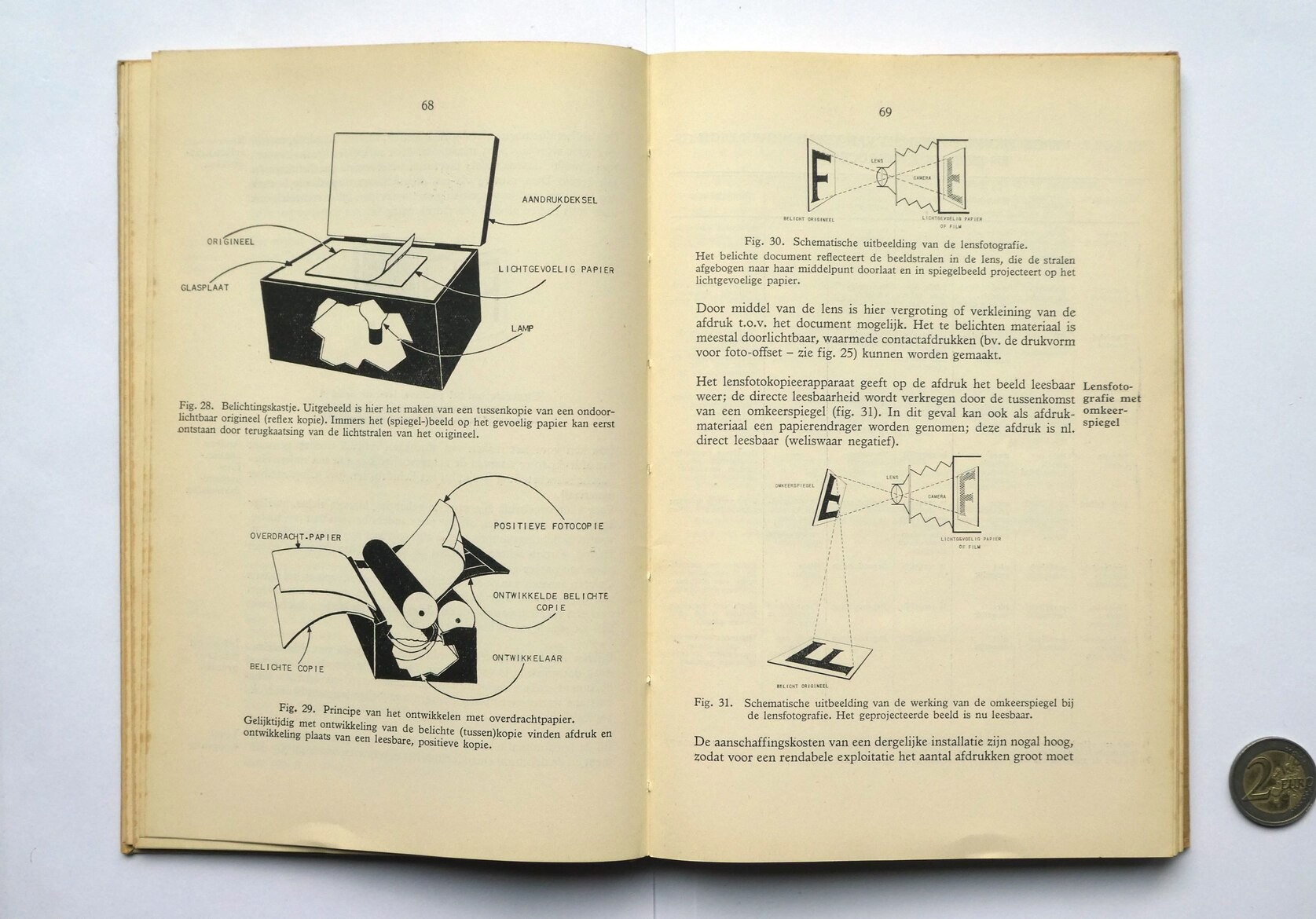
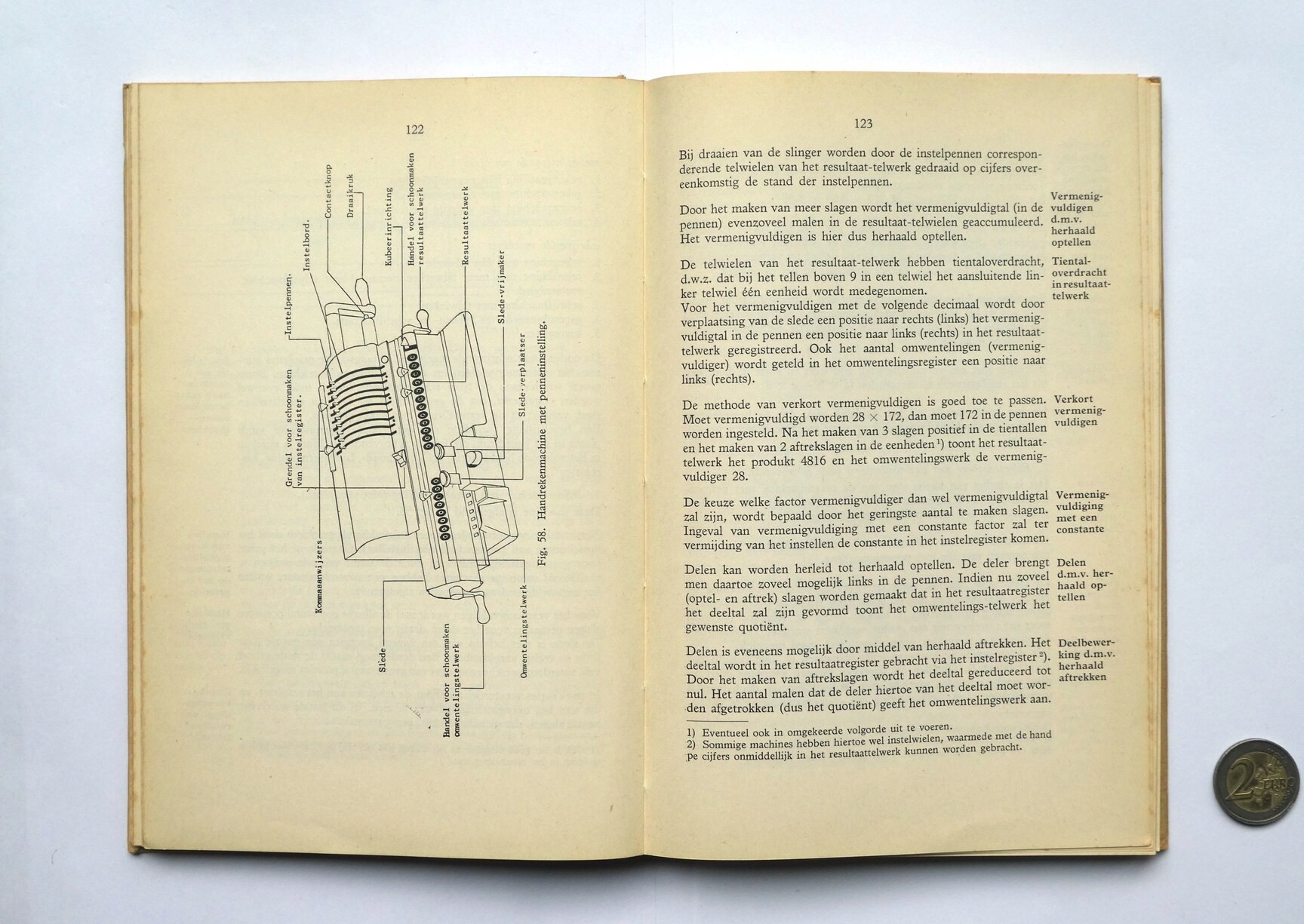
This book discusses administrative processes and the many tools to
expedite them. There is a short section on calculators which explains
and illustrates various types of calculator without explicitly
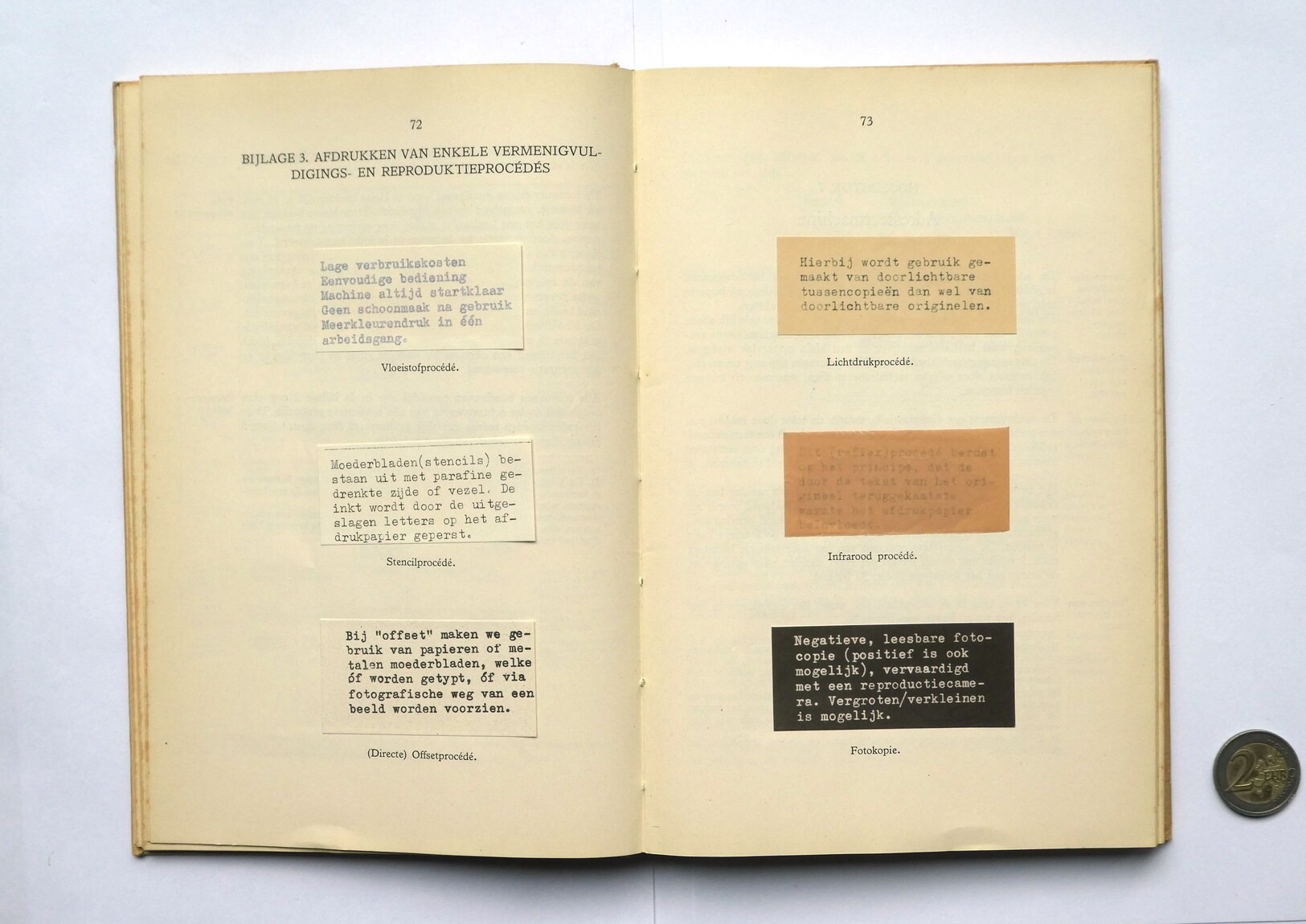
mentioning specific brands. On one set of pages there are examples of
different print reproduction methods glued in. I have not found any
copyright year, but other sources claim it was published in 1959.
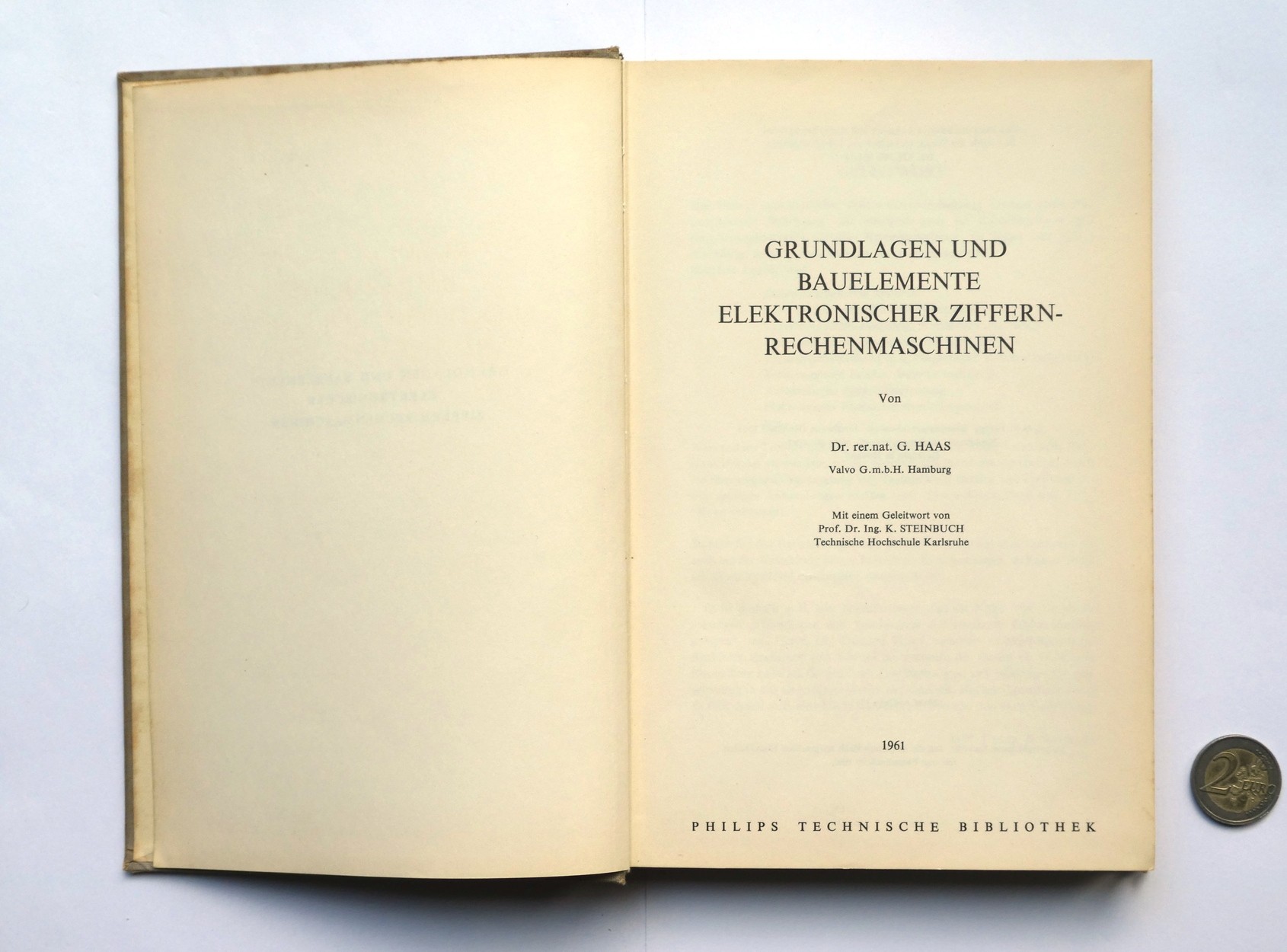
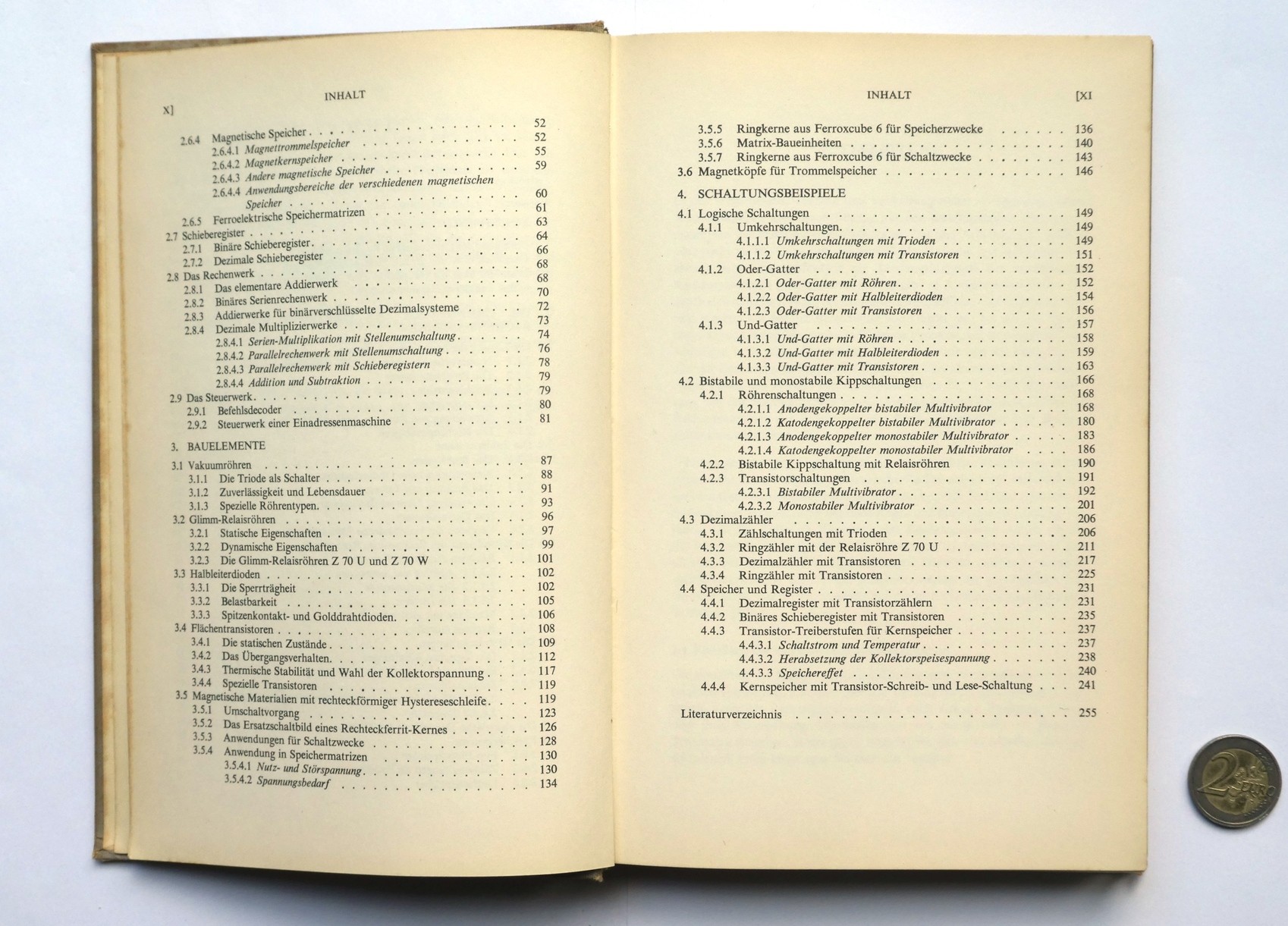
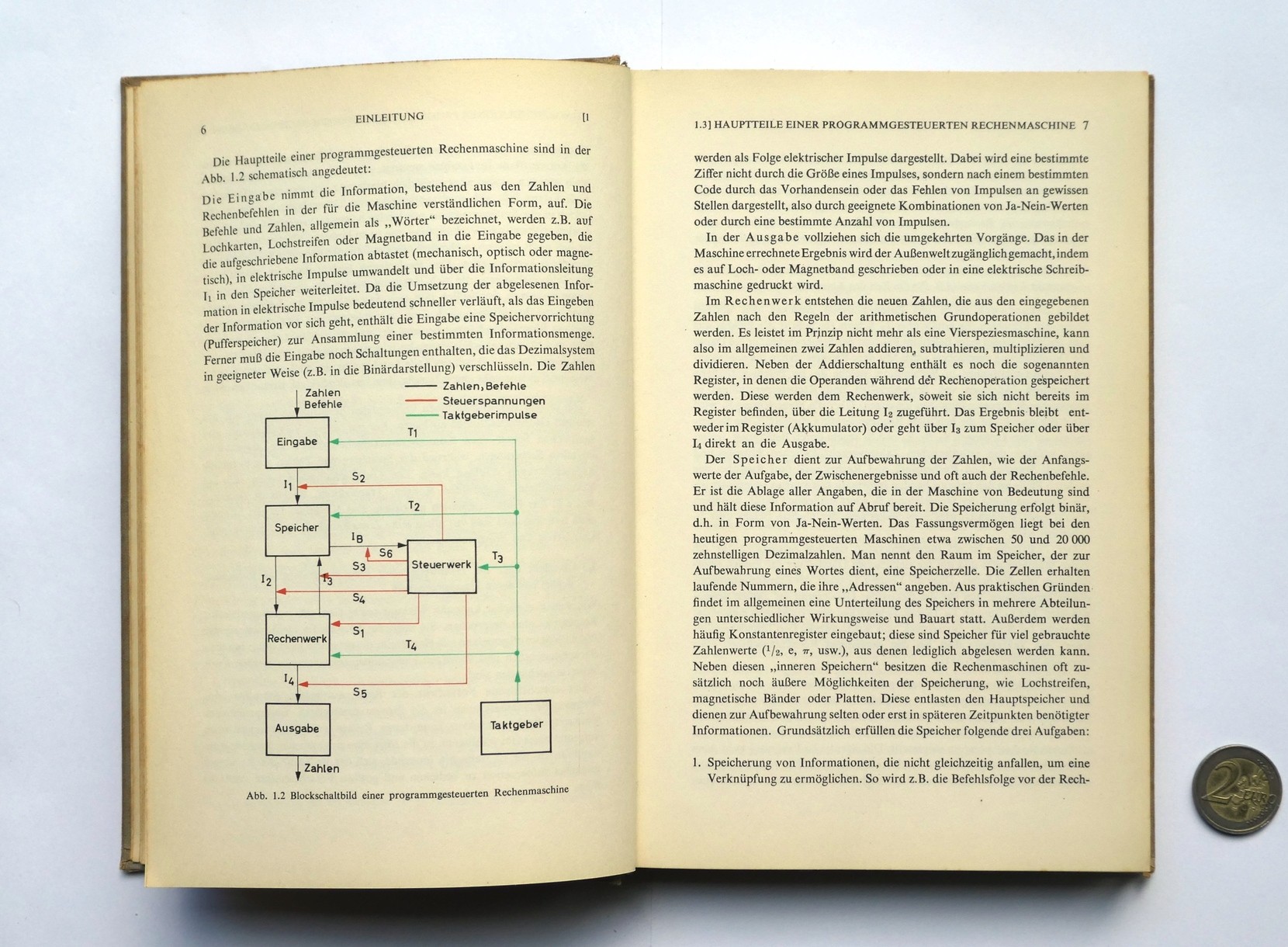
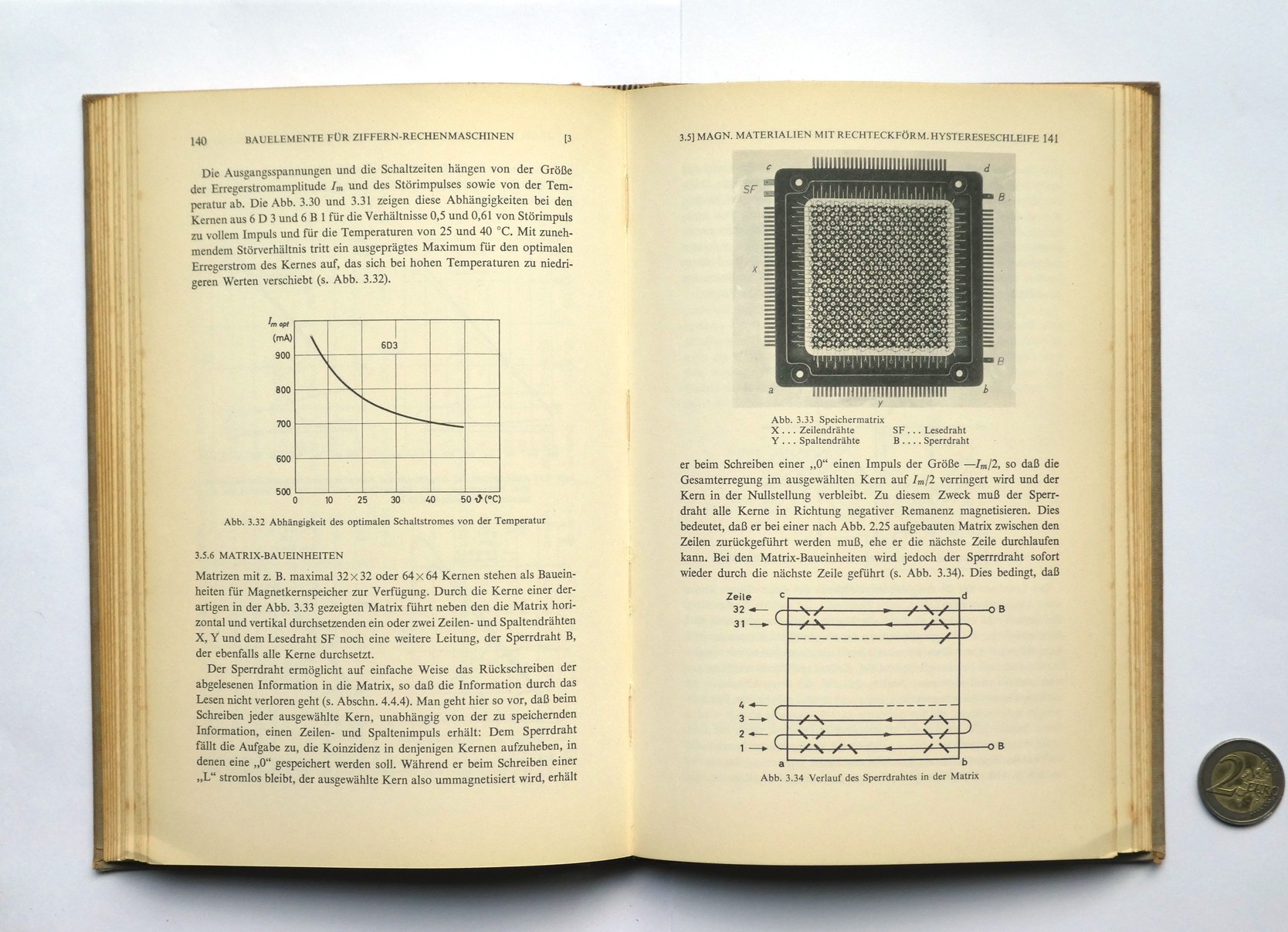
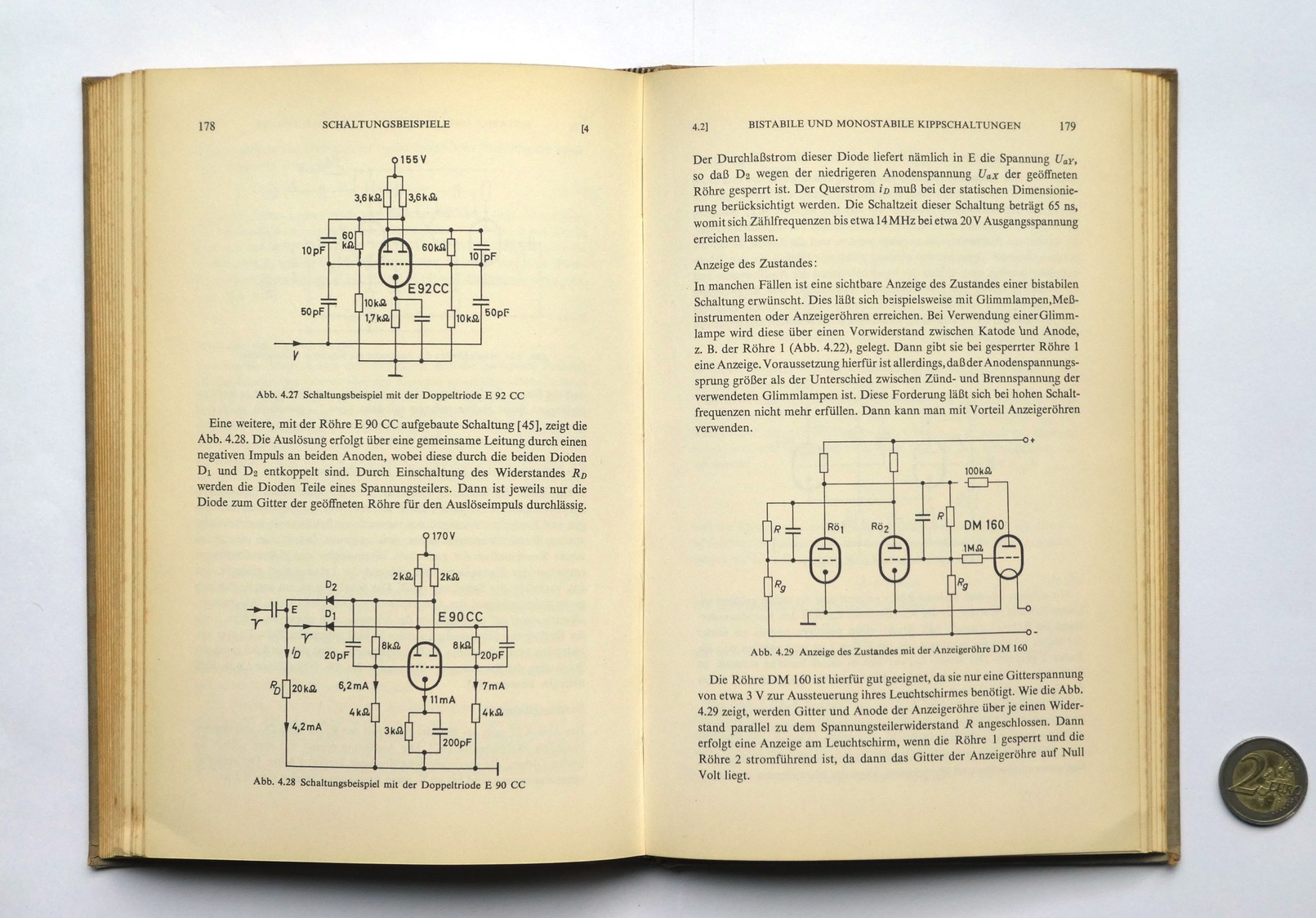
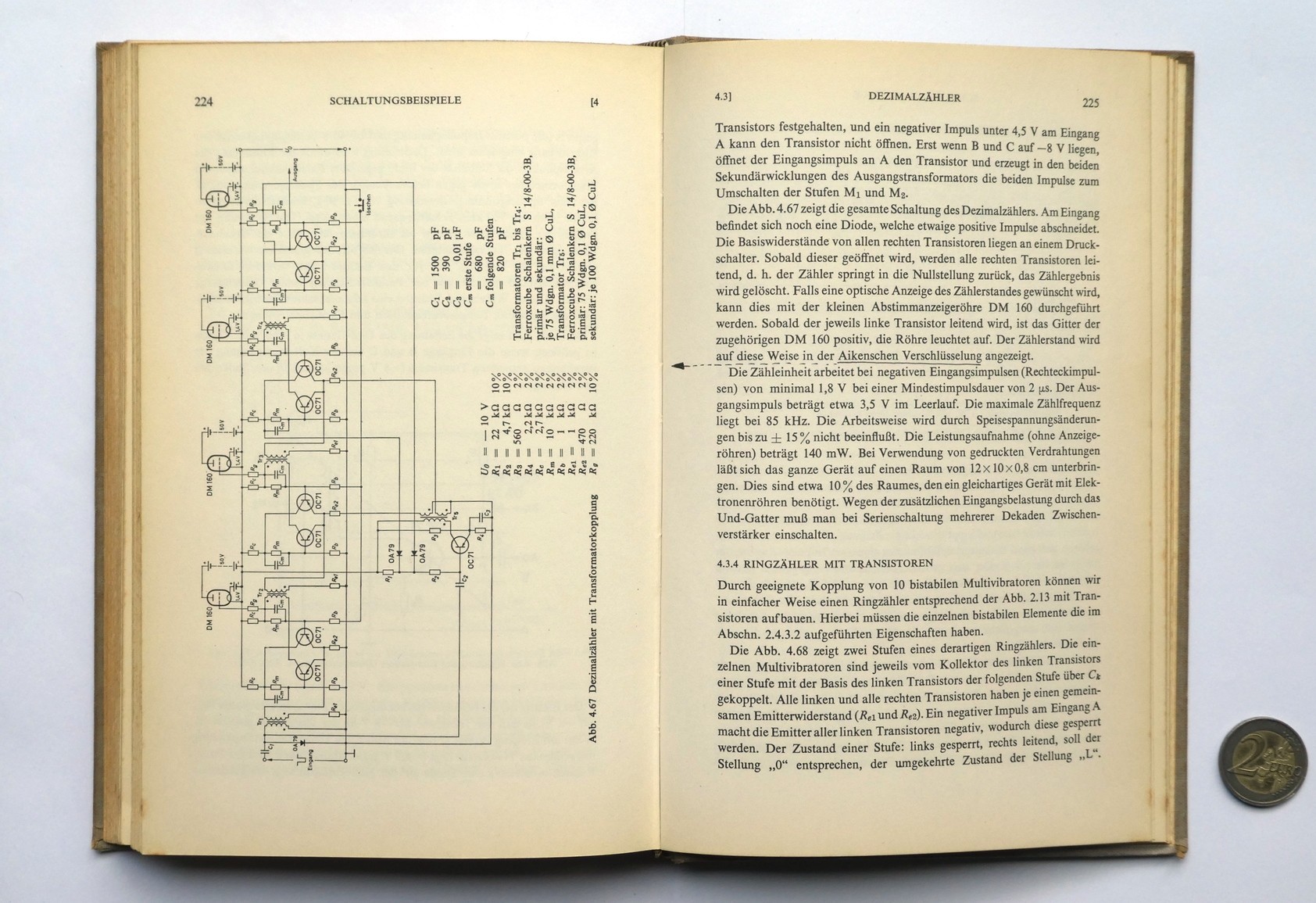
Grundlagen und Bauelemente elektronischer Ziffernrechenmaschinen G. Haas 1961
269 pages, hardcover, German
155mm × 232mm × 24mm
This book describes in detail the components and workings of
electronic calculators and computers. Unfortunately it does
not describe the history, so makes no mention of mechanical
calculation.
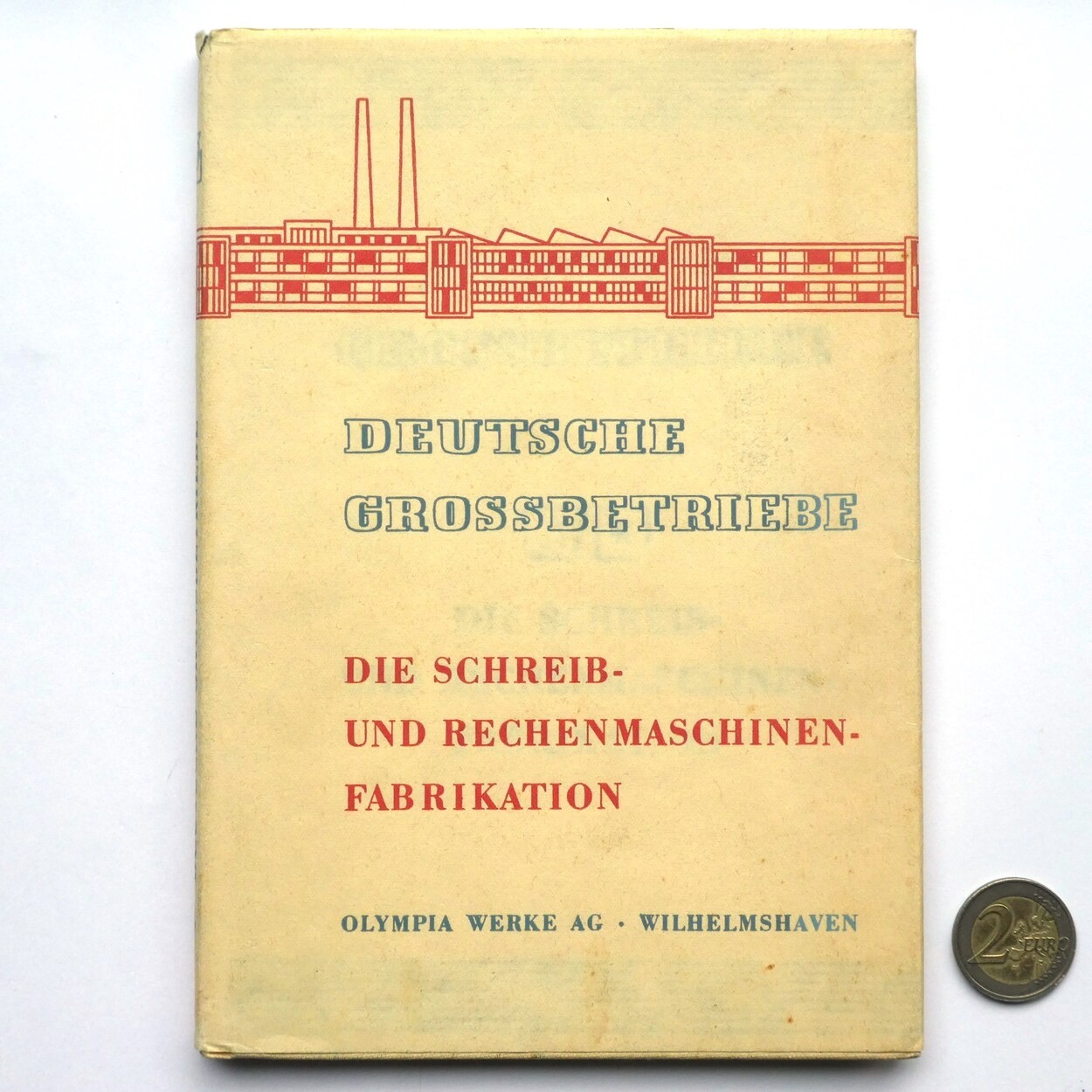
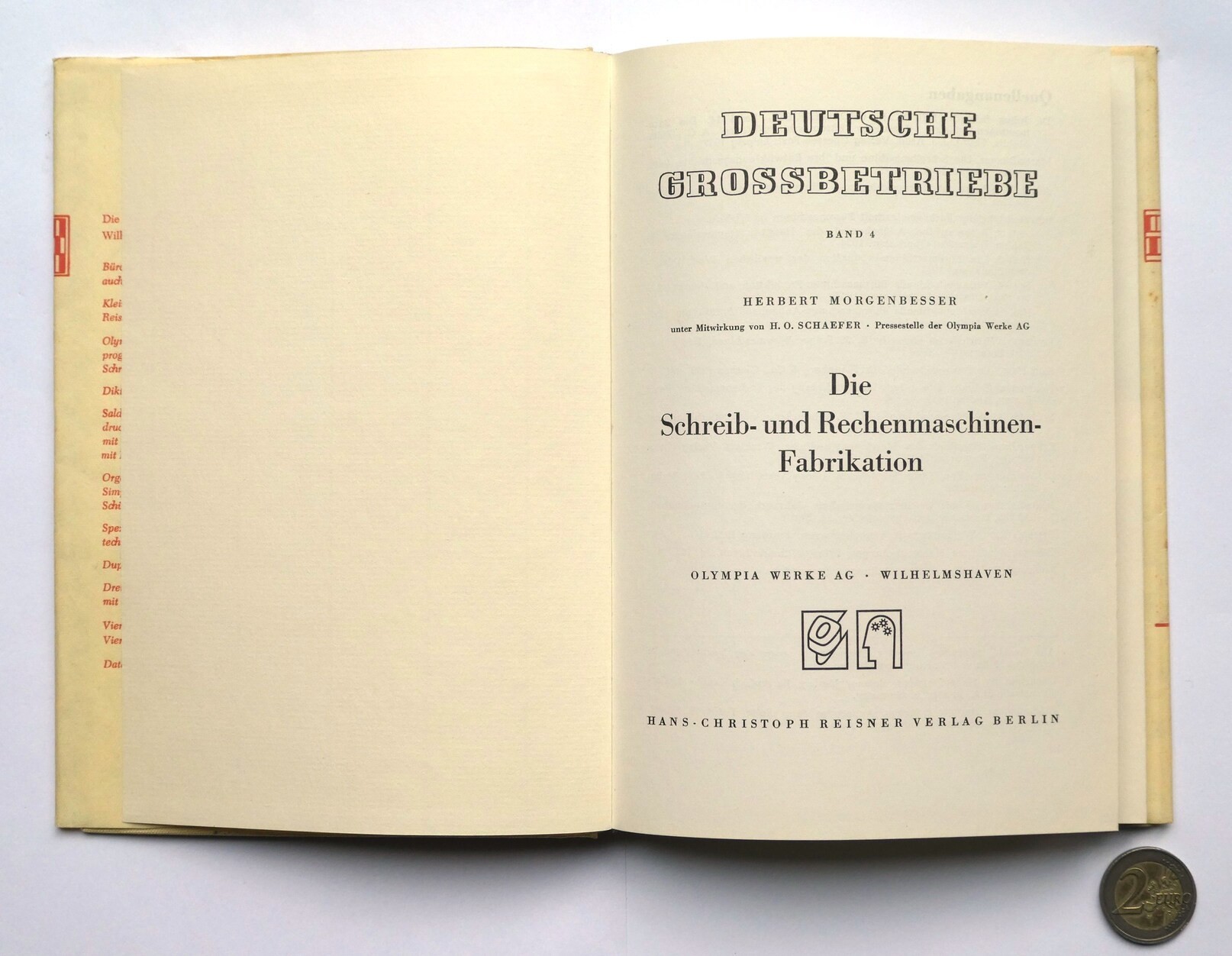
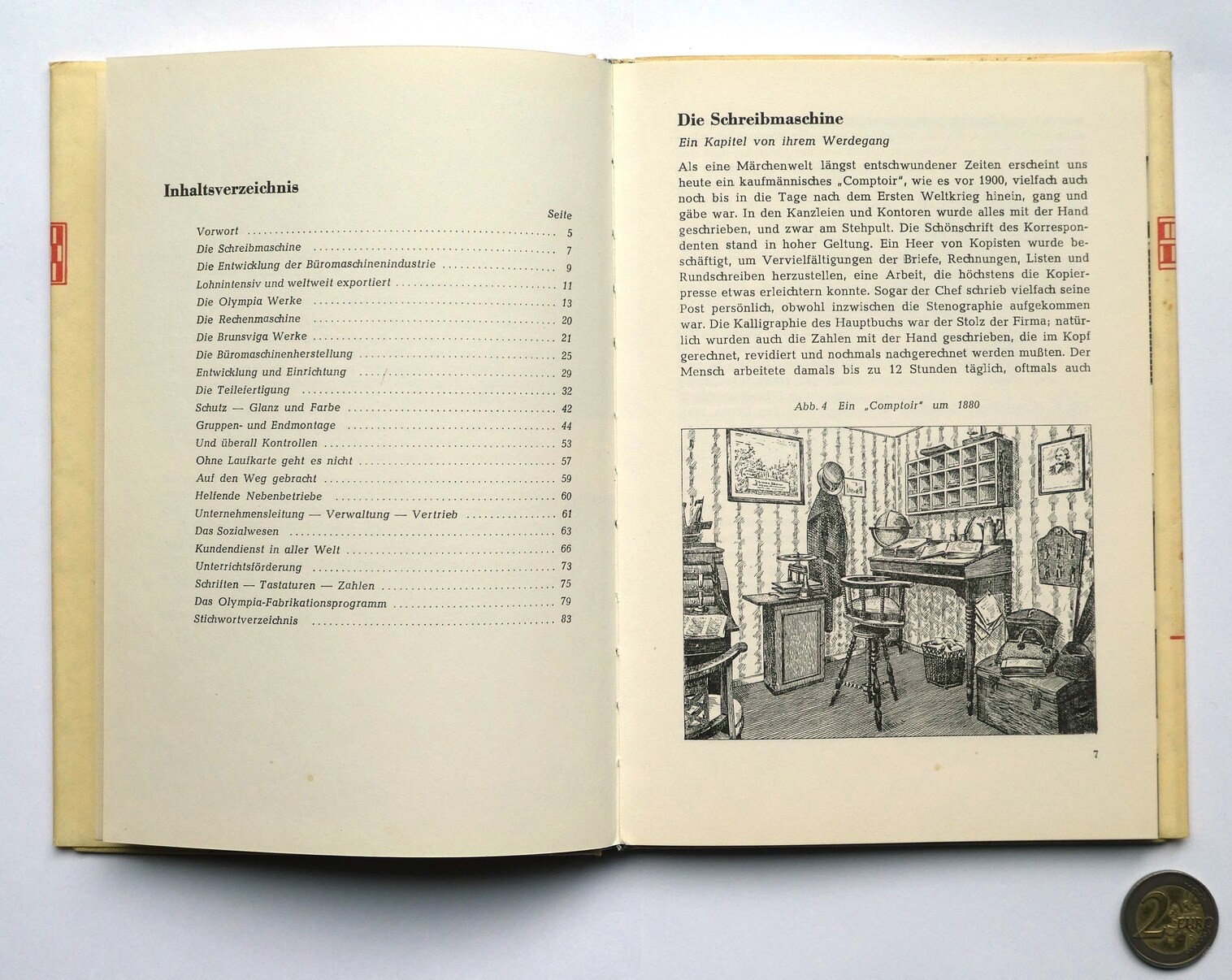
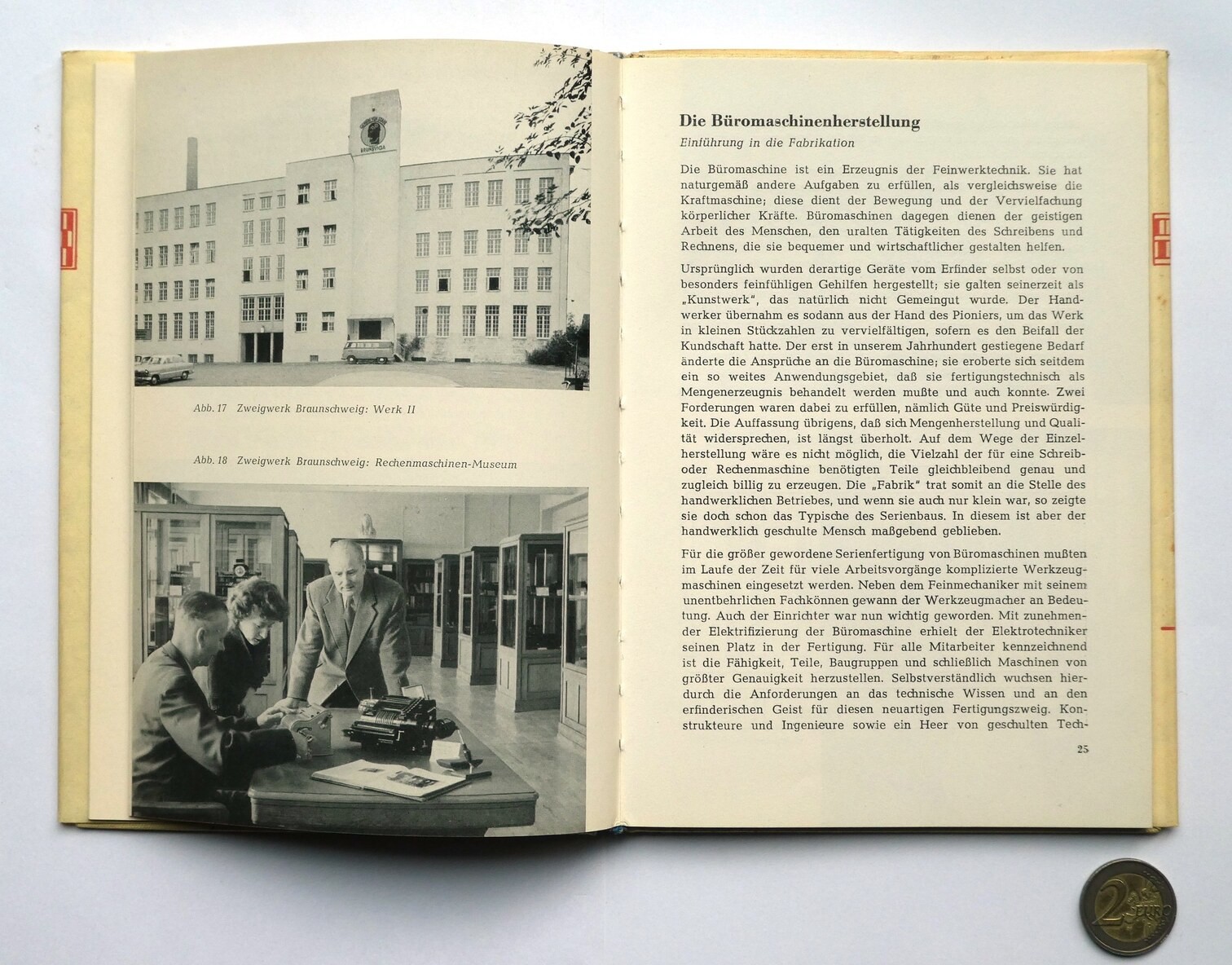
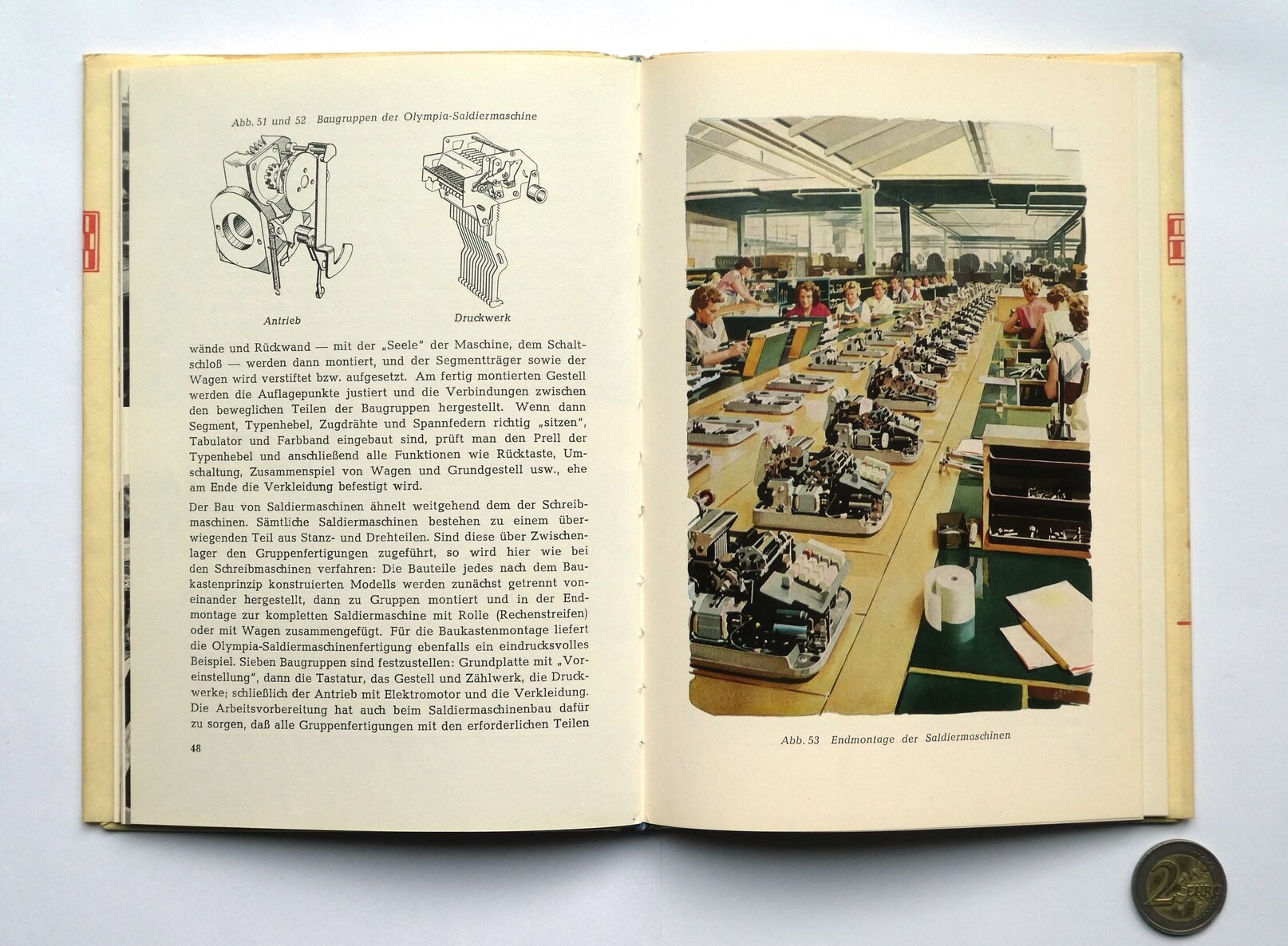
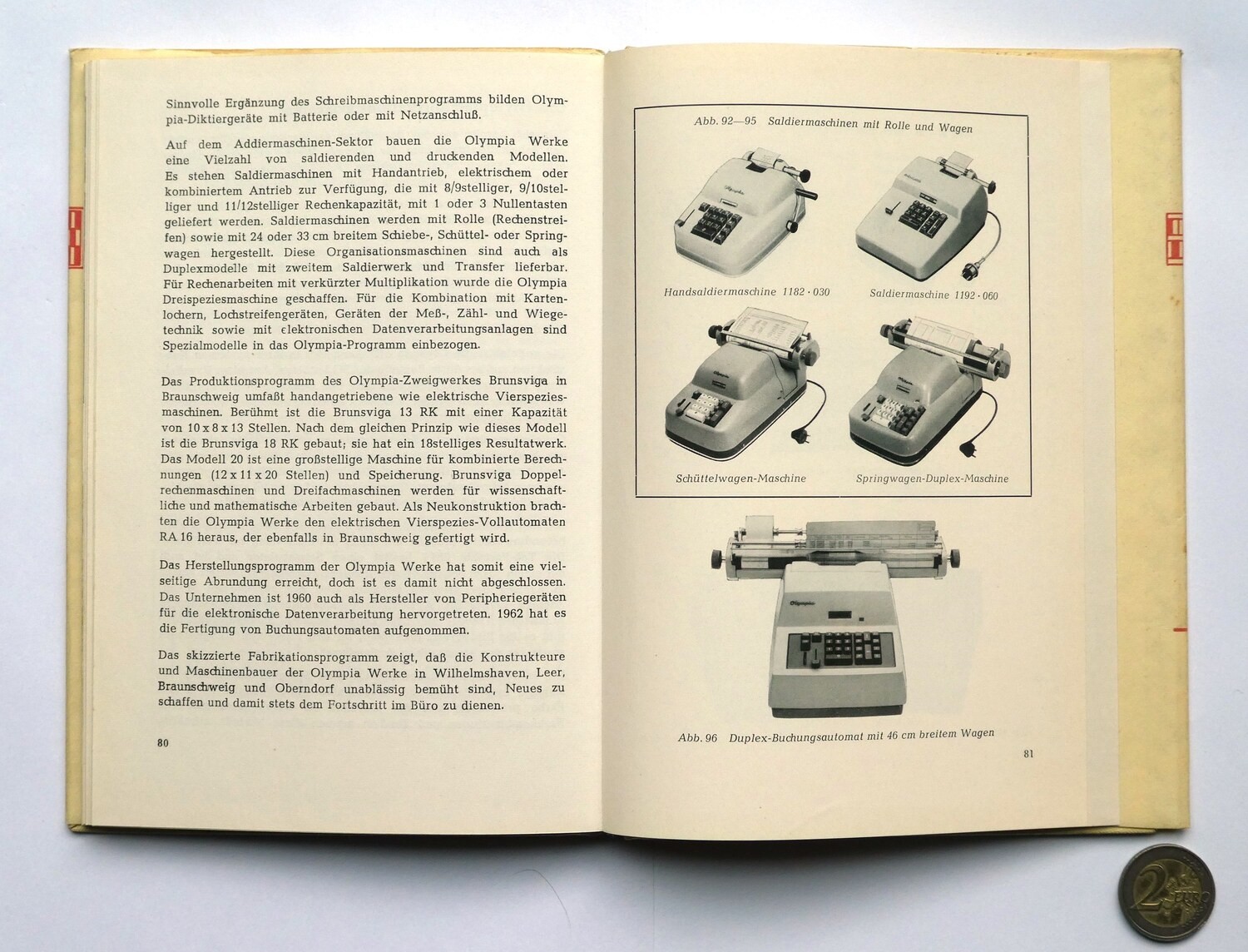
Deutsche Grossbetriebe 4 - Die Schreib- und Rechenmaschinenfabrikation Olympia Werke AG, Wilhelmshaven
Herbert Morgenbesser 1962
84 pages, hardcover, German
148mm × 210mm × 10mm
This book ostensibly covers the history of the
typewriter and calculator industry in Germany, but it is basically
only about Olympia and Brunsviga. It contains many photos from
the Olympia production line.
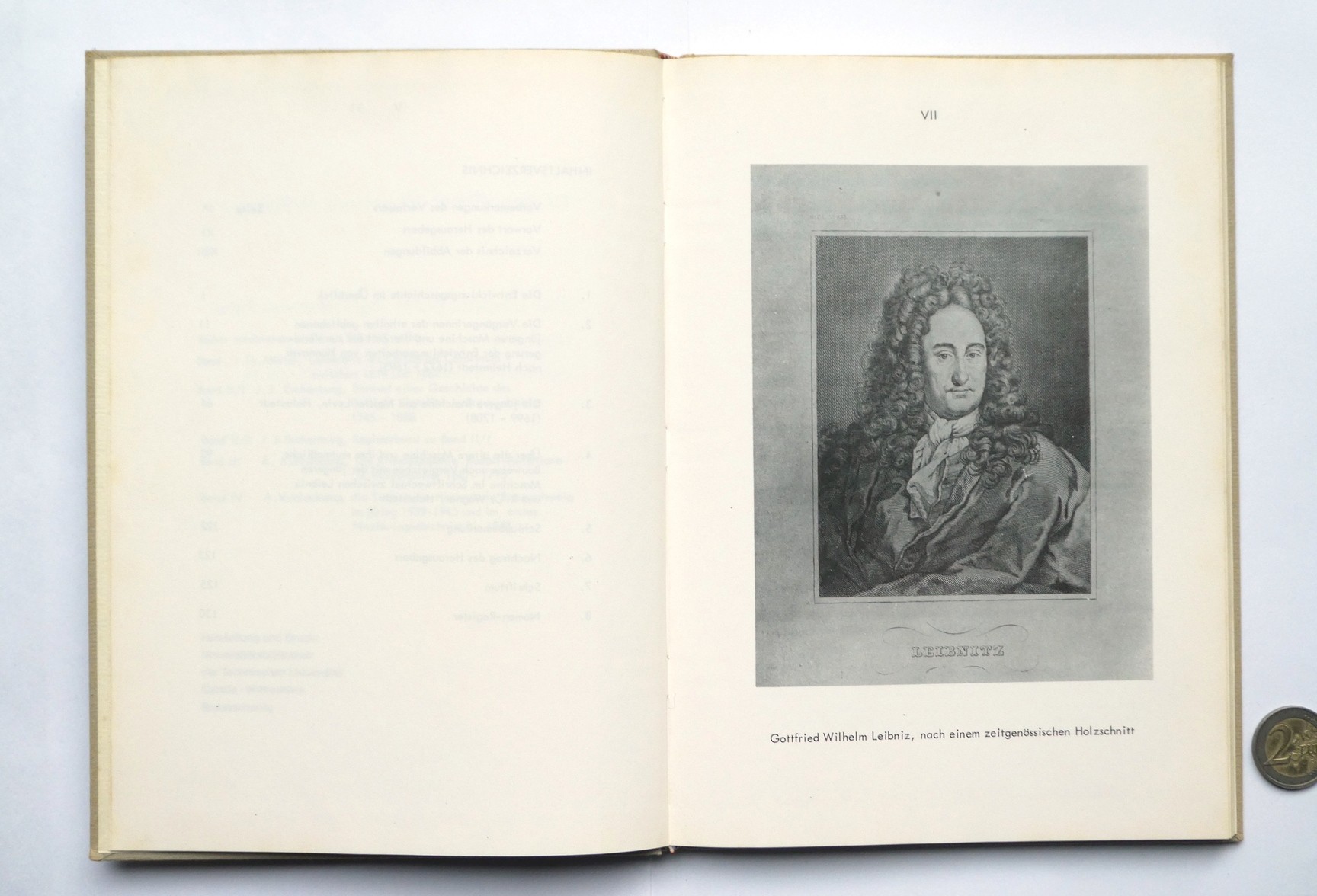
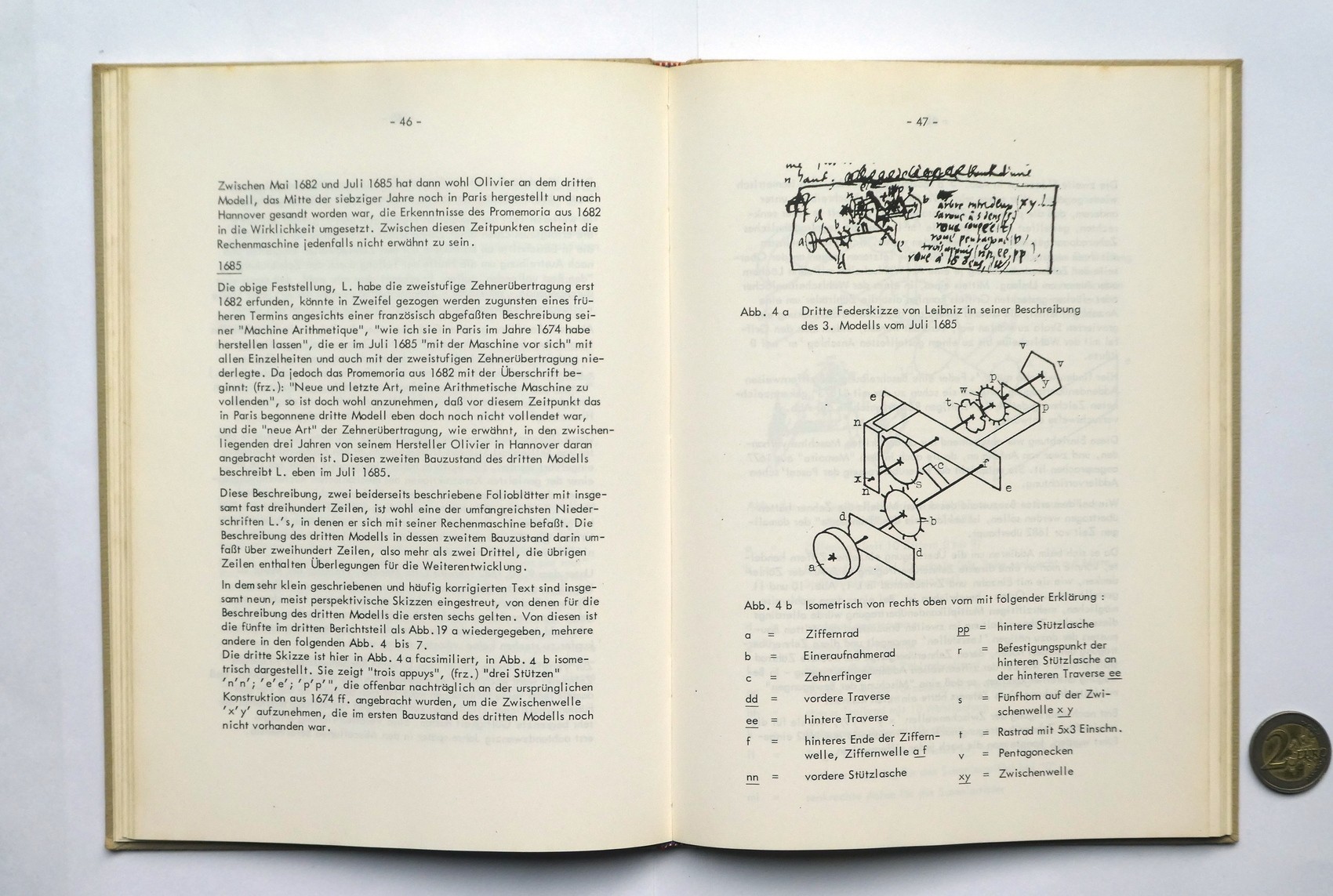
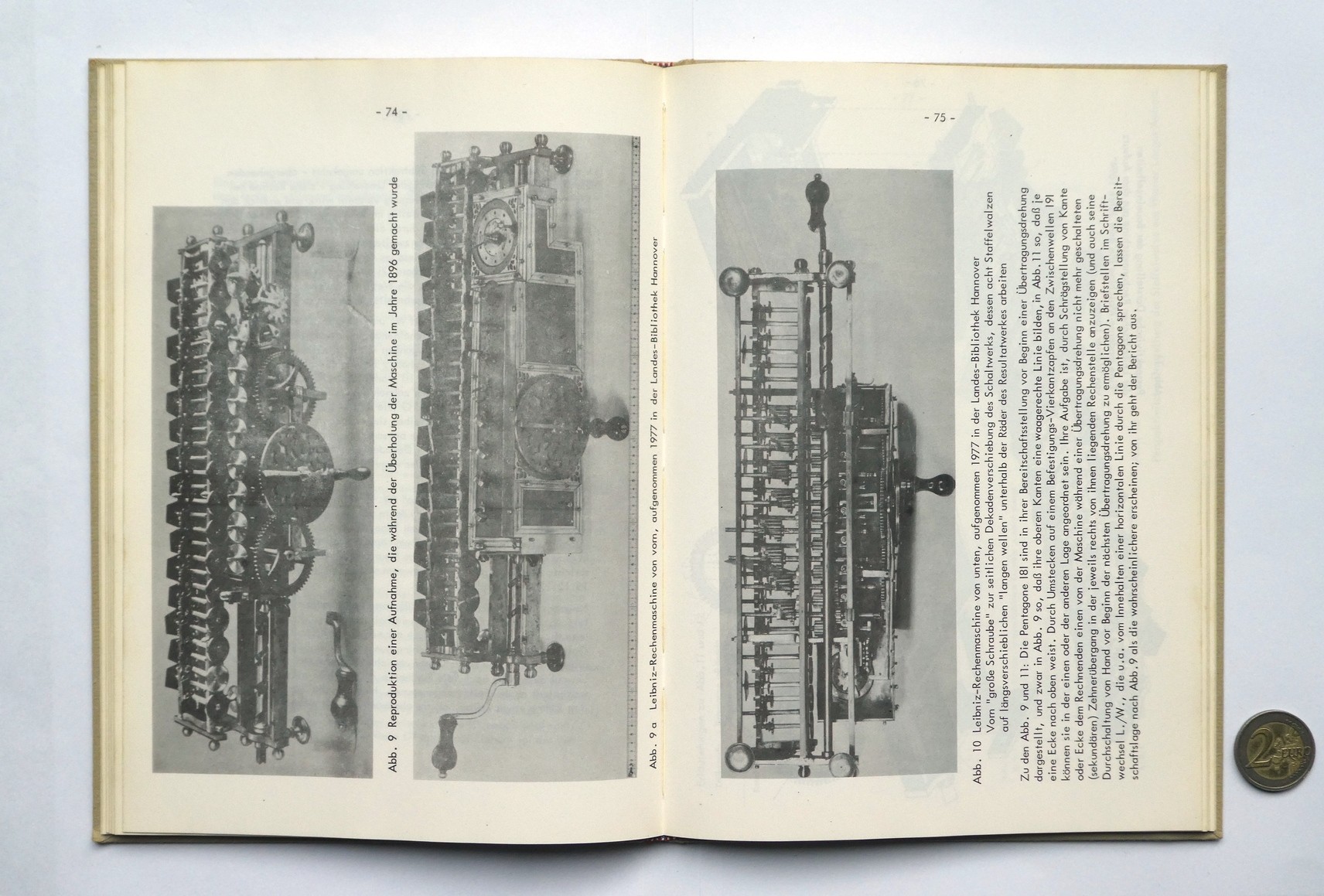
Die Leibniz'sche Rechenmaschine und die Julius-Universität in Helmstedt Ernst-Eberard Wilberg 1977
148 pages, hardcover, German
180mm × 245mm × 11mm
In-depth description of the stepped reckoner that Gottfried Wilhelm
Leibniz devised.
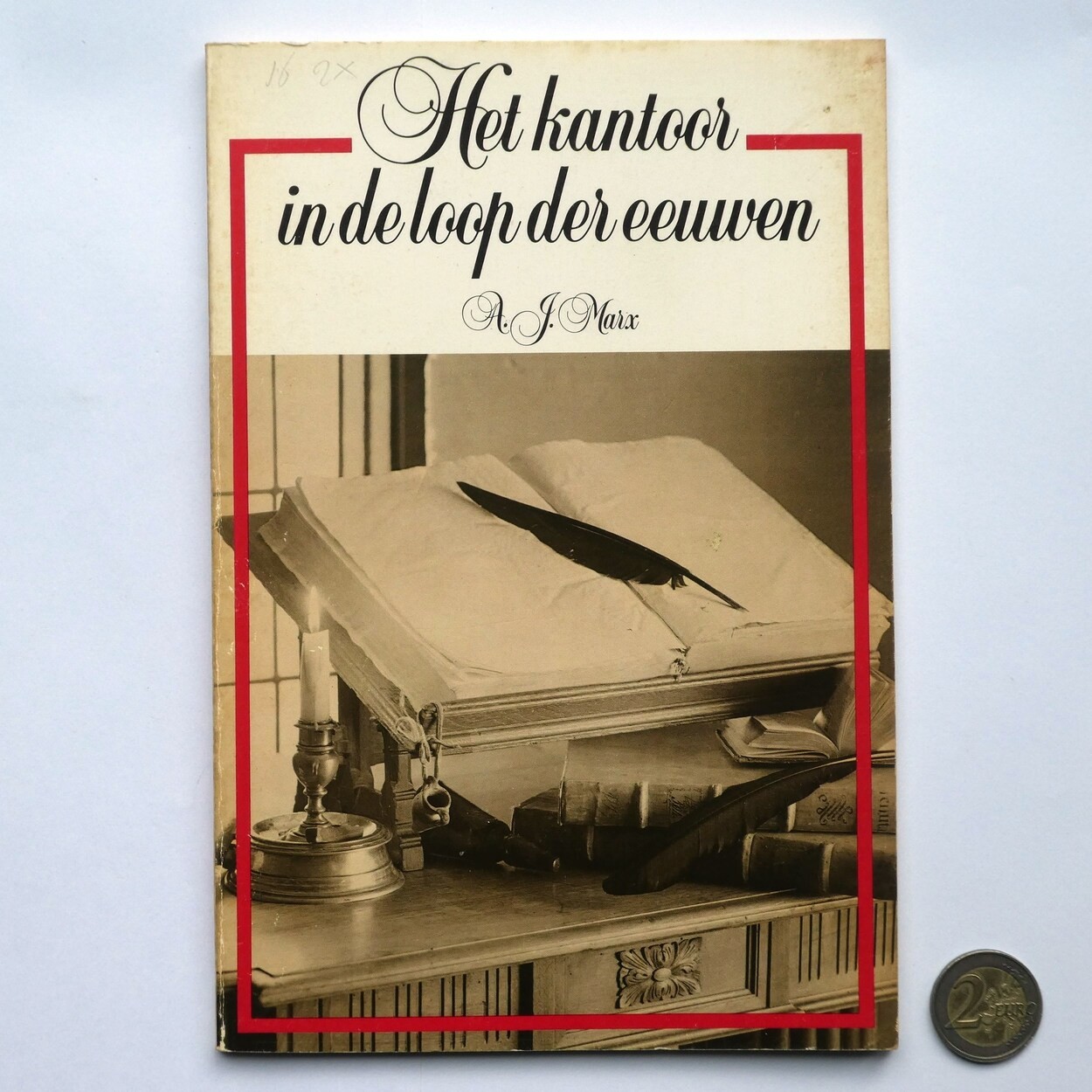
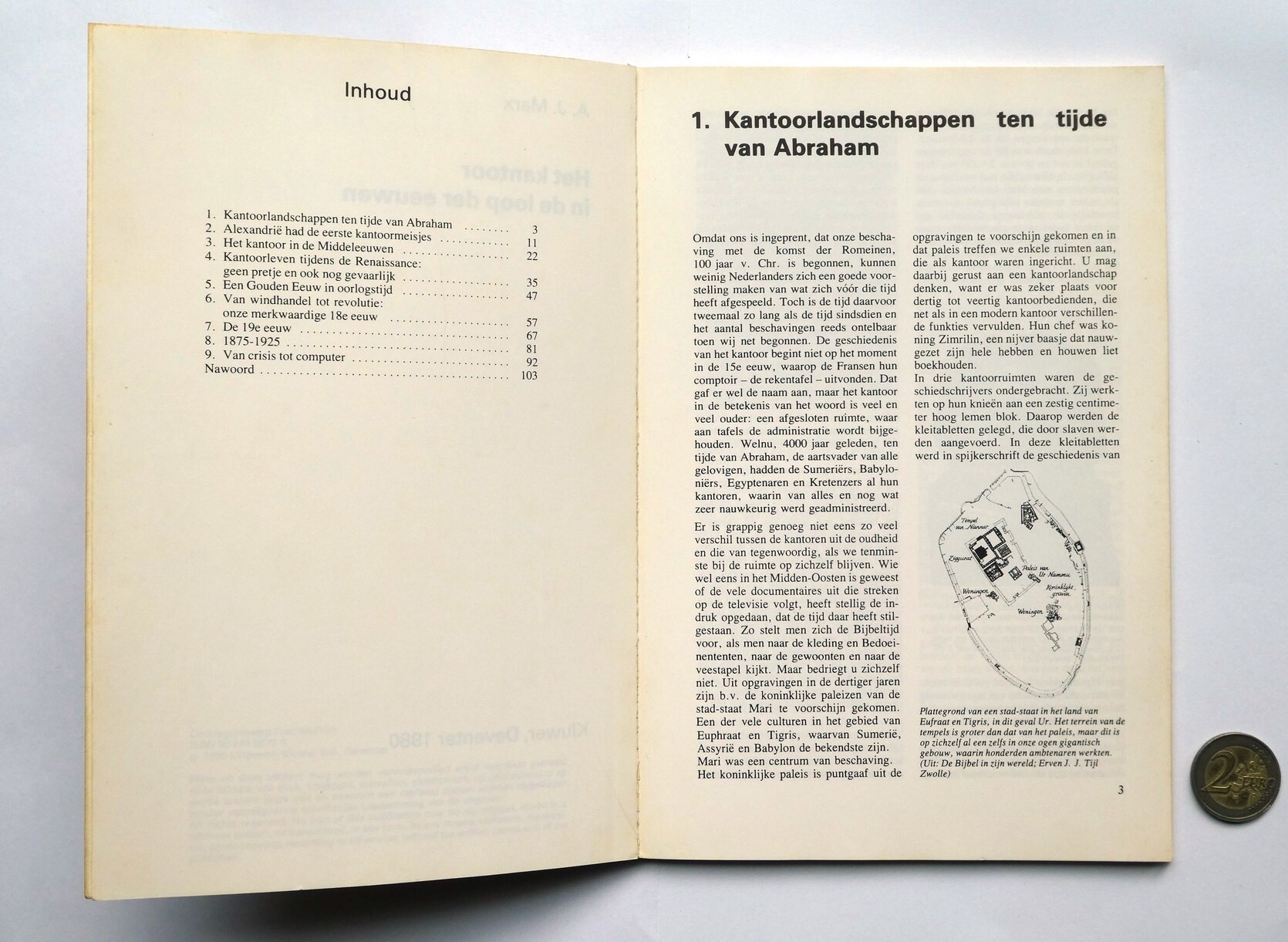
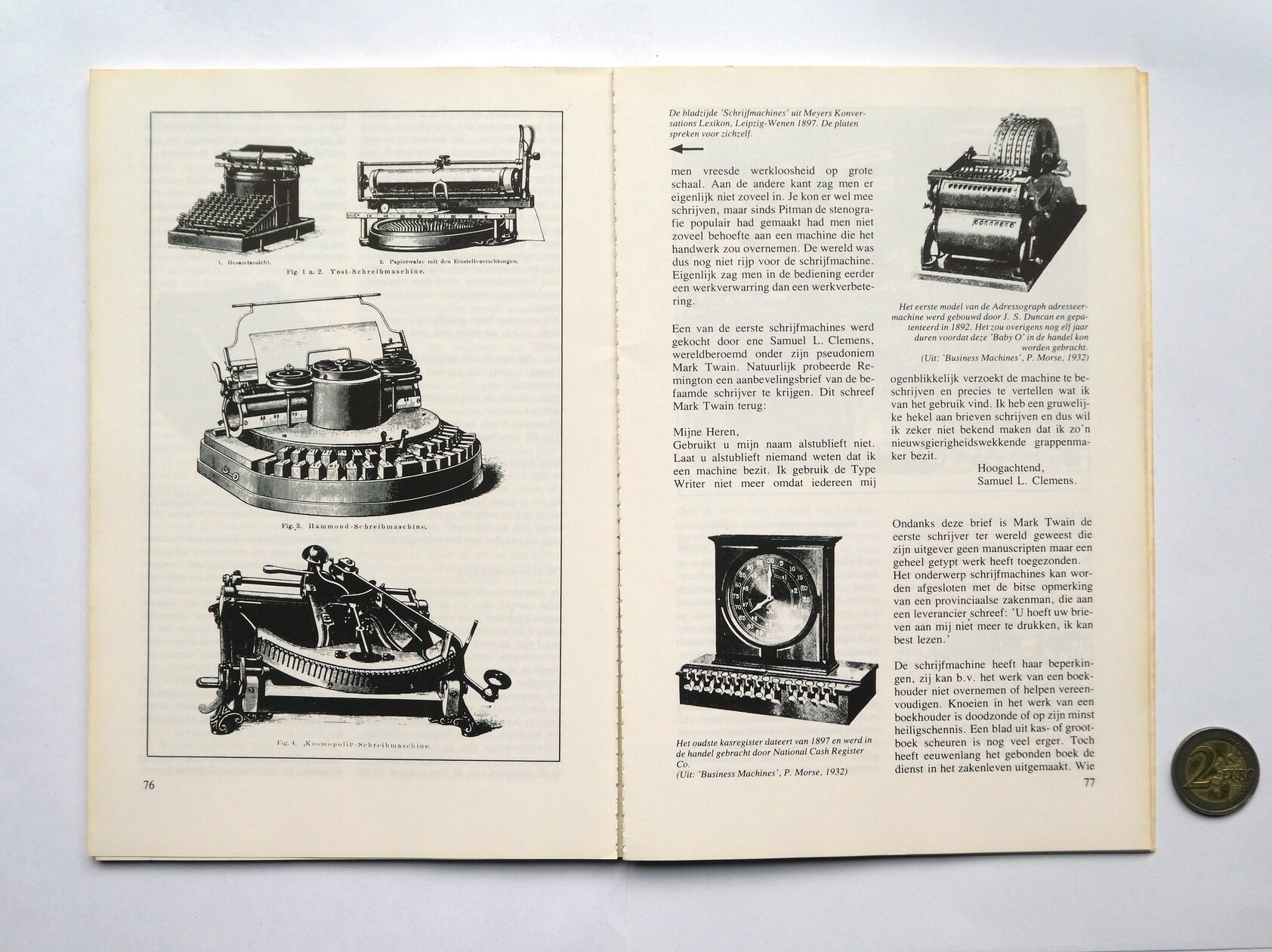
Het kantoor in de loop der eeuwen A. J. Marx 1980
104 pages, paperback, Dutch
156mm × 231mm × 5mm
This is a broad history of the office, from the ancients to now.
It only briefly mentions calculators, and notably has an
illustration of Frank Baldwin's pinwheel calculator but wrongly
describes it as an Addressograph machine.
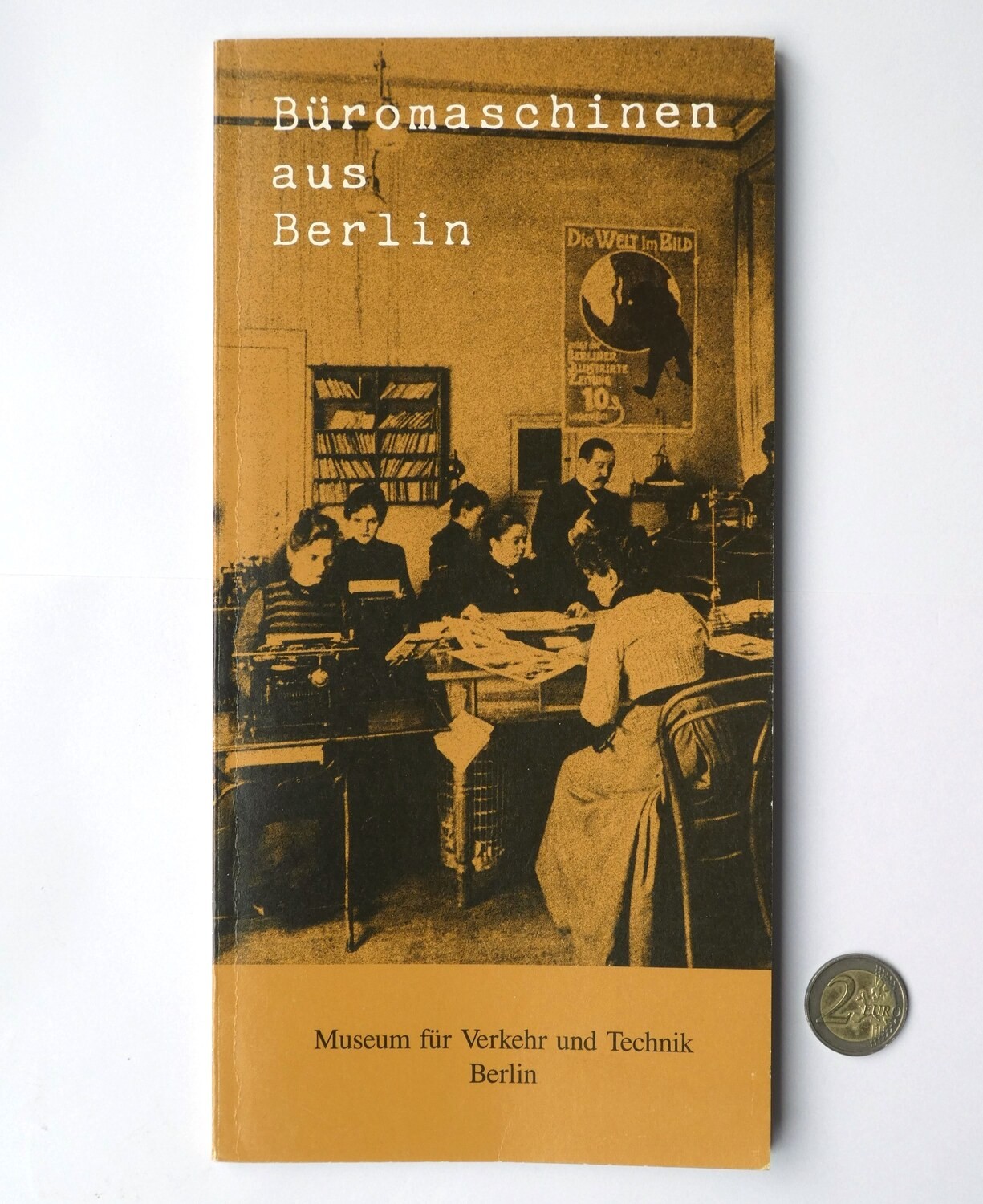
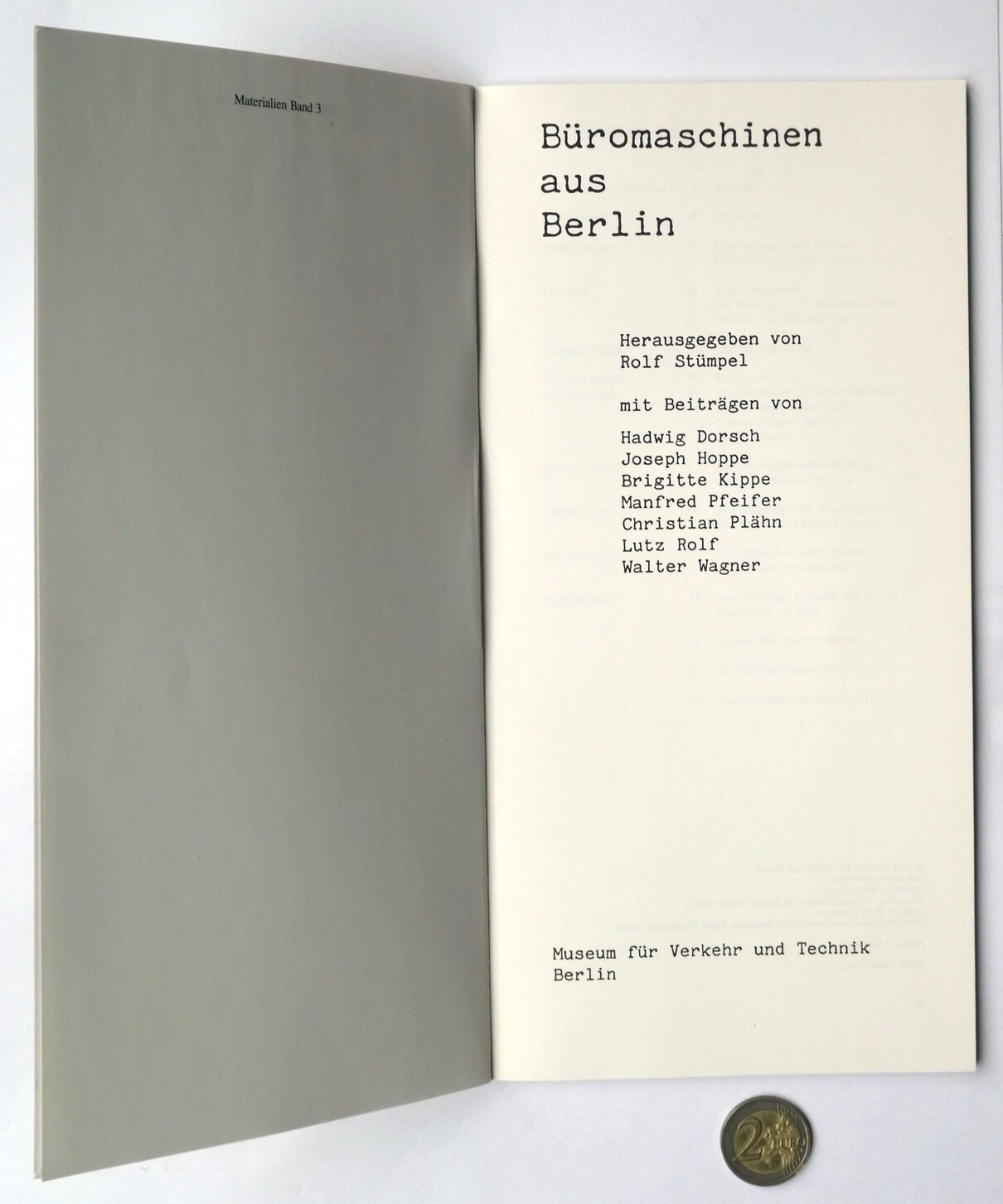
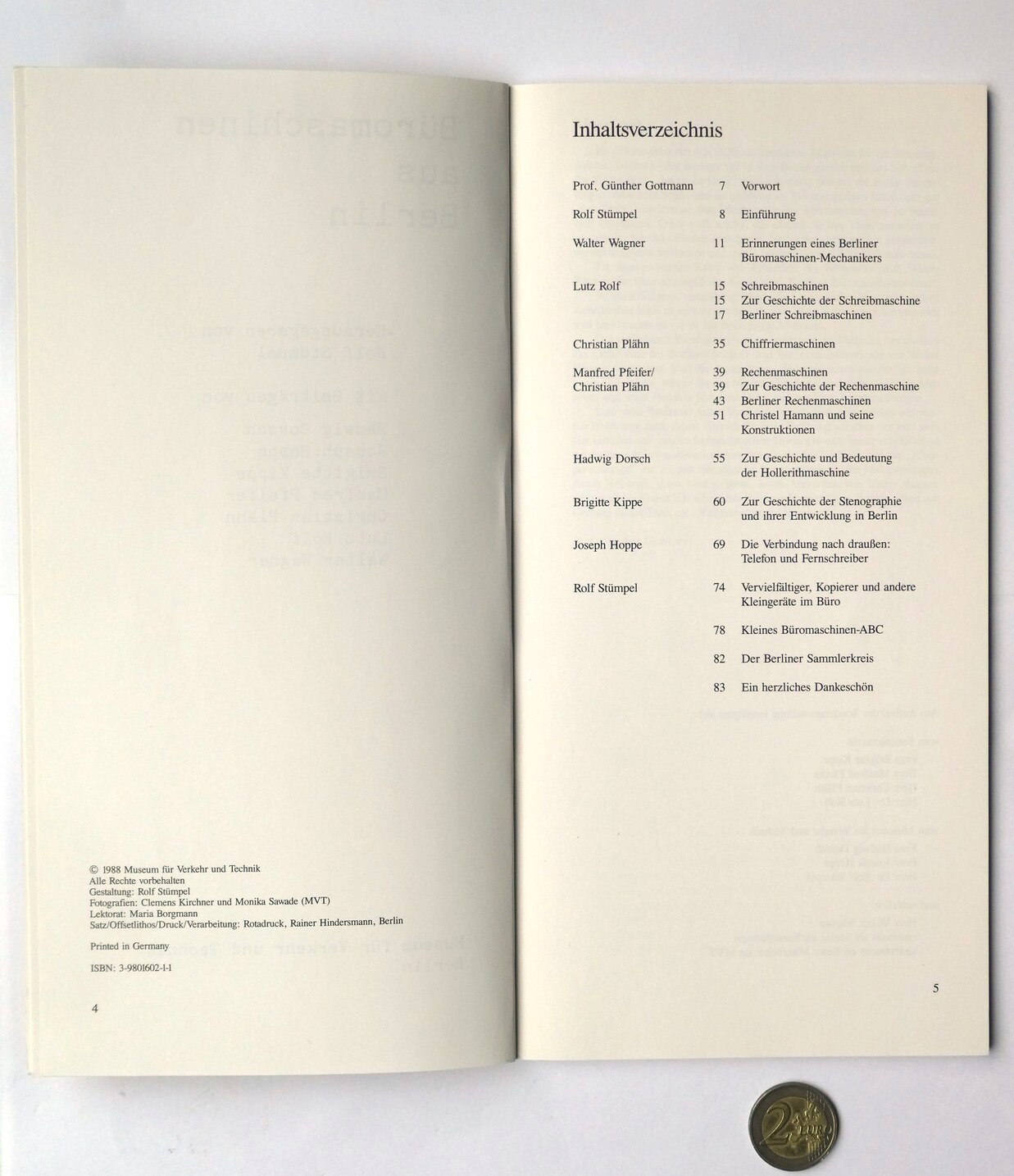
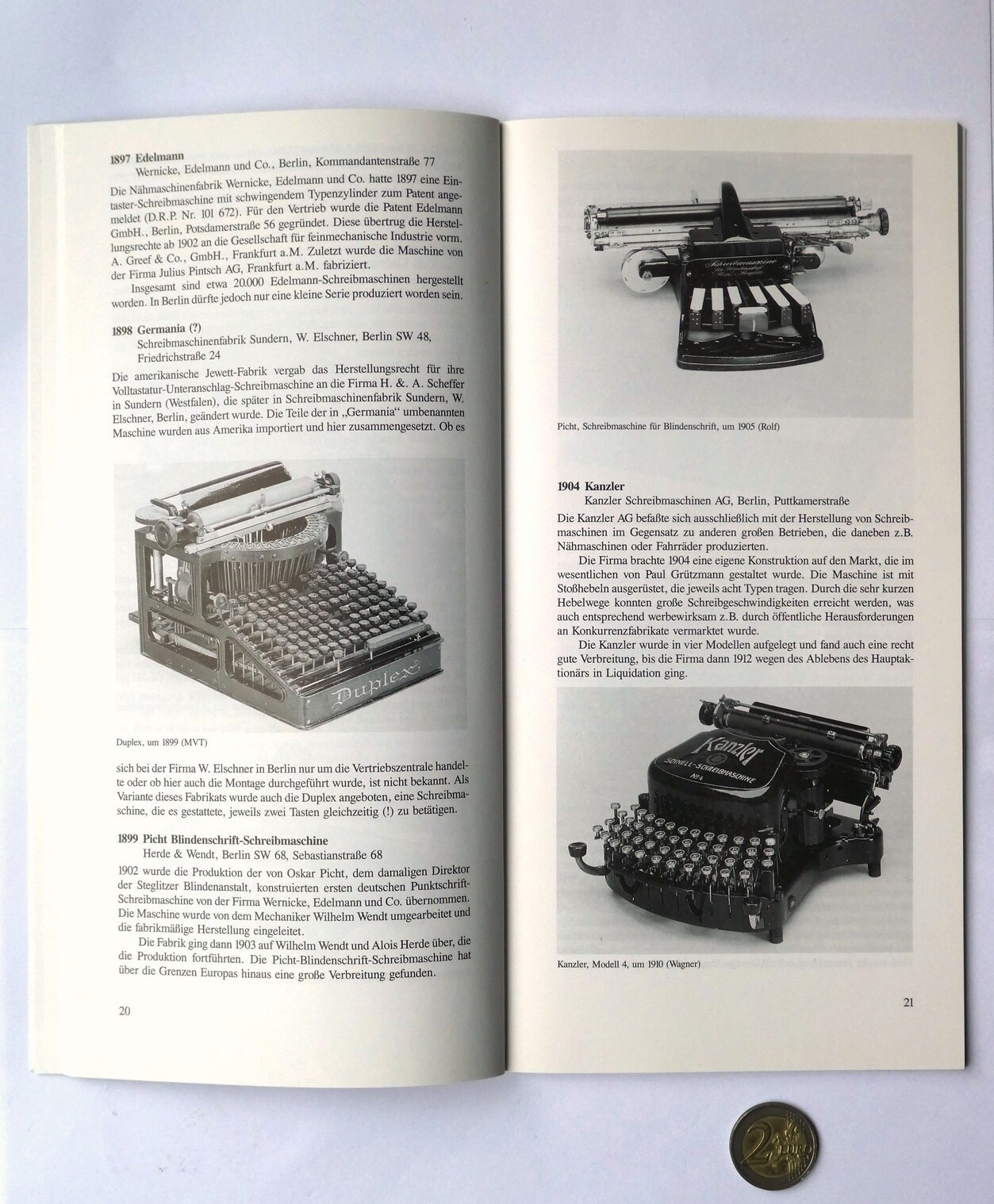
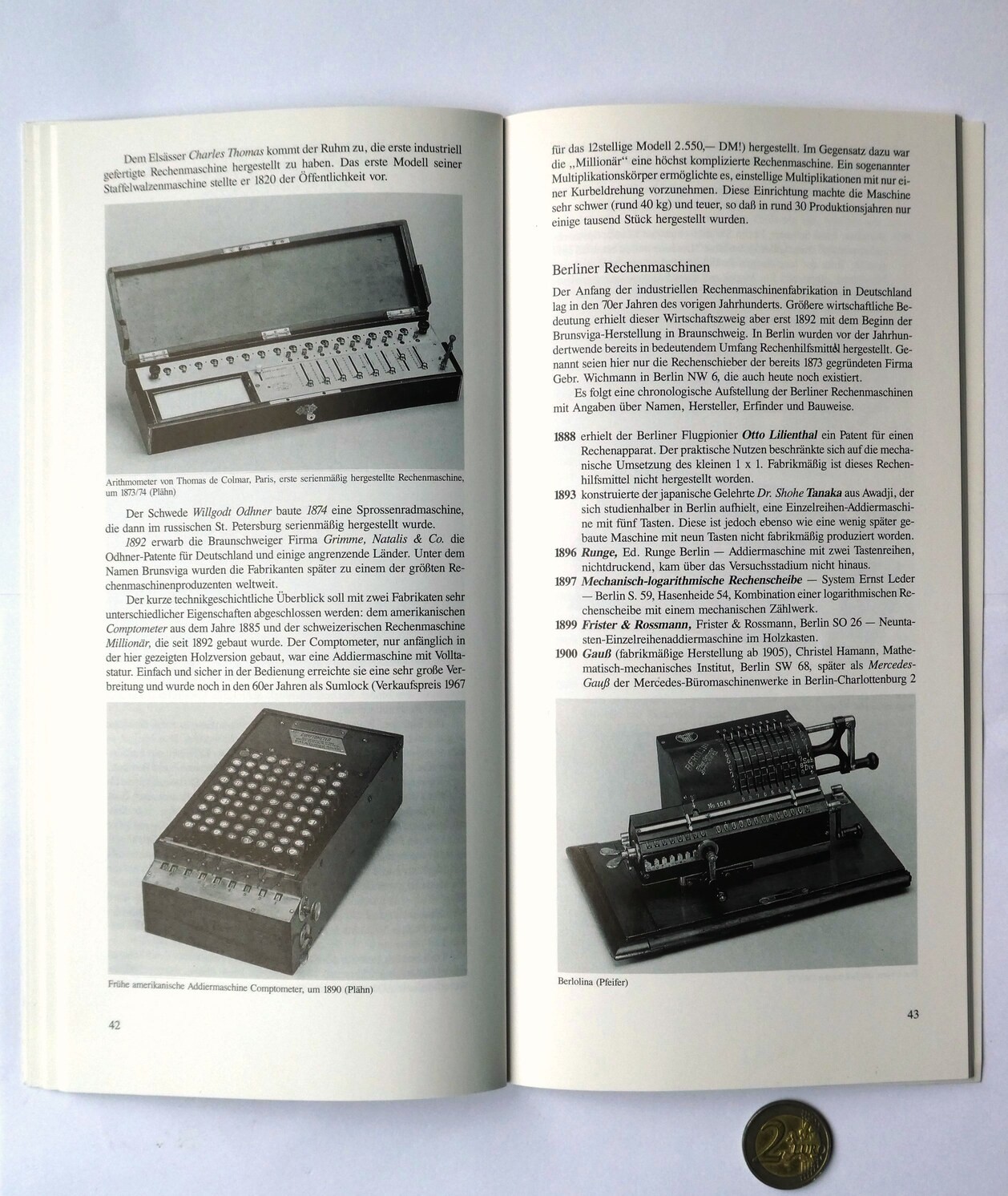
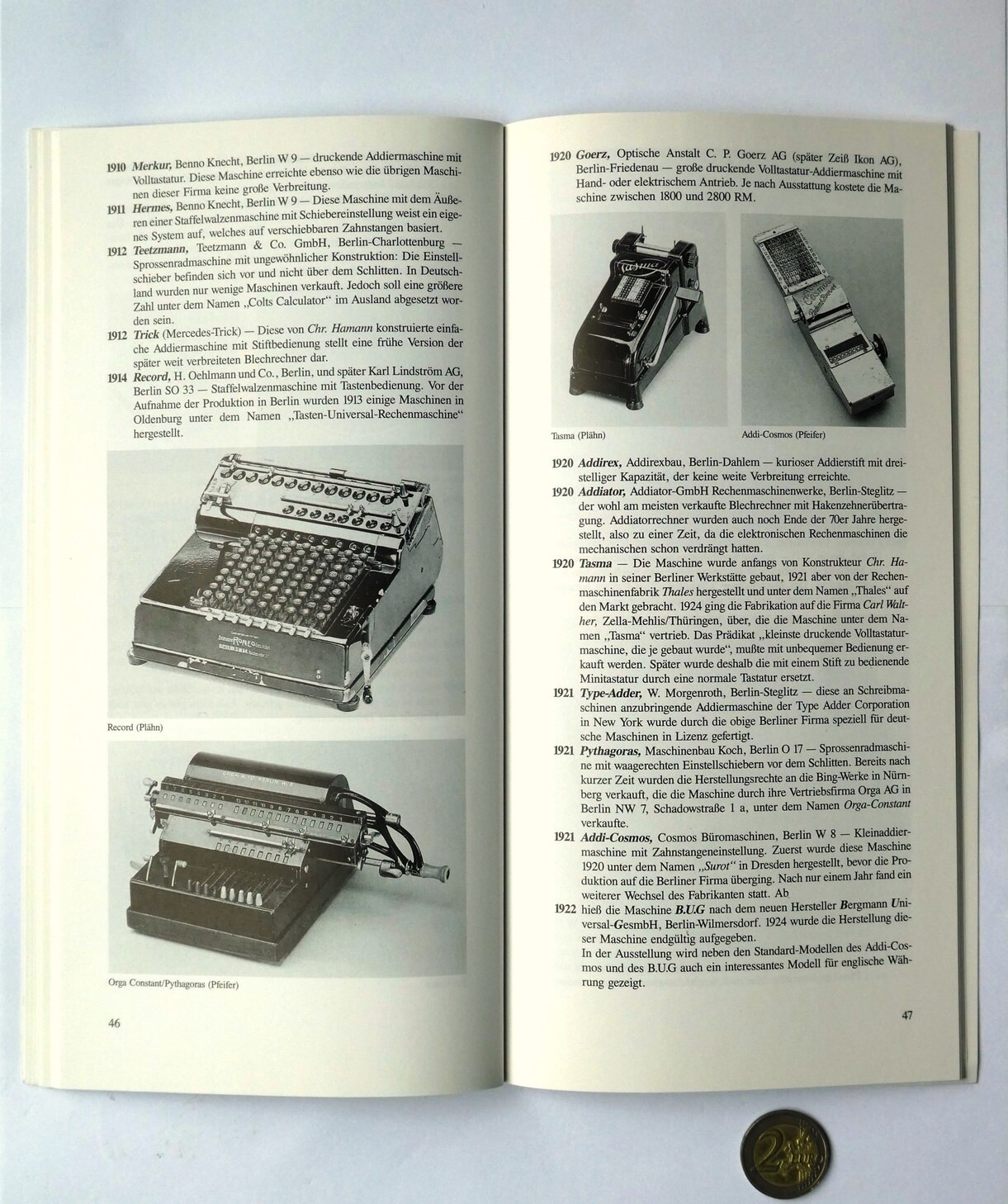
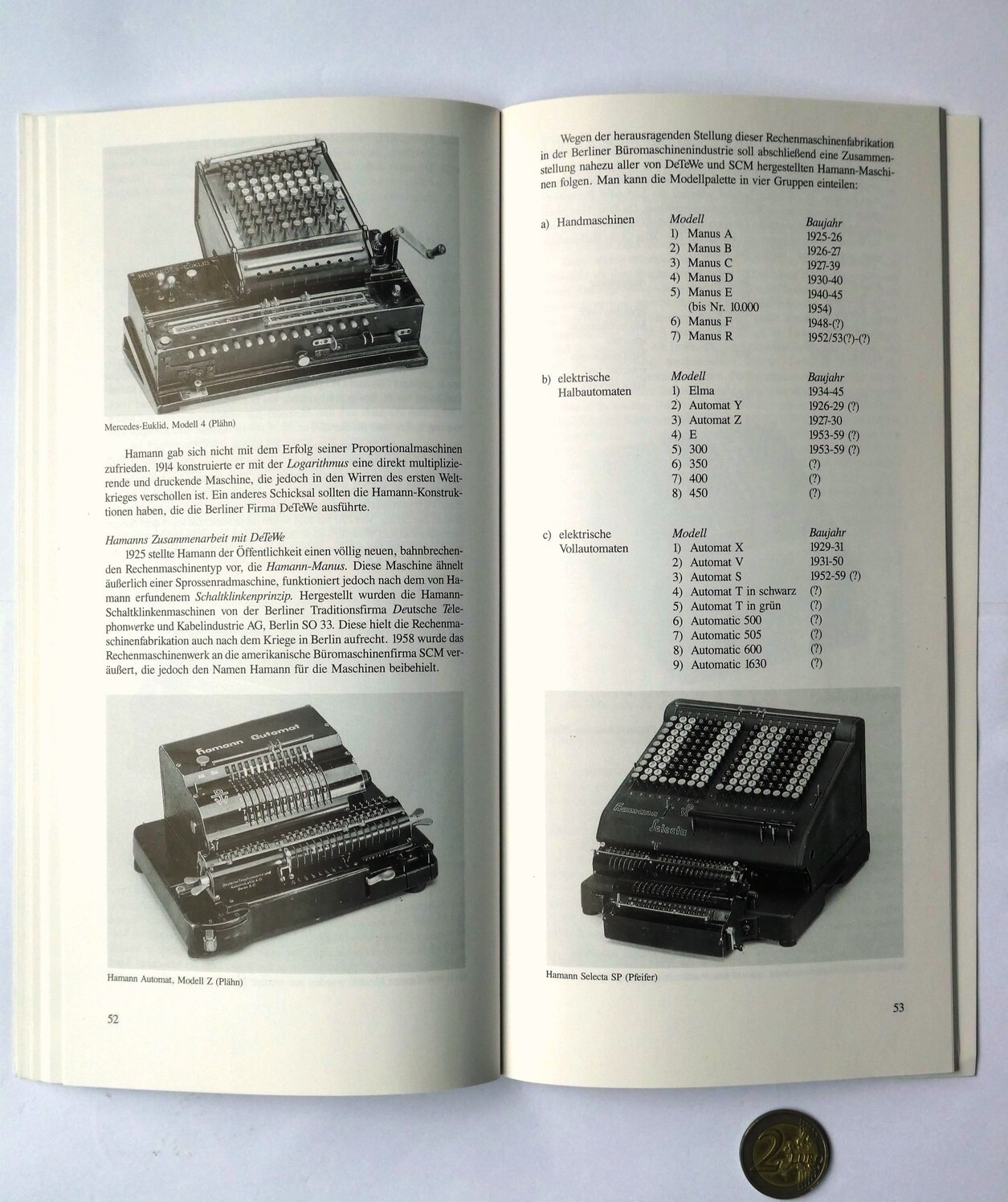
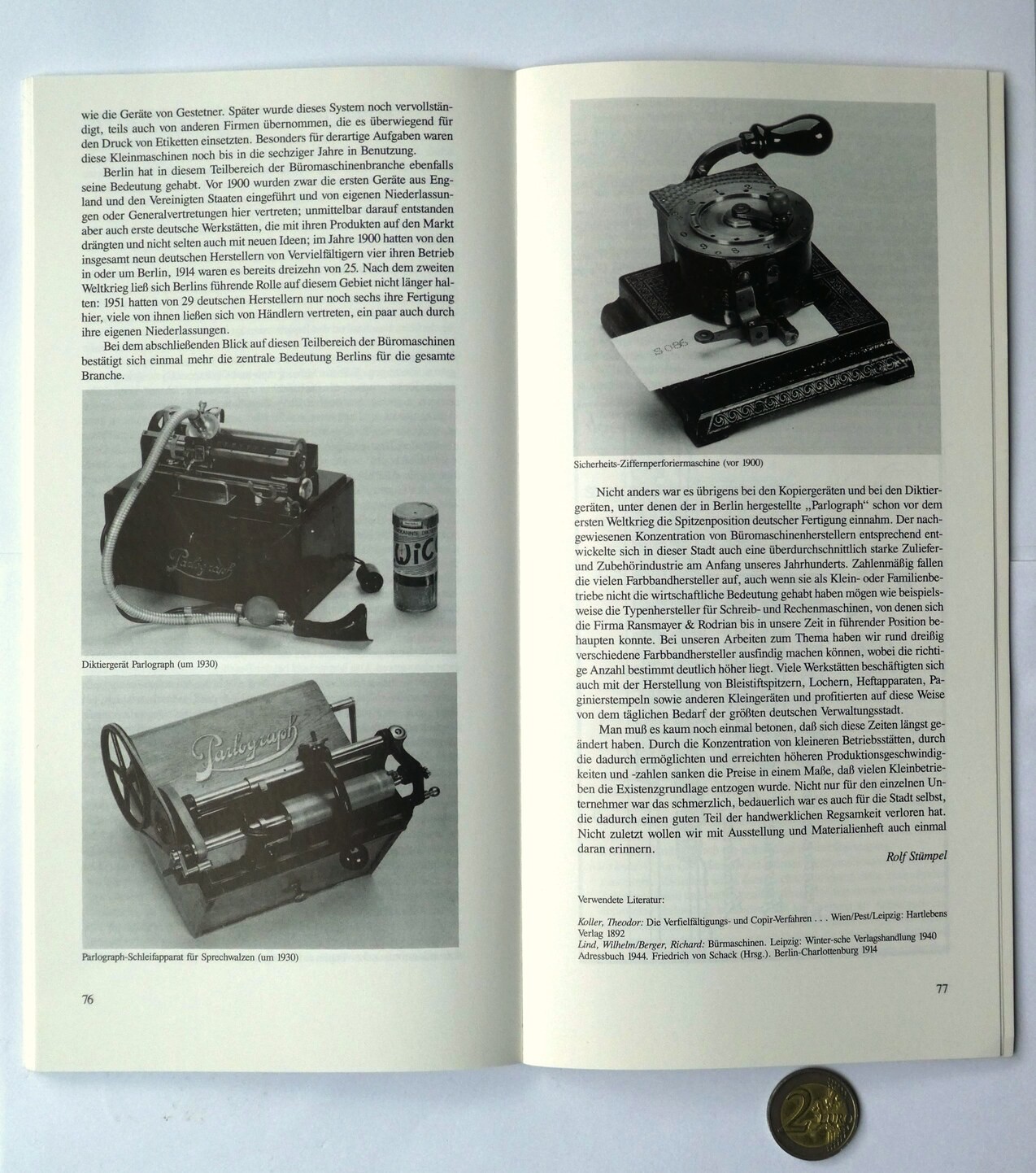
Büromaschinen aus Berlin Museum für Verkehr un Technik, Berlin
Editor Rolf Stümpel, various authors. Copyright 1988
83 pages, paperback, German
139mm × 279mm × 5mm
This book discusses various office machine that were manufactured
in Berlin. Each chapter is by a different author and tackles a
different subject, ranging from typewriters, to calculators,
to copiers.
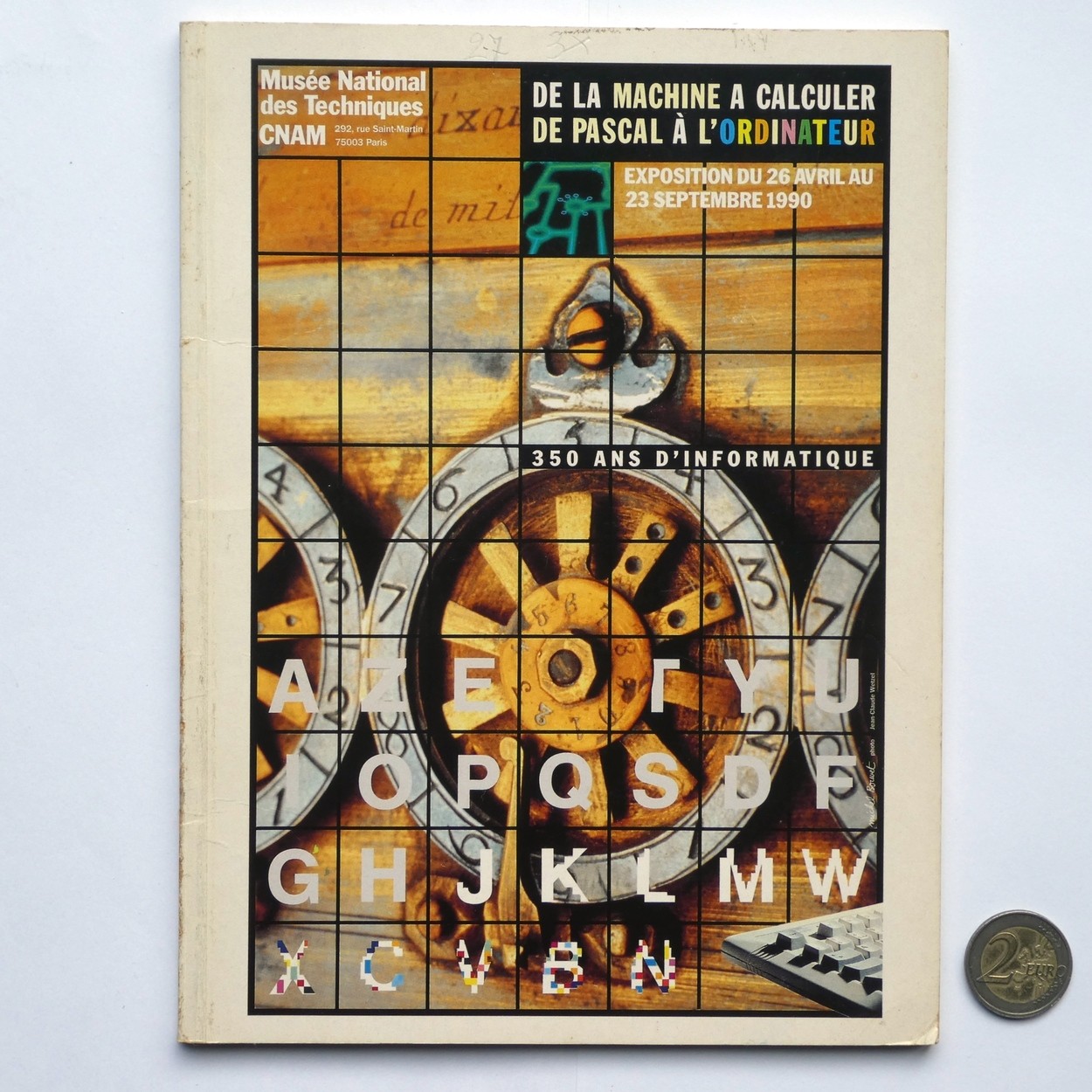
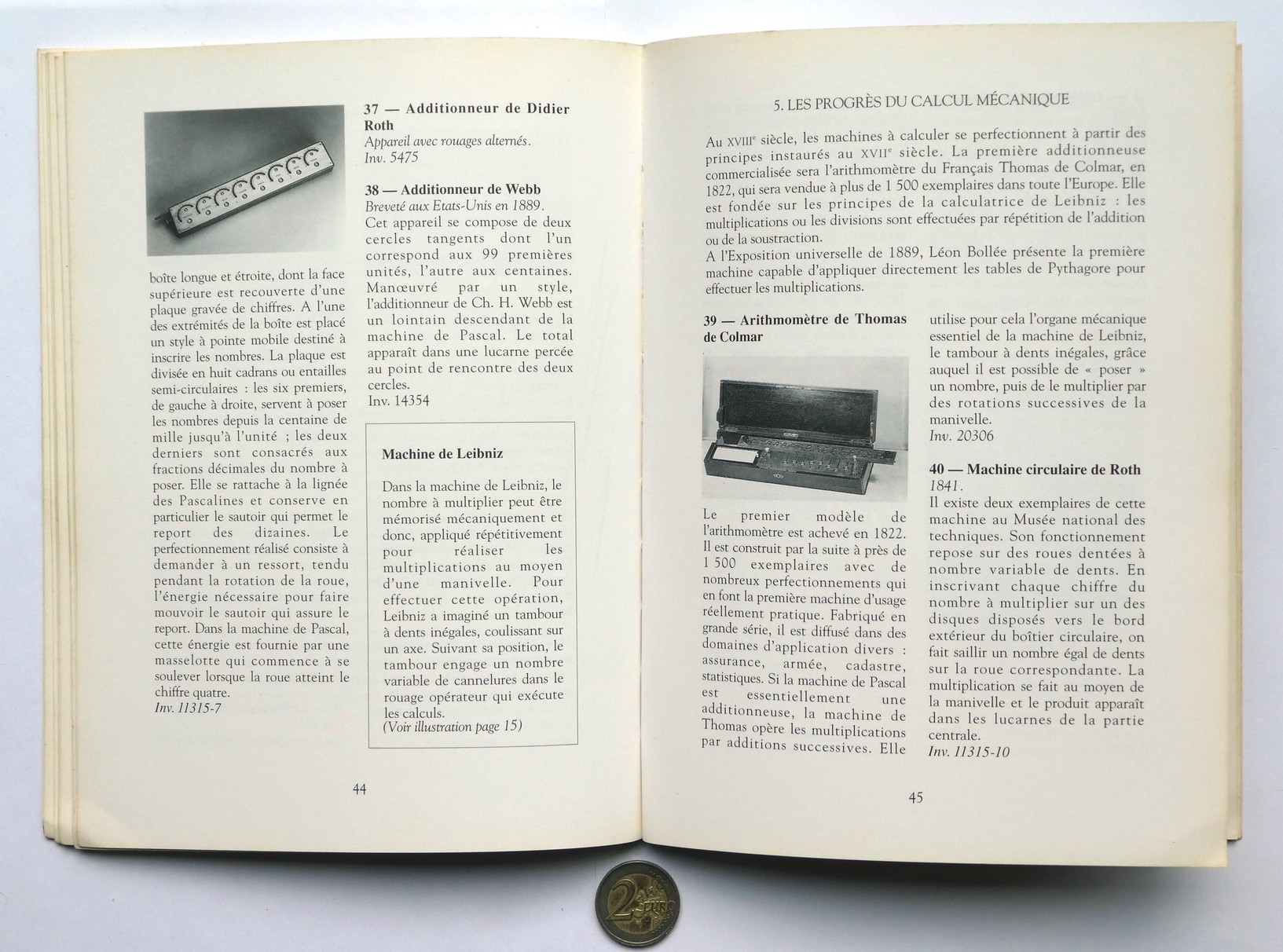
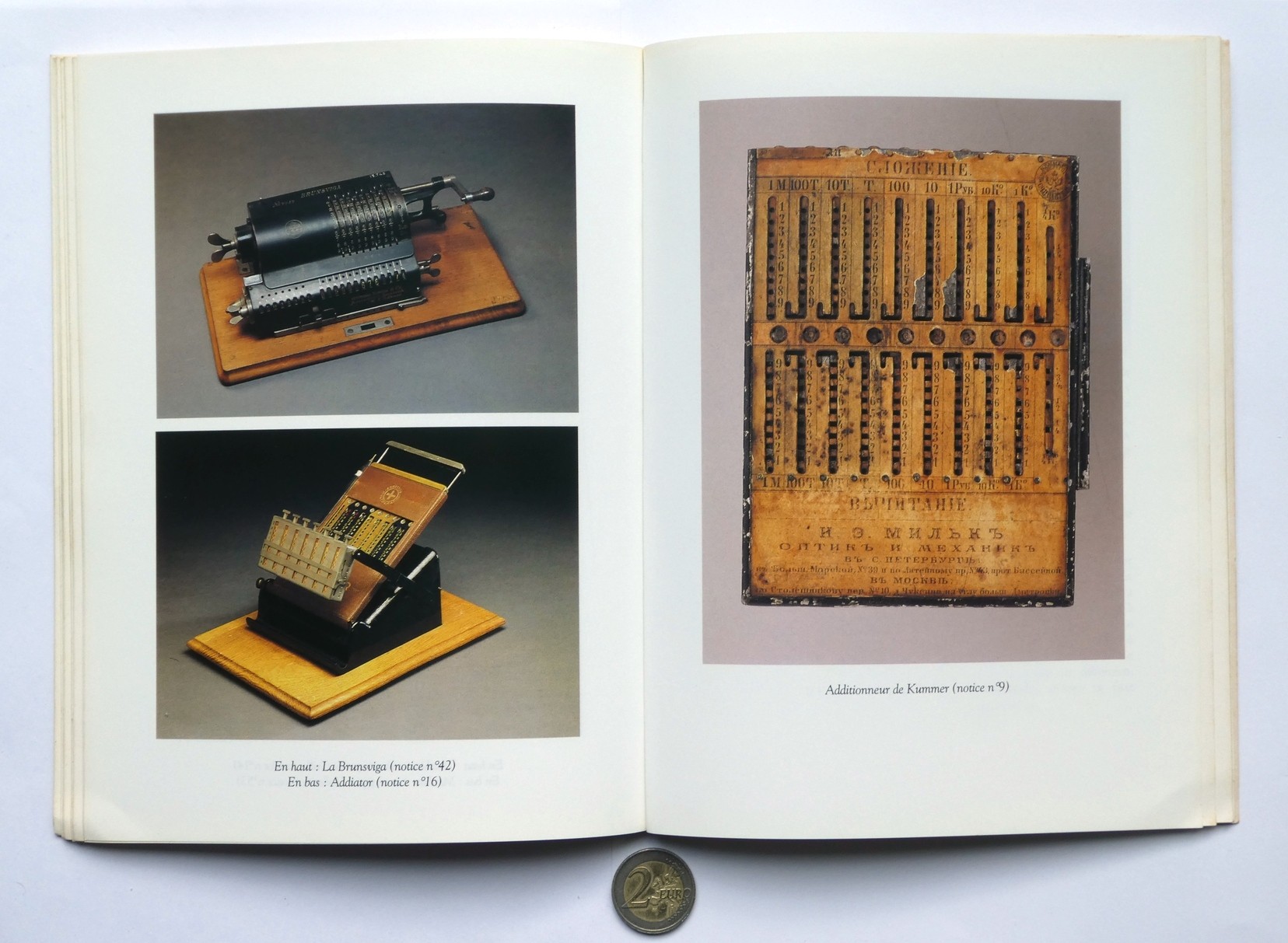
De La Machine a Calculer de Pascal à L'Ordinateur 350 Ans D'Informatique
Musée National Des Techniques
1990
64 pages, paperback, French
181mm × 240mm × 5mm
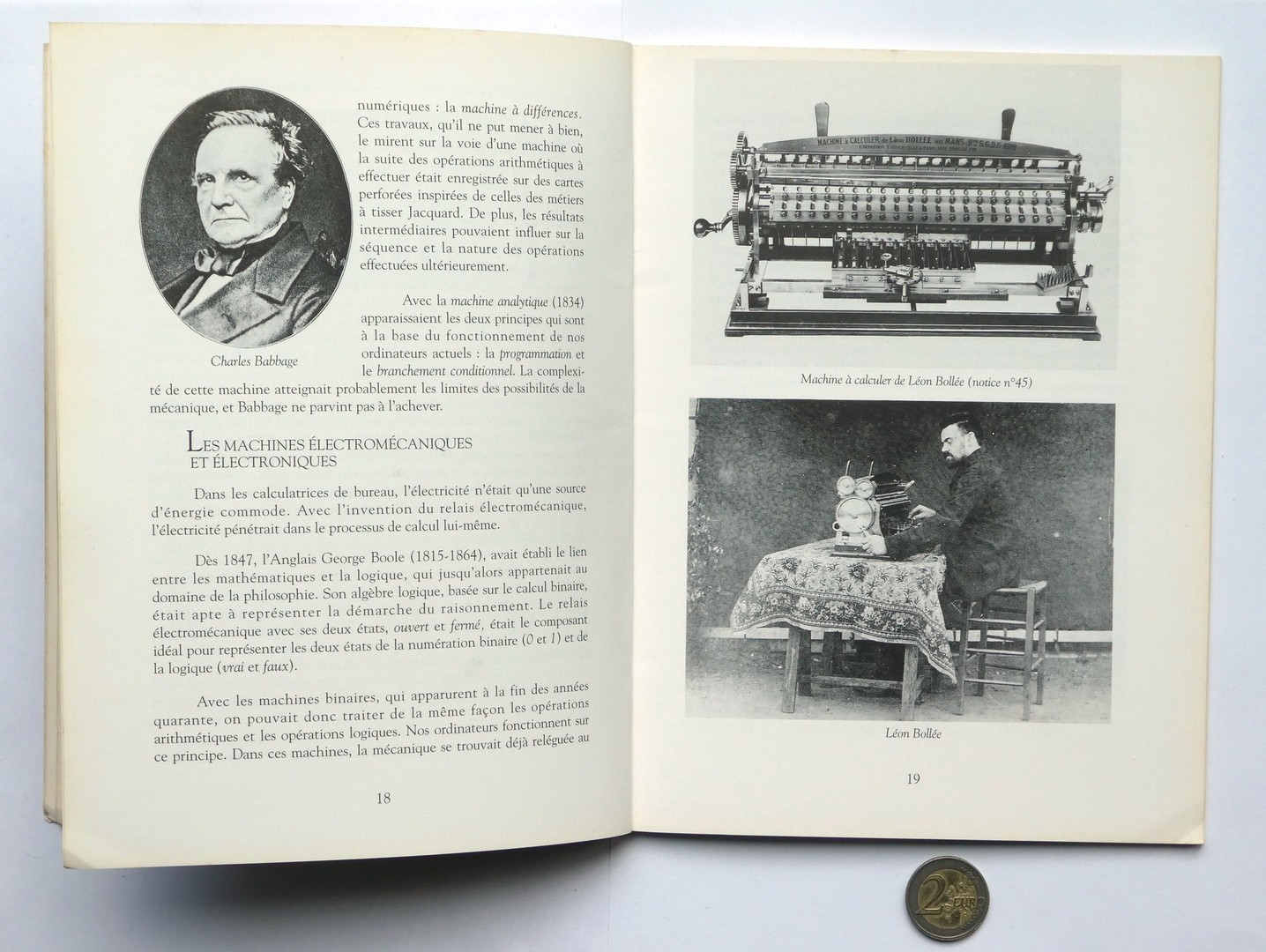
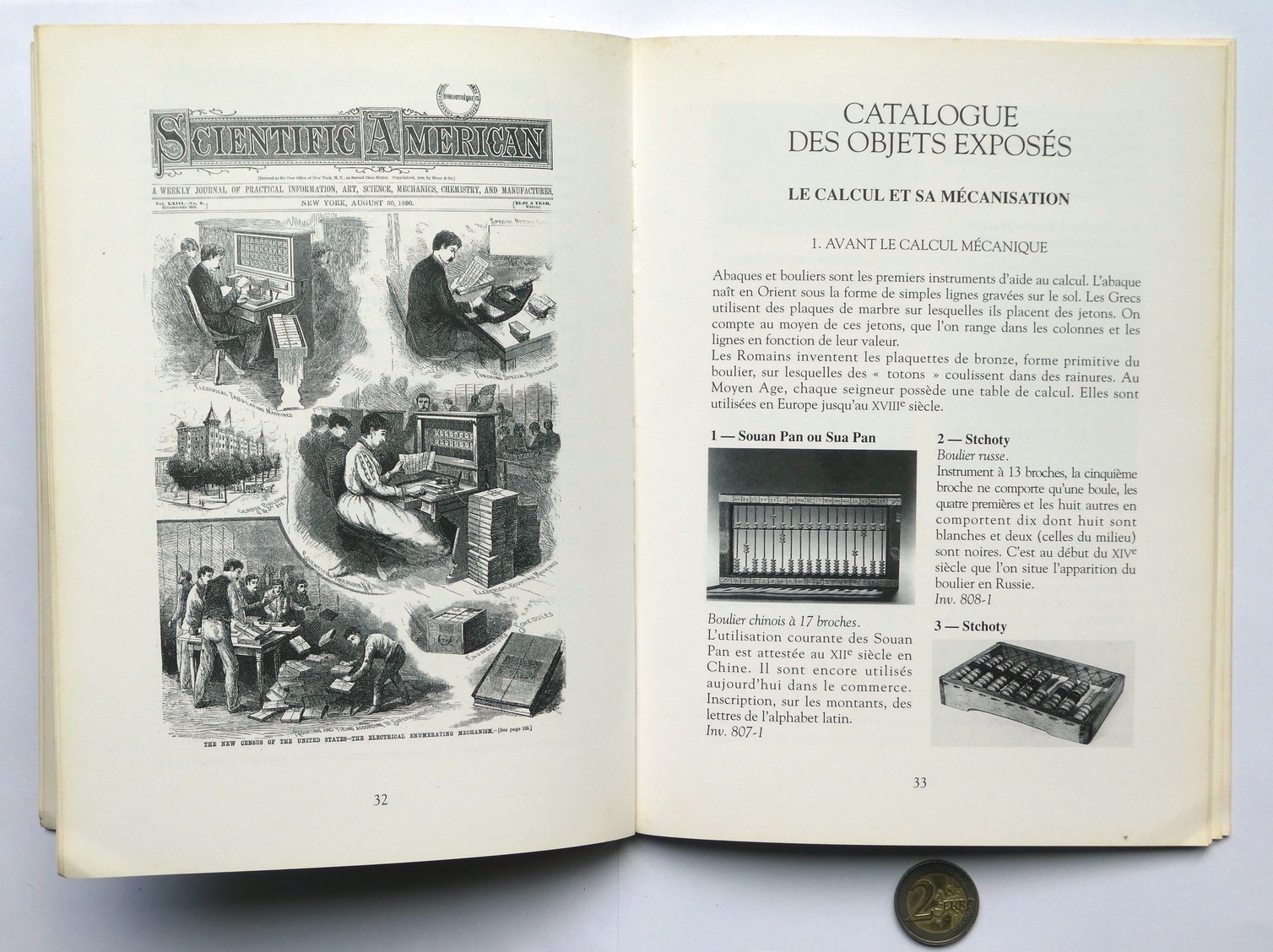
This is the book that accompanied a calculator exhibition. The first part
of the book gives a history of the calculator, and the second part lists
the various exhibits that were shown.
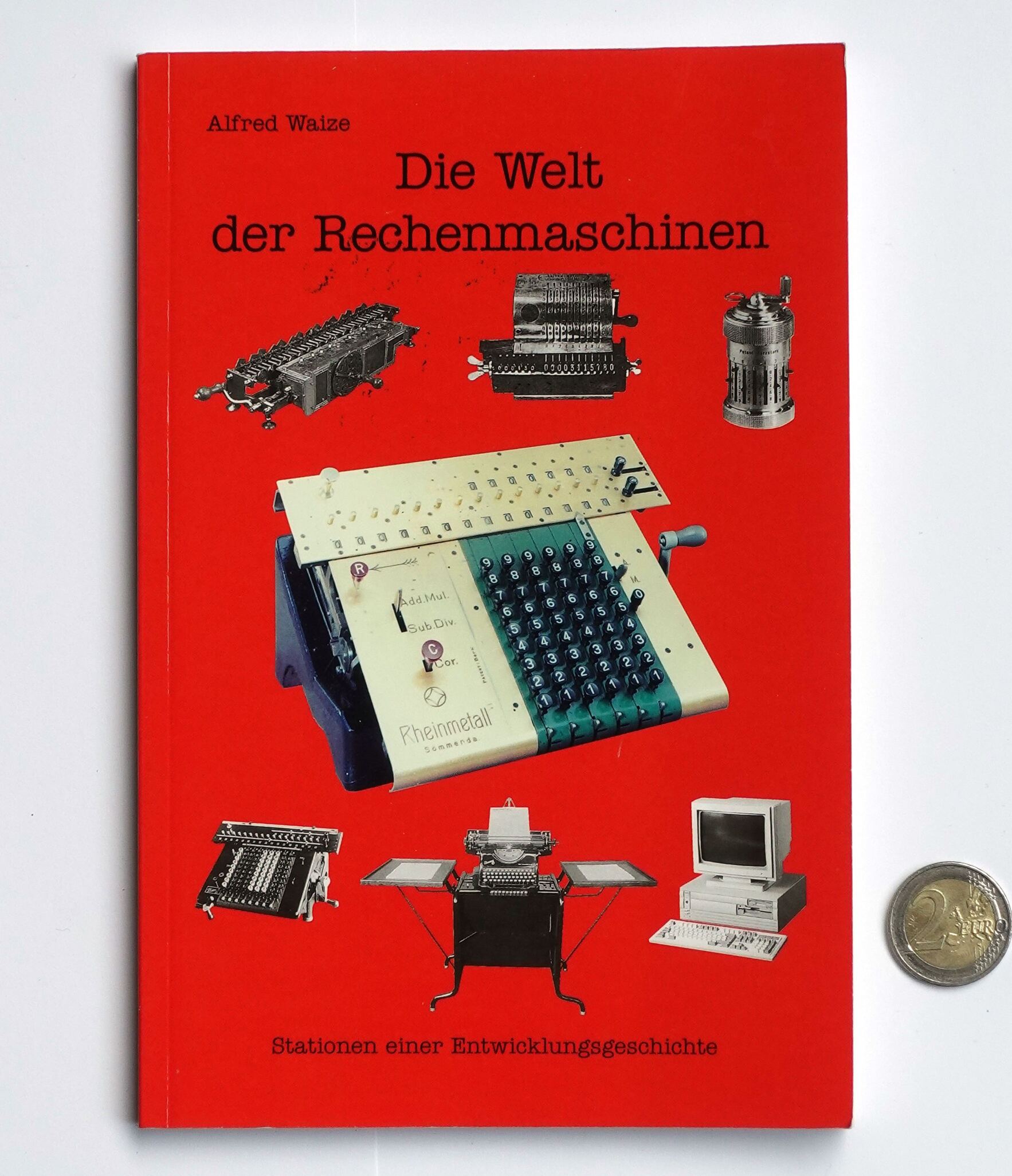
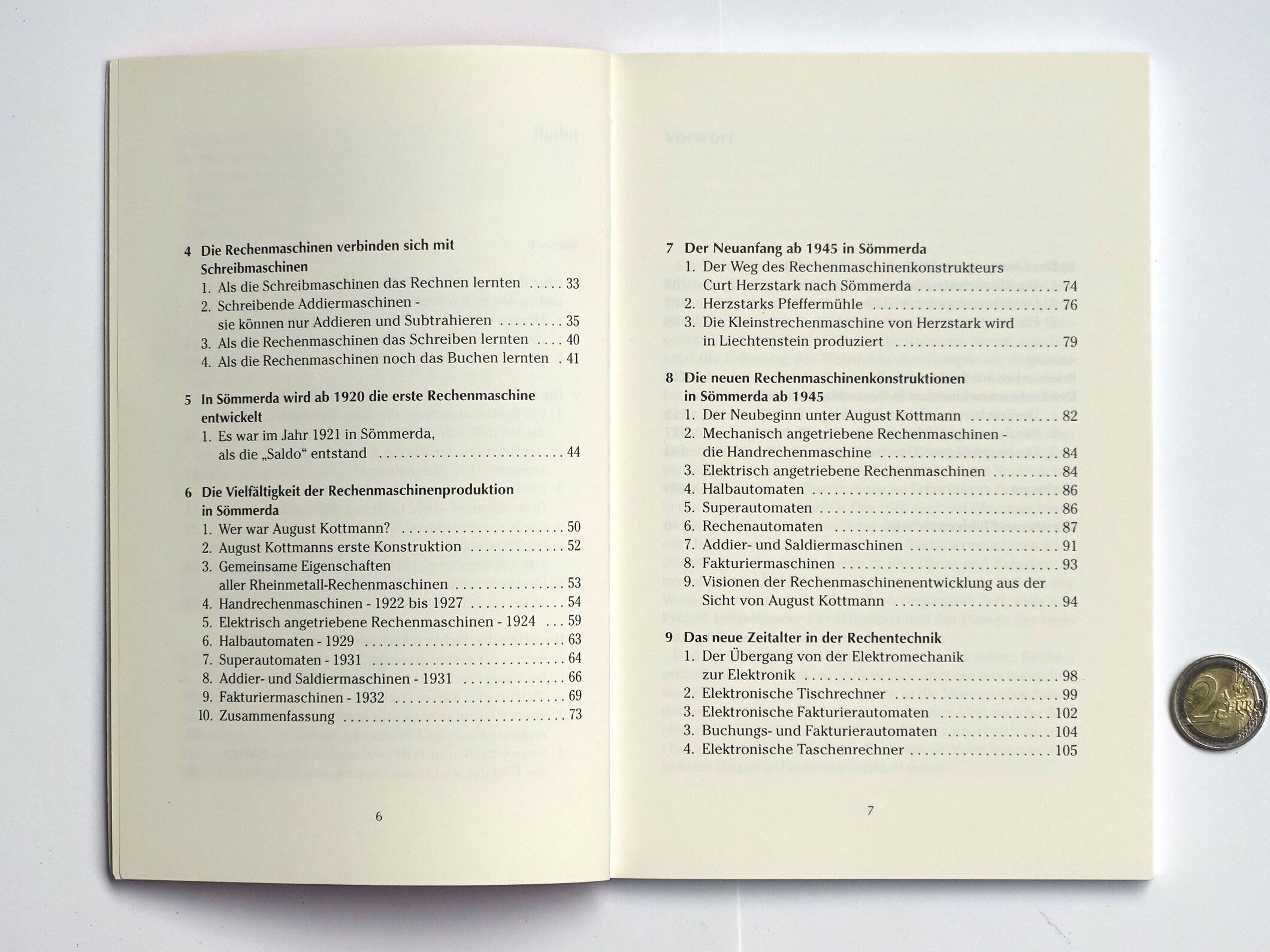
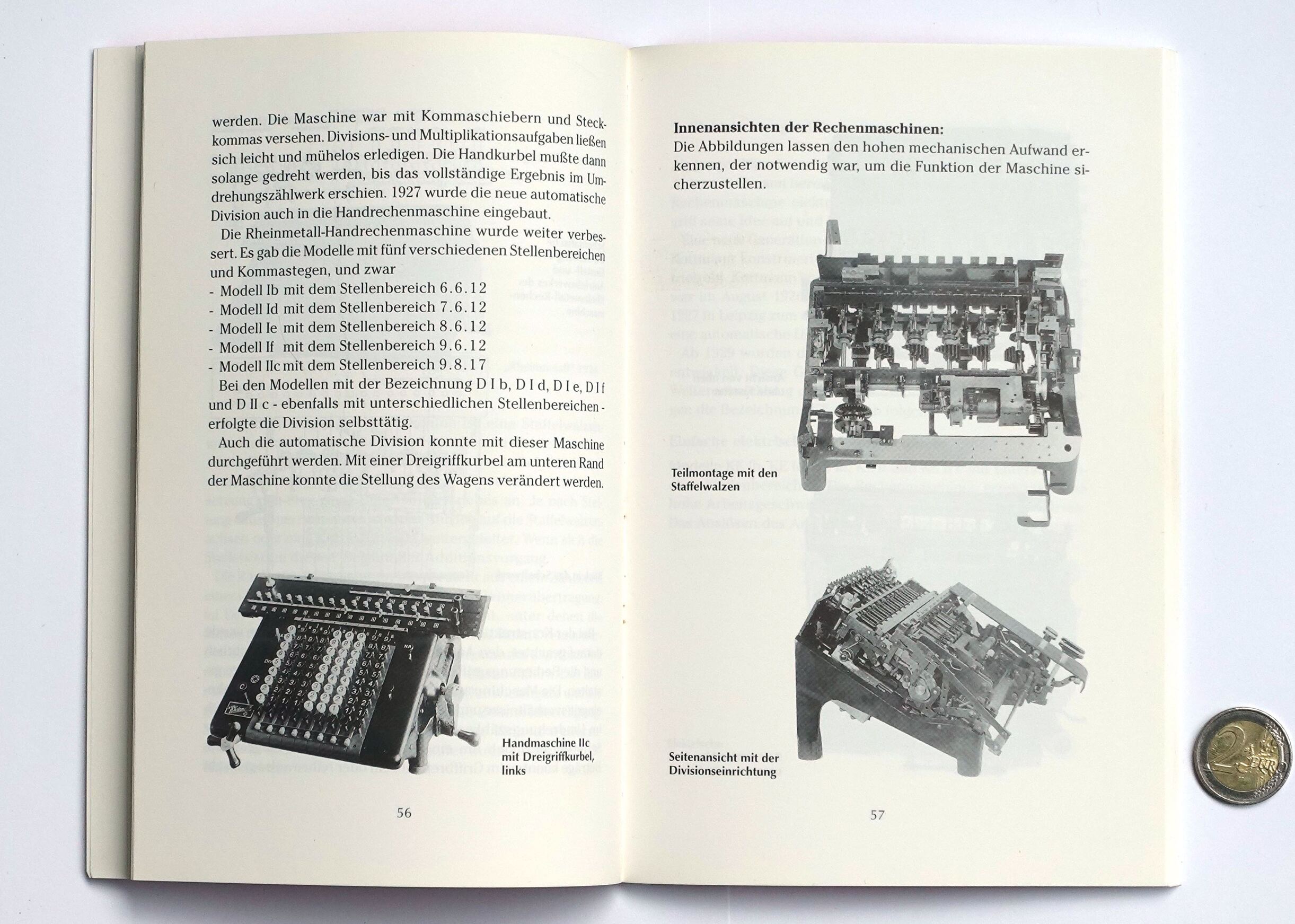
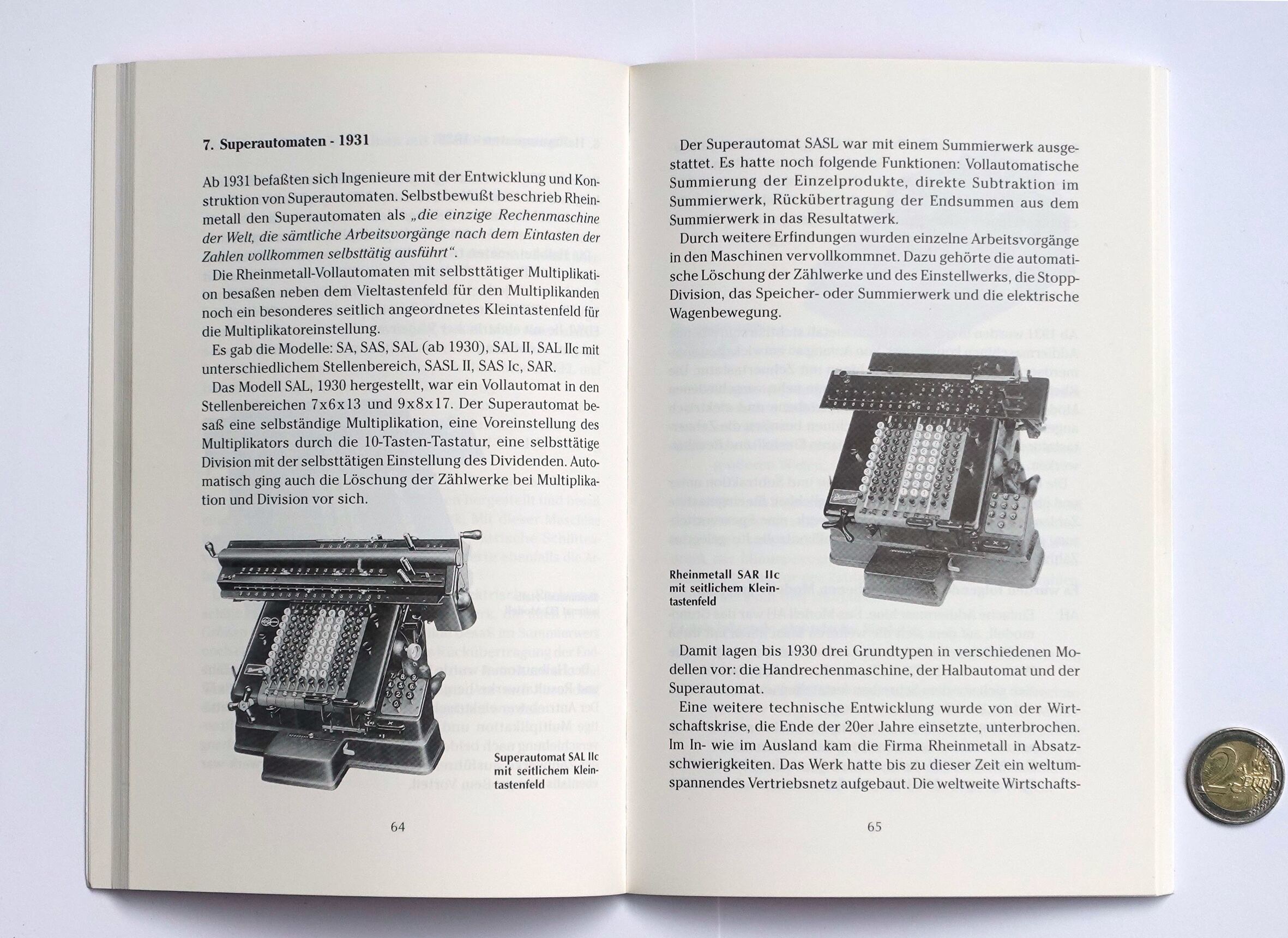
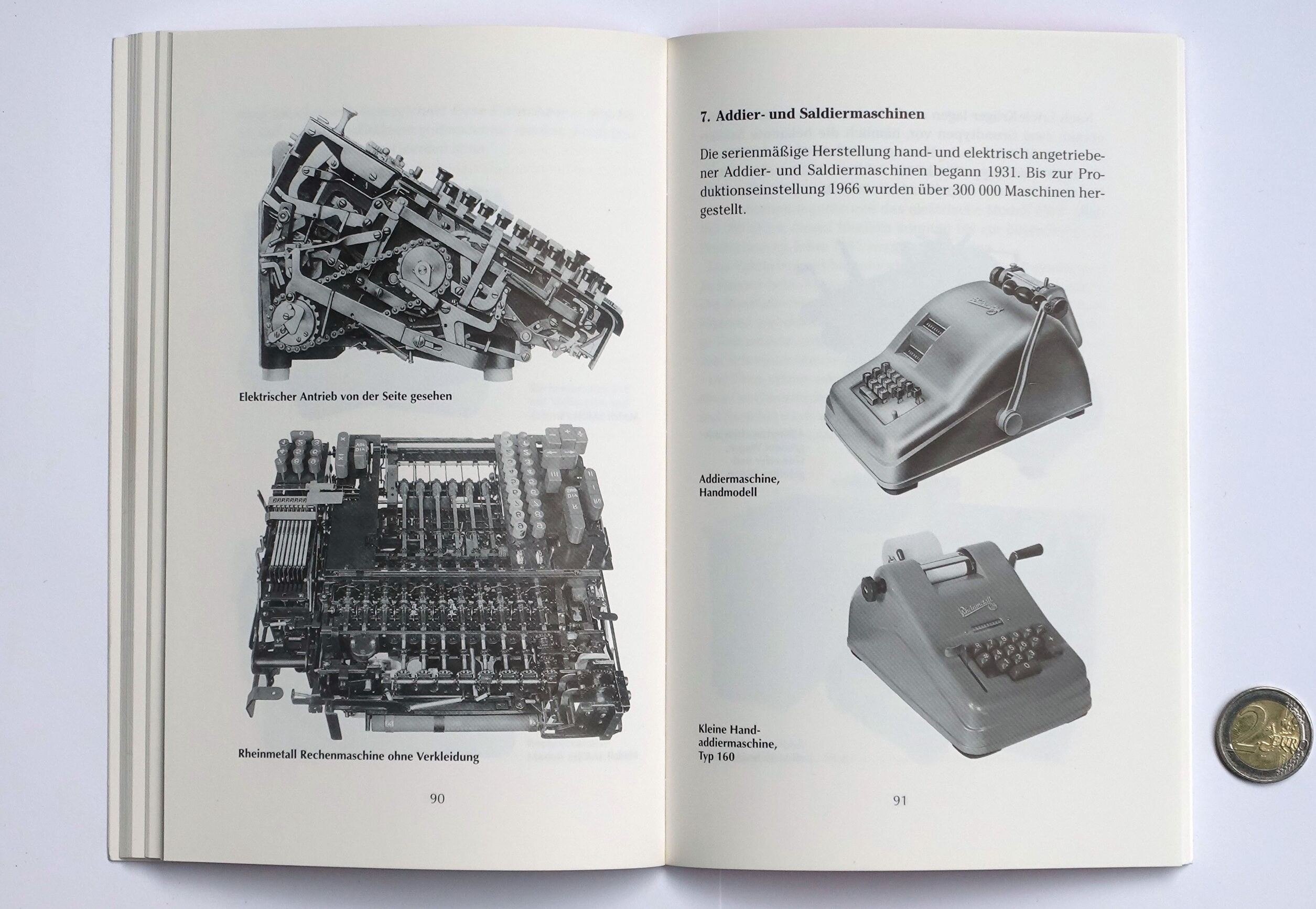
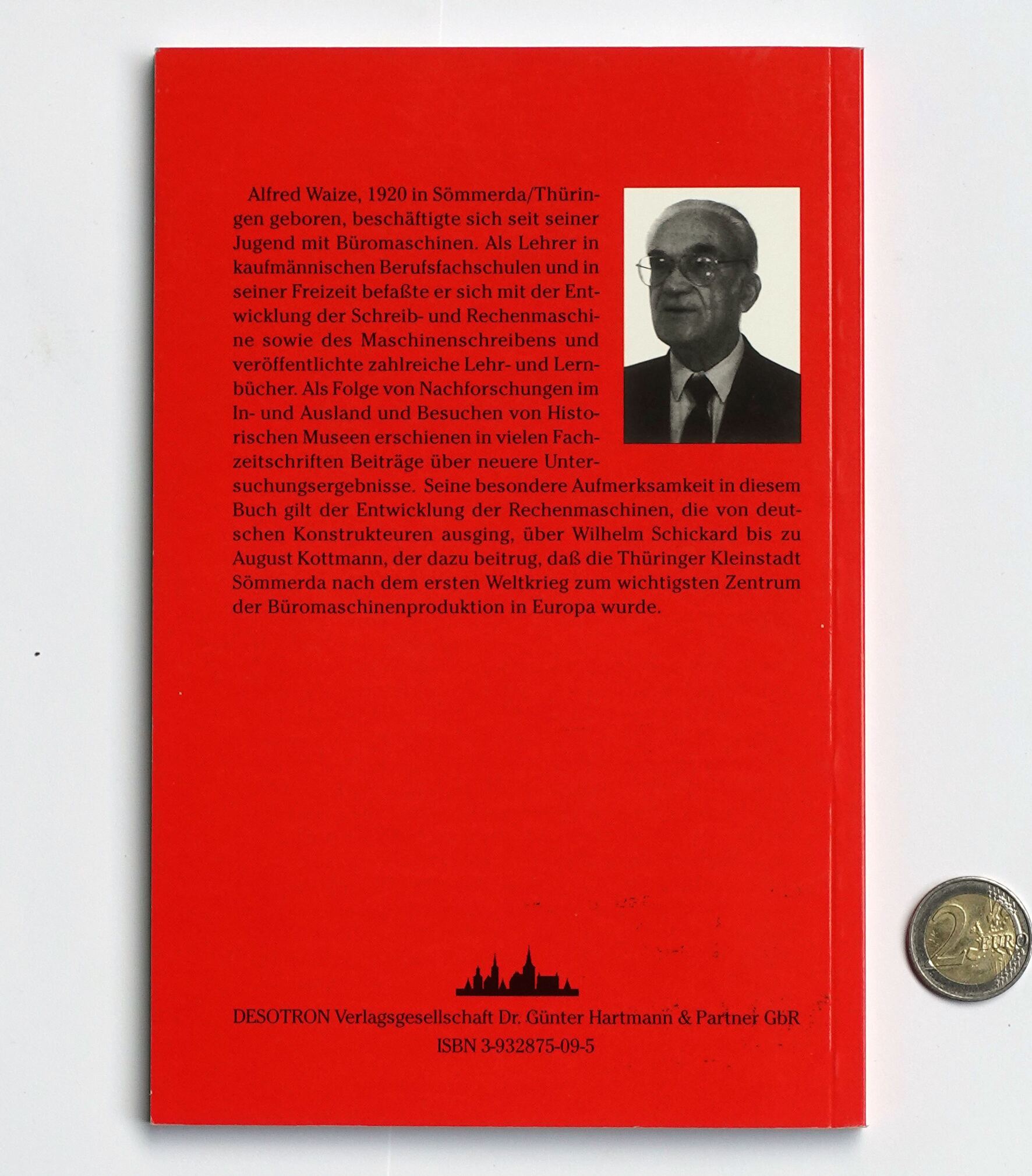
Die Welt der Rechenmaschinen Alfred Walze Copyright 1999
144 pages, softcover, German
146mm × 220mm × 9mm
This book has a history of calculators, with a heavy emphasis on
the calculator manufacturing in Sömmerda, i.e. Rheinmetall.
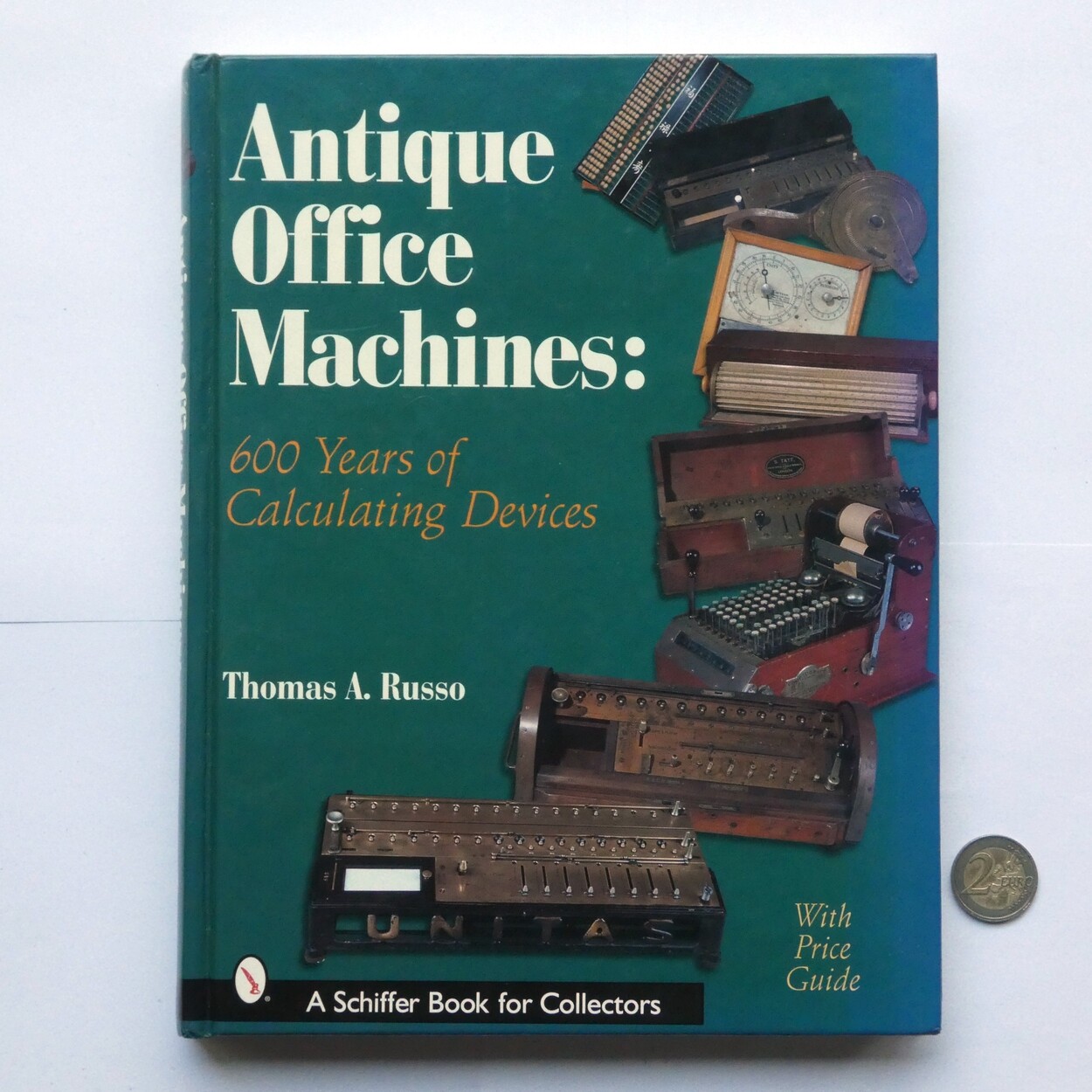
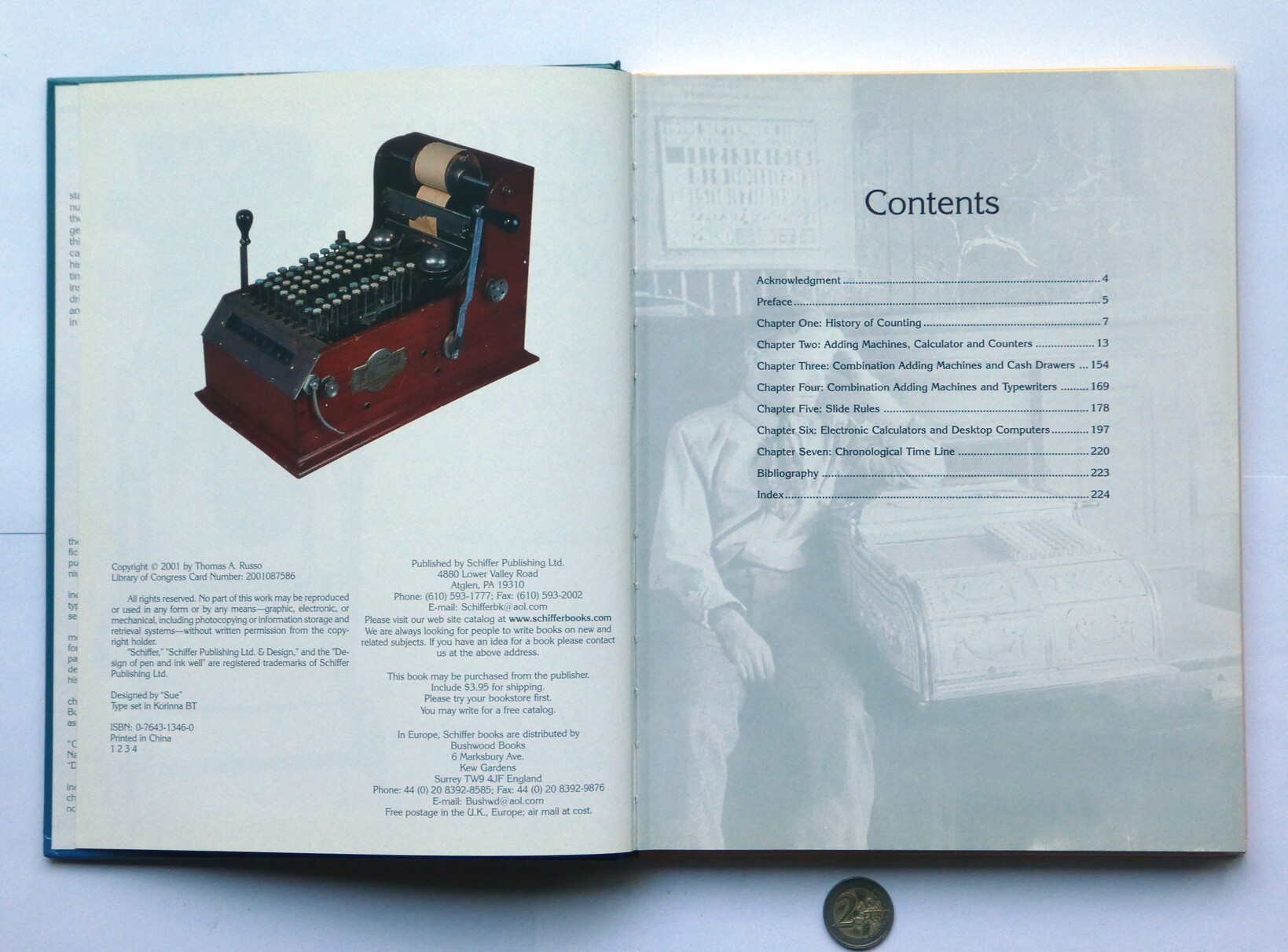
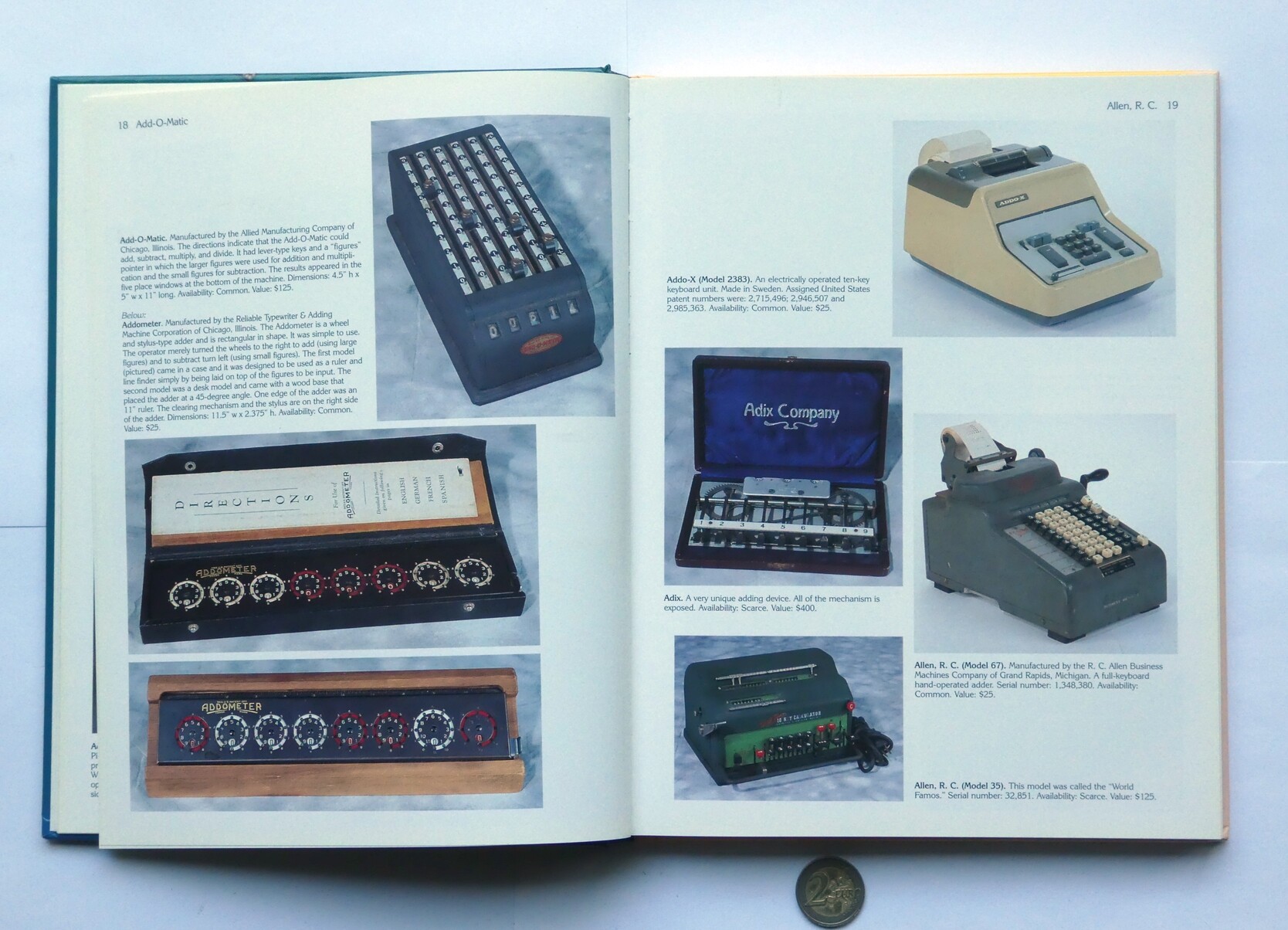
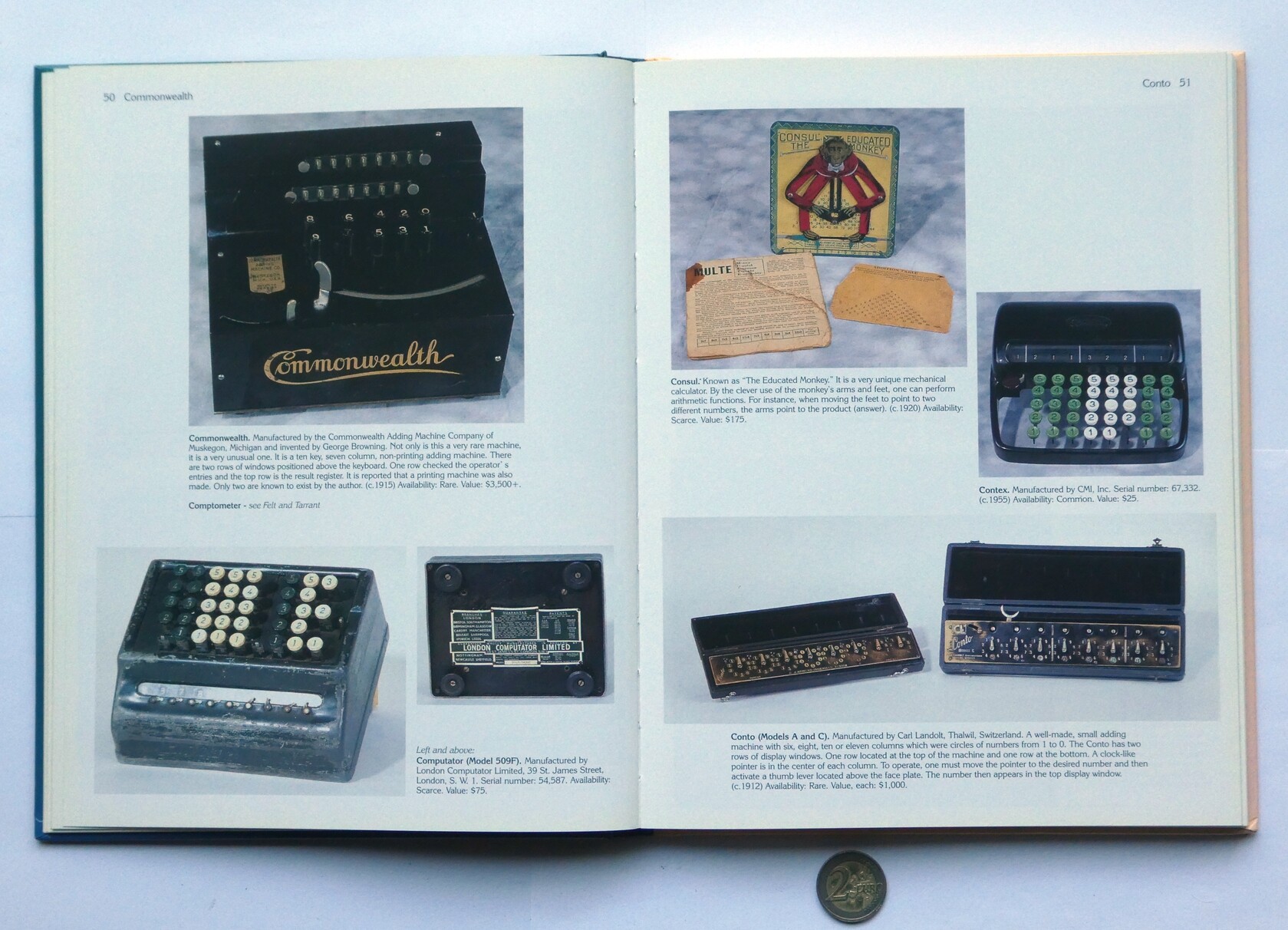
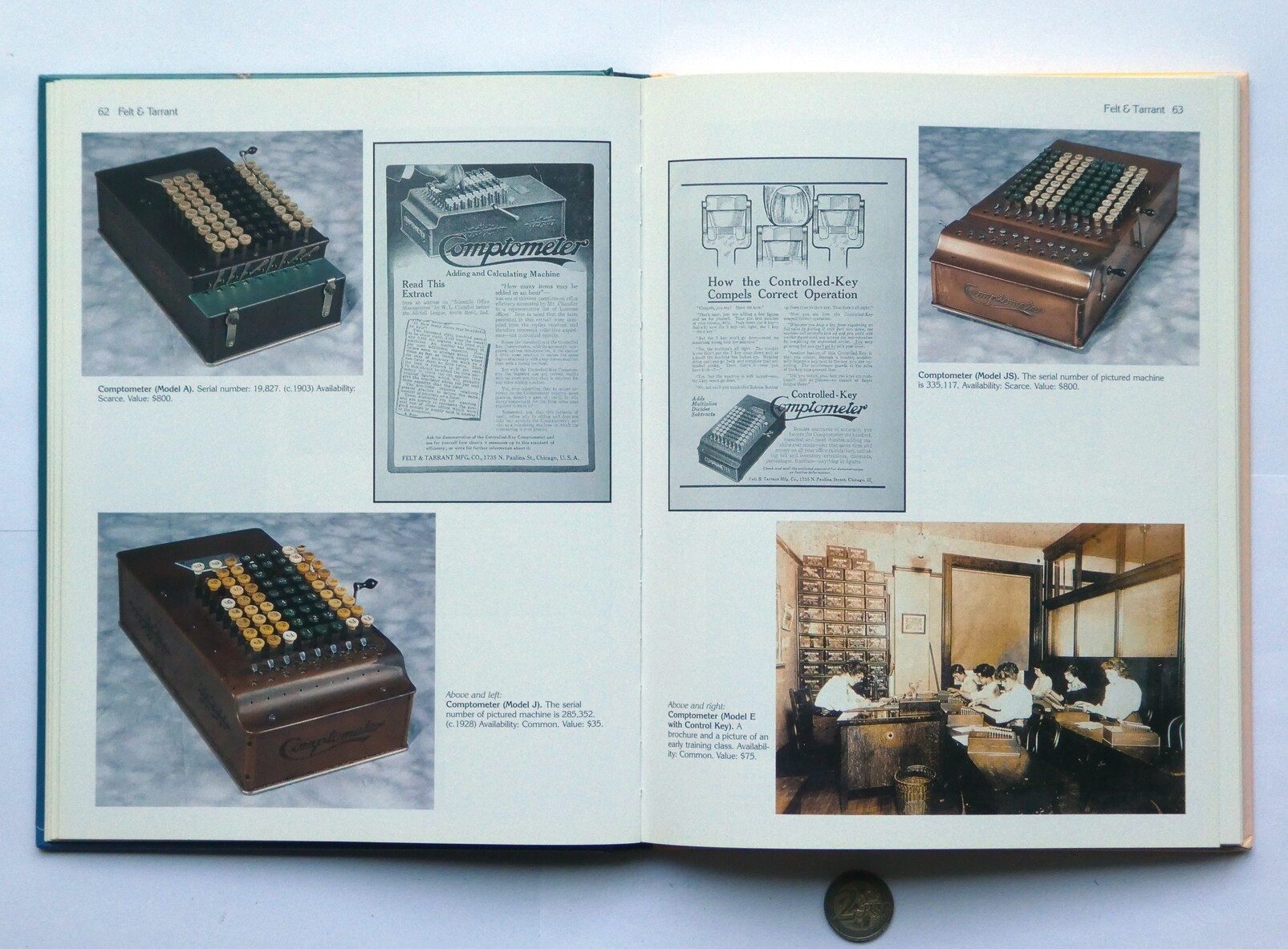
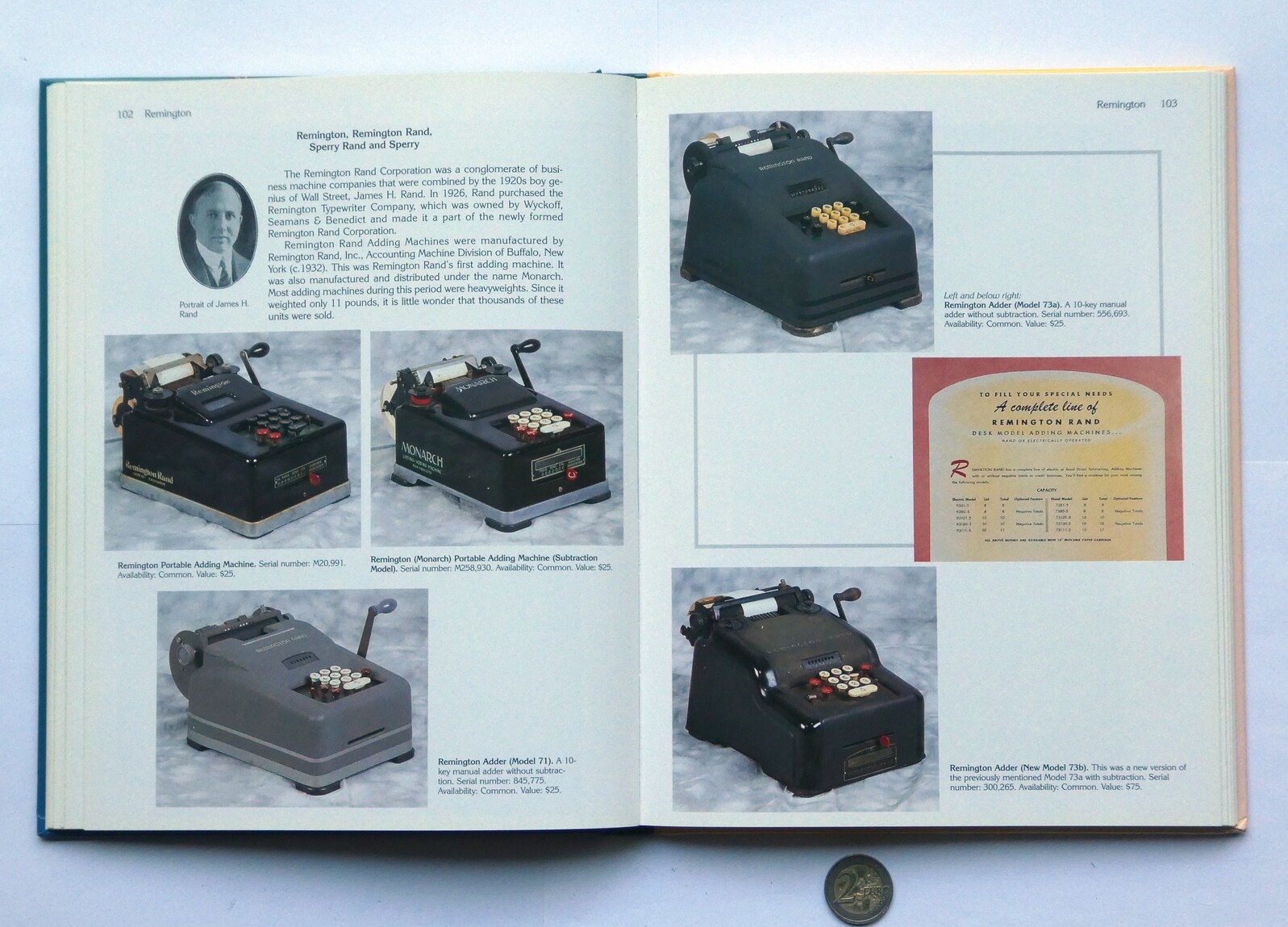
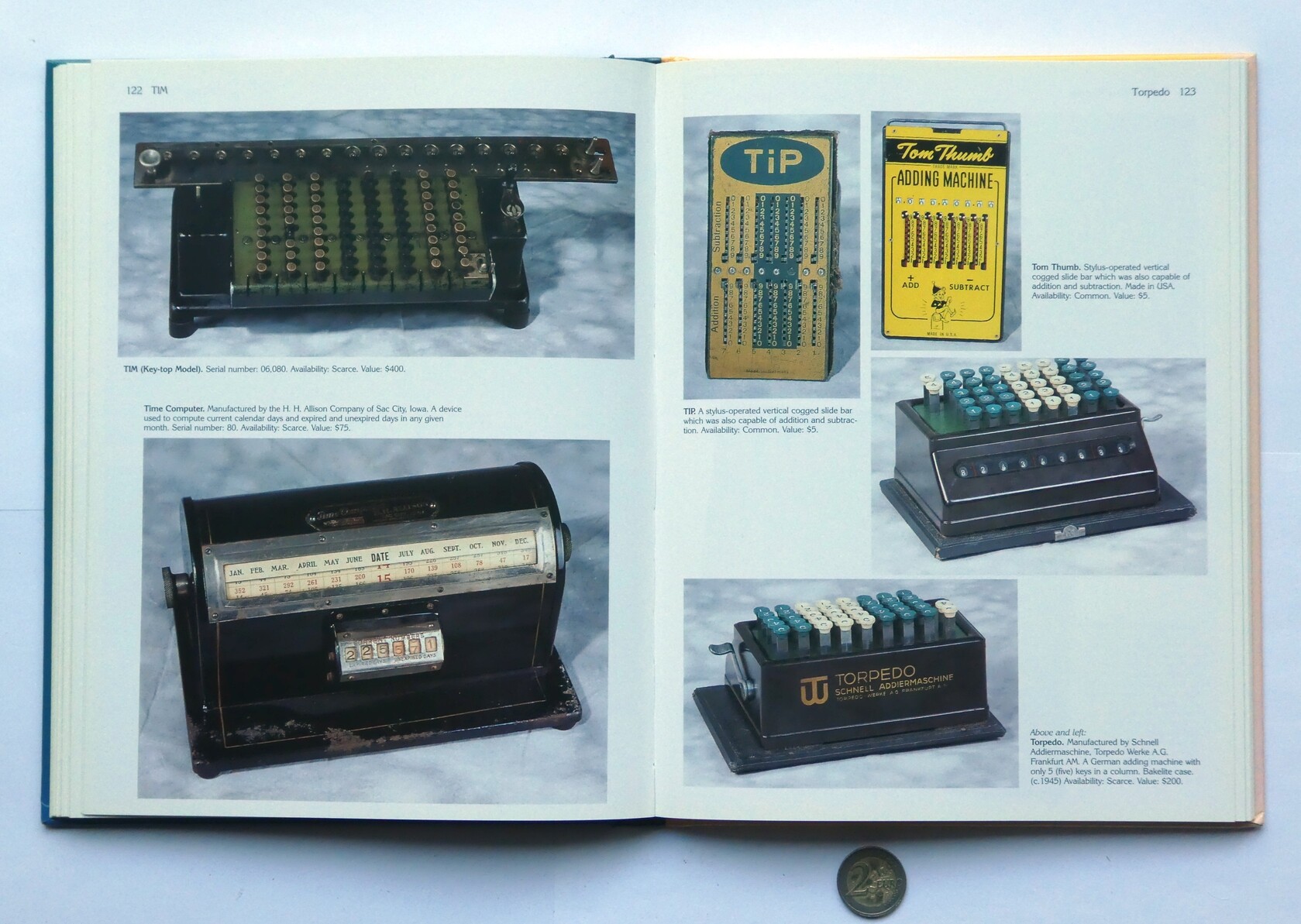
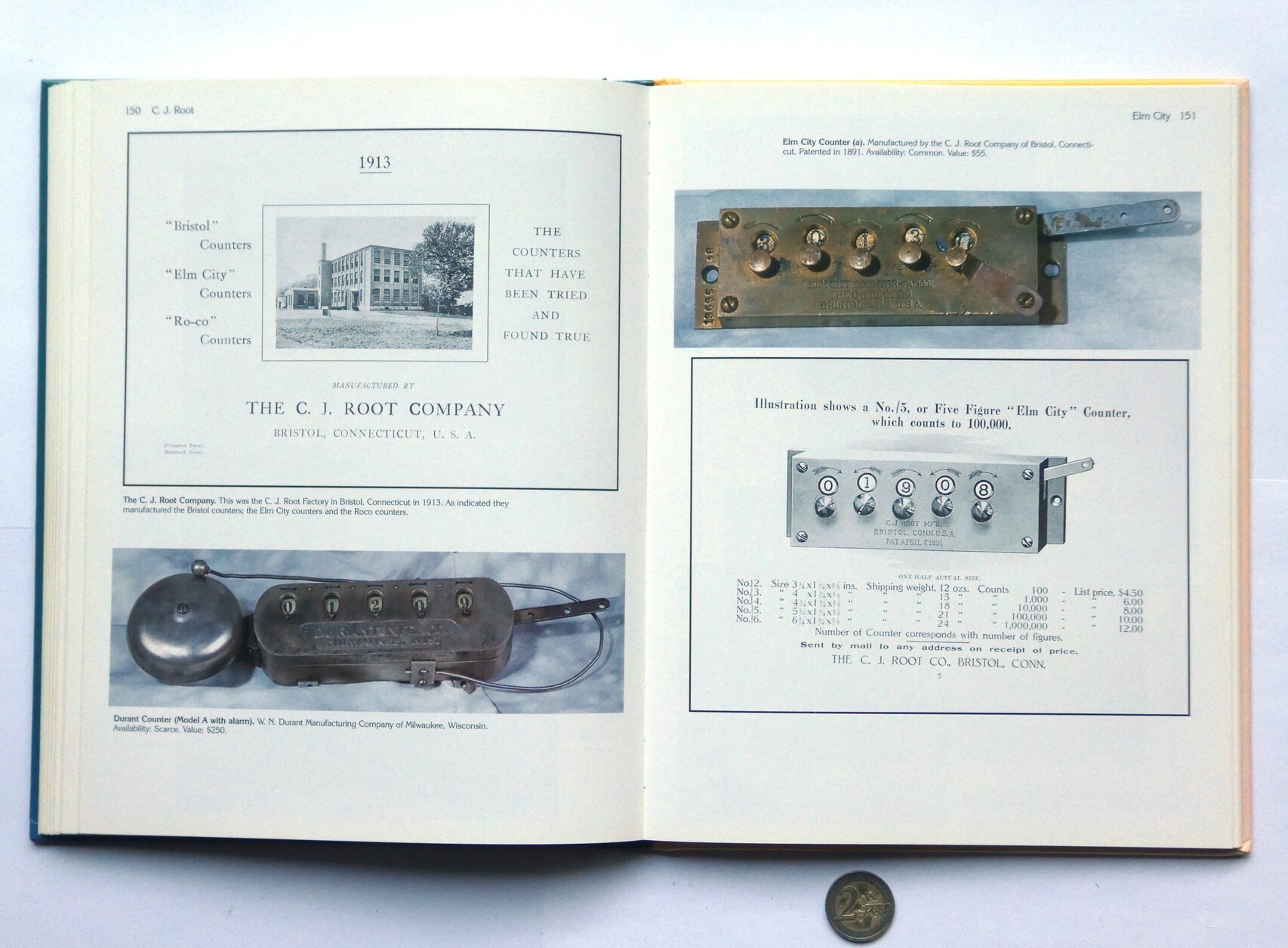
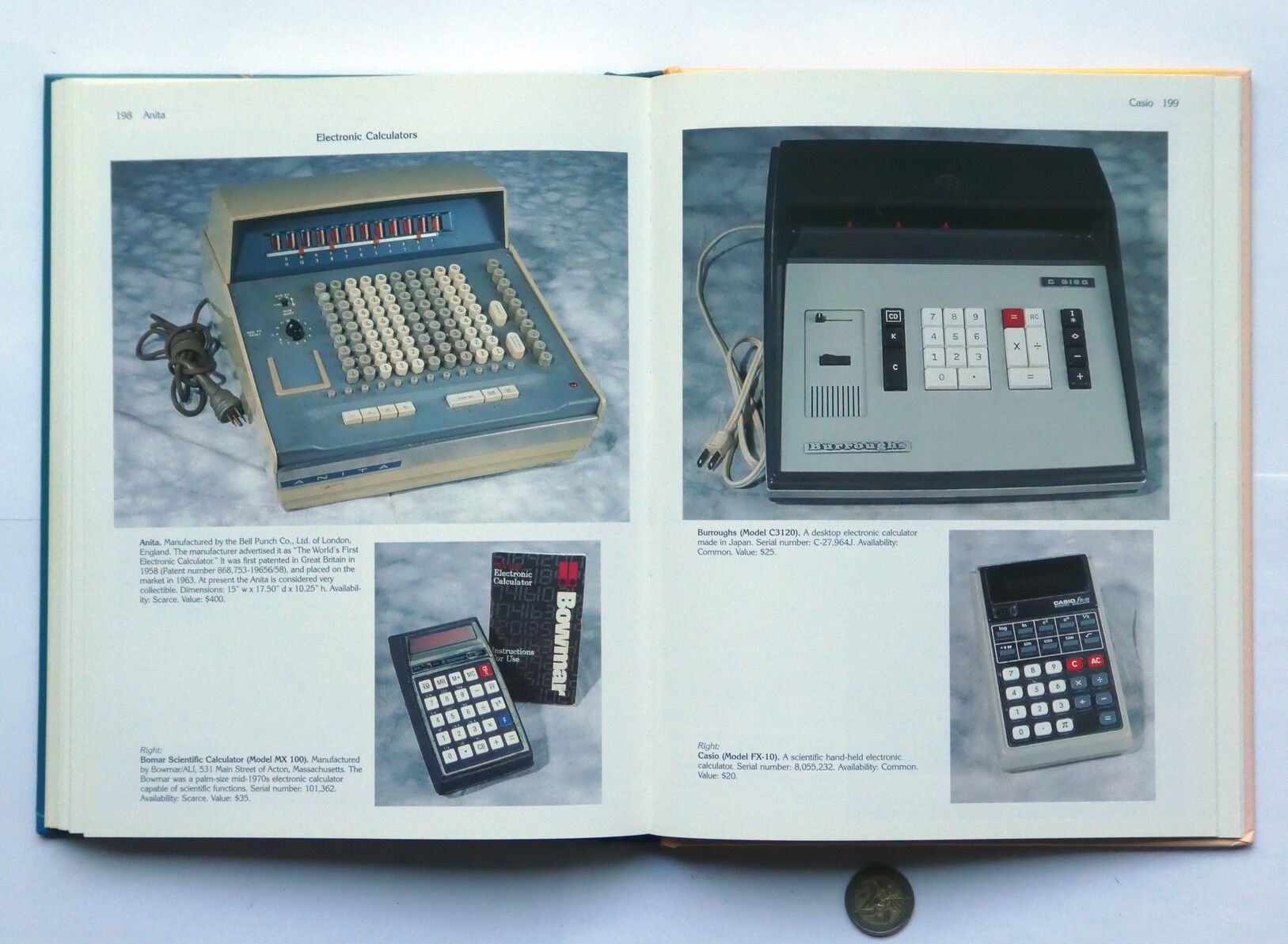
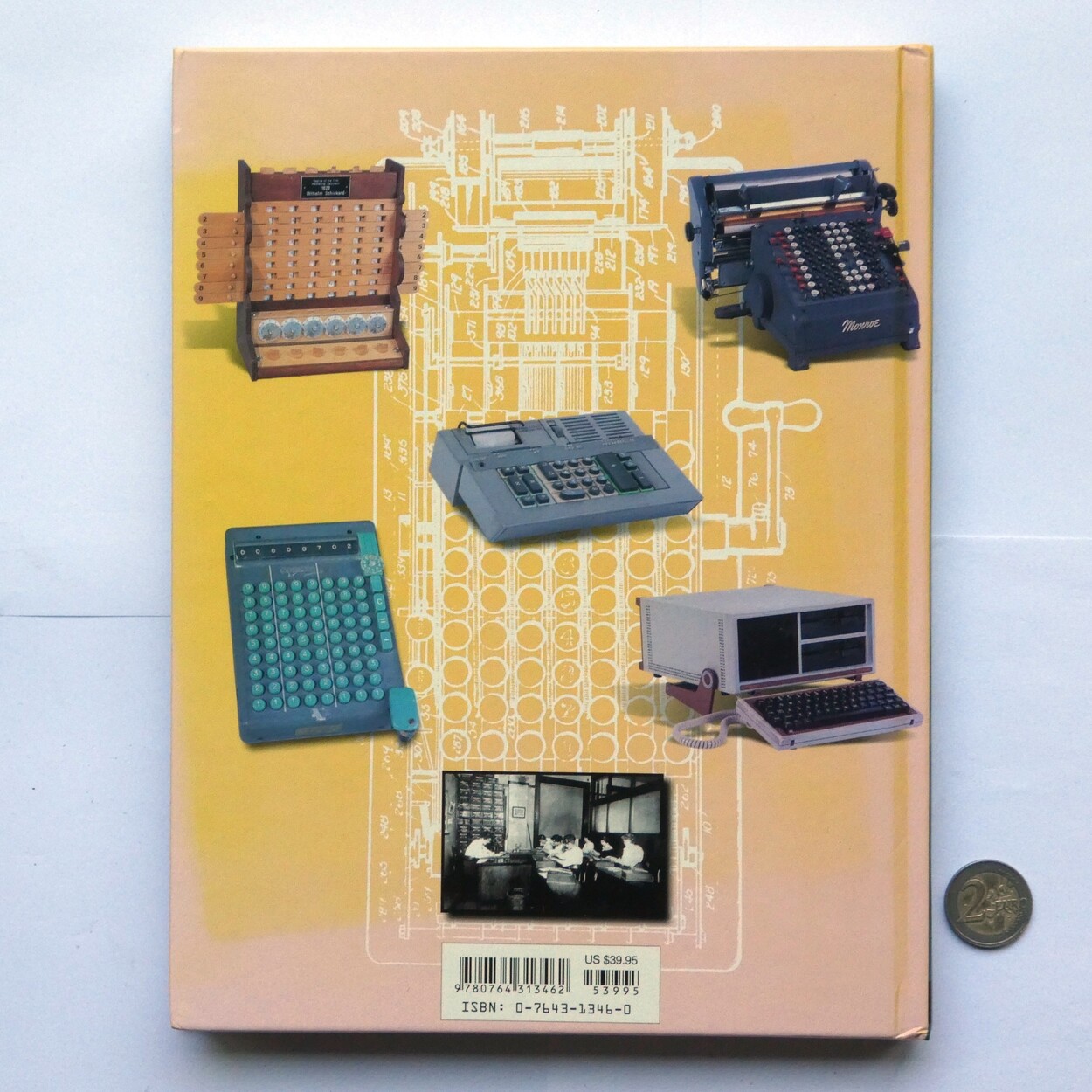
Antique Office Machines 600 Years of Calculating Devices
Thomas L. Russo Copyright 2001
224 pages, hardcover, English
222mm × 286mm × 23mm
This gorgeous book shows a large number of calculators, all beautifully
photographed. The short descriptions include an indication of its
rarity and value. Note however that these are very subjective,
based on the author's opinion, and don't always match my own experience.
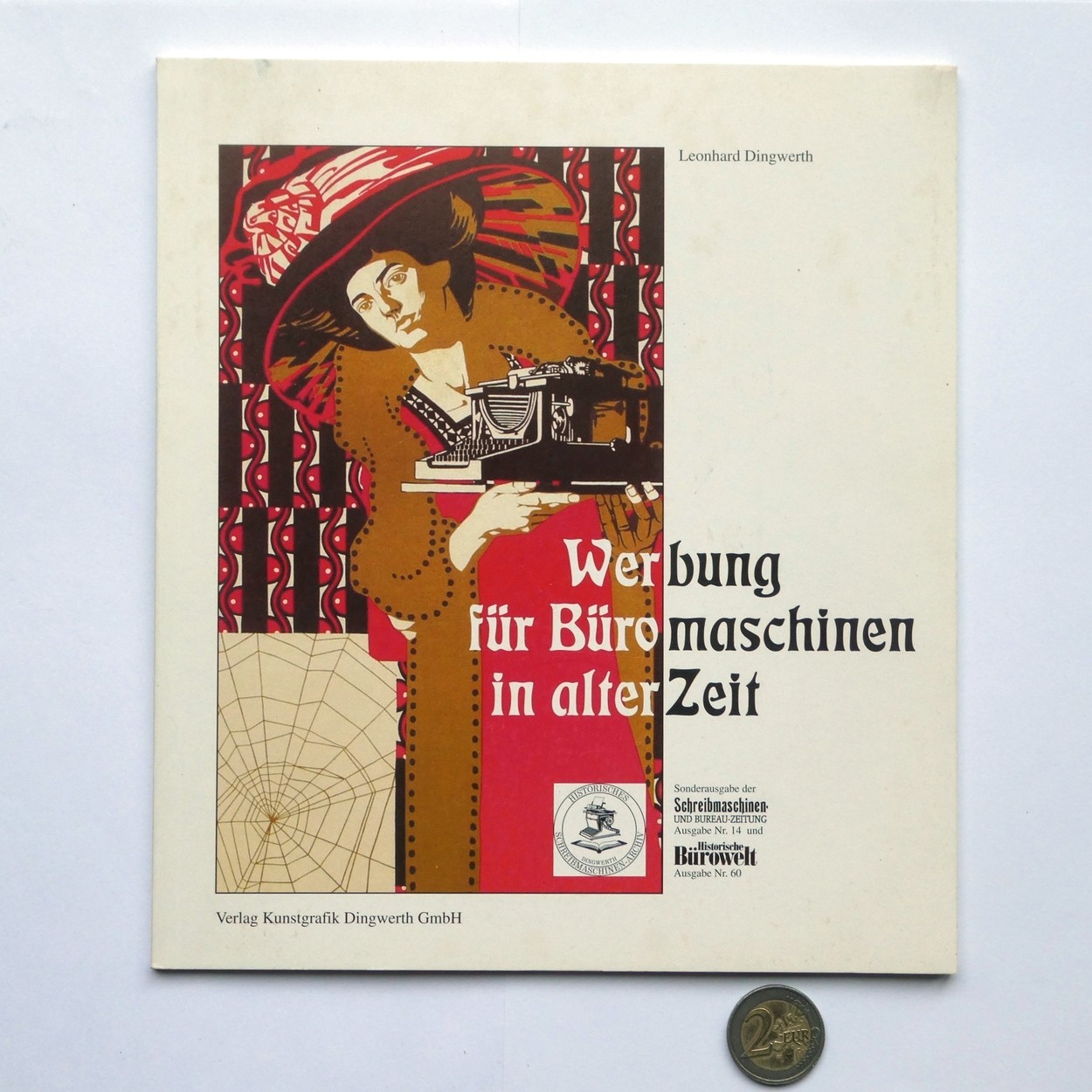
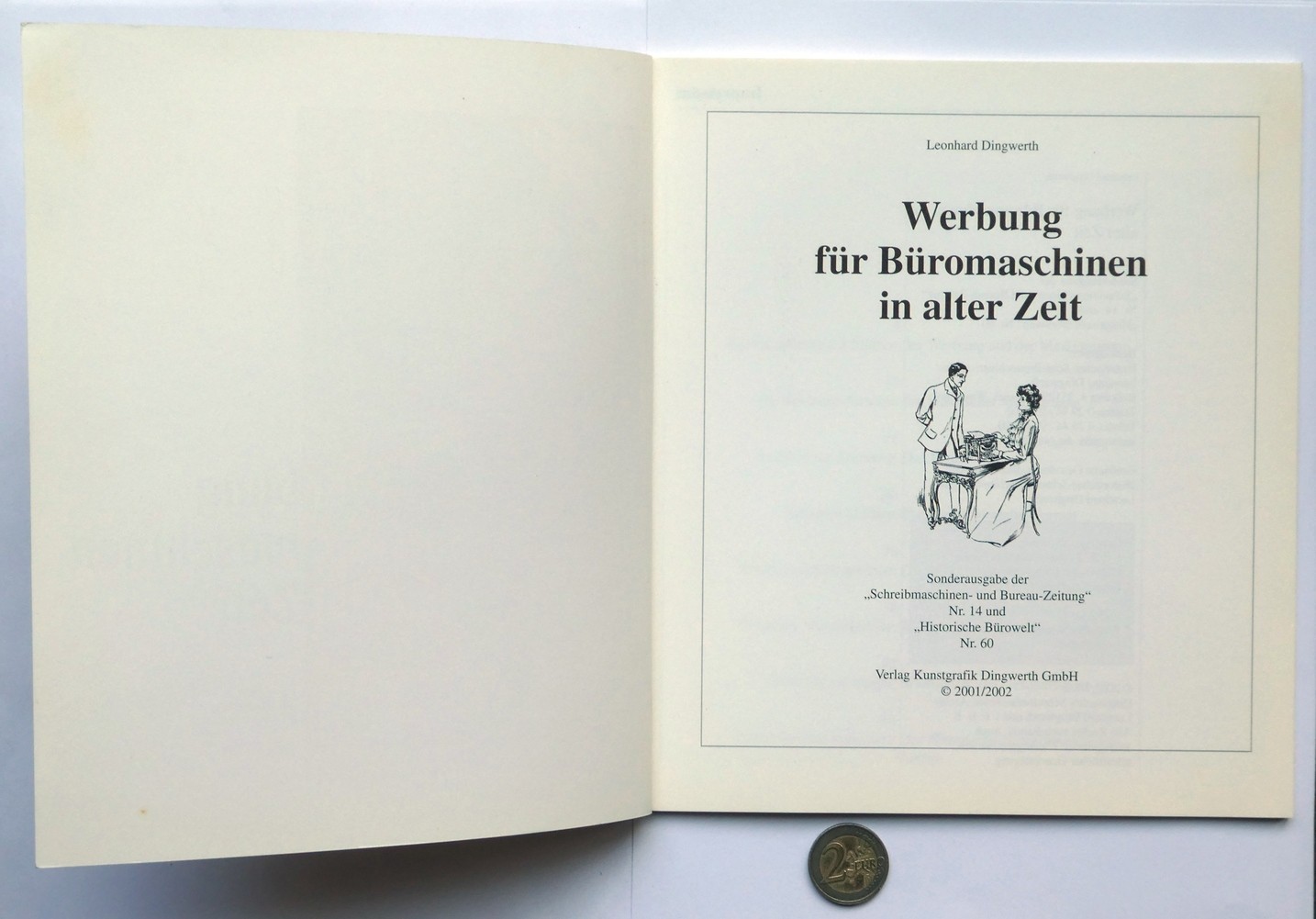
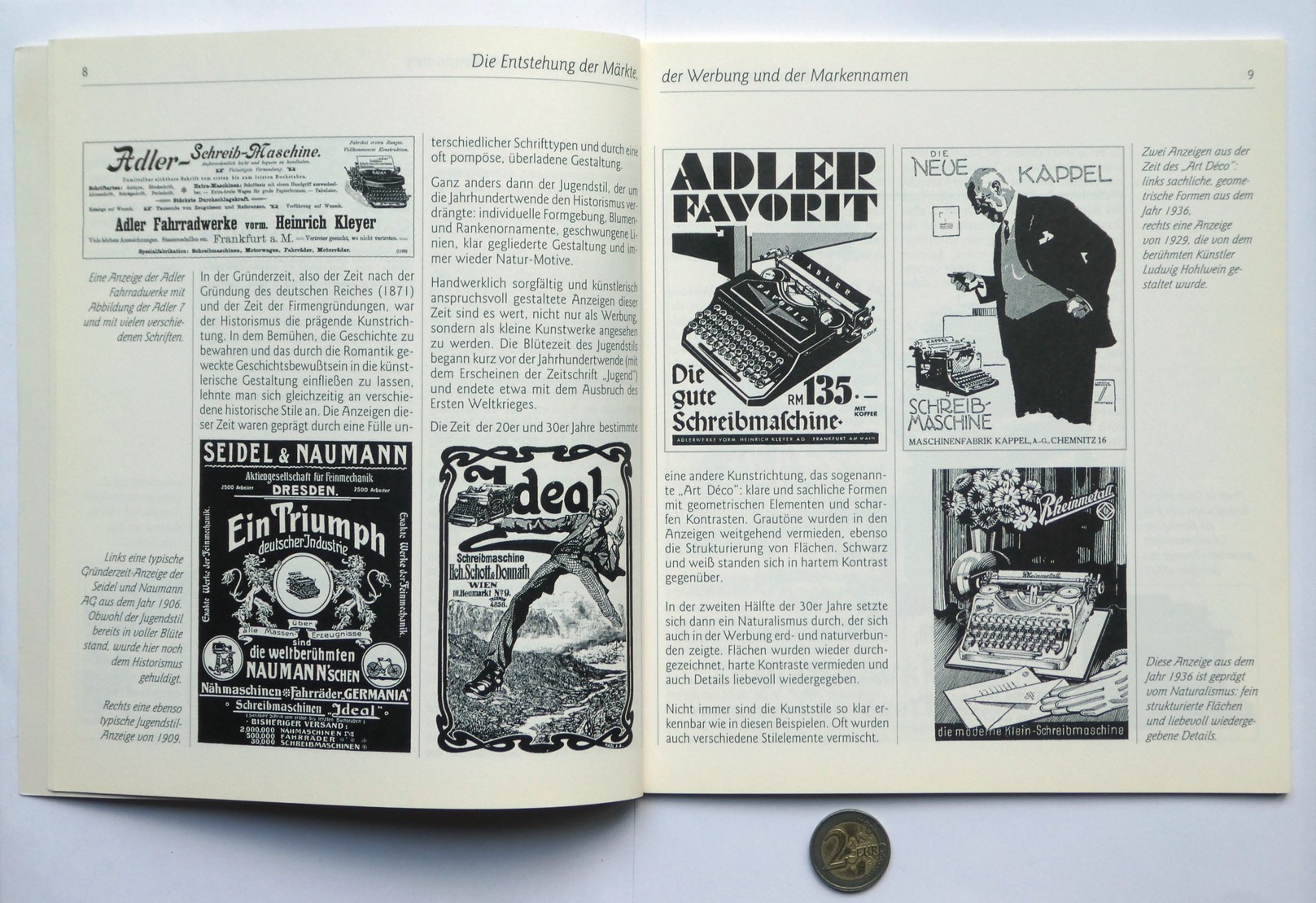
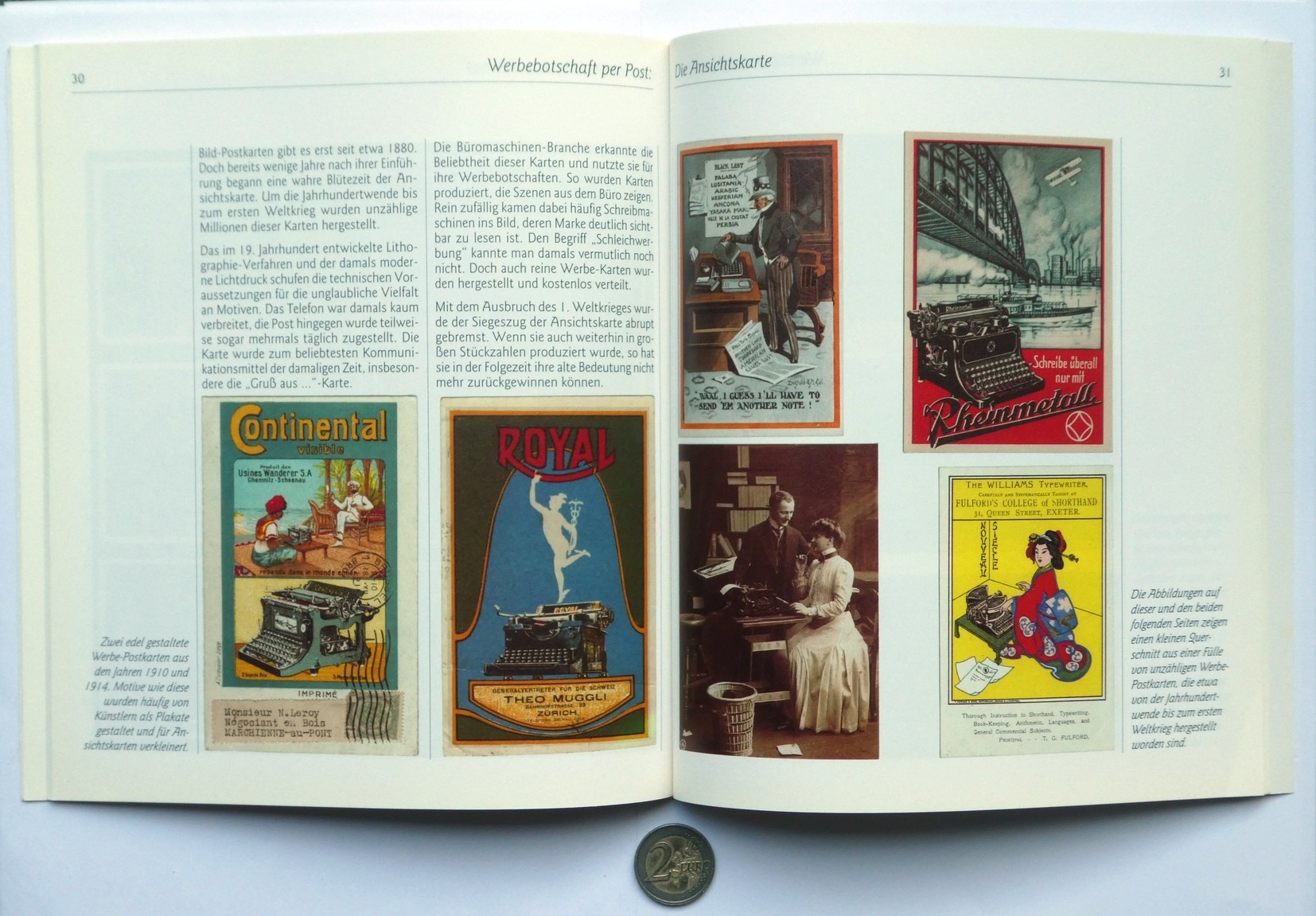
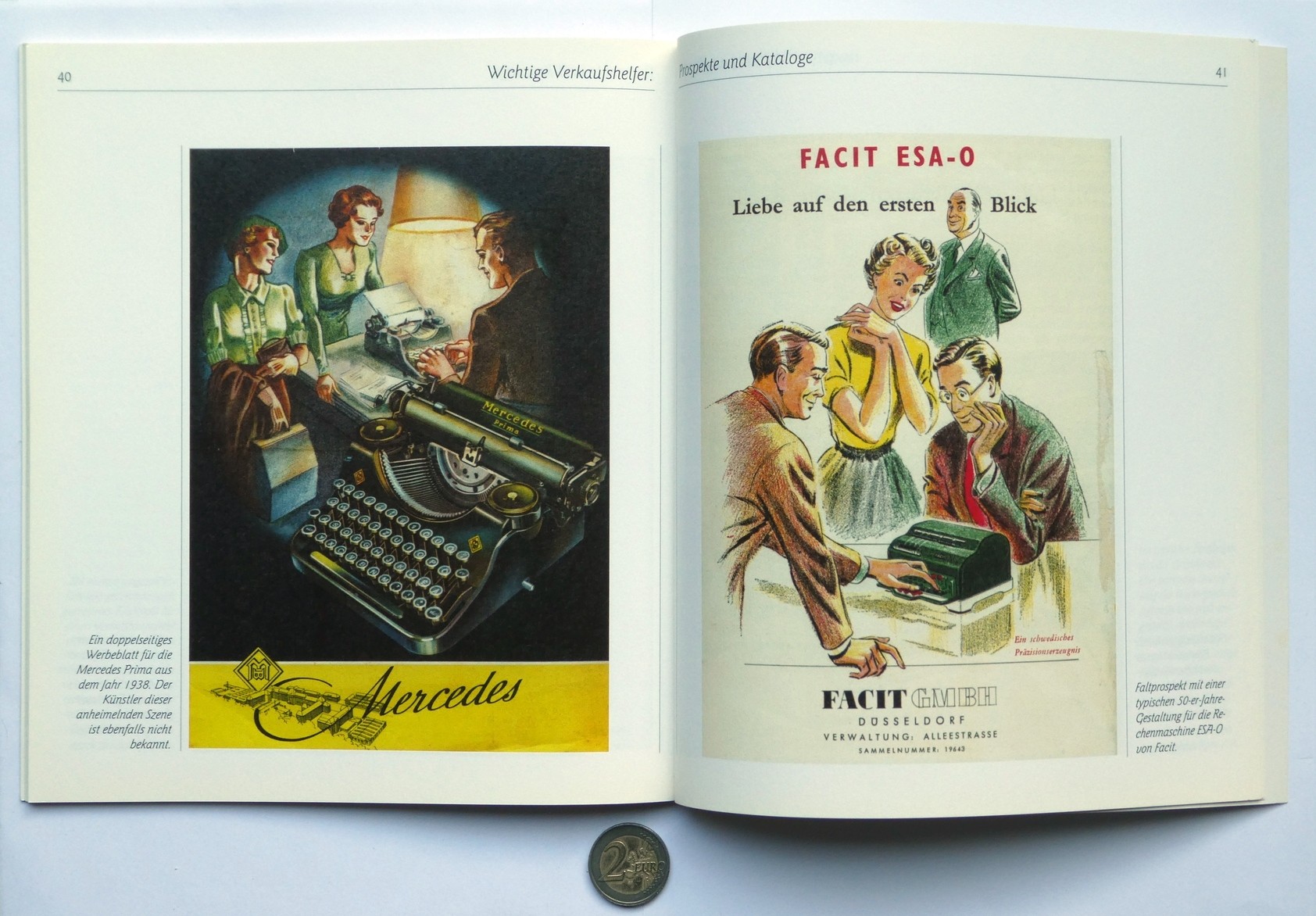
Werbung für Büromaschinen in alter Zeit Leonhard Dingwerth 2001/2002
48 pages, paperback, German
209mm × 238mm × 4mm
This book is a special publication for the magazines
"Schreibmaschinen- und Bureau-Zeitung" and
"Historische Bürowelt". It shows adverts for
office machines through the ages. It mostly concentrates on
typewriter ads, but there are a few calculators too.
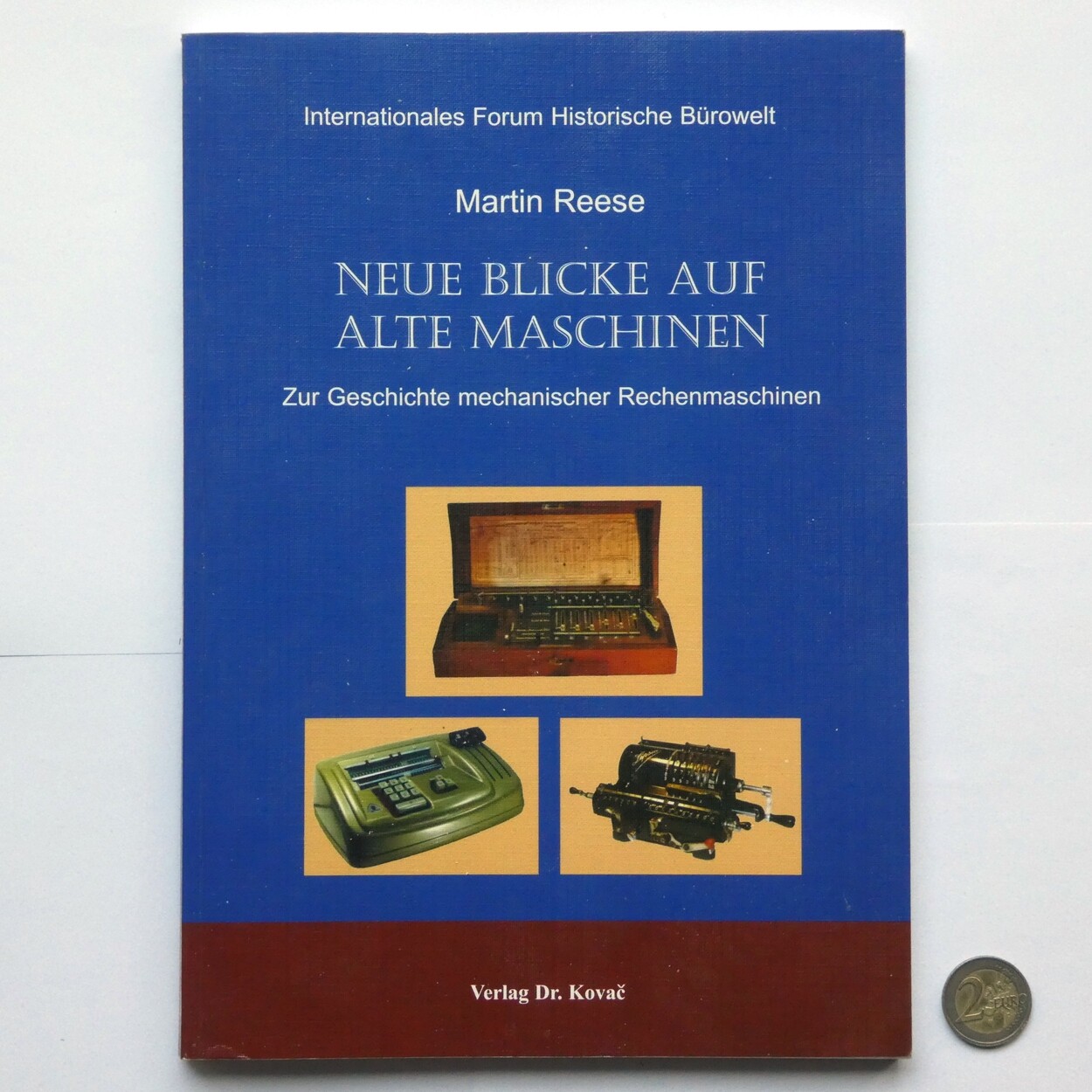
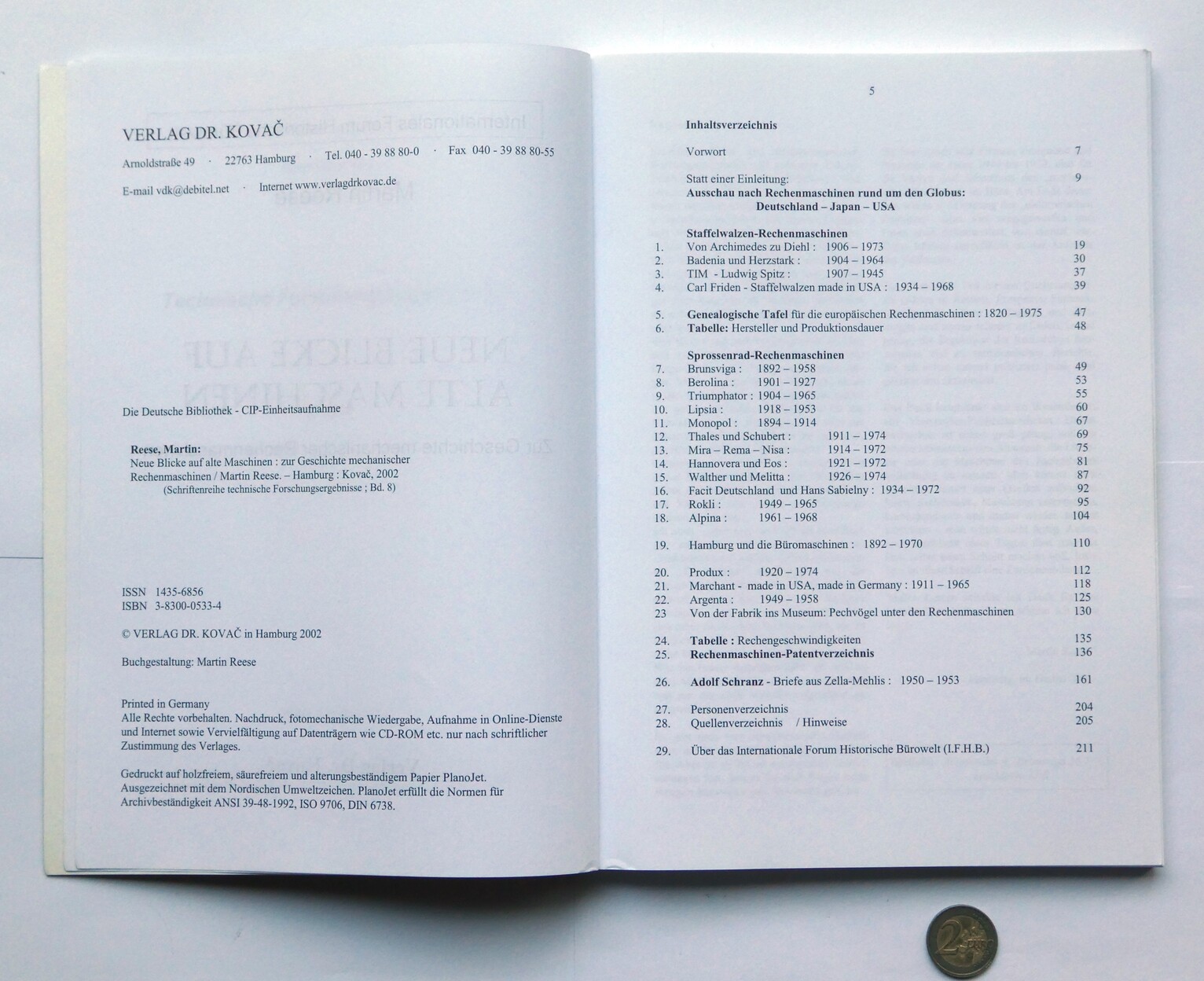
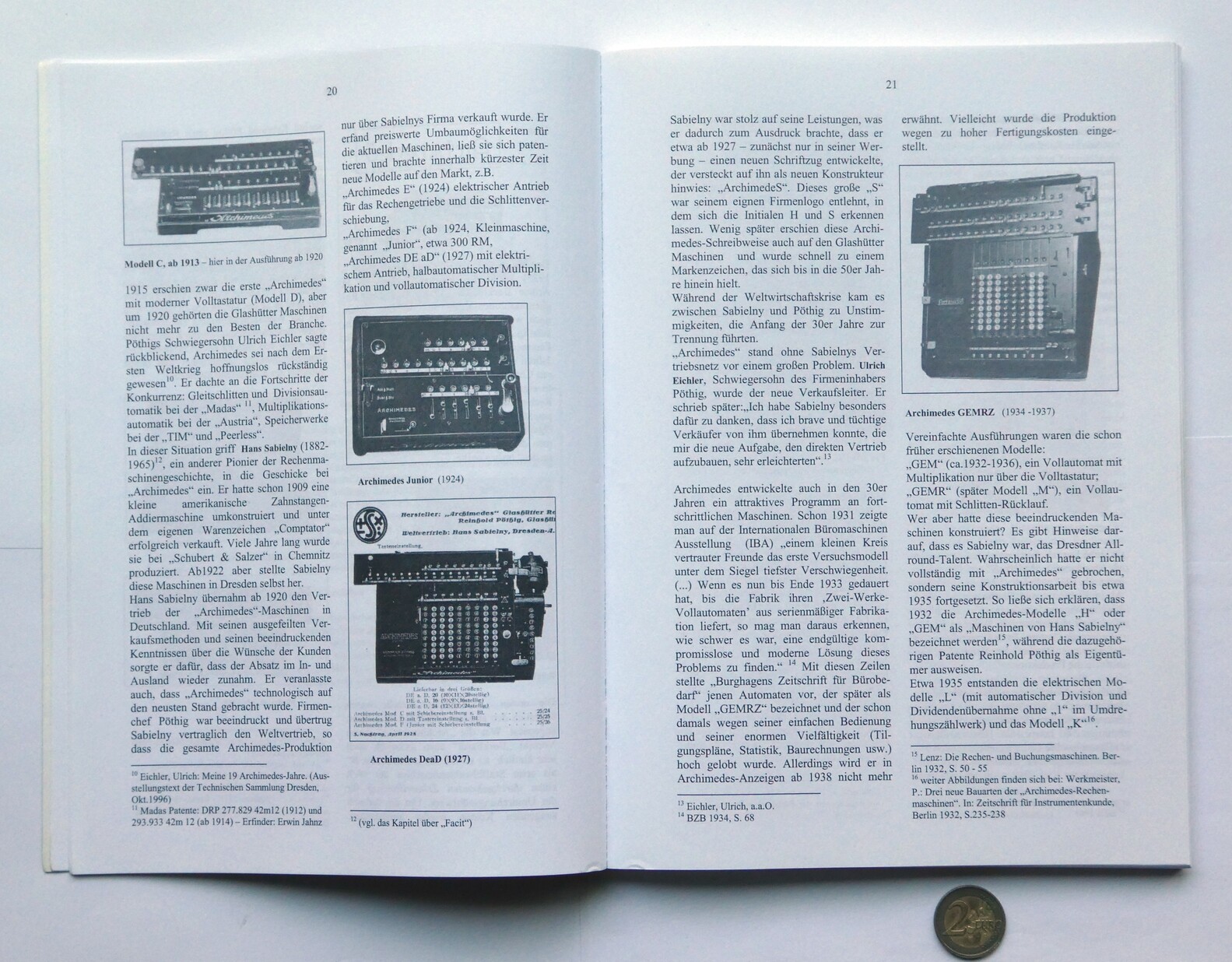
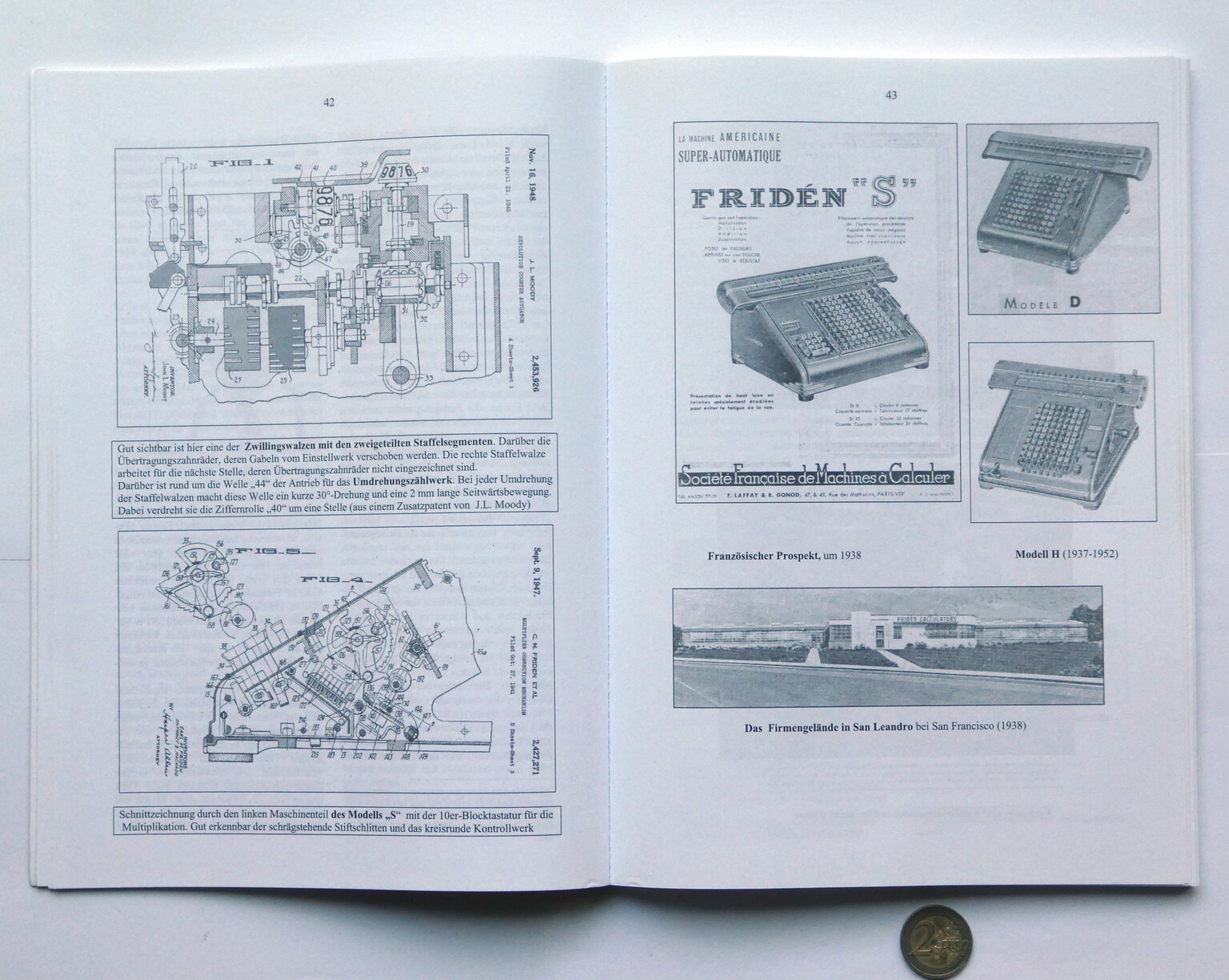
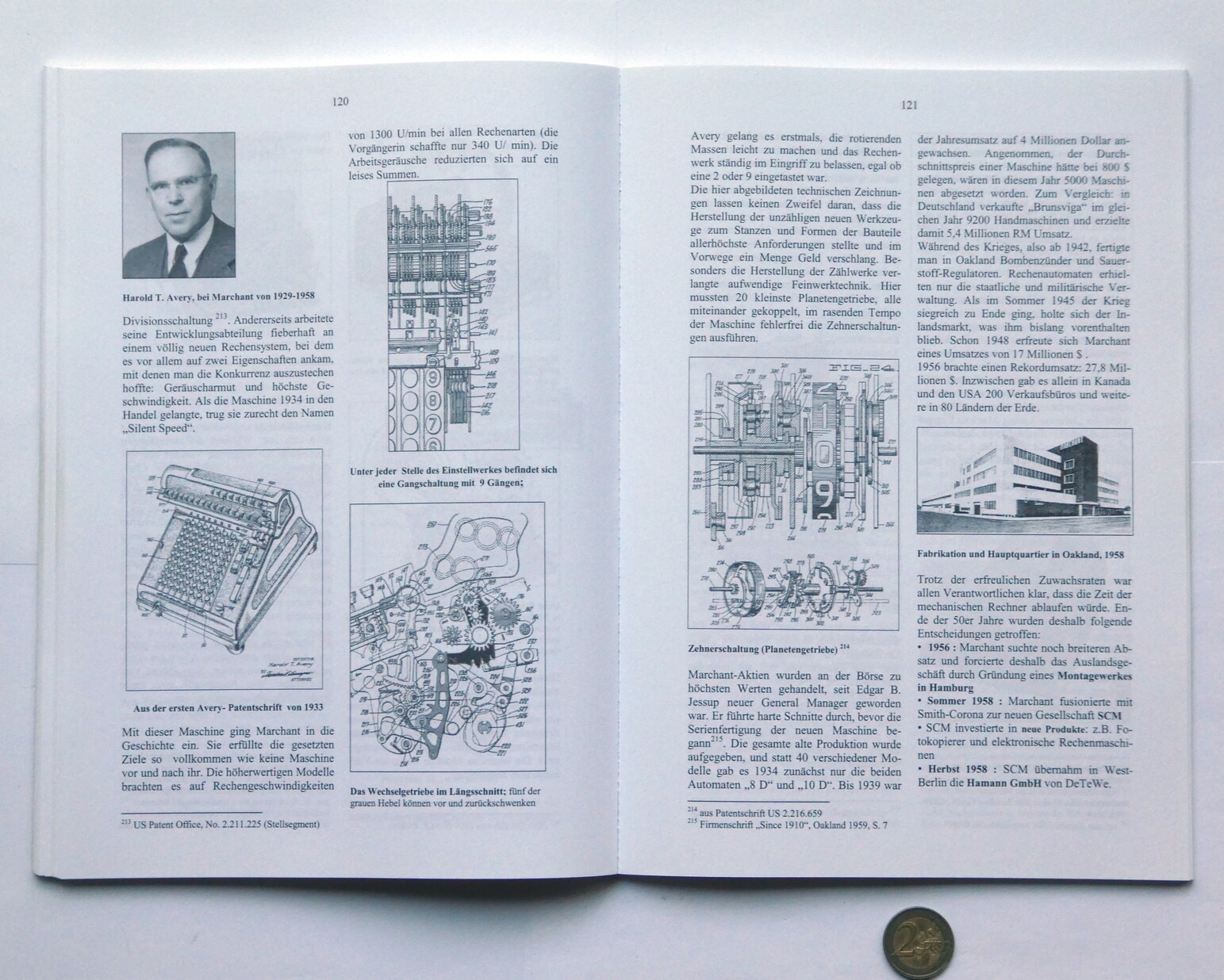
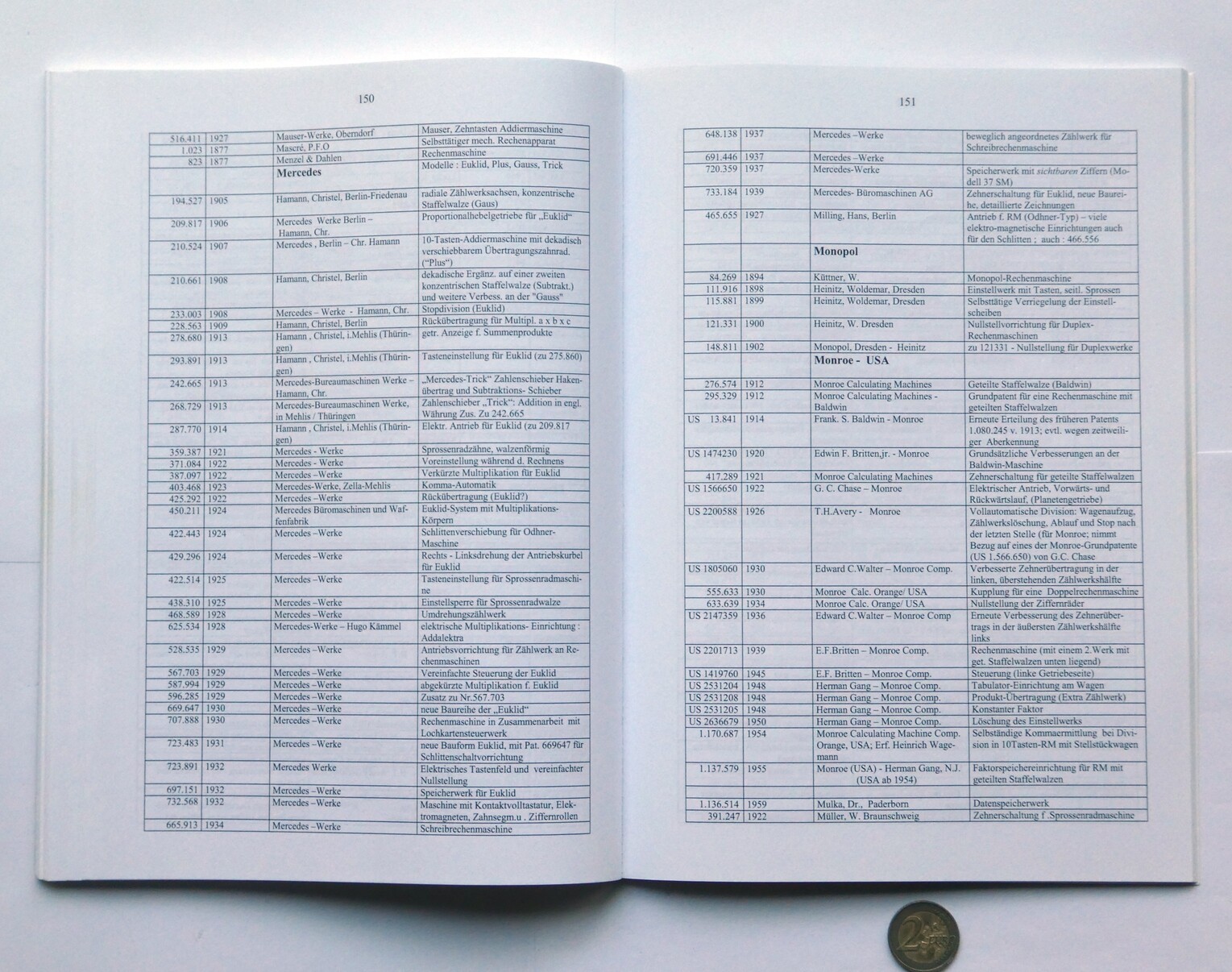
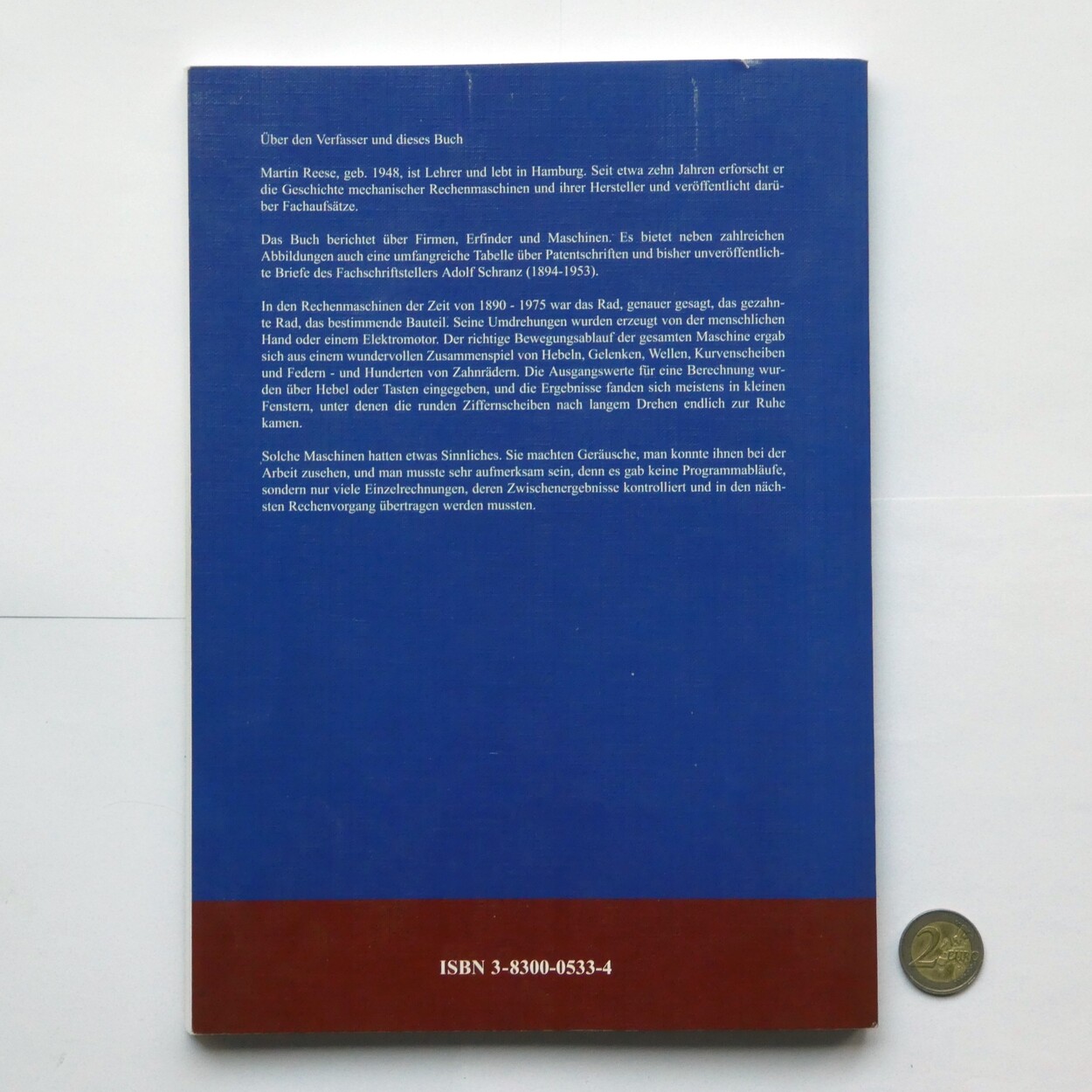
Neue Blicke auf alte Maschinen Zur Geschichte mechanischer Rechenmaschinen
Martin Reese Copyright 2002
ISBN 3-8300-0533-4
211 pages, softcover, German
203mm × 293mm × 13mm
This excellent book contains various detailed articles, each on
a different brand of calculator. They are accompanied with many
photographs and illustrations.
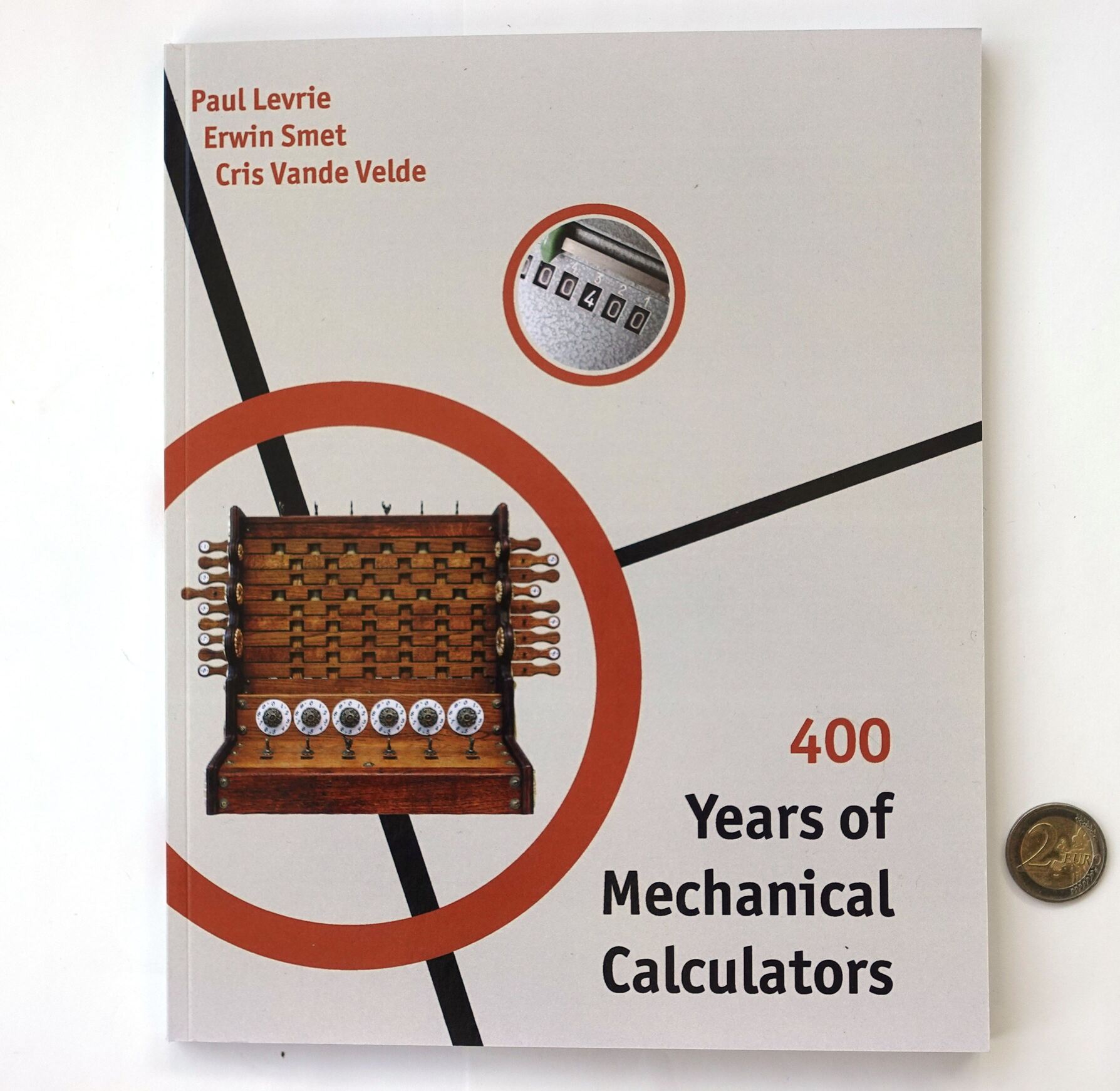
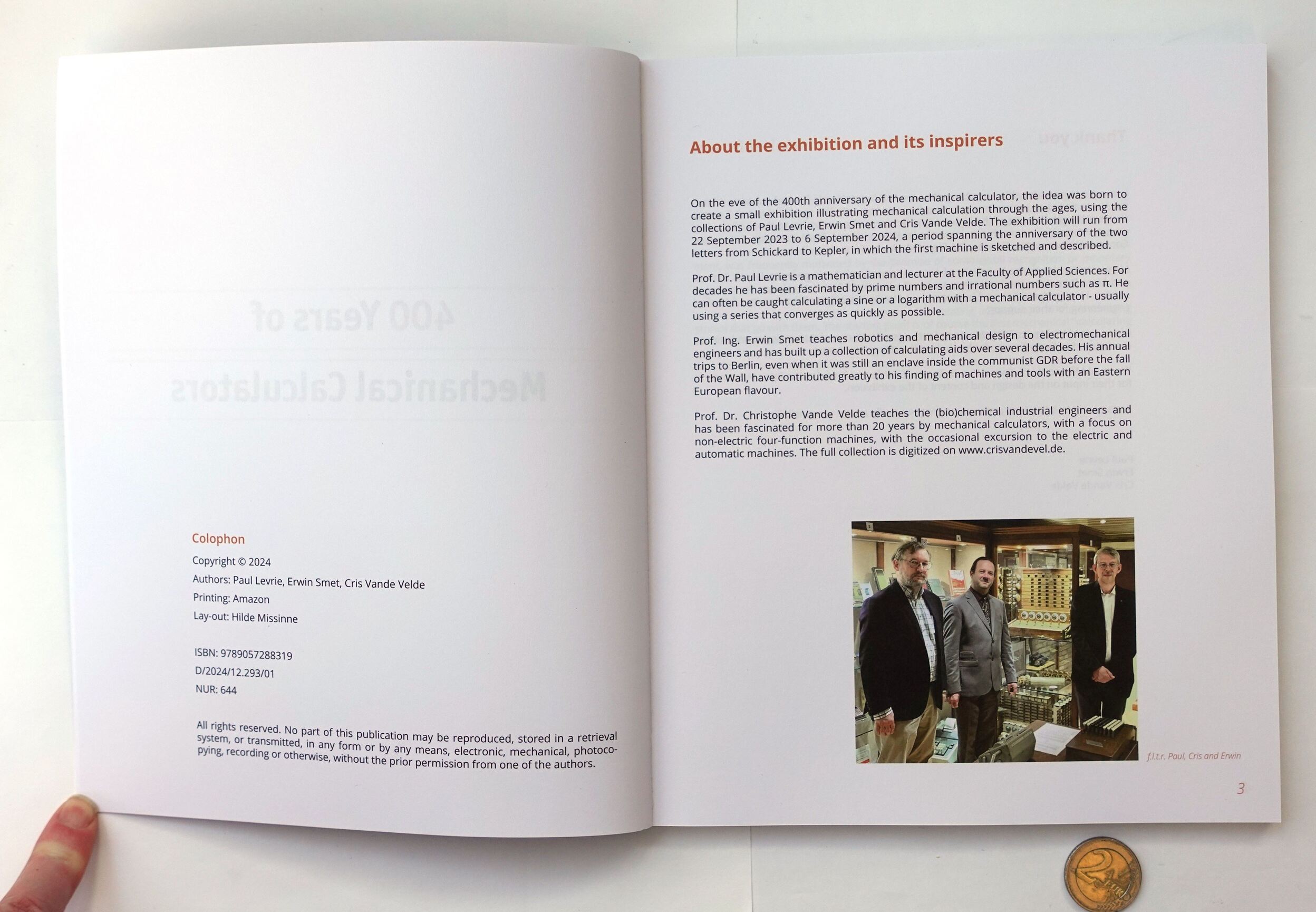
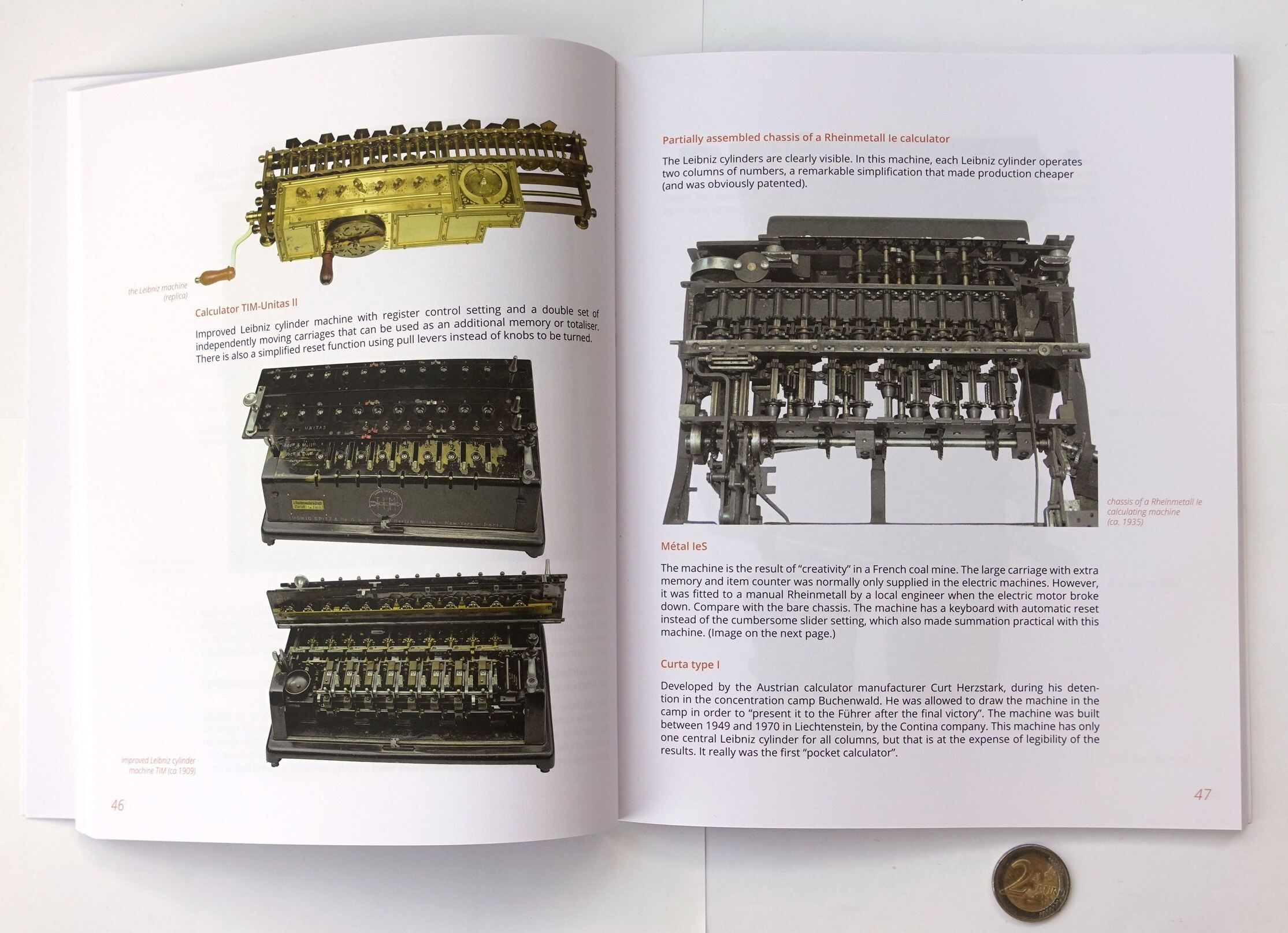
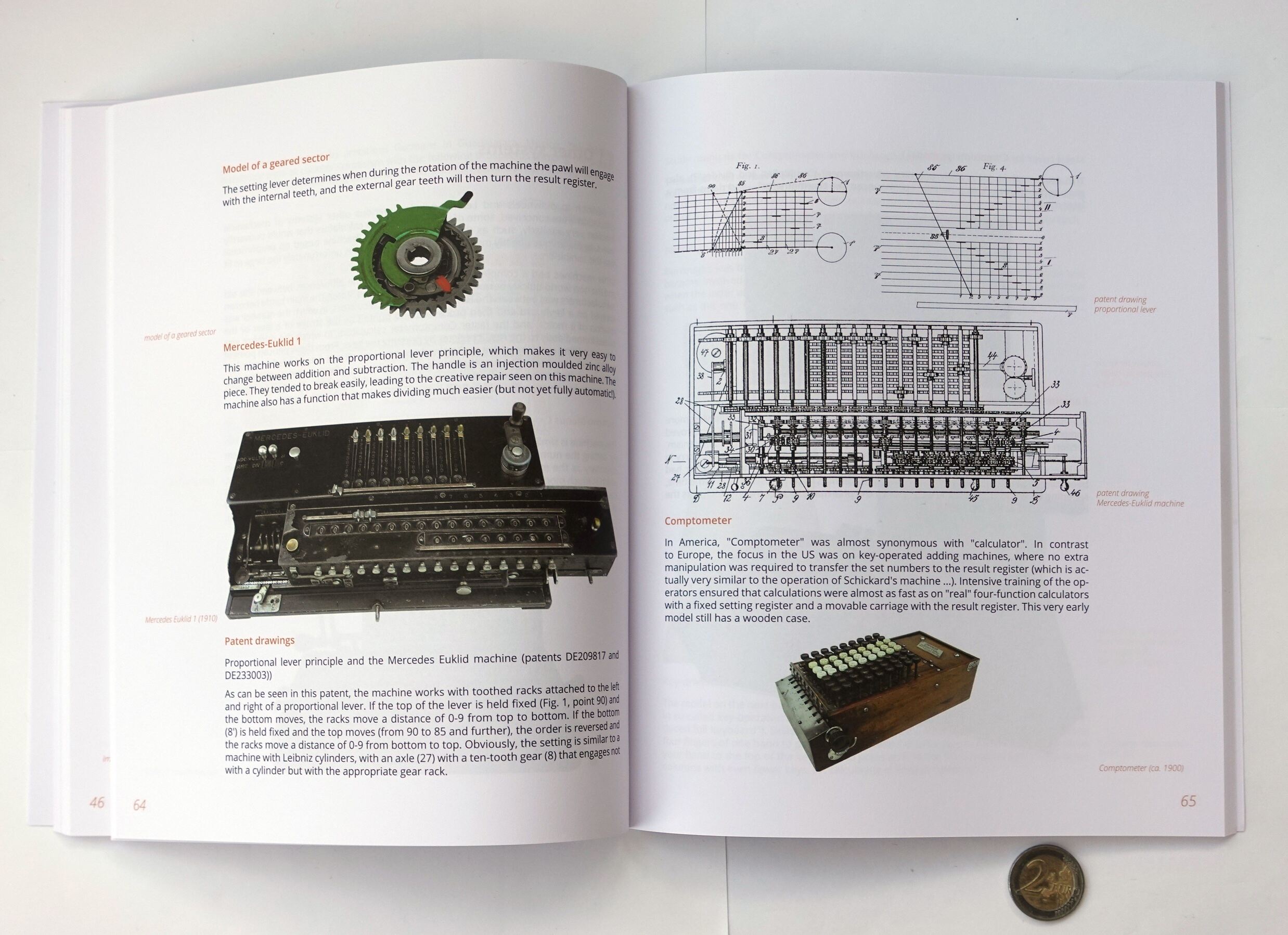
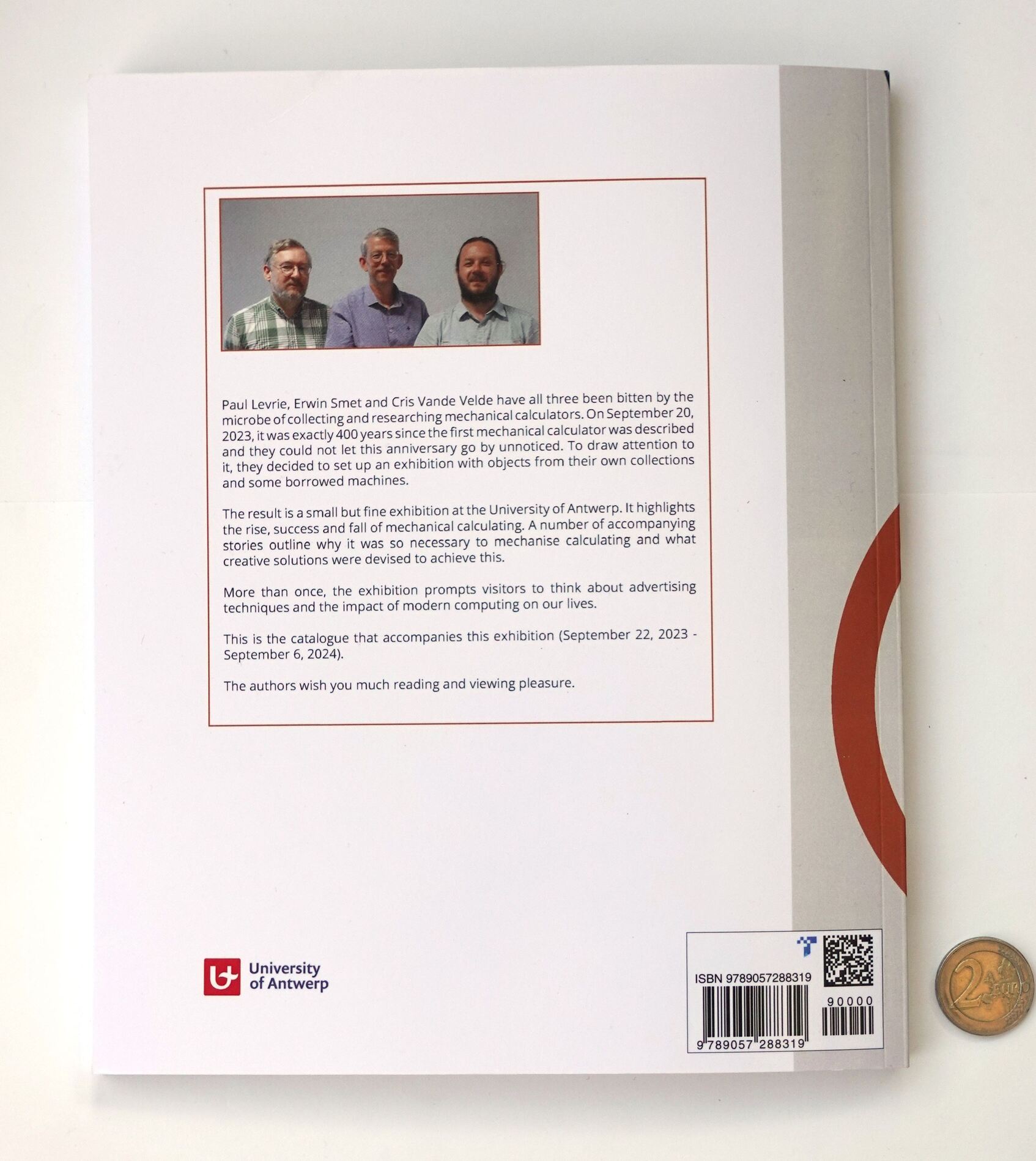
400 Years of Mechanical Calculators Paul Levrie, Erwin Smet, Cris Vande Velde Copyright 2024
ISBN 9789057288319
133 pages, softcover, English
210mm × 258mm × 9mm
In September 1623 Wilhelm Schickard described a calculating machine in
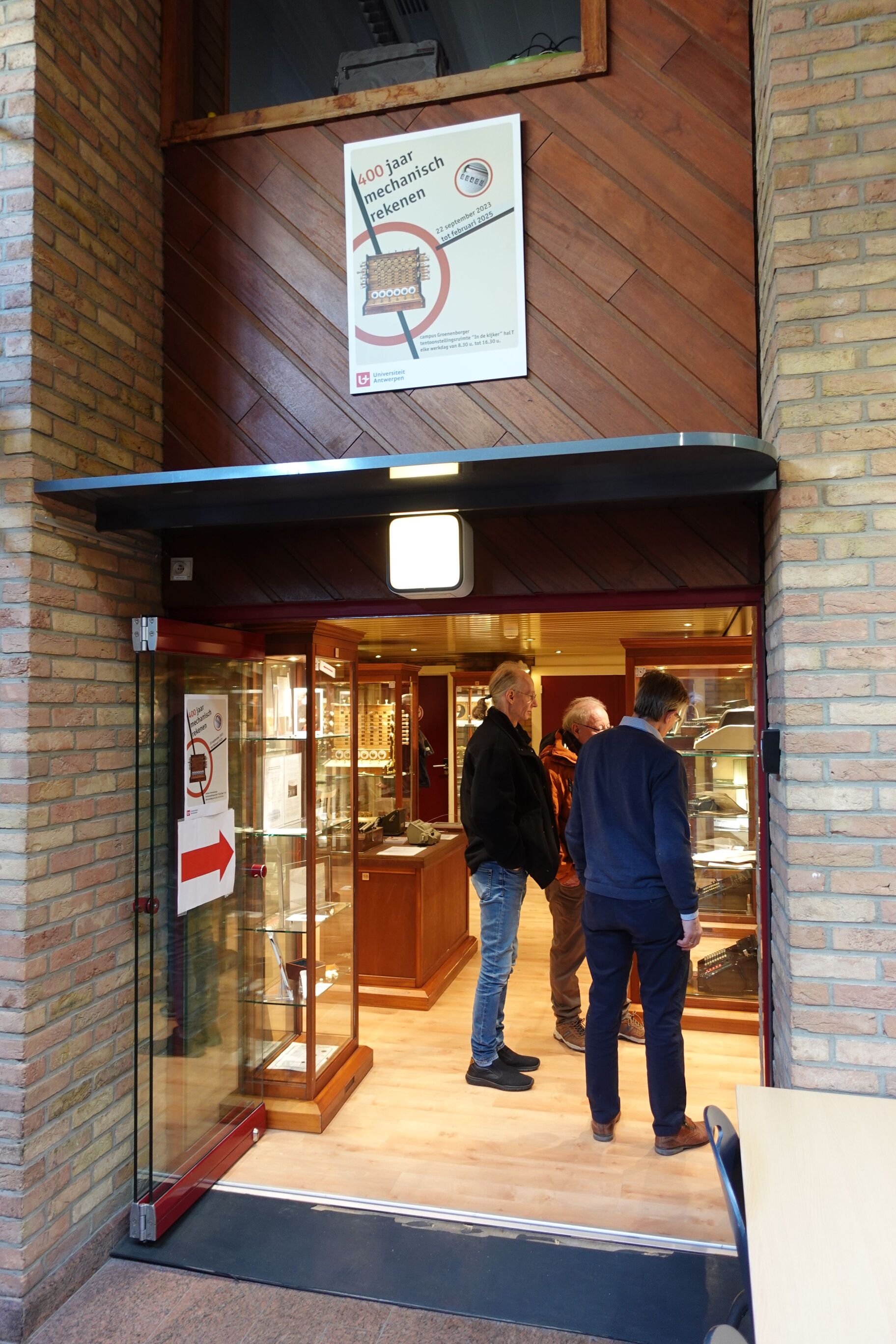
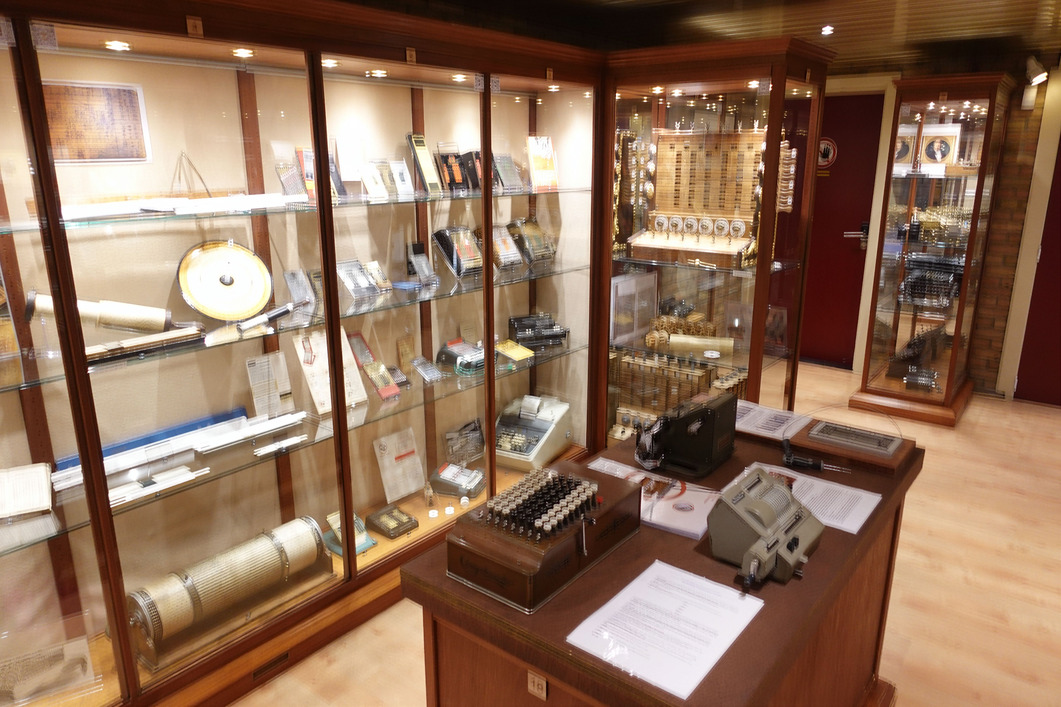
a letter to Kepler. Four hundred years later an exhibition on mechanical
calculators was opened, describing the evolution of those machines. The
exhibition was at the University of Antwerp for a little over a year.
This book accompanies that exhibition, with photos of many of the exhibited
machines and copious explanatory text. The
exhibition website
contains most of the same information.