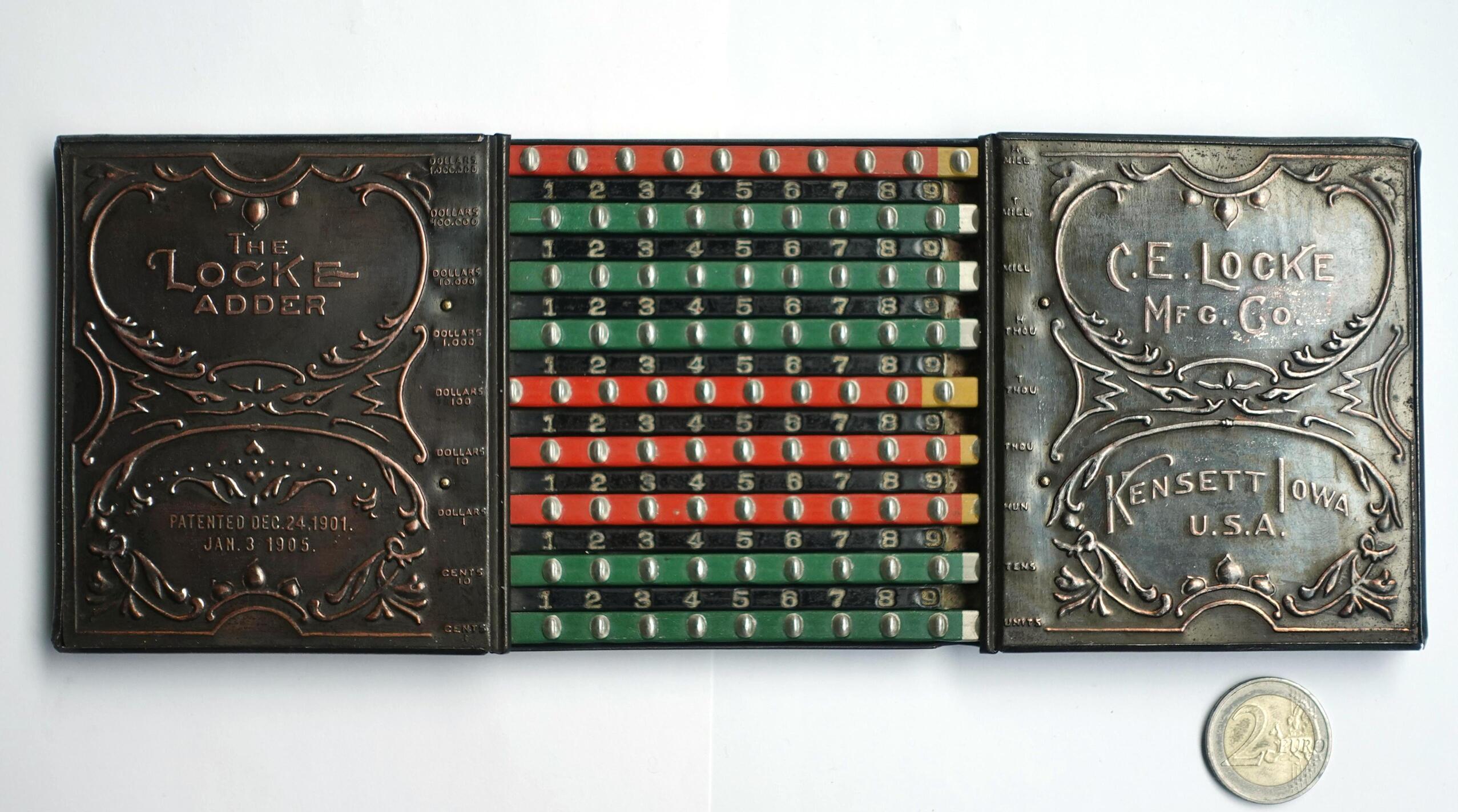
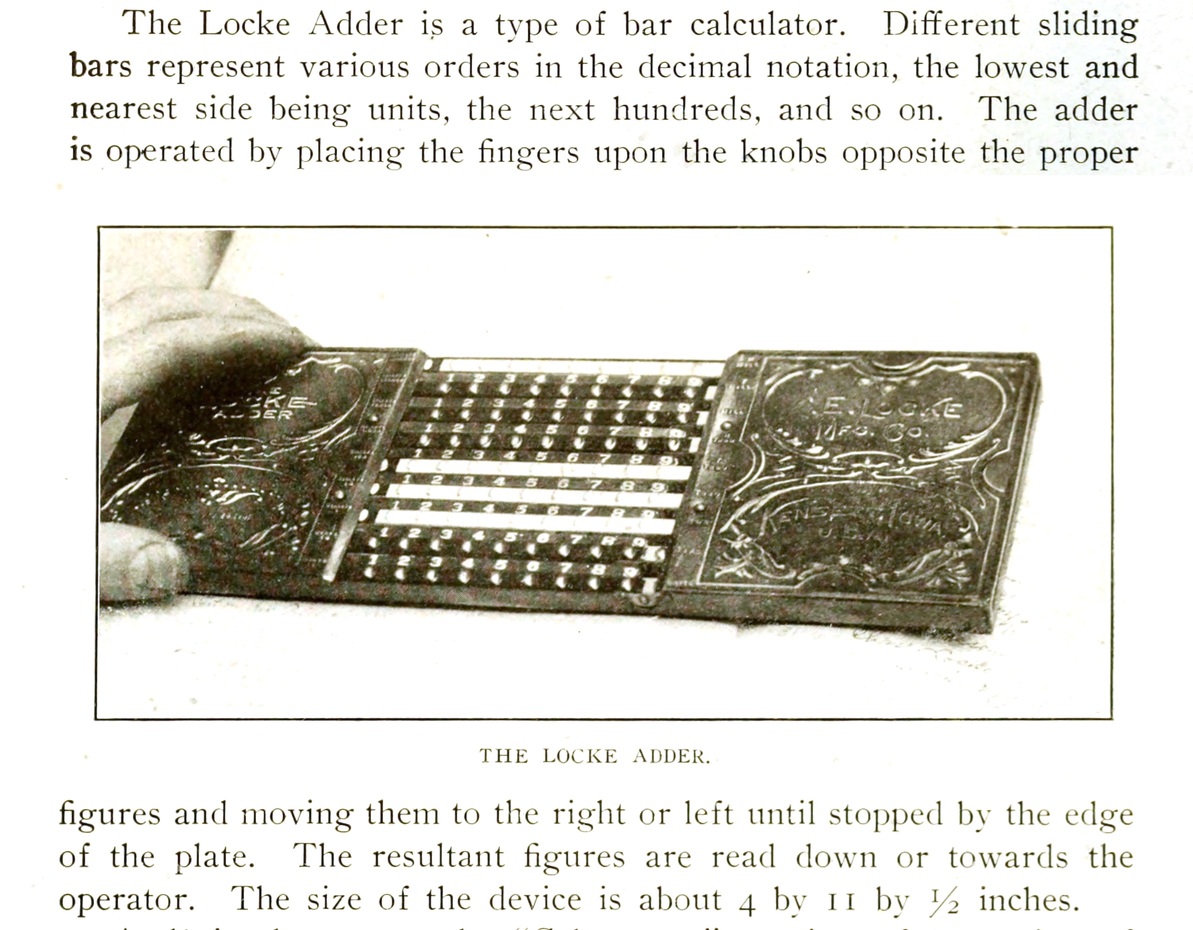
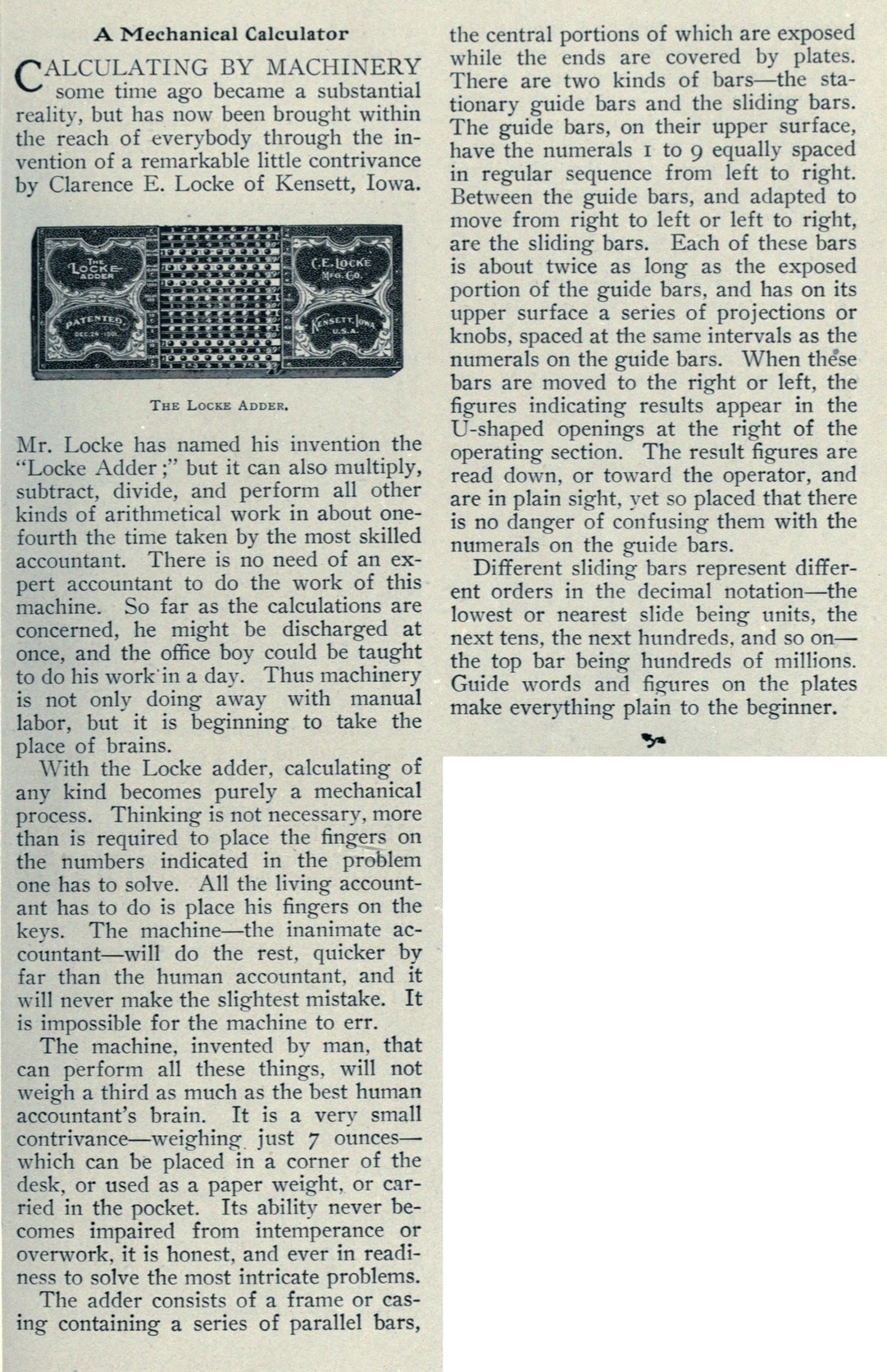
The Locke Adder is a very simple adder that does not even have any carry mechanism, so it is essentially an abacus. It uses nine horizontal rods to represent nine digits, so it can count up to 999,999,999. It has a beautifully decorated metal casing, probably made of aluminium just like the rods but given a bronze-coloured coating. It says "C. E. Locke Mfg. Co. / Kensett Iowa U.S.A." on the right section, and "The Locke Adder / Patented Dec.24.1901. Jan.3 1905." on the left section.
The 9 horizontal rods have small raised dots on them, and you slide them using
your finger. The bottom rod represents the units digit, the next rod the tens
digit, and so on, and how far each rod has moved indicates the digit value at
that position. There are numbers alongside the rods so that you can easily
choose what amount to slide. To add for example 4, you put your finger just
to the right of the dot next to the four, and slide the rod to the left as
far as possible. If your addition would cause an overflow, it is easily noticed
by the fact that the chosen dot is on part of the rod of a different colour.
In that case you put your finger just to the left of the dot and push the rod
all the way to the right, and then add 1 to the next rod.
There is a small cut-out in the casing revealing a digit printed on the side
of each rod, allowing the current value of the register to be read off from
top to bottom.
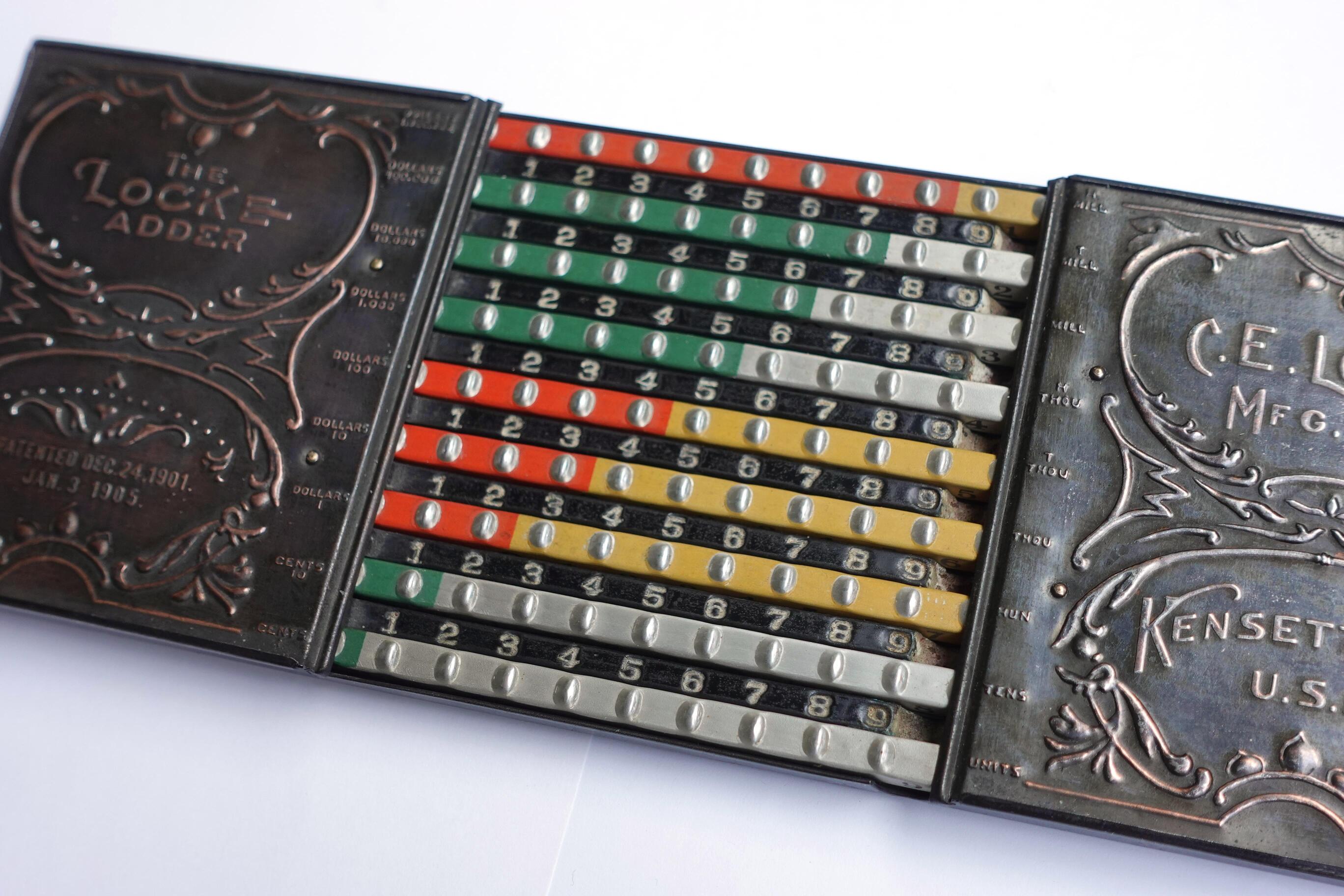
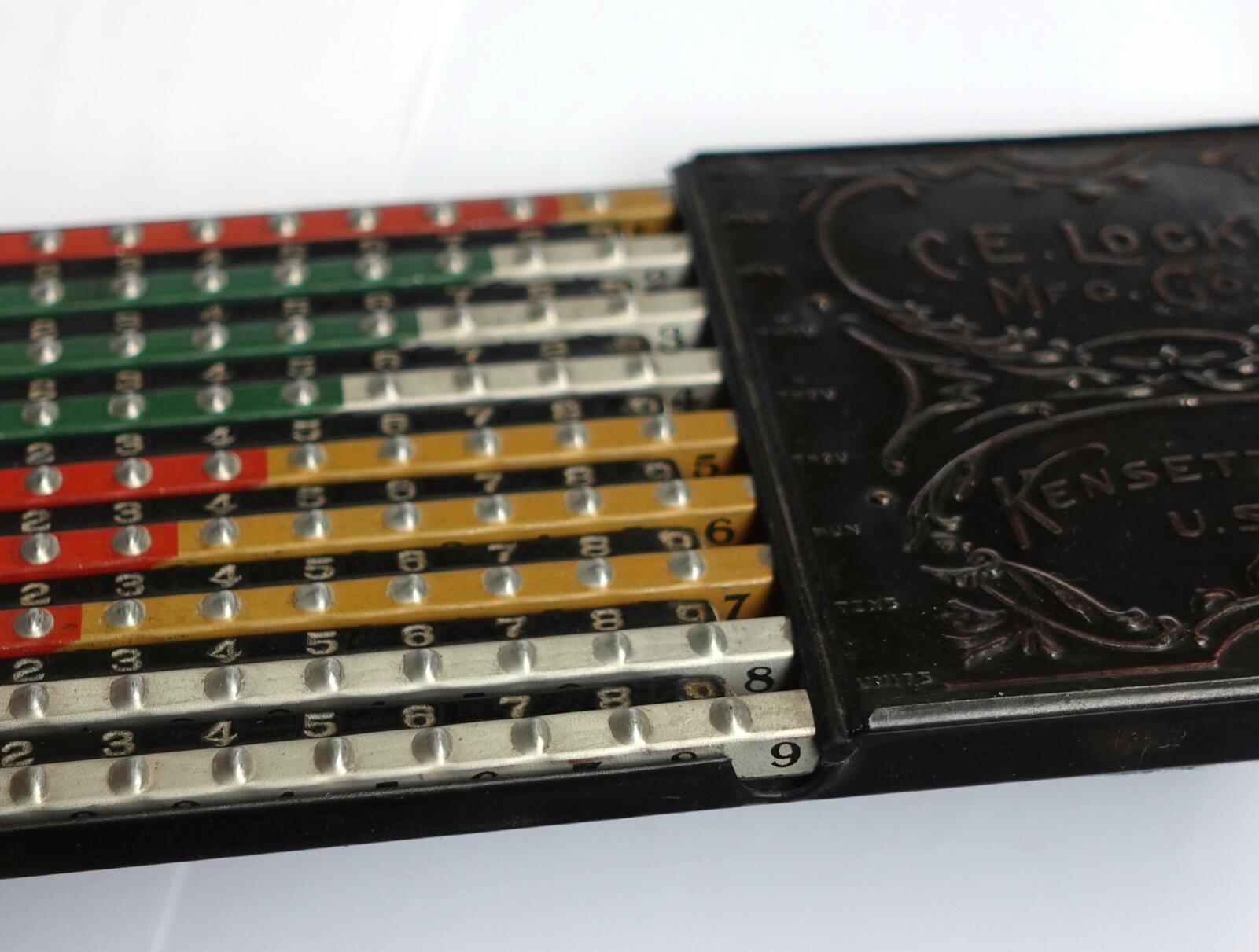
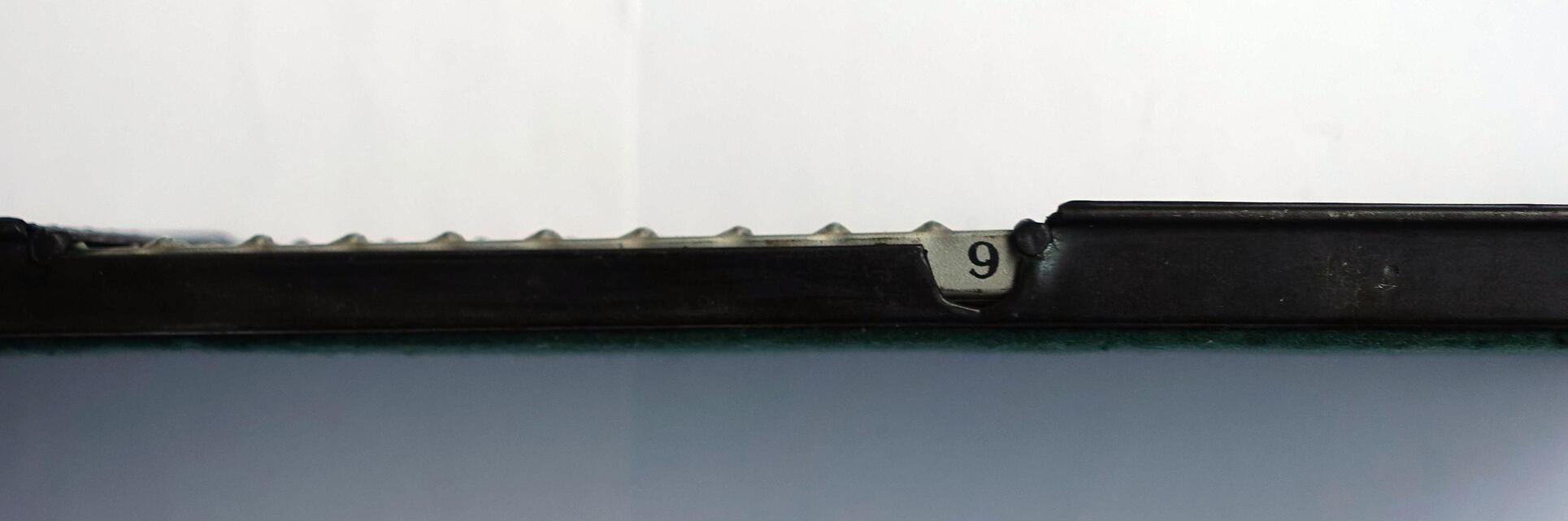
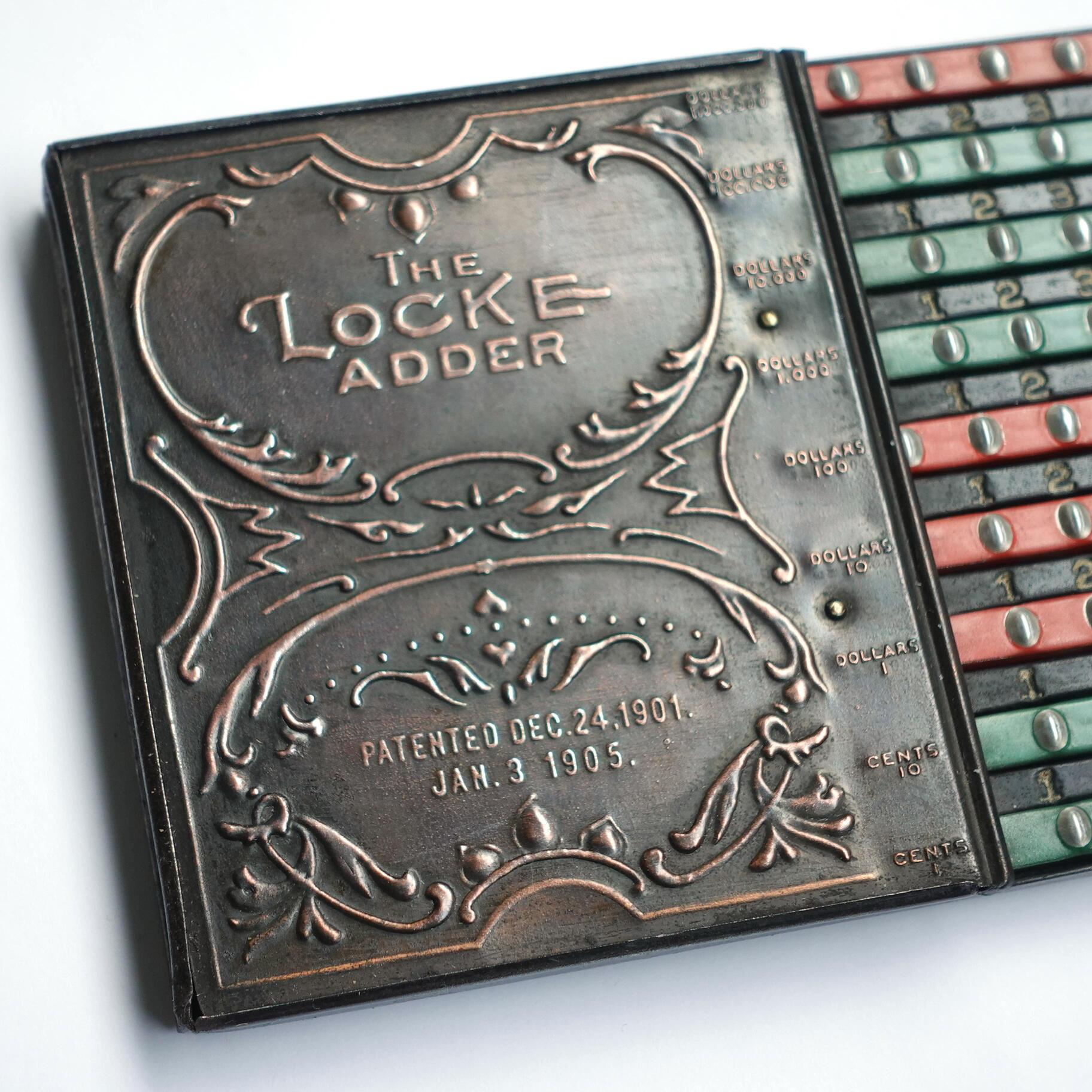
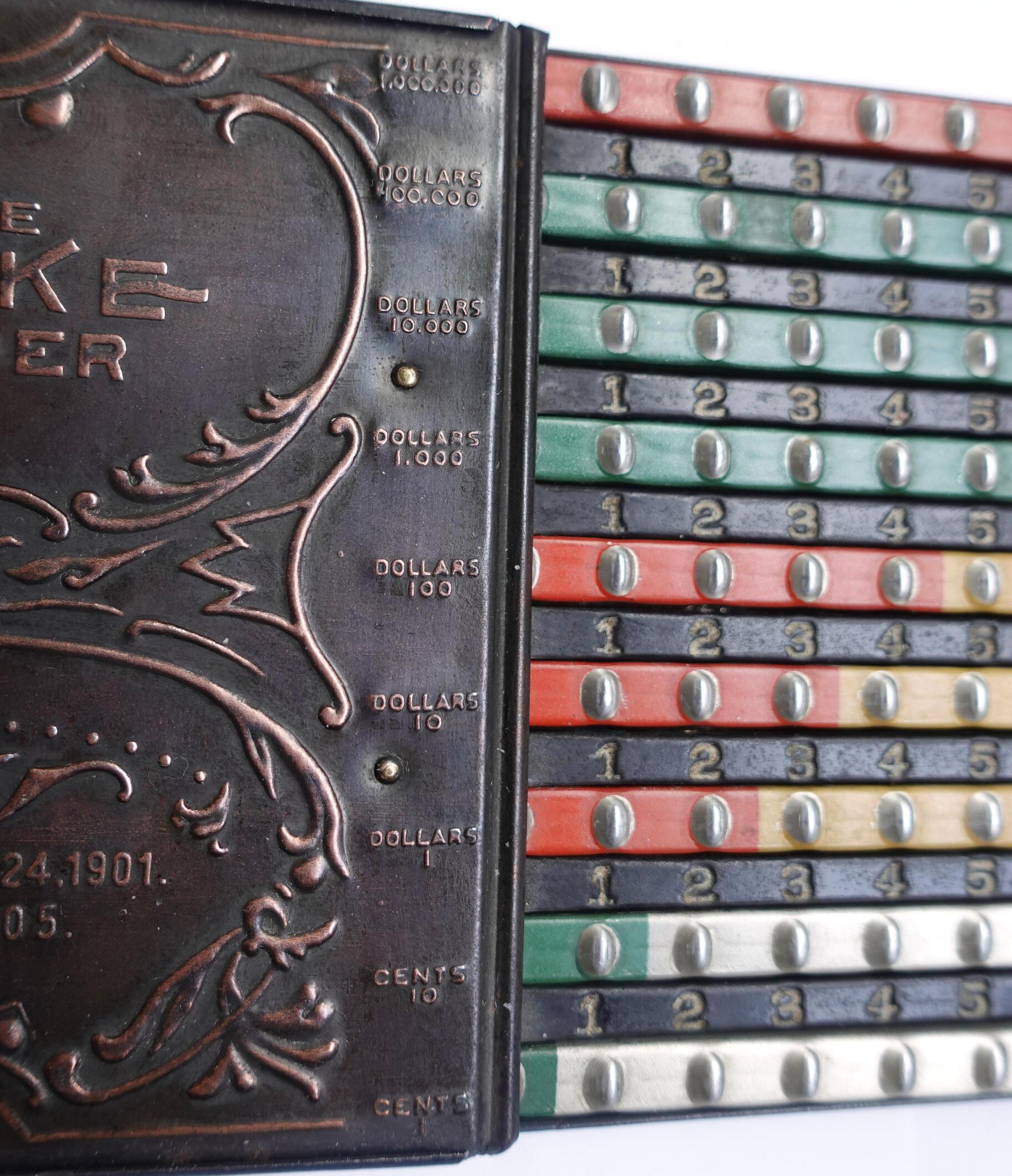
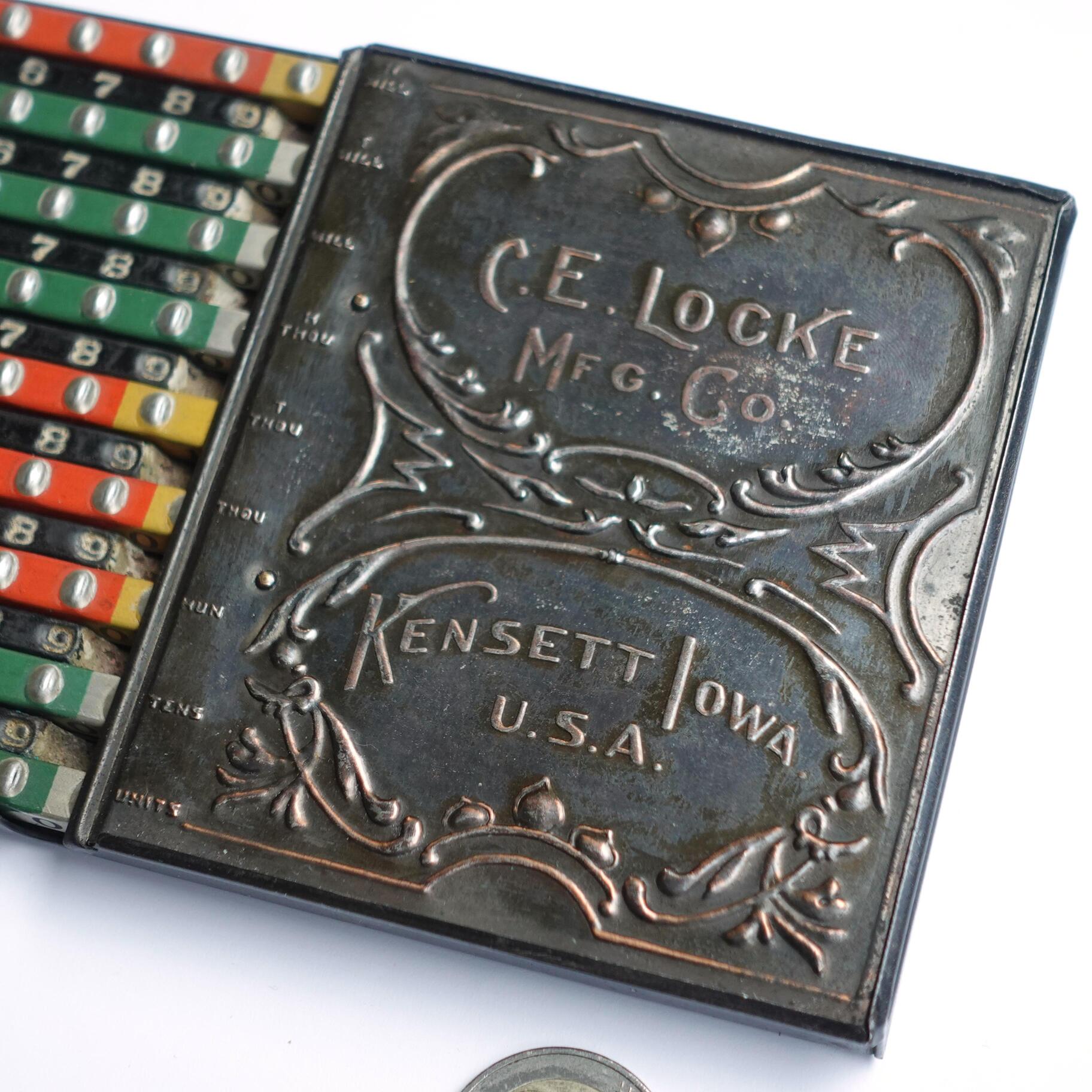
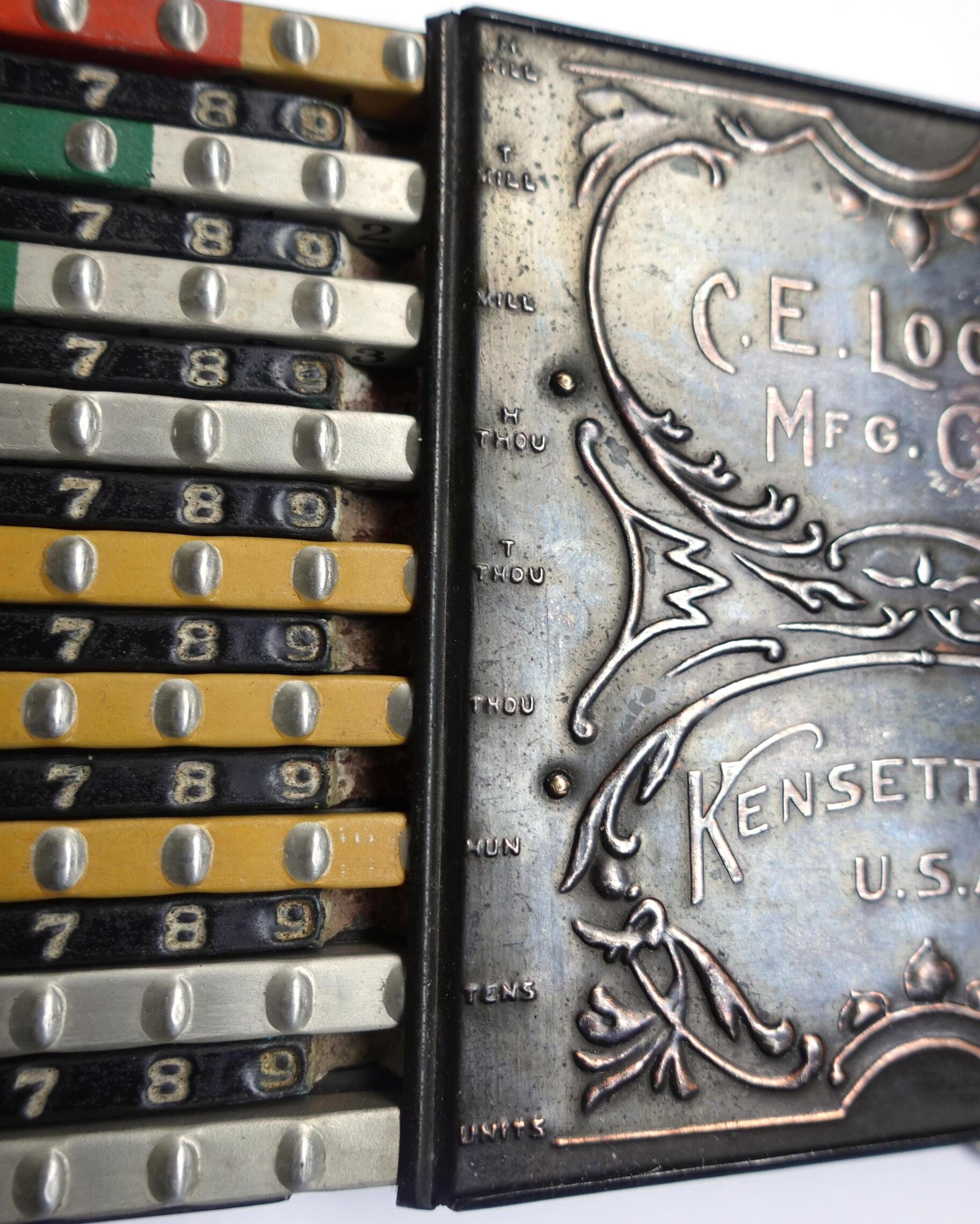
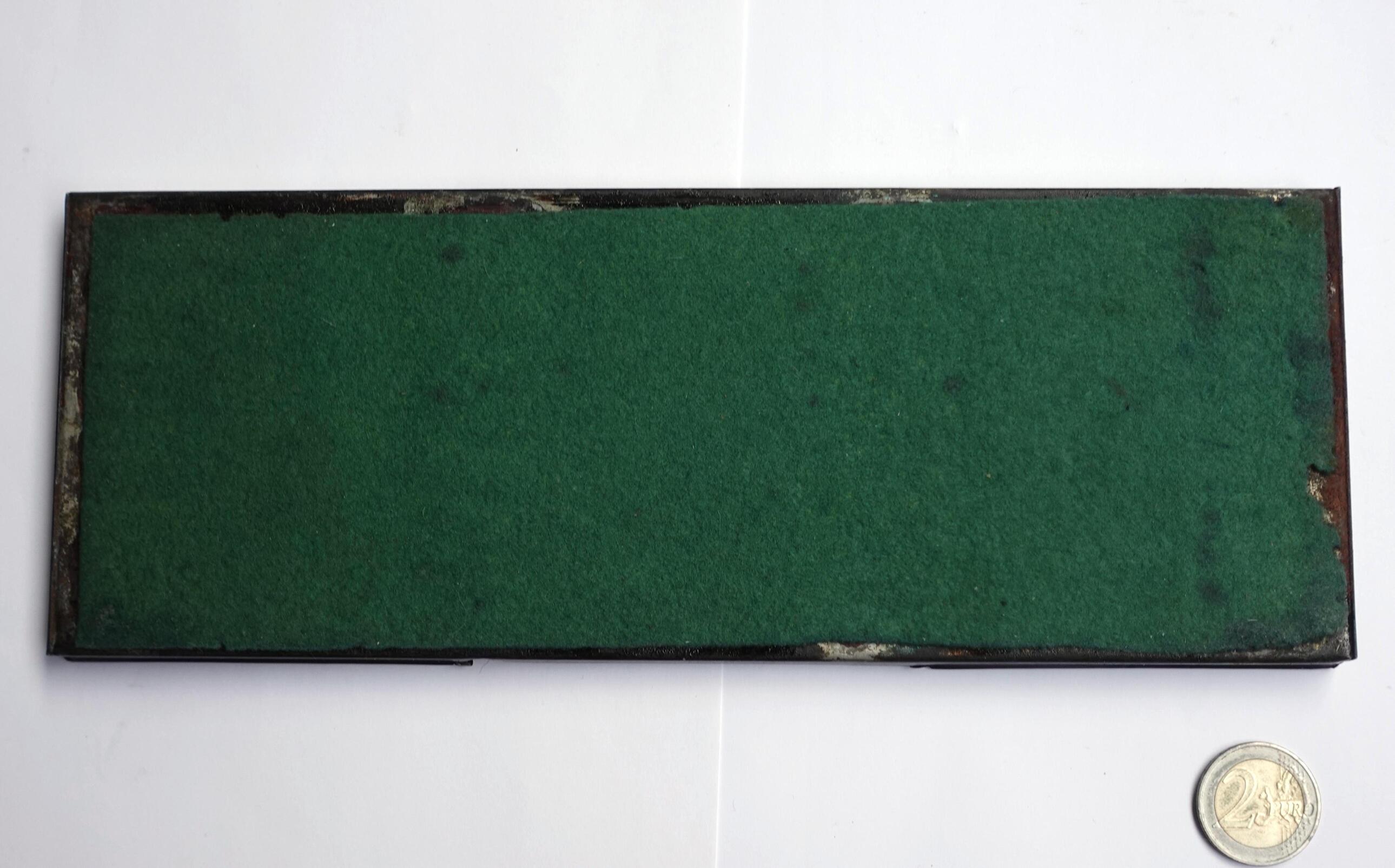
The adder has no serial number. This one has the 1905 patent date on it so it must have been manufactured between 1905 and 1907, the year that production ended. It is in very good condition.
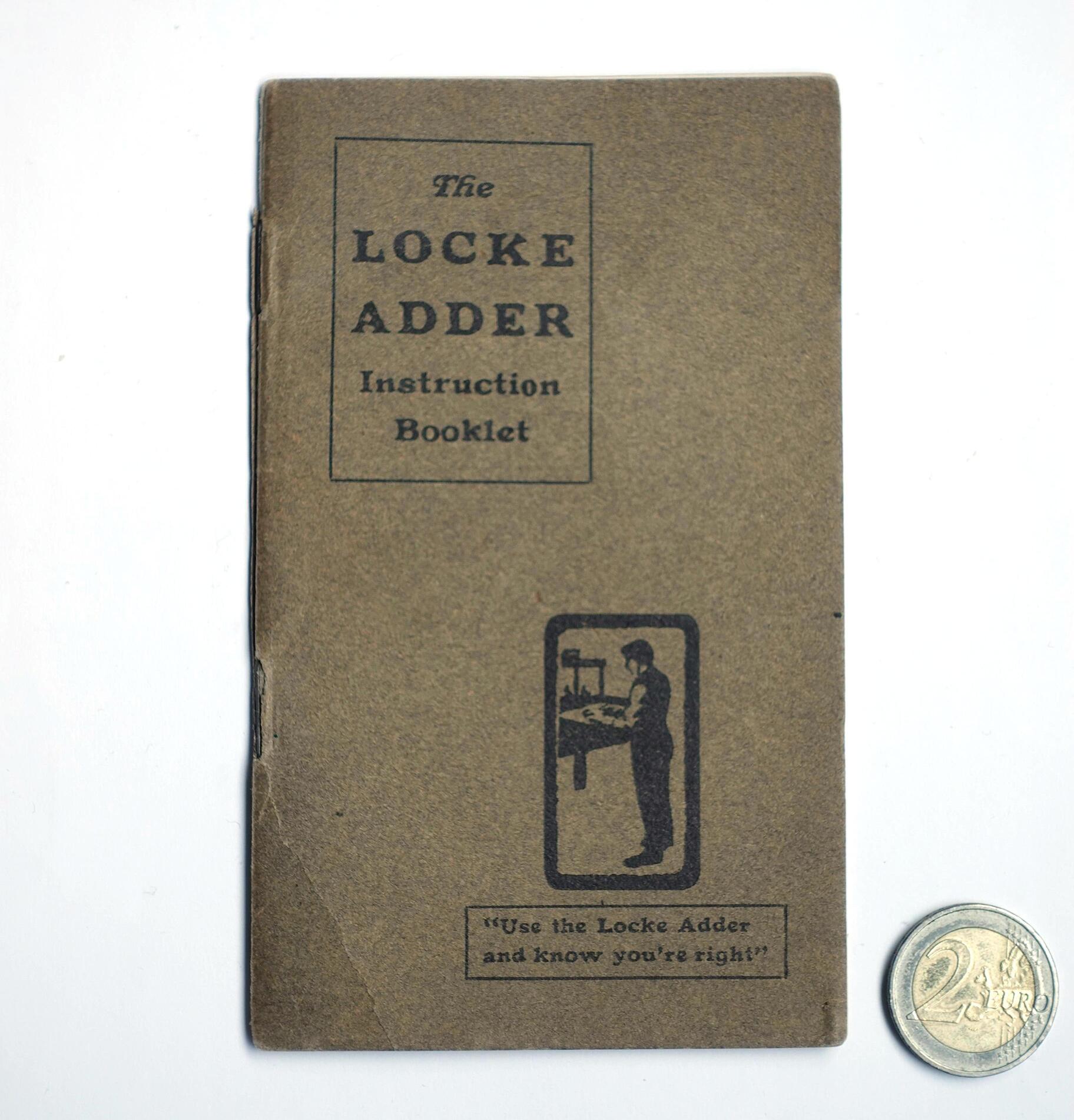
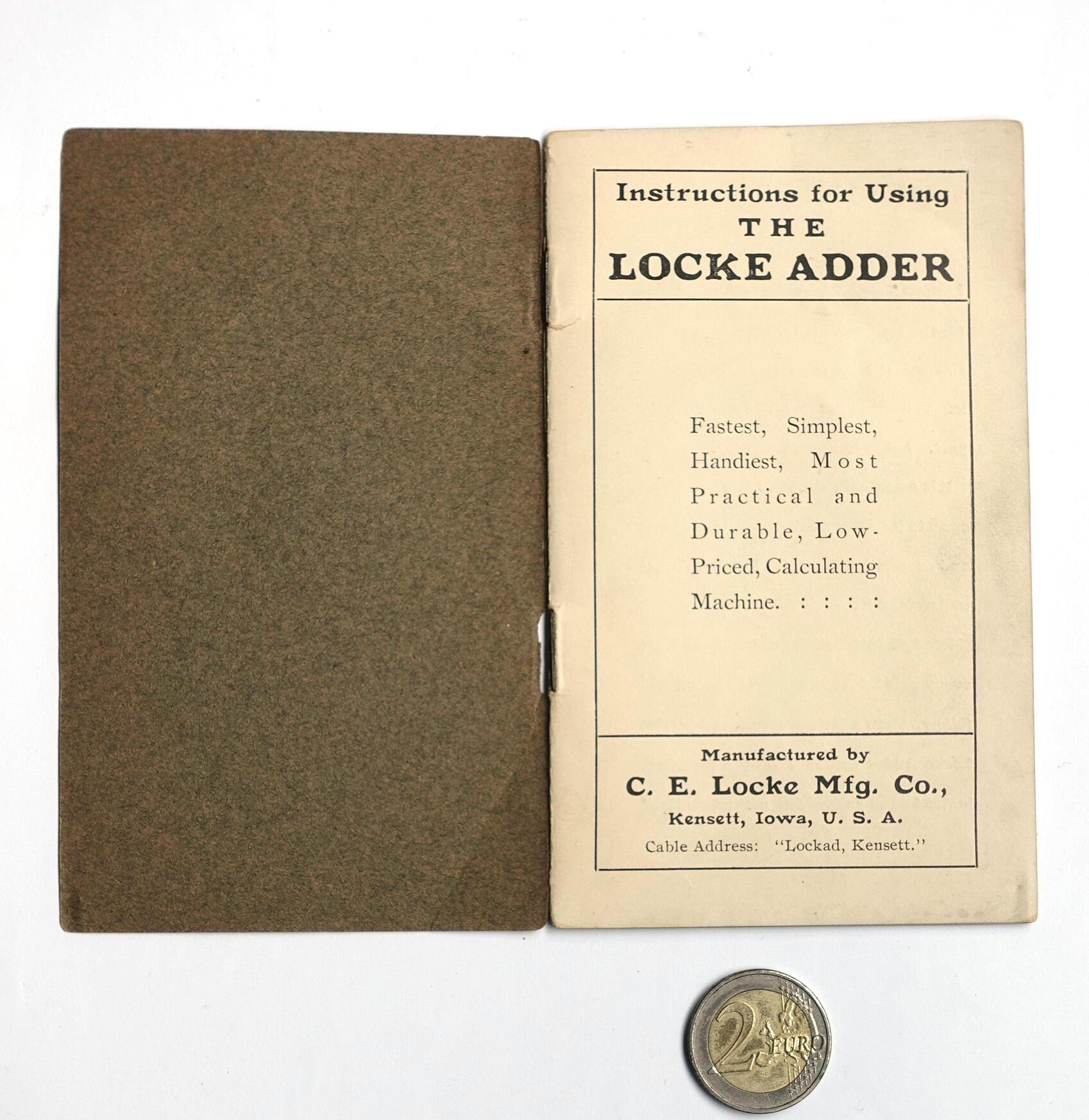
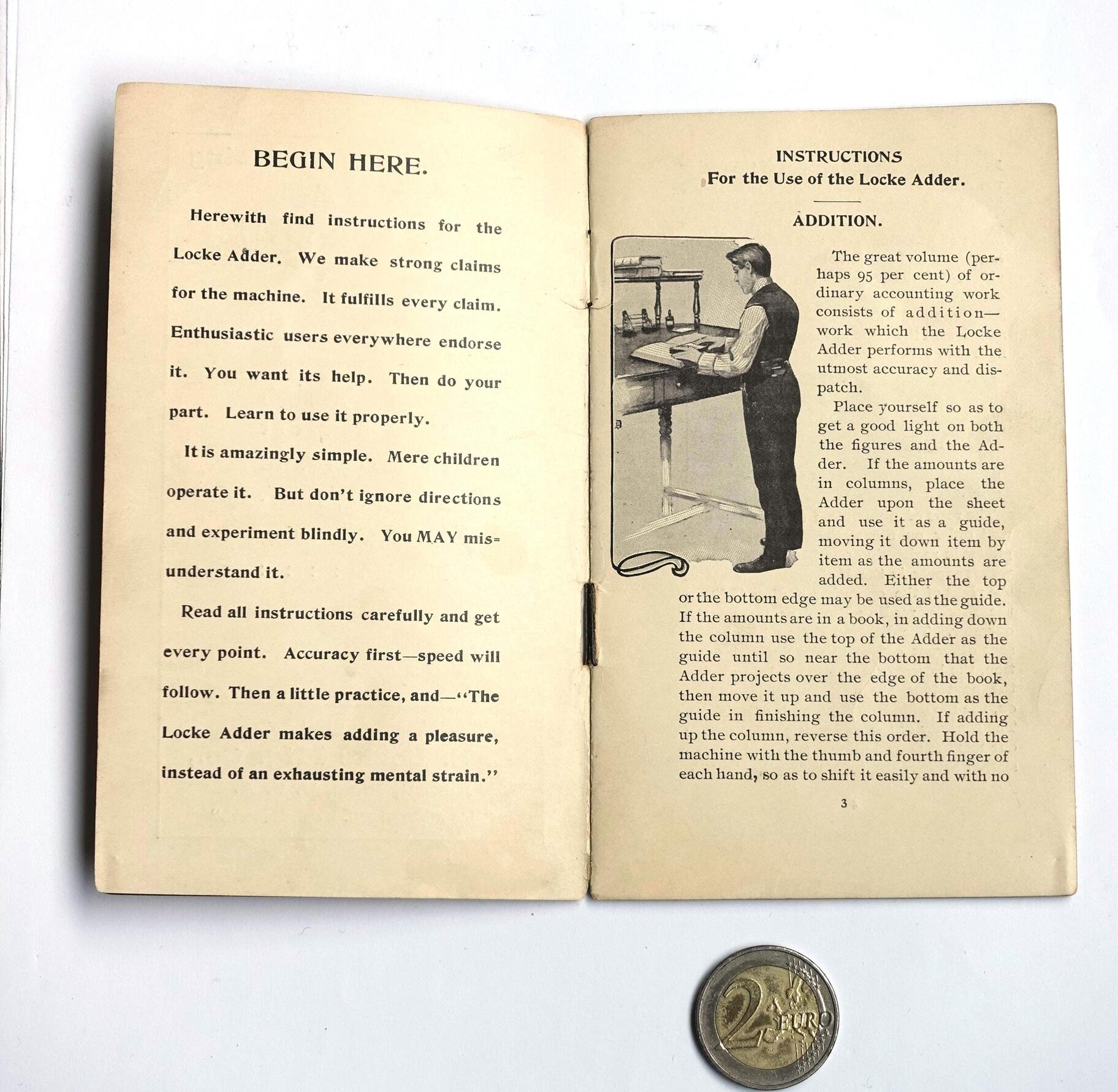
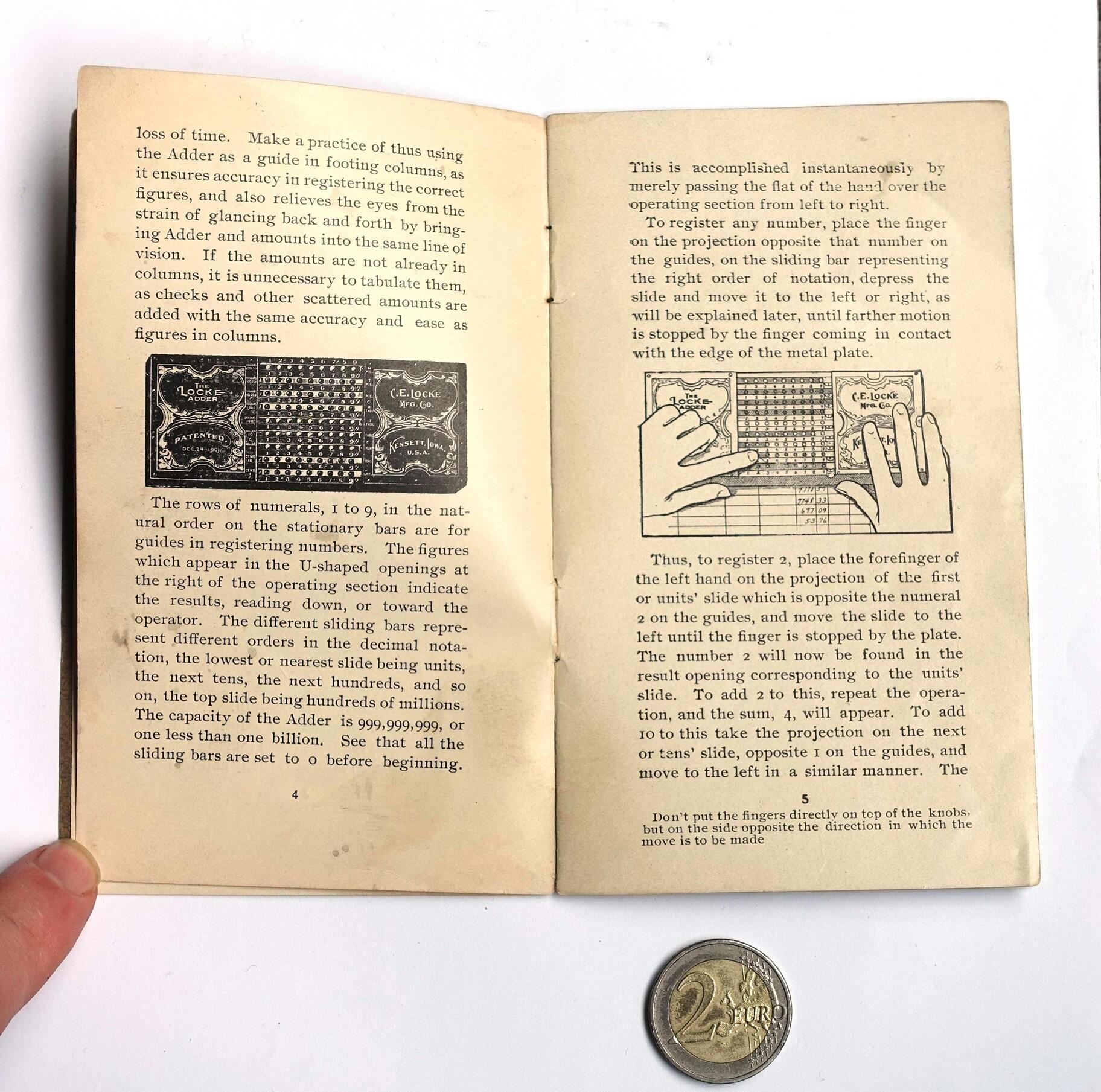
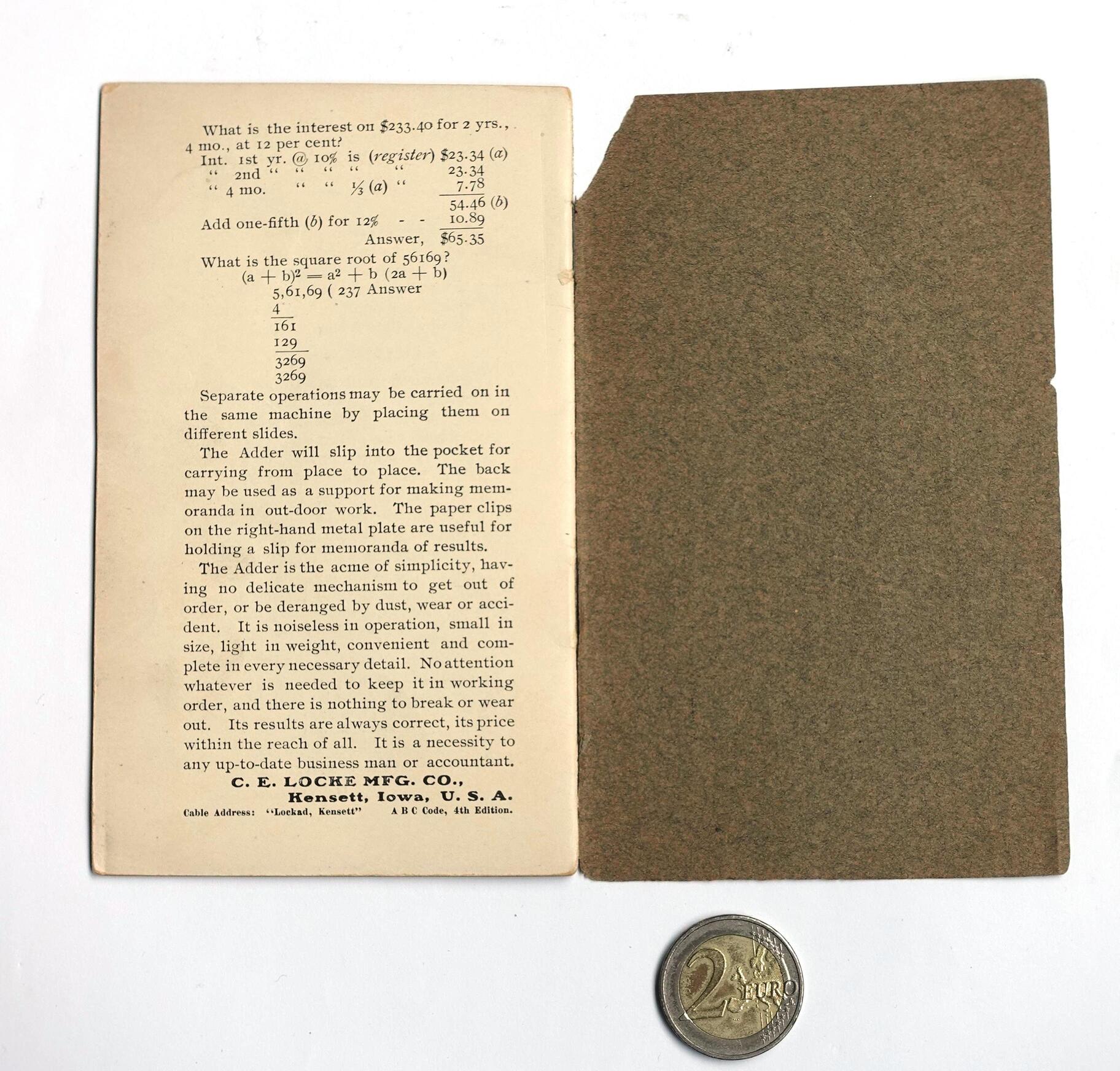
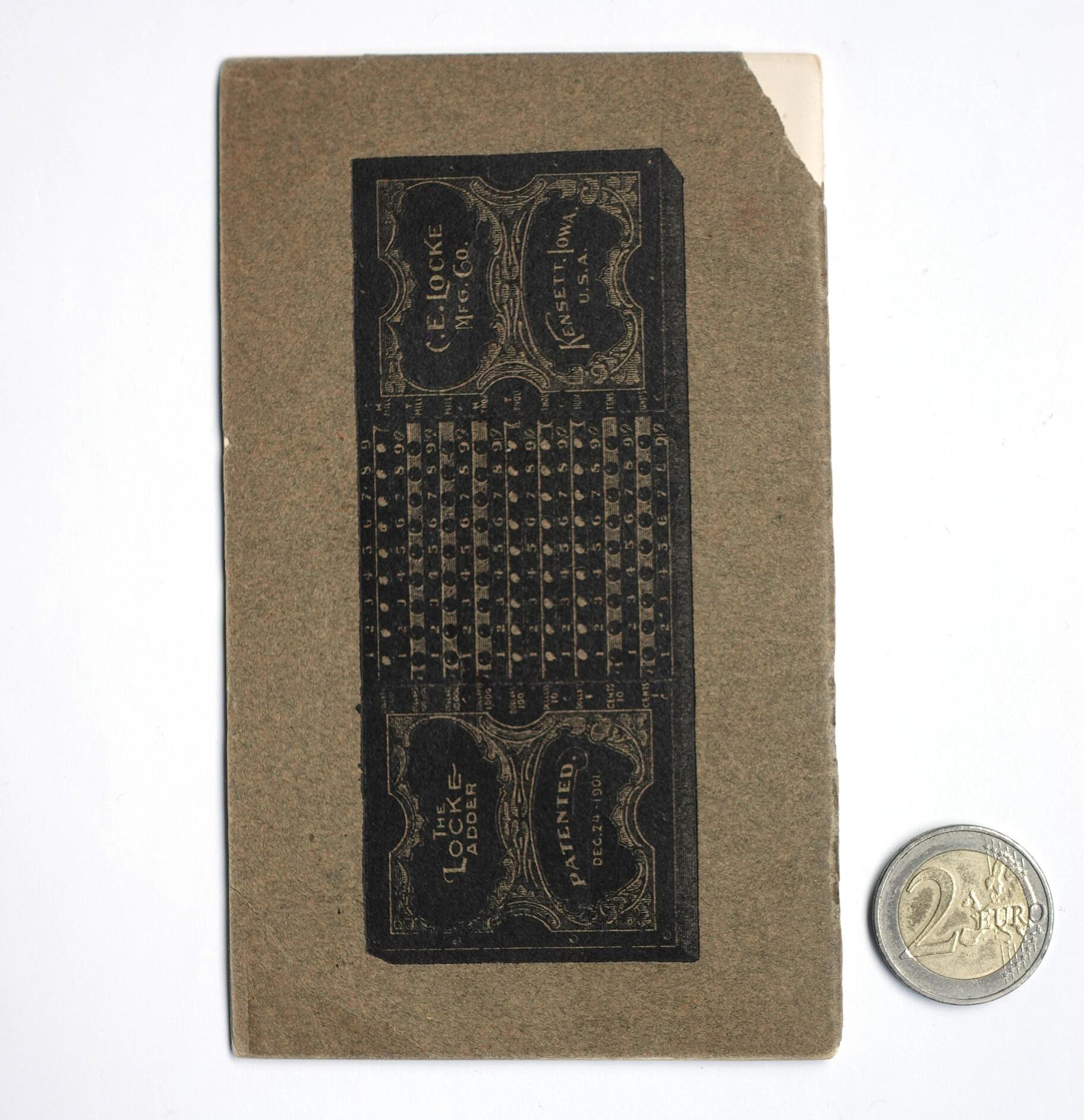
The adder comes with a small instruction manual. I acquired this manual separately to the adder.
The Locke Adder Instruction Booklet (PDF, 8.69 MB or archive.org)
1903?
20 page booklet
87mm × 143mm
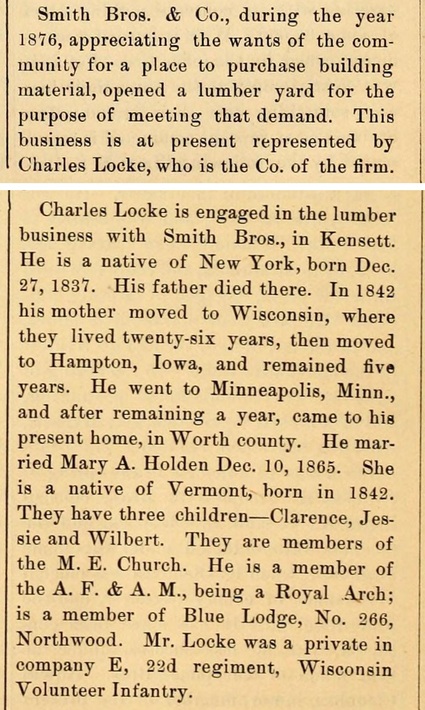
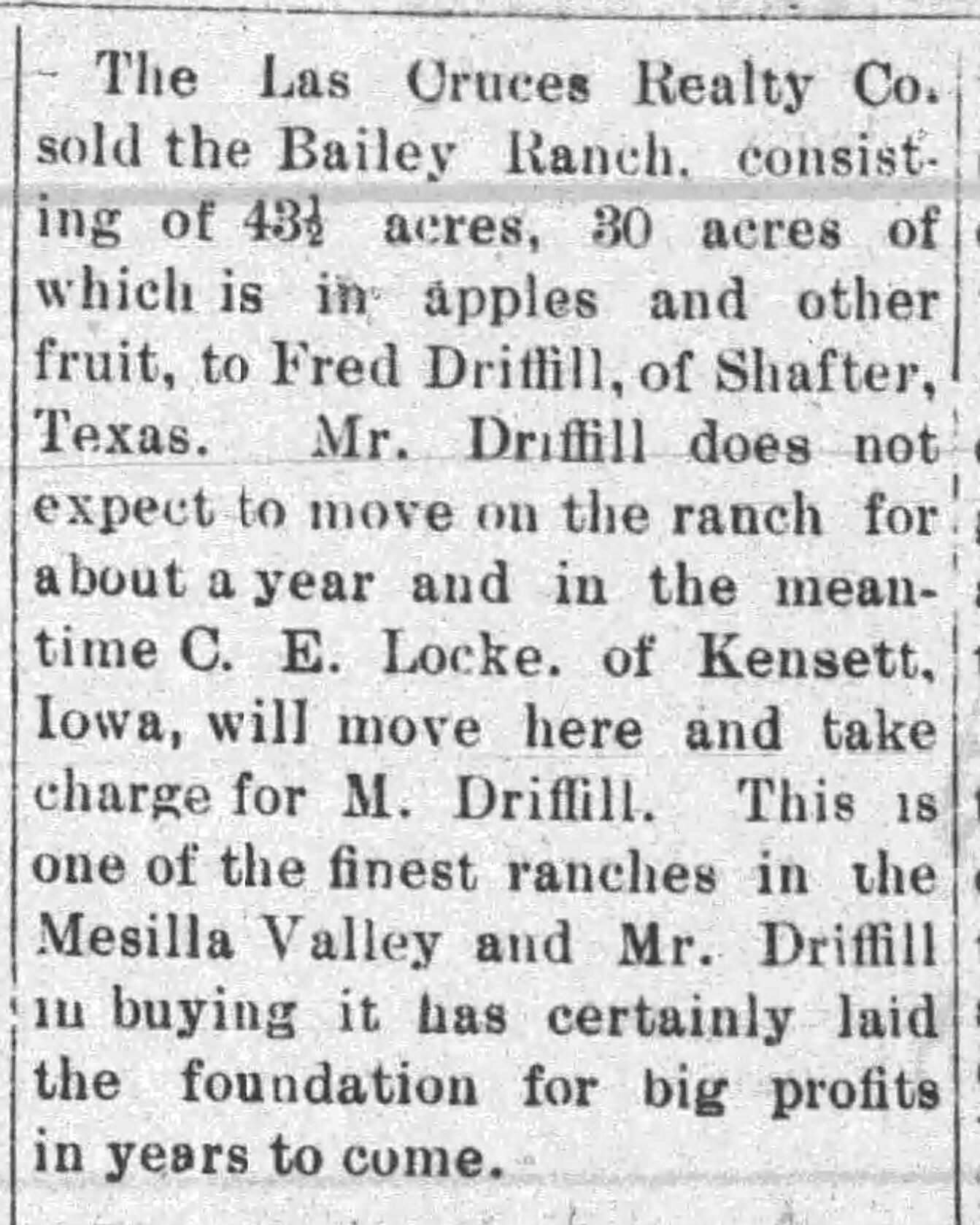
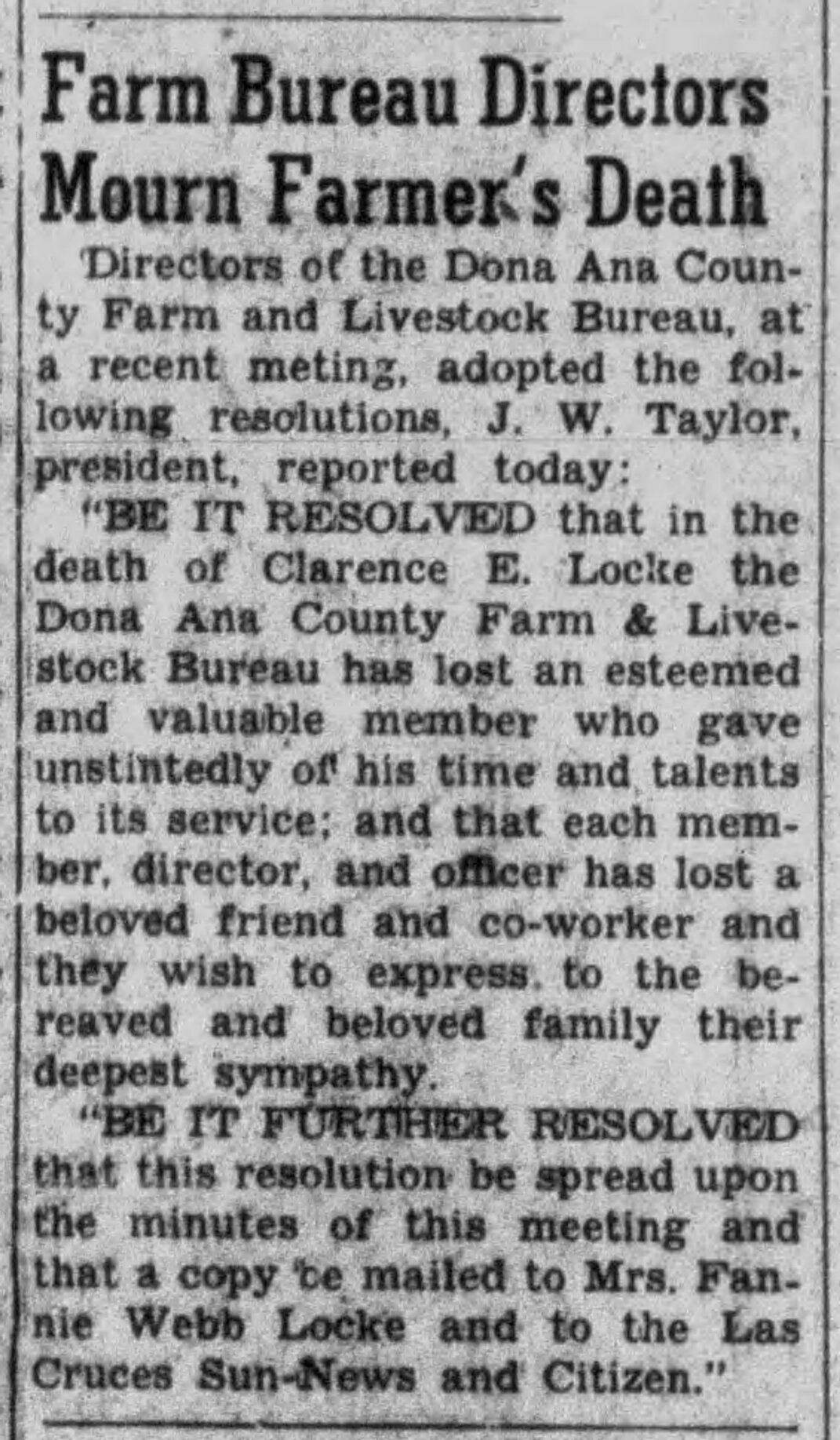
Clarence Elmer Locke (1866-1945) was born in Wisconsin, but was still a child when his family moved to Hampton, Iowa, then Minneapolis, and finally Kensett, Iowa. There his father Charles started working for Smith Bros., a lumber business. Clarence studied civil engineering, graduating in 1892, and briefly worked as a civil engineer in Minnesota. He married Fannie Webb in 1893, and they had their first of two children. By 1895 Clarence and his family moved back to Kensett, where his father now ran his own lumber company. He worked at the company which soon became named Charles Locke & Sons.
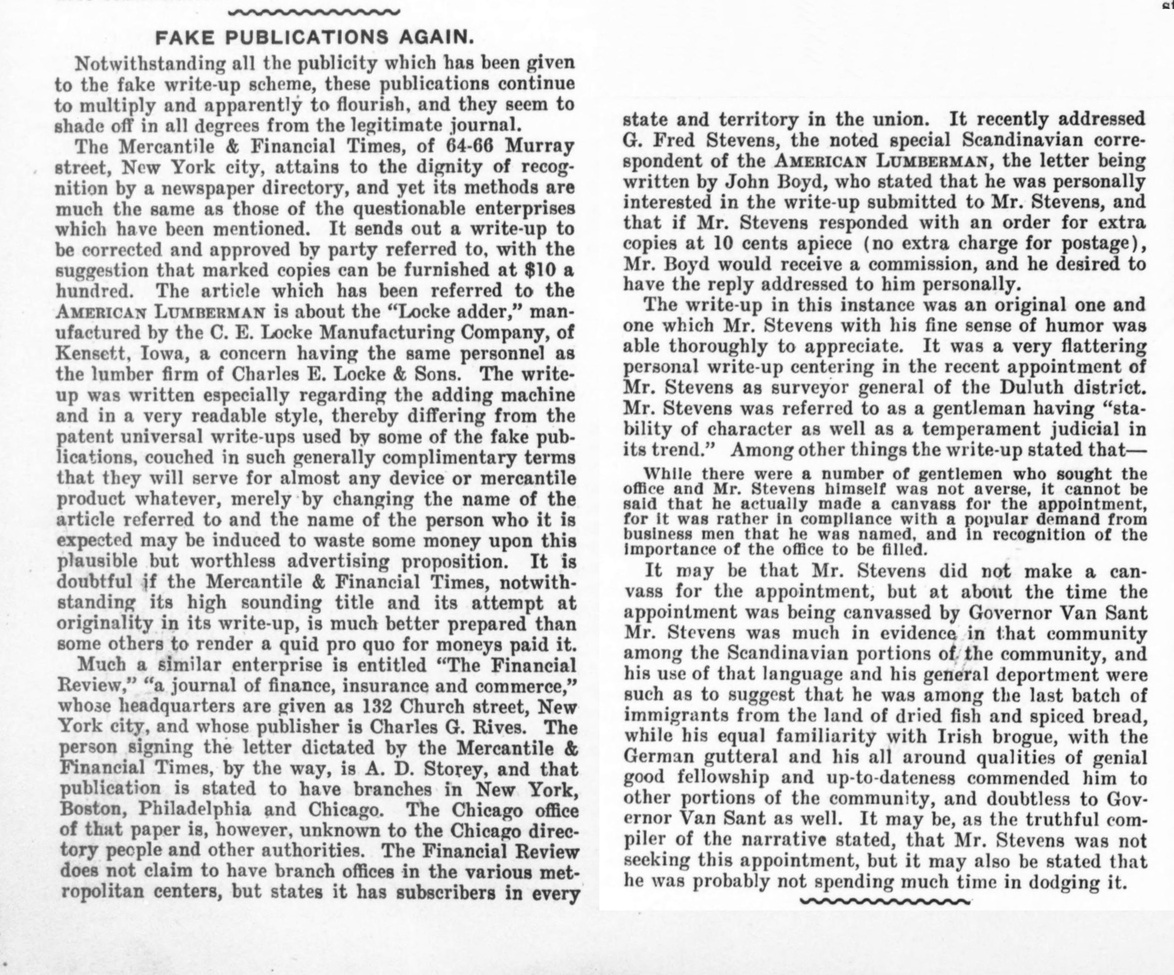
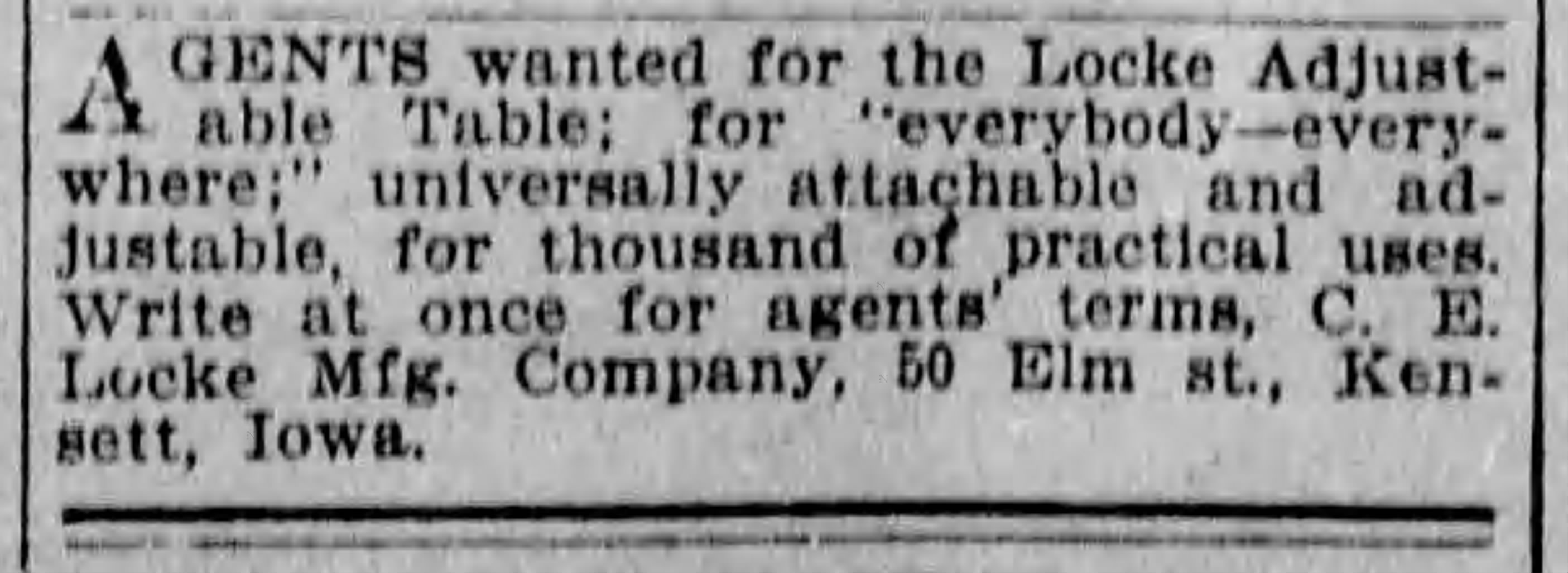
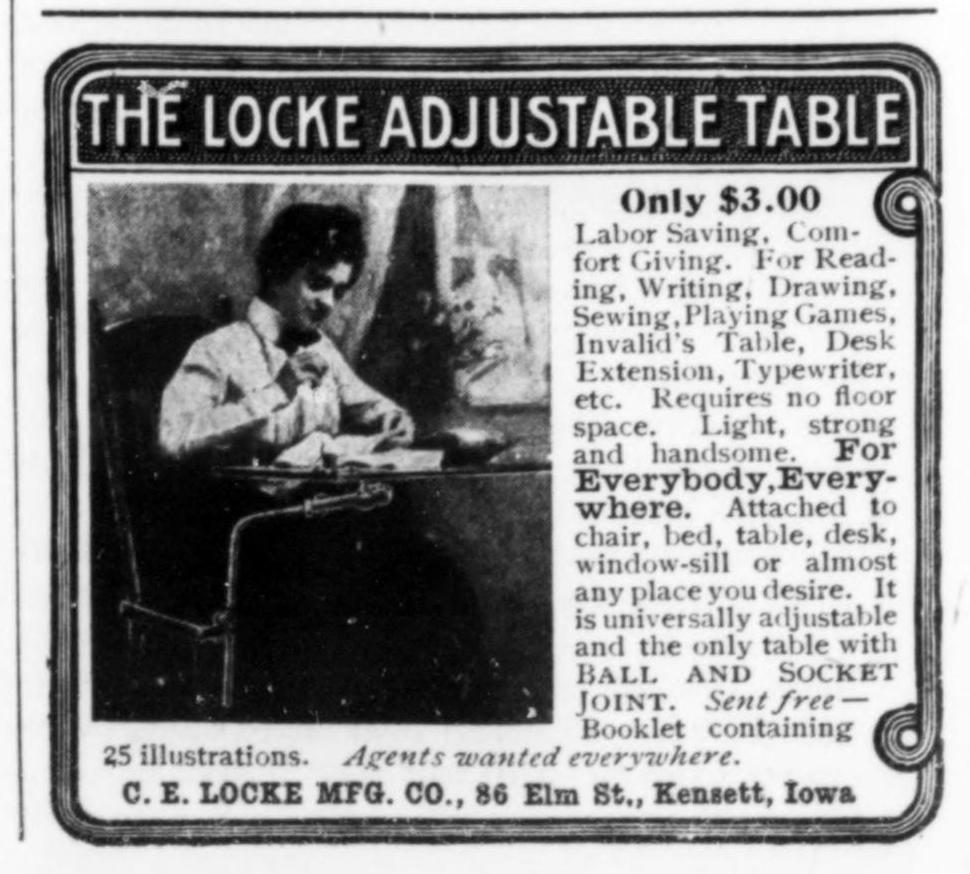
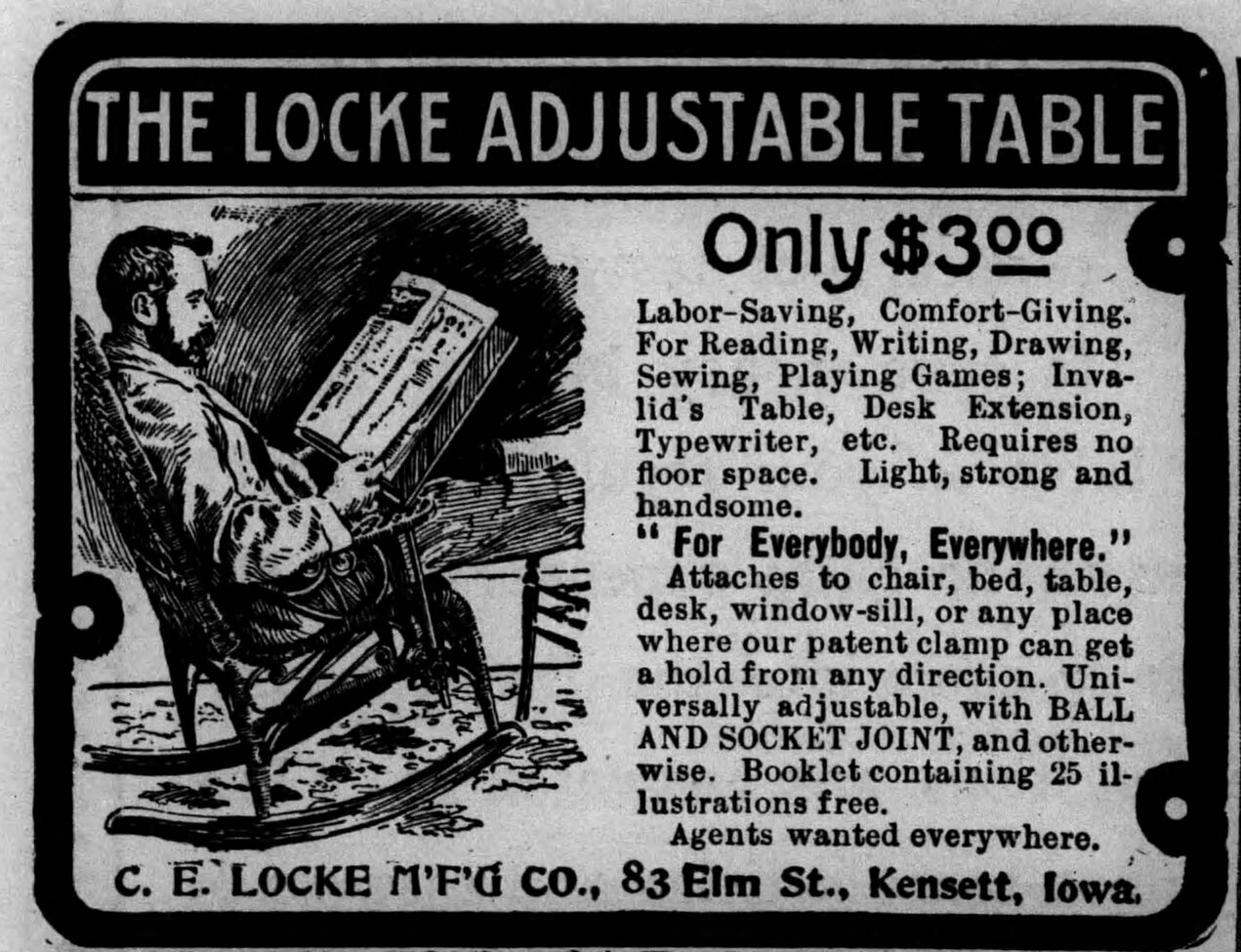
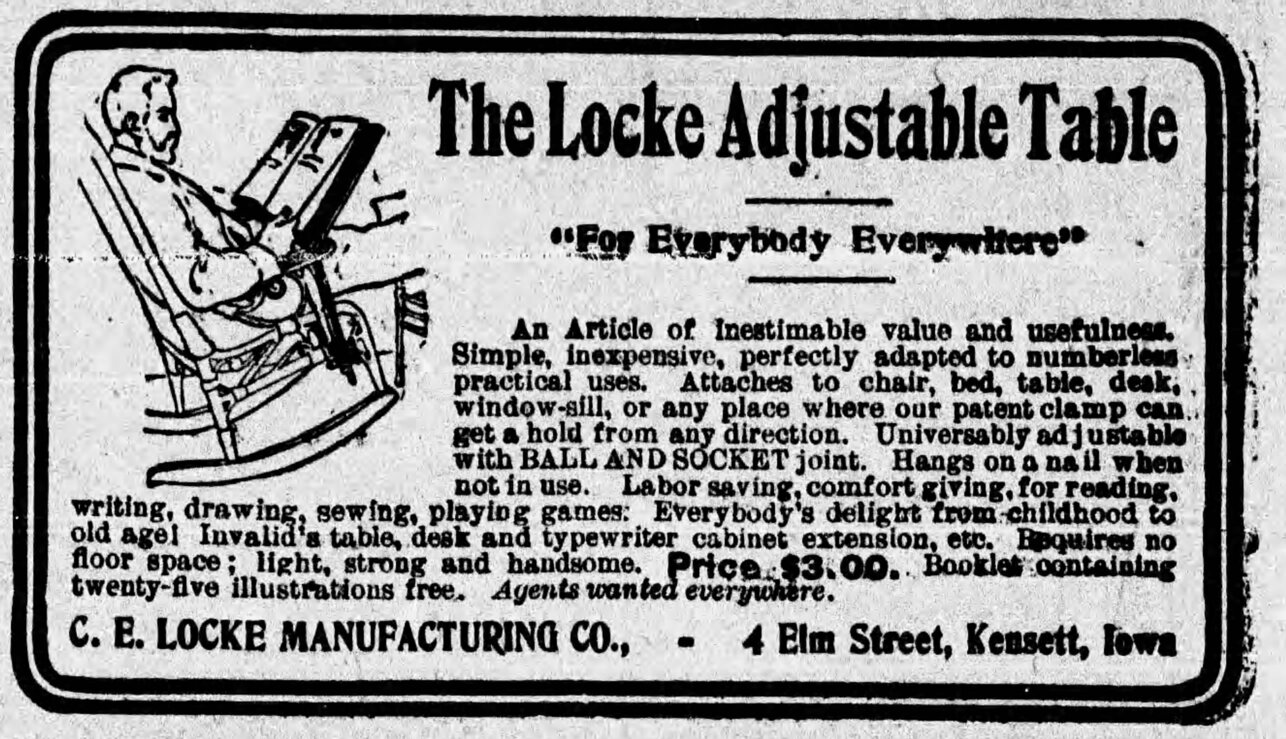
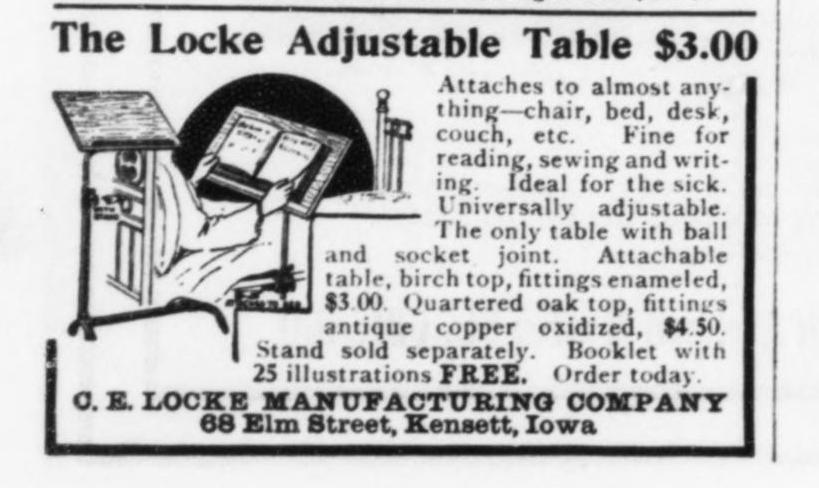
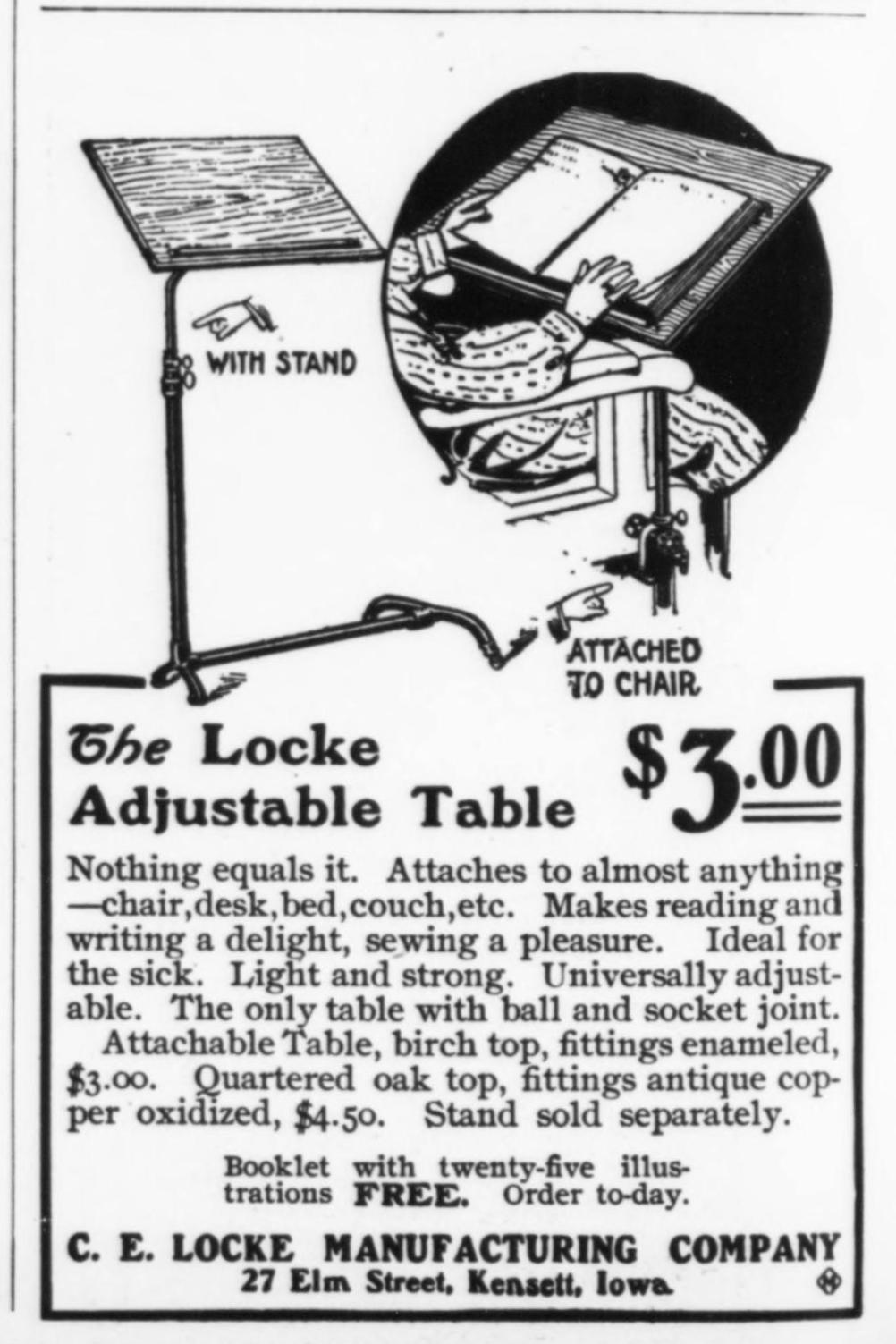
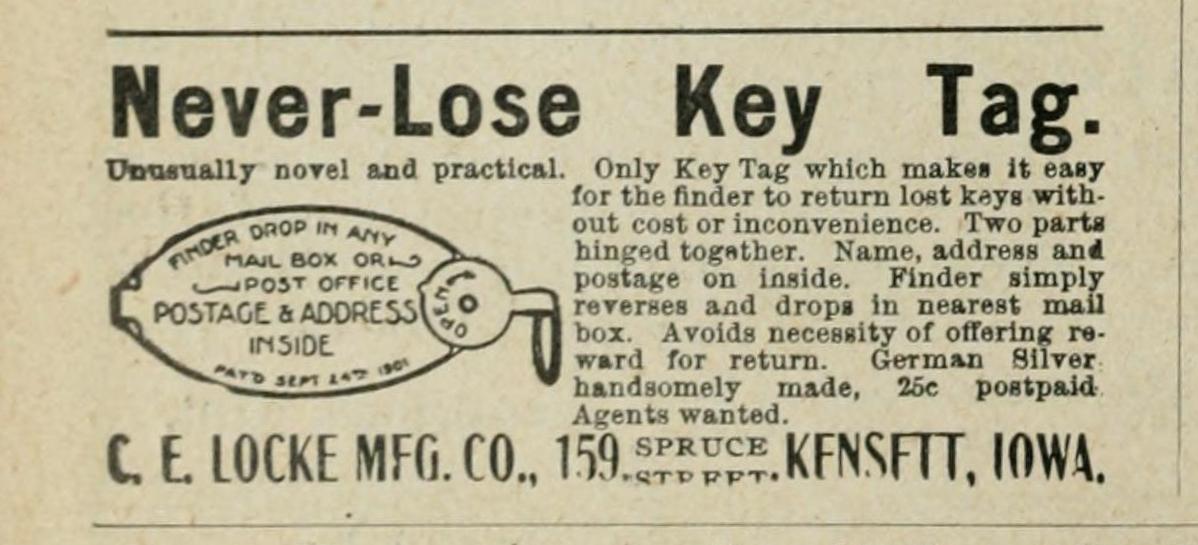
It seems that Clarence Locke was not really interested in lumber, as in 1900 he filed some patents (for a hand stamp and for the adder) and founded his own company, the C.E. Locke Manufacturing Company. He was president of the company, and his wife treasurer and secretary. His father's lumber business was sold in 1901, and his father died in 1903. While the C.E. Locke Mfg. Co.'s main product was the Locke Adder, they also made and sold several other products for which Clarence was not granted any patents, as well as sold products by third parties. These include the Locke Adjustable Table (a reading table attached through an adjustable arm able to a chair arm rest), the Columbus Safety Inkwell, the "Quick as a Wink" Cork Puller, the Locke Baby Jumper, and the Never-Lose Key Tag (US 683,296).
In May 1907 there was a large fire in Kensett which destroyed the plant of the C. E. Locke Mfg Company. It seems that Locke did not rebuild his business, and the next year he and his family moved to Las Cruces (New Mexico) to house-sit a ranch with fruit orchards for a year. They settled in the area, and Clarence remained a farmer until his death in 1945 in Doña Ana.
There are two main versions of the Locke Adder. The table below lists the main characteristics of the two versions.
| Version 1 | Version 2 | |
|---|---|---|
| Years | 1900-1902 | 1903?-1907 |
| Materials | Wooden base, sides, and rods. Metal rod studs and front plates | All metal |
| Rods bumps | Round | Ridges |
| Front face | Flat metal, painted red with gold lettering | Stamped aluminium, brass or copper plated, painted black or brown |
| Retaining method | Metal wire brace over rods | Brass leaf springs under rods |
The first version was mostly wood, with only the front plates being metal. It had a
metal wire clip that pressed down on all the rods to keep them from being accidentally
shifted. It could be folded out of the way for ease of use. The second version was made
mostly of aluminium. It used brass leaf springs underneath the aluminium rods to push
the rods to the front face, and this aligns them and keeps them in place until you push
down on a rod with your finger to move it.
It is hard to determine when the all-metal version 2 appeared. The ads only have drawings
which are not necessarily accurate or up to date. By April 1902 the metal retaining clip was
no longer shown, but the depiction of the rest of the adder was never changed, e.g. it shows
round bumps on the rods till the end. In 1904 it is described as made of metal, so by then
it is definitely version 2.
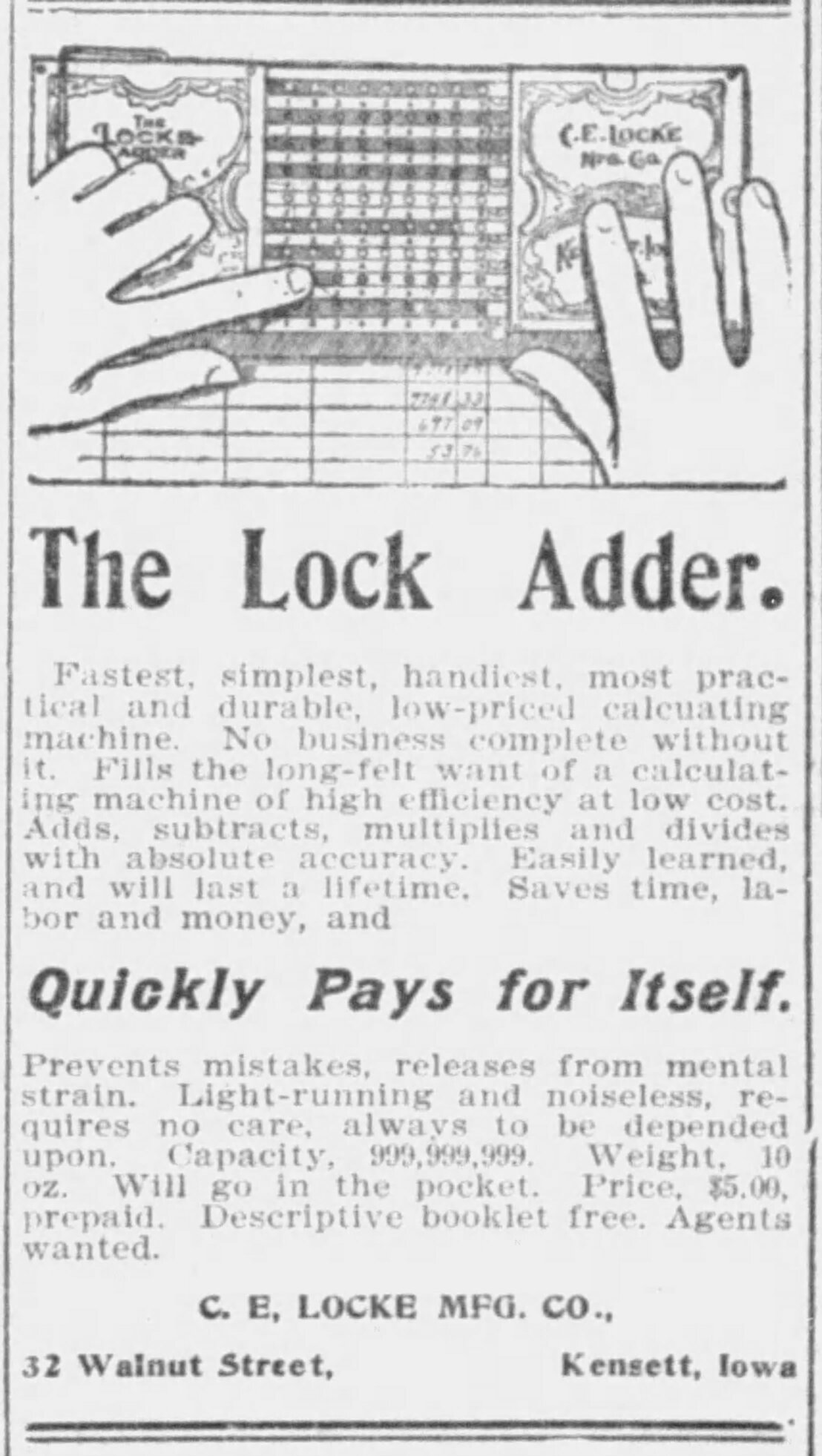
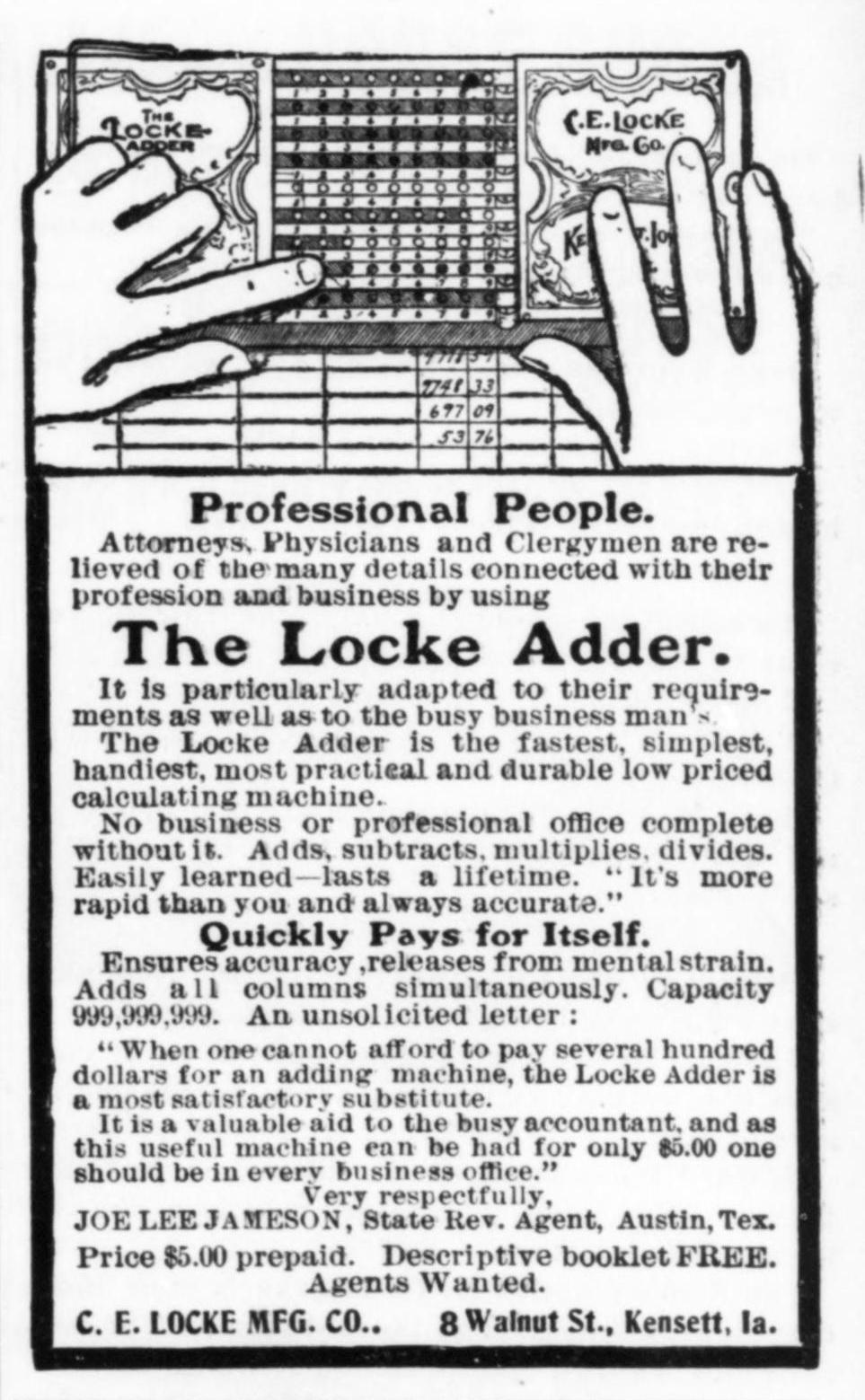
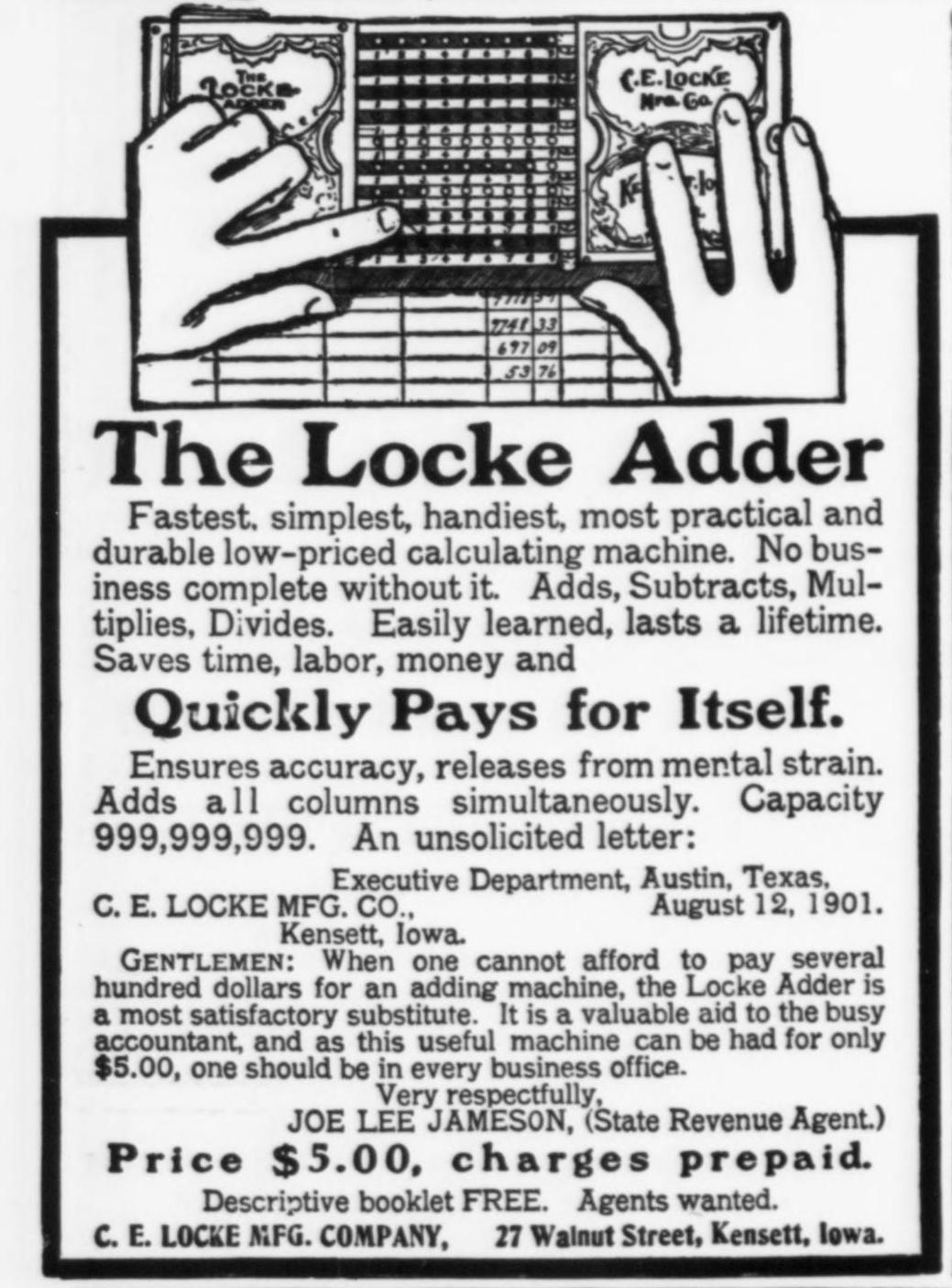
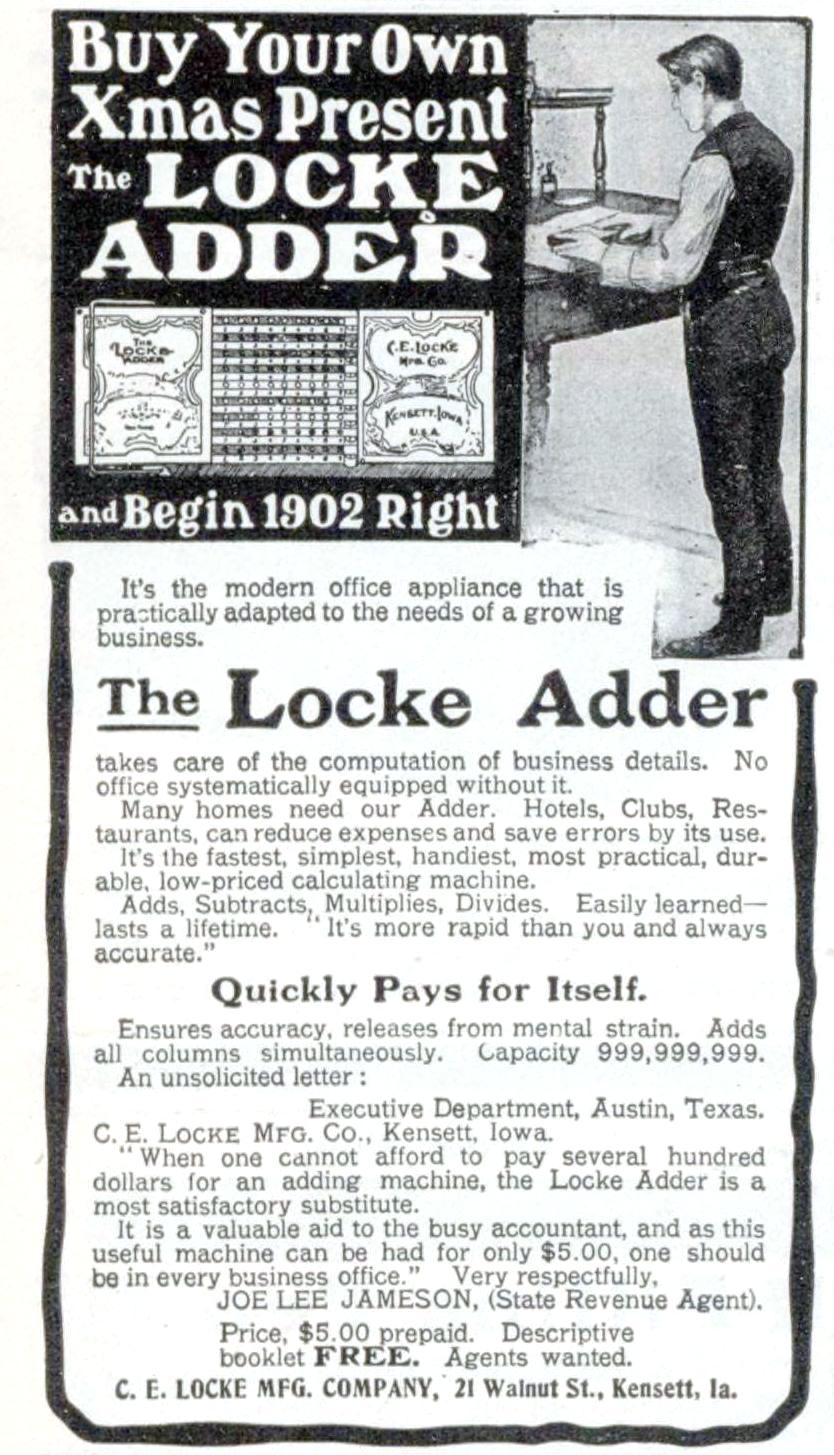
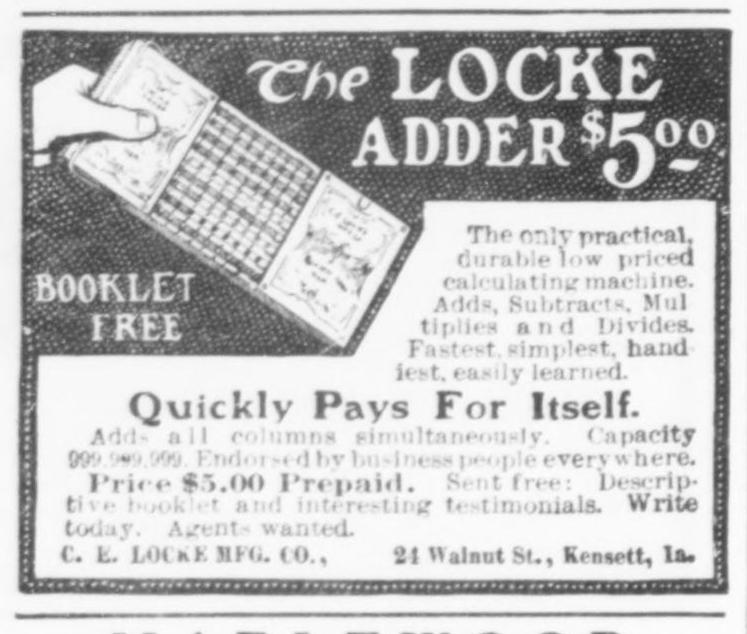
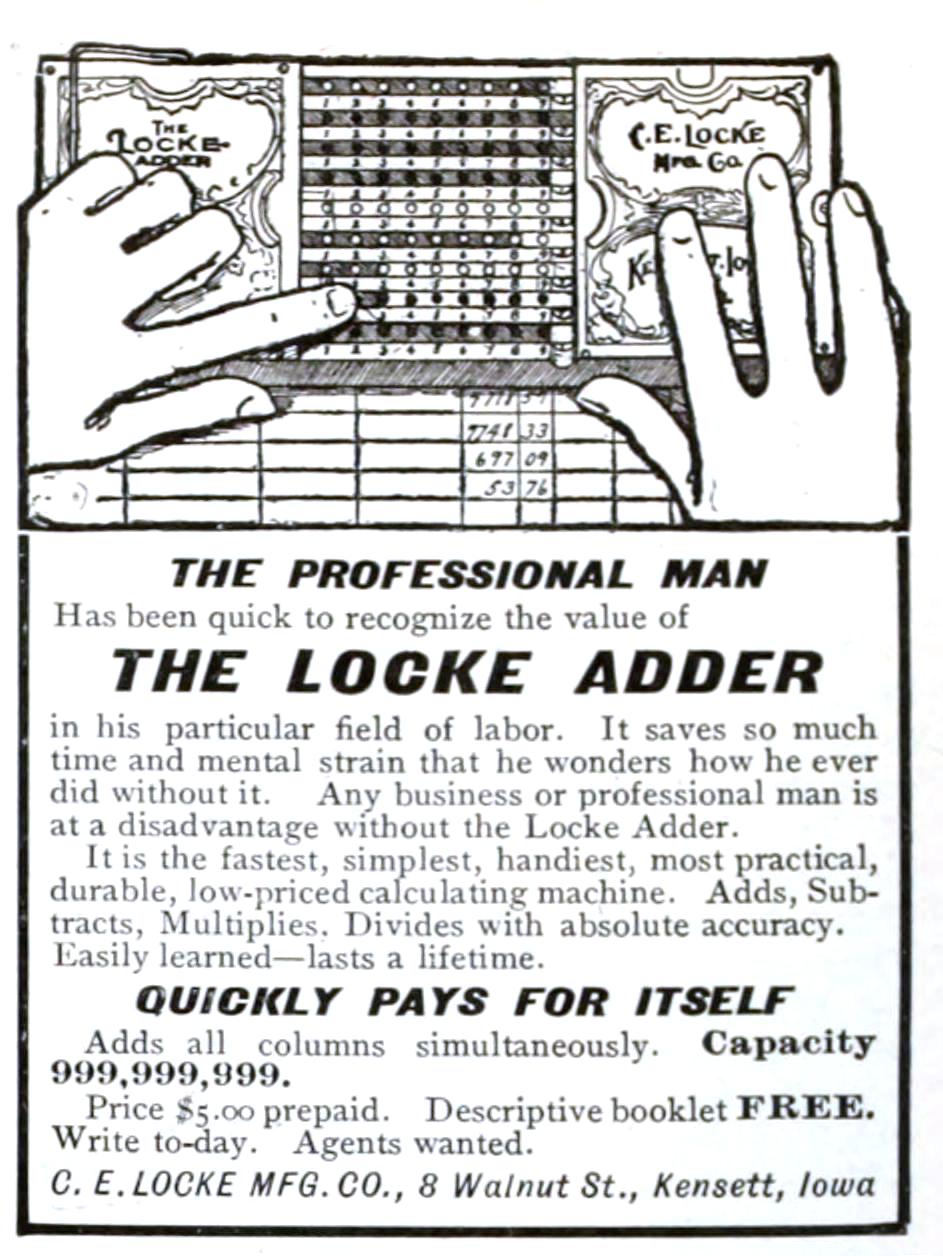
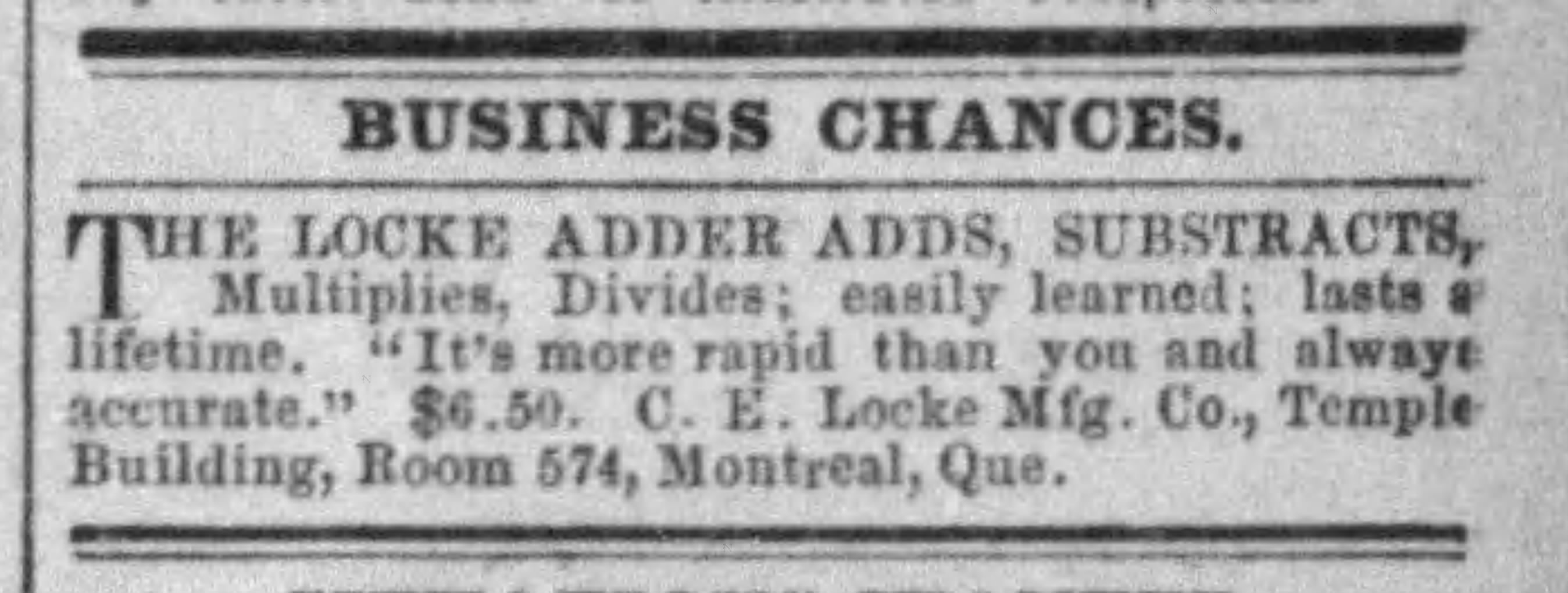
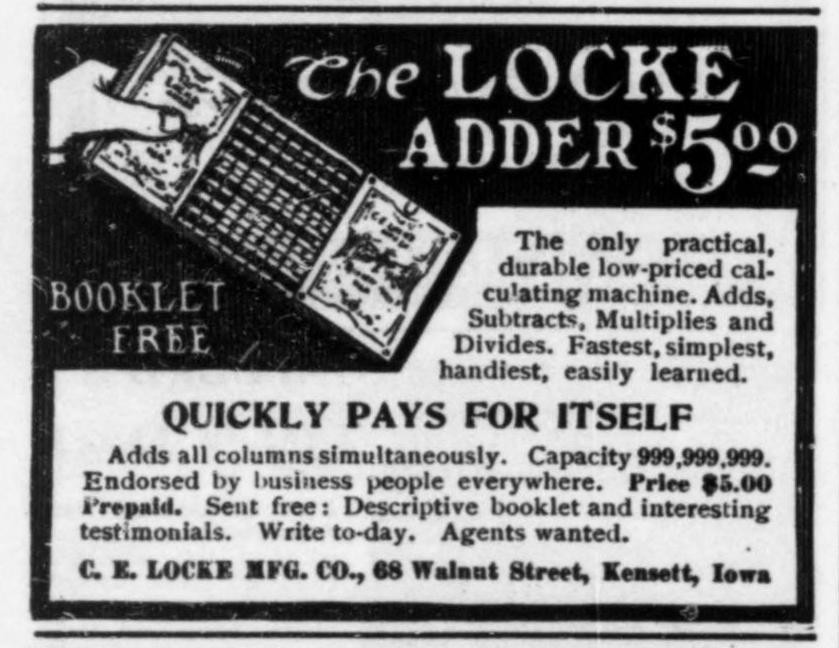
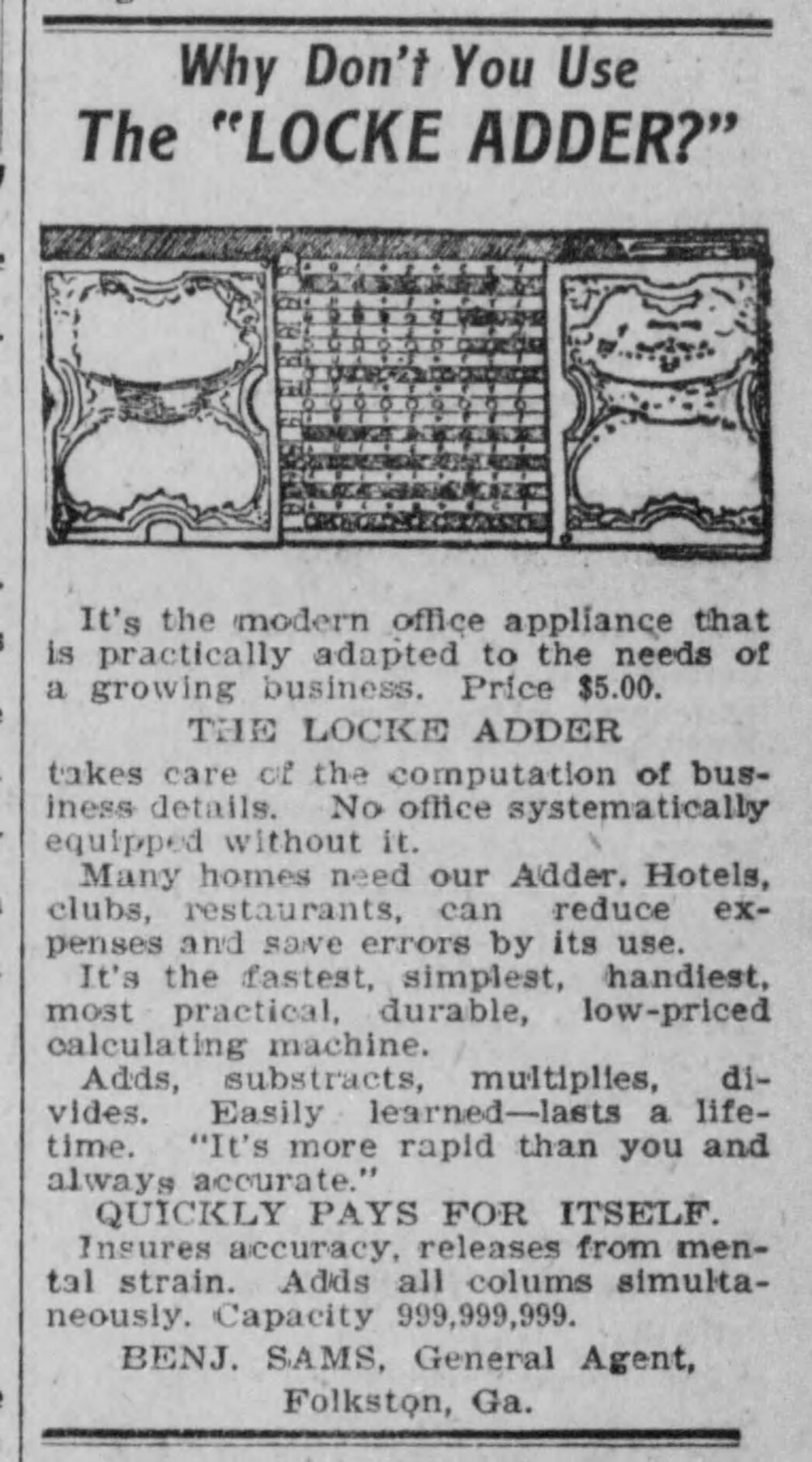
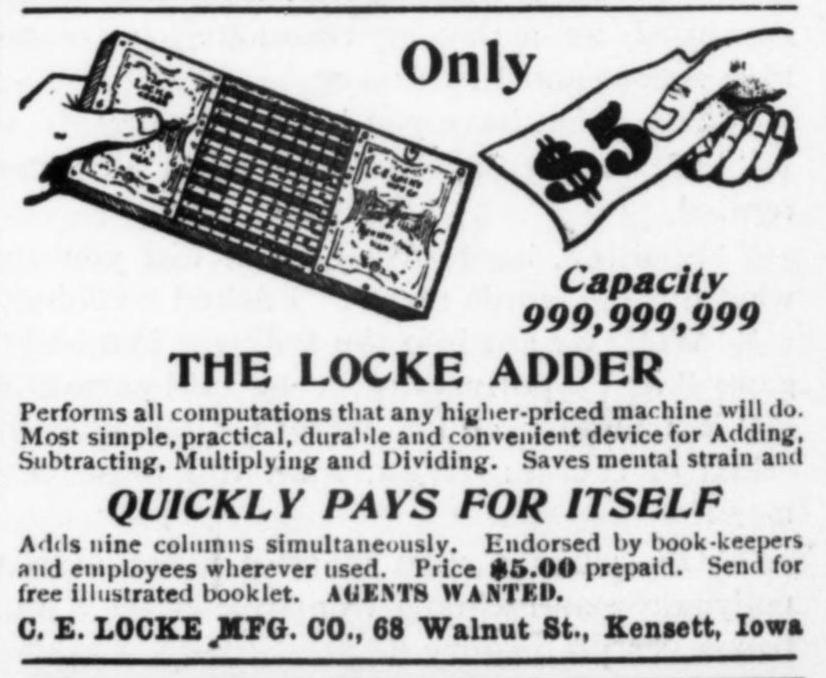
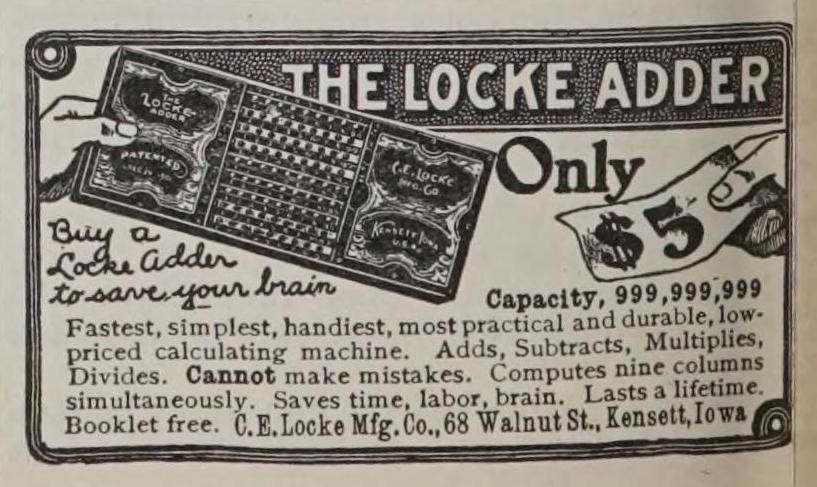
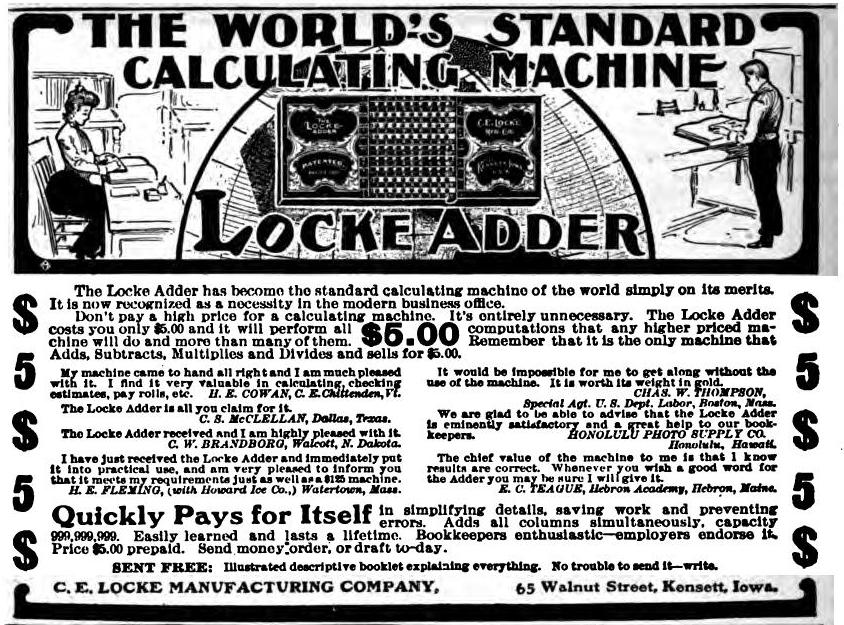
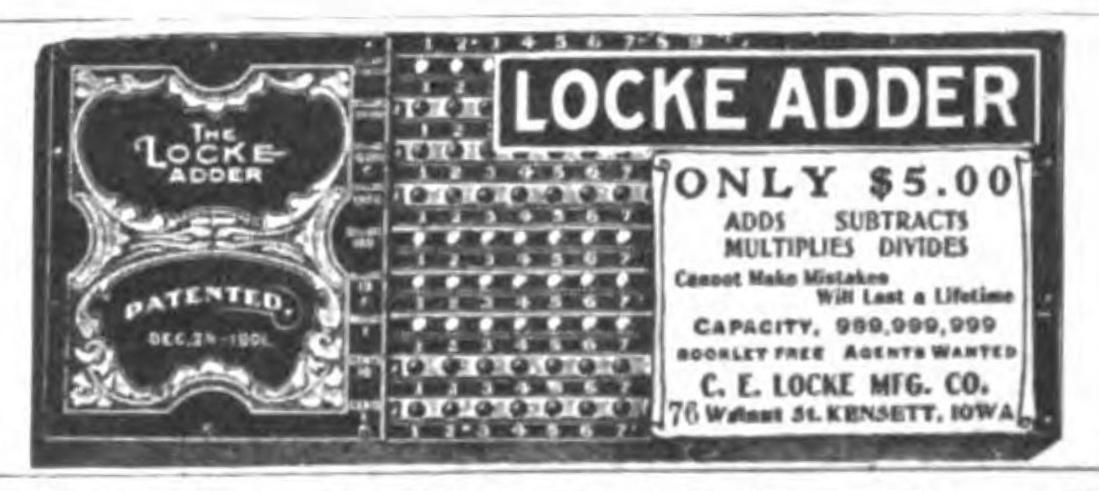
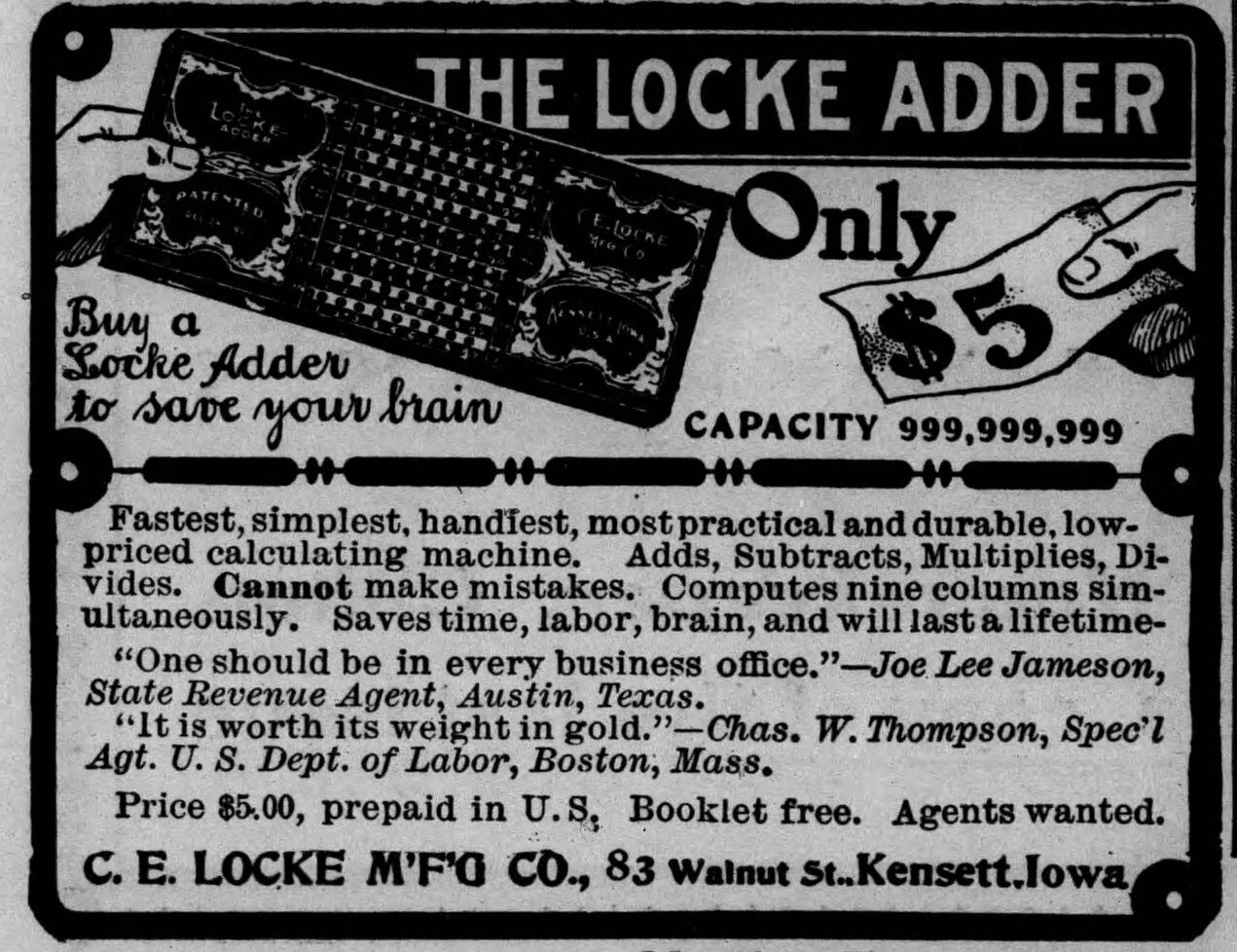
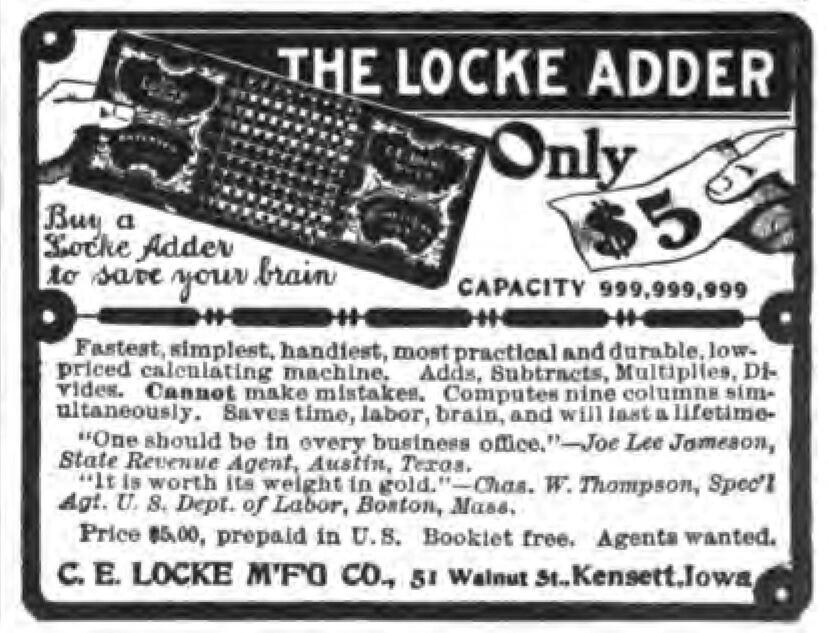
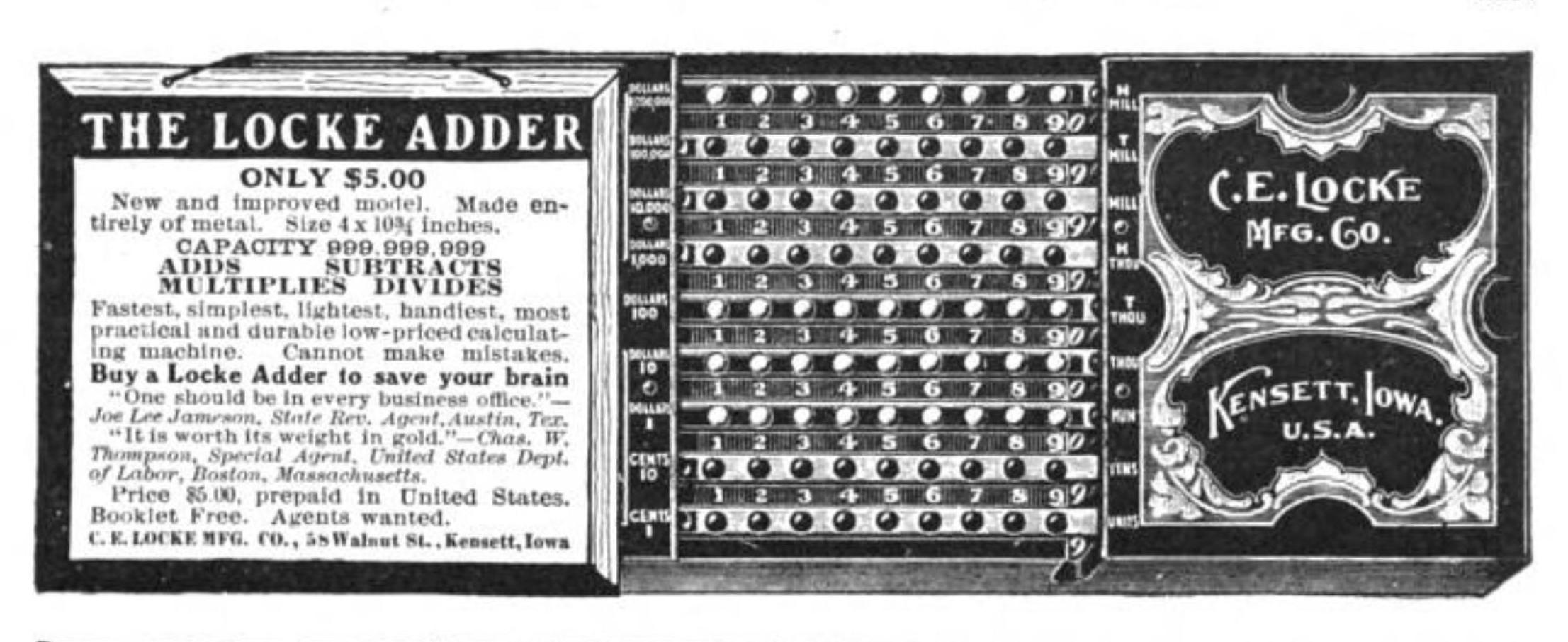
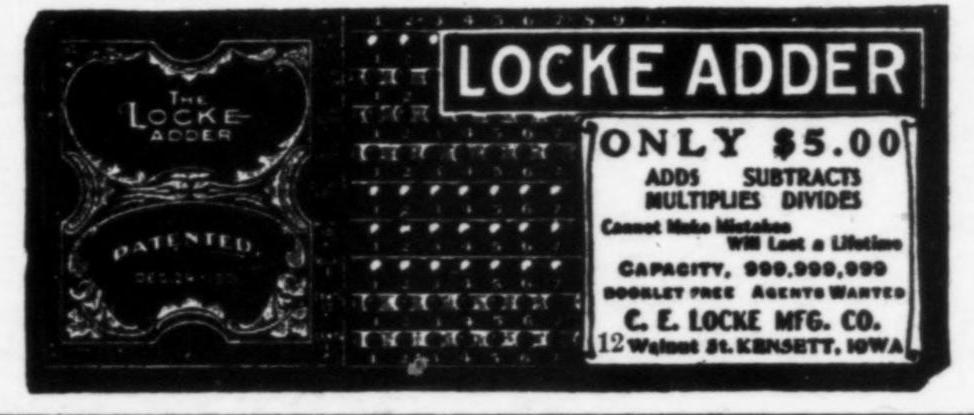
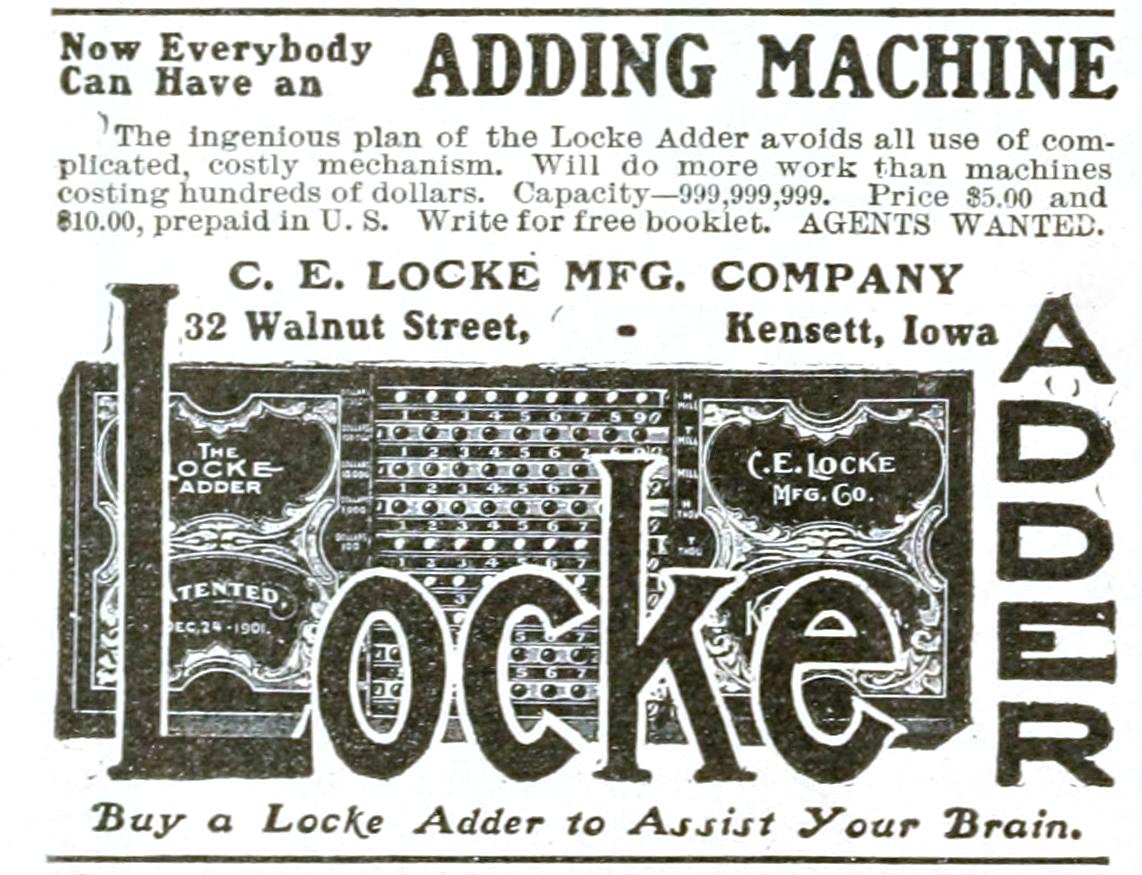
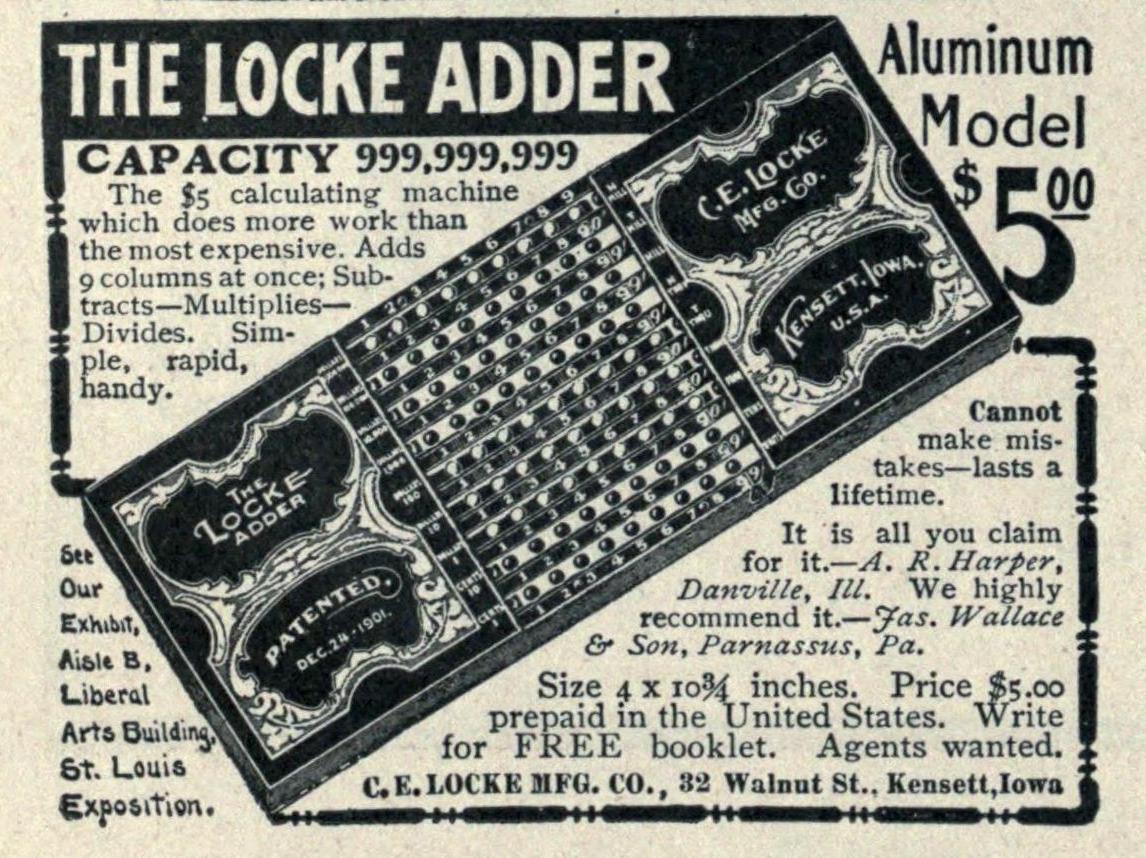
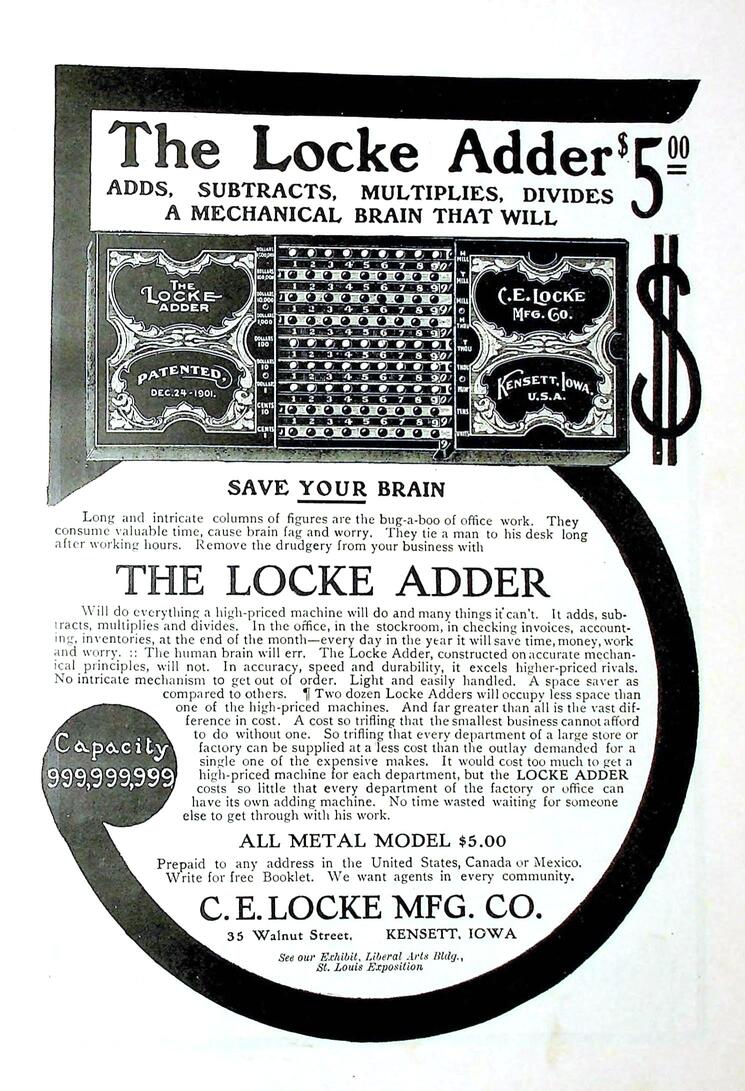
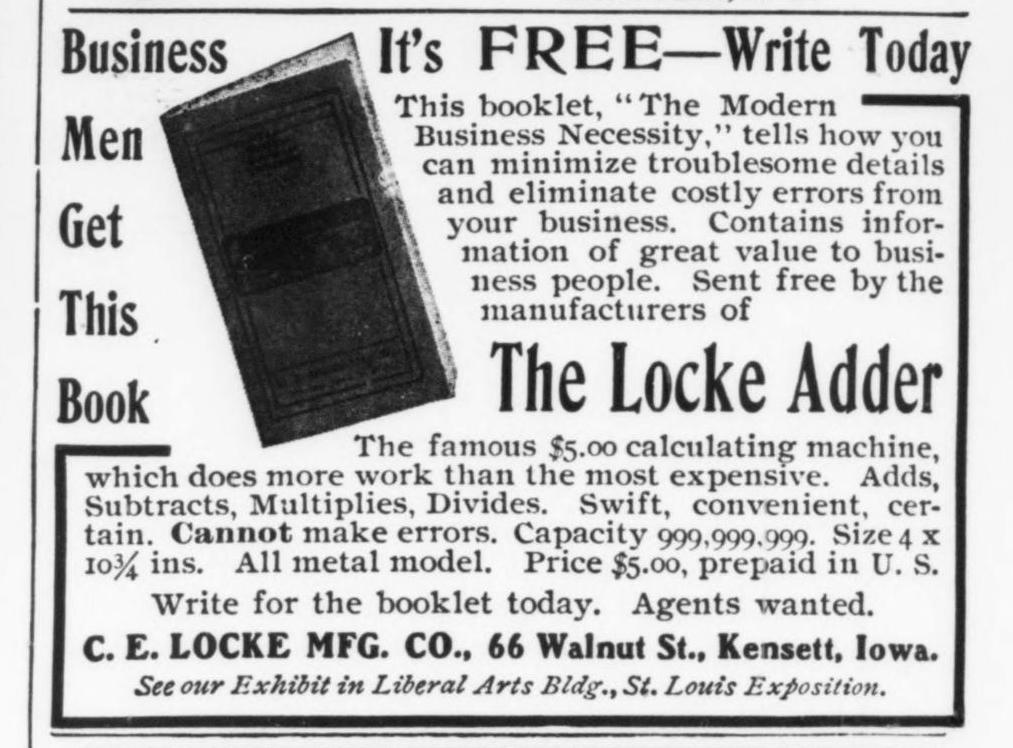
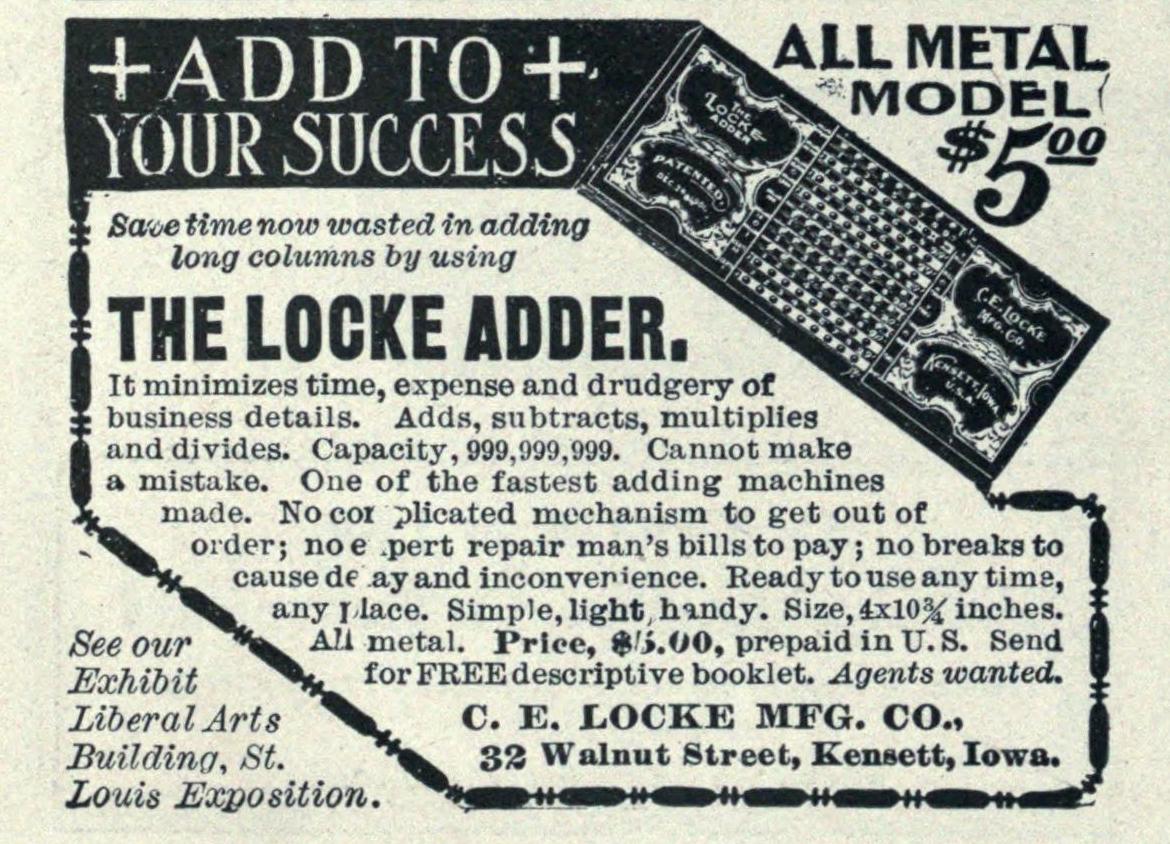
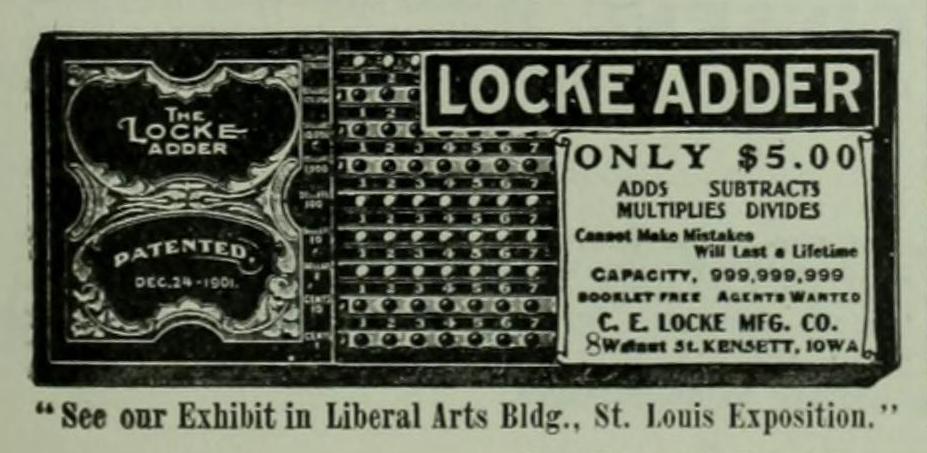
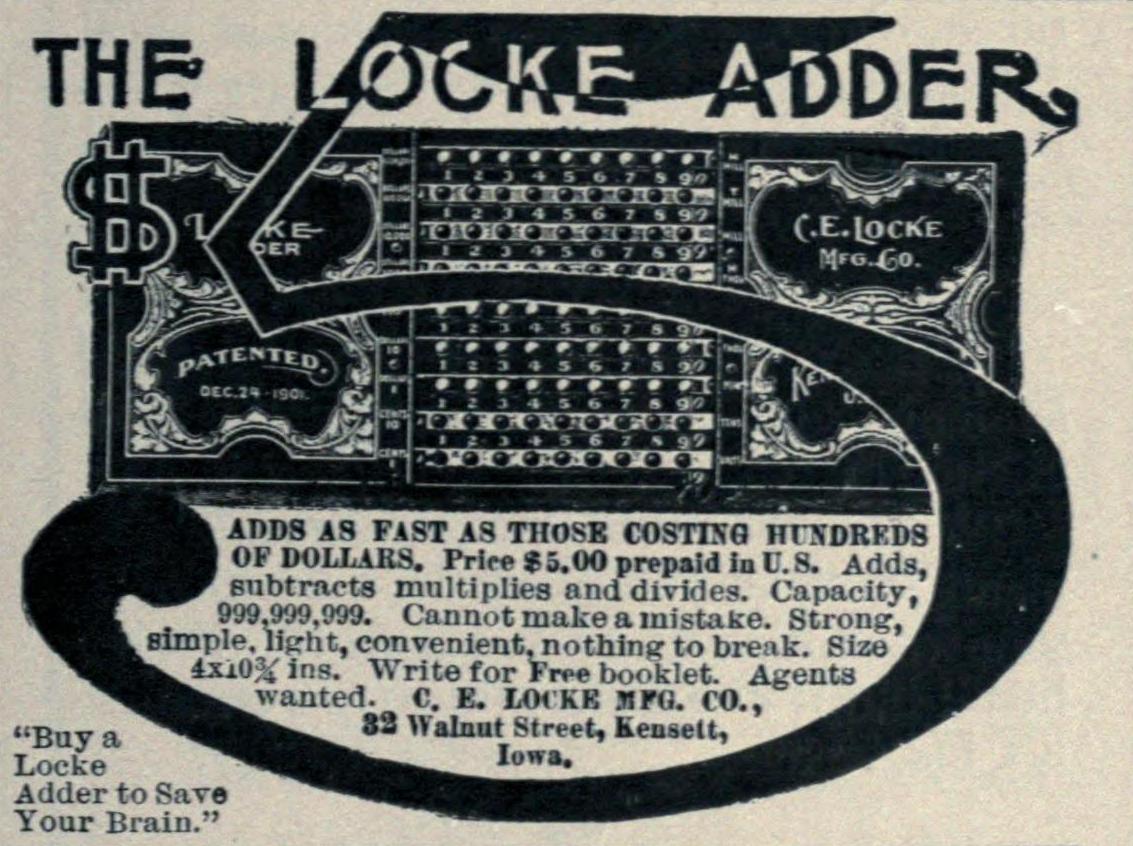
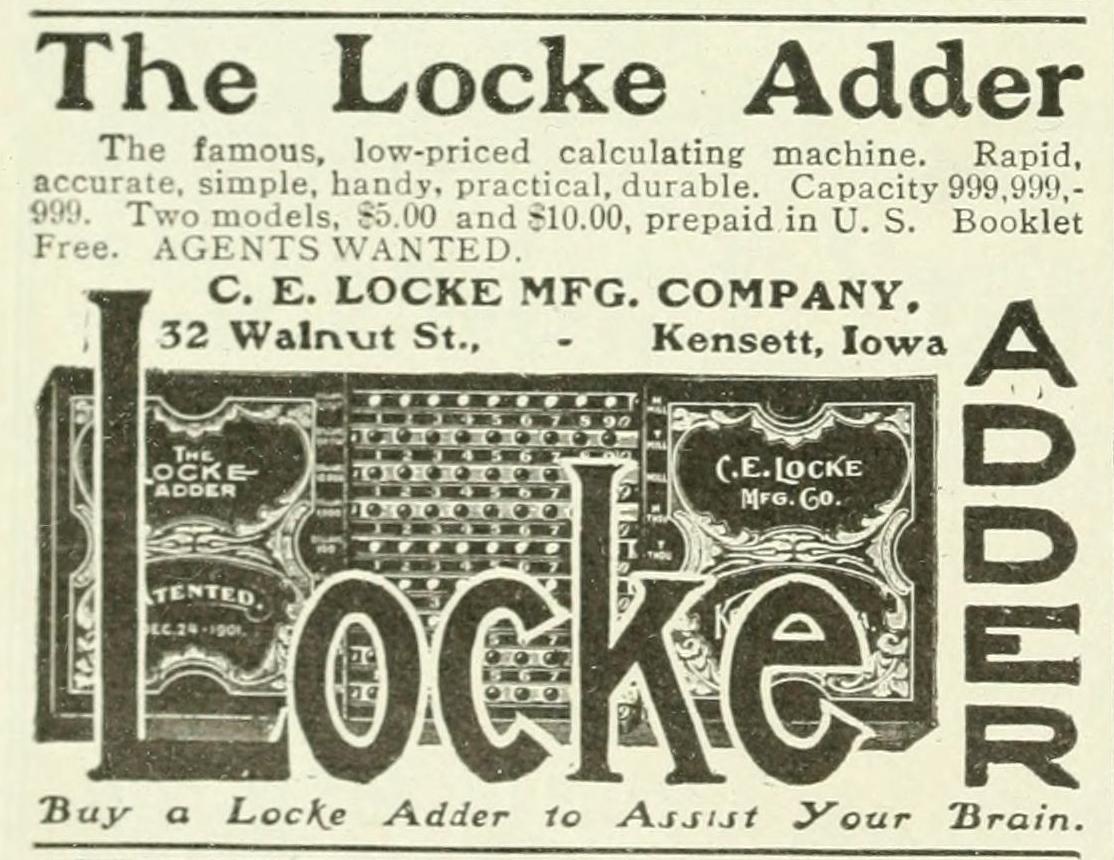
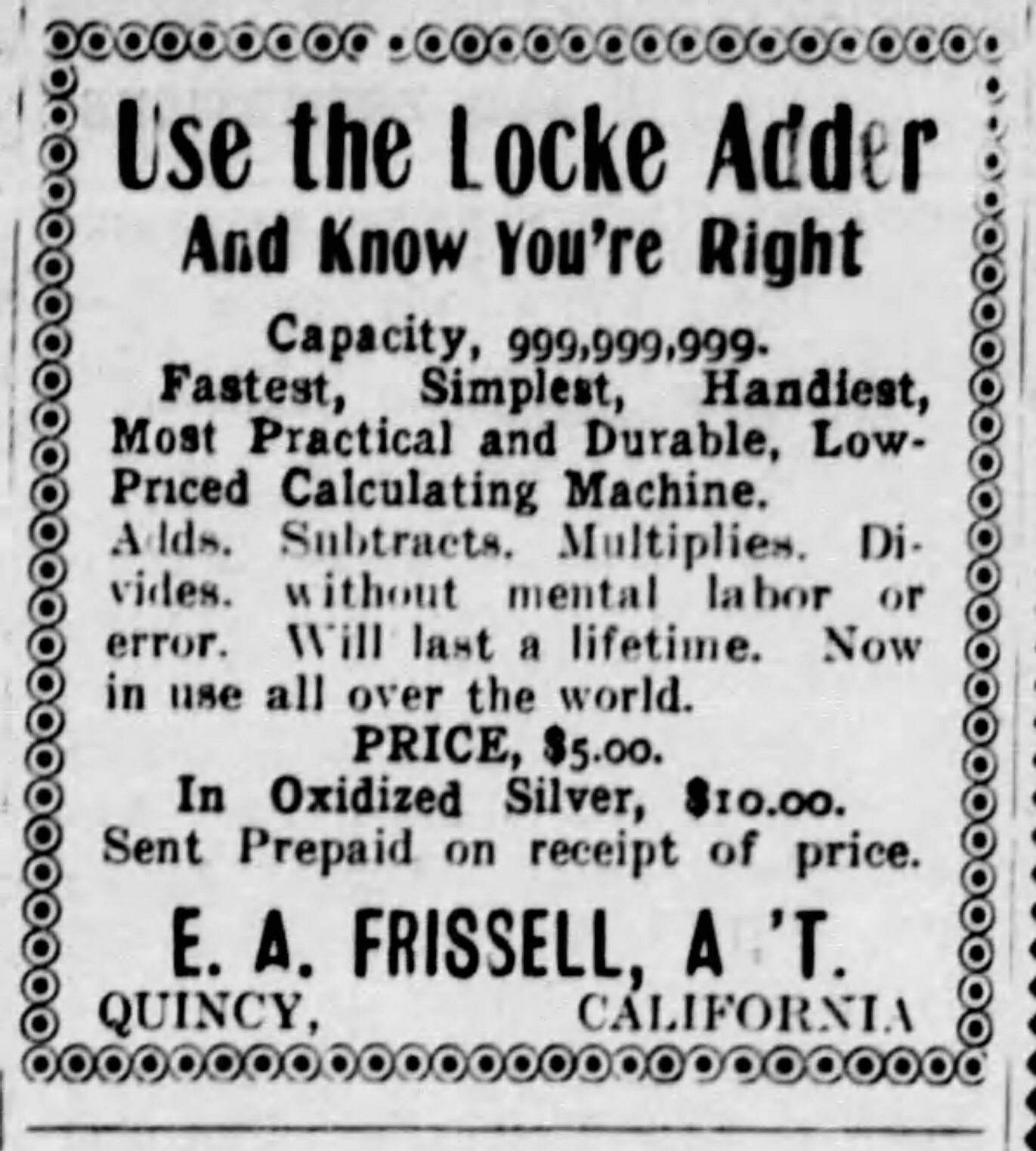
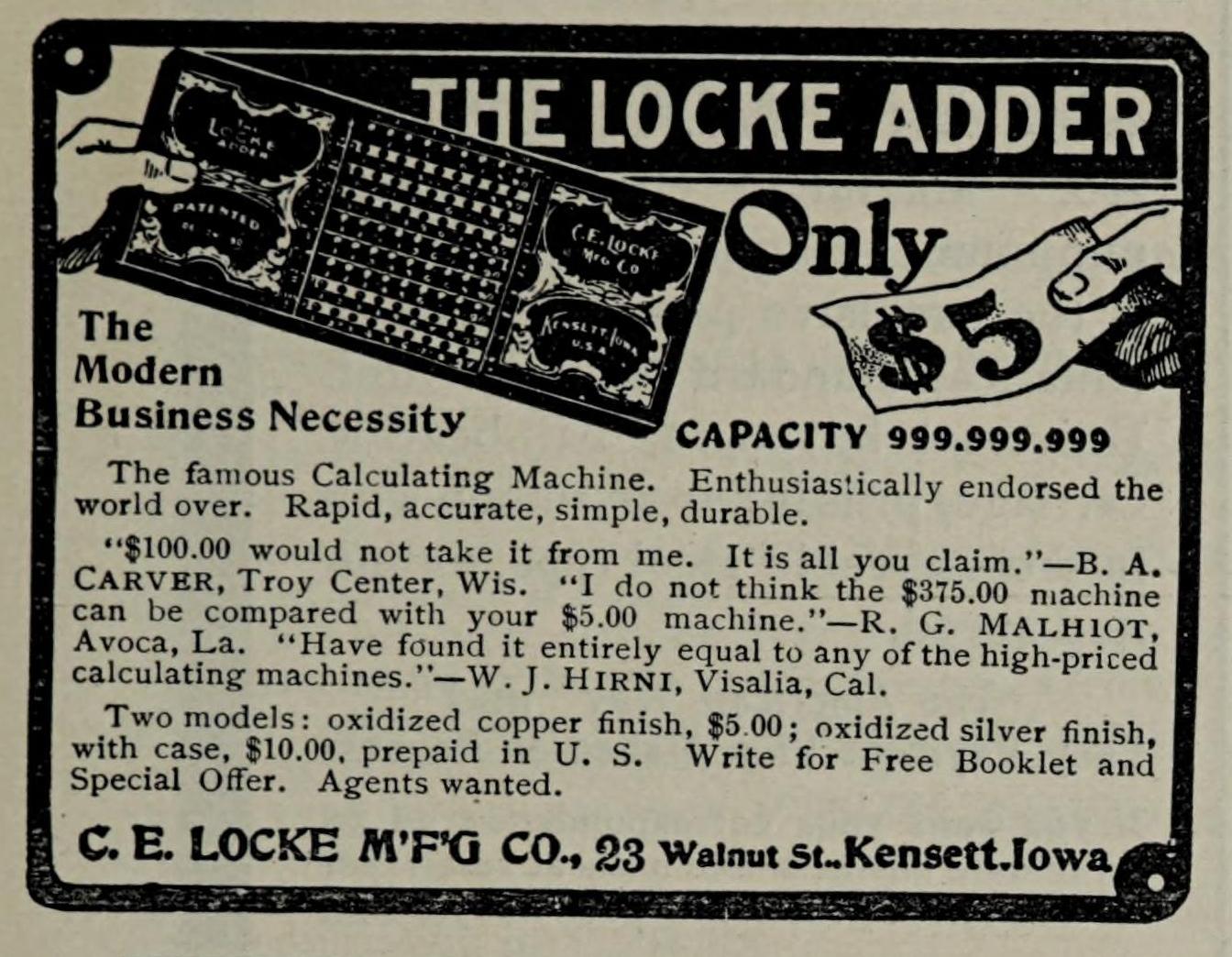
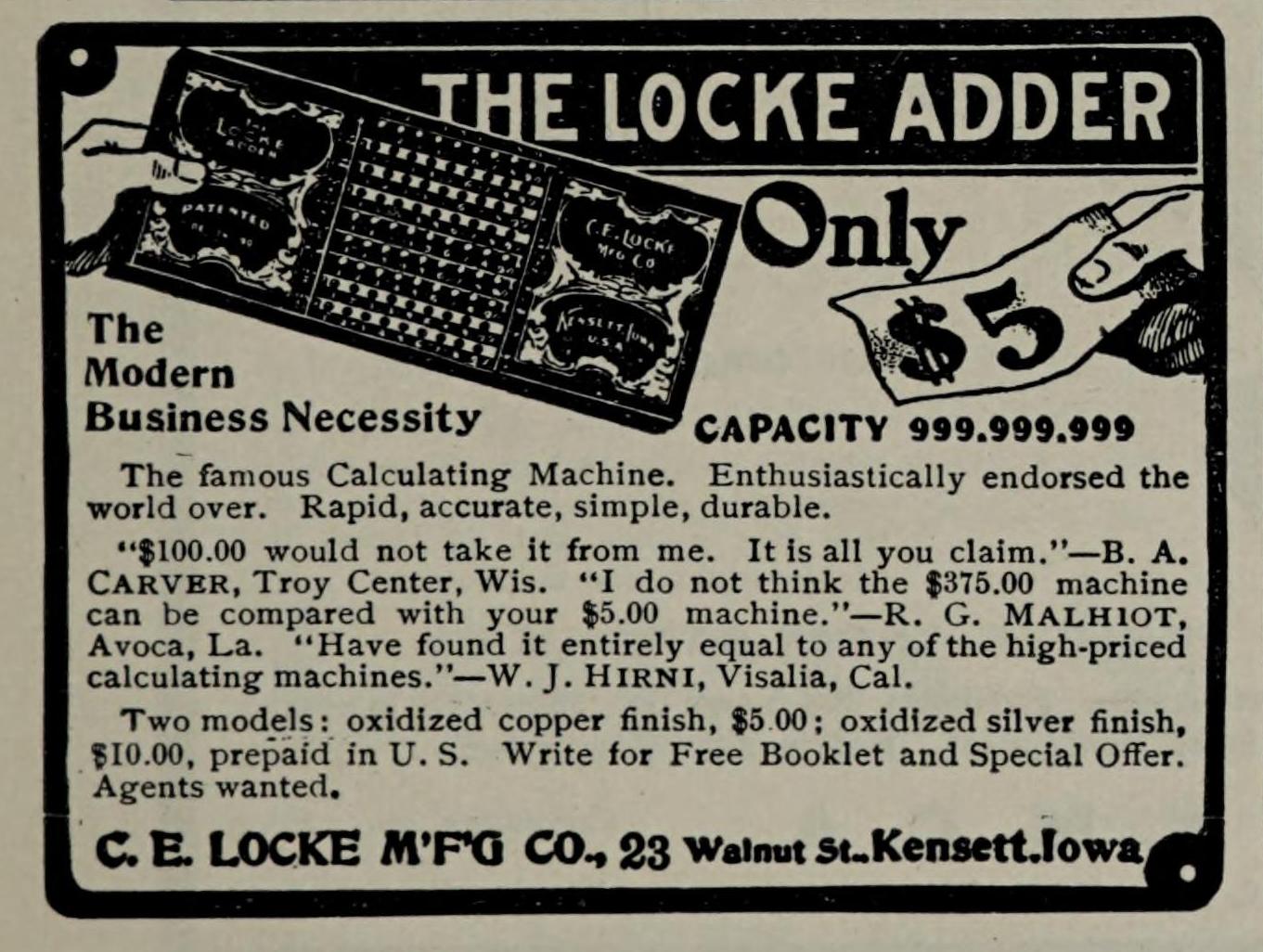
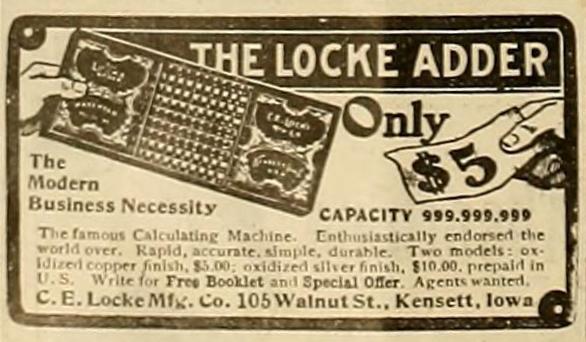
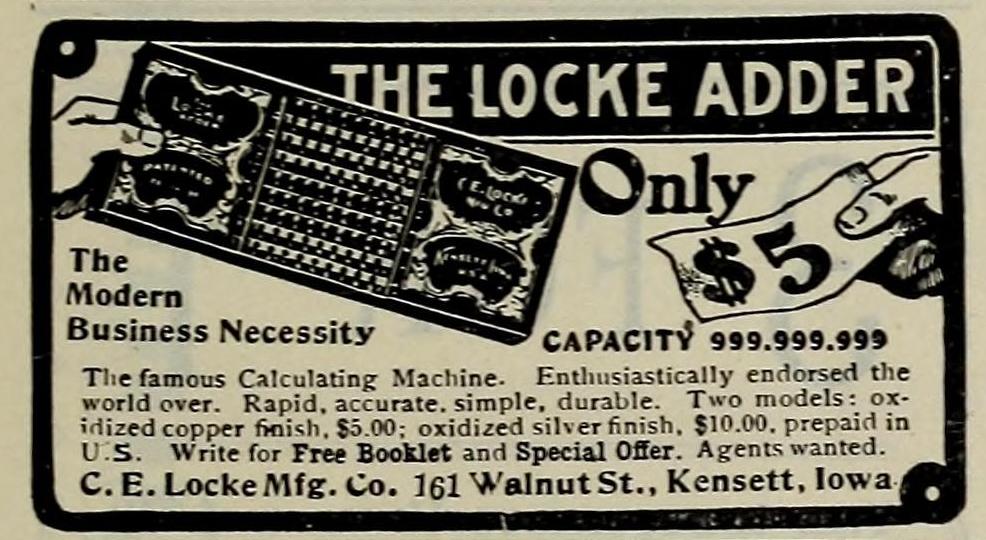
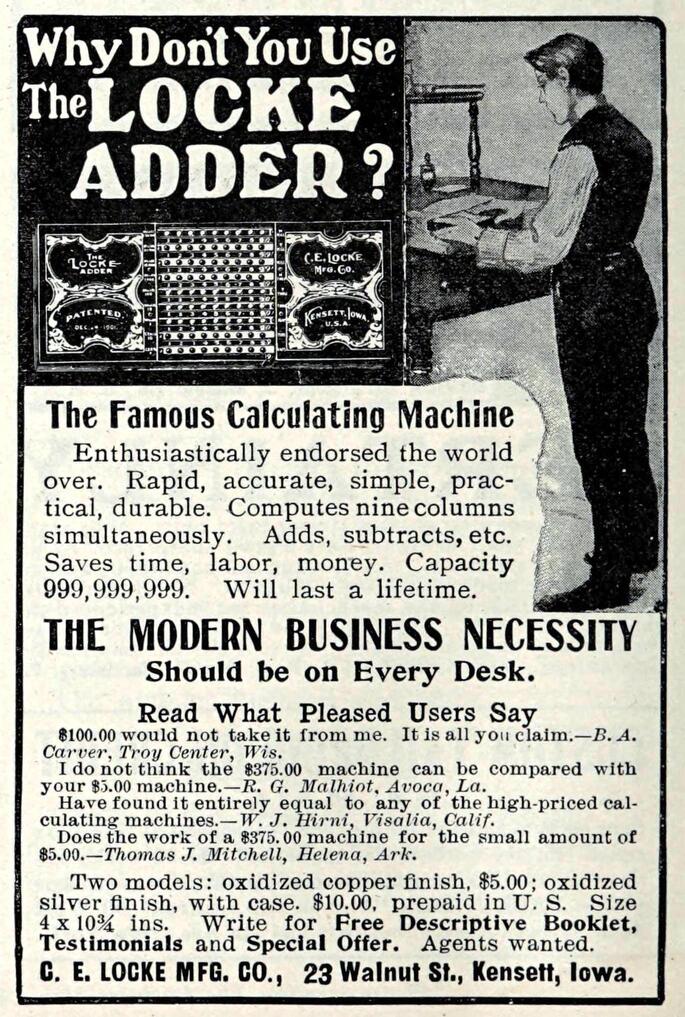
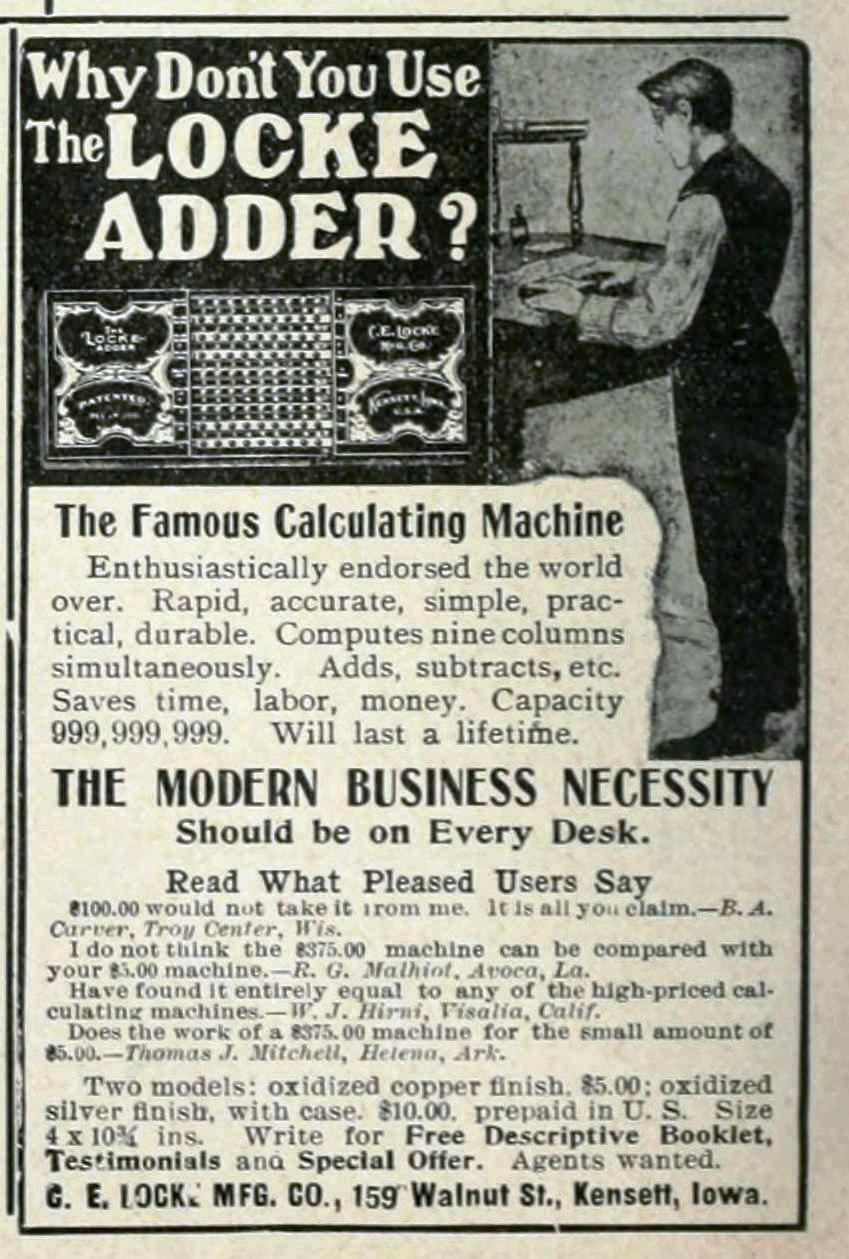
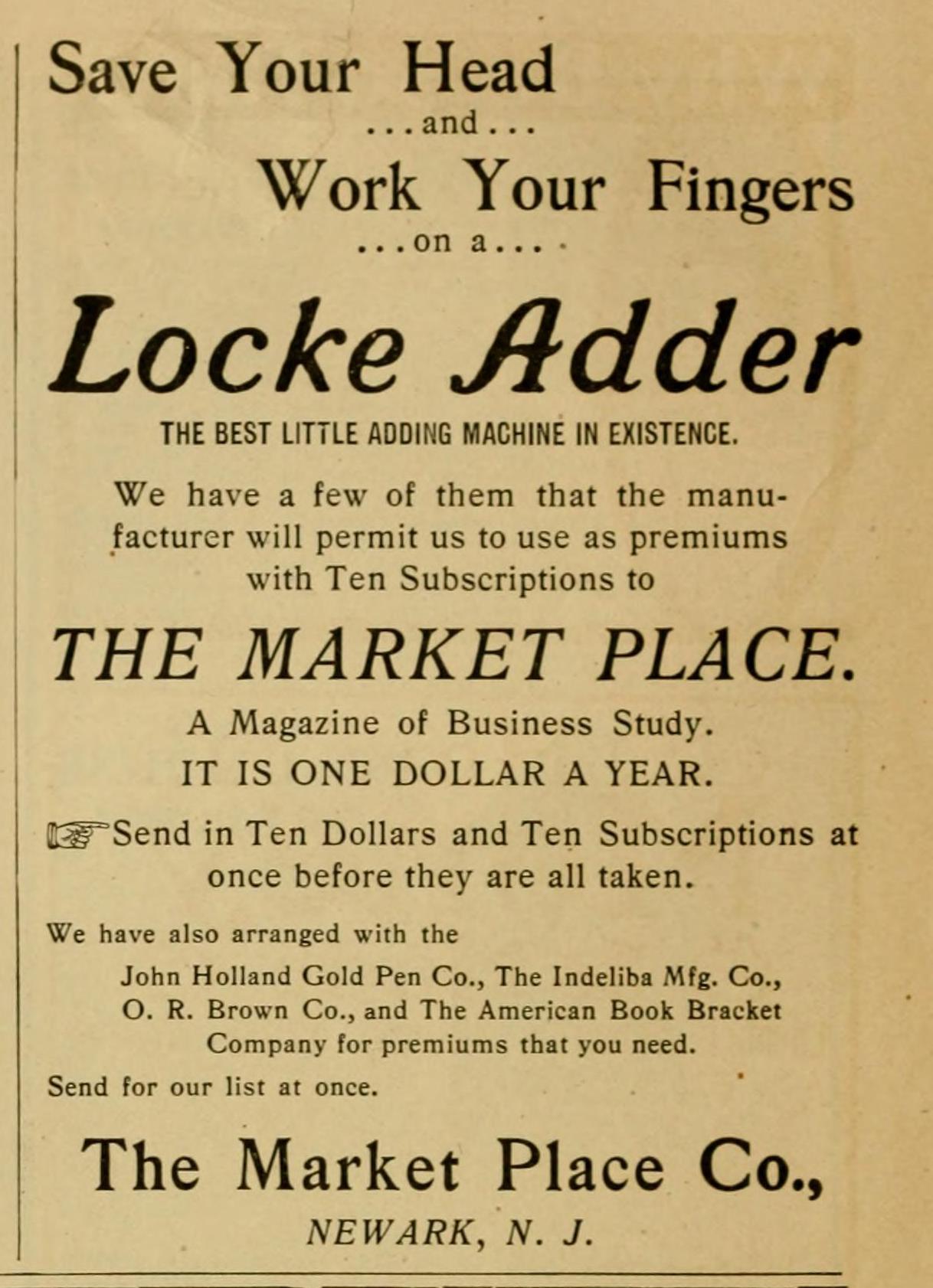
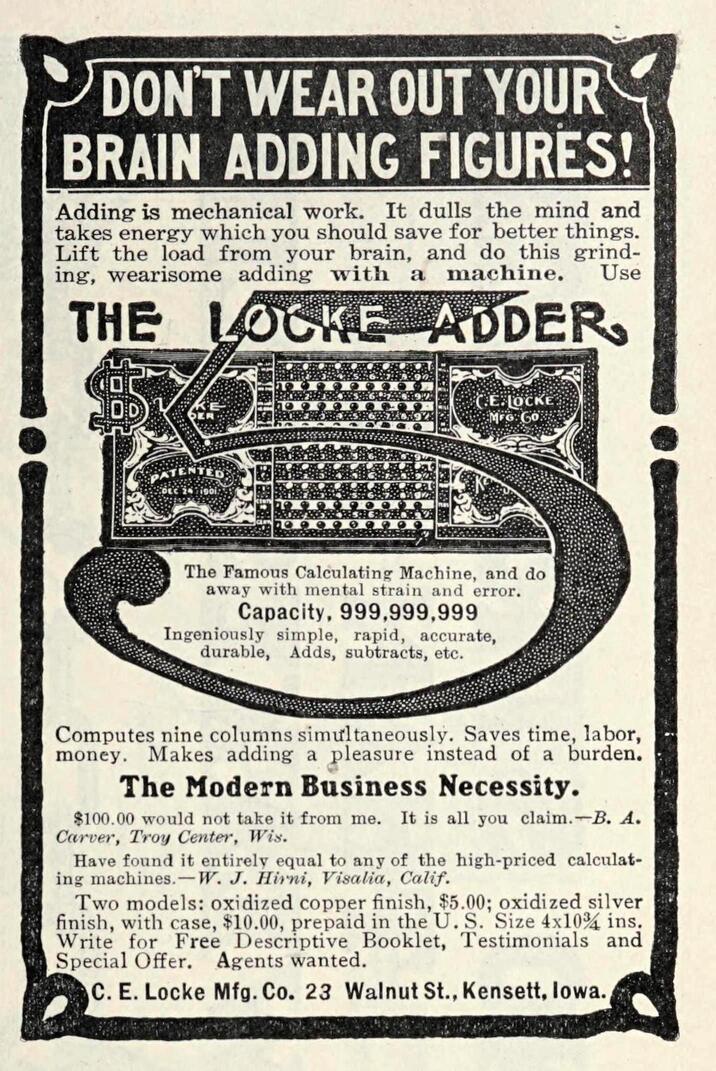
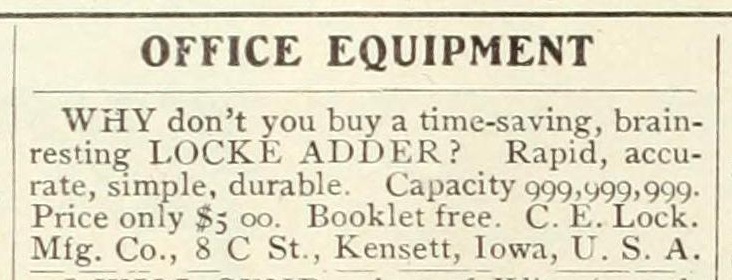
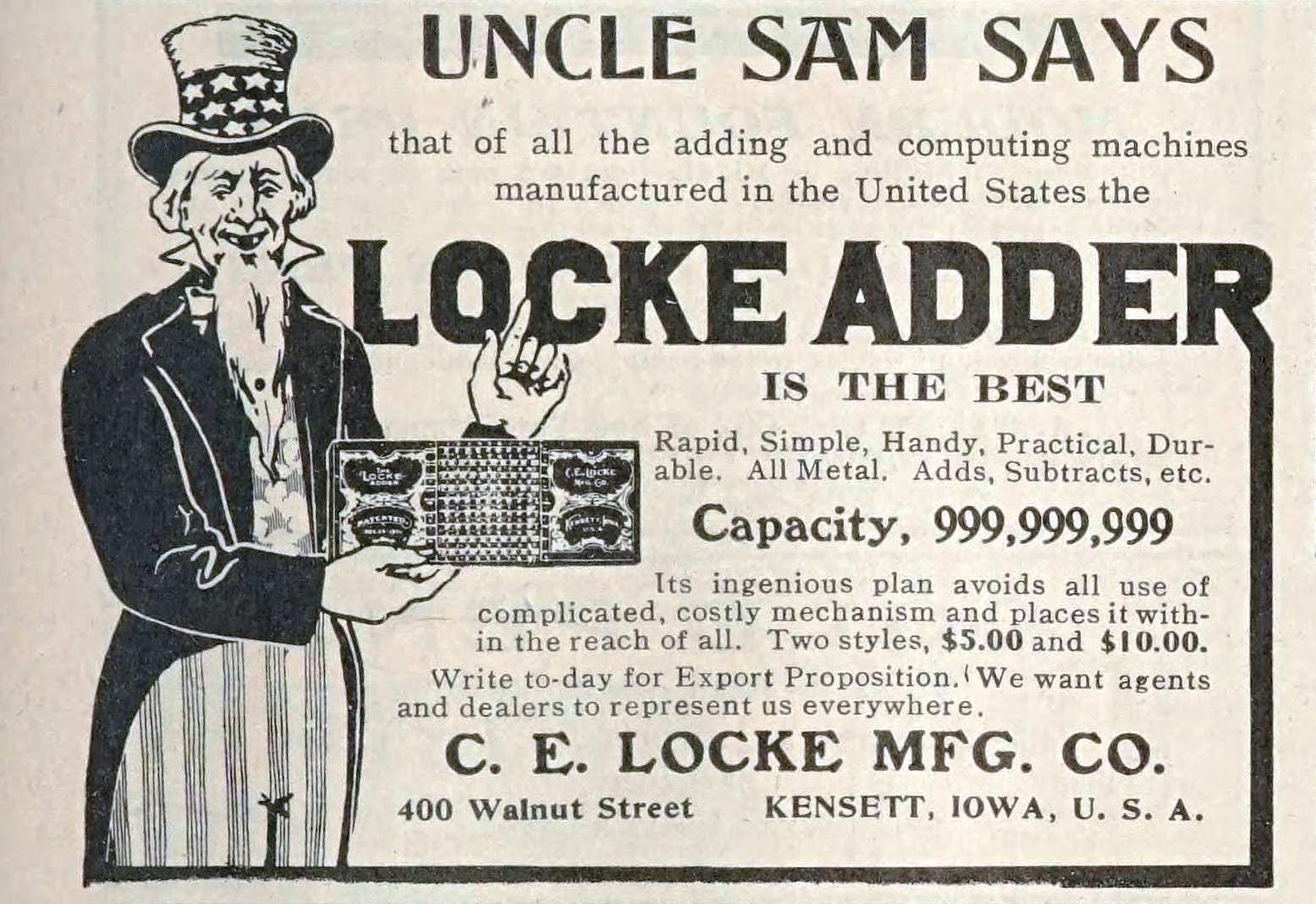
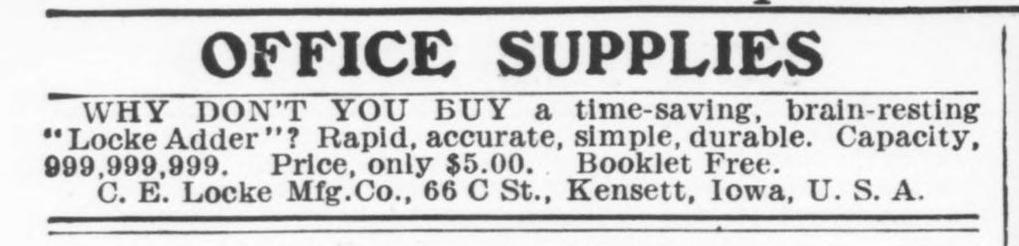
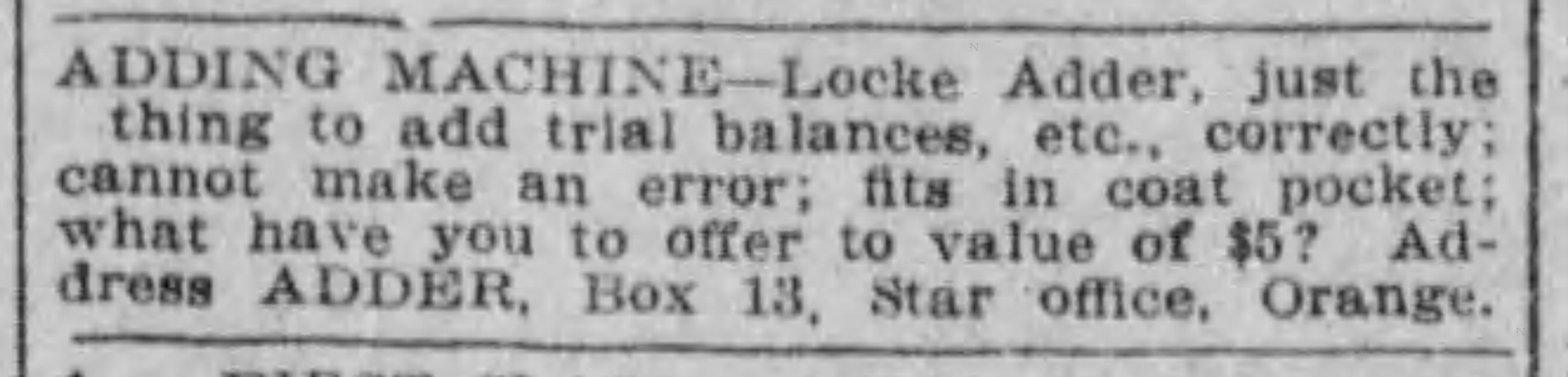
Here is a selection of the many adverts for the Locke Adder.
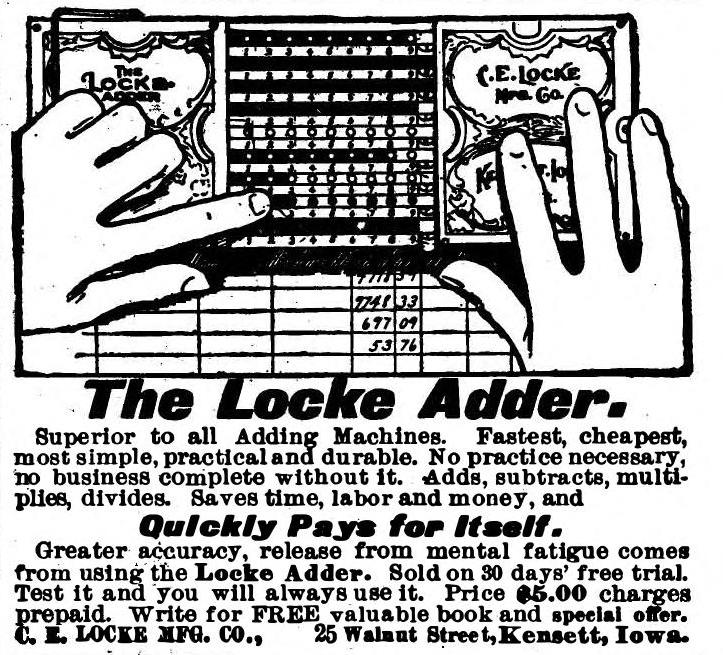
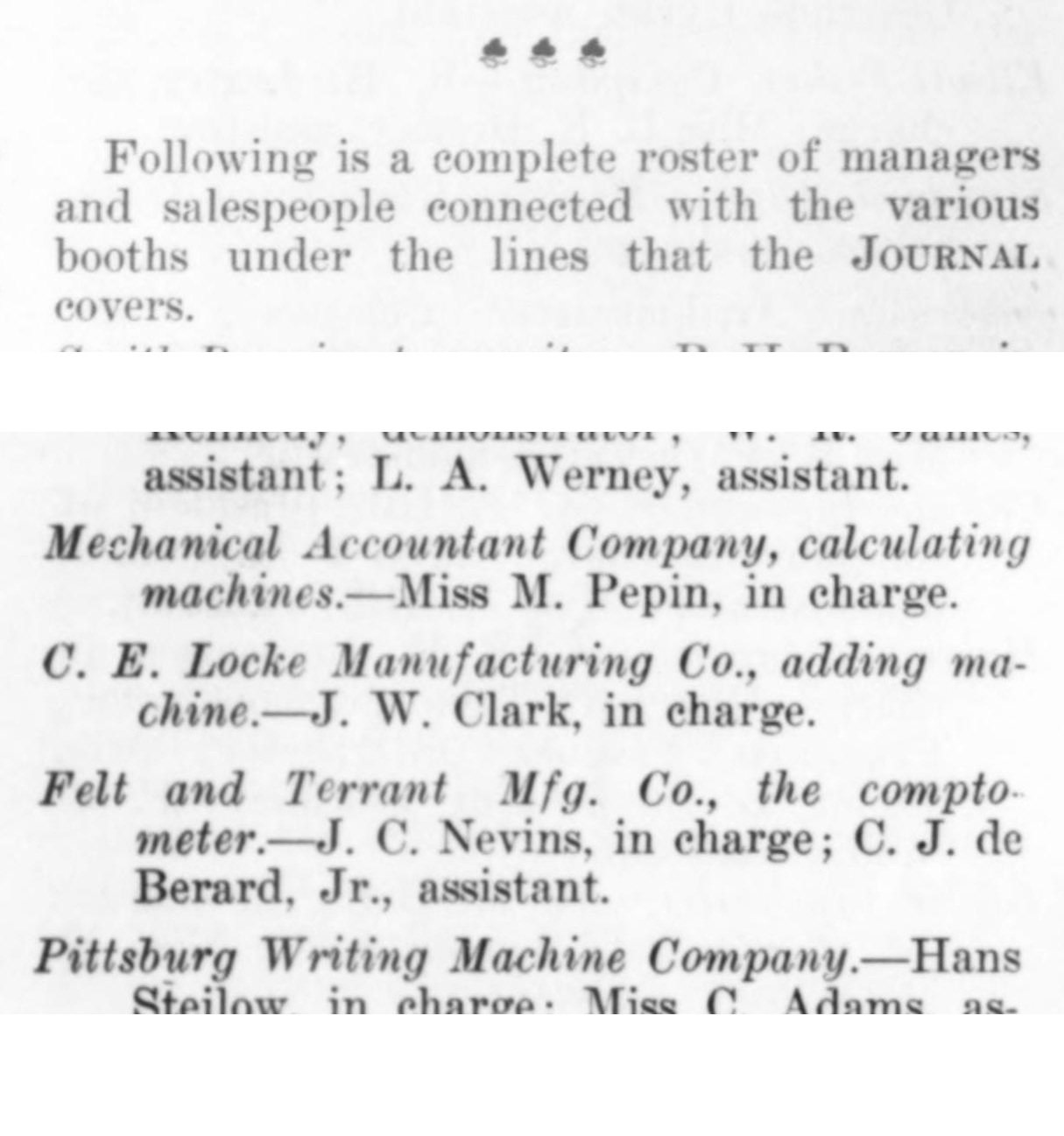
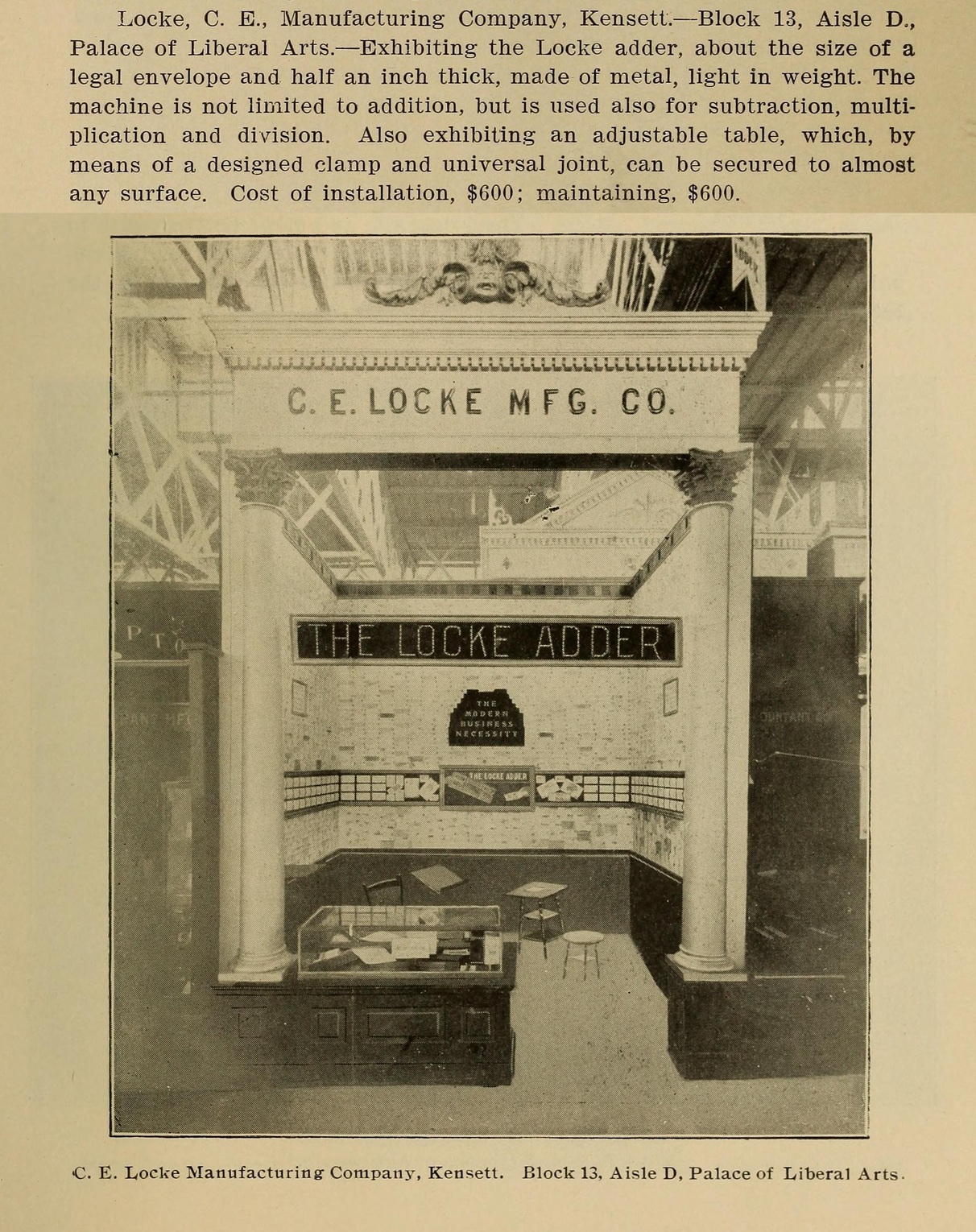
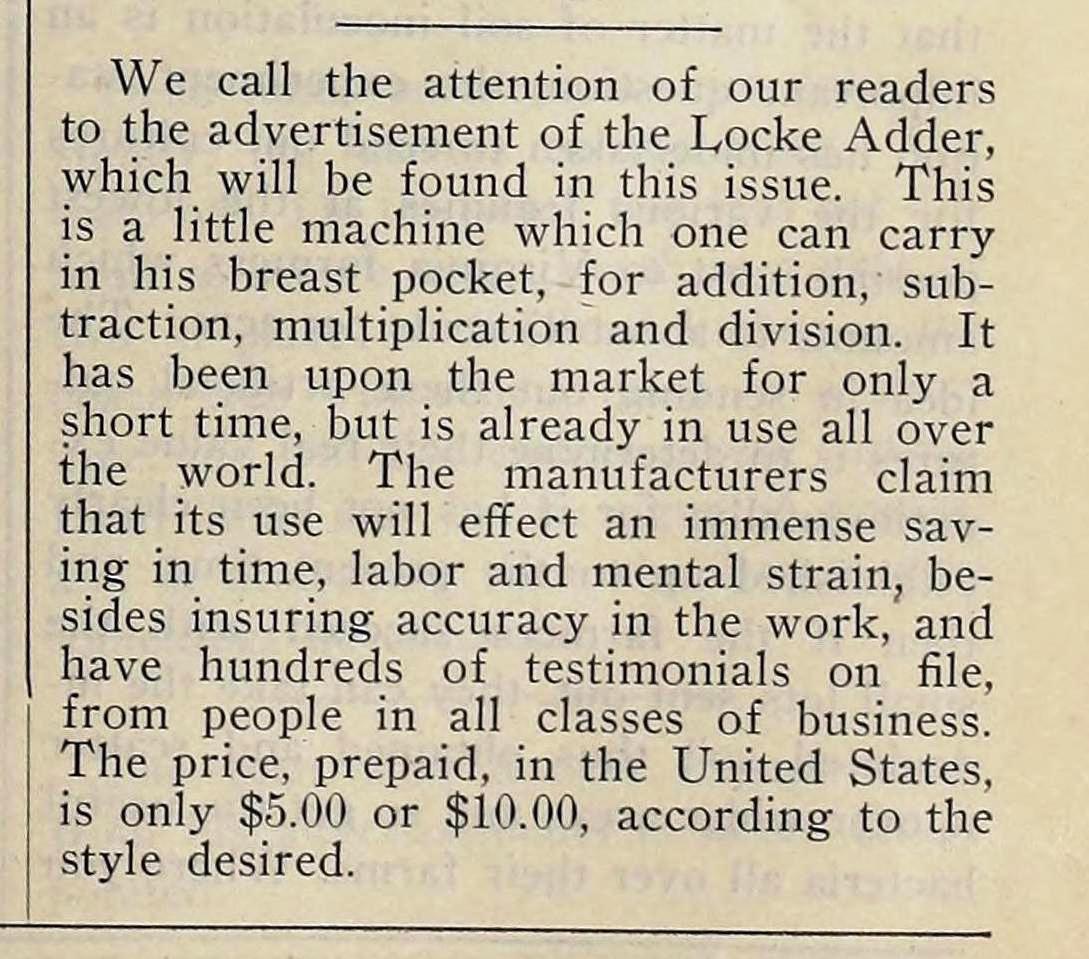
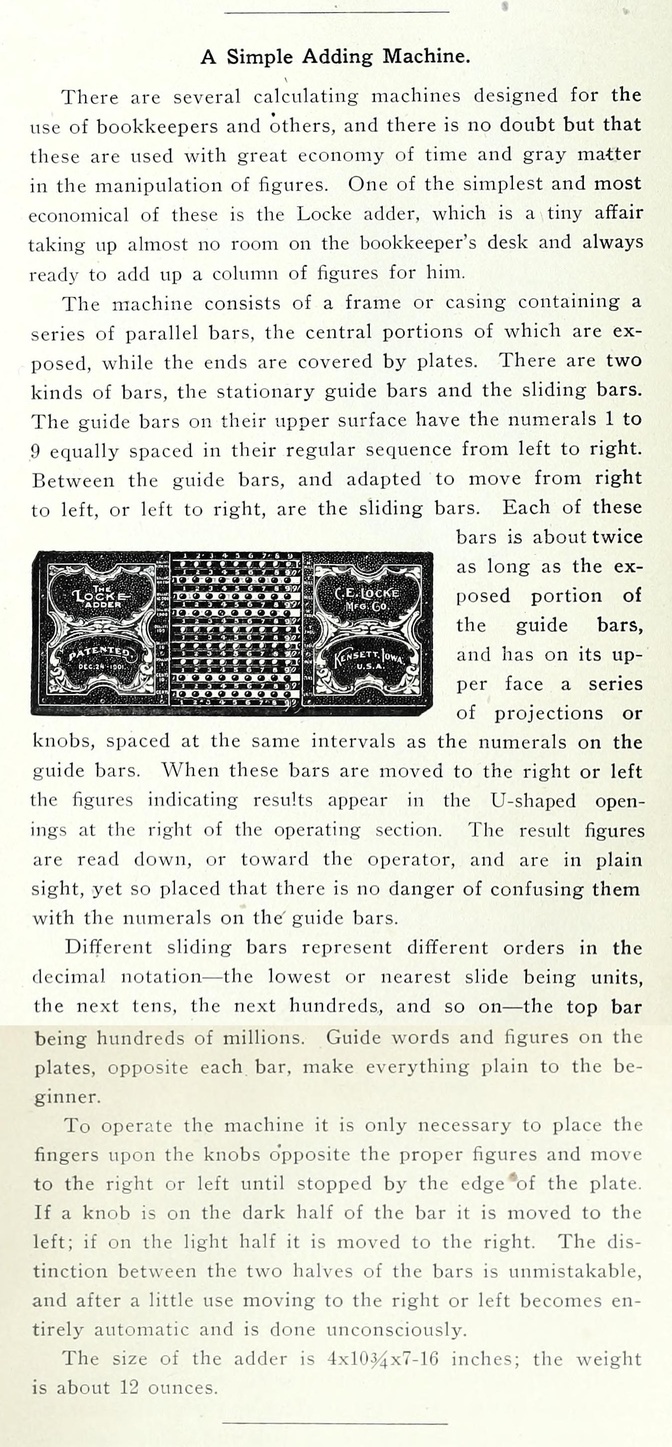
Here are a few articles related to the Locke Adder, the company, or the Locke family.
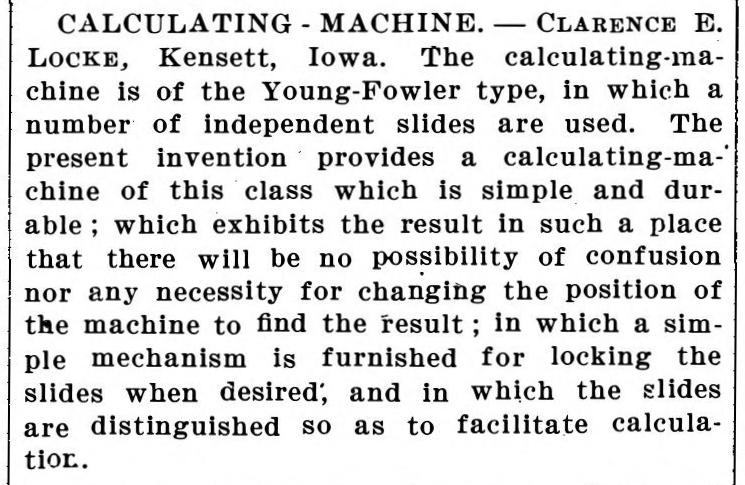
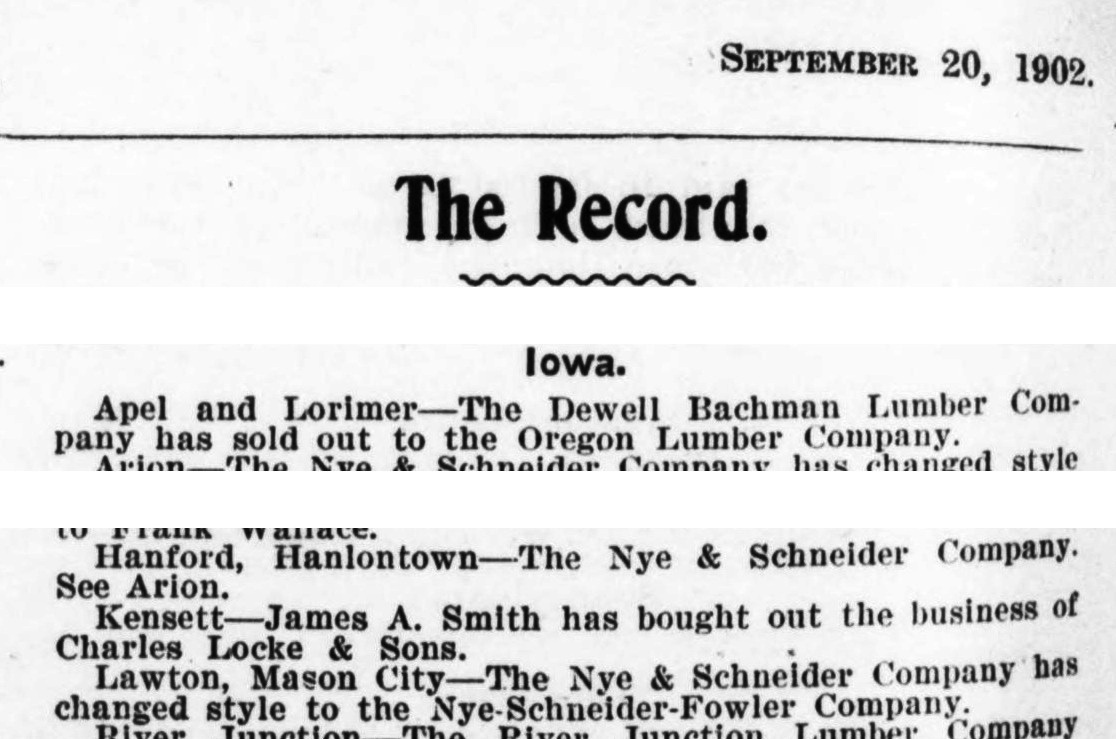
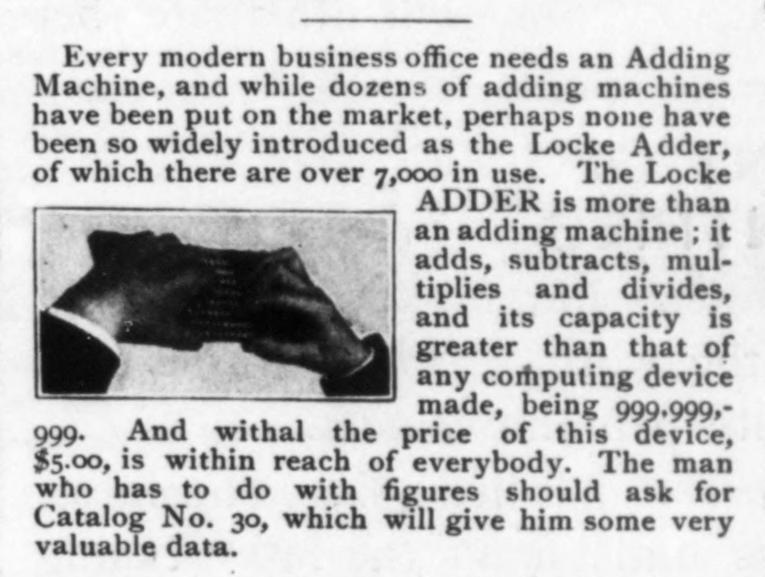
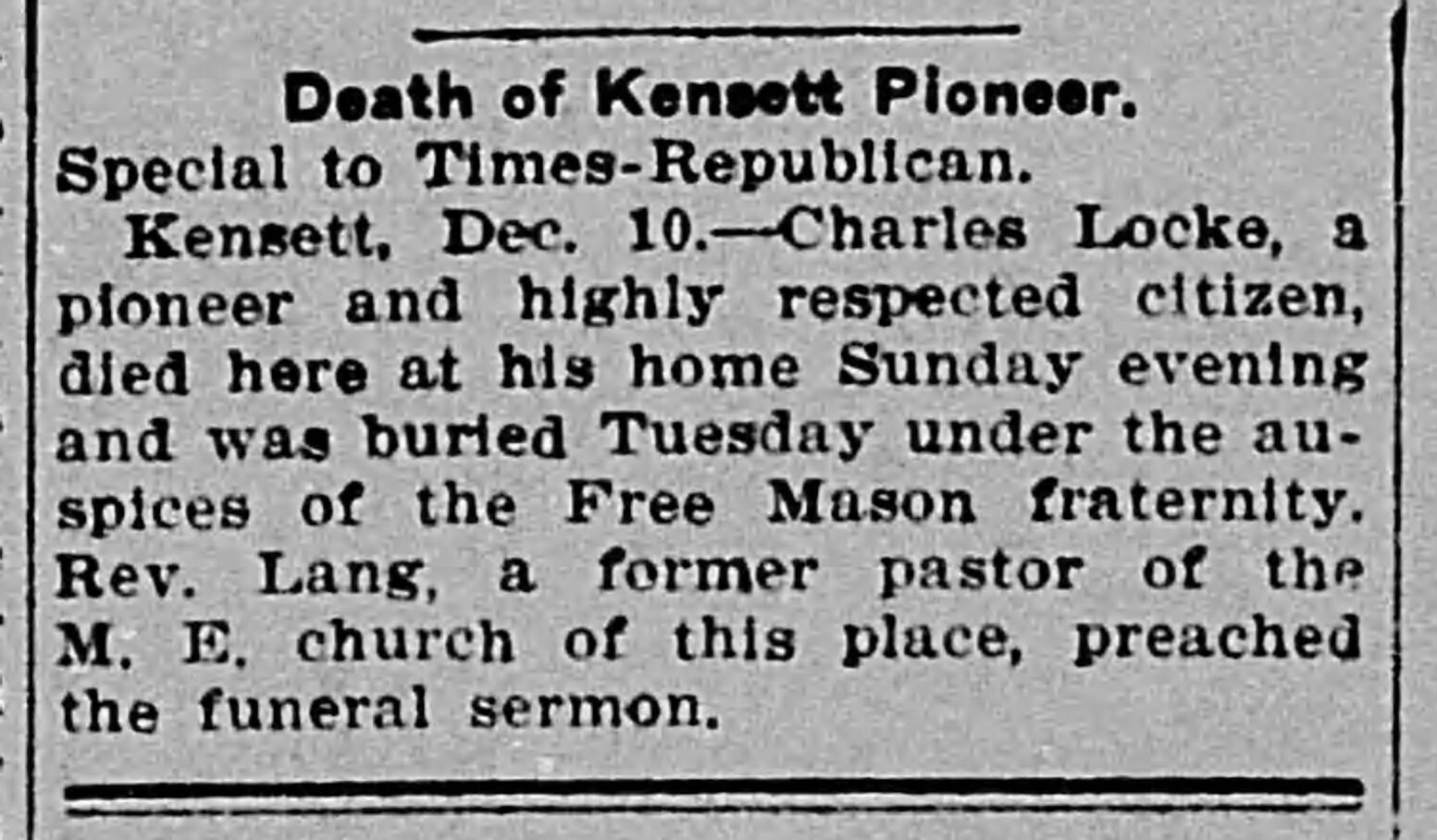

Lastly here are a few advertisements of Locke's other products.
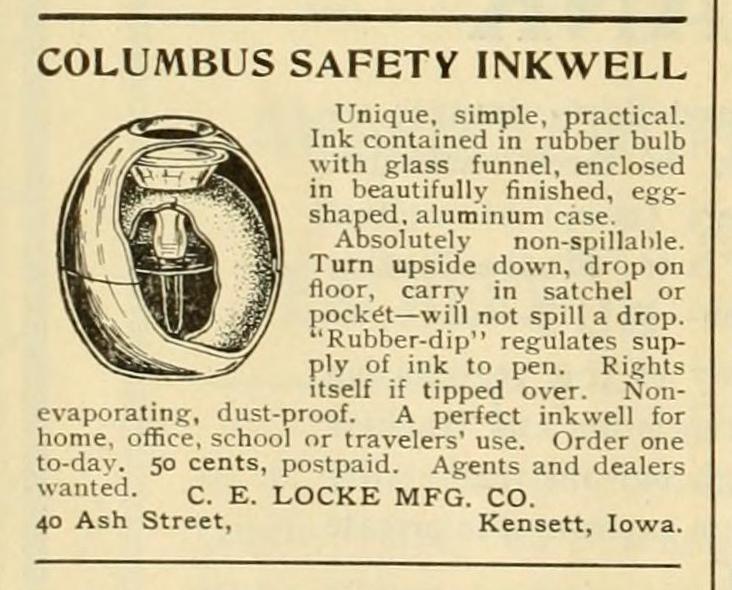
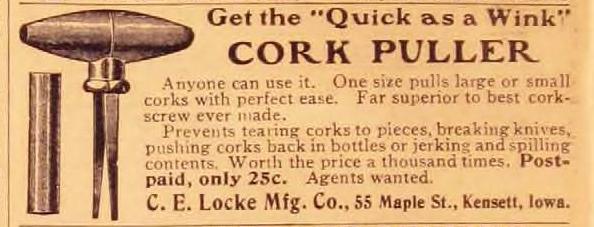

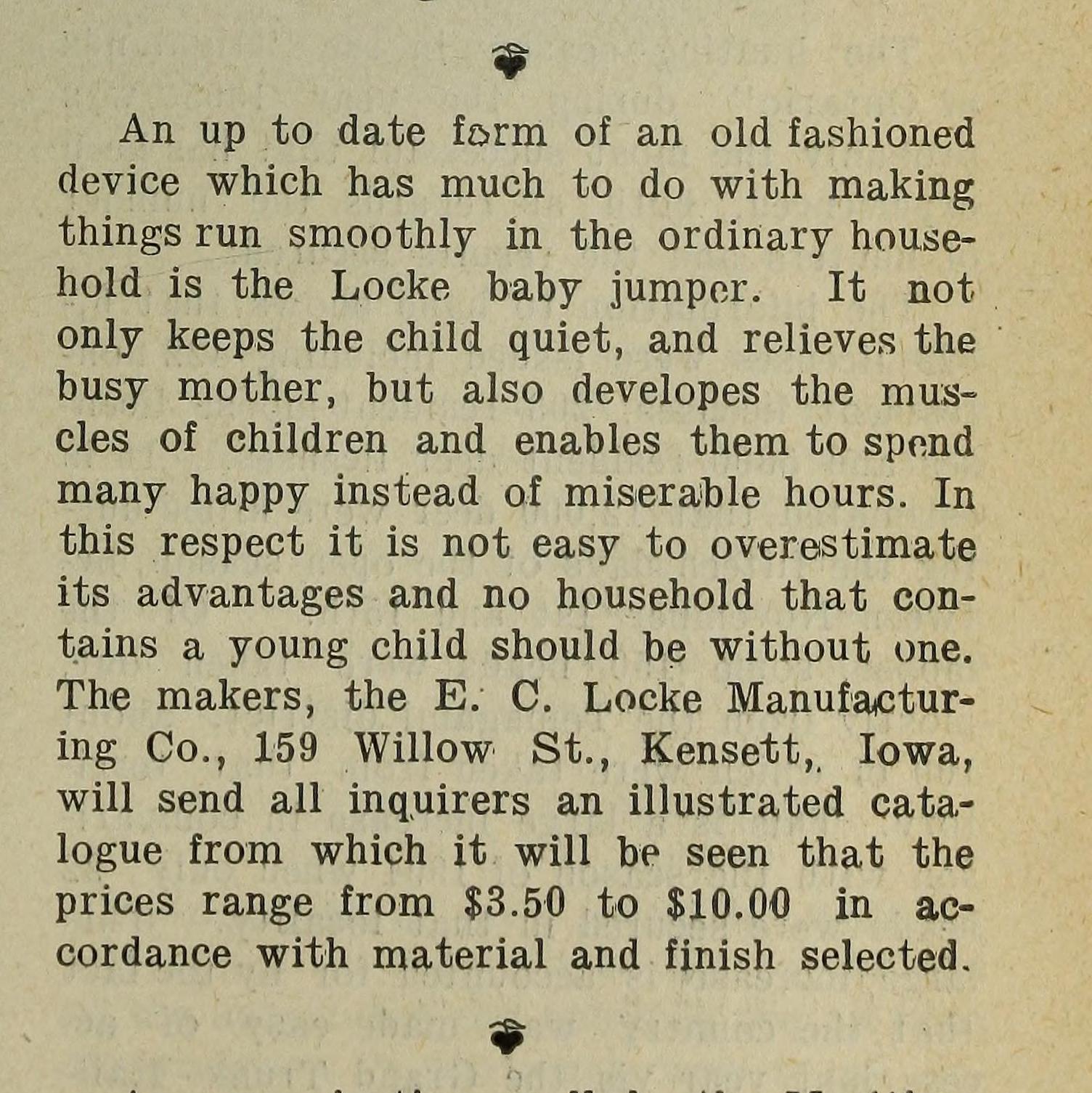
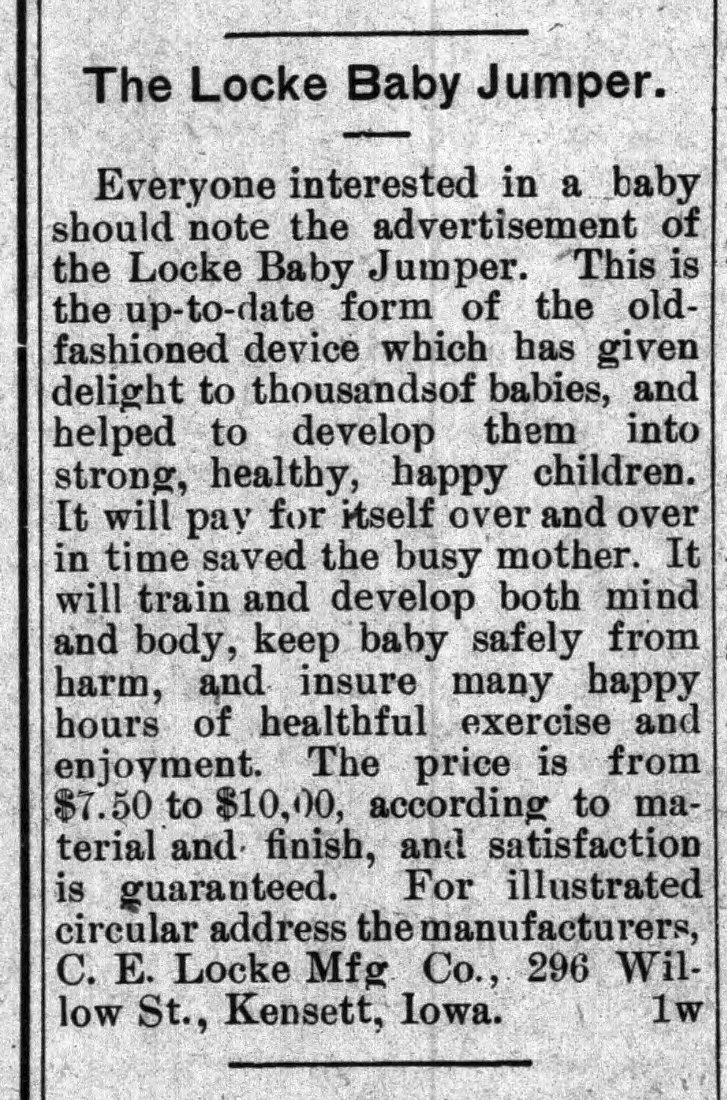


Clarence E. Locke was granted two patents for the Locke Adder which are listed below. The patents reference similar earlier adders, namely George Fowler's Universal Adder, and an earlier adder by Samuel Young. These previous patents are also in the table below.
Clarence manufactured several other items, but I found only one other patent to his name, which is for a hand stamp (US 686,815). I do not know if he actually made that stamp, since I have not found any advertisements for it.
| Patent | Filing date | Published date | Name | Description |
|---|---|---|---|---|
| US 6,602 | 24-07-1849 | 24-07-1849 | Samuel S. Young | Calculating Machine |
| US 39,222 | 14-07-1863 | 14-07-1863 | George B. Fowler | Adding Machine |
| US 432,266 | 07-03-1890 | 15-07-1890 | George B. Fowler | Adding Machine |
| US 689,680 | 20-03-1900 | 24-12-1901 | Clarence E. Locke | Calculating Machine |
| US 779,088 | 29-04-1904 | 03-01-1905 | Clarence E. Locke | Calculating Machine |
© Copyright 2026 Jaap Scherphuis, mechcalc a t jaapsch d o t net.