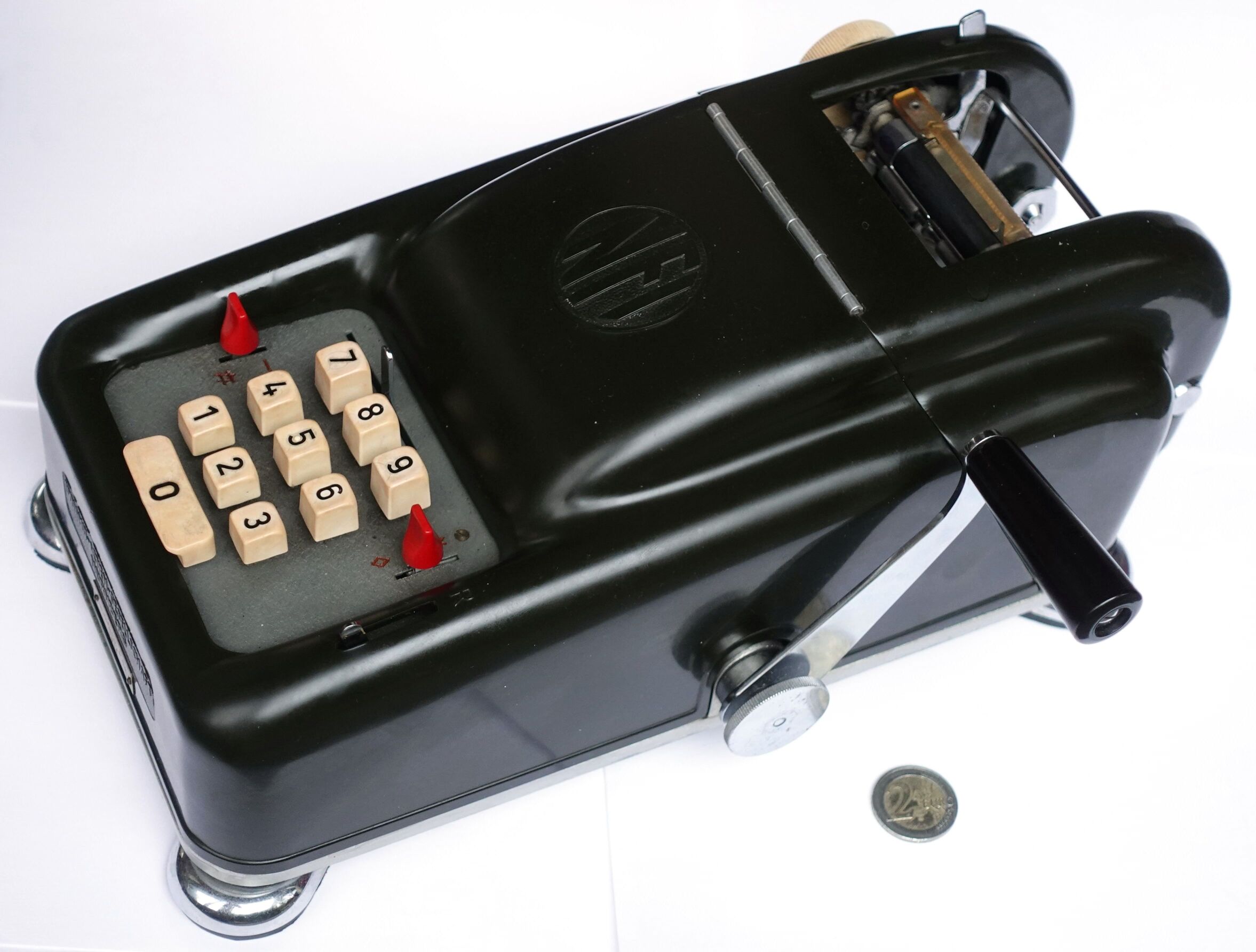
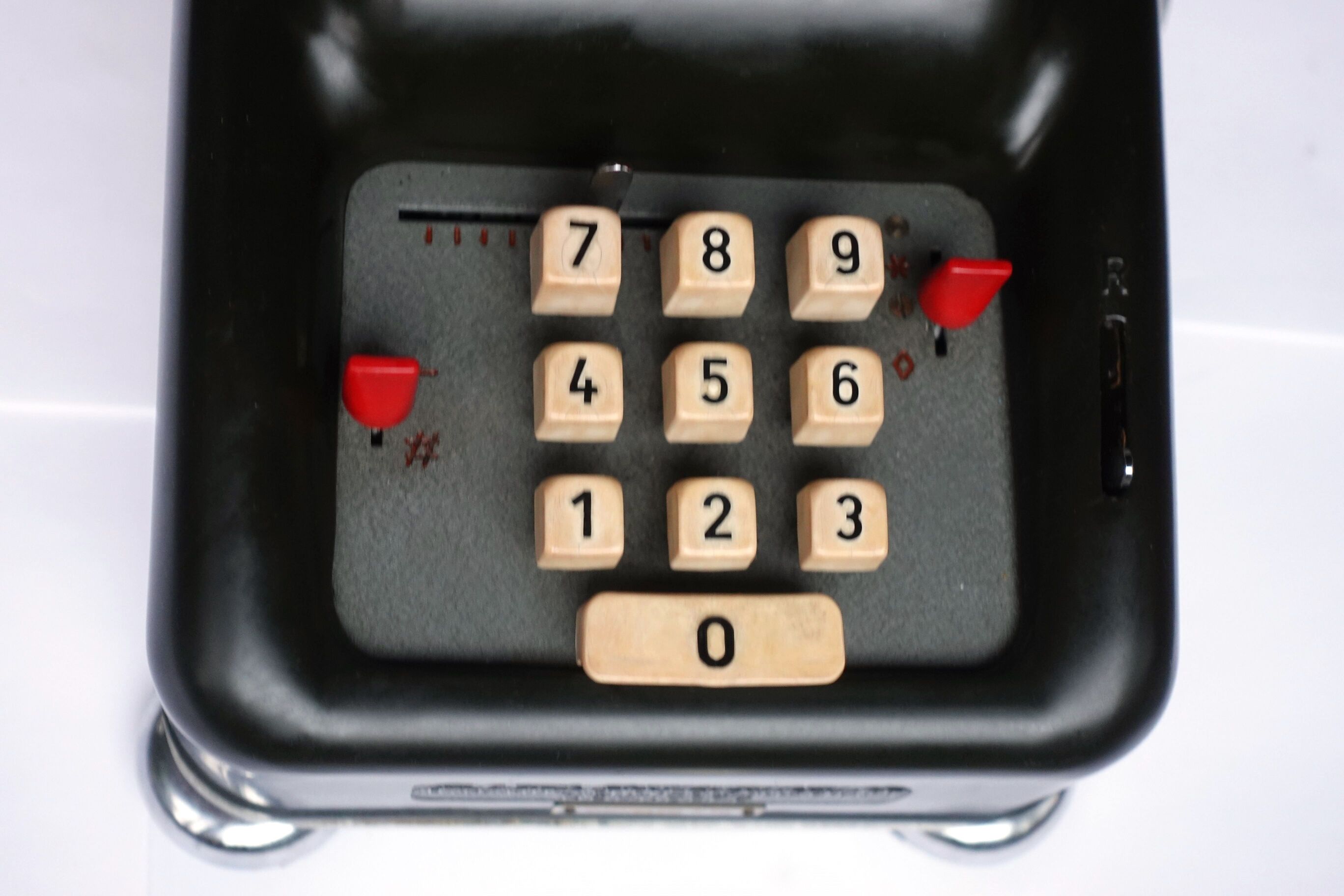
The NFI model 3A is a compact adding listing machine made in Germany from 1950 to 1954. It has a standard 10-key keyboard, allows input of 8-digit numbers, and its register is 9 digits in size. It can add and subtract, but does not handle negative totals.
This is a manually driven machine, so every calculation or printing operation involves pulling the large lever forwards and then back. To add just type a number using the ten digit keys and pull the lever. This prints the number and adds it to the internal register. There is a two-way switch on the left that can be flipped to do subtraction or to do a non-add operation (just printing a number without adding it) with the next pull of the lever. The two-way switch on the right selects the total (printing and then clearing the internal register) or sub-total (just printing the internal register). Note that this switch may be blocked, in which case a blank pull of the lever has to be done before the total or subtotal can be printed.
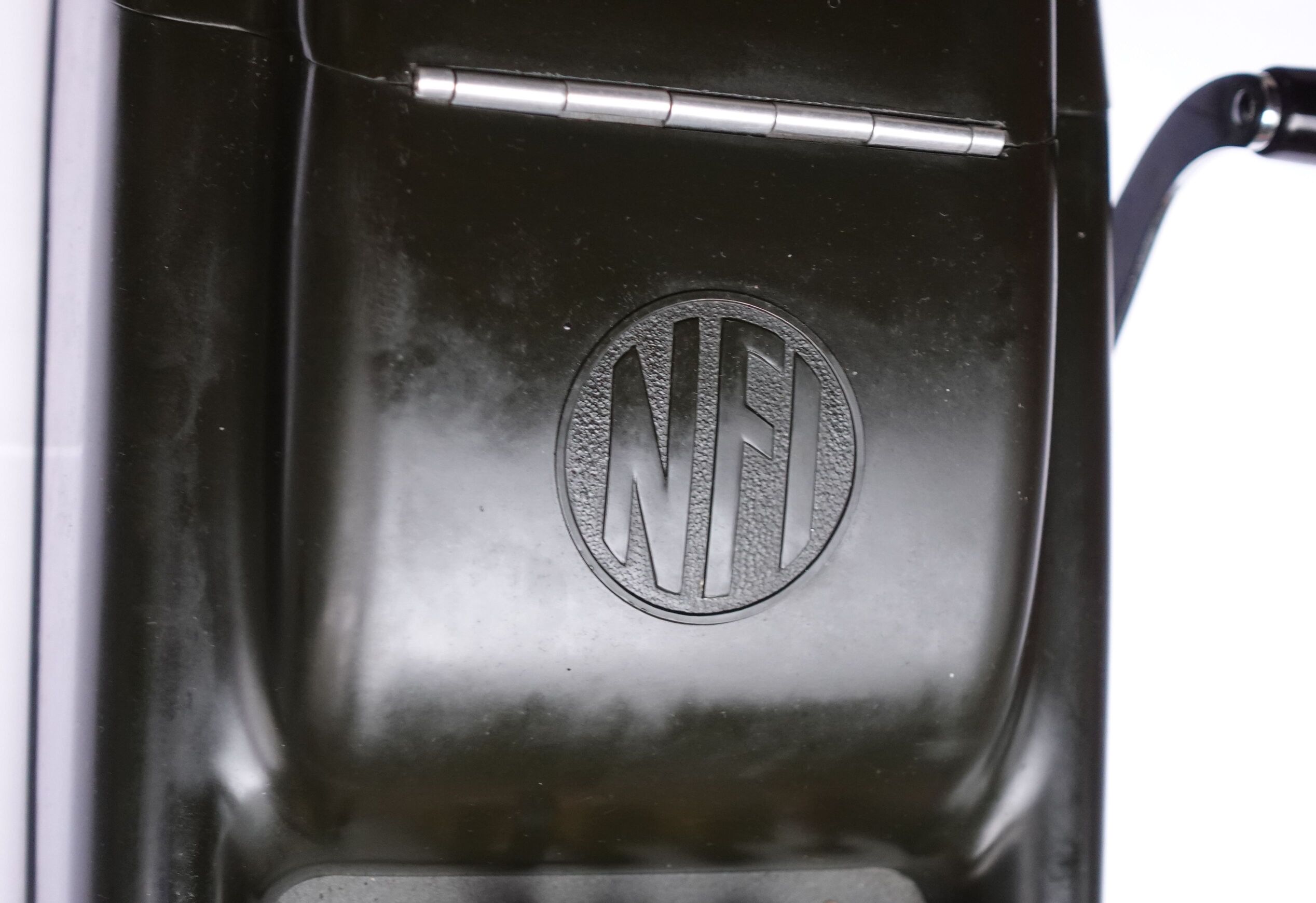
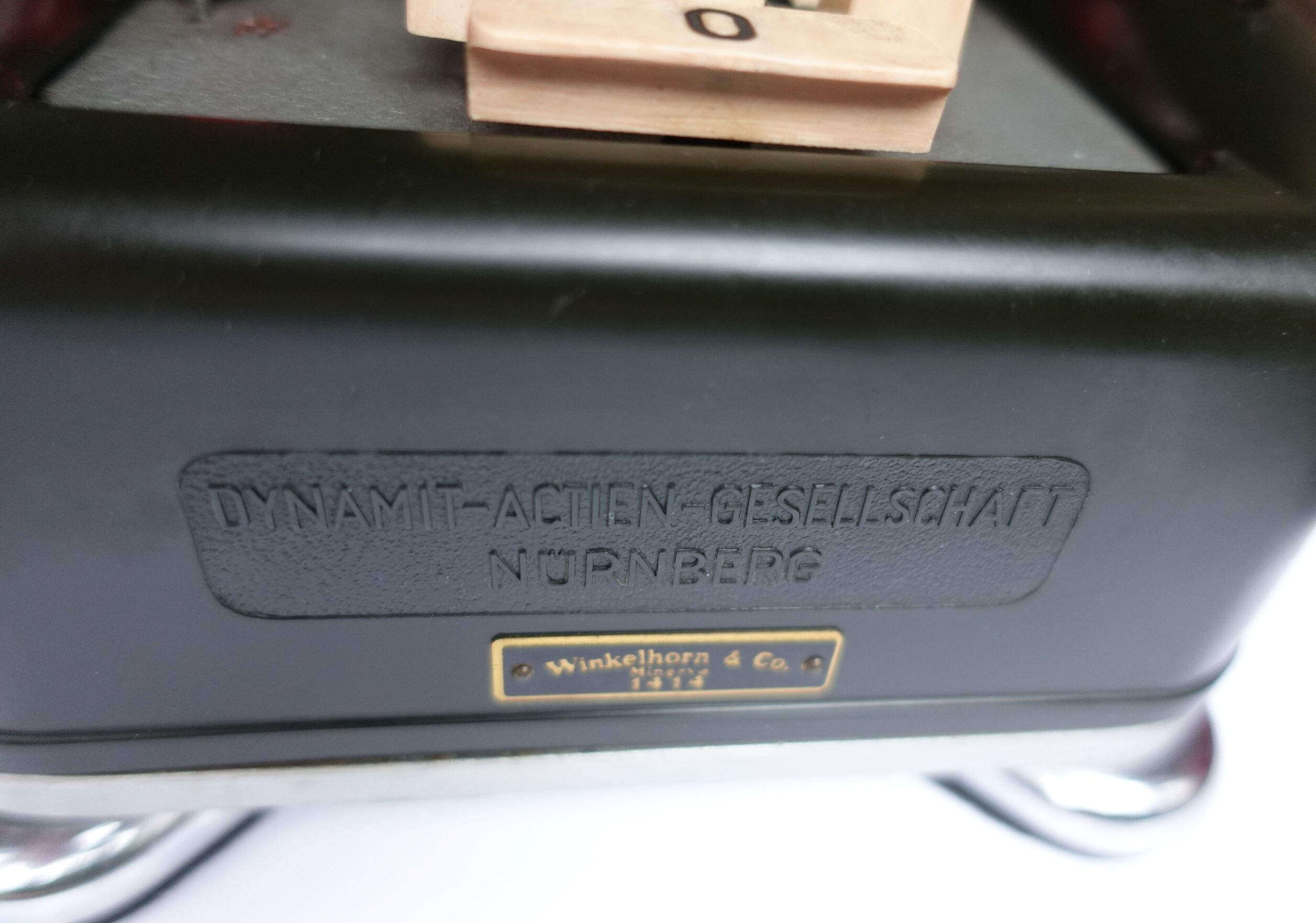
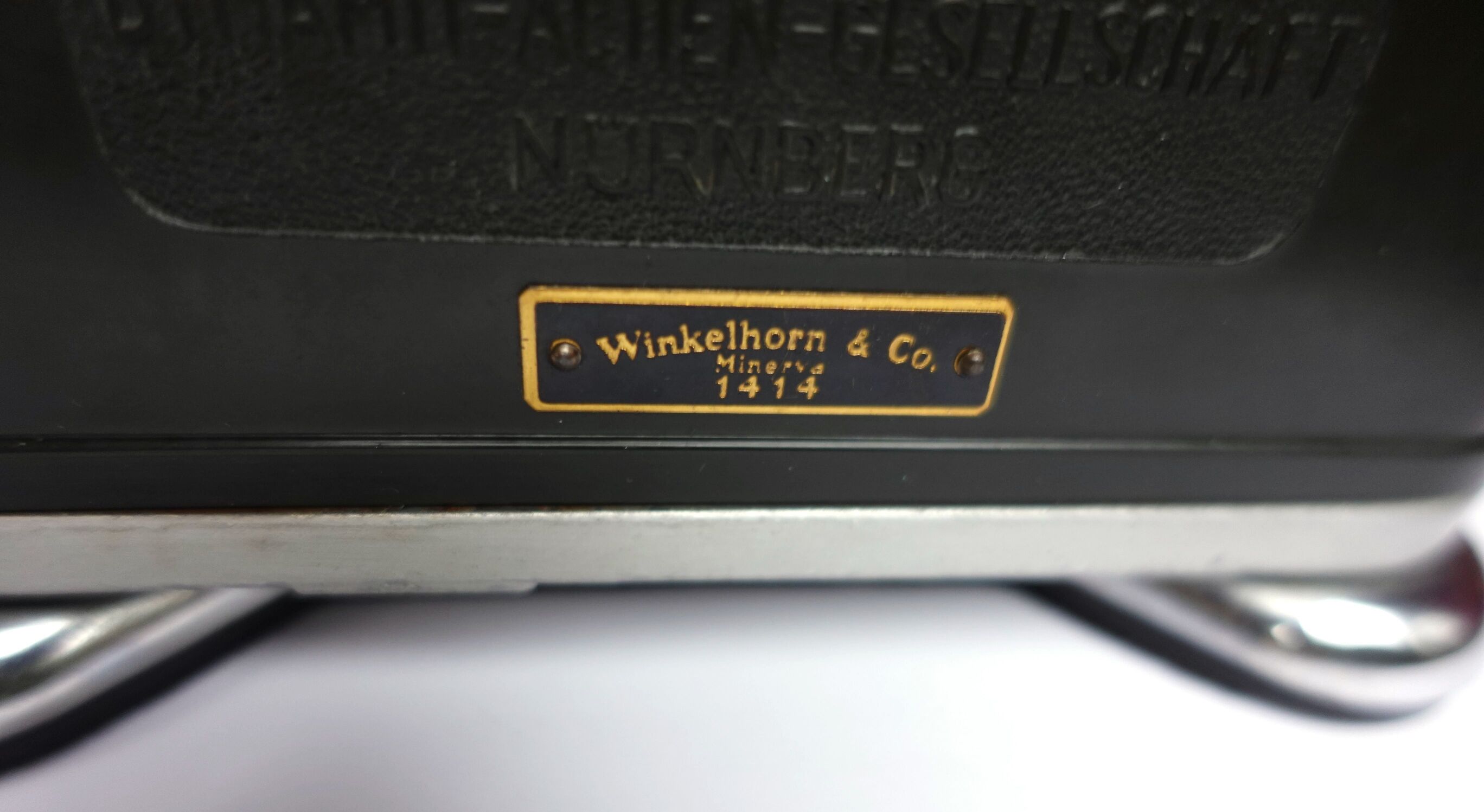
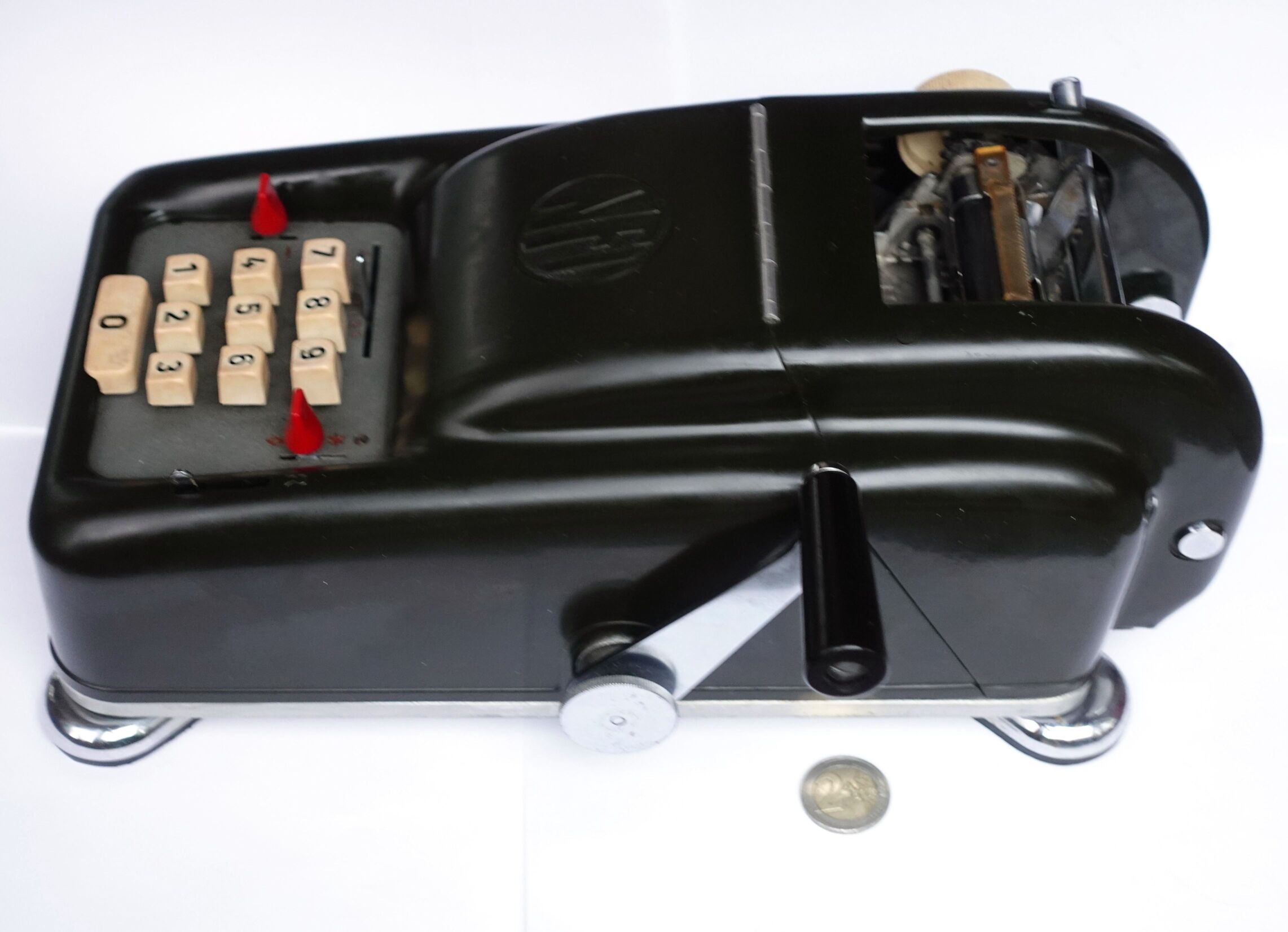
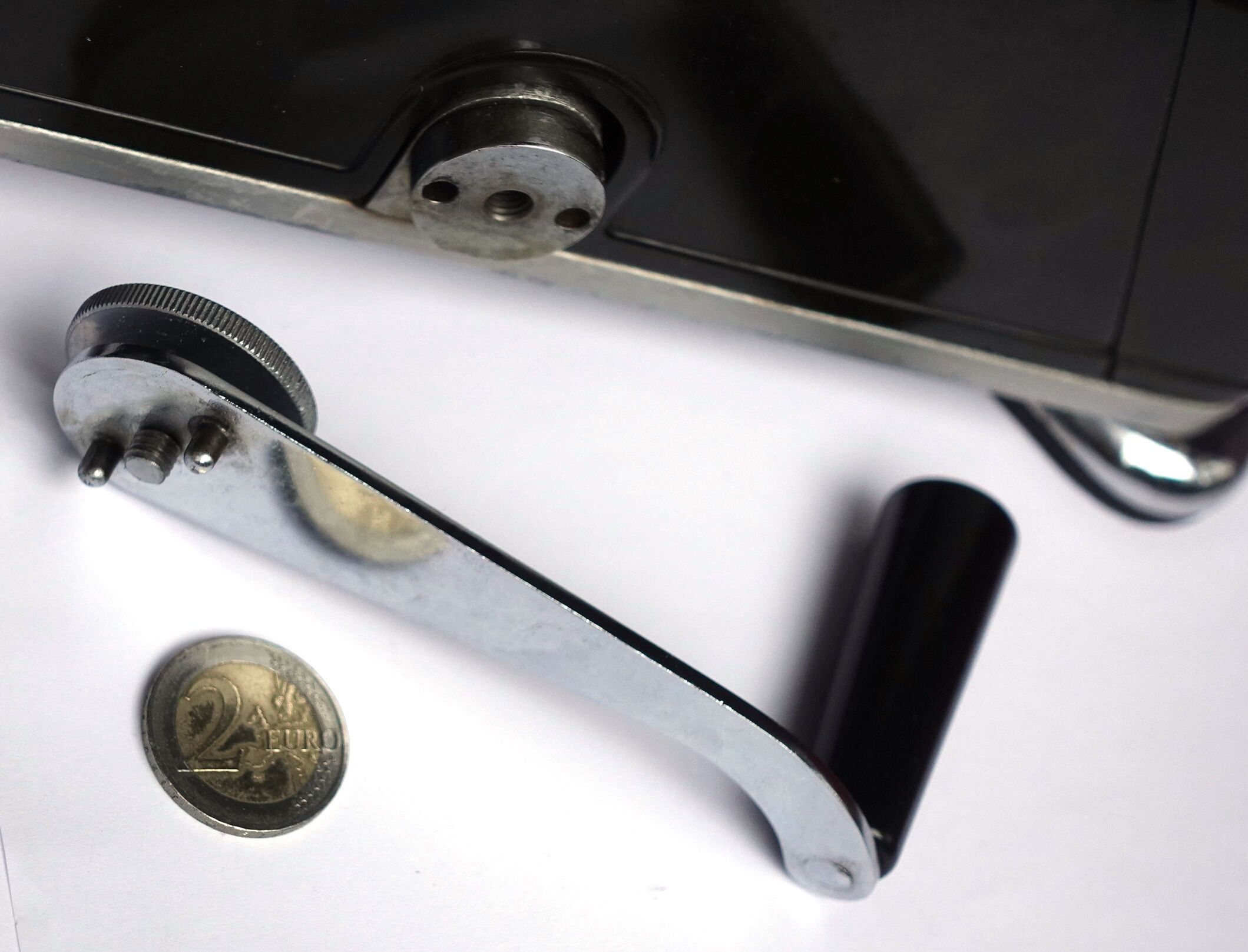
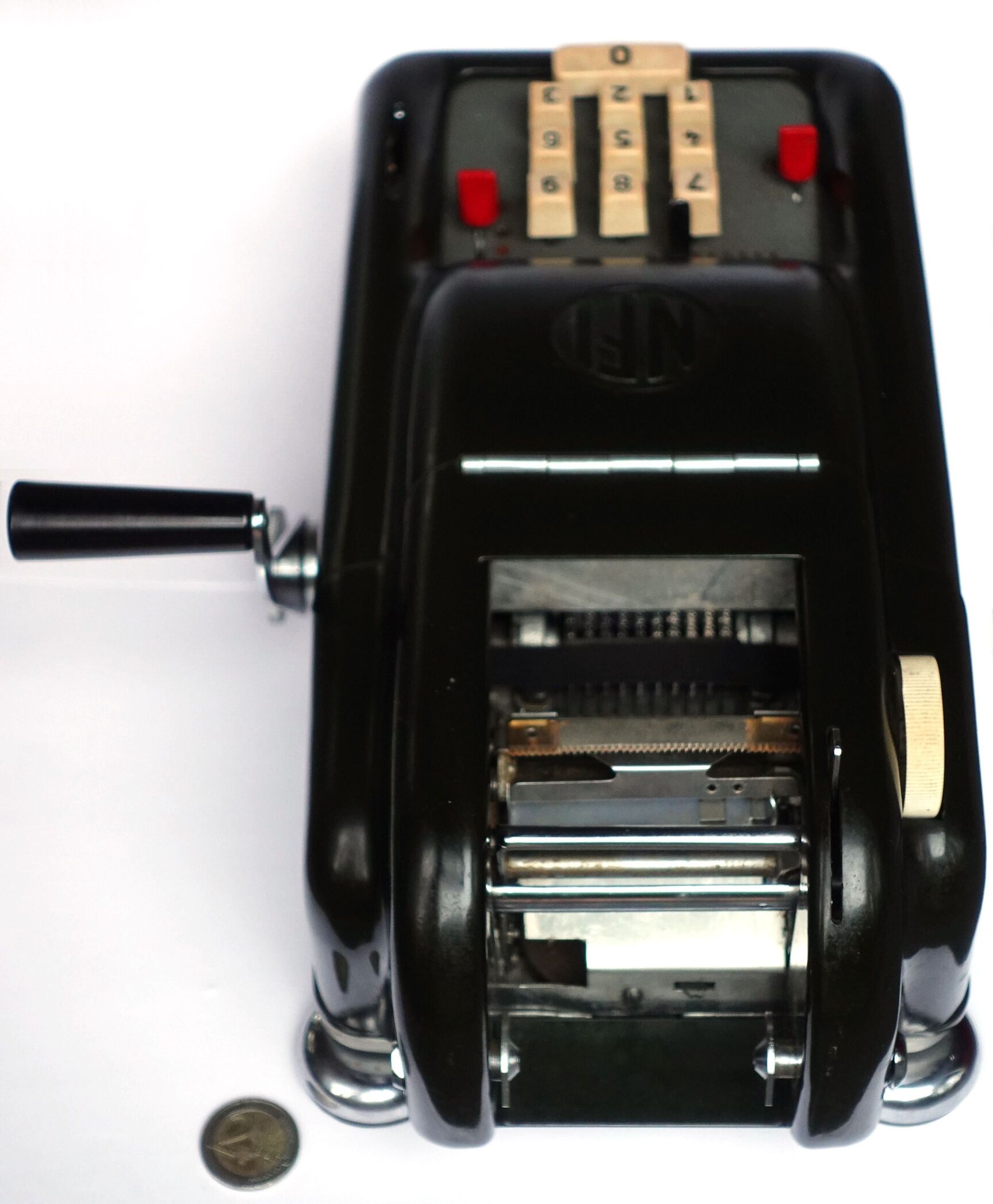
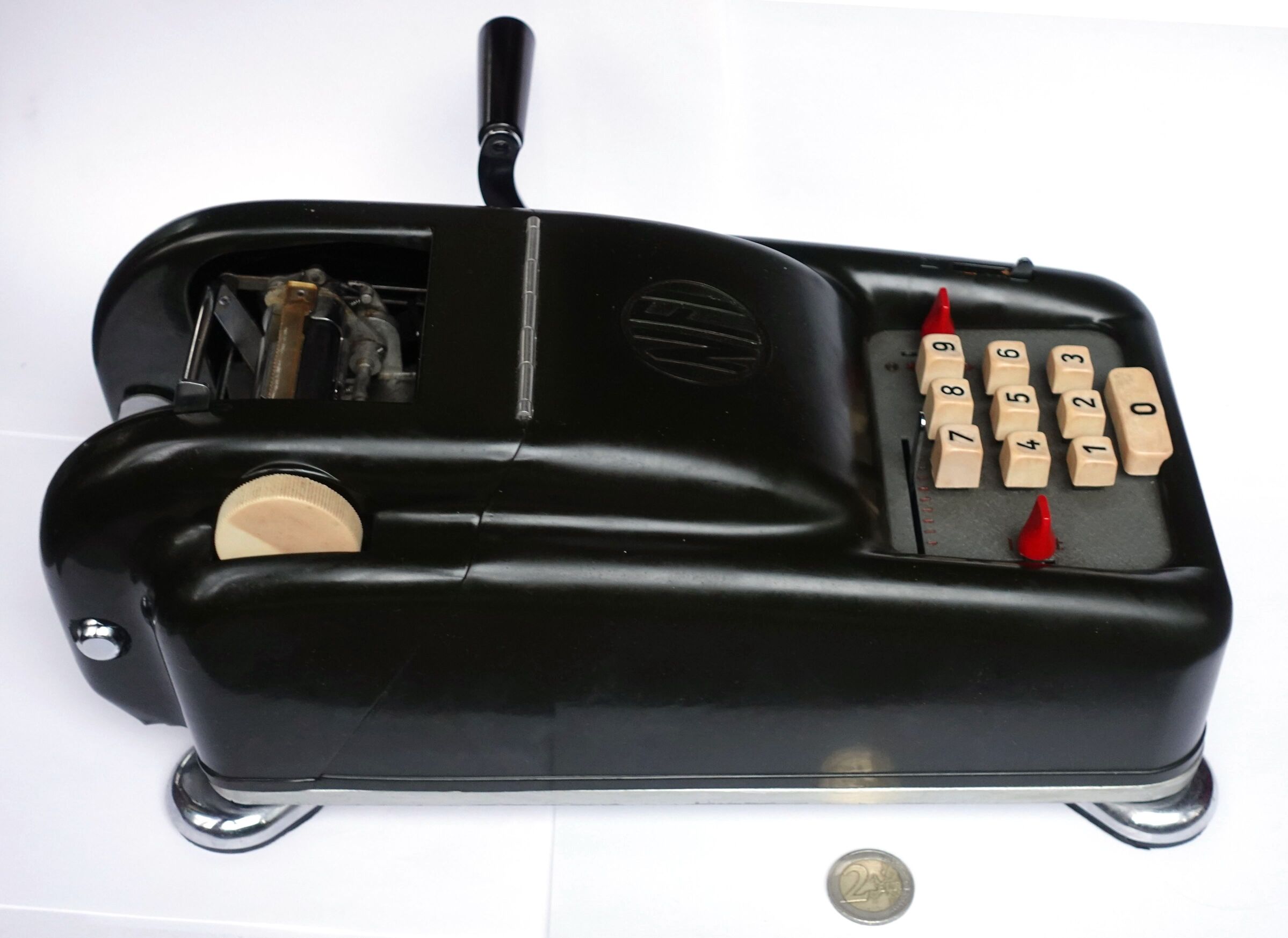
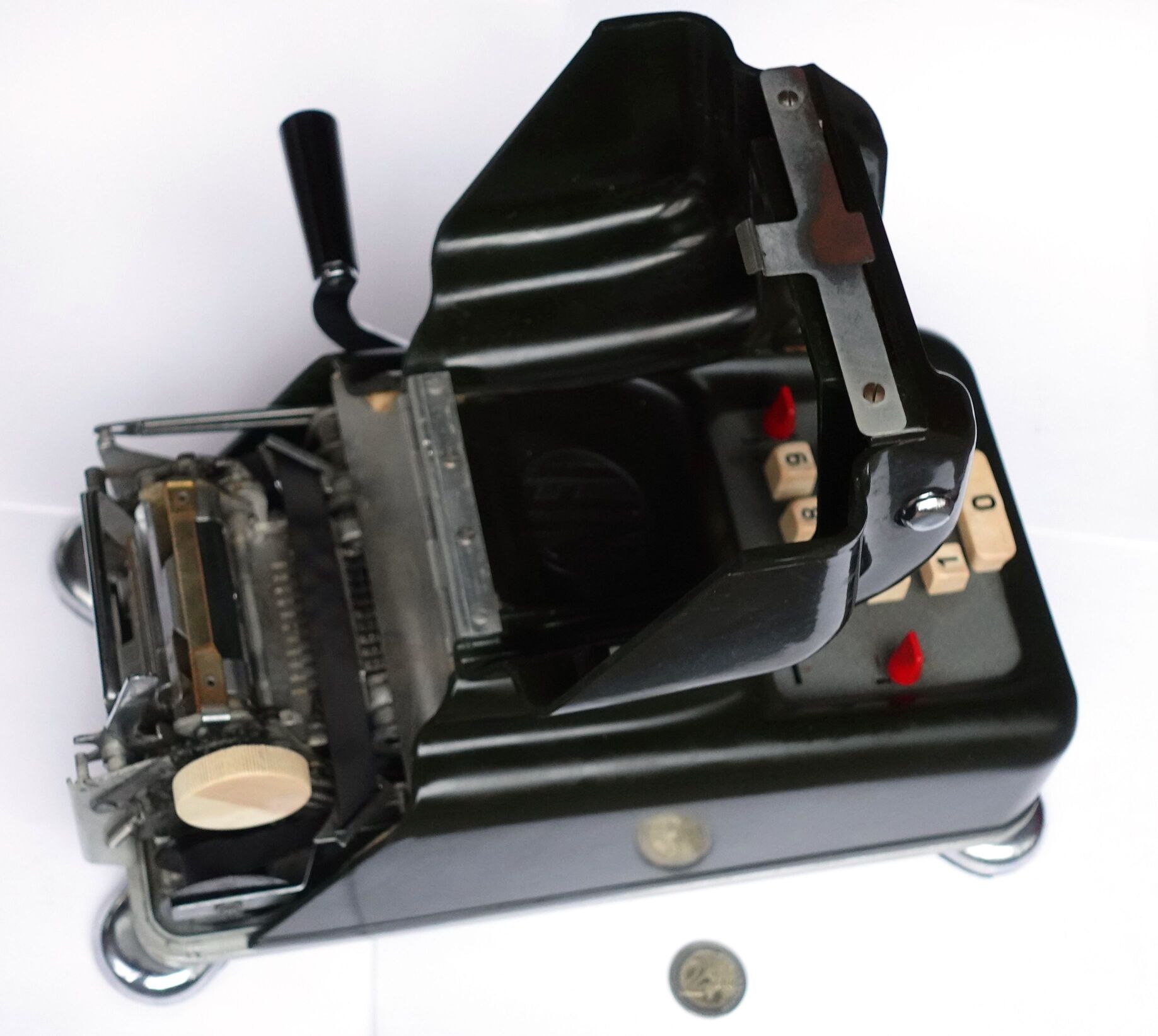
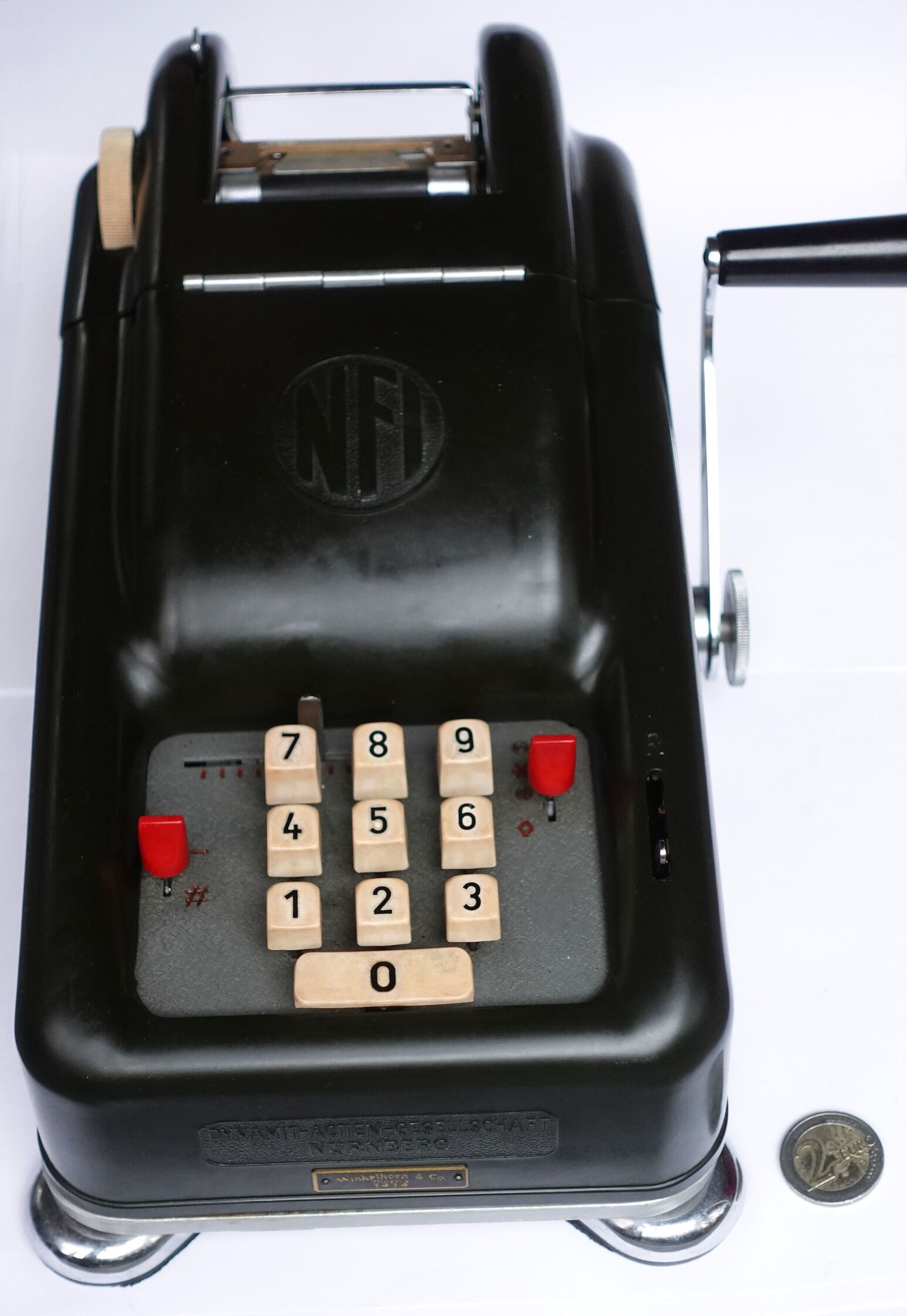
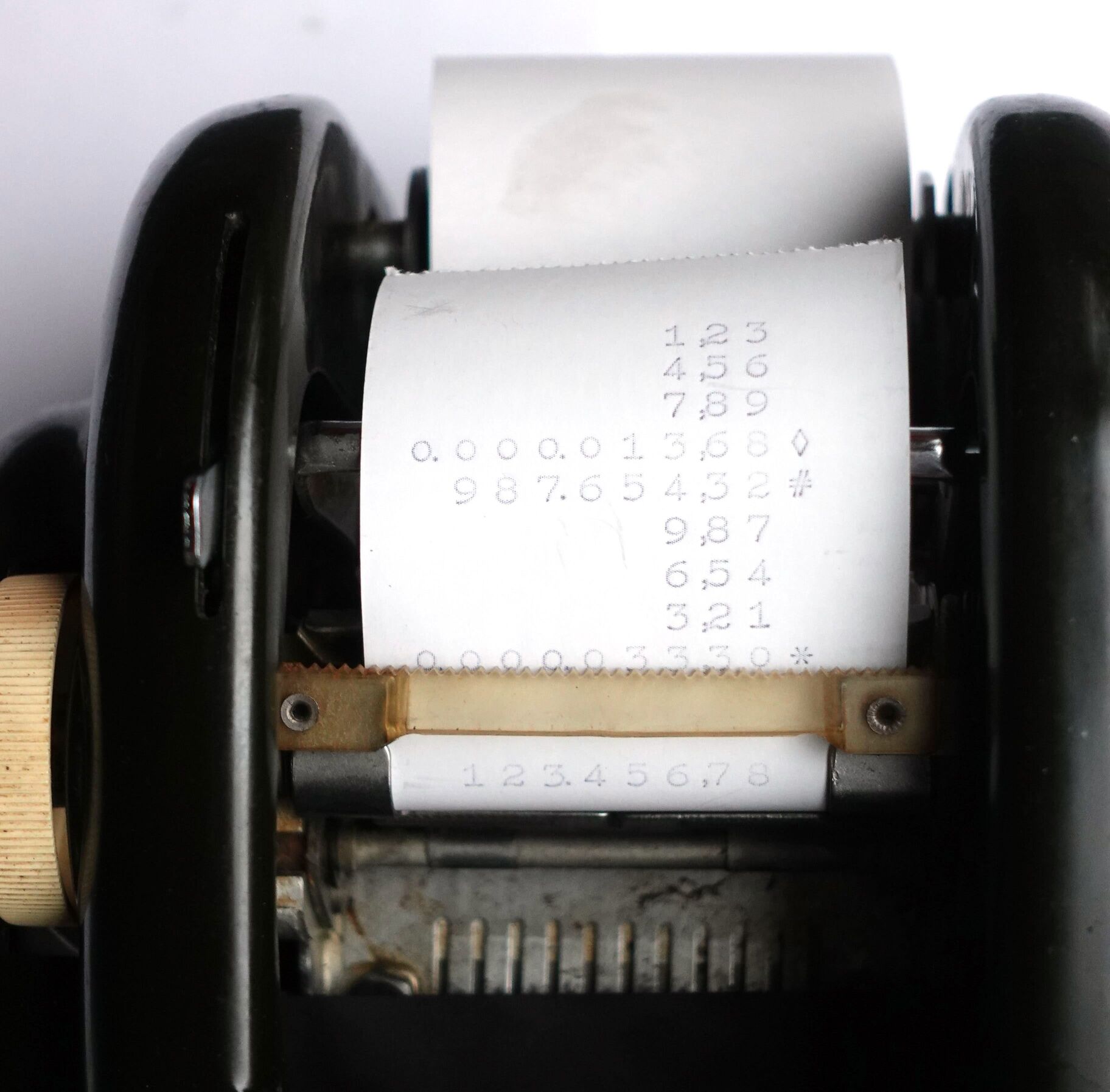
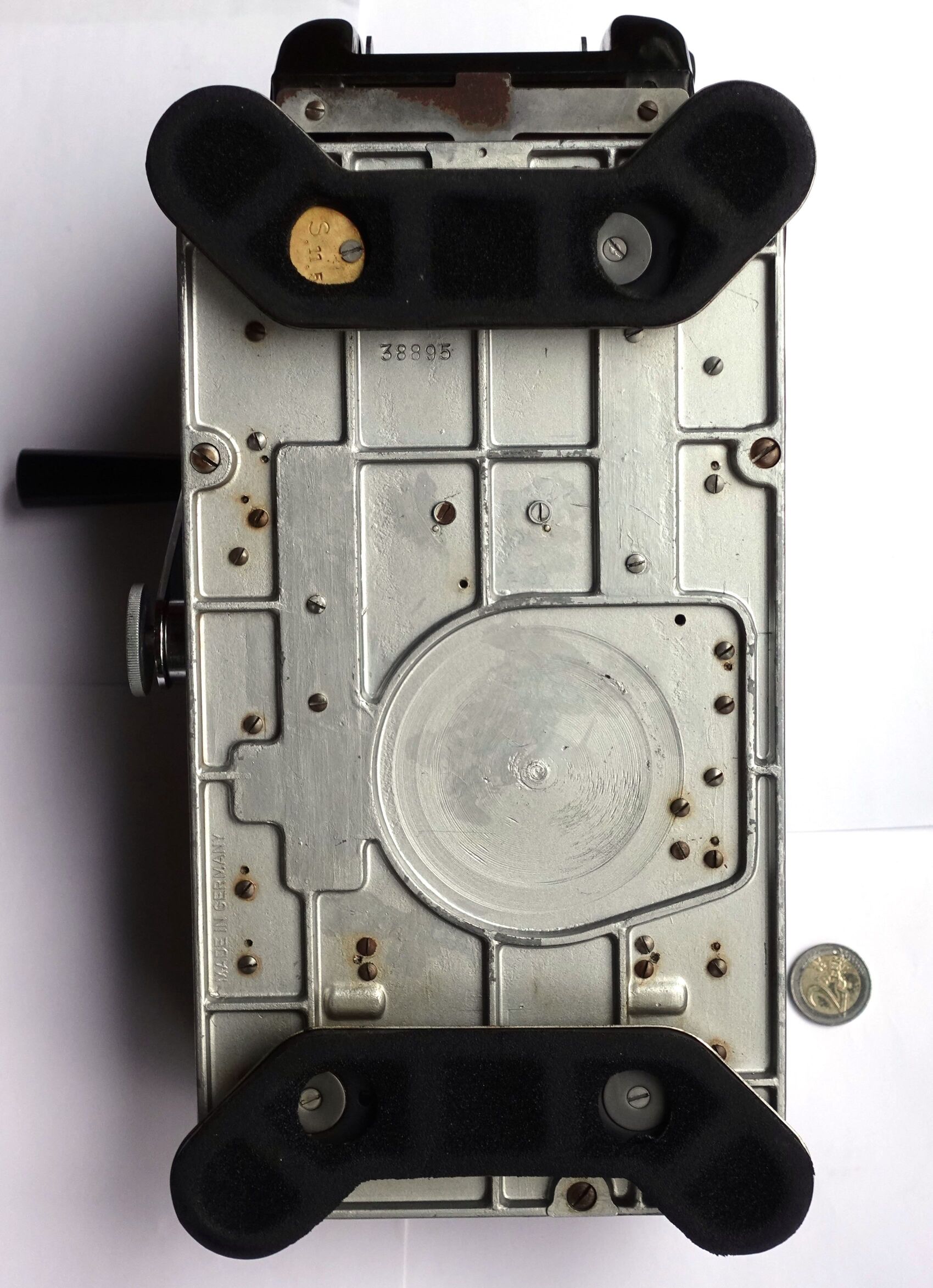
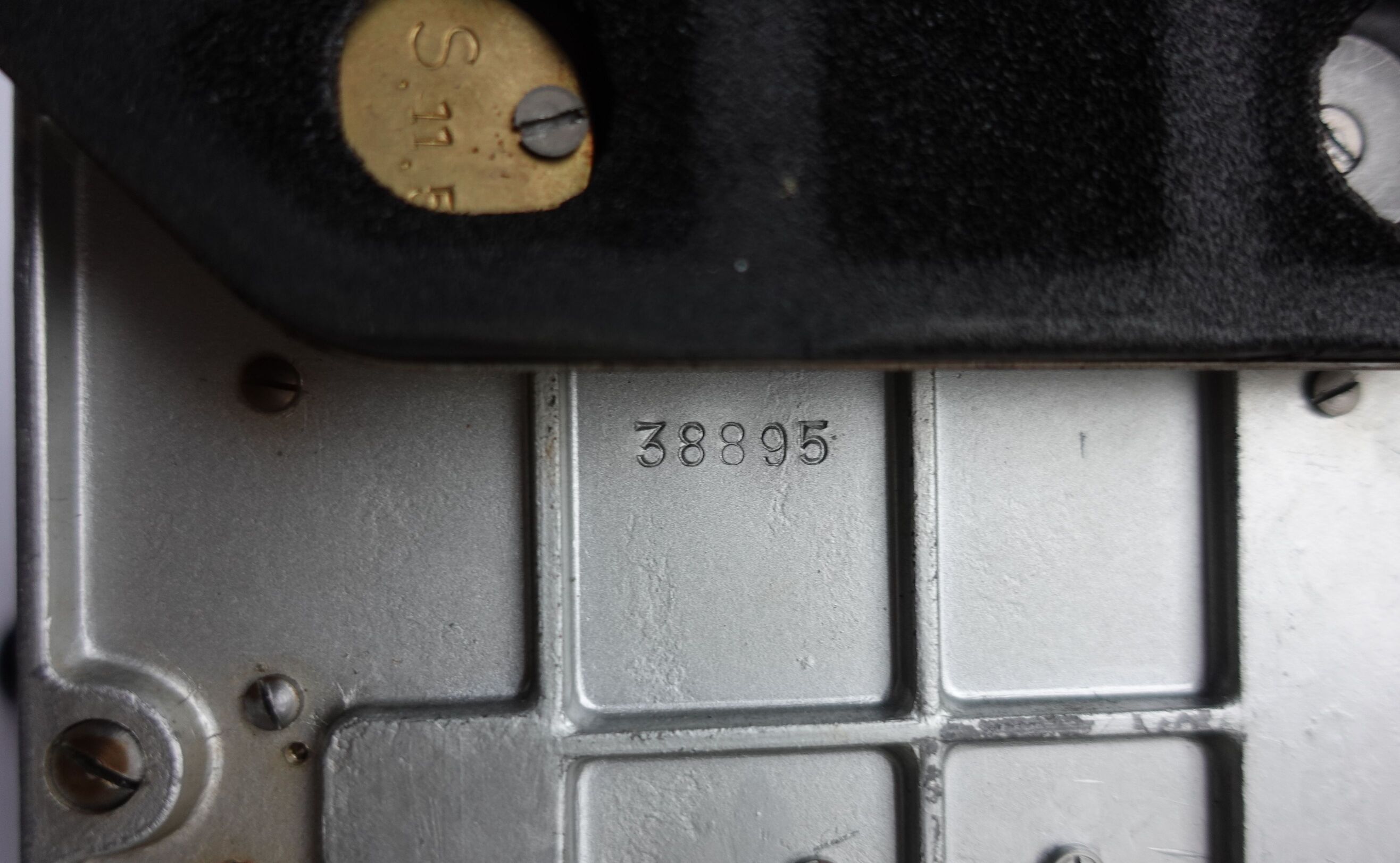
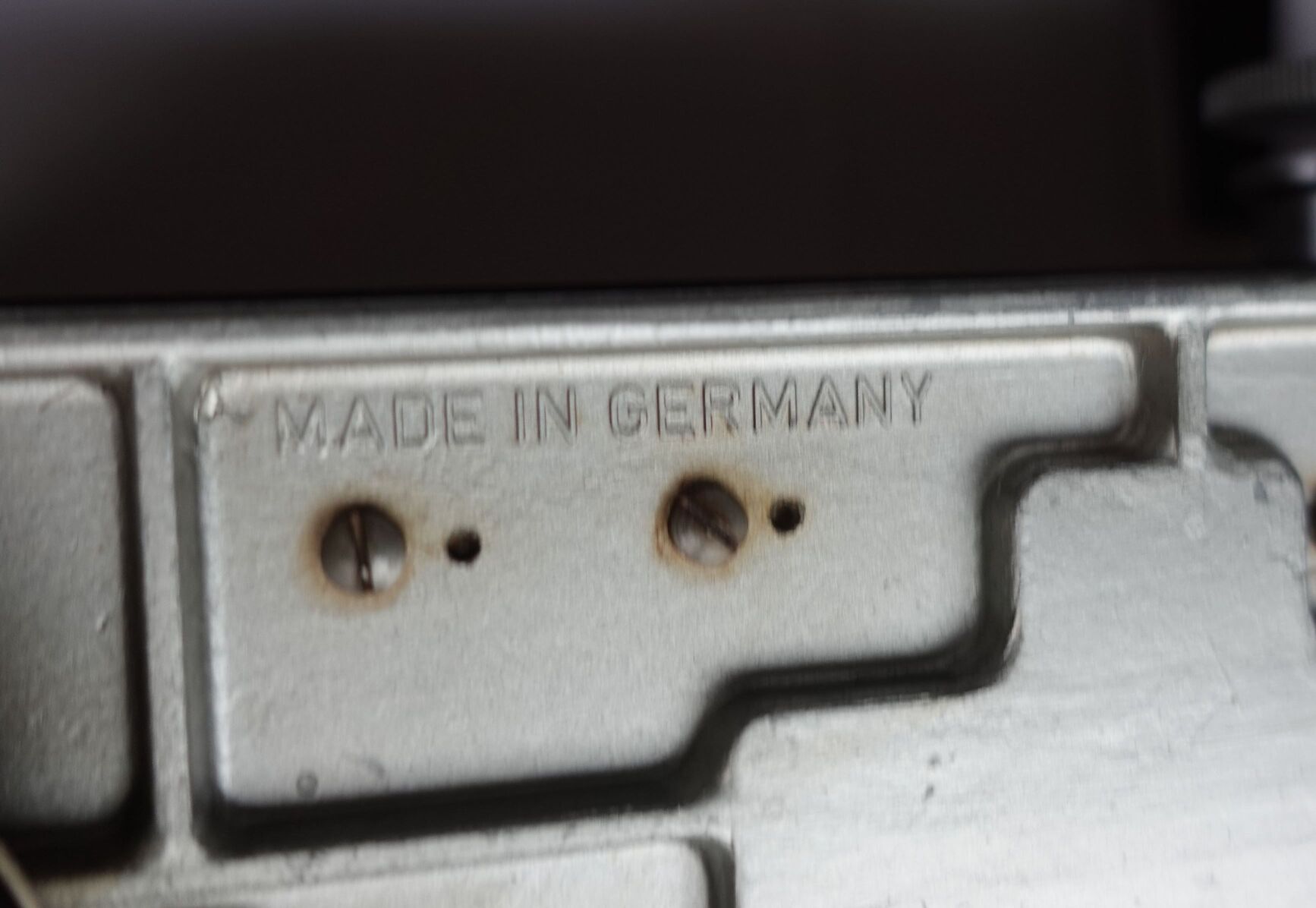
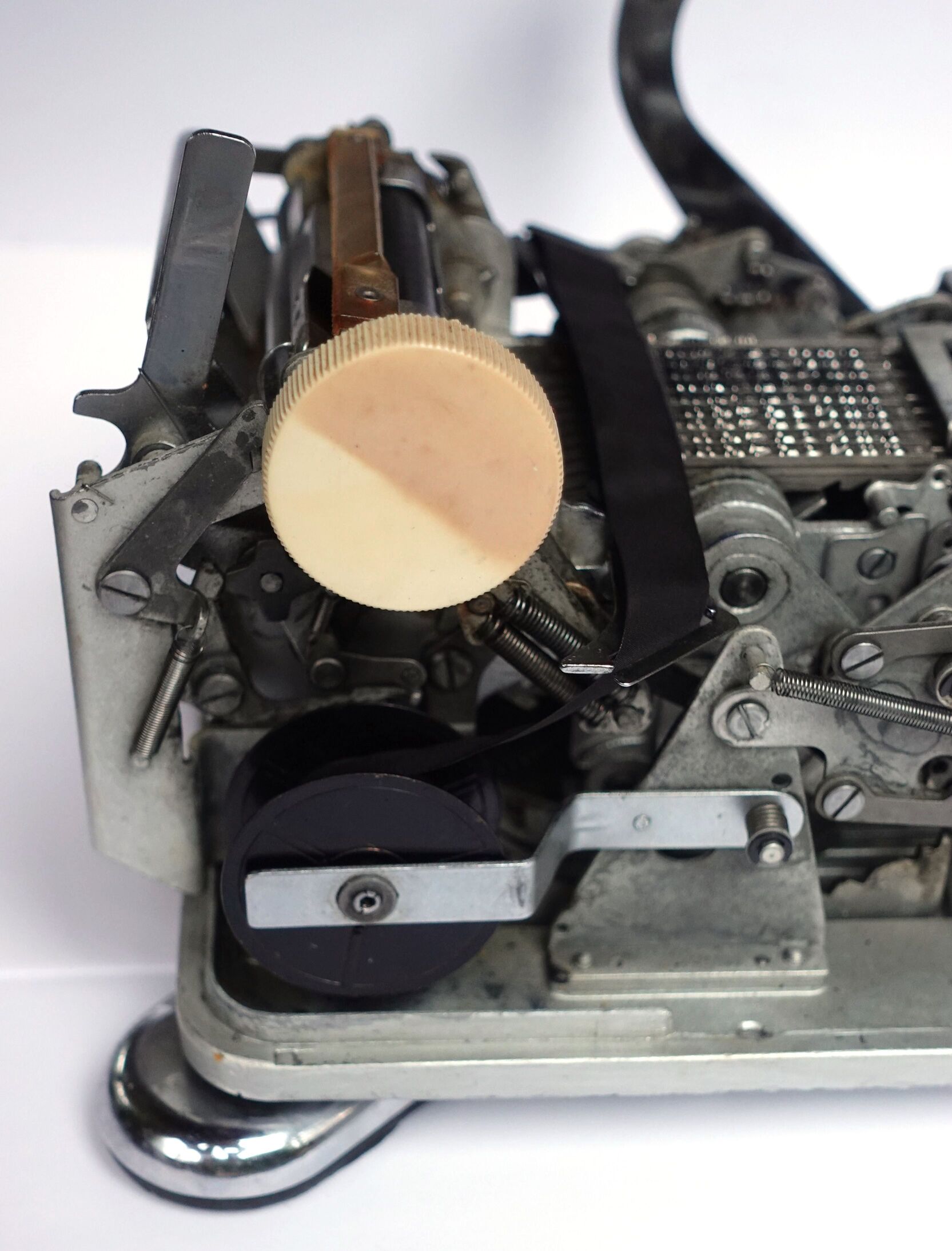
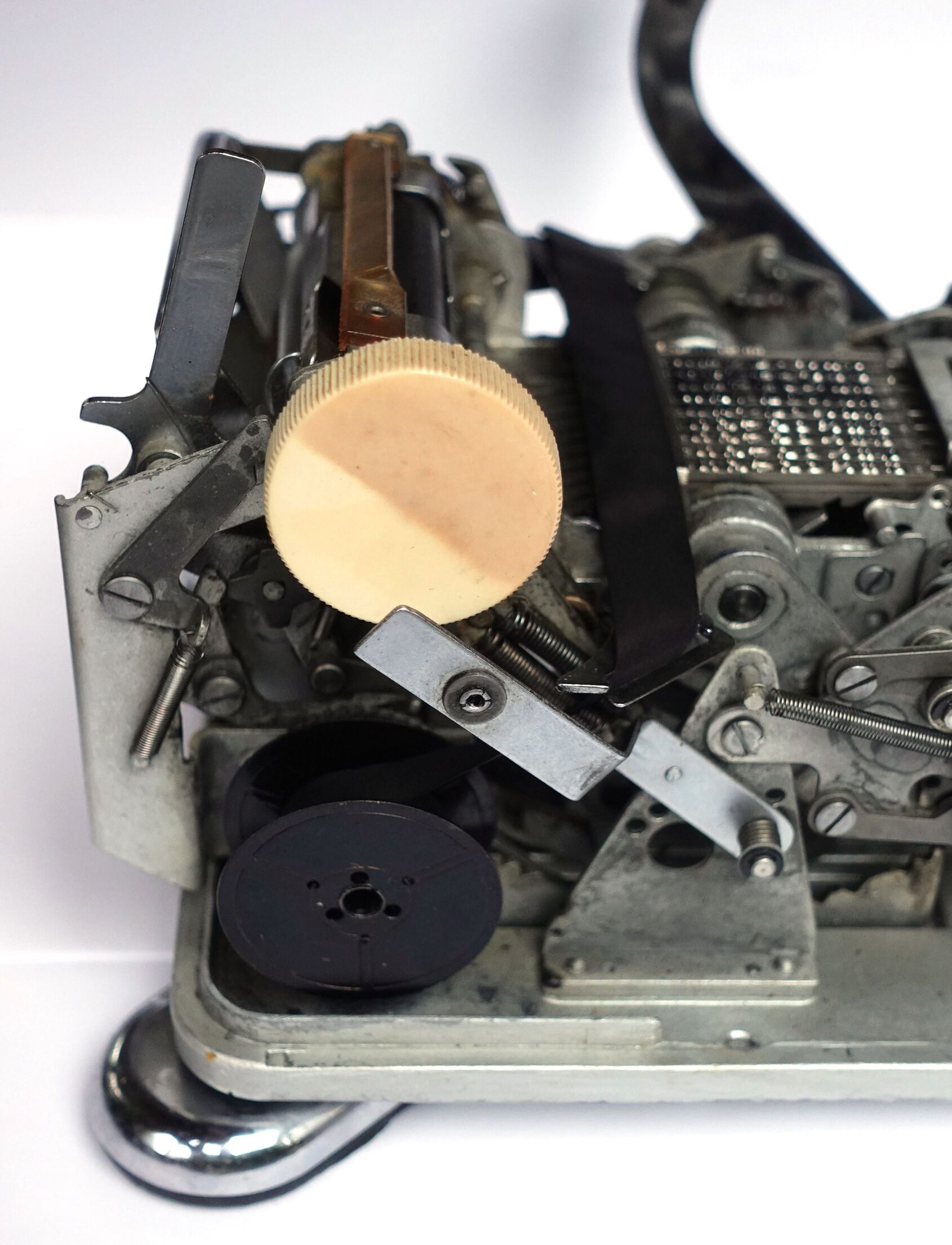
The serial number is 38,895, and it was made in about 1952. Most printing mechanisms on adding machines used vertical rods with the number type that is then hammered onto the paper. This adding machine was originally designed to fit into a briefcase, so the standard printing mechanism would make the machine too tall. Therefore the printing mechanism was changed to use horizontal rods instead, and the paper hammers down onto them. The main lever can also easily be removed.
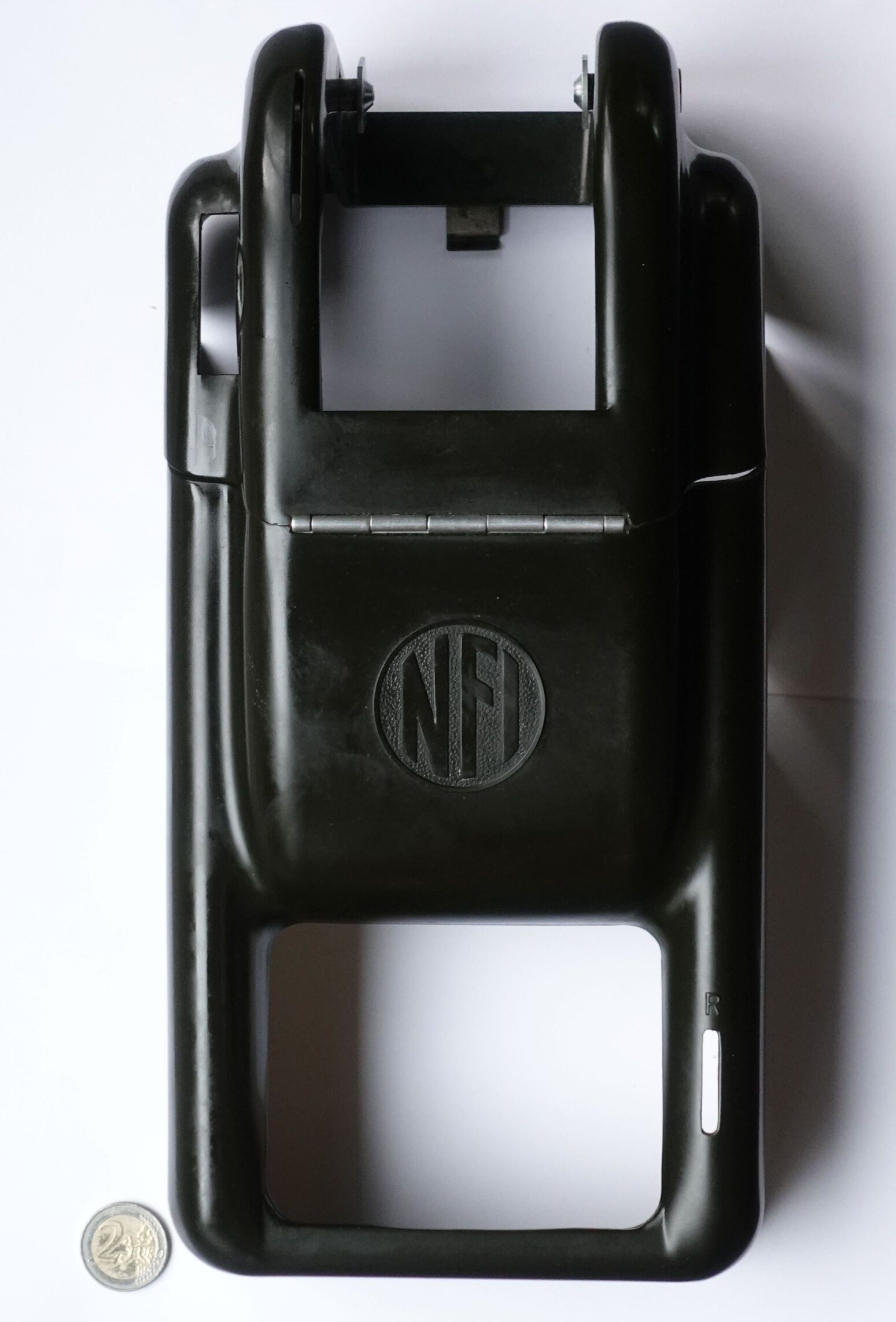
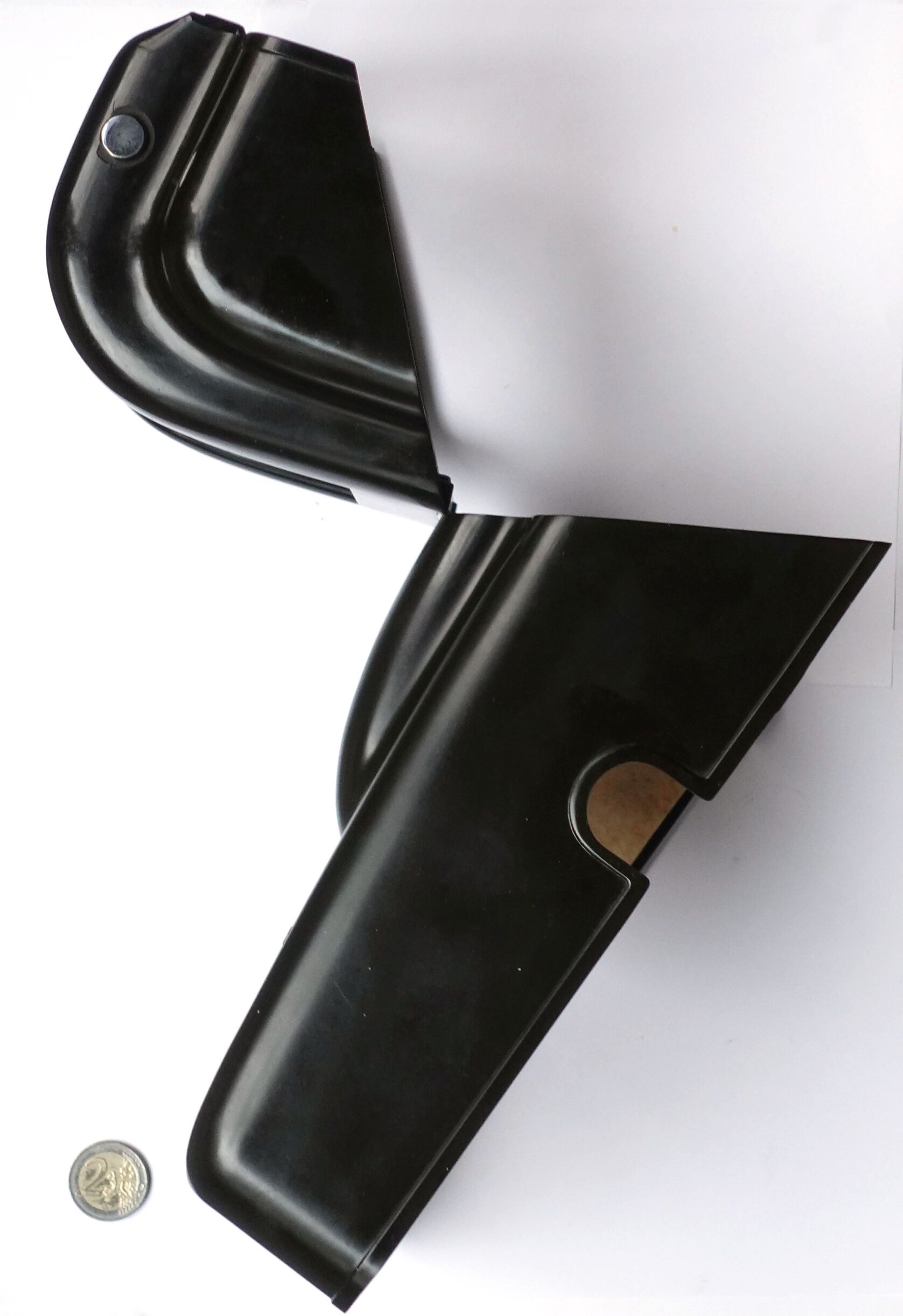
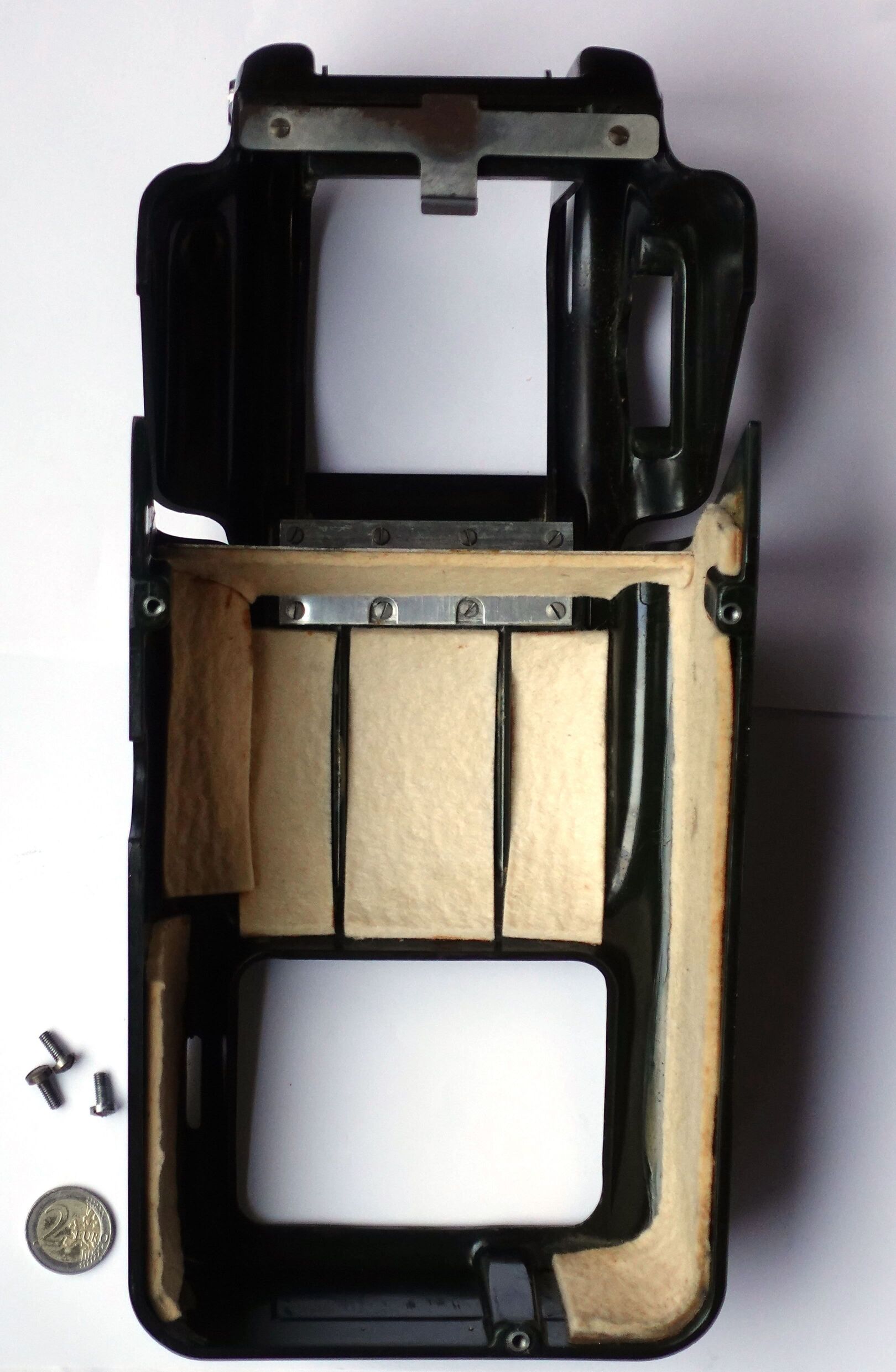
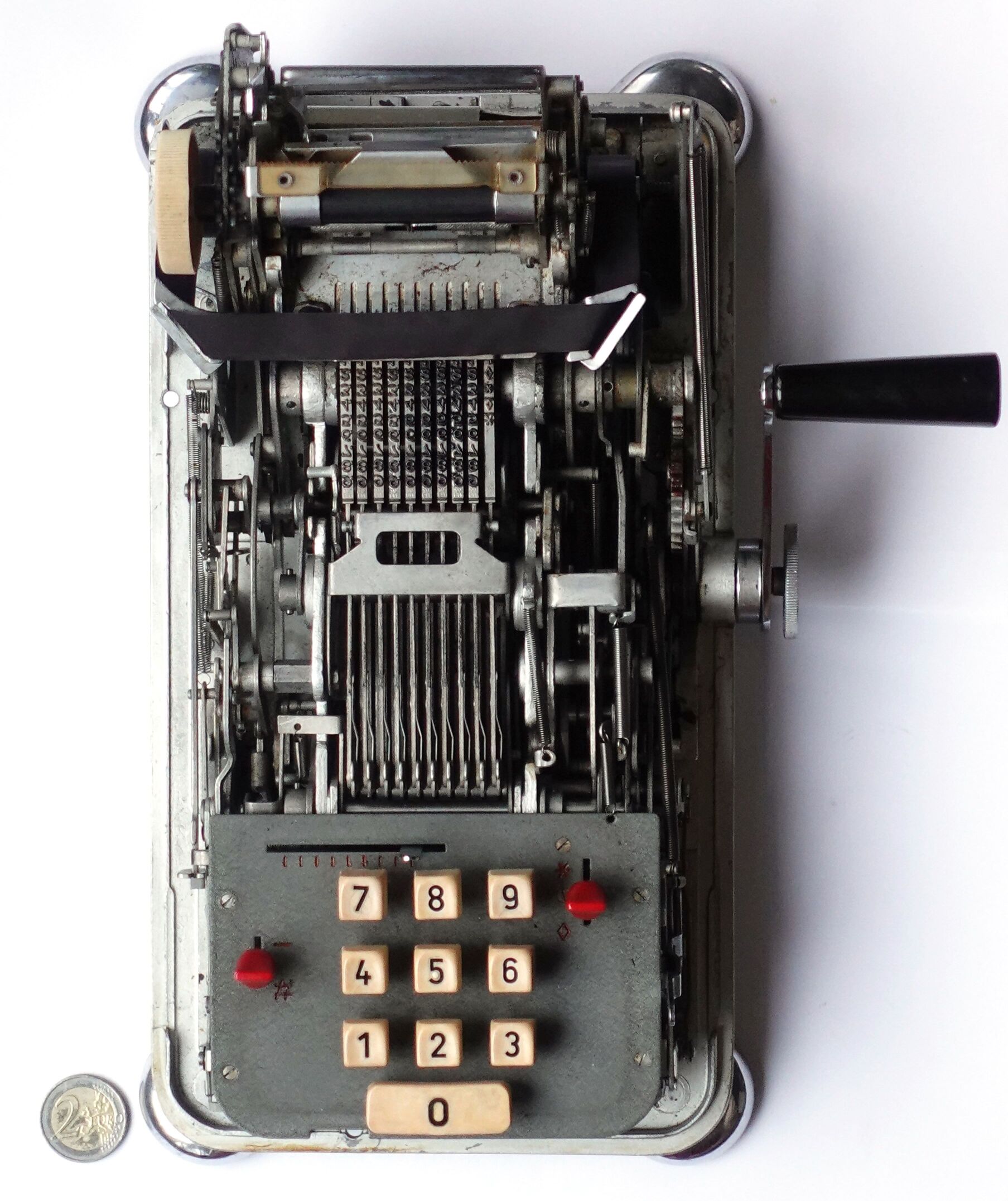
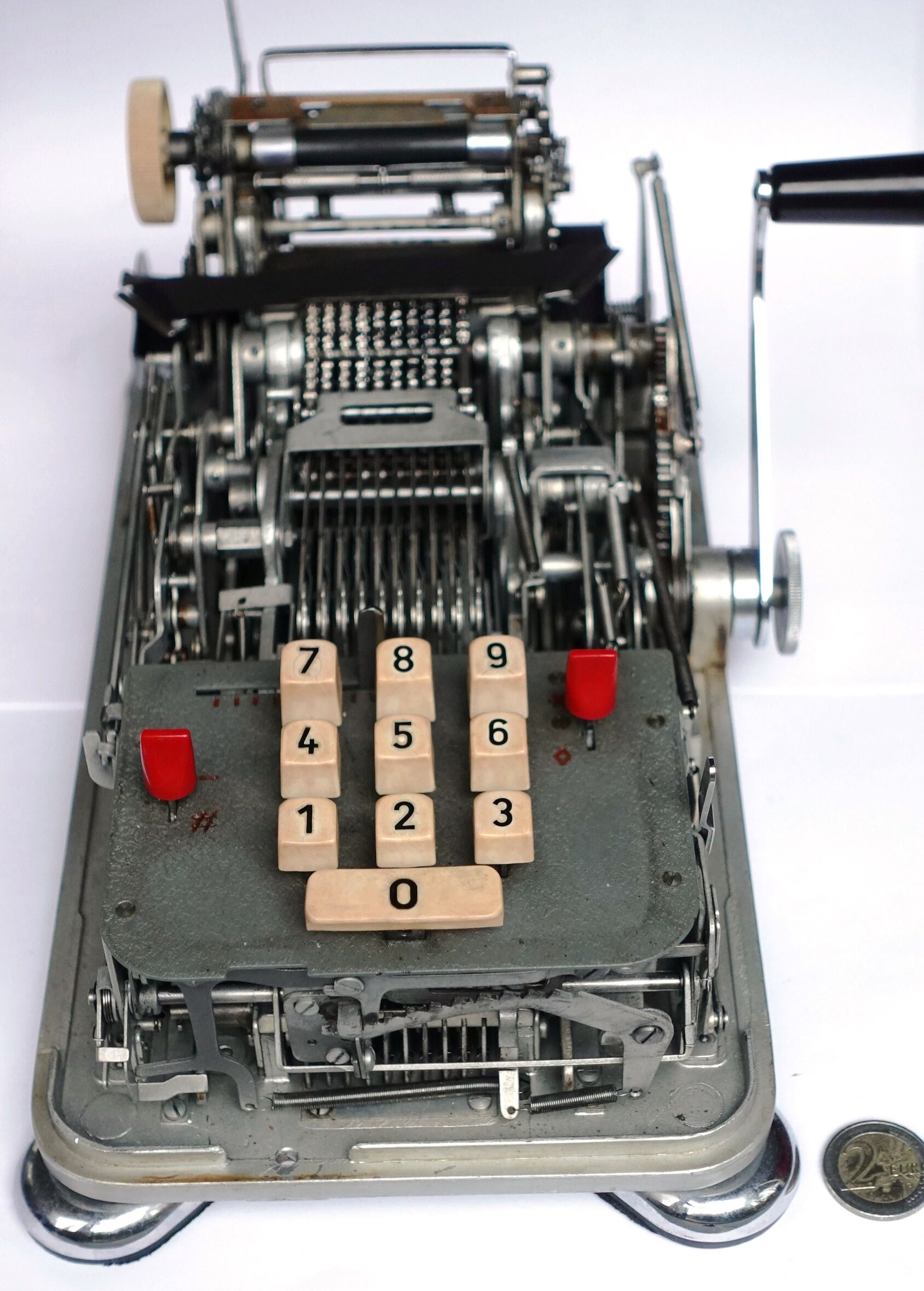
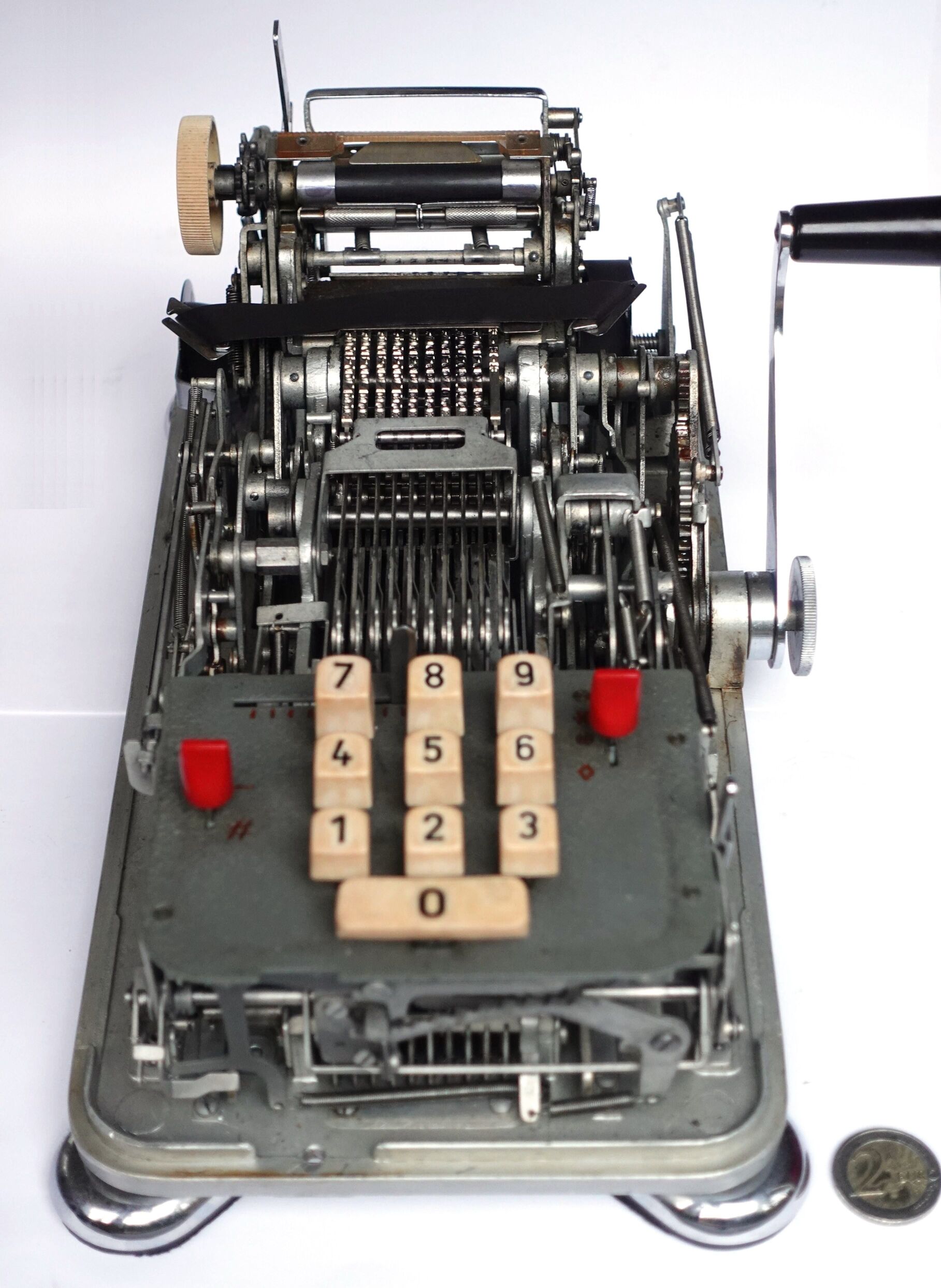
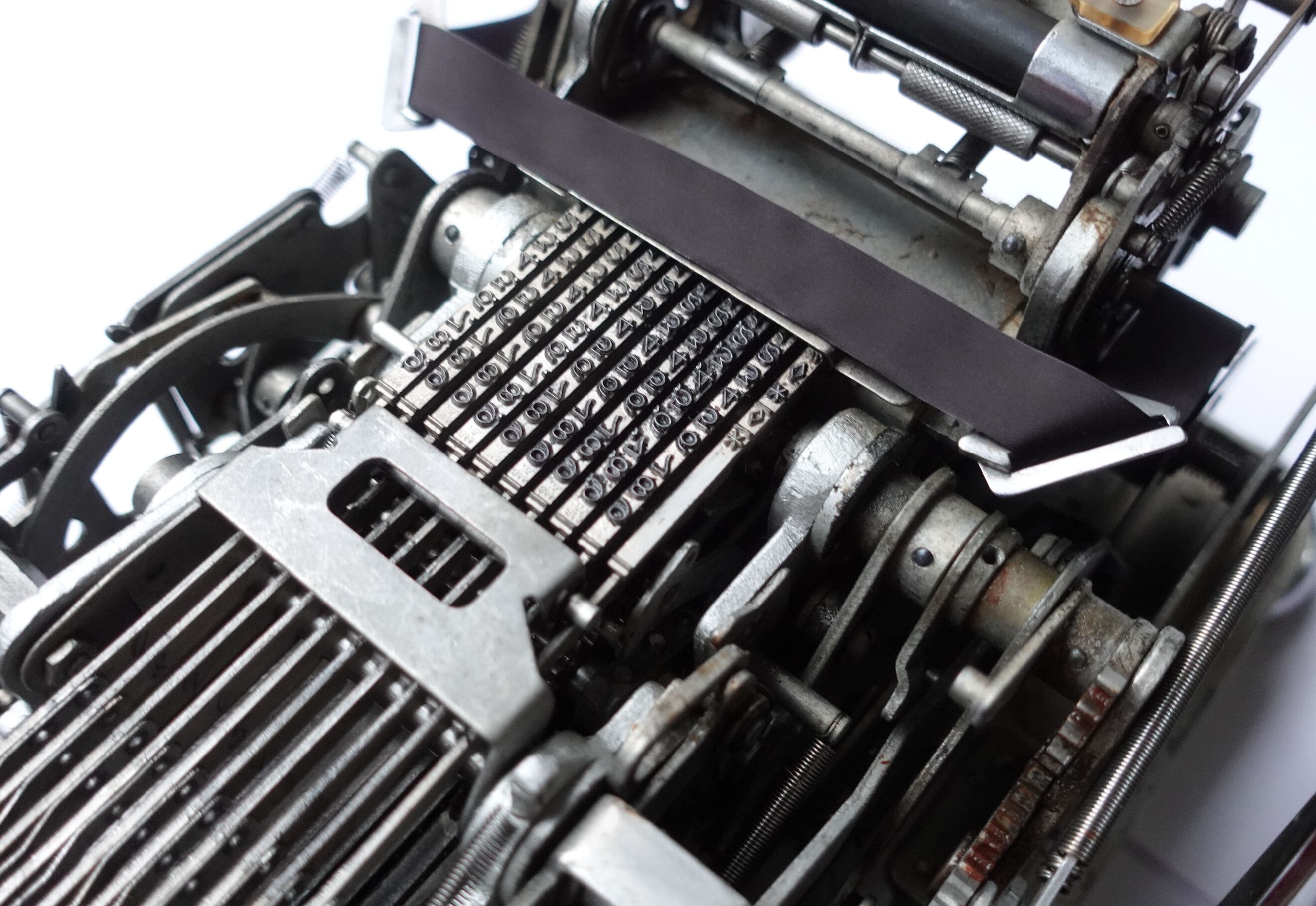
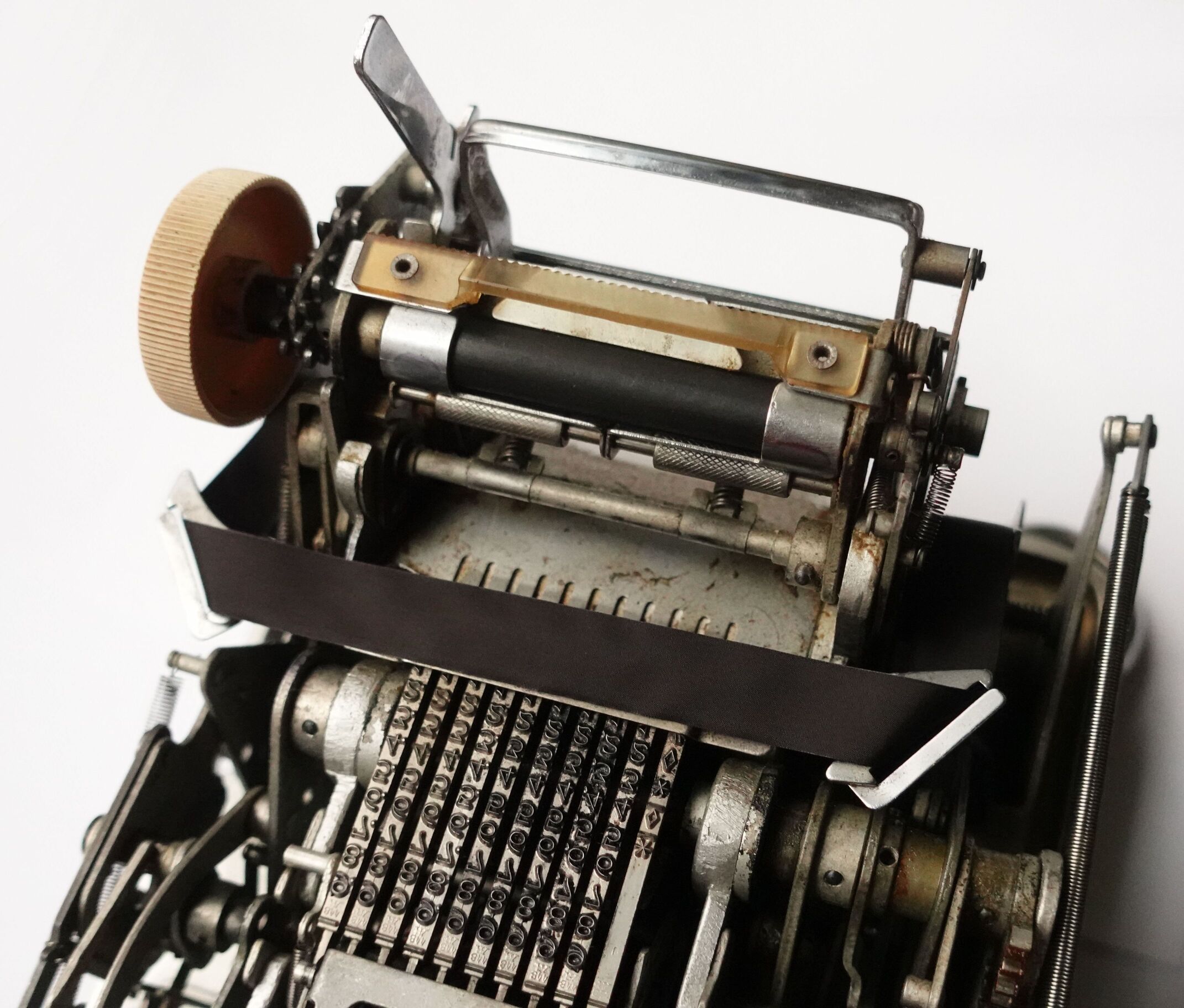
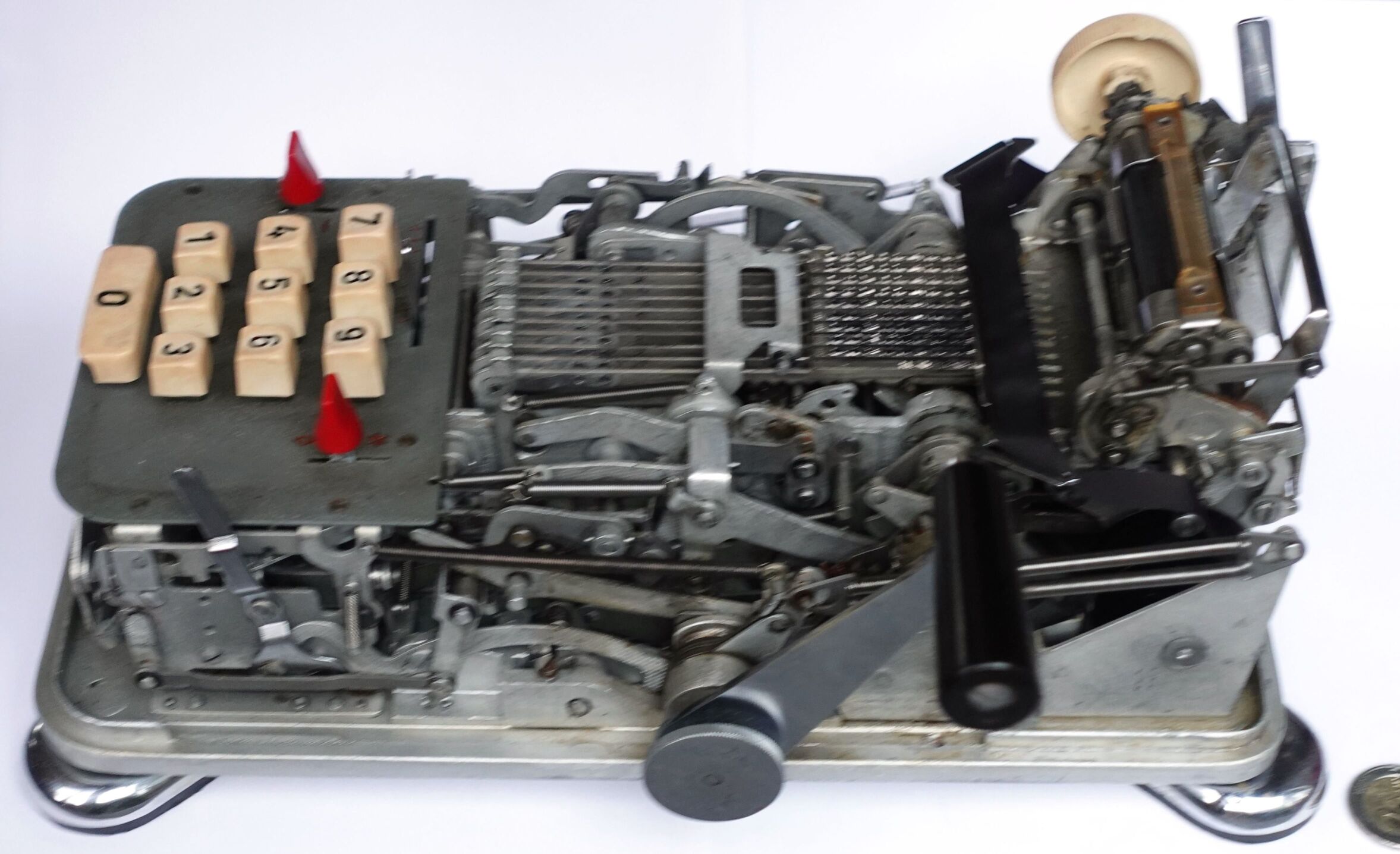
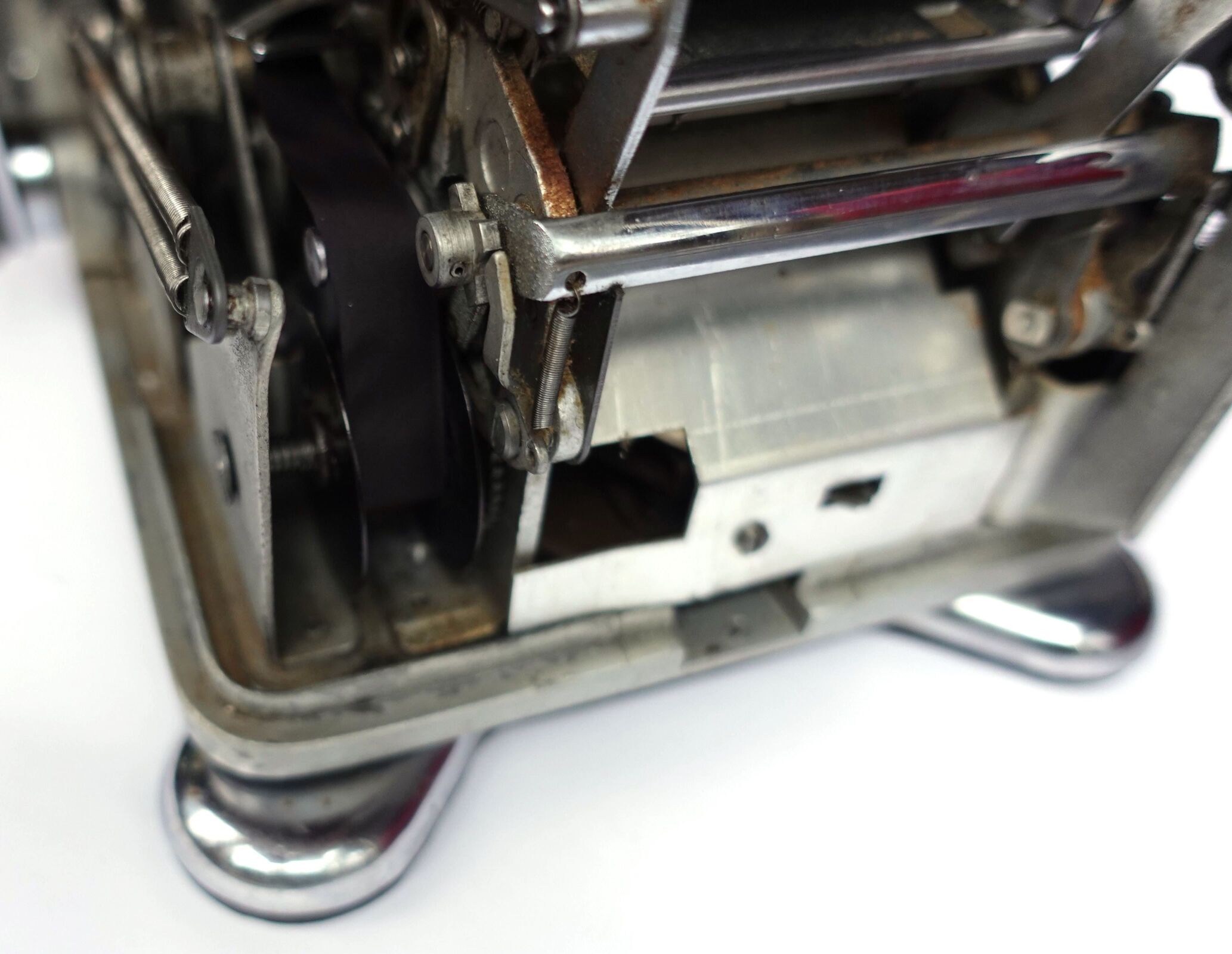
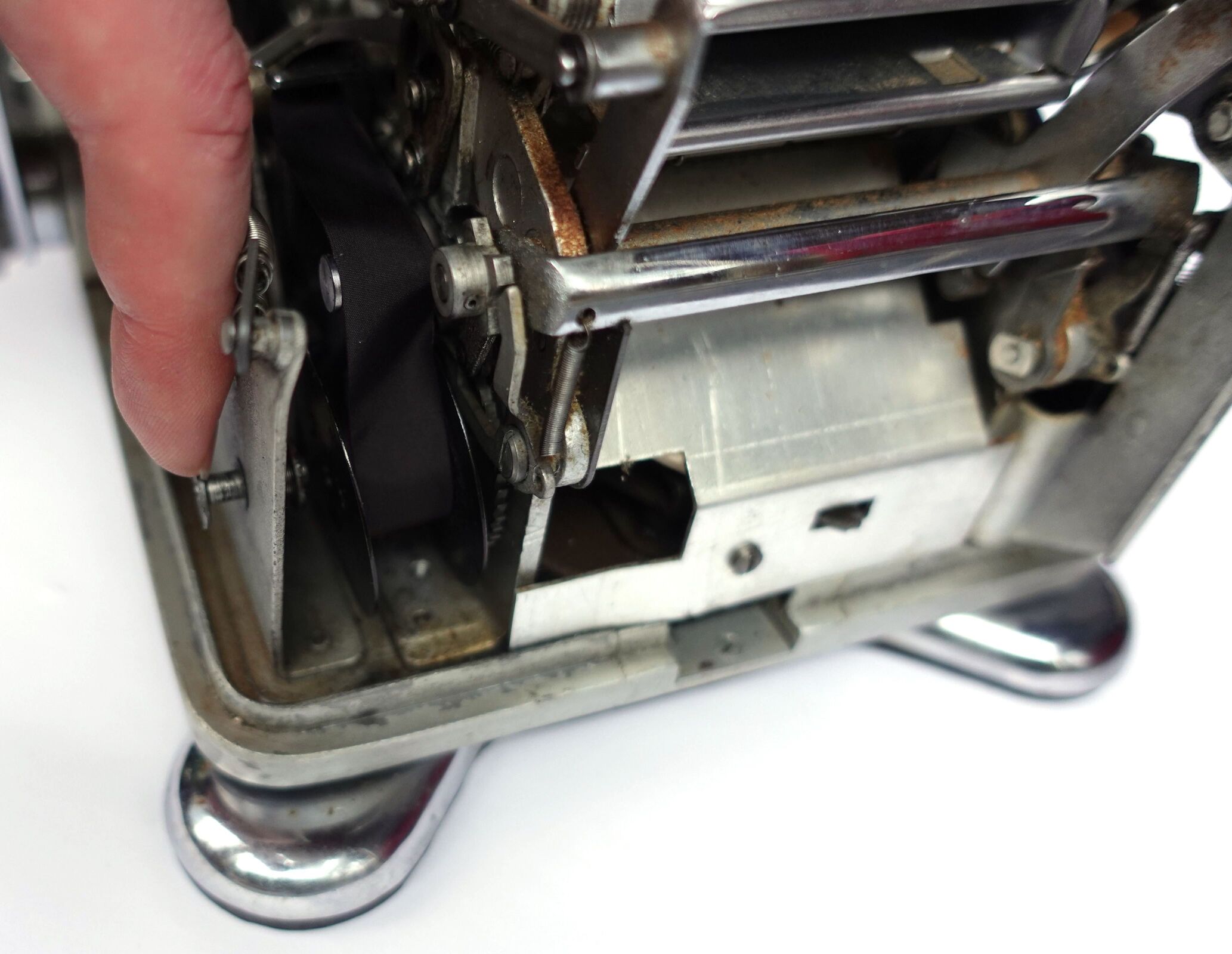
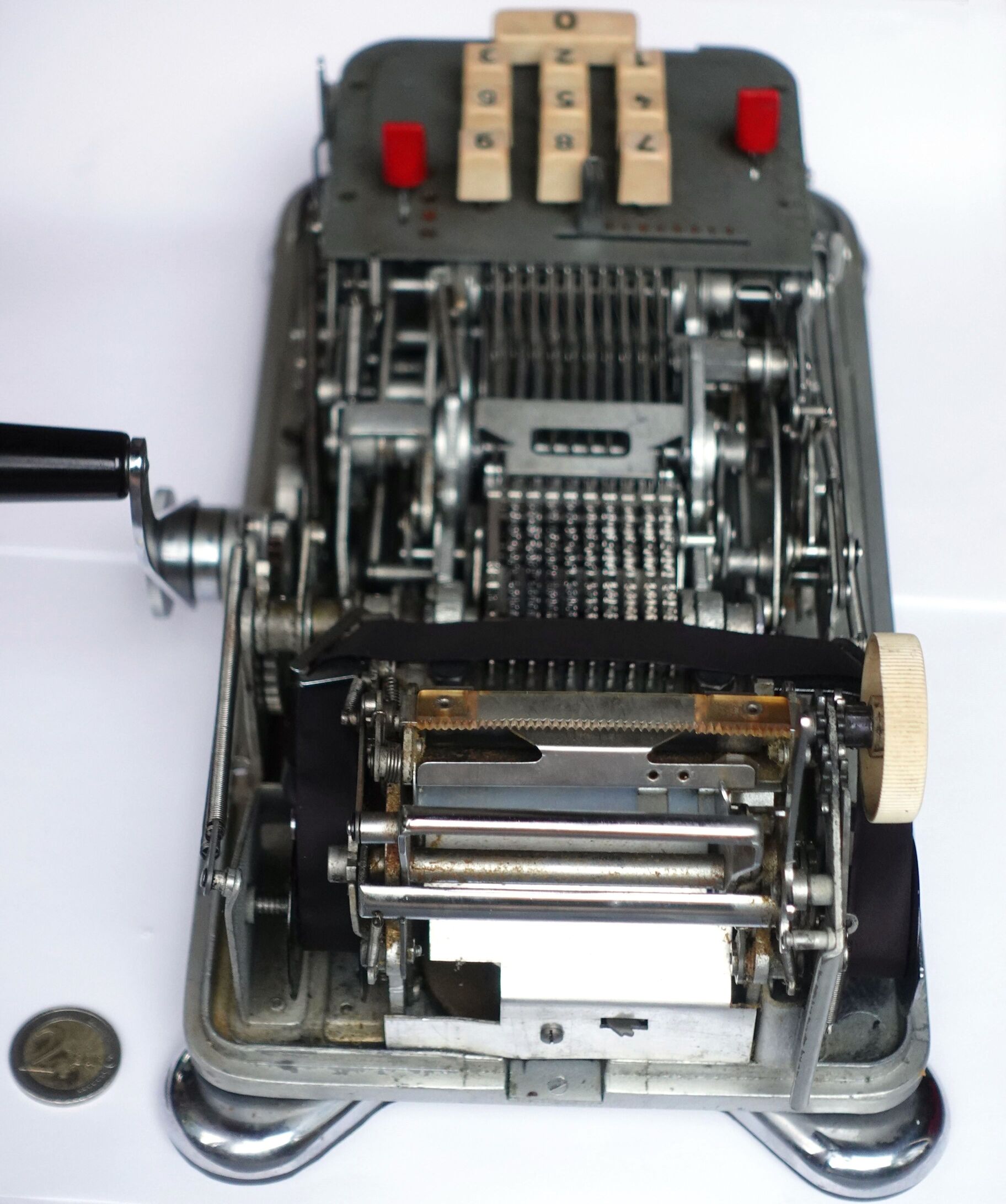
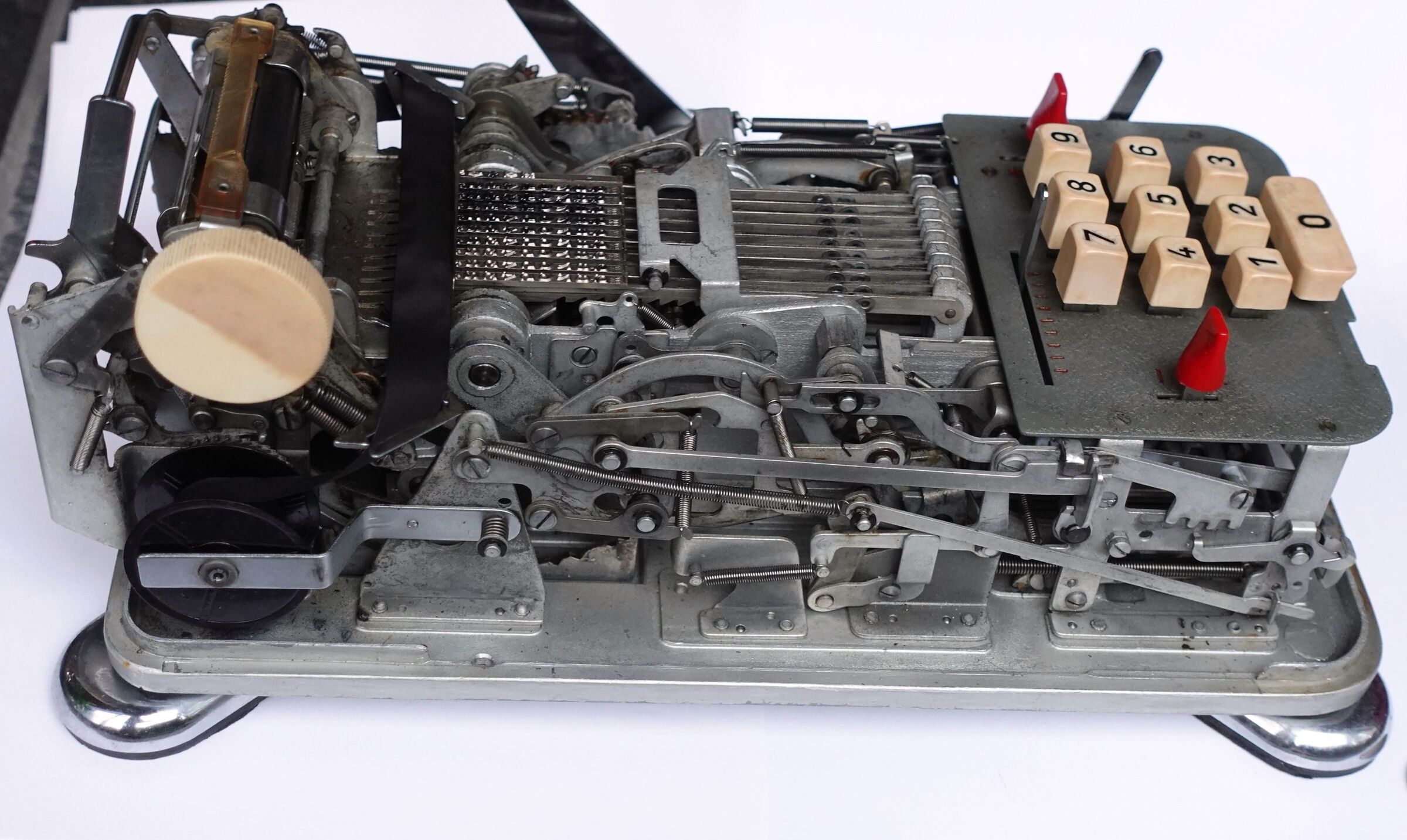
This adding machine design has an interesting and complicated history which can be found in detail in the article "Mauser - MLS - NFI, Drei Varianten einer Kleinrechenmaschine" by Peter Haertel, which can be read in full at Rechnerlexicon. Much of the information here comes from that article.
Mauser was a large German arms manufacturer based in Oberndorf. Its origins lie in the Königlich Württembergische Gewehrfabrik when it was acquired by Paul and Wilhelm Mauser in 1874 in order to produce 100,000 rifles of their design under contract to the Württemberg government. The company was renamed Waffenfabrik Mauser in 1884.
In 1929 Mauser also began producing adding machines. At first they used designs bought from other parties, but by 1933 they had developed their own models. These models were extended into a range of bookkeeping machines, and also into slightly cheaper variants with lower capacity. The latter were still quite large and heavy, so they wanted to have a significantly smaller and affordable adding machine too. This was designed by Reinhard Karl Rexin in the late 1930s. By the time it was ready for production, Astra had released their Klasse 0 adding machine which served the same market segment. The start of the second world war meant that Mauser had to focus more on arms production (unlike Astra which was not an arms manufacturer). Their small adding machine was not put into mass production, though it was developed further during the war years, with several variant models planned.
After the war the French controlled the region of Germany that Oberndorf was in, and they took charge of the Mauser company. As part of the reparations the calculator production was completely dismantled and transferred to France. This included the designs and prototypes of the small adder. From 1950 the Manufacture Nationale d’Armes de Levallois produced the Mauser calculator designs under the brand name MLS. The small adding machine however never reached full production. Apparently there were still some reliability issues, and there may have been fears about not owning the rights to the original patents.
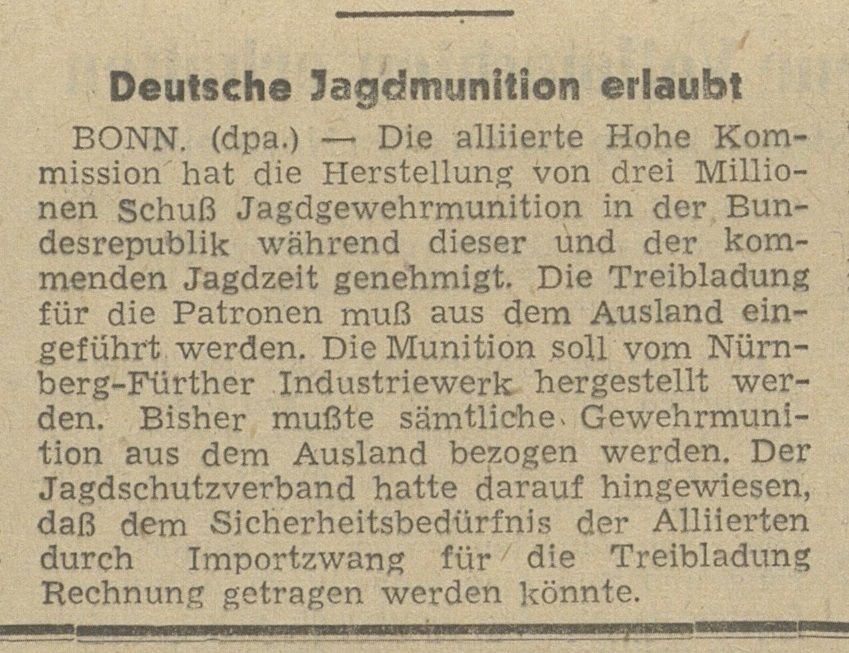
Meanwhile in Stadeln, near Nuremburg, a munitions manufacturing plant owned by Dynamit AG (formerly Alfred Nobel & Co) had been dismantled by the Americans, and mostly transported to Poland as reparations. In 1948 a legally independent company was founded from the remaining assets as the Nürnberg-Fürther Industriewerk, or NFI. They were looking for products to manufacture, and in September 1948 a deal was struck for Reinhard Rexin and some other former Mauser engineers to work for NFI and further develop Mauser's small adding machine, and for the patent rights to be transferred to NFI. Production began in April 1950. NFI also hosted production for many other companies on the large industrial site.
In 1952 the company could legally be reunited with the site's former owner, Dynamit AG based in Troisdorf, and it was renamed to Dynamit-Actien-Gesellschaft Nürnberg. Arms and munitions manufacturing was becoming legal again, though only limited to the consumer market, for hunting and sport. The company bagan to pivot back, so the manufacturing of other products was scaled back and halted as soon as the contracts expired. The production of adding machines ceased at the beginning of 1955.
The company was renamed Dynamit Nobel AG in 1959, and continued fairly successfully for the next forty years. On the Stadeln site the plant included a large tower in which lead shot was made by dropping molten lead from the top of the tower down into a water basin, allowing the droplets to become spherical before solidifying. From 1998 onwards the company was split up and sold bit by bit. The ammunition manufacturing part of the company was sold to the Swiss company RUAG in 2002, and in 2022 sold on to the Italian company Beretta. Dynamit Nobel AG was dissolved in 2004, but the name lives on in a successor company Dynamit Nobel Defence GmbH which produces shoulder launched weapons and reactive armour.
Mauser's original prototypes of the adding machine made just before the war were considered version 1, and the unproduced variants developed during the war were series 2. When Rexin finally saw his machine produced by NFI, it was therefore called model 3. The main difference is that it had an upright lever that the user pulls, whereas the previous models had an almost horizontal lever that the user had to press down (similar to the Corema).
| Name | Year | Serial Nrs | Description |
|---|---|---|---|
| 3 | 1950 | 33576 33942 34076 34091 34140 ???? | Boxy plastic casing, paper roll sticks out quite high. No negative totals. Serial numbers probably started at 30000. |
| 3A | 1951 | 35146 37482 37972 38263 38776 38895 60060 61144 61296 64153 64686 68218 | Streamlined casing, paper roll low and almost internal. Serial numbers continued on from the model 3, and later restarted at 60000. |
| 3AS | 1953 | 40849 | Negative totals. Serial numbers started at 40000. |
| 4 | 1953 | Electric motor. Bulkier cast metal case. Only 410 units made. Serial numbers started at 50000. | |
| 5HS | 1954 | Only in prototype form, no production. |
Production ceased at the start of 1955, abandoning the development of the series 4 and unproduced series 5.
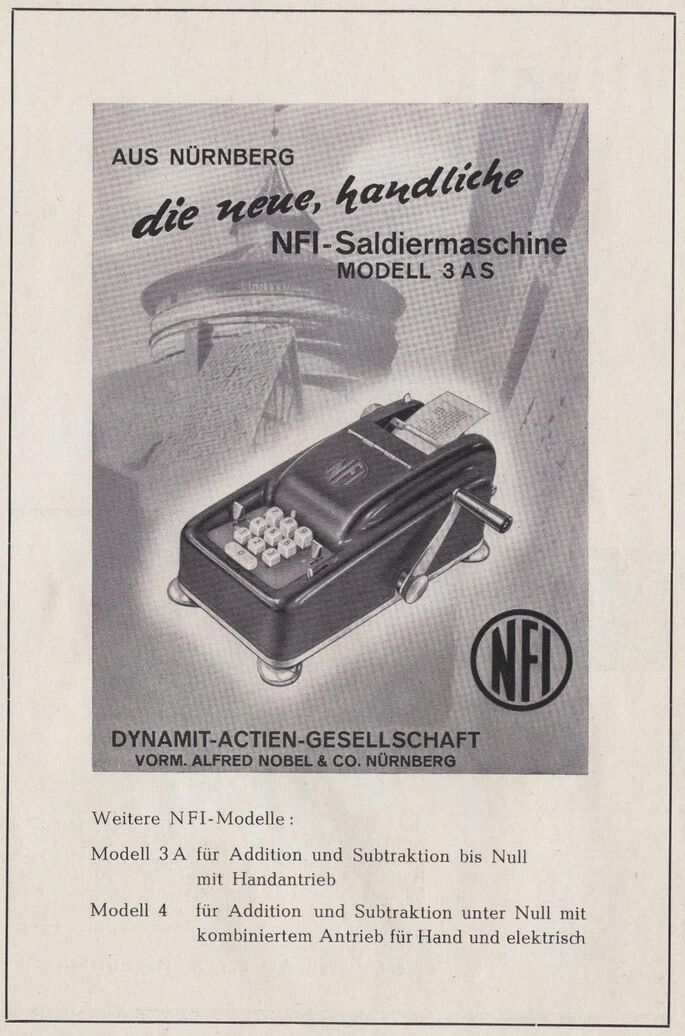
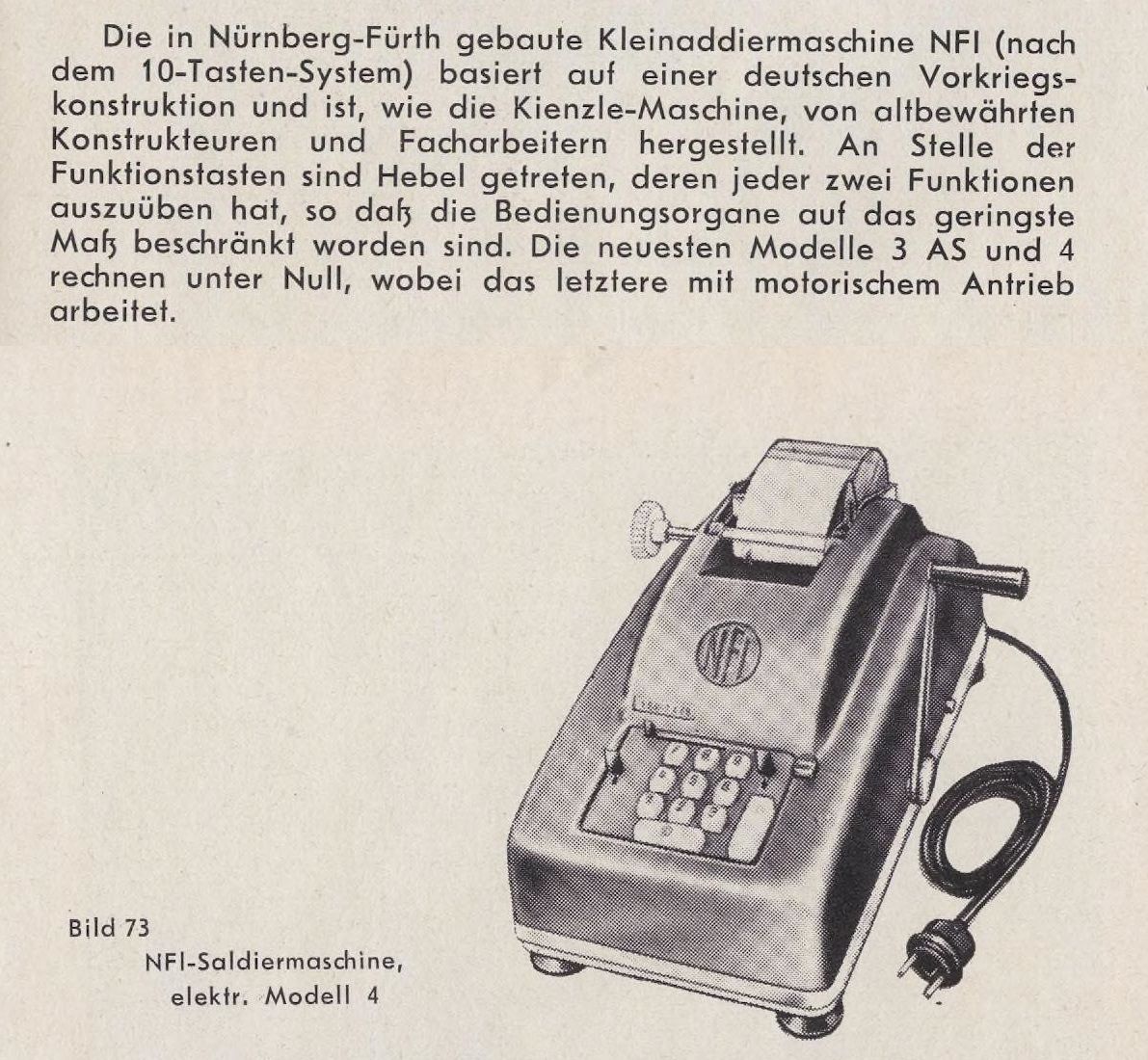
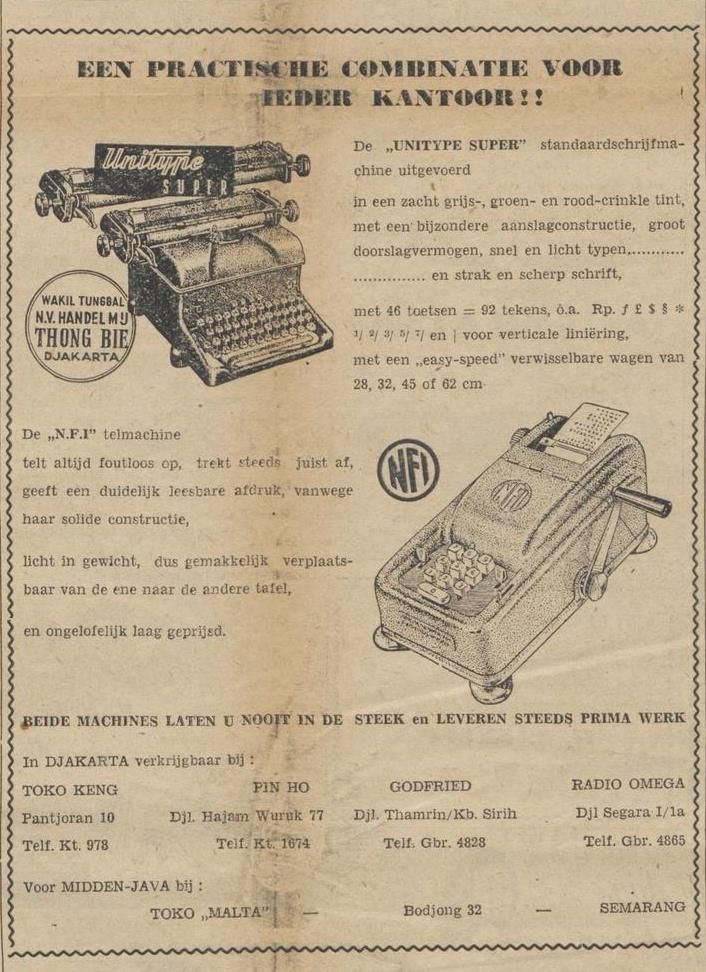
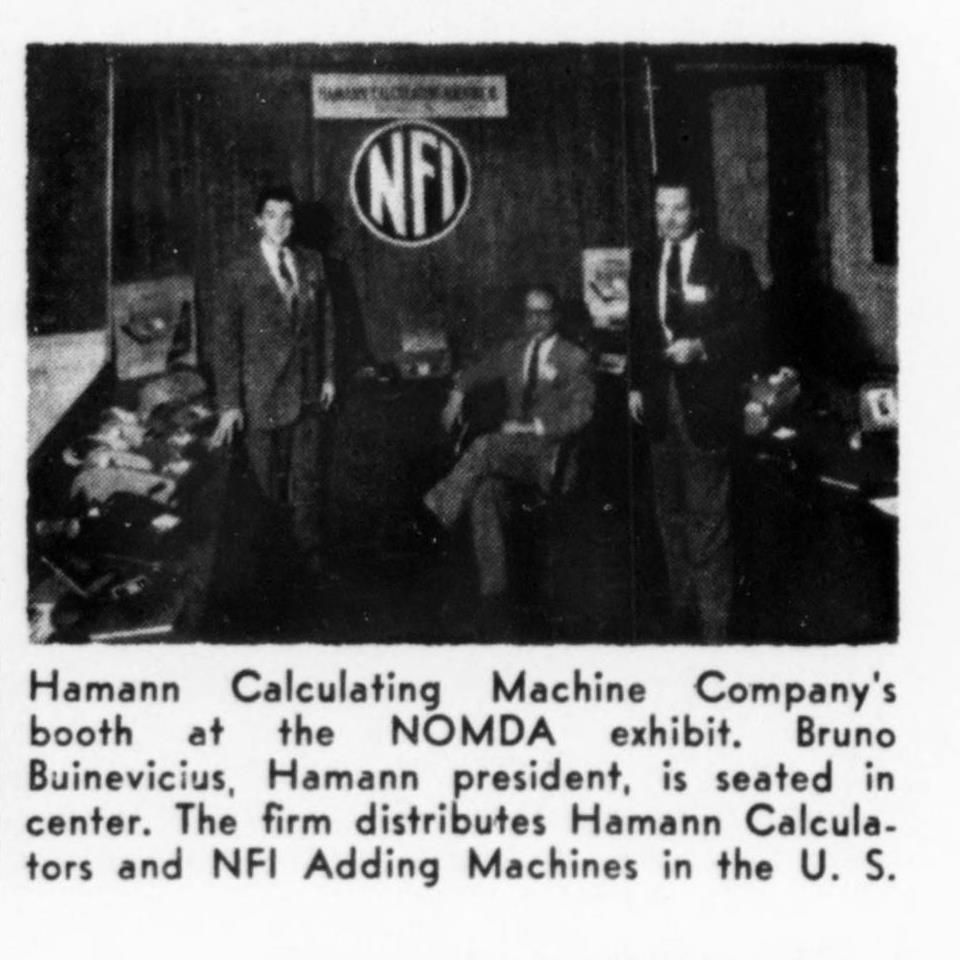
I found only a few ads and articles in online archives.
| Patent | Filing date | Publish date | Name | Description |
|---|---|---|---|---|
| US 2,305,839 | 27-09-1938 | 22-12-1942 | Franz Josef Berrendorf; Reinhard Rexin; Alien Property Custodian | Calculating Machine |
| DE 731,096 C | 28-09-1937 | 02-02-1943 | Josef Berrendorf; Mauser-Werke A.G. | 10-key Input Mechanism |
| DE 743,866 C | 31-05-1939 | 04-01-1944 | Josef Berrendorf; Reinhard Rexin; Mauser-Werke A.G. | Small Adding Machine |
| DE 746,090 C | 16-08-1938 | 21-12-1944 | Josef Berrendorf; Reinhard Rexin; Mauser-Werke A.G. | Drive mechanism for adding machine |
| DE 927,541 C | 23-04-1952 | 12-05-1955 | Reinhard Rexin; Dynamit-Actien-Gesellschaft | Paper roll housing |
© Copyright 2025 Jaap Scherphuis, mechcalc a t jaapsch d o t net.